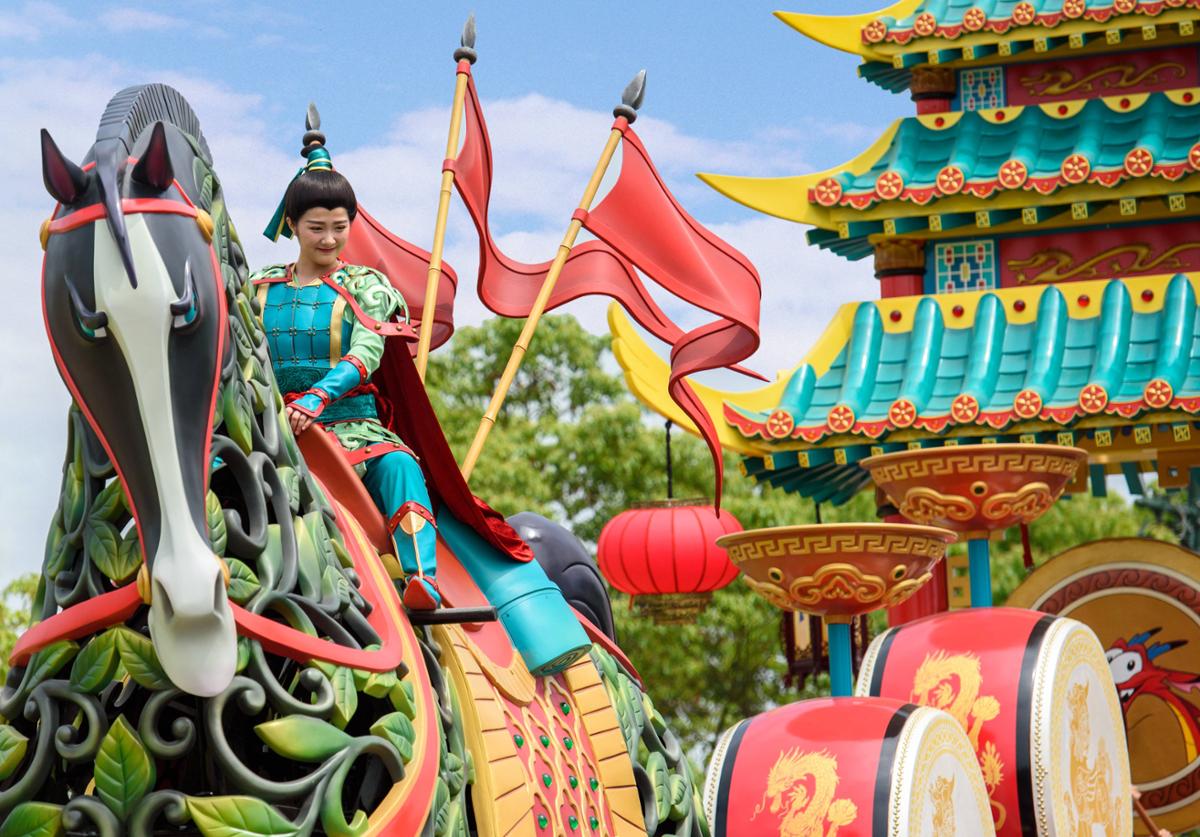
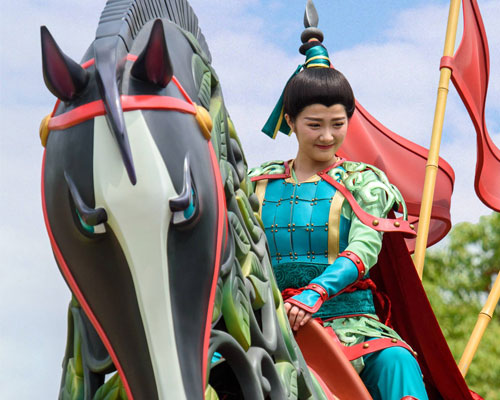
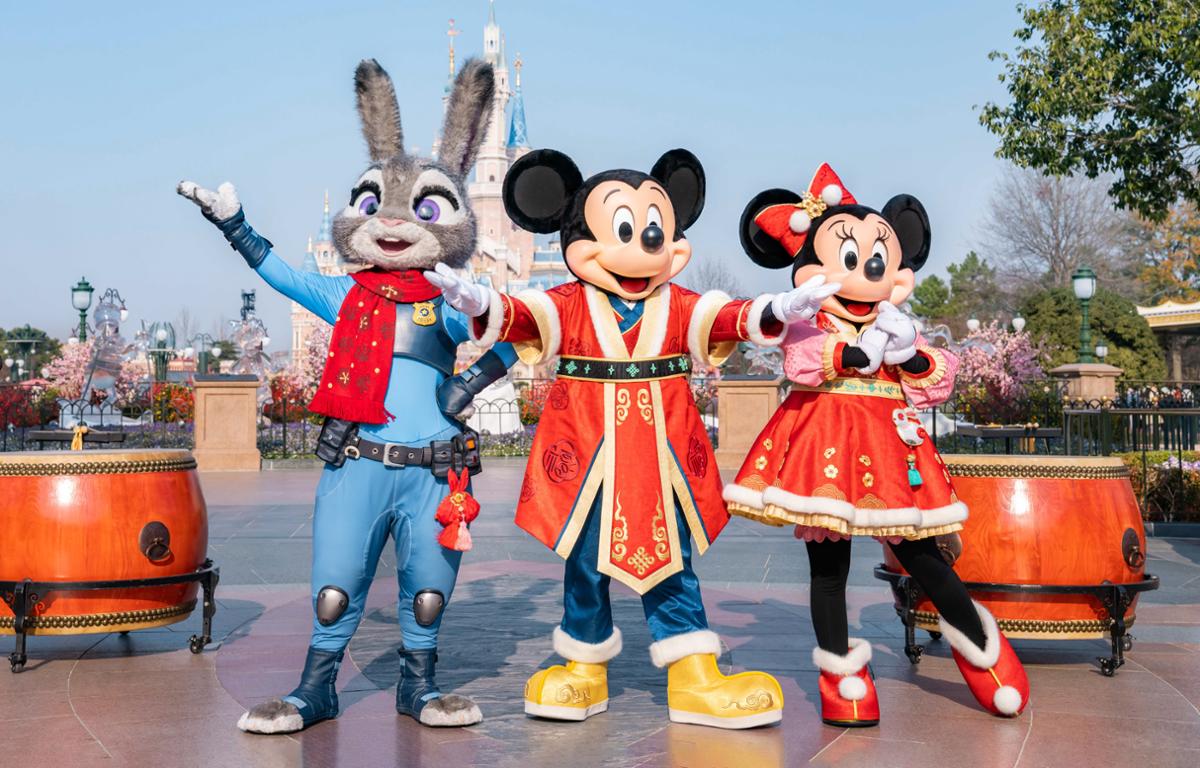
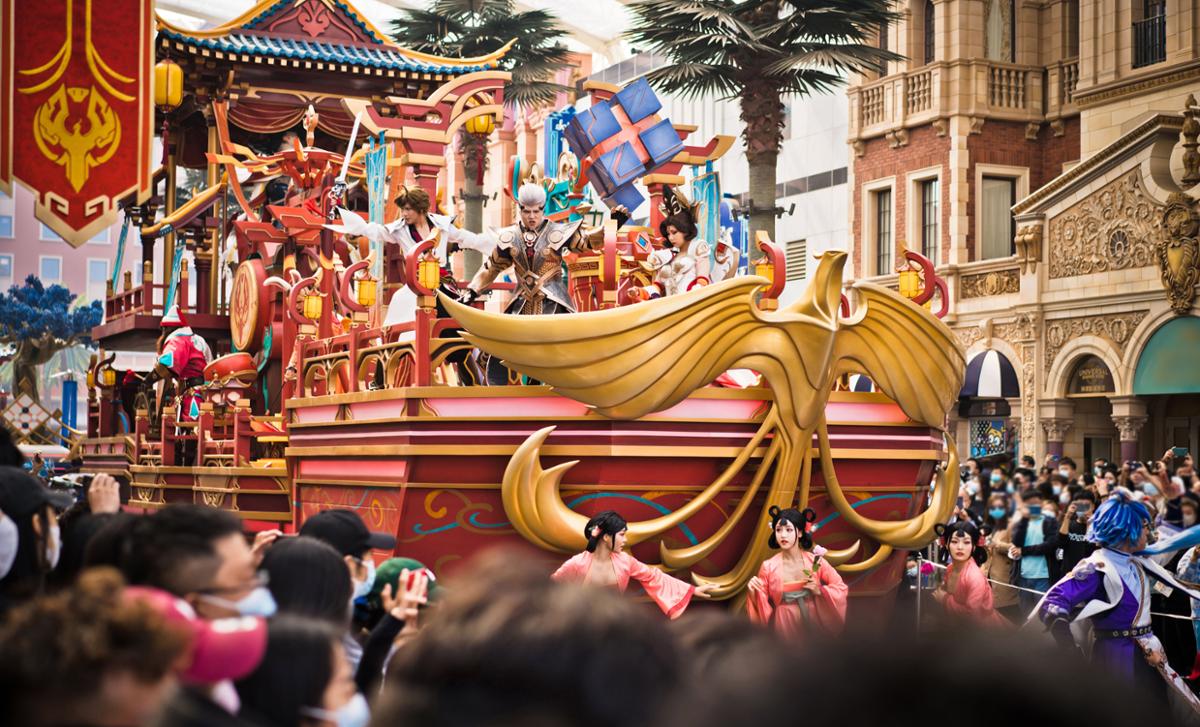
Shanghai Disney Resort opened in 2016, following Hong Kong Disneyland / Photo: Shanghai Disney
Driven by strong consumer enthusiasm, China’s theme park industry has transformed considerably over the past few decades, with hundreds of local players tapping into a rapidly growing market.
International brands with strong intellectual property have upped the game, and by the end of 2021, three new international theme parks had opened in China including Disneyland Shanghai and Hong Kong, and Universal Studios Beijing.
The market has huge potential – McKinsey’s latest report, titled China’s theme parks face a new era suggests that only 27 per cent of China’s population has ever visited a theme park, less than half the average for developed markets, at 68 per cent. And the market size could more than double from RMB40bn (£4.7bn, $5.8bn, E5.2bn) in 2019, to over RMB90bn (£10.5bn, $131bn, E11.9bn) by the end of 2025.
The challenges Even before COVID19-related restrictions, only half of the country’s parks turned a profit. During the pandemic, theme park attendance declined globally – theme parks had to comply with attendance caps, limits on individual rides, and a ban on indoor performances. Some theme parks shut down and those that remained open saw sharp drops in visitor numbers. Parks in Shanghai and Beijing closed for a few months, but visitor numbers rebounded quickly after reopening, with some theme parks hosting events.
Given the highly competitive environment, volatility due to COVID-19, and the fact that visitors are looking for new experiences after lockdowns, operators may have work to do to capture market share. But the good news is that there’s still enormous potential in the market, says McKinsey.
Despite pressure from leading international operators such as Legoland, Universal Studios, and Disneyland, local operators such as Happy Valley, Fantawild, and Chimelong are likely to draw more visitors than international brands. Leading local operators attract the majority of visitors thanks to the sheer size of their portfolios, number of chains, and their broad geographical coverage. In 2019, 81 per cent of visitors chose local operators. It’s expected that by 2025, local theme parks will serve around 70 to 75 per cent of visitors.
Looking ahead, a number of trends are shaping visitor expectations according to the report:
1. New experiences can draw repeat customers During COVID-19, trips around hometown cities became the first choice for leisure travel. A McKinsey survey of Chinese tourist attitudes revealed that nearly half of consumers said their first choice for travel would be a short trip to a new destination and over 80 per cent of consumers said they preferred short breaks of one or two nights.
Operators can stay relevant by updating their offering regularly and integrating entertainment and events to provide repeat visitors with new experiences. For example, the Disney characters dressed in traditional Chinese Hanfu attire to celebrate the Spring Festival in Shanghai soon captured visitors’ attention and became a trending topic on social media, gaining over 20 million views on TikTok. And when Chengdu Happy Valley launched its Dunhuang-themed event, cosplayers and influencers arrived in Bodhisattva and Feitian costumes, creating a hype on social media with over 1.5 million views on TikTok.
2. Digitisation is enhancing theme park experiences Consumers are increasingly looking for interactive and immersive storytelling experiences, not just rides. Operators are now introducing wearable devices as well as AR and VR technology to elevate the in-park experience.
Super Nintendo World at Universal Studios in Japan allows guests to play video games in real life, throughout the park. Players wear tracking devices and collect coins with interactive coin blocks and mini-games throughout the area, and can check their real-time ranking via mobile app.
3. Social media experiences are promoting engagement COVID-19 pushed people to spend more time online – now short-form videos and livestreaming have become the top online entertainment options. These categories have seen exponential growth, and in the first half of 2022, short videos accounted for 30 per cent of mobile internet use time in China.
As a result, theme park operators are doubling down on social content. When Disneyland Shanghai premiered LinaBell through a promotional video and influencer/celebrity endorsements, the character quickly became ubiquitous online. LinaBell-related hashtags gathered an estimated 940 million views on Weibo and 200 million views on Tiktok, drawing visitors to the park.
4. Greenfield parks need a strong IP While new theme park developments provide an opportunity to introduce something original to the market, they’re capital-intensive and take at least five years from initial planning to launch – often longer.
To help ensure their success, they need a strong brand identity or IP, a unique product concept based on consumer insight and innovative technology so the park retains its ‘wow factor.
5. Build a strong identity based on IP Global brands have invested heavily in IP, often over many years and such success can be difficult to emulate, so operators looking to use an IP could take a partnership approach, with the IP owner supervising the conceptual design phase and staying involved until construction is complete, so the end product aligns with the storyline.
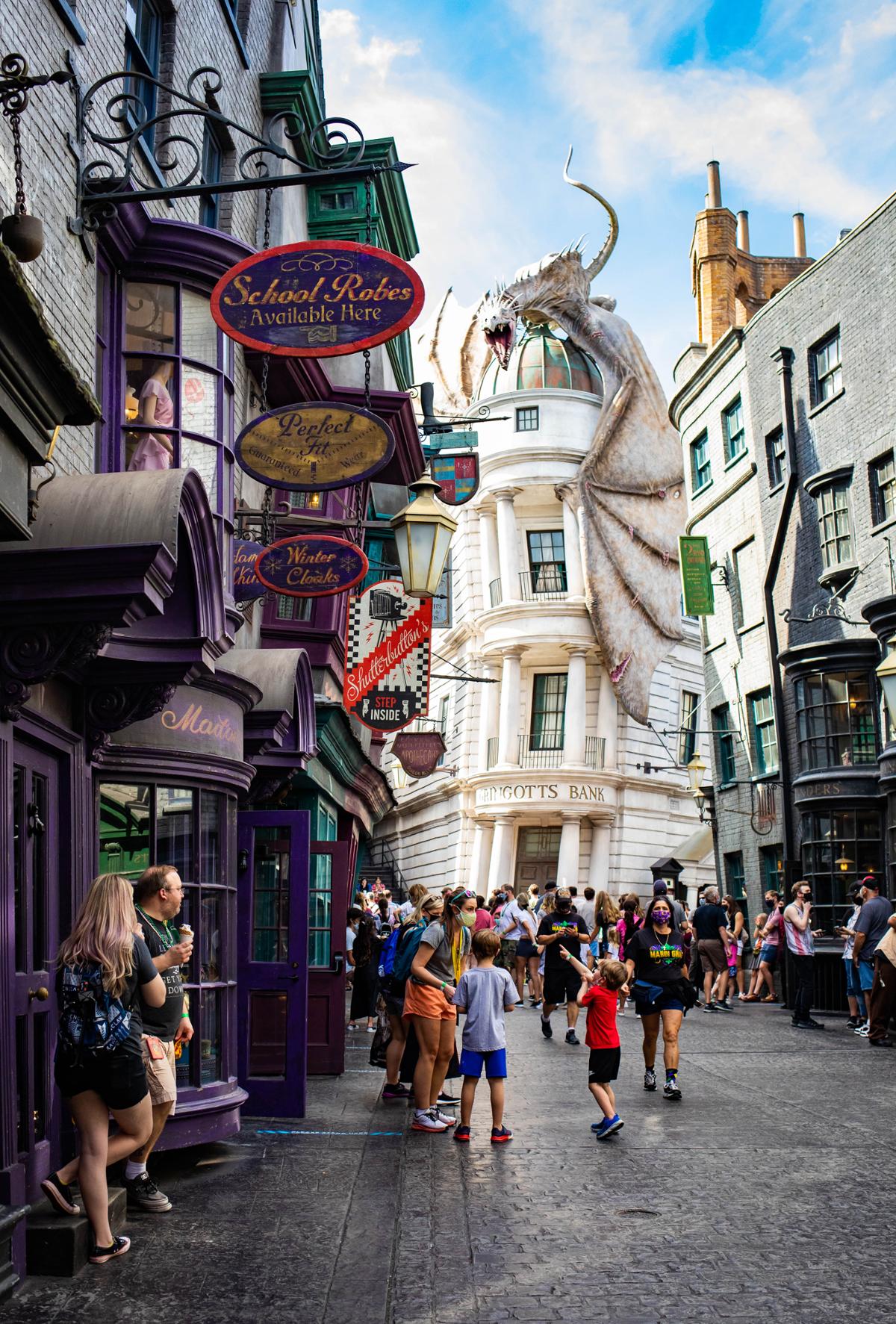
Examples of IP-related partnerships include Haichang Ocean Park in Shanghai adding an Ultraman-themed pavilion to its offering, including a theatre, restaurant, and entertainment centre with interactive facilities. Global examples include Universal’s Wizarding World of Harry Potter in Orlando and Pandora – The World of Avatar at Disney’s Animal Kingdom.
For operators without their own IP, the brand itself can become a key element in building a strong identity. For example, Chimelong built nationwide brand awareness with its Guangdong theme park complex, that includes an animal park, amusement park, waterpark, ocean park and circuses.
6. Deliver a unique concept Concepts should be developed with reference to consumer insights to ensure the end product provides a unique experience consumers want.
Leading operators incorporate consumer perspectives early on, for example, by drawing on a design-thinking process or running ‘innovation garage’ initiatives to test concepts with consumers and then adjusting and optimising the product design accordingly.
7. Think two steps ahead Keeping abreast of recent tech developments is key to ensuring the visitor experience will be exciting, easy to navigate, and on-trend.
Examples include VR/AR devices and RFID systems which can be used to create immersive experiences and ensure a seamless customer journey.
For example, Universal Studios’ Super Nintendo World features a Mario Kart-themed ride including AR headsets for an immersive experience. Other operators are creating customised solutions for visitor identification, including wearable devices and mobile apps, for more frictionless ticketless experience.
8. Elevating brownfield theme parks For operators looking to elevate established parks, it’s critical to understand the value-creation process right across the customer journey, from visitor acquisition and value conversion (including ticket sales, and non-ticket sales), to customer retention.
In terms of visitor acquisition, local operators often invest in one-size-fits-all mass marketing campaigns through traditional and offline media, such as TV, newspapers and outdoor advertising.
Considering the increase in consumers’ time spent online, operators could instead invest in online presence – and use customer insights to tailor messages to different segments and personas. Operators could also consider stimulating demand by promoting holidays or events that fall outside peak periods and by creating themed events that cater to local interest. They could also collaborate with partners, across industries, to reach new customers – for example, Universal Studios Beijing leveraged Tencent’s Honor of Kings mobile game to attract gamers by holding themed events at the park.
9. Growing revenue from ticket sales To grow revenue from ticket sales, operators could consider taking a tailored approach to travel agency management. Travel agencies accounted for around 45 per cent of Chinese tourism bookings in 2019. Theme parks may be able to manage these sales in a more efficient manner.
Local online shopping channels and apps such as Meituan are gaining traction too. Theme parks can partner to better leverage these online platforms’ capabilities when it comes to planning and executing marketing campaigns.
Although use of direct-to-consumer channels by visitor attractions operators is on the rise, they have generally been under-utilised when compared to other industries, such as retail.
These online shopping channels could be more effective in gaining traction with consumers than operators’ official brand websites and mobile apps, says McKinsey.
10. Boosting non-ticket revenue Operators can increase non-ticket revenue, which accounts for between 30 and 40 per cent of total income for industry leaders, but usually makes up less than 20 per cent of revenue for local operators.
To do this, McKinsey advocates operators develop more premium experiences, including VIP tours, backstage passes, fast passes and exclusive services.
They could also provide edutainment in the form of tailored offerings for families, designed around educating and entertaining children. These offerings are relatively new in the market.
Festivals, holidays, and special occasions also create the opportunity to boost non-ticket revenues through the sale of special dining experiences, costumes and limited-edition merchandise.
11. Improving customer retention To boost retention, operators can increase efforts to build long-term relationships with customers and keep them engaged – inside and outside the park.
Touchpoints outside park help keep the brand top of mind. For example, Universal Studios partnered with Nintendo to provide a wearable power-up band to visitors. This is more than an in-park accessory, it’s a Nintendo amiibo with game characters that can be connected to Nintendo consoles for at-home use, extending the park experience.
Customer retention can also be improved by a tiered annual pass that meets different needs. For example, a weekday pass can cater for visitors with more flexible schedules.
Read more from this issue of Attractions Management magazine
View contents of Attractions Management 2023 issue 2
Editor's letter: People power
The pandemic has been disruptive for the people in our industry. A new report shares how operators are getting creative to overcome issues
Letters: Write to reply
Liseberg CEO Andreas Andersen tells us 2023 will celebrate the past, but also be the start of something new, while BALPPA CEO Paul Kelly explains why the organisation has launched individual memberships
People: Sarah Roots
The countdown is on to the opening of Warner Bros Studio Tour Tokyo. We hear the latest
People: David Camp
With Puy du Fou, Eden International and Europa-Park among its clients, D&J International Consulting has done exciting work in its first decade
Interview: Scott O'Neil
US sports and entertainment veteran O’Neil is now CEO of Merlin Entertainments and he has big plans for the company. Magali Robathan sat down with him
Ethics: Reckoning with history
As a ground-breaking project aims to digitally unite Benin Bronzes for the first time, the Horniman Museum becomes the latest institution to return looted artefacts
Research: Elizabeth Merritt
What are the biggest trends affecting the museum sector? The VP of the Center for the Future of Museums shares her thoughts
Research: TrendsWatch: Building the future
A digital revolution, reparations and repatriation, partisan wars and the future of the workplace – key trends highlighted by this year’s TrendsWatch report
Research: China theme parks: New era
China is the world’s second largest market for theme parks and still has huge potential for growth, as a McKinsey report explains
Visitor centre: A golden age: Ad Gefrin
A new multi-million pound Anglo Saxon museum and whiskey distillery tells an old story in a new way. AM talks to the founders
Immersive art: House of Fun: Luna Luna
Works from Luna Luna, a ground-breaking ‘art amusement park’ have languished in storage for 30 years. Now rapper Drake is bringing them back to life
Shanghai Disney Resort opened in 2016, following Hong Kong Disneyland / Photo: Shanghai Disney
Driven by strong consumer enthusiasm, China’s theme park industry has transformed considerably over the past few decades, with hundreds of local players tapping into a rapidly growing market.
International brands with strong intellectual property have upped the game, and by the end of 2021, three new international theme parks had opened in China including Disneyland Shanghai and Hong Kong, and Universal Studios Beijing.
The market has huge potential – McKinsey’s latest report, titled China’s theme parks face a new era suggests that only 27 per cent of China’s population has ever visited a theme park, less than half the average for developed markets, at 68 per cent. And the market size could more than double from RMB40bn (£4.7bn, $5.8bn, E5.2bn) in 2019, to over RMB90bn (£10.5bn, $131bn, E11.9bn) by the end of 2025.
The challenges Even before COVID19-related restrictions, only half of the country’s parks turned a profit. During the pandemic, theme park attendance declined globally – theme parks had to comply with attendance caps, limits on individual rides, and a ban on indoor performances. Some theme parks shut down and those that remained open saw sharp drops in visitor numbers. Parks in Shanghai and Beijing closed for a few months, but visitor numbers rebounded quickly after reopening, with some theme parks hosting events.
Given the highly competitive environment, volatility due to COVID-19, and the fact that visitors are looking for new experiences after lockdowns, operators may have work to do to capture market share. But the good news is that there’s still enormous potential in the market, says McKinsey.
Despite pressure from leading international operators such as Legoland, Universal Studios, and Disneyland, local operators such as Happy Valley, Fantawild, and Chimelong are likely to draw more visitors than international brands. Leading local operators attract the majority of visitors thanks to the sheer size of their portfolios, number of chains, and their broad geographical coverage. In 2019, 81 per cent of visitors chose local operators. It’s expected that by 2025, local theme parks will serve around 70 to 75 per cent of visitors.
Looking ahead, a number of trends are shaping visitor expectations according to the report:
1. New experiences can draw repeat customers During COVID-19, trips around hometown cities became the first choice for leisure travel. A McKinsey survey of Chinese tourist attitudes revealed that nearly half of consumers said their first choice for travel would be a short trip to a new destination and over 80 per cent of consumers said they preferred short breaks of one or two nights.
Operators can stay relevant by updating their offering regularly and integrating entertainment and events to provide repeat visitors with new experiences. For example, the Disney characters dressed in traditional Chinese Hanfu attire to celebrate the Spring Festival in Shanghai soon captured visitors’ attention and became a trending topic on social media, gaining over 20 million views on TikTok. And when Chengdu Happy Valley launched its Dunhuang-themed event, cosplayers and influencers arrived in Bodhisattva and Feitian costumes, creating a hype on social media with over 1.5 million views on TikTok.
2. Digitisation is enhancing theme park experiences Consumers are increasingly looking for interactive and immersive storytelling experiences, not just rides. Operators are now introducing wearable devices as well as AR and VR technology to elevate the in-park experience.
Super Nintendo World at Universal Studios in Japan allows guests to play video games in real life, throughout the park. Players wear tracking devices and collect coins with interactive coin blocks and mini-games throughout the area, and can check their real-time ranking via mobile app.
3. Social media experiences are promoting engagement COVID-19 pushed people to spend more time online – now short-form videos and livestreaming have become the top online entertainment options. These categories have seen exponential growth, and in the first half of 2022, short videos accounted for 30 per cent of mobile internet use time in China.
As a result, theme park operators are doubling down on social content. When Disneyland Shanghai premiered LinaBell through a promotional video and influencer/celebrity endorsements, the character quickly became ubiquitous online. LinaBell-related hashtags gathered an estimated 940 million views on Weibo and 200 million views on Tiktok, drawing visitors to the park.
4. Greenfield parks need a strong IP While new theme park developments provide an opportunity to introduce something original to the market, they’re capital-intensive and take at least five years from initial planning to launch – often longer.
To help ensure their success, they need a strong brand identity or IP, a unique product concept based on consumer insight and innovative technology so the park retains its ‘wow factor.
5. Build a strong identity based on IP Global brands have invested heavily in IP, often over many years and such success can be difficult to emulate, so operators looking to use an IP could take a partnership approach, with the IP owner supervising the conceptual design phase and staying involved until construction is complete, so the end product aligns with the storyline.
Examples of IP-related partnerships include Haichang Ocean Park in Shanghai adding an Ultraman-themed pavilion to its offering, including a theatre, restaurant, and entertainment centre with interactive facilities. Global examples include Universal’s Wizarding World of Harry Potter in Orlando and Pandora – The World of Avatar at Disney’s Animal Kingdom.
For operators without their own IP, the brand itself can become a key element in building a strong identity. For example, Chimelong built nationwide brand awareness with its Guangdong theme park complex, that includes an animal park, amusement park, waterpark, ocean park and circuses.
6. Deliver a unique concept Concepts should be developed with reference to consumer insights to ensure the end product provides a unique experience consumers want.
Leading operators incorporate consumer perspectives early on, for example, by drawing on a design-thinking process or running ‘innovation garage’ initiatives to test concepts with consumers and then adjusting and optimising the product design accordingly.
7. Think two steps ahead Keeping abreast of recent tech developments is key to ensuring the visitor experience will be exciting, easy to navigate, and on-trend.
Examples include VR/AR devices and RFID systems which can be used to create immersive experiences and ensure a seamless customer journey.
For example, Universal Studios’ Super Nintendo World features a Mario Kart-themed ride including AR headsets for an immersive experience. Other operators are creating customised solutions for visitor identification, including wearable devices and mobile apps, for more frictionless ticketless experience.
8. Elevating brownfield theme parks For operators looking to elevate established parks, it’s critical to understand the value-creation process right across the customer journey, from visitor acquisition and value conversion (including ticket sales, and non-ticket sales), to customer retention.
In terms of visitor acquisition, local operators often invest in one-size-fits-all mass marketing campaigns through traditional and offline media, such as TV, newspapers and outdoor advertising.
Considering the increase in consumers’ time spent online, operators could instead invest in online presence – and use customer insights to tailor messages to different segments and personas. Operators could also consider stimulating demand by promoting holidays or events that fall outside peak periods and by creating themed events that cater to local interest. They could also collaborate with partners, across industries, to reach new customers – for example, Universal Studios Beijing leveraged Tencent’s Honor of Kings mobile game to attract gamers by holding themed events at the park.
9. Growing revenue from ticket sales To grow revenue from ticket sales, operators could consider taking a tailored approach to travel agency management. Travel agencies accounted for around 45 per cent of Chinese tourism bookings in 2019. Theme parks may be able to manage these sales in a more efficient manner.
Local online shopping channels and apps such as Meituan are gaining traction too. Theme parks can partner to better leverage these online platforms’ capabilities when it comes to planning and executing marketing campaigns.
Although use of direct-to-consumer channels by visitor attractions operators is on the rise, they have generally been under-utilised when compared to other industries, such as retail.
These online shopping channels could be more effective in gaining traction with consumers than operators’ official brand websites and mobile apps, says McKinsey.
10. Boosting non-ticket revenue Operators can increase non-ticket revenue, which accounts for between 30 and 40 per cent of total income for industry leaders, but usually makes up less than 20 per cent of revenue for local operators.
To do this, McKinsey advocates operators develop more premium experiences, including VIP tours, backstage passes, fast passes and exclusive services.
They could also provide edutainment in the form of tailored offerings for families, designed around educating and entertaining children. These offerings are relatively new in the market.
Festivals, holidays, and special occasions also create the opportunity to boost non-ticket revenues through the sale of special dining experiences, costumes and limited-edition merchandise.
11. Improving customer retention To boost retention, operators can increase efforts to build long-term relationships with customers and keep them engaged – inside and outside the park.
Touchpoints outside park help keep the brand top of mind. For example, Universal Studios partnered with Nintendo to provide a wearable power-up band to visitors. This is more than an in-park accessory, it’s a Nintendo amiibo with game characters that can be connected to Nintendo consoles for at-home use, extending the park experience.
Customer retention can also be improved by a tiered annual pass that meets different needs. For example, a weekday pass can cater for visitors with more flexible schedules.
Read more from this issue of Attractions Management magazine
View contents of Attractions Management 2023 issue 2
Editor's letter: People power
The pandemic has been disruptive for the people in our industry. A new report shares how operators are getting creative to overcome issues
Letters: Write to reply
Liseberg CEO Andreas Andersen tells us 2023 will celebrate the past, but also be the start of something new, while BALPPA CEO Paul Kelly explains why the organisation has launched individual memberships
People: Sarah Roots
The countdown is on to the opening of Warner Bros Studio Tour Tokyo. We hear the latest
People: David Camp
With Puy du Fou, Eden International and Europa-Park among its clients, D&J International Consulting has done exciting work in its first decade
Interview: Scott O'Neil
US sports and entertainment veteran O’Neil is now CEO of Merlin Entertainments and he has big plans for the company. Magali Robathan sat down with him
Ethics: Reckoning with history
As a ground-breaking project aims to digitally unite Benin Bronzes for the first time, the Horniman Museum becomes the latest institution to return looted artefacts
Research: Elizabeth Merritt
What are the biggest trends affecting the museum sector? The VP of the Center for the Future of Museums shares her thoughts
Research: TrendsWatch: Building the future
A digital revolution, reparations and repatriation, partisan wars and the future of the workplace – key trends highlighted by this year’s TrendsWatch report
Research: China theme parks: New era
China is the world’s second largest market for theme parks and still has huge potential for growth, as a McKinsey report explains
Visitor centre: A golden age: Ad Gefrin
A new multi-million pound Anglo Saxon museum and whiskey distillery tells an old story in a new way. AM talks to the founders
Immersive art: House of Fun: Luna Luna
Works from Luna Luna, a ground-breaking ‘art amusement park’ have languished in storage for 30 years. Now rapper Drake is bringing them back to life
OMA has completed a major transformation of New York's New Museum, creating a larger
cultural campus that combines expanded exhibition spaces with learning, performance,
hospitality and public programming.
A US$50 million (£44.2 million, €51.2 million) transformation of Chicago's historic McCormick
Mansion has created a new destination that combines live magic, immersive theatre, dining and
private membership under one roof.
The Montana Historical Society has officially celebrated the opening of its new Montana
Heritage
Center, a US$107 million (£79 million, €92 million) destination that combines immersive
storytelling with cutting-edge audiovisual technology to bring the sta
San Antonio Zoo has reported a US$283 million economic impact for 2025, following a decade-
long transformation programme that has seen almost US$200 million invested into the Texas
attraction.
Plans for the AU$180 million redevelopment of Reef HQ Aquarium in Townsville, Australia, are
progressing, with the project set to transform the attraction into a global centre for reef
education and conservation.
Abu Dhabi-based investment firm Mubadala Capital has made a binding, fully financed
€1 billion
offer to acquire Pierre and Vacances SA, the European holiday resort operator behind the
continental European Center Parcs business.
Disney has reaffirmed its commitment to investing US$30 billion in its US parks and cruise
business by 2033, using new America250 celebrations to underline the role its attractions play
in supporting jobs, tourism and economic growth.
Expo 2030 Riyadh is being planned as a permanent visitor destination, with organisers
confirming the six-million-square-metre site will become a Global Village after the event closes.
The owner of one of Australia's best-known waterparks has acquired a major competitor,
creating a new attractions business spanning two of the country's largest visitor destinations.
The Toverland theme park in the Netherlands has announced a €98m expansion programme
that will add a resort, new attractions and staff facilities as it pursues plans to become a multi-
day destination.
+ More news
COMPANY PROFILES
IAAPA EMEA IAAPA Expo Europe was established in 2006 and has grown to the largest international conference and [more...]
TechnoAlpin Indoor TechnoAlpin is the world leader for snowmaking systems. With the Indoor snow division, TechnoAlpin c [more...]
Holovis Holovis is a privately owned company
established in 2004 by CEO Stuart
Hetherington. [more...]
Polin Waterparks Polin was founded in Istanbul in 1976. Polin
has since grown into a leading company in
the waterpa [more...]