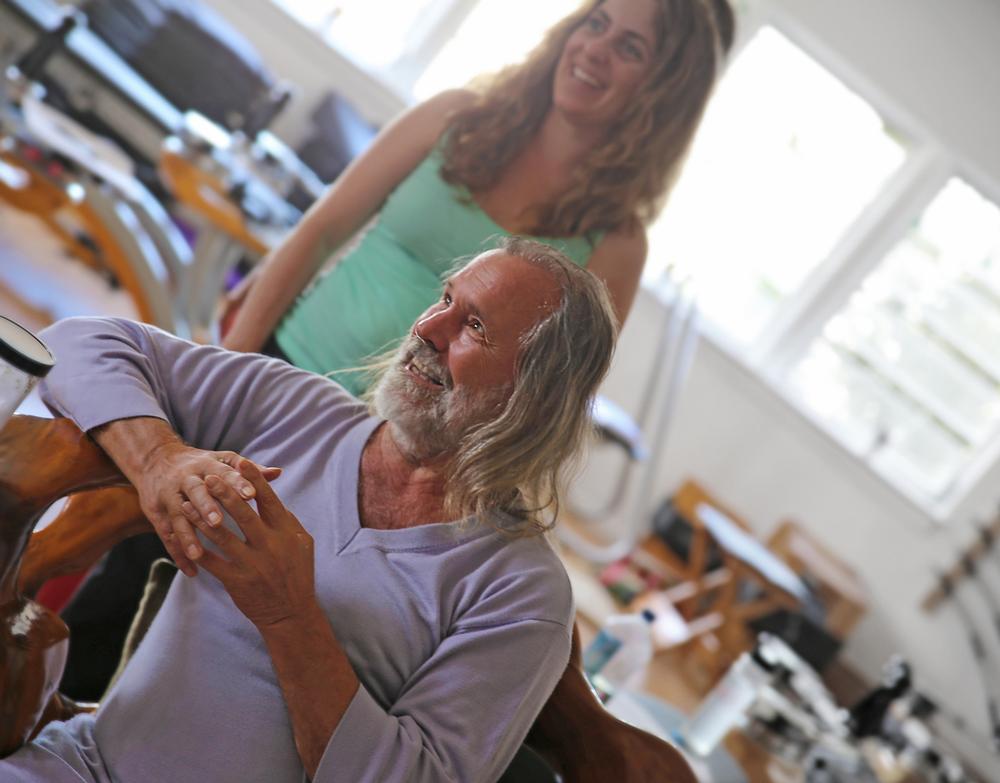
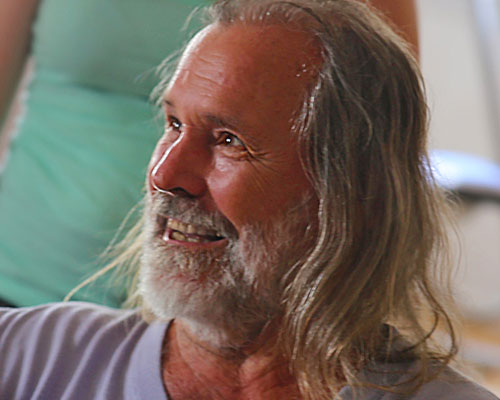
Before developing Gyrotonic and Gyrokinesis, Horvath was a principal ballet dancer
Speaking to Juliu Horvath I had the sense of speaking to a legend along the lines of Joseph Pilates or Pattabhi Jois. Now aged 77, Horvath has told his life story so many times that he sounds almost weary having to tell it again, but it’s an intriguing tale.
It’s a story about mindful movement, fitting for any spa looking to expand its repertoire or to entice customers who have a new-found respect for wellness once coronavirus lockdowns begin to lift.
Born in Romania, Horvath became the principal dancer for the Romanian National Ballet Company, but defected while touring with them in Italy, in 1970. Following a spell living in a refugee camp, he was then given political asylum in the US. After moving to New York City, he did whatever jobs he had to do to make a living until, once again, he found himself performing with ballet companies, alongside international stars, such as Margot Fonteyn.
While he was dancing, Horvath sometimes experienced lower back pain as a result of a slipped disc when he was a teenager. This occasionally became serious, but no one in the medical community was able to help him, so he started looking into other modalities which could support his body and allow him to continue dancing.
Horvath became the principal dancer with the Houston Ballet Company, but his dancing career was brought to a sudden halt when he ruptured his Achilles tendon in the late 70s. This was the catalyst for him to spend more time exploring his movement modality. Moving to a small hut in the Virgin Islands, he spent six years exploring yoga and meditation and gaining insights into movement and healing, which provided the foundations of the Gyrotonic and Gyrokinesis Method.
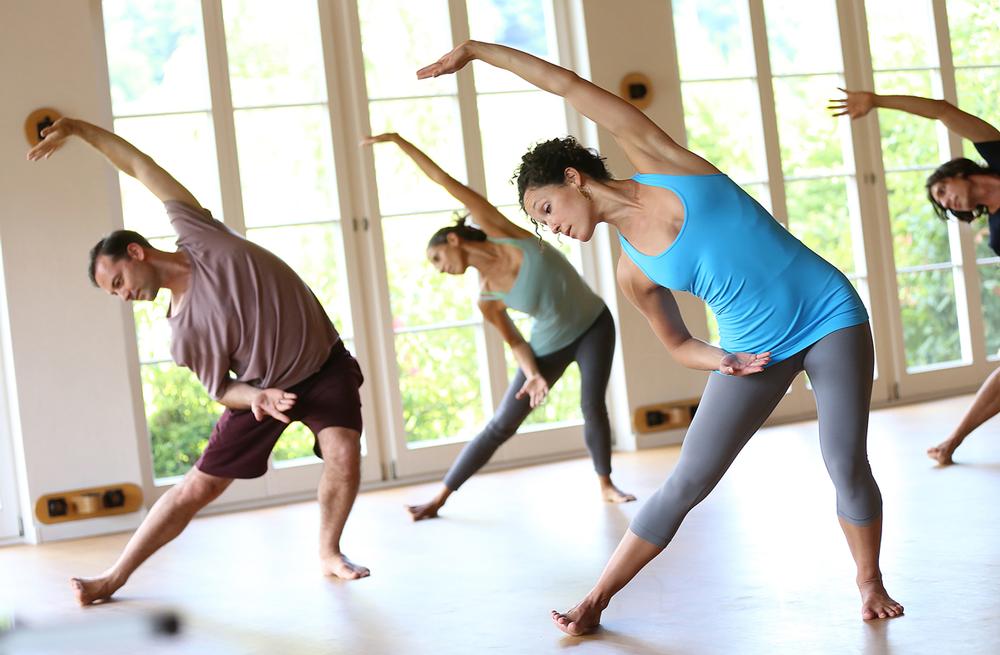
A new movement modality Horvath says his technique does to the body what spring cleaning does to a house. The movements look fluid, ballet and yoga-like. They open up and create space in the body, as well as serving to expand and elongate the joints.
Today there are some 16,000 trainers working in around 60 countries practising the discipline, but Horvath says this has all happened organically, via word of mouth. When he moved back to New York in the early 80s, he quickly gained a following in the dance community, as people wanted to know what he had been doing which allowed him to move so well.
“Initially my students were professional dancers who wanted to learn what I was doing and that was the beginning of my teaching,” he explains. “It has continued to grow via word of mouth. I quickly had people from all sorts of backgrounds and all kinds of disabilities coming to me, who the medical community couldn’t help. As I came across different people with different problems and limitations, I started to adapt the technique.
“The exercises support the five basic movements of the spine: forward and backwards, side to side and spiralling. We combine these in any configuration, depending on the needs of the person and can adapt it to anyone’s limitation and also their goal. People have been coming back to me for more than 35 years – I take them to another dimension as they progress, because the dimensions are endless.”
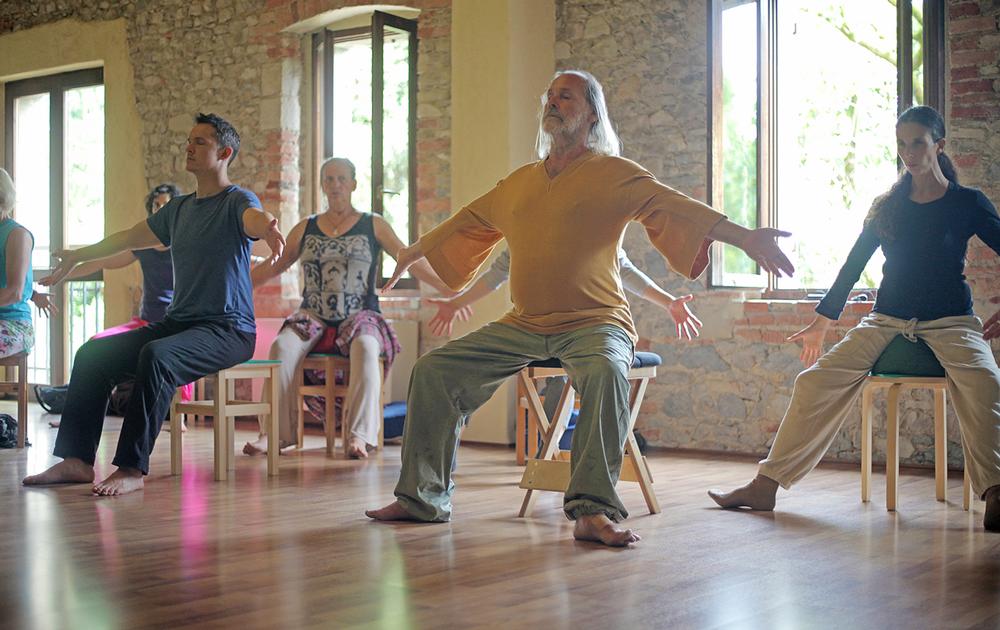
The introduction of equipment After a few years, Horvath started devising equipment to support the movements. Now there are two strands: Gyrotonic classes use a range of specially designed equipment, which incorporate pulleys and sliding and rotating parts, which all support the body in opening up. Gyrokinesis classes are performed on chairs or mats, without equipment but to the same end.
“The body is like a musical instrument,” says Horvath. “With a violin if you over pull the cord then it won’t play the right note, but if you don’t pull the cord enough it also won’t play the note. You have to find the exact pull in each movement and each dimension so the music becomes possible.”
Over the past 35 years, Horvath has worked with many people and had countless success stories, including bringing prima ballerinas back from injury and prolonging their careers by another five or six years. He says one of his most interesting cases was in the early days, when he helped a man who was half paralysed from a stroke to walk again.
“I’m not stuffed with previous knowledge, I don’t have a book, I just experiment and find a way to work around it,” he says. “I don’t pre-meditate anything. I work with what is happening at the particular time. I didn’t dream how big this is going to get. I never imagined it would go to the dimension it is now. But it’s there, so we’re going with it.”
Certified trainers People from all walks of life are leaving their jobs to become Gyrotonic and Gyrokinesis trainers: doctors, bank workers, physiotherapists. Training for either of the disciplines has four stages: pre-training, foundation training, a six to 12 month supervised apprenticeship and, lastly, the final certificate course.
Once qualified, trainers are expected to do continuing education courses, as Horvath is constantly making new discoveries: there are around 25 different applications for different physical issues, ranging from dancers and elite athletes to medical conditions.
“I’m still with my own limitations and the problems which people come to me with,” he says. “Every new person presents a learning curve. I don’t have a preconceived idea about what I’m going to do, I just figure out how I’m going to resolve the problem each time. The system is the vocabulary and it’s up to the trainer to formulate the sentences for individuals.”
For this reason, work experience and self practice is a fundamental part of the training. All of the training is undertaken by a team of master trainers who Horvath works closely with in order to pass on his latest learnings and teachings.
Gyrotonic or Gyrokinesis classes are now available at 5,000 studios worldwide. Going forward, Horvath wants to continuing expanding the reach and growing the community, while not letting it grow so fast that it loses its purity. His current focus is on teaching courses which focus on harnessing the power of the breath to expand the mind and improve movement quality.
Kath Hudson is a regular contributor to Spa Business
| [email protected]
Read more from this issue of Attractions Management magazine
View contents of Attractions Management 2020 issue 2
Editor’s letter: Our greatest challenge
Spa and wellness businesses will reopen while COVID-19 is still circulating in the community, meaning we have to find models which work in this new reality, says Katie Barnes. So how will this change the industry?
On the menu: Pivot to digital
Which forward-thinking spas are taking their offerings online during the coronavirus pandemic?
Interview: Mary Celeste Beall
The celebrated Blackberry Farm has opened a sister property in the mountains of Tennessee. The owner tells Spa Business why wellness through nature underpins the new destination
Everyone’s talking about: COVID-19
Spa operators, wellness companies and organisations from around the world talk to Spa Business about the impact of coronavirus and what to expect down the line
Promotion: Simone Gibertoni: Clinique La Prairie
World-renowned medical spa, Clinique La Prairie, is creating a global network of
locations to support clients with their wellbeing, every day of the year, says its CEO
Research: First responders
ISPA’s COVID-19 survey offers insights into how the industry has responded to the global pandemic. Spa Business magazine examines the findings
Hotel spa: Country life: The Newt
Karen Roos, owner of the world-renowned hotel The Newt, on design, gardens and a spa housed in an old cow barn
Insights: Calls to action
Industry leaders around the world come together in a crisis to share ideas and innovations in a series of GWS Collaboration calls. Spa Business magazine reports on the highlights
Insights: Webinar wisdom
Spa Business shares its industry-relevant takeaways from the masses of webinars that are being streamed worldwide
Research: Measure for measure
Intelligent Spas reveals its latest global spa benchmarks and explores what they mean in today’s ever-changing climate
Focus on: Extreme wellness
Spa Business tries out two boundary-pushing, cold immersion retreats led by ‘The Iceman’ Wim Hof and Dr Marc Cohen
Promotion: Barr and Wray: Creating
a seamless journey
With 60 years of experience, Barr and Wray has long been known for excellence in technical design for wellness. Design director Graeme Banks explains the company also offers interior design services
Interview: Juliu Horvath
The founder of Gyrotonic and Gyrokinesis tells Spa Business why he’ll never stop adapting his famous movement modality
Promotion: ISPA publishes Reopening Toolkit
A much-needed guide by ISPA gives essential advice on business planning, standard operating procedures, marketing and communications to support spas through the coronavirus crisis
An opportunity to reimagine one of the UK’s most recognisable towers has been formally
opened by Rivington Hark, as St Johns Beacon invites operators and partners to shape its
next phase. [more...]
Before developing Gyrotonic and Gyrokinesis, Horvath was a principal ballet dancer
Speaking to Juliu Horvath I had the sense of speaking to a legend along the lines of Joseph Pilates or Pattabhi Jois. Now aged 77, Horvath has told his life story so many times that he sounds almost weary having to tell it again, but it’s an intriguing tale.
It’s a story about mindful movement, fitting for any spa looking to expand its repertoire or to entice customers who have a new-found respect for wellness once coronavirus lockdowns begin to lift.
Born in Romania, Horvath became the principal dancer for the Romanian National Ballet Company, but defected while touring with them in Italy, in 1970. Following a spell living in a refugee camp, he was then given political asylum in the US. After moving to New York City, he did whatever jobs he had to do to make a living until, once again, he found himself performing with ballet companies, alongside international stars, such as Margot Fonteyn.
While he was dancing, Horvath sometimes experienced lower back pain as a result of a slipped disc when he was a teenager. This occasionally became serious, but no one in the medical community was able to help him, so he started looking into other modalities which could support his body and allow him to continue dancing.
Horvath became the principal dancer with the Houston Ballet Company, but his dancing career was brought to a sudden halt when he ruptured his Achilles tendon in the late 70s. This was the catalyst for him to spend more time exploring his movement modality. Moving to a small hut in the Virgin Islands, he spent six years exploring yoga and meditation and gaining insights into movement and healing, which provided the foundations of the Gyrotonic and Gyrokinesis Method.
A new movement modality Horvath says his technique does to the body what spring cleaning does to a house. The movements look fluid, ballet and yoga-like. They open up and create space in the body, as well as serving to expand and elongate the joints.
Today there are some 16,000 trainers working in around 60 countries practising the discipline, but Horvath says this has all happened organically, via word of mouth. When he moved back to New York in the early 80s, he quickly gained a following in the dance community, as people wanted to know what he had been doing which allowed him to move so well.
“Initially my students were professional dancers who wanted to learn what I was doing and that was the beginning of my teaching,” he explains. “It has continued to grow via word of mouth. I quickly had people from all sorts of backgrounds and all kinds of disabilities coming to me, who the medical community couldn’t help. As I came across different people with different problems and limitations, I started to adapt the technique.
“The exercises support the five basic movements of the spine: forward and backwards, side to side and spiralling. We combine these in any configuration, depending on the needs of the person and can adapt it to anyone’s limitation and also their goal. People have been coming back to me for more than 35 years – I take them to another dimension as they progress, because the dimensions are endless.”
The introduction of equipment After a few years, Horvath started devising equipment to support the movements. Now there are two strands: Gyrotonic classes use a range of specially designed equipment, which incorporate pulleys and sliding and rotating parts, which all support the body in opening up. Gyrokinesis classes are performed on chairs or mats, without equipment but to the same end.
“The body is like a musical instrument,” says Horvath. “With a violin if you over pull the cord then it won’t play the right note, but if you don’t pull the cord enough it also won’t play the note. You have to find the exact pull in each movement and each dimension so the music becomes possible.”
Over the past 35 years, Horvath has worked with many people and had countless success stories, including bringing prima ballerinas back from injury and prolonging their careers by another five or six years. He says one of his most interesting cases was in the early days, when he helped a man who was half paralysed from a stroke to walk again.
“I’m not stuffed with previous knowledge, I don’t have a book, I just experiment and find a way to work around it,” he says. “I don’t pre-meditate anything. I work with what is happening at the particular time. I didn’t dream how big this is going to get. I never imagined it would go to the dimension it is now. But it’s there, so we’re going with it.”
Certified trainers People from all walks of life are leaving their jobs to become Gyrotonic and Gyrokinesis trainers: doctors, bank workers, physiotherapists. Training for either of the disciplines has four stages: pre-training, foundation training, a six to 12 month supervised apprenticeship and, lastly, the final certificate course.
Once qualified, trainers are expected to do continuing education courses, as Horvath is constantly making new discoveries: there are around 25 different applications for different physical issues, ranging from dancers and elite athletes to medical conditions.
“I’m still with my own limitations and the problems which people come to me with,” he says. “Every new person presents a learning curve. I don’t have a preconceived idea about what I’m going to do, I just figure out how I’m going to resolve the problem each time. The system is the vocabulary and it’s up to the trainer to formulate the sentences for individuals.”
For this reason, work experience and self practice is a fundamental part of the training. All of the training is undertaken by a team of master trainers who Horvath works closely with in order to pass on his latest learnings and teachings.
Gyrotonic or Gyrokinesis classes are now available at 5,000 studios worldwide. Going forward, Horvath wants to continuing expanding the reach and growing the community, while not letting it grow so fast that it loses its purity. His current focus is on teaching courses which focus on harnessing the power of the breath to expand the mind and improve movement quality.
Kath Hudson is a regular contributor to Spa Business
| [email protected]
Read more from this issue of Attractions Management magazine
View contents of Attractions Management 2020 issue 2
Editor’s letter: Our greatest challenge
Spa and wellness businesses will reopen while COVID-19 is still circulating in the community, meaning we have to find models which work in this new reality, says Katie Barnes. So how will this change the industry?
On the menu: Pivot to digital
Which forward-thinking spas are taking their offerings online during the coronavirus pandemic?
Interview: Mary Celeste Beall
The celebrated Blackberry Farm has opened a sister property in the mountains of Tennessee. The owner tells Spa Business why wellness through nature underpins the new destination
Everyone’s talking about: COVID-19
Spa operators, wellness companies and organisations from around the world talk to Spa Business about the impact of coronavirus and what to expect down the line
Promotion: Simone Gibertoni: Clinique La Prairie
World-renowned medical spa, Clinique La Prairie, is creating a global network of
locations to support clients with their wellbeing, every day of the year, says its CEO
Research: First responders
ISPA’s COVID-19 survey offers insights into how the industry has responded to the global pandemic. Spa Business magazine examines the findings
Hotel spa: Country life: The Newt
Karen Roos, owner of the world-renowned hotel The Newt, on design, gardens and a spa housed in an old cow barn
Insights: Calls to action
Industry leaders around the world come together in a crisis to share ideas and innovations in a series of GWS Collaboration calls. Spa Business magazine reports on the highlights
Insights: Webinar wisdom
Spa Business shares its industry-relevant takeaways from the masses of webinars that are being streamed worldwide
Research: Measure for measure
Intelligent Spas reveals its latest global spa benchmarks and explores what they mean in today’s ever-changing climate
Focus on: Extreme wellness
Spa Business tries out two boundary-pushing, cold immersion retreats led by ‘The Iceman’ Wim Hof and Dr Marc Cohen
Promotion: Barr and Wray: Creating
a seamless journey
With 60 years of experience, Barr and Wray has long been known for excellence in technical design for wellness. Design director Graeme Banks explains the company also offers interior design services
Interview: Juliu Horvath
The founder of Gyrotonic and Gyrokinesis tells Spa Business why he’ll never stop adapting his famous movement modality
Promotion: ISPA publishes Reopening Toolkit
A much-needed guide by ISPA gives essential advice on business planning, standard operating procedures, marketing and communications to support spas through the coronavirus crisis
A new immersive attraction designed to transport visitors into the final hours of ancient Pompeii
is preparing to open near the world-famous archaeological site in southern Italy.
Experience design company, BRC Imagination Arts, has completed a transition that sees founder
Bob Rogers pass ownership of the business to four long-serving senior executives, while
remaining actively involved with the company.
Movie Park Germany has opened a new Paramount Pictures-themed attraction as part of its 30th
anniversary celebrations, using immersive storytelling and adaptive reuse to reinforce the park’s
longstanding “Hollywood in Germany” positioning.
Therme Manchester’s 28-acre development, which will include interconnected glass pavilions
that measure 65,000sq m, will be the largest bathing and wellbeing attraction in the world once
complete, according to prof David Russell, CEO of Therme UK.
Efteling has opened Hooghmoed, a new family drop tower designed to broaden the appeal of its
recently launched Sirene Island themed area and introduce younger visitors to thrill attractions.
A proposed Puy du Fou development near Bicester and Universal Destinations and Experiences’
planned resort in Bedford are emerging as part of a wider transformation of the Oxford–
Cambridge Growth Corridor into a major centre for UK leisure and tourism inv
Shedd Aquarium has opened the Immersion Theater developed in partnership with SimEx-
Iwerks, as part of a wider strategy to enhance the guest experience and create additional
revenue opportunities.
The UK government has announced a temporary reduction in VAT on visitor attractions and
children’s meals as part of a summer cost-of-living support package designed to stimulate the
visitor economy and encourage family days out.
As designer Yinka Ilori prepares for his first solo gallery show in London, he speaks exclusively
to CLADmag about his mission to spread joy, the power of play, and his bold approach to using
colour (including the colours you won’t see in his work).
The government of Thailand is exploring plans for a THB300bn (£6.3bn, US$8.3bn)
entertainment complex in the country’s Eastern Economic Corridor (EEC), with officials
proposing a large-scale theme park and sports destination as part of a broader tourism and
economic development strategy.
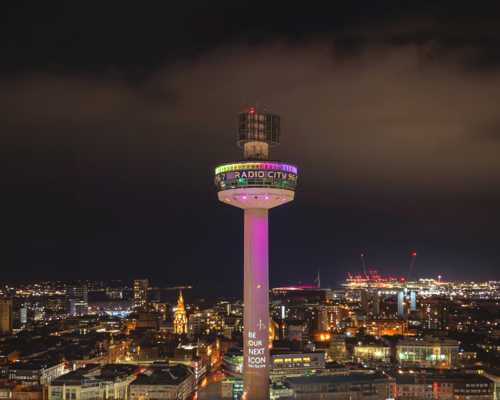
An opportunity to reimagine one of the UK’s most recognisable towers has been formally
opened by Rivington Hark, as St Johns Beacon invites operators and partners to shape its
next phase. [more...]