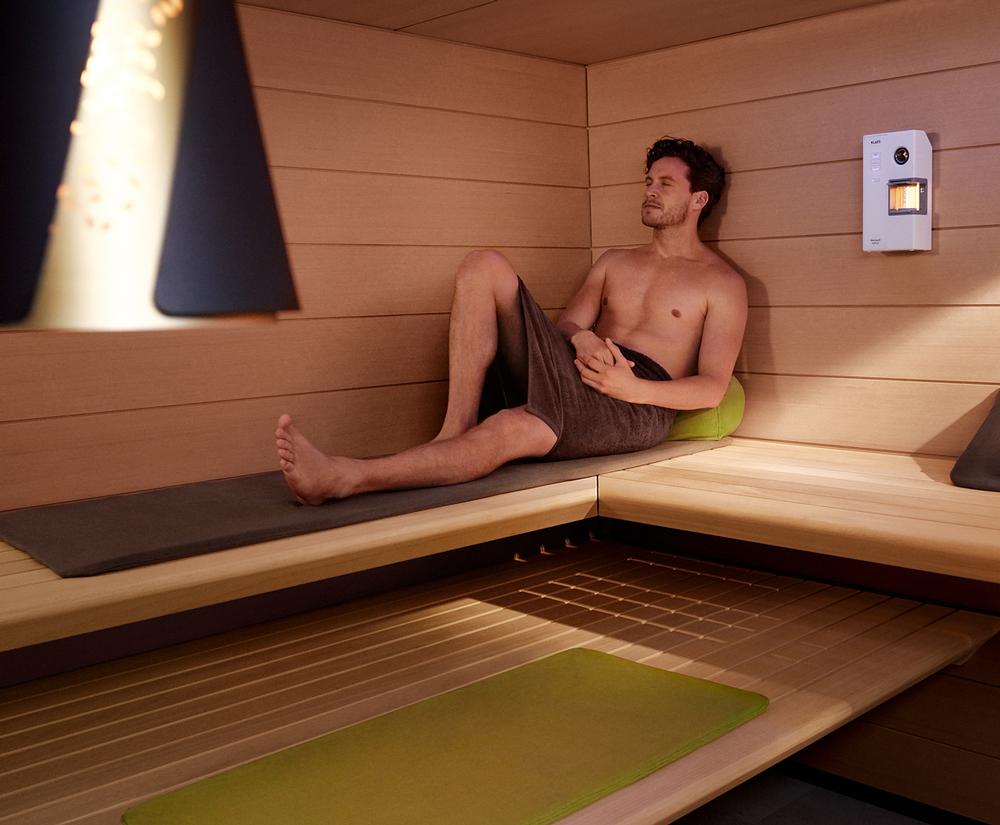
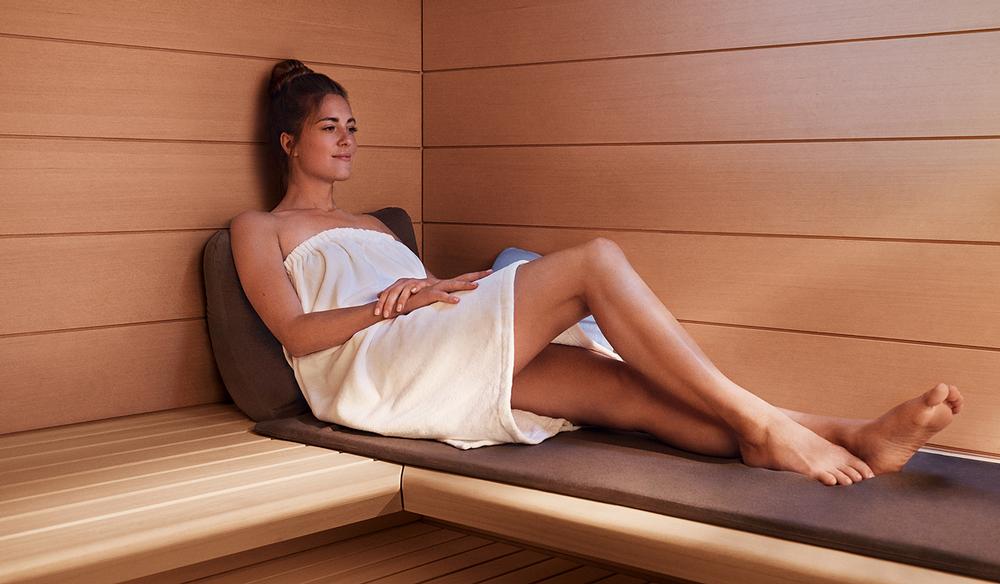
Suppliers like Klafs already know the benefits of sauna, but experts are divided on if it can be used to both prevent and treat COVID-19 / KLAFS GmbH & Co KG
With no cure for COVID-19, there’s much debate in the wellness industry about interventions which can strengthen the immune systems of those who want to take steps to avoid it, and also modalities that can potentially help support people with the virus. Sauna is one of those most widely discussed.
It’s worth noting that the initiation of global government shutdowns means many spas, thermal experiences and public bathing facilities have been closed, restricting accessibility to such therapies – but this article could provide many details to contemplate for when they do reopen. Meanwhile, in many European countries like Finland and Germany, where people have long believed in the benefits of heat, private saunas in houses are not uncommon.
Dr Marc Cohen, an integrative medicine expert; Risto Elomaa, president of the International Sauna Association (ISA); and Dr Karl-Ludwig Resch, head of the German Institute for Health Research, have all recently shared their views on saunas and coronavirus.
Cautionary tale ISA represents sauna associations, companies and enthusiasts the world over (see SB18/3) and in a recent statement, which has been reviewed by medical experts for accuracy, its message is one of caution. “Even though viruses can be quickly destroyed by the heat in most sauna rooms (65-100˚C), coughing and sneezing in close proximity to other bathers can transfer a virus from one person to another before the heat has time to react.”
Cohen, who has a background as a medical doctor and a professor of health sciences and complementary medicine concurs. He emphasises the need for medicalised protocols, with rules about social distancing and procedures adapted from existing hospital regulations, to be implemented when spas do reopen.
But can heat help protect us against coronavirus? Yes says the ISA, but only from a preventative standpoint where sauna remains an integral part of a healthy lifestyle that includes exercise, smart eating and sleeping habits combined with social interaction. Elomaa adds a warning: “If you’re sick with the coronavirus or any respiratory illness, you should refrain from using the sauna. It will not directly contribute to healing the disease and the body’s reaction to heat can put a strain on an already stressed body, which can lead to serious health issues.”
Resch thinks along similar lines. “As long as there is no drug that effectively acts directly against the virus, all therapeutic approaches are limited to supporting the body’s immune system and hoping it will somehow get to grips with the invader,” he says. “You should also take particular care if you are already experiencing symptoms of respiratory tract infection or even have a slight fever: the body may have a difficult time with a ‘healthy’ counter-regulation, especially if it has not already learned to deal positively with high temperature stimuli by taking sauna baths regularly.”
However, Cohen believes heat-stress could potentially help prevent and treat COVID-19 and is in the process of completing an academic paper collating scientific evidence from previous studies to demonstrate this. “I’m frustrated and concerned there’s no positive health information coming from the authorities on what to do once you have the virus,” he says. “It’s all focused on washing your hands and self-isolating, nothing about how to boost your immunity, clear the virus from your upper airways or about the effective use of heat, sunlight or essential oils. Instead, people who are infected are told to just ‘hunker down and wait for a vaccine’.”
How can sauna help?
Cohen explains that there’s plenty of medical evidence to show that people who use saunas regularly get less viral infections. Treating the common cold and other respiratory viruses with heat also leads to lower-incidence rates, as shown by 2017 research by SK Kunutsor at the University of Bristol, UK (see above). Although this study doesn’t target people aged 70 and over and black and ethnic minorities who have been identified as high risk and potential high risk groups for contracting coronavirus.
He also contends that humans have been using heat – such as saunas and sweat lodges – for prevention and cure, throughout history. This approach essentially uses the sauna to outsource the work of the immune system to simulate a fever, meaning less physical exhaustion for the body than a fever driven by infection. In addition, humans can tolerate high temperatures in saunas in which the virus cannot survive and at the same time heat-stress activates, heightens and stimulates the immune system, while inhibiting viral replication.
Resch says coronavirus, like the flu, first multiply in the nose, throat and upper respiratory tract – areas which may be reached effectively with external heat. “Sauna is a real secret weapon,” he says. “You should take a sauna bath as often as possible (daily!) and for as long as possible. The latter works best if the temperature is set relatively low: 60-70˚C is probably sufficient. By increasing temperature, the effect may work further into the upper respiratory tract, but possible and well-tolerated duration of exposure decreases.
“Many aspects of the current pandemic are still in the starting blocks of scientific research, but what has been scientifically proven is that taking sauna baths regularly is a highly-efficient means of training the body’s own immune system,” he adds referencing three particular studies (see p79). “This may significantly increase the chances of fending off an infection (at least if the dose of virus you have been exposed to is not too high). If you should become infected, it might be much milder and the course of the illness much shorter without life-threatening crisis.”
Cohen explains: “We need more evidence before we can be sure of the effects of heat in combating coronavirus, because that research has not yet been done, as COVID-19 is a new virus, but there’s a huge line of evolutionary and historical evidence from humans, as well as epidemiological and laboratory evidence that consistently point to the therapeutic application of heat having a positive effect in dealing with respiratory viruses.”
The belief is that inhaling warm, moist air, such as over a bowl of hot water, or dry salt inhalation can also potentially help.
Psychological benefits Experts think that because the body goes through a physiological state of hyper-arousal in a sauna, it’s important to balance this with hyper-relaxation. Furthermore, sauna can help alleviate psychological symptoms when coping with coronavirus, helping people feel more in control of symptoms and allowing time for dedicated rest.
Resch says: “A sauna bath stimulates the body, mind and soul, gives us a nice break during these chaotic times and boosts our inner metabolism.”
Cohen adds: “Around 80 per cent of people will get this virus, they may be asymptomatic or get milder symptoms, but they’re all panicking. If you’re in fight or flight mode your body is not going to be using energy on healing from coronavirus.
“I actually think there’s a huge scope for including saunas, steamrooms and hot bathing into hospitals, care homes and public facilities. I really think that when we come out of this, the health system could be much more integrated with conventional medicine and wellness practices.”
Studies of note
• Kunutsor, SK et al. Longitudinal associations of sauna bathing with inflammation and oxidative stress. 2018
• Kunutsor, SK et al. Frequent sauna bathing may reduce the risk of pneumonia in middle-aged Caucasian men. 2017
• Kukkonen-Harjula, K et al. Health effects and risks of sauna bathing. 2006
• Ernst, E et al. Regular sauna bathing and the incidence of common colds. 1990
10 ways saunas help your body overcome COVID-19
By Marc Cohen
• Saunas can help destroy viruses in the places in the body where they first lodge – the nose and throat
• They keep mucus thin and mobile, so cilia can clear the airways and prevent viral penetration
• Saunas mimic a fever, speed up metabolism and stimulate immune function while inhibiting viral replication
• Heat-stress induces mild hyperventilation which changes blood pH and gives your body an advantage in fighting infection
• Saunas release heat shock proteins that protect immune cells and increase their number and activity
• They also induce hormesis and increase your ability to tolerate and recover from heat and other physiological stresses
• Saunas flush your skin with blood and sweat which nourishes and cleans it from the inside out
• Saunas flood your internal organs with blood and lymph so clean water and herbal tonics can flush out toxic compounds
• Saunas exercise your heart, lungs and vascular system without significant production of metabolic waste products
• Essential oils with antiviral, and decongestant properties, can be delivered to your upper respiratory tract while in the sauna
Experts left to right: Dr Marc Cohen, Risto Elomaa and Dr Karl-Ludwig Resch
Read more from this issue of Attractions Management magazine
View contents of Attractions Management 2020 issue 2
Editor’s letter: Our greatest challenge
Spa and wellness businesses will reopen while COVID-19 is still circulating in the community, meaning we have to find models which work in this new reality, says Katie Barnes. So how will this change the industry?
On the menu: Pivot to digital
Which forward-thinking spas are taking their offerings online during the coronavirus pandemic?
Interview: Mary Celeste Beall
The celebrated Blackberry Farm has opened a sister property in the mountains of Tennessee. The owner tells Spa Business why wellness through nature underpins the new destination
Everyone’s talking about: COVID-19
Spa operators, wellness companies and organisations from around the world talk to Spa Business about the impact of coronavirus and what to expect down the line
Promotion: Simone Gibertoni: Clinique La Prairie
World-renowned medical spa, Clinique La Prairie, is creating a global network of
locations to support clients with their wellbeing, every day of the year, says its CEO
Research: First responders
ISPA’s COVID-19 survey offers insights into how the industry has responded to the global pandemic. Spa Business magazine examines the findings
Hotel spa: Country life: The Newt
Karen Roos, owner of the world-renowned hotel The Newt, on design, gardens and a spa housed in an old cow barn
Insights: Calls to action
Industry leaders around the world come together in a crisis to share ideas and innovations in a series of GWS Collaboration calls. Spa Business magazine reports on the highlights
Insights: Webinar wisdom
Spa Business shares its industry-relevant takeaways from the masses of webinars that are being streamed worldwide
Research: Measure for measure
Intelligent Spas reveals its latest global spa benchmarks and explores what they mean in today’s ever-changing climate
Focus on: Extreme wellness
Spa Business tries out two boundary-pushing, cold immersion retreats led by ‘The Iceman’ Wim Hof and Dr Marc Cohen
Promotion: Barr and Wray: Creating
a seamless journey
With 60 years of experience, Barr and Wray has long been known for excellence in technical design for wellness. Design director Graeme Banks explains the company also offers interior design services
Interview: Juliu Horvath
The founder of Gyrotonic and Gyrokinesis tells Spa Business why he’ll never stop adapting his famous movement modality
Promotion: ISPA publishes Reopening Toolkit
A much-needed guide by ISPA gives essential advice on business planning, standard operating procedures, marketing and communications to support spas through the coronavirus crisis
An opportunity to reimagine one of the UK’s most recognisable towers has been formally
opened by Rivington Hark, as St Johns Beacon invites operators and partners to shape its
next phase. [more...]
Suppliers like Klafs already know the benefits of sauna, but experts are divided on if it can be used to both prevent and treat COVID-19 / KLAFS GmbH & Co KG
With no cure for COVID-19, there’s much debate in the wellness industry about interventions which can strengthen the immune systems of those who want to take steps to avoid it, and also modalities that can potentially help support people with the virus. Sauna is one of those most widely discussed.
It’s worth noting that the initiation of global government shutdowns means many spas, thermal experiences and public bathing facilities have been closed, restricting accessibility to such therapies – but this article could provide many details to contemplate for when they do reopen. Meanwhile, in many European countries like Finland and Germany, where people have long believed in the benefits of heat, private saunas in houses are not uncommon.
Dr Marc Cohen, an integrative medicine expert; Risto Elomaa, president of the International Sauna Association (ISA); and Dr Karl-Ludwig Resch, head of the German Institute for Health Research, have all recently shared their views on saunas and coronavirus.
Cautionary tale ISA represents sauna associations, companies and enthusiasts the world over (see SB18/3) and in a recent statement, which has been reviewed by medical experts for accuracy, its message is one of caution. “Even though viruses can be quickly destroyed by the heat in most sauna rooms (65-100˚C), coughing and sneezing in close proximity to other bathers can transfer a virus from one person to another before the heat has time to react.”
Cohen, who has a background as a medical doctor and a professor of health sciences and complementary medicine concurs. He emphasises the need for medicalised protocols, with rules about social distancing and procedures adapted from existing hospital regulations, to be implemented when spas do reopen.
But can heat help protect us against coronavirus? Yes says the ISA, but only from a preventative standpoint where sauna remains an integral part of a healthy lifestyle that includes exercise, smart eating and sleeping habits combined with social interaction. Elomaa adds a warning: “If you’re sick with the coronavirus or any respiratory illness, you should refrain from using the sauna. It will not directly contribute to healing the disease and the body’s reaction to heat can put a strain on an already stressed body, which can lead to serious health issues.”
Resch thinks along similar lines. “As long as there is no drug that effectively acts directly against the virus, all therapeutic approaches are limited to supporting the body’s immune system and hoping it will somehow get to grips with the invader,” he says. “You should also take particular care if you are already experiencing symptoms of respiratory tract infection or even have a slight fever: the body may have a difficult time with a ‘healthy’ counter-regulation, especially if it has not already learned to deal positively with high temperature stimuli by taking sauna baths regularly.”
However, Cohen believes heat-stress could potentially help prevent and treat COVID-19 and is in the process of completing an academic paper collating scientific evidence from previous studies to demonstrate this. “I’m frustrated and concerned there’s no positive health information coming from the authorities on what to do once you have the virus,” he says. “It’s all focused on washing your hands and self-isolating, nothing about how to boost your immunity, clear the virus from your upper airways or about the effective use of heat, sunlight or essential oils. Instead, people who are infected are told to just ‘hunker down and wait for a vaccine’.”
How can sauna help?
Cohen explains that there’s plenty of medical evidence to show that people who use saunas regularly get less viral infections. Treating the common cold and other respiratory viruses with heat also leads to lower-incidence rates, as shown by 2017 research by SK Kunutsor at the University of Bristol, UK (see above). Although this study doesn’t target people aged 70 and over and black and ethnic minorities who have been identified as high risk and potential high risk groups for contracting coronavirus.
He also contends that humans have been using heat – such as saunas and sweat lodges – for prevention and cure, throughout history. This approach essentially uses the sauna to outsource the work of the immune system to simulate a fever, meaning less physical exhaustion for the body than a fever driven by infection. In addition, humans can tolerate high temperatures in saunas in which the virus cannot survive and at the same time heat-stress activates, heightens and stimulates the immune system, while inhibiting viral replication.
Resch says coronavirus, like the flu, first multiply in the nose, throat and upper respiratory tract – areas which may be reached effectively with external heat. “Sauna is a real secret weapon,” he says. “You should take a sauna bath as often as possible (daily!) and for as long as possible. The latter works best if the temperature is set relatively low: 60-70˚C is probably sufficient. By increasing temperature, the effect may work further into the upper respiratory tract, but possible and well-tolerated duration of exposure decreases.
“Many aspects of the current pandemic are still in the starting blocks of scientific research, but what has been scientifically proven is that taking sauna baths regularly is a highly-efficient means of training the body’s own immune system,” he adds referencing three particular studies (see p79). “This may significantly increase the chances of fending off an infection (at least if the dose of virus you have been exposed to is not too high). If you should become infected, it might be much milder and the course of the illness much shorter without life-threatening crisis.”
Cohen explains: “We need more evidence before we can be sure of the effects of heat in combating coronavirus, because that research has not yet been done, as COVID-19 is a new virus, but there’s a huge line of evolutionary and historical evidence from humans, as well as epidemiological and laboratory evidence that consistently point to the therapeutic application of heat having a positive effect in dealing with respiratory viruses.”
The belief is that inhaling warm, moist air, such as over a bowl of hot water, or dry salt inhalation can also potentially help.
Psychological benefits Experts think that because the body goes through a physiological state of hyper-arousal in a sauna, it’s important to balance this with hyper-relaxation. Furthermore, sauna can help alleviate psychological symptoms when coping with coronavirus, helping people feel more in control of symptoms and allowing time for dedicated rest.
Resch says: “A sauna bath stimulates the body, mind and soul, gives us a nice break during these chaotic times and boosts our inner metabolism.”
Cohen adds: “Around 80 per cent of people will get this virus, they may be asymptomatic or get milder symptoms, but they’re all panicking. If you’re in fight or flight mode your body is not going to be using energy on healing from coronavirus.
“I actually think there’s a huge scope for including saunas, steamrooms and hot bathing into hospitals, care homes and public facilities. I really think that when we come out of this, the health system could be much more integrated with conventional medicine and wellness practices.”
Studies of note
• Kunutsor, SK et al. Longitudinal associations of sauna bathing with inflammation and oxidative stress. 2018
• Kunutsor, SK et al. Frequent sauna bathing may reduce the risk of pneumonia in middle-aged Caucasian men. 2017
• Kukkonen-Harjula, K et al. Health effects and risks of sauna bathing. 2006
• Ernst, E et al. Regular sauna bathing and the incidence of common colds. 1990
10 ways saunas help your body overcome COVID-19
By Marc Cohen
• Saunas can help destroy viruses in the places in the body where they first lodge – the nose and throat
• They keep mucus thin and mobile, so cilia can clear the airways and prevent viral penetration
• Saunas mimic a fever, speed up metabolism and stimulate immune function while inhibiting viral replication
• Heat-stress induces mild hyperventilation which changes blood pH and gives your body an advantage in fighting infection
• Saunas release heat shock proteins that protect immune cells and increase their number and activity
• They also induce hormesis and increase your ability to tolerate and recover from heat and other physiological stresses
• Saunas flush your skin with blood and sweat which nourishes and cleans it from the inside out
• Saunas flood your internal organs with blood and lymph so clean water and herbal tonics can flush out toxic compounds
• Saunas exercise your heart, lungs and vascular system without significant production of metabolic waste products
• Essential oils with antiviral, and decongestant properties, can be delivered to your upper respiratory tract while in the sauna
Experts left to right: Dr Marc Cohen, Risto Elomaa and Dr Karl-Ludwig Resch
Read more from this issue of Attractions Management magazine
View contents of Attractions Management 2020 issue 2
Editor’s letter: Our greatest challenge
Spa and wellness businesses will reopen while COVID-19 is still circulating in the community, meaning we have to find models which work in this new reality, says Katie Barnes. So how will this change the industry?
On the menu: Pivot to digital
Which forward-thinking spas are taking their offerings online during the coronavirus pandemic?
Interview: Mary Celeste Beall
The celebrated Blackberry Farm has opened a sister property in the mountains of Tennessee. The owner tells Spa Business why wellness through nature underpins the new destination
Everyone’s talking about: COVID-19
Spa operators, wellness companies and organisations from around the world talk to Spa Business about the impact of coronavirus and what to expect down the line
Promotion: Simone Gibertoni: Clinique La Prairie
World-renowned medical spa, Clinique La Prairie, is creating a global network of
locations to support clients with their wellbeing, every day of the year, says its CEO
Research: First responders
ISPA’s COVID-19 survey offers insights into how the industry has responded to the global pandemic. Spa Business magazine examines the findings
Hotel spa: Country life: The Newt
Karen Roos, owner of the world-renowned hotel The Newt, on design, gardens and a spa housed in an old cow barn
Insights: Calls to action
Industry leaders around the world come together in a crisis to share ideas and innovations in a series of GWS Collaboration calls. Spa Business magazine reports on the highlights
Insights: Webinar wisdom
Spa Business shares its industry-relevant takeaways from the masses of webinars that are being streamed worldwide
Research: Measure for measure
Intelligent Spas reveals its latest global spa benchmarks and explores what they mean in today’s ever-changing climate
Focus on: Extreme wellness
Spa Business tries out two boundary-pushing, cold immersion retreats led by ‘The Iceman’ Wim Hof and Dr Marc Cohen
Promotion: Barr and Wray: Creating
a seamless journey
With 60 years of experience, Barr and Wray has long been known for excellence in technical design for wellness. Design director Graeme Banks explains the company also offers interior design services
Interview: Juliu Horvath
The founder of Gyrotonic and Gyrokinesis tells Spa Business why he’ll never stop adapting his famous movement modality
Promotion: ISPA publishes Reopening Toolkit
A much-needed guide by ISPA gives essential advice on business planning, standard operating procedures, marketing and communications to support spas through the coronavirus crisis
A new immersive attraction designed to transport visitors into the final hours of ancient Pompeii
is preparing to open near the world-famous archaeological site in southern Italy.
Experience design company, BRC Imagination Arts, has completed a transition that sees founder
Bob Rogers pass ownership of the business to four long-serving senior executives, while
remaining actively involved with the company.
Movie Park Germany has opened a new Paramount Pictures-themed attraction as part of its 30th
anniversary celebrations, using immersive storytelling and adaptive reuse to reinforce the park’s
longstanding “Hollywood in Germany” positioning.
Therme Manchester’s 28-acre development, which will include interconnected glass pavilions
that measure 65,000sq m, will be the largest bathing and wellbeing attraction in the world once
complete, according to prof David Russell, CEO of Therme UK.
Efteling has opened Hooghmoed, a new family drop tower designed to broaden the appeal of its
recently launched Sirene Island themed area and introduce younger visitors to thrill attractions.
A proposed Puy du Fou development near Bicester and Universal Destinations and Experiences’
planned resort in Bedford are emerging as part of a wider transformation of the Oxford–
Cambridge Growth Corridor into a major centre for UK leisure and tourism inv
Shedd Aquarium has opened the Immersion Theater developed in partnership with SimEx-
Iwerks, as part of a wider strategy to enhance the guest experience and create additional
revenue opportunities.
The UK government has announced a temporary reduction in VAT on visitor attractions and
children’s meals as part of a summer cost-of-living support package designed to stimulate the
visitor economy and encourage family days out.
As designer Yinka Ilori prepares for his first solo gallery show in London, he speaks exclusively
to CLADmag about his mission to spread joy, the power of play, and his bold approach to using
colour (including the colours you won’t see in his work).
The government of Thailand is exploring plans for a THB300bn (£6.3bn, US$8.3bn)
entertainment complex in the country’s Eastern Economic Corridor (EEC), with officials
proposing a large-scale theme park and sports destination as part of a broader tourism and
economic development strategy.
An opportunity to reimagine one of the UK’s most recognisable towers has been formally
opened by Rivington Hark, as St Johns Beacon invites operators and partners to shape its
next phase. [more...]