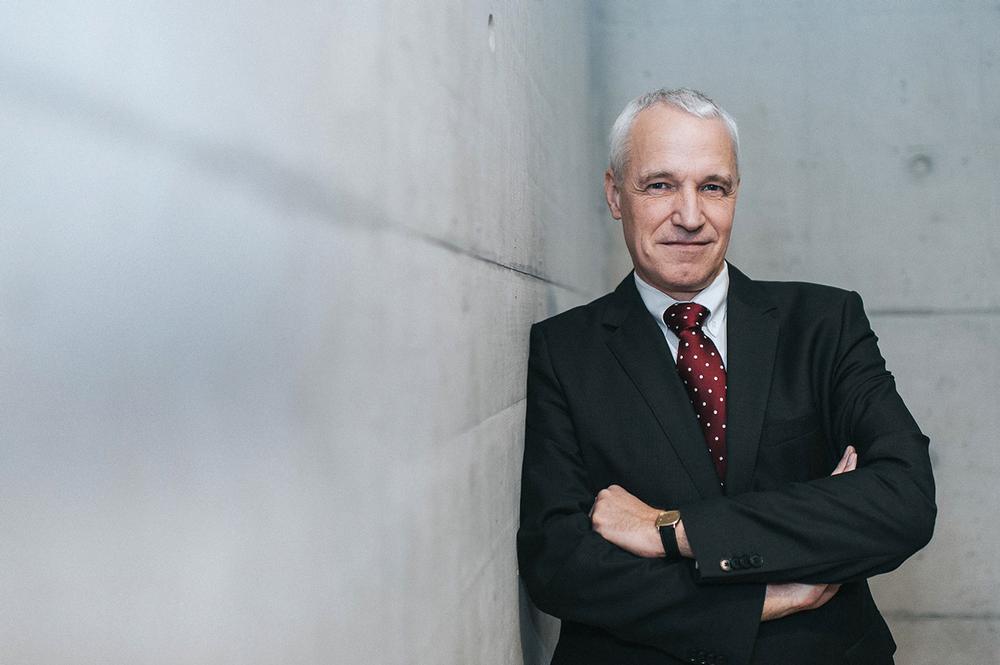
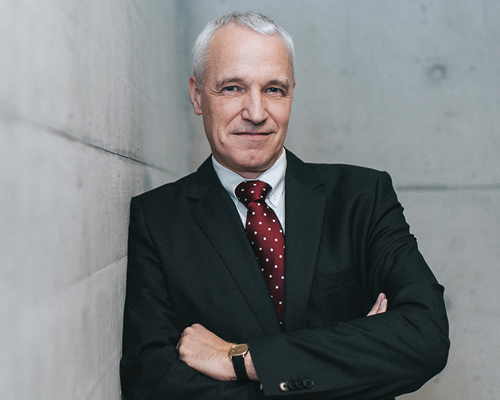
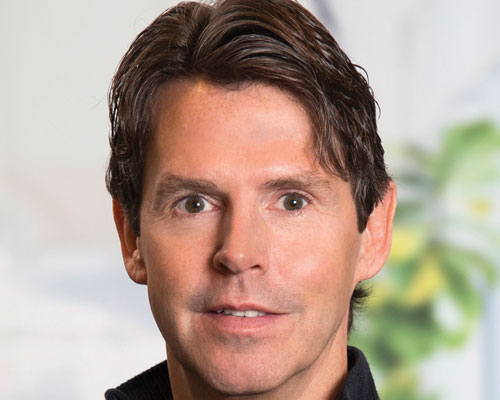
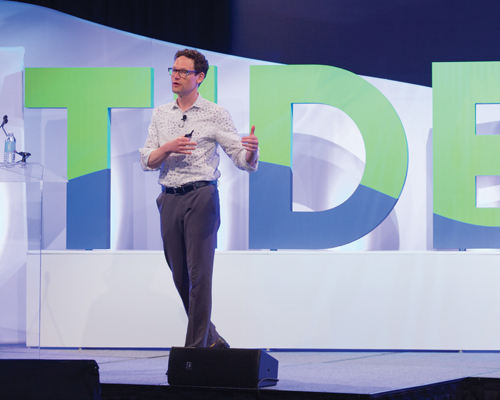
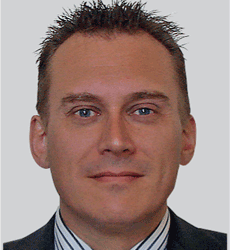
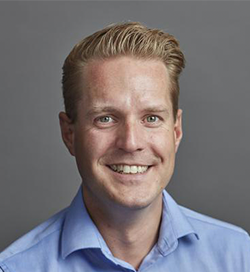
Ecsite’s new president, Herbert Münder, has said a pressing challenge for the science engagement community is the rise of the ‘post-truth’ era.
“For Ecsite members, there is one big challenge, and that’s what we’re calling the post-truth time,” Münder tells Attractions Management. “As a group of science centres and museums and science communicators, we have to think about how we can address this in an adequate and efficient way.”
One way forward posited by Münder is to talk more about the process of science. He says there are times when scientists have different interpretations concerning scientific observations, which can be confusing to people.
“But of course, in scientific research, there’s a need to have different views to be able to cross check, to challenge, to develop the thesis and antithesis, to determine repeatability – for example, would the same experiment in Australia and in Europe come back with same outcomes?” he says.
“These features of the scientific process must be more visible to the public and, I believe, we as science centres face a challenge to get these ideas across. This will help the public to think more critically about things they hear, read or see on TV, and they can create their own opinion.”
“We have to come up with a strategy to address this challenge. I feel science centres and museums will become even more important in the future because of this trend we observe now. And we have a responsibility to address it.
“Science centres make a huge impact already, but we are facing a new situation. To make an impact in the future we need to rethink our position and the things we do.”
Münder is general manager at Germany’s Universum Bremen science centre and is also past president of Eusea, the European Science Events Association, and current president of MINTaktiv, Germany’s science museum network.
He says Universum is not just a place for exhibitions, but also acts as a communication platform between different partners, such as businesses, researchers, NGOs, and other groups.
He says: “The curator of this platform is the science centre, which is more or less neutral. We bring together different views and citizens have a chance to build their own opinion about it and have a voice, so we are a platform for the voice of citizens.”
Münder adds that another point of focus during his presidency will be ensuring the science communication community has a voice at discussions for the next EU Framework Programme for Research and Innovation, with the current framework, Horizon 2020, drawing to a close in 2020.
“I believe strongly that science communication and science engagement is important for the future period of the framework, so my personal position is that we have to talk to the stakeholders and decision makers to show them it is necessary the sector is again visible in the programme.”
Read more from this issue of Attractions Management magazine
View contents of Attractions Management 2017 issue 3
Interview: Wolfgang Kiessling
We talked to Wolfgang Kiessling, who set
up a small parrot park on Tenerife in the
1970s. Today, Loro Parque and Siam Park
are some of Europe’s top attractions
Promotional feature: Sysco Productions
Sysco Productions is a world-class experience delivery
company, working for global clients in the museum and
heritage, exhibition, and sports and leisure industries
Ecsite’s new president, Herbert Münder, has said a pressing challenge for the science engagement community is the rise of the ‘post-truth’ era.
“For Ecsite members, there is one big challenge, and that’s what we’re calling the post-truth time,” Münder tells Attractions Management. “As a group of science centres and museums and science communicators, we have to think about how we can address this in an adequate and efficient way.”
One way forward posited by Münder is to talk more about the process of science. He says there are times when scientists have different interpretations concerning scientific observations, which can be confusing to people.
“But of course, in scientific research, there’s a need to have different views to be able to cross check, to challenge, to develop the thesis and antithesis, to determine repeatability – for example, would the same experiment in Australia and in Europe come back with same outcomes?” he says.
“These features of the scientific process must be more visible to the public and, I believe, we as science centres face a challenge to get these ideas across. This will help the public to think more critically about things they hear, read or see on TV, and they can create their own opinion.”
“We have to come up with a strategy to address this challenge. I feel science centres and museums will become even more important in the future because of this trend we observe now. And we have a responsibility to address it.
“Science centres make a huge impact already, but we are facing a new situation. To make an impact in the future we need to rethink our position and the things we do.”
Münder is general manager at Germany’s Universum Bremen science centre and is also past president of Eusea, the European Science Events Association, and current president of MINTaktiv, Germany’s science museum network.
He says Universum is not just a place for exhibitions, but also acts as a communication platform between different partners, such as businesses, researchers, NGOs, and other groups.
He says: “The curator of this platform is the science centre, which is more or less neutral. We bring together different views and citizens have a chance to build their own opinion about it and have a voice, so we are a platform for the voice of citizens.”
Münder adds that another point of focus during his presidency will be ensuring the science communication community has a voice at discussions for the next EU Framework Programme for Research and Innovation, with the current framework, Horizon 2020, drawing to a close in 2020.
“I believe strongly that science communication and science engagement is important for the future period of the framework, so my personal position is that we have to talk to the stakeholders and decision makers to show them it is necessary the sector is again visible in the programme.”
Read more from this issue of Attractions Management magazine
View contents of Attractions Management 2017 issue 3
Interview: Wolfgang Kiessling
We talked to Wolfgang Kiessling, who set
up a small parrot park on Tenerife in the
1970s. Today, Loro Parque and Siam Park
are some of Europe’s top attractions
Promotional feature: Sysco Productions
Sysco Productions is a world-class experience delivery
company, working for global clients in the museum and
heritage, exhibition, and sports and leisure industries
Expo 2030 Riyadh is being planned as a permanent visitor destination, with organisers
confirming the six-million-square-metre site will become a Global Village after the event closes.
The owner of one of Australia's best-known waterparks has acquired a major competitor,
creating a new attractions business spanning two of the country's largest visitor destinations.
The Toverland theme park in the Netherlands has announced a €98m expansion programme
that will add a resort, new attractions and staff facilities as it pursues plans to become a multi-
day destination.
Hotel de France, located on the British Isle of Jersey, has created a wellness retreat package
that includes a hot yoga session that will take place in Jersey Zoo’s butterfly sanctuary.
A new immersive attraction designed to transport visitors into the final hours of ancient Pompeii
is preparing to open near the world-famous archaeological site in southern Italy.
Experience design company, BRC Imagination Arts, has completed a transition that sees founder
Bob Rogers pass ownership of the business to four long-serving senior executives, while
remaining actively involved with the company.
Movie Park Germany has opened a new Paramount Pictures-themed attraction as part of its 30th
anniversary celebrations, using immersive storytelling and adaptive reuse to reinforce the park’s
longstanding “Hollywood in Germany” positioning.
Therme Manchester’s 28-acre development, which will include interconnected glass pavilions
that measure 65,000sq m, will be the largest bathing and wellbeing attraction in the world once
complete, according to prof David Russell, CEO of Therme UK.
Efteling has opened Hooghmoed, a new family drop tower designed to broaden the appeal of its
recently launched Sirene Island themed area and introduce younger visitors to thrill attractions.
A proposed Puy du Fou development near Bicester and Universal Destinations and Experiences’
planned resort in Bedford are emerging as part of a wider transformation of the Oxford–
Cambridge Growth Corridor into a major centre for UK leisure and tourism inv
+ More news
COMPANY PROFILES
Taylor Made Designs Founded in 1993, Taylor Made
Designs supply corporate clothing
and brand-enhancing merchandise
to [more...]
Holovis Holovis is a privately owned company
established in 2004 by CEO Stuart
Hetherington. [more...]
IAAPA EMEA IAAPA Expo Europe was established in 2006 and has grown to the largest international conference and [more...]
Clip 'n Climb Clip ‘n Climb currently offers facility owners and
investors more than 40 colourful and unique
Cha [more...]