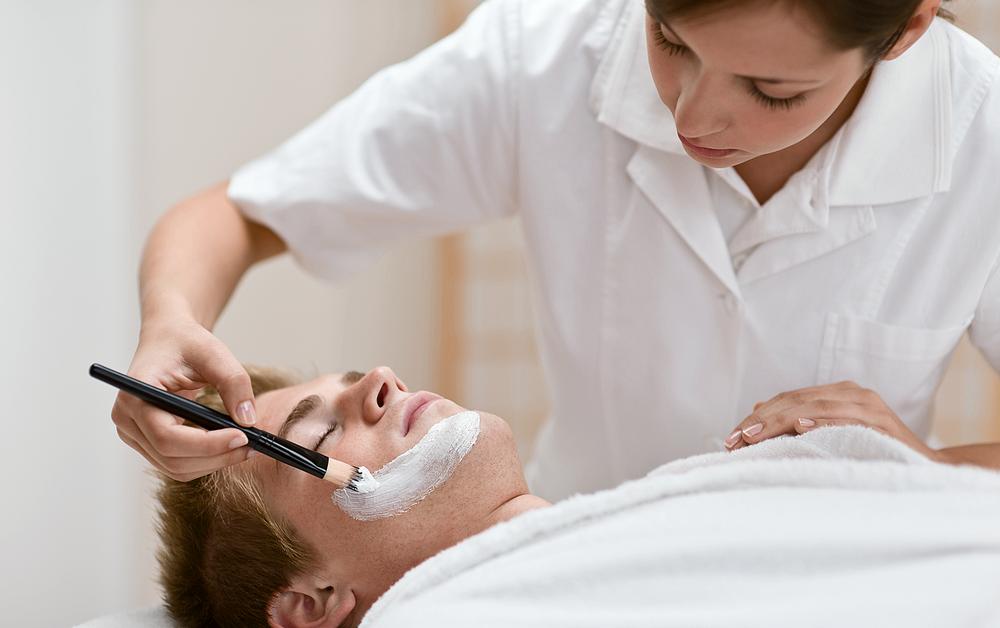
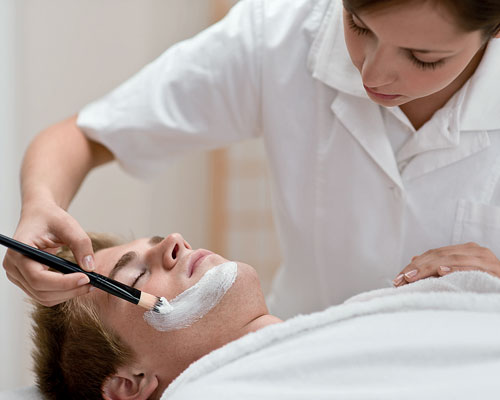
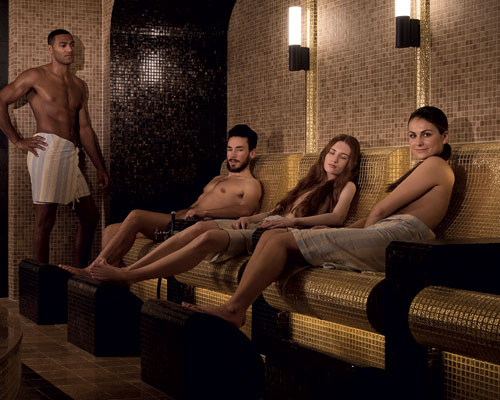
Male millennials are experimenting beyond massage, trying out facials and manicures / shutterstock/CandyBox Images
The perceptions and preferences of millennials – those born between 1980 and 1997 – was the focus of this year’s Consumer Snapshot Initiative by the International Spa Association (ISPA) and PricewaterhouseCoopers (PwC), results of which were released in September. And out of the 1,000-plus 17- to 35-year-olds who responded to the survey, 56 per cent reported having visited a spa in the last 12 months, compared to 44 per cent who had not.
This is the first time in the five-year history of ISPA’s consumer surveys that spa-goers have outnumbered non-spa-goers – evidence that young people have become powerful players in the spa market. “Millennials will be the core spa-going generation for years to come,” notes Russell Donaldson, senior associate of research at PwC.
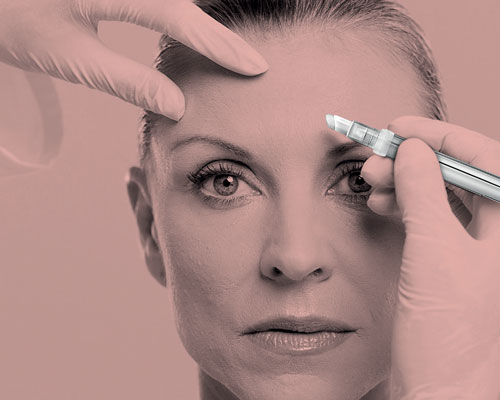
Perhaps most notably, 46 per cent of the male millennials surveyed are spa-goers. And men are increasingly exploring treatments outside of massage; 52 per cent claim to have had a manicure or pedicure, and over half – 59 per cent – have had a facial at a spa. That said, 24 per cent of the men who did go to a spa said they were put off from visiting more often because they were either not comfortable or familiar with the spa environment or etiquette, suggesting the industry would do well to address this.
Not surprisingly, the majority of millennial spa-goers – 64 per cent – are aged 25-35, with just over one in three aged 17-25. However, significantly more millennials aged over 25 think spa-going is too expensive, compared to those aged 25 or under (71 per cent compared to 53 per cent).
Most millennials are infrequent spa-goers – 83 per cent go to a spa less than five times a year – and a high amount (60 per cent) stay no longer than two hours and spend between US$50 and US$150 on treatments (61 per cent).
Money (65 per cent) and time (51 per cent) are the two top reasons for not visiting a spa more often, which is in line with previous ISPA/PwC consumer studies of other demographics.
Interestingly, millennials’ affinity with technology hasn’t spilled over into the spa industry yet. Just 32 per cent book their spa appointments online (by laptop, smartphone or tablet), compared to 40 per cent who book via telephone.
That said, men were more likely to make an appointment online (36 per cent) rather than by phone (30 per cent). In contrast, 49 per cent of women booked treatments by phone, compared to 29 per cent who booked online.
ISPA’s consumer surveys are published in addition to its annual industry study, the latest of which shows that spa revenues in the US passed the US$16bn (€14.5bn, £13.1bn) mark in 2015.
Read more from this issue of Attractions Management magazine
View contents of Attractions Management 2016 issue 4
Promotional feature: Phytomer
As a pioneer of marine skincare, Phytomer represents a story of three impassioned generations and a dedication to cultivating the purest spa ingredients from the northern French coast
An opportunity to reimagine one of the UK’s most recognisable towers has been formally
opened by Rivington Hark, as St Johns Beacon invites operators and partners to shape its
next phase. [more...]
Male millennials are experimenting beyond massage, trying out facials and manicures / shutterstock/CandyBox Images
The perceptions and preferences of millennials – those born between 1980 and 1997 – was the focus of this year’s Consumer Snapshot Initiative by the International Spa Association (ISPA) and PricewaterhouseCoopers (PwC), results of which were released in September. And out of the 1,000-plus 17- to 35-year-olds who responded to the survey, 56 per cent reported having visited a spa in the last 12 months, compared to 44 per cent who had not.
This is the first time in the five-year history of ISPA’s consumer surveys that spa-goers have outnumbered non-spa-goers – evidence that young people have become powerful players in the spa market. “Millennials will be the core spa-going generation for years to come,” notes Russell Donaldson, senior associate of research at PwC.
Perhaps most notably, 46 per cent of the male millennials surveyed are spa-goers. And men are increasingly exploring treatments outside of massage; 52 per cent claim to have had a manicure or pedicure, and over half – 59 per cent – have had a facial at a spa. That said, 24 per cent of the men who did go to a spa said they were put off from visiting more often because they were either not comfortable or familiar with the spa environment or etiquette, suggesting the industry would do well to address this.
Not surprisingly, the majority of millennial spa-goers – 64 per cent – are aged 25-35, with just over one in three aged 17-25. However, significantly more millennials aged over 25 think spa-going is too expensive, compared to those aged 25 or under (71 per cent compared to 53 per cent).
Most millennials are infrequent spa-goers – 83 per cent go to a spa less than five times a year – and a high amount (60 per cent) stay no longer than two hours and spend between US$50 and US$150 on treatments (61 per cent).
Money (65 per cent) and time (51 per cent) are the two top reasons for not visiting a spa more often, which is in line with previous ISPA/PwC consumer studies of other demographics.
Interestingly, millennials’ affinity with technology hasn’t spilled over into the spa industry yet. Just 32 per cent book their spa appointments online (by laptop, smartphone or tablet), compared to 40 per cent who book via telephone.
That said, men were more likely to make an appointment online (36 per cent) rather than by phone (30 per cent). In contrast, 49 per cent of women booked treatments by phone, compared to 29 per cent who booked online.
ISPA’s consumer surveys are published in addition to its annual industry study, the latest of which shows that spa revenues in the US passed the US$16bn (€14.5bn, £13.1bn) mark in 2015.
Read more from this issue of Attractions Management magazine
View contents of Attractions Management 2016 issue 4
Promotional feature: Phytomer
As a pioneer of marine skincare, Phytomer represents a story of three impassioned generations and a dedication to cultivating the purest spa ingredients from the northern French coast
Hotel de France, located on the British Isle of Jersey, has created a wellness retreat package
that includes a hot yoga session that will take place in Jersey Zoo’s butterfly sanctuary.
A new immersive attraction designed to transport visitors into the final hours of ancient Pompeii
is preparing to open near the world-famous archaeological site in southern Italy.
Experience design company, BRC Imagination Arts, has completed a transition that sees founder
Bob Rogers pass ownership of the business to four long-serving senior executives, while
remaining actively involved with the company.
Movie Park Germany has opened a new Paramount Pictures-themed attraction as part of its 30th
anniversary celebrations, using immersive storytelling and adaptive reuse to reinforce the park’s
longstanding “Hollywood in Germany” positioning.
Therme Manchester’s 28-acre development, which will include interconnected glass pavilions
that measure 65,000sq m, will be the largest bathing and wellbeing attraction in the world once
complete, according to prof David Russell, CEO of Therme UK.
Efteling has opened Hooghmoed, a new family drop tower designed to broaden the appeal of its
recently launched Sirene Island themed area and introduce younger visitors to thrill attractions.
A proposed Puy du Fou development near Bicester and Universal Destinations and Experiences’
planned resort in Bedford are emerging as part of a wider transformation of the Oxford–
Cambridge Growth Corridor into a major centre for UK leisure and tourism inv
Shedd Aquarium has opened the Immersion Theater developed in partnership with SimEx-
Iwerks, as part of a wider strategy to enhance the guest experience and create additional
revenue opportunities.
The UK government has announced a temporary reduction in VAT on visitor attractions and
children’s meals as part of a summer cost-of-living support package designed to stimulate the
visitor economy and encourage family days out.
As designer Yinka Ilori prepares for his first solo gallery show in London, he speaks exclusively
to CLADmag about his mission to spread joy, the power of play, and his bold approach to using
colour (including the colours you won’t see in his work).
The government of Thailand is exploring plans for a THB300bn (£6.3bn, US$8.3bn)
entertainment complex in the country’s Eastern Economic Corridor (EEC), with officials
proposing a large-scale theme park and sports destination as part of a broader tourism and
economic development strategy.
+ More news
COMPANY PROFILES
Painting With Light By combining lighting, video, scenic and architectural elements, sound and special effects we tell s [more...]
Polin Waterparks Polin was founded in Istanbul in 1976. Polin
has since grown into a leading company in
the waterpa [more...]
An opportunity to reimagine one of the UK’s most recognisable towers has been formally
opened by Rivington Hark, as St Johns Beacon invites operators and partners to shape its
next phase. [more...]