Attractions have traditionally seen their ticketing and access control operations as being about little more than gatekeeping, with money exchanged for access. But today, that touch point with the customer is an opportunity to begin a whole new and transformational relationship
By Liz Terry | Published in Attractions Management 2015 issue 4
Visitor attractions of all kinds, from museums to theme parks and zoos to planetariums, have traditionally known very little about the customers who come through their doors.
Understanding visitors’ motivations, needs, wants and responses has only been possible through the use of market research which few could afford or afford often enough, so it’s mainly been a case of build it and they will come.
The growth of membership schemes has helped some attractions to better understand who their customers are and to develop deeper and more meaningful engagement with them, but few attractions have taken this golden opportunity and made anything of it – even those with membership schemes do very little with them in terms of customer engagement – so for the most part, the attractions industry is poor at knowing and interacting with its customers/visitors.
A few years back, I argued attractions should follow the same model as the theatre and sports markets and move to advance ticketing. We had a mixed post bag on that topic, with some arguing it would spoilt the spontaneous nature of an attractions visit, or that the investment in technology wasn’t justified.
The trend towards advance ticketing is now growing and on page 94, we debate the issue and look at some examples of how the implementation of advance ticketing is helping businesses to improve their financial position through more reliable ticket sales and their marketing reach and customer engagement through better customer data.
As a customer, I’ve repeatedly been frustrated to find attractions doing a poor job of customer engagement through tech and believe we need an industry-wide push on this front.
As a basic check list, customers should be able to easily buy timed and non-timed tickets online. They should also be able to join membership schemes with valid and useful benefits and then to have a great customer journey in relation to that scheme, with regular and sincere contact from the attraction, special offers and other types of benefits.
They should also be able to buy gift certificates which meet their needs in terms of the types of packages on offer and which are delivered in a timely fashion. The technology is available – cheaply – to enable this and it’s time we grasped the nettle and implemented it.
The world is increasingly affluent: the World Bank announced this month that the number of people living in extreme poverty will fall to under 10 per cent in 2015, and as previously poor nations urbanise, there will be an increasing appetite to do things rather than have things. Attractions are in completely the right place to deliver on this need.
You can make a healthy revenue stream from gifting, from memberships and from online sales and if you’re geared up to do this, we’d love to hear about it, so we can share it as best practice with other readers. And if you’re not, then it’s really time to take action. Your customers expect and need it and it can do nothing but benefit all concerned.
Liz Terry, editor. Twitter: @elizterry
Read more from this issue of Attractions Management magazine
View contents of Attractions Management 2015 issue 4
Attractions: Gone, Not Forgotten
We find out what people thought of
Dismaland, Banksy’s twisted theme park
and contemporary art attraction – and
talk to one of the Dismal Stewards
Promotional feature: IdeAttack
Mysteries of China’s rich culture are at the heart of IDEATTACK’s new mixed-used tourism destination
Zoos & Aquariums: Turn over a New Reef
The Florida Aquarium is teaming
up with the National Aquarium of
Cuba in a bid to save and restore
the region’s precious coral reefs
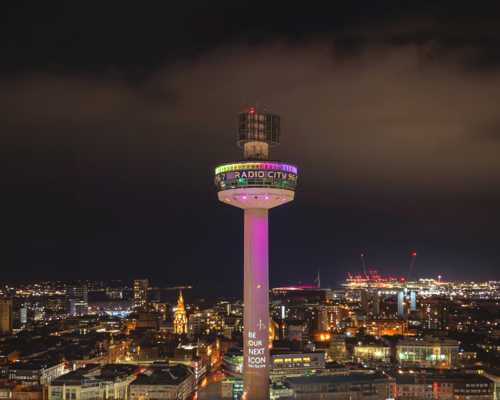
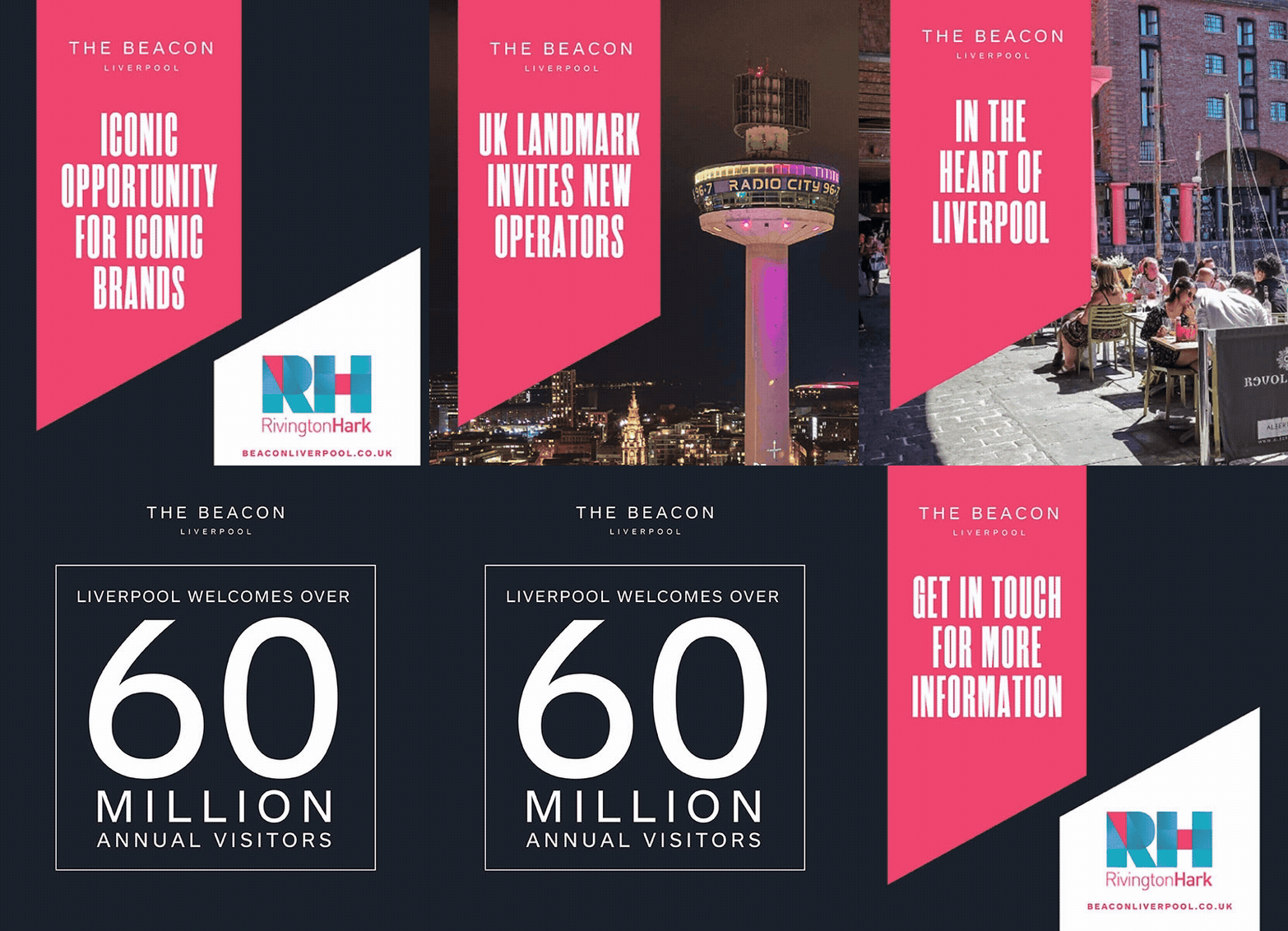
An opportunity to reimagine one of the UK’s most recognisable towers has been formally
opened by Rivington Hark, as St Johns Beacon invites operators and partners to shape its
next phase. [more...]
Attractions have traditionally seen their ticketing and access control operations as being about little more than gatekeeping, with money exchanged for access. But today, that touch point with the customer is an opportunity to begin a whole new and transformational relationship
By Liz Terry | Published in Attractions Management 2015 issue 4
Visitor attractions of all kinds, from museums to theme parks and zoos to planetariums, have traditionally known very little about the customers who come through their doors.
Understanding visitors’ motivations, needs, wants and responses has only been possible through the use of market research which few could afford or afford often enough, so it’s mainly been a case of build it and they will come.
The growth of membership schemes has helped some attractions to better understand who their customers are and to develop deeper and more meaningful engagement with them, but few attractions have taken this golden opportunity and made anything of it – even those with membership schemes do very little with them in terms of customer engagement – so for the most part, the attractions industry is poor at knowing and interacting with its customers/visitors.
A few years back, I argued attractions should follow the same model as the theatre and sports markets and move to advance ticketing. We had a mixed post bag on that topic, with some arguing it would spoilt the spontaneous nature of an attractions visit, or that the investment in technology wasn’t justified.
The trend towards advance ticketing is now growing and on page 94, we debate the issue and look at some examples of how the implementation of advance ticketing is helping businesses to improve their financial position through more reliable ticket sales and their marketing reach and customer engagement through better customer data.
As a customer, I’ve repeatedly been frustrated to find attractions doing a poor job of customer engagement through tech and believe we need an industry-wide push on this front.
As a basic check list, customers should be able to easily buy timed and non-timed tickets online. They should also be able to join membership schemes with valid and useful benefits and then to have a great customer journey in relation to that scheme, with regular and sincere contact from the attraction, special offers and other types of benefits.
They should also be able to buy gift certificates which meet their needs in terms of the types of packages on offer and which are delivered in a timely fashion. The technology is available – cheaply – to enable this and it’s time we grasped the nettle and implemented it.
The world is increasingly affluent: the World Bank announced this month that the number of people living in extreme poverty will fall to under 10 per cent in 2015, and as previously poor nations urbanise, there will be an increasing appetite to do things rather than have things. Attractions are in completely the right place to deliver on this need.
You can make a healthy revenue stream from gifting, from memberships and from online sales and if you’re geared up to do this, we’d love to hear about it, so we can share it as best practice with other readers. And if you’re not, then it’s really time to take action. Your customers expect and need it and it can do nothing but benefit all concerned.
Liz Terry, editor. Twitter: @elizterry
Read more from this issue of Attractions Management magazine
View contents of Attractions Management 2015 issue 4
Attractions: Gone, Not Forgotten
We find out what people thought of
Dismaland, Banksy’s twisted theme park
and contemporary art attraction – and
talk to one of the Dismal Stewards
Promotional feature: IdeAttack
Mysteries of China’s rich culture are at the heart of IDEATTACK’s new mixed-used tourism destination
Zoos & Aquariums: Turn over a New Reef
The Florida Aquarium is teaming
up with the National Aquarium of
Cuba in a bid to save and restore
the region’s precious coral reefs
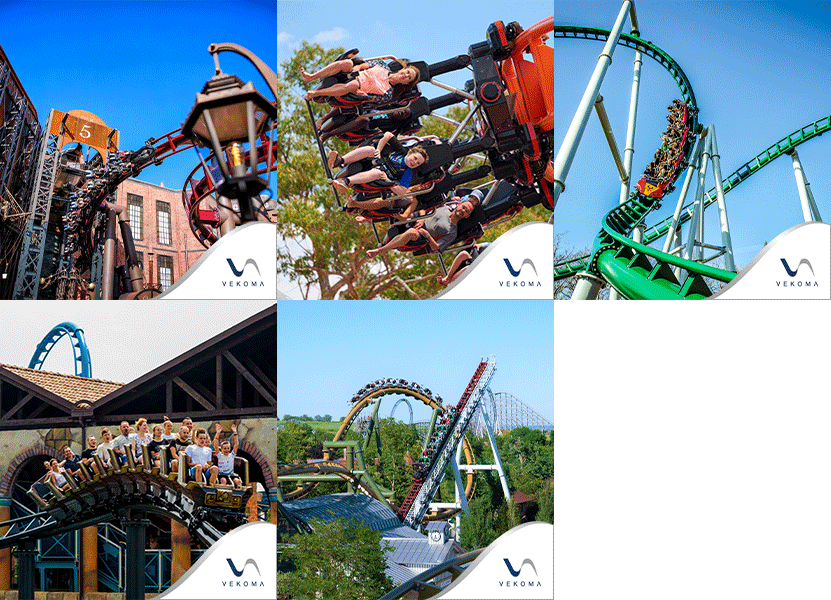
Movie Park Germany has opened a new Paramount Pictures-themed attraction as part of its 30th
anniversary celebrations, using immersive storytelling and adaptive reuse to reinforce the park’s
longstanding “Hollywood in Germany” positioning.
Therme Manchester’s 28-acre development, which will include interconnected glass pavilions
that measure 65,000sq m, will be the largest bathing and wellbeing attraction in the world once
complete, according to prof David Russell, CEO of Therme UK.
Efteling has opened Hooghmoed, a new family drop tower designed to broaden the appeal of its
recently launched Sirene Island themed area and introduce younger visitors to thrill attractions.
A proposed Puy du Fou development near Bicester and Universal Destinations and Experiences’
planned resort in Bedford are emerging as part of a wider transformation of the Oxford–
Cambridge Growth Corridor into a major centre for UK leisure and tourism inv
Shedd Aquarium has opened the Immersion Theater developed in partnership with SimEx-
Iwerks, as part of a wider strategy to enhance the guest experience and create additional
revenue opportunities.
The UK government has announced a temporary reduction in VAT on visitor attractions and
children’s meals as part of a summer cost-of-living support package designed to stimulate the
visitor economy and encourage family days out.
As designer Yinka Ilori prepares for his first solo gallery show in London, he speaks exclusively
to CLADmag about his mission to spread joy, the power of play, and his bold approach to using
colour (including the colours you won’t see in his work).
The government of Thailand is exploring plans for a THB300bn (£6.3bn, US$8.3bn)
entertainment complex in the country’s Eastern Economic Corridor (EEC), with officials
proposing a large-scale theme park and sports destination as part of a broader tourism and
economic development strategy.
Royal Caribbean has revealed its Hero of the Seas cruise ship, home to the most pools at sea
(nine), and a record-breaking 28 dining venues, as well as attractions including a waterpark
with two new family raft slides.
An opportunity to reimagine one of the UK’s most recognisable towers has been formally
opened by Rivington Hark, as St Johns Beacon invites operators and partners to shape its
next phase. [more...]