Does the industry need separate attractions for disabled people, or can all attractions effectively cater for those with disabilities? What can attractions do to make sure everyone feels included?
By Kath Hudson | Published in Attractions Management 2014 issue 4
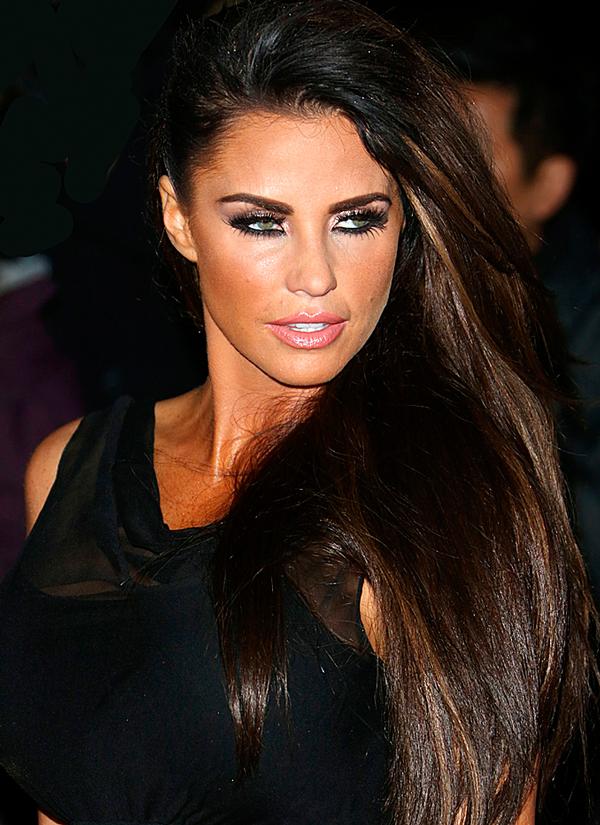
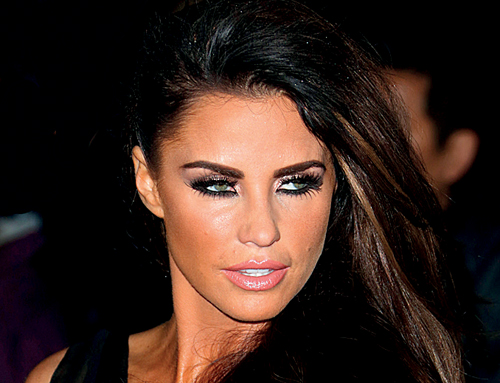
Model Katie Price has always been frank about life with her son Harvey,
who has a number of disabilities / shutterstock
Katie Price, the former glamour model Jordan, who's mum to a 12-year-old son with disabilities, has said that she'd like to create a theme park where both disabled and able-bodied children are able to have fun.
Speaking on her internet radio show earlier this year, Price claimed there’s a need for visitor attractions that are aimed at disabled children, but which able-bodied children can enjoy as well.
“When you’ve got kids who are able-bodied and can do things, there are loads of choices,” she said. “But where are the facilities for disabled kids and adults? There are no rides for wheelchairs. Sometimes there's disabled access but I wish they'd add a theme park on the side that stimulates their brain too.”
There are many reasons for improving disability access. The most important is moral – everyone with a disability has a right to quality of life and equality. Responding to the disabled market also makes sense commercially – it's a sizeable and growing sector which has considerable potential to scale up if accessibility is improved.
If you can offer a good experience, you'll discover this is also a loyal market: disabled people tend to revisit places where they know they'll have a positive experience.
In many countries, legislation makes it illegal to discriminate against disabled people – which also means they're entitled to sue if they're not treated equally – so it's vital to offer experiences which everyone can participate in and enjoy across all disabilities.
So how difficult is it for visitor attractions to make sure they're universally accessible? What changes need to be made to both operations and facilities? What are the specific needs of disabled people and what are the main steps to take to be inclusive? We ask the experts for their advice.
Read more from this issue of Attractions Management magazine
View contents of Attractions Management 2014 issue 4
Editor’s letter: Access for all
We ask whether enough is being done to ensure access for all to
attractions and what practical steps can be taken to improve things
Interview: Tim Smit
The Eden Project was groundbreaking
when it opened in 2001. Now the
attraction’s founder Tim Smit is taking
the concept to a global audience,
and he’s starting with China
Interview: Jonathan Gottschall
Literary scholar and author of The
Storytelling Animal explains why we’re
all addicted to story, and how attractions
can capitalise on our love of narrative
Heritage: Actions Speak Louder
The National Trust’s Ben Cowell
describes how landscaping can build up
to a reveal, and ways the organisation
is using actors to bring history to life
Conference Report: SATE 2014
TEA president Christine Kerr presents
the hot topics from the annual design
conference devoted to Storytelling,
Architecture, Technology, Experience
Story Centres: Tell Me A Story
The popularity of story centres shows
the youngest generation – dubbed
digital natives – are thirsty for
children’s literature and illustration
Technology: Reinventing the Nerd
Meet carnival-inspired Two Bit
Circus, created from its founders’
passion for engineering, video games
and the newest technologies
Promotional feature: BARCO
Barco offers state-of-the-art visualisation technology and
a holistic solution uniquely tailored to suit any attraction
Rides: The Ride Makers
In the first of a new series,
industry-leading manufacturers
tell us about the latest trends and
innovations in thrill coasters
Theme Parks: Kooza Came to Town
PortAventura’s general manager
on the Spanish park’s partnership
with celebrated circus troupe Cirque
du Soleil and its Kooza show
Planetariums: Tom Falvey
A new planetarium, capable of live
streaming to 14,000 schools, opens
as a new addition to the South
Carolina State Museum in the US
Show Preview: IAAPA EXPO
IAAPA returns to the Orange County Convention Center in Orlando,
Florida, from 18-21 November, with more than 1,000 exhibitors
and an expected 27,000 attendees
Multimedia: Art Project
State-of-the-art projectors and
world-class artists combine to
create inspiring installations
Tracey ProudlockFounderProudlock Associates, Disability and Inclusive Design Consultants
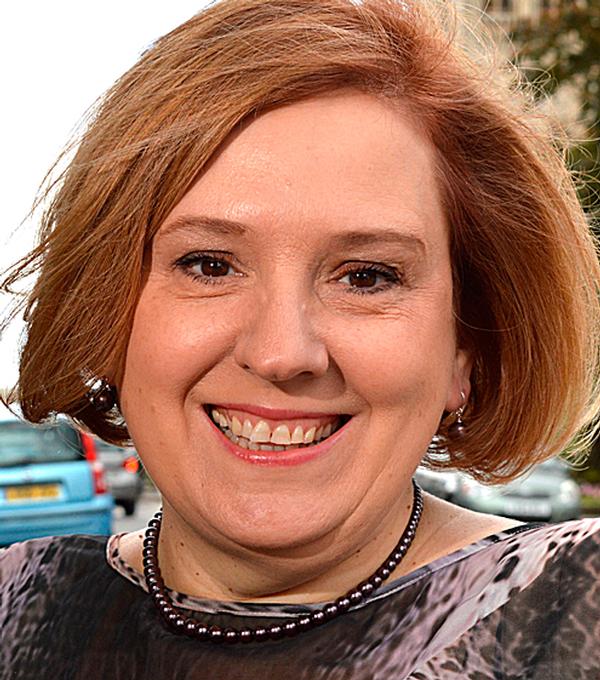
Tracey Proudlock
Children need to share experiences and have fun together and I think it’s more important for existing attractions to focus on being more inclusive, rather than focusing on building new attractions aimed exclusively at disabled people.
Being able to go on rides and play with other children is an essential part of growing up. Visitor attractions should aim to include rides which offer lift access, equipment which gives space for wheelchair users and stimulating activities which are based on what you feel when you take part, rather than on what you do. These are all important to enable and allow social interaction and to foster play relationships.
Site layout is important too. Visitor attractions need to have appropriate seating, waiting areas and queue systems. Allowing seats to be removed to provide access for a wheelchair – or space for an assistance dog – could greatly improve things for everyone involved: carers, support workers and the child's family and friends.
In order to become more inclusive, I suggest visitor attractions carry out an access audit and perhaps engage an access consultant to help inform a plan to remove barriers. In the UK, for example, the National Register of Access Consultants can help.
Staff should be trained in disability awareness and be confident to offer help to those who need it. Attractions should also get feedback from disabled customers about their experiences and talk to suppliers about new inclusive play equipment options.
proudlockassociates.com
@TraceyProudlock
Gordon HartmanOwnerMorgan’s Wonderland theme park, San Antonio, Texas
An ultra-accessible family-oriented fun park was the vision behind Morgan's Wonderland
I 'd love to talk to Katie Price about developing another theme park. Morgan’s Wonderland, which we opened in 2010 and was inspired by my wonderful daughter Morgan, was designed for people with special needs, but we also made sure it would be a park for everyone. Many theme parks require people in wheelchairs to sit and watch everyone else having fun, whereas at our theme park everyone can do everything.
We worked with Chance Rides to develop rides which people can go onto in wheelchairs and these are now beginning to be incorporated at other theme parks.
But, it’s not just about the rides, it’s about the culture of inclusion which we've created.
Morgan’s Wonderland looks like any other park, but there are subtle differences: we don’t have fluorescent lights or latex, for example. That's because fluorescent lights can be overstimulating for children with autism, and many children with special needs have an increased propensity for allergies – latex is one. Children with spina bifida in particular can have severe allergies to latex that can be life threatening. We also limit the number of visitors because if the park gets too crowded and loud it can also become overstimulating.
The park has developed beyond what we set out to do. We thought we'd be lucky to get 50,000 visitors a year but, without advertising, we’re getting over 100,000. Visitors have travelled here from 50 US states and 49 countries.
We'll be extending the park with an ultra-accessible waterpark in 2016. We're just finalising the design phase and we'll start construction within six months. We want to take this concept elsewhere. Of 6.5 billion people in the world, 1 billion have special needs.
Being accessible means much more than building ramps. It’s about developing the environment and culture of inclusion. Inclusion is so important to people with special needs – it increases their self-esteem. Then they try harder to participate, which leads them to do more and is a major plus in their lives.
morganswonderland.com
@MorgansWndrlnd
Being accessible means much more than building ramps. It’s about developing the environment and culture of inclusion. Inclusion is so important to people with special needs – it increases their self esteem
Kiki MacDonaldCo-founder Euan’s Guide, Edinburgh
Kiki MacDonald
Disabled people and their families generally want to do the same and be treated the same as everyone else. They make up a huge section of society, but at the moment only 20 per cent take a holiday. This could be much higher if they felt confident about venues’ accessibility.
There's a lot of fear around accessibility. Many venues assume it’s too costly or fear negative feedback. But small, simple improvements can make a huge difference, for example, hanging a door to open out rather than in, or having better signage.
Talking to disabled people and taking on their feedback is an obvious place to start.
Publicising information about a venue's accessibility is a good idea – which areas are accessible, and where the accessible toilets and disabled parking are located.
While disabled toilets are required by law, the reality is that a number of venues and attractions don't provide them. Toilets can make or break a visit for a disabled guest.
Some theme parks in the US are introducing rides where you don’t need to transfer from a wheelchair to go on them, while the Eureka! Children’s Museum in the UK runs clubs aimed at disabled and non-disabled children, and offers a helper service to make families’ visits easier.
Chessington World of Adventures – also in the UK – has introduced a hi-tech toilet, which has space for two carers, a changing table and a hoist. Hopefully more attractions will follow this example.
Having staff provide a warm welcome and give details about navigating the attraction, such as how to get around the site or where to find the toilets, is hugely helpful. Many sports events do this well too, by employing Access Buddies to assist disabled visitors.
euansguide.com @EuansGuide
Disabled people and their families make up a huge section of society, but at the moment only 20 per cent take a holiday. This could be much higher if they felt confident about venues’ accessibility
Children's museum Eureka! offers free admission to essential carers, free holiday clubs for disabled children and a free "Extra Pair of Hands" trained guide service. A Changing Places washroom will open soon
Carrie-Ann LightlyInformation service manageTourism for All
Carrie-Ann Lightly
One of the main things attractions can do to be more inclusive is to adopt a blanket policy financial concessions for disabled visitors and their carers.
Good accessibility, disabled toilets and having mobility equipment on site for guests to borrow is also important. Theme parks can be big and exhausting places, so even some who don’t usually rely on a mobility aid might need it for a day at a theme park.
There should also be some specific experiences aimed at disabled people: being able to take wheelchairs onto rides would be helpful for those who struggle to transfer.
Providing an access guide which can either be posted or downloaded from the website is always hugely helpful.
Giving staff disability awareness training is also important: if I go to a place where the access isn’t easy but the staff go out of their way to help me, then I'm more likely to go back.
Some visitor attractions invest in accessibility and then don’t promote it. In the UK, if businesses become members of the Tourism for All scheme, we help promote them to disabled customers.
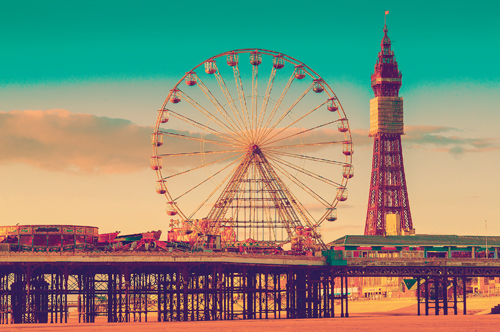
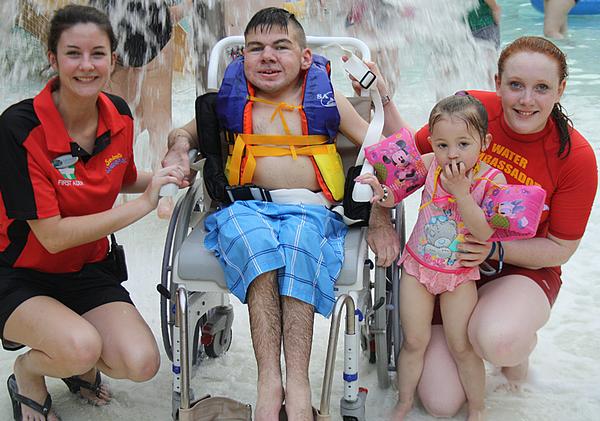
Finally, think of ways you can take the stress out of the day. Sandcastle Waterpark in Blackpool, UK, which has a Gold Award for accessibility [from UK tourism organisation Visit England], employs water ambassadors to provide one-on-one support. This means a family of mixed abilities can leave their disabled child with a member of staff while they take other children to other areas. There are places for wheelchairs and the pool is easily accessible. Evening sessions for autistic children are offered, with lights dimmed and music turned off, making it less stimulating and crowded. These are things we'd like to see offered more broadly across the industry.
tourismforall.org.uk
@tourismforalluk
Currently, some visitor attractions invest in accessibility but then don’t promote it. If accessible businesses become a member of Tourism for All, we can help to promote them to disabled customers
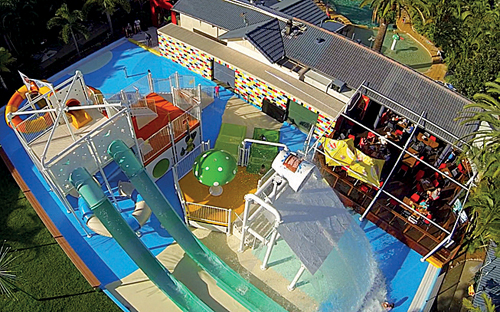
Sandcastle Waterpark has been praised for being highly accessible and offering activities and support
COMPANY PROFILES
Polin Waterparks
Polin was founded in Istanbul in 1976. Polin
has since grown into a leading company in
the waterpa [more...]
TechnoAlpin Indoor
TechnoAlpin is the world leader for snowmaking systems. With the Indoor snow division, TechnoAlpin c [more...]
IDEATTACK
IDEATTACK is a full-service planning and
design company with headquarters in
Los Angeles. [more...]
Alterface
Alterface’s Creative Division team is
seasoned in concept and ride development,
as well as storyte [more...]
Does the industry need separate attractions for disabled people, or can all attractions effectively cater for those with disabilities? What can attractions do to make sure everyone feels included?
By Kath Hudson | Published in Attractions Management 2014 issue 4
Model Katie Price has always been frank about life with her son Harvey,
who has a number of disabilities / shutterstock
Katie Price, the former glamour model Jordan, who's mum to a 12-year-old son with disabilities, has said that she'd like to create a theme park where both disabled and able-bodied children are able to have fun.
Speaking on her internet radio show earlier this year, Price claimed there’s a need for visitor attractions that are aimed at disabled children, but which able-bodied children can enjoy as well.
“When you’ve got kids who are able-bodied and can do things, there are loads of choices,” she said. “But where are the facilities for disabled kids and adults? There are no rides for wheelchairs. Sometimes there's disabled access but I wish they'd add a theme park on the side that stimulates their brain too.”
There are many reasons for improving disability access. The most important is moral – everyone with a disability has a right to quality of life and equality. Responding to the disabled market also makes sense commercially – it's a sizeable and growing sector which has considerable potential to scale up if accessibility is improved.
If you can offer a good experience, you'll discover this is also a loyal market: disabled people tend to revisit places where they know they'll have a positive experience.
In many countries, legislation makes it illegal to discriminate against disabled people – which also means they're entitled to sue if they're not treated equally – so it's vital to offer experiences which everyone can participate in and enjoy across all disabilities.
So how difficult is it for visitor attractions to make sure they're universally accessible? What changes need to be made to both operations and facilities? What are the specific needs of disabled people and what are the main steps to take to be inclusive? We ask the experts for their advice.
Read more from this issue of Attractions Management magazine
View contents of Attractions Management 2014 issue 4
Editor’s letter: Access for all
We ask whether enough is being done to ensure access for all to
attractions and what practical steps can be taken to improve things
Interview: Tim Smit
The Eden Project was groundbreaking
when it opened in 2001. Now the
attraction’s founder Tim Smit is taking
the concept to a global audience,
and he’s starting with China
Interview: Jonathan Gottschall
Literary scholar and author of The
Storytelling Animal explains why we’re
all addicted to story, and how attractions
can capitalise on our love of narrative
Heritage: Actions Speak Louder
The National Trust’s Ben Cowell
describes how landscaping can build up
to a reveal, and ways the organisation
is using actors to bring history to life
Conference Report: SATE 2014
TEA president Christine Kerr presents
the hot topics from the annual design
conference devoted to Storytelling,
Architecture, Technology, Experience
Story Centres: Tell Me A Story
The popularity of story centres shows
the youngest generation – dubbed
digital natives – are thirsty for
children’s literature and illustration
Technology: Reinventing the Nerd
Meet carnival-inspired Two Bit
Circus, created from its founders’
passion for engineering, video games
and the newest technologies
Promotional feature: BARCO
Barco offers state-of-the-art visualisation technology and
a holistic solution uniquely tailored to suit any attraction
Rides: The Ride Makers
In the first of a new series,
industry-leading manufacturers
tell us about the latest trends and
innovations in thrill coasters
Theme Parks: Kooza Came to Town
PortAventura’s general manager
on the Spanish park’s partnership
with celebrated circus troupe Cirque
du Soleil and its Kooza show
Planetariums: Tom Falvey
A new planetarium, capable of live
streaming to 14,000 schools, opens
as a new addition to the South
Carolina State Museum in the US
Show Preview: IAAPA EXPO
IAAPA returns to the Orange County Convention Center in Orlando,
Florida, from 18-21 November, with more than 1,000 exhibitors
and an expected 27,000 attendees
Multimedia: Art Project
State-of-the-art projectors and
world-class artists combine to
create inspiring installations
Tracey ProudlockFounderProudlock Associates, Disability and Inclusive Design Consultants
Tracey Proudlock
Children need to share experiences and have fun together and I think it’s more important for existing attractions to focus on being more inclusive, rather than focusing on building new attractions aimed exclusively at disabled people.
Being able to go on rides and play with other children is an essential part of growing up. Visitor attractions should aim to include rides which offer lift access, equipment which gives space for wheelchair users and stimulating activities which are based on what you feel when you take part, rather than on what you do. These are all important to enable and allow social interaction and to foster play relationships.
Site layout is important too. Visitor attractions need to have appropriate seating, waiting areas and queue systems. Allowing seats to be removed to provide access for a wheelchair – or space for an assistance dog – could greatly improve things for everyone involved: carers, support workers and the child's family and friends.
In order to become more inclusive, I suggest visitor attractions carry out an access audit and perhaps engage an access consultant to help inform a plan to remove barriers. In the UK, for example, the National Register of Access Consultants can help.
Staff should be trained in disability awareness and be confident to offer help to those who need it. Attractions should also get feedback from disabled customers about their experiences and talk to suppliers about new inclusive play equipment options.
proudlockassociates.com
@TraceyProudlock
Gordon HartmanOwnerMorgan’s Wonderland theme park, San Antonio, Texas
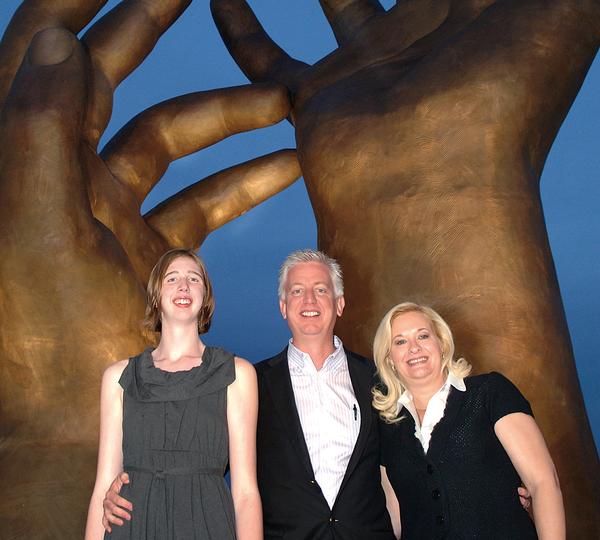
An ultra-accessible family-oriented fun park was the vision behind Morgan's Wonderland
I 'd love to talk to Katie Price about developing another theme park. Morgan’s Wonderland, which we opened in 2010 and was inspired by my wonderful daughter Morgan, was designed for people with special needs, but we also made sure it would be a park for everyone. Many theme parks require people in wheelchairs to sit and watch everyone else having fun, whereas at our theme park everyone can do everything.
We worked with Chance Rides to develop rides which people can go onto in wheelchairs and these are now beginning to be incorporated at other theme parks.
But, it’s not just about the rides, it’s about the culture of inclusion which we've created.
Morgan’s Wonderland looks like any other park, but there are subtle differences: we don’t have fluorescent lights or latex, for example. That's because fluorescent lights can be overstimulating for children with autism, and many children with special needs have an increased propensity for allergies – latex is one. Children with spina bifida in particular can have severe allergies to latex that can be life threatening. We also limit the number of visitors because if the park gets too crowded and loud it can also become overstimulating.
The park has developed beyond what we set out to do. We thought we'd be lucky to get 50,000 visitors a year but, without advertising, we’re getting over 100,000. Visitors have travelled here from 50 US states and 49 countries.
We'll be extending the park with an ultra-accessible waterpark in 2016. We're just finalising the design phase and we'll start construction within six months. We want to take this concept elsewhere. Of 6.5 billion people in the world, 1 billion have special needs.
Being accessible means much more than building ramps. It’s about developing the environment and culture of inclusion. Inclusion is so important to people with special needs – it increases their self-esteem. Then they try harder to participate, which leads them to do more and is a major plus in their lives.
morganswonderland.com
@MorgansWndrlnd
Being accessible means much more than building ramps. It’s about developing the environment and culture of inclusion. Inclusion is so important to people with special needs – it increases their self esteem
Kiki MacDonaldCo-founder Euan’s Guide, Edinburgh
Kiki MacDonald
Disabled people and their families generally want to do the same and be treated the same as everyone else. They make up a huge section of society, but at the moment only 20 per cent take a holiday. This could be much higher if they felt confident about venues’ accessibility.
There's a lot of fear around accessibility. Many venues assume it’s too costly or fear negative feedback. But small, simple improvements can make a huge difference, for example, hanging a door to open out rather than in, or having better signage.
Talking to disabled people and taking on their feedback is an obvious place to start.
Publicising information about a venue's accessibility is a good idea – which areas are accessible, and where the accessible toilets and disabled parking are located.
While disabled toilets are required by law, the reality is that a number of venues and attractions don't provide them. Toilets can make or break a visit for a disabled guest.
Some theme parks in the US are introducing rides where you don’t need to transfer from a wheelchair to go on them, while the Eureka! Children’s Museum in the UK runs clubs aimed at disabled and non-disabled children, and offers a helper service to make families’ visits easier.
Chessington World of Adventures – also in the UK – has introduced a hi-tech toilet, which has space for two carers, a changing table and a hoist. Hopefully more attractions will follow this example.
Having staff provide a warm welcome and give details about navigating the attraction, such as how to get around the site or where to find the toilets, is hugely helpful. Many sports events do this well too, by employing Access Buddies to assist disabled visitors.
euansguide.com @EuansGuide
Disabled people and their families make up a huge section of society, but at the moment only 20 per cent take a holiday. This could be much higher if they felt confident about venues’ accessibility
Children's museum Eureka! offers free admission to essential carers, free holiday clubs for disabled children and a free "Extra Pair of Hands" trained guide service. A Changing Places washroom will open soon
Carrie-Ann LightlyInformation service manageTourism for All
Carrie-Ann Lightly
One of the main things attractions can do to be more inclusive is to adopt a blanket policy financial concessions for disabled visitors and their carers.
Good accessibility, disabled toilets and having mobility equipment on site for guests to borrow is also important. Theme parks can be big and exhausting places, so even some who don’t usually rely on a mobility aid might need it for a day at a theme park.
There should also be some specific experiences aimed at disabled people: being able to take wheelchairs onto rides would be helpful for those who struggle to transfer.
Providing an access guide which can either be posted or downloaded from the website is always hugely helpful.
Giving staff disability awareness training is also important: if I go to a place where the access isn’t easy but the staff go out of their way to help me, then I'm more likely to go back.
Some visitor attractions invest in accessibility and then don’t promote it. In the UK, if businesses become members of the Tourism for All scheme, we help promote them to disabled customers.
Finally, think of ways you can take the stress out of the day. Sandcastle Waterpark in Blackpool, UK, which has a Gold Award for accessibility [from UK tourism organisation Visit England], employs water ambassadors to provide one-on-one support. This means a family of mixed abilities can leave their disabled child with a member of staff while they take other children to other areas. There are places for wheelchairs and the pool is easily accessible. Evening sessions for autistic children are offered, with lights dimmed and music turned off, making it less stimulating and crowded. These are things we'd like to see offered more broadly across the industry.
tourismforall.org.uk
@tourismforalluk
Currently, some visitor attractions invest in accessibility but then don’t promote it. If accessible businesses become a member of Tourism for All, we can help to promote them to disabled customers
Sandcastle Waterpark has been praised for being highly accessible and offering activities and support
San Antonio Zoo has reported a US$283 million economic impact for 2025, following a decade-
long transformation programme that has seen almost US$200 million invested into the Texas
attraction.
Plans for the AU$180 million redevelopment of Reef HQ Aquarium in Townsville, Australia, are
progressing, with the project set to transform the attraction into a global centre for reef
education and conservation.
Abu Dhabi-based investment firm Mubadala Capital has made a binding, fully financed
€1 billion
offer to acquire Pierre and Vacances SA, the European holiday resort operator behind the
continental European Center Parcs business.
Disney has reaffirmed its commitment to investing US$30 billion in its US parks and cruise
business by 2033, using new America250 celebrations to underline the role its attractions play
in supporting jobs, tourism and economic growth.
Expo 2030 Riyadh is being planned as a permanent visitor destination, with organisers
confirming the six-million-square-metre site will become a Global Village after the event closes.
The owner of one of Australia's best-known waterparks has acquired a major competitor,
creating a new attractions business spanning two of the country's largest visitor destinations.
The Toverland theme park in the Netherlands has announced a €98m expansion programme
that will add a resort, new attractions and staff facilities as it pursues plans to become a multi-
day destination.
Hotel de France, located on the British Isle of Jersey, has created a wellness retreat package
that includes a hot yoga session that will take place in Jersey Zoo’s butterfly sanctuary.
A new immersive attraction designed to transport visitors into the final hours of ancient Pompeii
is preparing to open near the world-famous archaeological site in southern Italy.
Experience design company, BRC Imagination Arts, has completed a transition that sees founder
Bob Rogers pass ownership of the business to four long-serving senior executives, while
remaining actively involved with the company.
+ More news
COMPANY PROFILES
Polin Waterparks Polin was founded in Istanbul in 1976. Polin
has since grown into a leading company in
the waterpa [more...]
TechnoAlpin Indoor TechnoAlpin is the world leader for snowmaking systems. With the Indoor snow division, TechnoAlpin c [more...]
IDEATTACK IDEATTACK is a full-service planning and
design company with headquarters in
Los Angeles. [more...]
Alterface Alterface’s Creative Division team is
seasoned in concept and ride development,
as well as storyte [more...]