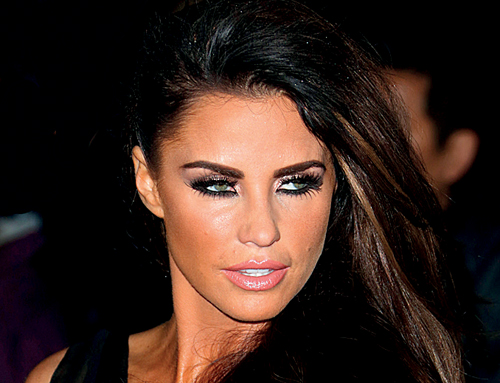
Our cover star this issue, Katie Price, has been outspoken in support of the rights of people with disabilities – especially children. We ask whether enough is being done to ensure access for all to attractions and what practical steps can be taken to improve things
By Liz Terry | Published in Attractions Management 2014 issue 4
In this issue, we ask our panel of experts how attractions can better cater for people with disabilities – how they can engage with them and enable them to enjoy the enhanced quality of life that comes from great days out with friends and family (see page 28).
Our feature was inspired by comments made by former glamour model Katie Price, who has a 12-year-old son with disabilities. Price is putting her fame to good use in calling for better provision of facilities for children with disabilities and their families.
Disabled people can be vulnerable to poverty, so provisions need to be made so they can both afford and access attractions. We’ve written before about Morgan’s Wonderland, the amazing US-based theme park built by Gordon Hartman – who’s contributed to our feature. Hartman made his theme park free for children with disabilities and their families. He has funded it by setting up an American football team and building a stadium next to the theme park, so the profits from the sports team subsidise the park.
There are plans for more Morgan’s Wonderlands and it would be exciting if this was the start of a new generation of purpose-built attractions that enable wider access.
Our experts raise important points about addressing the challenges of supporting and accommodating people of all ages with a wide range of disabilities. They discuss ways to help people with disabilities to feel comfortable and at ease and ensure their safety, while also avoiding segregation.
These include having dedicated staff, specialist training, targeted marketing and adapted physical environments. It’s a substantial challenge, but one we must rise to for a whole host of reasons – some practical, some ethical and some commercial – if real change is to be achieved.
The World Health Organisation (WHO) says more than 1 billion people worldwide are permanently disabled – that’s around 15 per cent of the total population. The number is growing due to the ageing of the population, increases in chronic health conditions and – shockingly – war.
Although it’s tough to contemplate, the WHO says war is a cause for this number escalating: “for every person killed, many more are permanently disabled.” There are also millions who struggle physically but aren’t categorised as disabled: older people, or those whose challenges are less severe but still limiting and those who are injured or have a temporary challenge or disability. All need support, which gives operators the opportunity to develop an additional visitor stream, while offering assistance to groups who need it.
The WHO says attitudes against disability are the main barrier to people leading better lives, but that this can be changed through better education, training and integration.
As attractions grow across the world, we have the opportunity to make a contribution to what is increasingly seen as a basic human right by the WHO: a full social life.
Liz Terry, editor, twitter: @elizterry
Read more from this issue of Attractions Management magazine
View contents of Attractions Management 2014 issue 4
Editor’s letter: Access for all
We ask whether enough is being done to ensure access for all to
attractions and what practical steps can be taken to improve things
Interview: Tim Smit
The Eden Project was groundbreaking
when it opened in 2001. Now the
attraction’s founder Tim Smit is taking
the concept to a global audience,
and he’s starting with China
Interview: Jonathan Gottschall
Literary scholar and author of The
Storytelling Animal explains why we’re
all addicted to story, and how attractions
can capitalise on our love of narrative
Heritage: Actions Speak Louder
The National Trust’s Ben Cowell
describes how landscaping can build up
to a reveal, and ways the organisation
is using actors to bring history to life
Conference Report: SATE 2014
TEA president Christine Kerr presents
the hot topics from the annual design
conference devoted to Storytelling,
Architecture, Technology, Experience
Story Centres: Tell Me A Story
The popularity of story centres shows
the youngest generation – dubbed
digital natives – are thirsty for
children’s literature and illustration
Technology: Reinventing the Nerd
Meet carnival-inspired Two Bit
Circus, created from its founders’
passion for engineering, video games
and the newest technologies
Promotional feature: BARCO
Barco offers state-of-the-art visualisation technology and
a holistic solution uniquely tailored to suit any attraction
Rides: The Ride Makers
In the first of a new series,
industry-leading manufacturers
tell us about the latest trends and
innovations in thrill coasters
Theme Parks: Kooza Came to Town
PortAventura’s general manager
on the Spanish park’s partnership
with celebrated circus troupe Cirque
du Soleil and its Kooza show
Planetariums: Tom Falvey
A new planetarium, capable of live
streaming to 14,000 schools, opens
as a new addition to the South
Carolina State Museum in the US
Show Preview: IAAPA EXPO
IAAPA returns to the Orange County Convention Center in Orlando,
Florida, from 18-21 November, with more than 1,000 exhibitors
and an expected 27,000 attendees
Multimedia: Art Project
State-of-the-art projectors and
world-class artists combine to
create inspiring installations
Our cover star this issue, Katie Price, has been outspoken in support of the rights of people with disabilities – especially children. We ask whether enough is being done to ensure access for all to attractions and what practical steps can be taken to improve things
By Liz Terry | Published in Attractions Management 2014 issue 4
In this issue, we ask our panel of experts how attractions can better cater for people with disabilities – how they can engage with them and enable them to enjoy the enhanced quality of life that comes from great days out with friends and family (see page 28).
Our feature was inspired by comments made by former glamour model Katie Price, who has a 12-year-old son with disabilities. Price is putting her fame to good use in calling for better provision of facilities for children with disabilities and their families.
Disabled people can be vulnerable to poverty, so provisions need to be made so they can both afford and access attractions. We’ve written before about Morgan’s Wonderland, the amazing US-based theme park built by Gordon Hartman – who’s contributed to our feature. Hartman made his theme park free for children with disabilities and their families. He has funded it by setting up an American football team and building a stadium next to the theme park, so the profits from the sports team subsidise the park.
There are plans for more Morgan’s Wonderlands and it would be exciting if this was the start of a new generation of purpose-built attractions that enable wider access.
Our experts raise important points about addressing the challenges of supporting and accommodating people of all ages with a wide range of disabilities. They discuss ways to help people with disabilities to feel comfortable and at ease and ensure their safety, while also avoiding segregation.
These include having dedicated staff, specialist training, targeted marketing and adapted physical environments. It’s a substantial challenge, but one we must rise to for a whole host of reasons – some practical, some ethical and some commercial – if real change is to be achieved.
The World Health Organisation (WHO) says more than 1 billion people worldwide are permanently disabled – that’s around 15 per cent of the total population. The number is growing due to the ageing of the population, increases in chronic health conditions and – shockingly – war.
Although it’s tough to contemplate, the WHO says war is a cause for this number escalating: “for every person killed, many more are permanently disabled.” There are also millions who struggle physically but aren’t categorised as disabled: older people, or those whose challenges are less severe but still limiting and those who are injured or have a temporary challenge or disability. All need support, which gives operators the opportunity to develop an additional visitor stream, while offering assistance to groups who need it.
The WHO says attitudes against disability are the main barrier to people leading better lives, but that this can be changed through better education, training and integration.
As attractions grow across the world, we have the opportunity to make a contribution to what is increasingly seen as a basic human right by the WHO: a full social life.
Liz Terry, editor, twitter: @elizterry
Read more from this issue of Attractions Management magazine
View contents of Attractions Management 2014 issue 4
Editor’s letter: Access for all
We ask whether enough is being done to ensure access for all to
attractions and what practical steps can be taken to improve things
Interview: Tim Smit
The Eden Project was groundbreaking
when it opened in 2001. Now the
attraction’s founder Tim Smit is taking
the concept to a global audience,
and he’s starting with China
Interview: Jonathan Gottschall
Literary scholar and author of The
Storytelling Animal explains why we’re
all addicted to story, and how attractions
can capitalise on our love of narrative
Heritage: Actions Speak Louder
The National Trust’s Ben Cowell
describes how landscaping can build up
to a reveal, and ways the organisation
is using actors to bring history to life
Conference Report: SATE 2014
TEA president Christine Kerr presents
the hot topics from the annual design
conference devoted to Storytelling,
Architecture, Technology, Experience
Story Centres: Tell Me A Story
The popularity of story centres shows
the youngest generation – dubbed
digital natives – are thirsty for
children’s literature and illustration
Technology: Reinventing the Nerd
Meet carnival-inspired Two Bit
Circus, created from its founders’
passion for engineering, video games
and the newest technologies
Promotional feature: BARCO
Barco offers state-of-the-art visualisation technology and
a holistic solution uniquely tailored to suit any attraction
Rides: The Ride Makers
In the first of a new series,
industry-leading manufacturers
tell us about the latest trends and
innovations in thrill coasters
Theme Parks: Kooza Came to Town
PortAventura’s general manager
on the Spanish park’s partnership
with celebrated circus troupe Cirque
du Soleil and its Kooza show
Planetariums: Tom Falvey
A new planetarium, capable of live
streaming to 14,000 schools, opens
as a new addition to the South
Carolina State Museum in the US
Show Preview: IAAPA EXPO
IAAPA returns to the Orange County Convention Center in Orlando,
Florida, from 18-21 November, with more than 1,000 exhibitors
and an expected 27,000 attendees
Multimedia: Art Project
State-of-the-art projectors and
world-class artists combine to
create inspiring installations
Expo 2030 Riyadh is being planned as a permanent visitor destination, with organisers
confirming the six-million-square-metre site will become a Global Village after the event closes.
The owner of one of Australia's best-known waterparks has acquired a major competitor,
creating a new attractions business spanning two of the country's largest visitor destinations.
The Toverland theme park in the Netherlands has announced a €98m expansion programme
that will add a resort, new attractions and staff facilities as it pursues plans to become a multi-
day destination.
Hotel de France, located on the British Isle of Jersey, has created a wellness retreat package
that includes a hot yoga session that will take place in Jersey Zoo’s butterfly sanctuary.
A new immersive attraction designed to transport visitors into the final hours of ancient Pompeii
is preparing to open near the world-famous archaeological site in southern Italy.
Experience design company, BRC Imagination Arts, has completed a transition that sees founder
Bob Rogers pass ownership of the business to four long-serving senior executives, while
remaining actively involved with the company.
Movie Park Germany has opened a new Paramount Pictures-themed attraction as part of its 30th
anniversary celebrations, using immersive storytelling and adaptive reuse to reinforce the park’s
longstanding “Hollywood in Germany” positioning.
Therme Manchester’s 28-acre development, which will include interconnected glass pavilions
that measure 65,000sq m, will be the largest bathing and wellbeing attraction in the world once
complete, according to prof David Russell, CEO of Therme UK.
Efteling has opened Hooghmoed, a new family drop tower designed to broaden the appeal of its
recently launched Sirene Island themed area and introduce younger visitors to thrill attractions.
A proposed Puy du Fou development near Bicester and Universal Destinations and Experiences’
planned resort in Bedford are emerging as part of a wider transformation of the Oxford–
Cambridge Growth Corridor into a major centre for UK leisure and tourism inv