The opening of the Oitavos hotel and spa, part of a Portuguese beach estate came 90 years after it was first envisioned and challenges traditional design conceptions
By Tom Walker | Published in Spa Business 2012 issue 1
Located in the sporting estate of Quinta da Marinha within the protected Cascais Sintra Natural Park on Portugal’s Estoril coast, the family-owned Oitavos hotel and spa has a fascinating birth story.
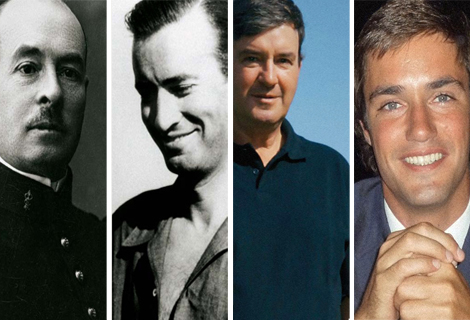
“All you see around you – the golf course, the hotel, even the roads, trees and vegetation – are the result of a 90-year-long family project,” says general manager Miguel M Champalimaud. “My great-grandfather Carlos Montez Champalimaud discovered this site in 1908 and bought 900 hectares (9sq km) of land here in 1920: when it was barren and dominated by sand dunes. His dream was to transform the wild and uninhabited landscape and establish a tourism and leisure resort here.”
Partly due to delays caused by WWII, Carlos never saw his dream become a reality, but his work was continued enthusiastically by his son, Carlos Sommer Champalimaud, who created a vineyard and an equestrian centre after the war. The project was then completed by Carlos Sommer’s son Miguel (the father of Miguel M) who oversaw the design and launch of the Oitavos Dunes golf course (in 2001), a large health and racquet club (in 2004), and finally The Oitavos hotel and spa in September 2010.
90-YEAR-OLD DREAM Carlos Montez would be proud of the results – the health club has 4,000 paying members, and the golf course has gained international recognition. And at the centre of the impeccably groomed fairways of the golf course sits the Champalimaud’s prize possession – The Oitavos hotel and spa.
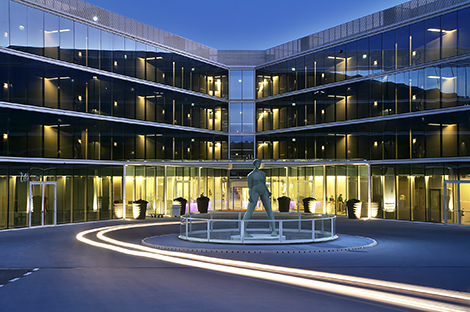
The hotel might have been first envisaged more than 90 years ago, but the final result – a somewhat otherworldly steel and glass structure in the shape of the letter Y – is anything but traditional. Designed by Portuguese architect and artist José Amaral Anahory, the 142-bedroom hotel took four years to design and three years to build to ensure that it met the family’s expectations. In addition, the investment totalled €40m (us$51.4m, £33.1m), with funding coming from cash flow via other family businesses, added to the selling of plots of land in Quinta da Marinha for residential development and a bank loan.
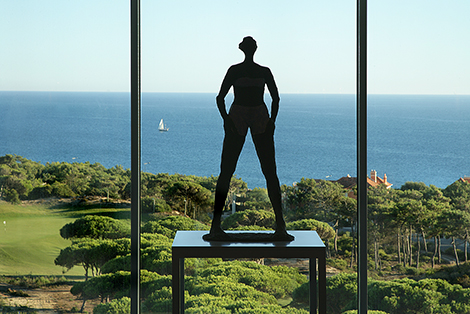
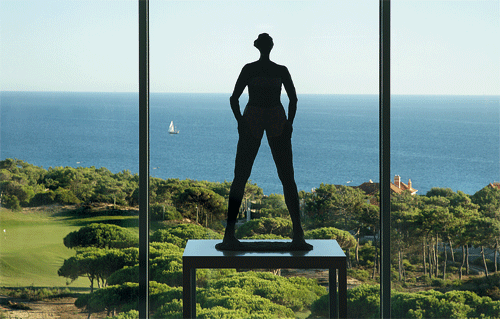
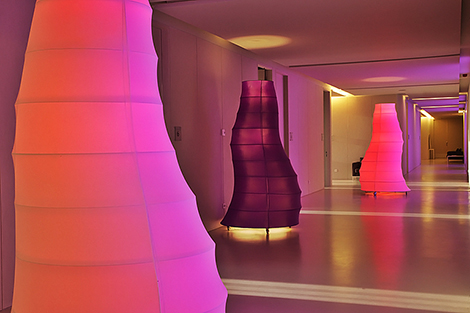
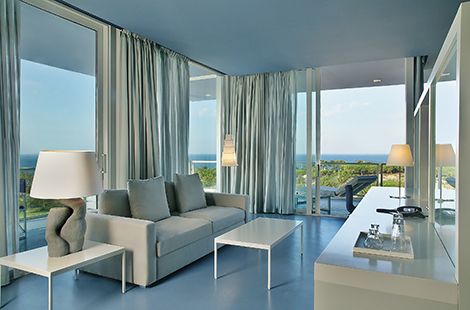
Anahory was given a brief to “bring the outside inside” and to make the hotel take a backseat to nature – rather than dominate it. His solution was to use large floor-to-ceiling windows throughout to open up the view to the guests. Nowhere is Anahory’s concept of creating bright, open spaces more evident than at the spa, which occupies the ground floor of the five-storey building.
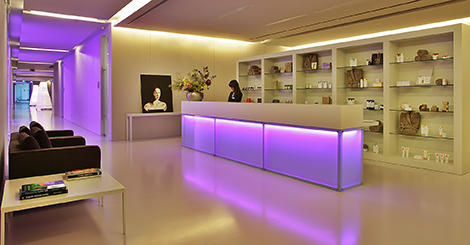
LET THE SUNSHINE IN “Natural light is definitely our unique selling point,” says spa manager Rita Rosado. “Many spas, especially at hotels, are either underground, tucked in a basement or confined to a windowless space. Here we have opened the spa to the elements and, rather than creating a dimly-lit space with warm tones, we rely on brightness, the nature and sun to help the healing process.”
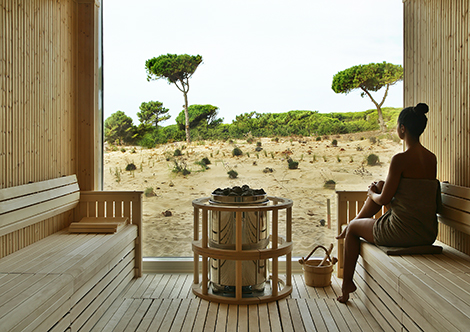
As a result, no matter where guests are in the spa – even the treatment rooms – they are treated to sweeping views across the undulating dunes and a breathtaking vista of the Atlantic Sea. This, says Miguel M, was always part of the plan. “My father knew the land – he grew up here – so he knew exactly where the best location for the hotel would be. When the golf course was designed, he had already identified this plot so it was left empty for the hotel.”
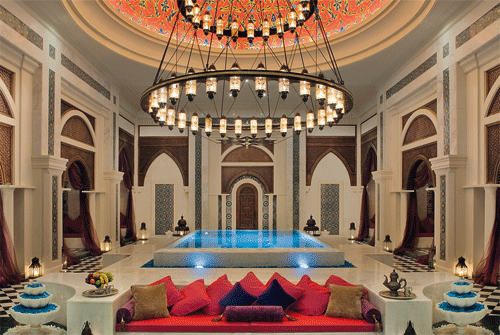
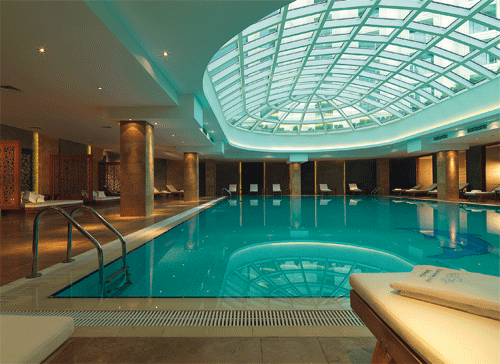
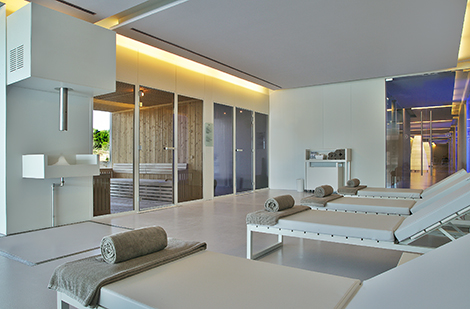
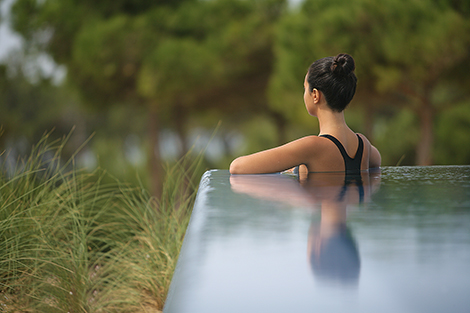
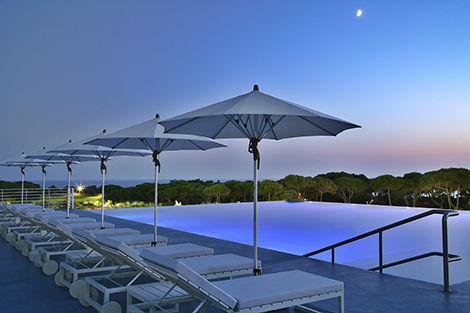
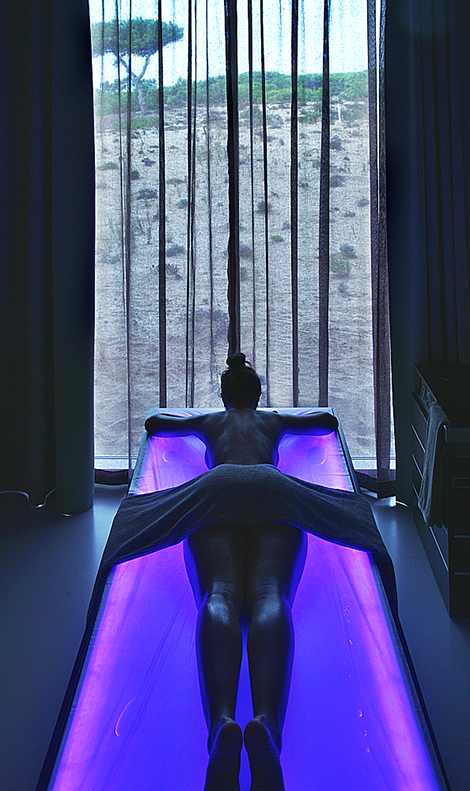
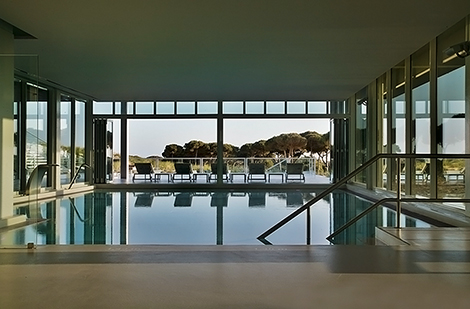
The 800sq m (8,600 sq ft) spa has 10 treatment rooms and therapies include those by organic seaweed company Voya to highlight the relationship that The Oitavos has with its Atlantic surroundings. Due to its proximity to the ocean, the indoor and outdoor spa pools also feature seawater and are heated by the warm-air expelled by the hotel’s ventilation system. A large relaxation area, a sauna and a steamroom complete the spa facilities. For the more active, there’s also a large health and fitness suite adjacent to the spa with more than 20 exercise stations supplied by Star Trac.
French skincare brand GERnétic is also used at the spa. In addition to a full menu of body treatments, facials and bath therapies, is the spa’s signature four-handed massage.
TEAM WORK Rosado has been working for the Champalimaud’s since 2004. Previously she was the spa manager at the family’s health and racquet club, which has four treatment rooms. “I was lucky enough to land the role,” she says. “It was very exciting to be part of something this big and new – especially when you got to see it all open for the first time.”
To help with the hotel launch, the family appointed Seattle-based management and consultancy company Columbia Hospitality. The team – led by Stephen Roughley, who spent eight years as director of operations at JW Marriott Las Vegas Resort and Spa – took up residence for nearly two years, 12 months before the opening of the hotel and for the first 10 months of operating.
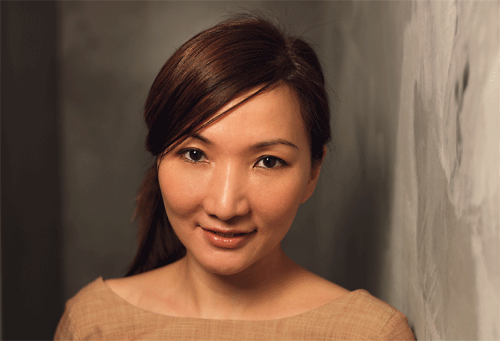
Within the spa environment, Rosado worked closely with Columbia’s dedicated spa consultant, Melanie Silver, whose CV includes seven years as director of spa at Ritz-Carlton St Thomas on the British Virgin Islands. “The biggest pre-opening challenge was recruiting and establishing a great team,” says Rosado. “It wasn’t that there was a lack of talent – it was more to do with charting individual personalities and making sure they clicked with each other. I believe having a great team is the most important aspect of having a great spa. Each team member must be clear about their own individual roles but also aware of what’s going on around them. We want to be with our clients at every step of their spa journey and to achieve that I believe the team has to work as one.”
Visiting the spa, it’s clear to see this approach works. On arrival, every member of staff seems to know who you are and what treatments you’re about to have, creating a genuinely welcoming atmosphere.
Alongside her ambition to make sure everything runs like clockwork, Rosado also wants her team to be spontaneous. “I always encourage the team to add little touches to treatments and to make the guest really feel that they are experiencing something unique. For example, a therapist might give a head massage to a guest who’s having a seaweed bath to further ease away tension.”
A WIDER AUDIENCE The spa was drawn into the hotel plans at an early stage with the rationale that it was needed to complete the offer. “It was essential to embrace spa visitors and to make the experience at The Oitavos relaxing,” says Miguel M. “The motivating factor was the possibility of having such a diversified offer that’s inclusive of gastronomy, golf, a riding centre, the beach and a spa.”
Early on, it was also decided that the spa would be an independent profit centre and although it features heavily in the hotel’s marketing, Rosado says it’s also actively marketed to affluent locals as a stand-alone day spa. To support this, a new set of day packages will be introduced, some of which will combine access to the spa with lunch at the hotel’s award-winning restaurant.
As for hotel guests, in its first year the spa’s capture rate has bounced around the 25 per cent mark – a figure that spa director Rosado is happy with, but one that she will work to improve. “We want to grow the capture rate by 15 per cent in the next year,” she says. One key audience she’s identified to help with this is business guests – 50 per cent of the hotel’s customers – who are attracted by the spa’s express treatments, such as the 25-minute Swedish massage.
According to Miguel M, the hotel’s conferencing and corporate hospitality business has proven stronger than expected. So much so that the hotel will shut for a month at the beginning of 2012 to increase conference space by converting an unused space on the first floor.
However, this does not mean that the hotel’s focus will change from leisure to business. “We want to make the split 60-40 in favour of leisure,” says Miguel M, adding that the average stay for a leisure customer is currently four days compared with only around 1.5 days for business customers.
FUTURE HORIZONS The overall occupancy rate at Oitavos was 45 per cent for the first year – which was according to the expectations set for the first 12 months. The target for 2012 is to increase occupancy to 50 per cent – a sign that the family does not want to run before it can walk. Although the target might seem modest, the family is only expecting to start seeing a return on their investment within the next 15-20 years.
When questioned about future plans, Miguel M rules out expanding the hotel – but not the possibility of opening a second site. “There are no expansion plans for The Oitavos. This is the way it was designed and this is the way it will stay. As for a second site, at the moment we have no plans for that either. We need to concentrate all our energy and efforts on making The Oitavos successful. But why not in the future? Why not? If our concept and take on luxury proves successful then I can’t see any reason why we couldn’t replicate it in another place in some way.”
Read more from this issue of Attractions Management magazine
View contents of Attractions Management 2012 issue 1
Top team: Peninsula Hotels
Kath Hudson talks to key figures behind the leading Asian hotel chain about how they run their spas and exciting future plans
Profile: Cynthia Chua
The Singapore entrepreneur behind Ministry of Waxing and Browhaus has revolutionised personal grooming worldwide. She talks to Katie Barnes about the business of beauty and integration with spas
Hot springs: Chinese-style!
Lisa Starr tries out two hot spring spas - one catering to international visitors and the other to the domestic market - in China's Yunnan province
Bath time: The Chinese bathhouse
Lee David Stephens gives an insight into a traditional Chinese bathhouse and how Chinese people like to spa
Resort Spa: Sands of time
The Oitavos hotel and spa on Portugal's Estoril coast is 90 years in the making. Tom Walker pays a visit
Interview: Gary Henkin
The president and founder of WTS International - the US-based spa management and consultancy firm - talks to Rhianon Howells about expanding globally
Ask an expert: Crisis control
The Arab Spring, the Japanese tsunami and bombings in Mumbai - what's the best way of dealing with a crisis? We ask those who have first-hand experience of the events
New Zealand thermal spa: Pooling resources
The Polynesian Spa in the geothermal town of Rotorua in New Zealand boasts 25 thermal pools and is one of the longest running attractions in the country. Chris McBeath takes a look
Tourism: Booming Baku
Terry Stevens reports on the Azerbaijan capital which has seen a surge of international hotel openings in the past two years
Fitness: Pilates pure vs applied
Pure vs applied - should pilates only ever involve the exercises designed by Joseph Pilates, or can his philosophy be applied while keeping the product moving with the times?
* Hotel prices range from €275 (us$353, £227) for a superior room to €1,380 (us$1,773, £1,140) a night for a suite * The domestic market accounts for 30 per cent of overnights stays * 50 per cent of hotel guests come from central and northern Europe, with a large number of these arriving from the UK, Germany and France * Number of staff at the hotel overall: 130 * Number of therapists: seven. * Cost of a four hand massage: €175 (us$225, £145) for 50 minutes, €270 (us$347, £223) for 80 minutes *Voya facials range from €89-170 (us$114-218, £74-180) for 50 and 80 minutes respectively; while the 170-minute Land to Sea package costs €296 (us$380, £244) and includes a seaweed bath, massage, facial and wrap
Huge floor-to-ceiling windows throughout the hotel and spa open up the stunning views to guests
Portuguese architect Anahory spent four years designing the 142-bedroom hotel to ensure it met the owners’ expectations
The spa journey is a smooth process – on arrival every member of staff knows who you are and what treatment you’re having
THE Champalimauds
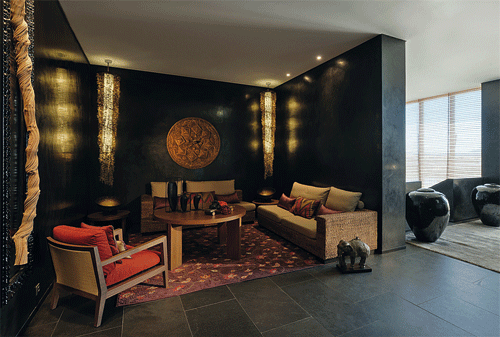
The modern spa features 10 treatment rooms, a large relaxation area, a sauna, a steamroom and a health and fitness suite
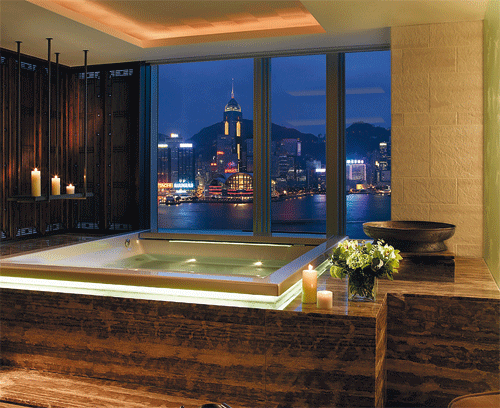
The use of seawater in the spa pools reflects its proximity to the Atlantic Ocean
A new set of day packages is being launched in a bid to attract affluent locals to use the facility as a stand-alone day spa
The spa is marketed alongside the hotel but remains an independent profit centre
Seaweed wraps by Voya emphasise the spa’s location by the ocean
The company aims to boost the hotel’s occupancy rate from 45 per cent in the first year to 50 per cent capacity in 2012
Leisure customers enjoy longer stays at the hotel and spa than business customers
COMPANY PROFILES
IDEATTACK
IDEATTACK is a full-service planning and
design company with headquarters in
Los Angeles. [more...]
Clip 'n Climb
Clip ‘n Climb currently offers facility owners and
investors more than 40 colourful and unique
Cha [more...]
Simworx Ltd
The company was initially established
in 1997. Terry Monkton and Andrew
Roberts are the key stakeh [more...]
IAAPA EMEA
IAAPA Expo Europe was established in 2006 and has grown to the largest international conference and [more...]
An opportunity to reimagine one of the UK’s most recognisable towers has been formally
opened by Rivington Hark, as St Johns Beacon invites operators and partners to shape its
next phase. [more...]
The opening of the Oitavos hotel and spa, part of a Portuguese beach estate came 90 years after it was first envisioned and challenges traditional design conceptions
By Tom Walker | Published in Spa Business 2012 issue 1
Located in the sporting estate of Quinta da Marinha within the protected Cascais Sintra Natural Park on Portugal’s Estoril coast, the family-owned Oitavos hotel and spa has a fascinating birth story.
“All you see around you – the golf course, the hotel, even the roads, trees and vegetation – are the result of a 90-year-long family project,” says general manager Miguel M Champalimaud. “My great-grandfather Carlos Montez Champalimaud discovered this site in 1908 and bought 900 hectares (9sq km) of land here in 1920: when it was barren and dominated by sand dunes. His dream was to transform the wild and uninhabited landscape and establish a tourism and leisure resort here.”
Partly due to delays caused by WWII, Carlos never saw his dream become a reality, but his work was continued enthusiastically by his son, Carlos Sommer Champalimaud, who created a vineyard and an equestrian centre after the war. The project was then completed by Carlos Sommer’s son Miguel (the father of Miguel M) who oversaw the design and launch of the Oitavos Dunes golf course (in 2001), a large health and racquet club (in 2004), and finally The Oitavos hotel and spa in September 2010.
90-YEAR-OLD DREAM Carlos Montez would be proud of the results – the health club has 4,000 paying members, and the golf course has gained international recognition. And at the centre of the impeccably groomed fairways of the golf course sits the Champalimaud’s prize possession – The Oitavos hotel and spa.
The hotel might have been first envisaged more than 90 years ago, but the final result – a somewhat otherworldly steel and glass structure in the shape of the letter Y – is anything but traditional. Designed by Portuguese architect and artist José Amaral Anahory, the 142-bedroom hotel took four years to design and three years to build to ensure that it met the family’s expectations. In addition, the investment totalled €40m (us$51.4m, £33.1m), with funding coming from cash flow via other family businesses, added to the selling of plots of land in Quinta da Marinha for residential development and a bank loan.
Anahory was given a brief to “bring the outside inside” and to make the hotel take a backseat to nature – rather than dominate it. His solution was to use large floor-to-ceiling windows throughout to open up the view to the guests. Nowhere is Anahory’s concept of creating bright, open spaces more evident than at the spa, which occupies the ground floor of the five-storey building.
LET THE SUNSHINE IN “Natural light is definitely our unique selling point,” says spa manager Rita Rosado. “Many spas, especially at hotels, are either underground, tucked in a basement or confined to a windowless space. Here we have opened the spa to the elements and, rather than creating a dimly-lit space with warm tones, we rely on brightness, the nature and sun to help the healing process.”
As a result, no matter where guests are in the spa – even the treatment rooms – they are treated to sweeping views across the undulating dunes and a breathtaking vista of the Atlantic Sea. This, says Miguel M, was always part of the plan. “My father knew the land – he grew up here – so he knew exactly where the best location for the hotel would be. When the golf course was designed, he had already identified this plot so it was left empty for the hotel.”
The 800sq m (8,600 sq ft) spa has 10 treatment rooms and therapies include those by organic seaweed company Voya to highlight the relationship that The Oitavos has with its Atlantic surroundings. Due to its proximity to the ocean, the indoor and outdoor spa pools also feature seawater and are heated by the warm-air expelled by the hotel’s ventilation system. A large relaxation area, a sauna and a steamroom complete the spa facilities. For the more active, there’s also a large health and fitness suite adjacent to the spa with more than 20 exercise stations supplied by Star Trac.
French skincare brand GERnétic is also used at the spa. In addition to a full menu of body treatments, facials and bath therapies, is the spa’s signature four-handed massage.
TEAM WORK Rosado has been working for the Champalimaud’s since 2004. Previously she was the spa manager at the family’s health and racquet club, which has four treatment rooms. “I was lucky enough to land the role,” she says. “It was very exciting to be part of something this big and new – especially when you got to see it all open for the first time.”
To help with the hotel launch, the family appointed Seattle-based management and consultancy company Columbia Hospitality. The team – led by Stephen Roughley, who spent eight years as director of operations at JW Marriott Las Vegas Resort and Spa – took up residence for nearly two years, 12 months before the opening of the hotel and for the first 10 months of operating.
Within the spa environment, Rosado worked closely with Columbia’s dedicated spa consultant, Melanie Silver, whose CV includes seven years as director of spa at Ritz-Carlton St Thomas on the British Virgin Islands. “The biggest pre-opening challenge was recruiting and establishing a great team,” says Rosado. “It wasn’t that there was a lack of talent – it was more to do with charting individual personalities and making sure they clicked with each other. I believe having a great team is the most important aspect of having a great spa. Each team member must be clear about their own individual roles but also aware of what’s going on around them. We want to be with our clients at every step of their spa journey and to achieve that I believe the team has to work as one.”
Visiting the spa, it’s clear to see this approach works. On arrival, every member of staff seems to know who you are and what treatments you’re about to have, creating a genuinely welcoming atmosphere.
Alongside her ambition to make sure everything runs like clockwork, Rosado also wants her team to be spontaneous. “I always encourage the team to add little touches to treatments and to make the guest really feel that they are experiencing something unique. For example, a therapist might give a head massage to a guest who’s having a seaweed bath to further ease away tension.”
A WIDER AUDIENCE The spa was drawn into the hotel plans at an early stage with the rationale that it was needed to complete the offer. “It was essential to embrace spa visitors and to make the experience at The Oitavos relaxing,” says Miguel M. “The motivating factor was the possibility of having such a diversified offer that’s inclusive of gastronomy, golf, a riding centre, the beach and a spa.”
Early on, it was also decided that the spa would be an independent profit centre and although it features heavily in the hotel’s marketing, Rosado says it’s also actively marketed to affluent locals as a stand-alone day spa. To support this, a new set of day packages will be introduced, some of which will combine access to the spa with lunch at the hotel’s award-winning restaurant.
As for hotel guests, in its first year the spa’s capture rate has bounced around the 25 per cent mark – a figure that spa director Rosado is happy with, but one that she will work to improve. “We want to grow the capture rate by 15 per cent in the next year,” she says. One key audience she’s identified to help with this is business guests – 50 per cent of the hotel’s customers – who are attracted by the spa’s express treatments, such as the 25-minute Swedish massage.
According to Miguel M, the hotel’s conferencing and corporate hospitality business has proven stronger than expected. So much so that the hotel will shut for a month at the beginning of 2012 to increase conference space by converting an unused space on the first floor.
However, this does not mean that the hotel’s focus will change from leisure to business. “We want to make the split 60-40 in favour of leisure,” says Miguel M, adding that the average stay for a leisure customer is currently four days compared with only around 1.5 days for business customers.
FUTURE HORIZONS The overall occupancy rate at Oitavos was 45 per cent for the first year – which was according to the expectations set for the first 12 months. The target for 2012 is to increase occupancy to 50 per cent – a sign that the family does not want to run before it can walk. Although the target might seem modest, the family is only expecting to start seeing a return on their investment within the next 15-20 years.
When questioned about future plans, Miguel M rules out expanding the hotel – but not the possibility of opening a second site. “There are no expansion plans for The Oitavos. This is the way it was designed and this is the way it will stay. As for a second site, at the moment we have no plans for that either. We need to concentrate all our energy and efforts on making The Oitavos successful. But why not in the future? Why not? If our concept and take on luxury proves successful then I can’t see any reason why we couldn’t replicate it in another place in some way.”
Read more from this issue of Attractions Management magazine
View contents of Attractions Management 2012 issue 1
Top team: Peninsula Hotels
Kath Hudson talks to key figures behind the leading Asian hotel chain about how they run their spas and exciting future plans
Profile: Cynthia Chua
The Singapore entrepreneur behind Ministry of Waxing and Browhaus has revolutionised personal grooming worldwide. She talks to Katie Barnes about the business of beauty and integration with spas
Hot springs: Chinese-style!
Lisa Starr tries out two hot spring spas - one catering to international visitors and the other to the domestic market - in China's Yunnan province
Bath time: The Chinese bathhouse
Lee David Stephens gives an insight into a traditional Chinese bathhouse and how Chinese people like to spa
Resort Spa: Sands of time
The Oitavos hotel and spa on Portugal's Estoril coast is 90 years in the making. Tom Walker pays a visit
Interview: Gary Henkin
The president and founder of WTS International - the US-based spa management and consultancy firm - talks to Rhianon Howells about expanding globally
Ask an expert: Crisis control
The Arab Spring, the Japanese tsunami and bombings in Mumbai - what's the best way of dealing with a crisis? We ask those who have first-hand experience of the events
New Zealand thermal spa: Pooling resources
The Polynesian Spa in the geothermal town of Rotorua in New Zealand boasts 25 thermal pools and is one of the longest running attractions in the country. Chris McBeath takes a look
Tourism: Booming Baku
Terry Stevens reports on the Azerbaijan capital which has seen a surge of international hotel openings in the past two years
Fitness: Pilates pure vs applied
Pure vs applied - should pilates only ever involve the exercises designed by Joseph Pilates, or can his philosophy be applied while keeping the product moving with the times?
* Hotel prices range from €275 (us$353, £227) for a superior room to €1,380 (us$1,773, £1,140) a night for a suite * The domestic market accounts for 30 per cent of overnights stays * 50 per cent of hotel guests come from central and northern Europe, with a large number of these arriving from the UK, Germany and France * Number of staff at the hotel overall: 130 * Number of therapists: seven. * Cost of a four hand massage: €175 (us$225, £145) for 50 minutes, €270 (us$347, £223) for 80 minutes *Voya facials range from €89-170 (us$114-218, £74-180) for 50 and 80 minutes respectively; while the 170-minute Land to Sea package costs €296 (us$380, £244) and includes a seaweed bath, massage, facial and wrap
Huge floor-to-ceiling windows throughout the hotel and spa open up the stunning views to guests
Portuguese architect Anahory spent four years designing the 142-bedroom hotel to ensure it met the owners’ expectations
The spa journey is a smooth process – on arrival every member of staff knows who you are and what treatment you’re having
THE Champalimauds
The modern spa features 10 treatment rooms, a large relaxation area, a sauna, a steamroom and a health and fitness suite
The use of seawater in the spa pools reflects its proximity to the Atlantic Ocean
A new set of day packages is being launched in a bid to attract affluent locals to use the facility as a stand-alone day spa
The spa is marketed alongside the hotel but remains an independent profit centre
Seaweed wraps by Voya emphasise the spa’s location by the ocean
The company aims to boost the hotel’s occupancy rate from 45 per cent in the first year to 50 per cent capacity in 2012
Leisure customers enjoy longer stays at the hotel and spa than business customers
Movie Park Germany has opened a new Paramount Pictures-themed attraction as part of its 30th
anniversary celebrations, using immersive storytelling and adaptive reuse to reinforce the park’s
longstanding “Hollywood in Germany” positioning.
Therme Manchester’s 28-acre development, which will include interconnected glass pavilions
that measure 65,000sq m, will be the largest bathing and wellbeing attraction in the world once
complete, according to prof David Russell, CEO of Therme UK.
Efteling has opened Hooghmoed, a new family drop tower designed to broaden the appeal of its
recently launched Sirene Island themed area and introduce younger visitors to thrill attractions.
A proposed Puy du Fou development near Bicester and Universal Destinations and Experiences’
planned resort in Bedford are emerging as part of a wider transformation of the Oxford–
Cambridge Growth Corridor into a major centre for UK leisure and tourism inv
Shedd Aquarium has opened the Immersion Theater developed in partnership with SimEx-
Iwerks, as part of a wider strategy to enhance the guest experience and create additional
revenue opportunities.
The UK government has announced a temporary reduction in VAT on visitor attractions and
children’s meals as part of a summer cost-of-living support package designed to stimulate the
visitor economy and encourage family days out.
As designer Yinka Ilori prepares for his first solo gallery show in London, he speaks exclusively
to CLADmag about his mission to spread joy, the power of play, and his bold approach to using
colour (including the colours you won’t see in his work).
The government of Thailand is exploring plans for a THB300bn (£6.3bn, US$8.3bn)
entertainment complex in the country’s Eastern Economic Corridor (EEC), with officials
proposing a large-scale theme park and sports destination as part of a broader tourism and
economic development strategy.
Royal Caribbean has revealed its Hero of the Seas cruise ship, home to the most pools at sea
(nine), and a record-breaking 28 dining venues, as well as attractions including a waterpark
with two new family raft slides.
An opportunity to reimagine one of the UK’s most recognisable towers has been formally
opened by Rivington Hark, as St Johns Beacon invites operators and partners to shape its
next phase. [more...]