Traditional Chinese
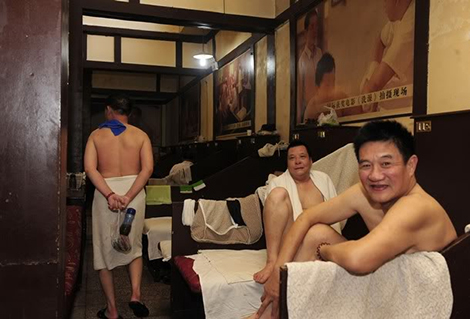
bathhouses can be found in
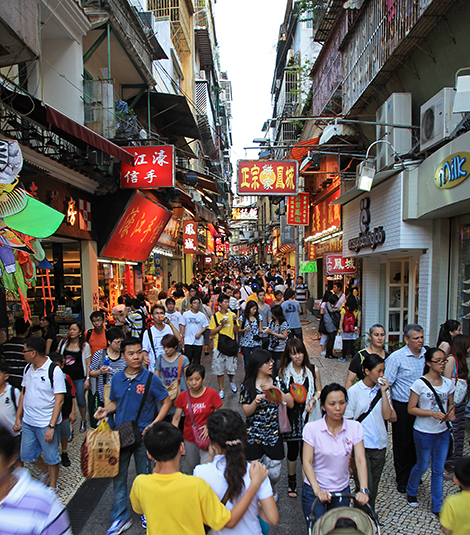
brightly lit five-storey buildings / testing / Shutterstock.com
In recent years, hundreds of millions of Chinese people have come out of poverty and hit the middle classes with money to burn. In turn, the growth of luxury five-star resorts is booming. These resorts, however, only cater to a very small percentage of the population (which still equates to millions of people), with the majority of the ‘emerging wealthy’ opting to spend hours in a traditional Chinese spa bathhouse instead.
Most Chinese cities are peppered with brightly lit five-storey buildings with the Chinese characters for spa – ?? (water therapy) – above the door. These authentic bathhouses are a far cry from five-star resort spas and the differences are intrinsic to cultural behaviours. In the west, we like order, peace and quiet, health juices and alone-time in our spas. In the east, we like social interaction, noise, food and stimulation. The west deprives the senses for relaxation; the east bombards them for enjoyment.
Westerners visiting a Chinese spa of this type will be in for a surprise. Enter to be greeted by a gaggle of well-groomed, uniformed hostesses who will charge a nominal entrance fee to spend eight hours at the ??, which will be deducted from any massage treatments you choose.
The first floor will typically be full of groups of entire families clad in bathrobes eating fried noodles at the buffet, drinking tea and smoking in their armchairs while chatting loudly and generally socialising. The second floor might have a variety of wet features – hydrotherapy baths, steamrooms and saunas – as well as steaming teapots, armchairs and the steady hum of chit chat.
The third floor will be crammed with the most comfortable lounge chairs designed for Chinese foot reflexology. And each chair will boast its own individual TV and in some cases its own ashtray.
Floor four could be a mix of massage rooms with one, two or up to five massage tables in each. Some with TV, some without, mostly you will be clothed in the bathrobes or kimonos and the pressure point massage begins. Staff will chat lightly among each other while they take you though the phases of a gruelling tui na pressure point massage only to leave you on cloud nine, not quite sure if your euphoria is because the treatment is over of if you are genuinely feeling the benefits. The fifth floor is a quieter place, somewhere to lie down and sleep, rest and switch off. Strewn throughout the floor are beds, loungers or tatamis in alcoves divided by curtains. The only noise that you are likely to hear is the hypnotic snoring of a distant patron. Spend as much time here as you like (or until your eight-hour pass runs out).
Westerners might expect to see a variety of traditional Chinese medicine (TCM) treatments on the menu such as acupuncture, gua sha and ba guan. However, the Chinese typically leave these to medical doctors and don’t associate them with their spa buildings. In fact, many local TCM medicines use animal parts such as ground deer antlers, which in the west would be considered a far cry from healthy, organic and Zen-like treatments.
As a western operator, you may read the above and think that it’s completely wrong – noise and smoking in the spa? But this is perfectly fine for 1.3 billion Chinese citizens.They go to spa to feel better about themselves inside and out, the end result is much the same as that in the west, just the way that they get there is very different.
Read more from this issue of Attractions Management magazine
View contents of Attractions Management 2012 issue 1
Top team: Peninsula Hotels
Kath Hudson talks to key figures behind the leading Asian hotel chain about how they run their spas and exciting future plans
Profile: Cynthia Chua
The Singapore entrepreneur behind Ministry of Waxing and Browhaus has revolutionised personal grooming worldwide. She talks to Katie Barnes about the business of beauty and integration with spas
Hot springs: Chinese-style!
Lisa Starr tries out two hot spring spas - one catering to international visitors and the other to the domestic market - in China's Yunnan province
Bath time: The Chinese bathhouse
Lee David Stephens gives an insight into a traditional Chinese bathhouse and how Chinese people like to spa
Resort Spa: Sands of time
The Oitavos hotel and spa on Portugal's Estoril coast is 90 years in the making. Tom Walker pays a visit
Interview: Gary Henkin
The president and founder of WTS International - the US-based spa management and consultancy firm - talks to Rhianon Howells about expanding globally
Ask an expert: Crisis control
The Arab Spring, the Japanese tsunami and bombings in Mumbai - what's the best way of dealing with a crisis? We ask those who have first-hand experience of the events
New Zealand thermal spa: Pooling resources
The Polynesian Spa in the geothermal town of Rotorua in New Zealand boasts 25 thermal pools and is one of the longest running attractions in the country. Chris McBeath takes a look
Tourism: Booming Baku
Terry Stevens reports on the Azerbaijan capital which has seen a surge of international hotel openings in the past two years
Fitness: Pilates pure vs applied
Pure vs applied - should pilates only ever involve the exercises designed by Joseph Pilates, or can his philosophy be applied while keeping the product moving with the times?
An opportunity to reimagine one of the UK’s most recognisable towers has been formally
opened by Rivington Hark, as St Johns Beacon invites operators and partners to shape its
next phase. [more...]
Traditional Chinese
bathhouses can be found in
brightly lit five-storey buildings / testing / Shutterstock.com
In recent years, hundreds of millions of Chinese people have come out of poverty and hit the middle classes with money to burn. In turn, the growth of luxury five-star resorts is booming. These resorts, however, only cater to a very small percentage of the population (which still equates to millions of people), with the majority of the ‘emerging wealthy’ opting to spend hours in a traditional Chinese spa bathhouse instead.
Most Chinese cities are peppered with brightly lit five-storey buildings with the Chinese characters for spa – ?? (water therapy) – above the door. These authentic bathhouses are a far cry from five-star resort spas and the differences are intrinsic to cultural behaviours. In the west, we like order, peace and quiet, health juices and alone-time in our spas. In the east, we like social interaction, noise, food and stimulation. The west deprives the senses for relaxation; the east bombards them for enjoyment.
Westerners visiting a Chinese spa of this type will be in for a surprise. Enter to be greeted by a gaggle of well-groomed, uniformed hostesses who will charge a nominal entrance fee to spend eight hours at the ??, which will be deducted from any massage treatments you choose.
The first floor will typically be full of groups of entire families clad in bathrobes eating fried noodles at the buffet, drinking tea and smoking in their armchairs while chatting loudly and generally socialising. The second floor might have a variety of wet features – hydrotherapy baths, steamrooms and saunas – as well as steaming teapots, armchairs and the steady hum of chit chat.
The third floor will be crammed with the most comfortable lounge chairs designed for Chinese foot reflexology. And each chair will boast its own individual TV and in some cases its own ashtray.
Floor four could be a mix of massage rooms with one, two or up to five massage tables in each. Some with TV, some without, mostly you will be clothed in the bathrobes or kimonos and the pressure point massage begins. Staff will chat lightly among each other while they take you though the phases of a gruelling tui na pressure point massage only to leave you on cloud nine, not quite sure if your euphoria is because the treatment is over of if you are genuinely feeling the benefits. The fifth floor is a quieter place, somewhere to lie down and sleep, rest and switch off. Strewn throughout the floor are beds, loungers or tatamis in alcoves divided by curtains. The only noise that you are likely to hear is the hypnotic snoring of a distant patron. Spend as much time here as you like (or until your eight-hour pass runs out).
Westerners might expect to see a variety of traditional Chinese medicine (TCM) treatments on the menu such as acupuncture, gua sha and ba guan. However, the Chinese typically leave these to medical doctors and don’t associate them with their spa buildings. In fact, many local TCM medicines use animal parts such as ground deer antlers, which in the west would be considered a far cry from healthy, organic and Zen-like treatments.
As a western operator, you may read the above and think that it’s completely wrong – noise and smoking in the spa? But this is perfectly fine for 1.3 billion Chinese citizens.They go to spa to feel better about themselves inside and out, the end result is much the same as that in the west, just the way that they get there is very different.
Read more from this issue of Attractions Management magazine
View contents of Attractions Management 2012 issue 1
Top team: Peninsula Hotels
Kath Hudson talks to key figures behind the leading Asian hotel chain about how they run their spas and exciting future plans
Profile: Cynthia Chua
The Singapore entrepreneur behind Ministry of Waxing and Browhaus has revolutionised personal grooming worldwide. She talks to Katie Barnes about the business of beauty and integration with spas
Hot springs: Chinese-style!
Lisa Starr tries out two hot spring spas - one catering to international visitors and the other to the domestic market - in China's Yunnan province
Bath time: The Chinese bathhouse
Lee David Stephens gives an insight into a traditional Chinese bathhouse and how Chinese people like to spa
Resort Spa: Sands of time
The Oitavos hotel and spa on Portugal's Estoril coast is 90 years in the making. Tom Walker pays a visit
Interview: Gary Henkin
The president and founder of WTS International - the US-based spa management and consultancy firm - talks to Rhianon Howells about expanding globally
Ask an expert: Crisis control
The Arab Spring, the Japanese tsunami and bombings in Mumbai - what's the best way of dealing with a crisis? We ask those who have first-hand experience of the events
New Zealand thermal spa: Pooling resources
The Polynesian Spa in the geothermal town of Rotorua in New Zealand boasts 25 thermal pools and is one of the longest running attractions in the country. Chris McBeath takes a look
Tourism: Booming Baku
Terry Stevens reports on the Azerbaijan capital which has seen a surge of international hotel openings in the past two years
Fitness: Pilates pure vs applied
Pure vs applied - should pilates only ever involve the exercises designed by Joseph Pilates, or can his philosophy be applied while keeping the product moving with the times?
Hotel de France, located on the British Isle of Jersey, has created a wellness retreat package
that includes a hot yoga session that will take place in Jersey Zoo’s butterfly sanctuary.
A new immersive attraction designed to transport visitors into the final hours of ancient Pompeii
is preparing to open near the world-famous archaeological site in southern Italy.
Experience design company, BRC Imagination Arts, has completed a transition that sees founder
Bob Rogers pass ownership of the business to four long-serving senior executives, while
remaining actively involved with the company.
Movie Park Germany has opened a new Paramount Pictures-themed attraction as part of its 30th
anniversary celebrations, using immersive storytelling and adaptive reuse to reinforce the park’s
longstanding “Hollywood in Germany” positioning.
Therme Manchester’s 28-acre development, which will include interconnected glass pavilions
that measure 65,000sq m, will be the largest bathing and wellbeing attraction in the world once
complete, according to prof David Russell, CEO of Therme UK.
Efteling has opened Hooghmoed, a new family drop tower designed to broaden the appeal of its
recently launched Sirene Island themed area and introduce younger visitors to thrill attractions.
A proposed Puy du Fou development near Bicester and Universal Destinations and Experiences’
planned resort in Bedford are emerging as part of a wider transformation of the Oxford–
Cambridge Growth Corridor into a major centre for UK leisure and tourism inv
Shedd Aquarium has opened the Immersion Theater developed in partnership with SimEx-
Iwerks, as part of a wider strategy to enhance the guest experience and create additional
revenue opportunities.
The UK government has announced a temporary reduction in VAT on visitor attractions and
children’s meals as part of a summer cost-of-living support package designed to stimulate the
visitor economy and encourage family days out.
As designer Yinka Ilori prepares for his first solo gallery show in London, he speaks exclusively
to CLADmag about his mission to spread joy, the power of play, and his bold approach to using
colour (including the colours you won’t see in his work).
The government of Thailand is exploring plans for a THB300bn (£6.3bn, US$8.3bn)
entertainment complex in the country’s Eastern Economic Corridor (EEC), with officials
proposing a large-scale theme park and sports destination as part of a broader tourism and
economic development strategy.
+ More news
COMPANY PROFILES
Alterface Alterface’s Creative Division team is
seasoned in concept and ride development,
as well as storyte [more...]
Simworx Ltd The company was initially established
in 1997. Terry Monkton and Andrew
Roberts are the key stakeh [more...]
TechnoAlpin Indoor TechnoAlpin is the world leader for snowmaking systems. With the Indoor snow division, TechnoAlpin c [more...]
instantprint We’re a Yorkshire-based online printer, founded
in 2009 by Adam Carnell and James Kinsella. [more...]
An opportunity to reimagine one of the UK’s most recognisable towers has been formally
opened by Rivington Hark, as St Johns Beacon invites operators and partners to shape its
next phase. [more...]