Industry leaders need to prioritise their own wellbeing / photo: shutterstock/Kzenon
Industry leaders with a higher level of wellbeing make those around them feel more energised, maximising their effectiveness and growth and cultivating a positive work environment, reveals a new survey.
The report – Leading in the Health & Wellbeing Industry 2023 – by US-based social enterprise Wisdom Works Group (WWG) explores the state of wellbeing leadership.
Answered by 841 leaders across 71 countries, the survey quizzed respondents from three sectors (the global wellness economy, healthcare and human potential and development) about their organisation and everyday stressors. It also looked at leadership impact and psychological wellbeing – which combine into something WWG calls wellbeing leadership (see p62).
“This study brings to light the need for integrating the science and practices of wellbeing into leader development as a strategy for improving leadership, work culture and industry impact,” says WWG CEO Renee Moorefield.
“The measurements we studied offer wellness leadership an expansive way to view, and thus, elevate the wellbeing of people.”
Walk the talk Across all three sectors, the higher the psychological wellbeing of leaders, the more positive their impact was. WWG calls this the study’s most significant conclusion and says it reinforces the necessity for leaders in the health and wellbeing industry to ‘walk the wellbeing talk’.
Study director Kate McIver says: “Having grown up in the spa industry, I know people join it to make a difference to other people’s lives and wellbeing. These results show the toll our roles as servant leaders can have when we don’t, as they say, ‘put our own mask on first’.
“How we treat ourselves – and as leaders, those we lead – broadcasts to those around us. This is about integrating human wellbeing into the very ethos and about creating a thriving work environment and this is a positive force for attracting and retaining employees.”
Managers need support First- and mid-level managers reported lower wellbeing leadership compared with other leadership levels. While they represented 35 per cent of the study sample, only 28 per cent of them reported high wellbeing leadership.
As this pool of leaders is the future of the industry, WWG says this finding highlights that there’s a critical opportunity for retaining and developing talent within the spa sector.
Gender and age variations In every sector, a higher proportion of women consistently scored in the high-stress category compared with their male counterparts. Women represented 65 per cent of leaders in the study sample yet a disproportionate 71 per cent of leaders in the high-stress category.
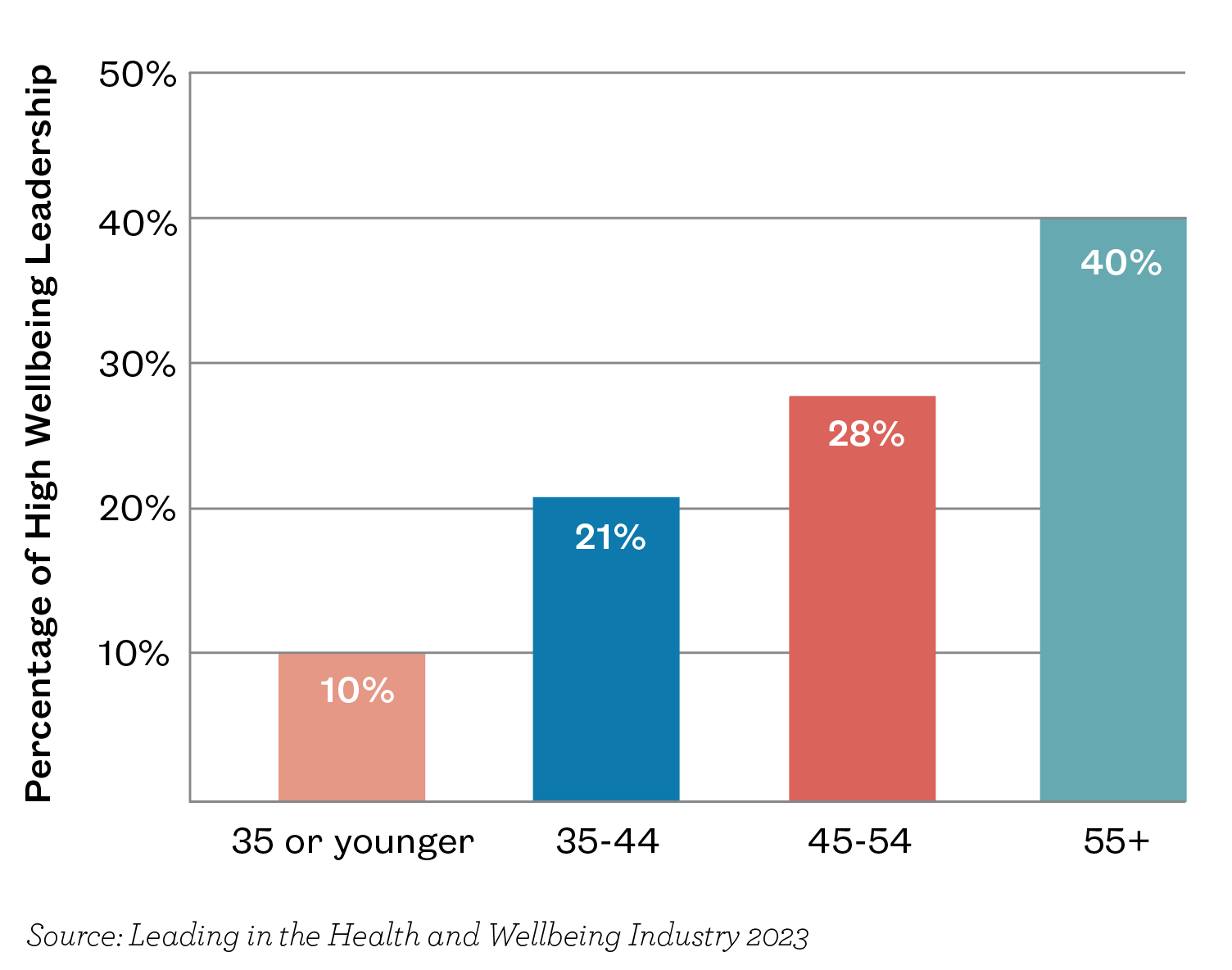
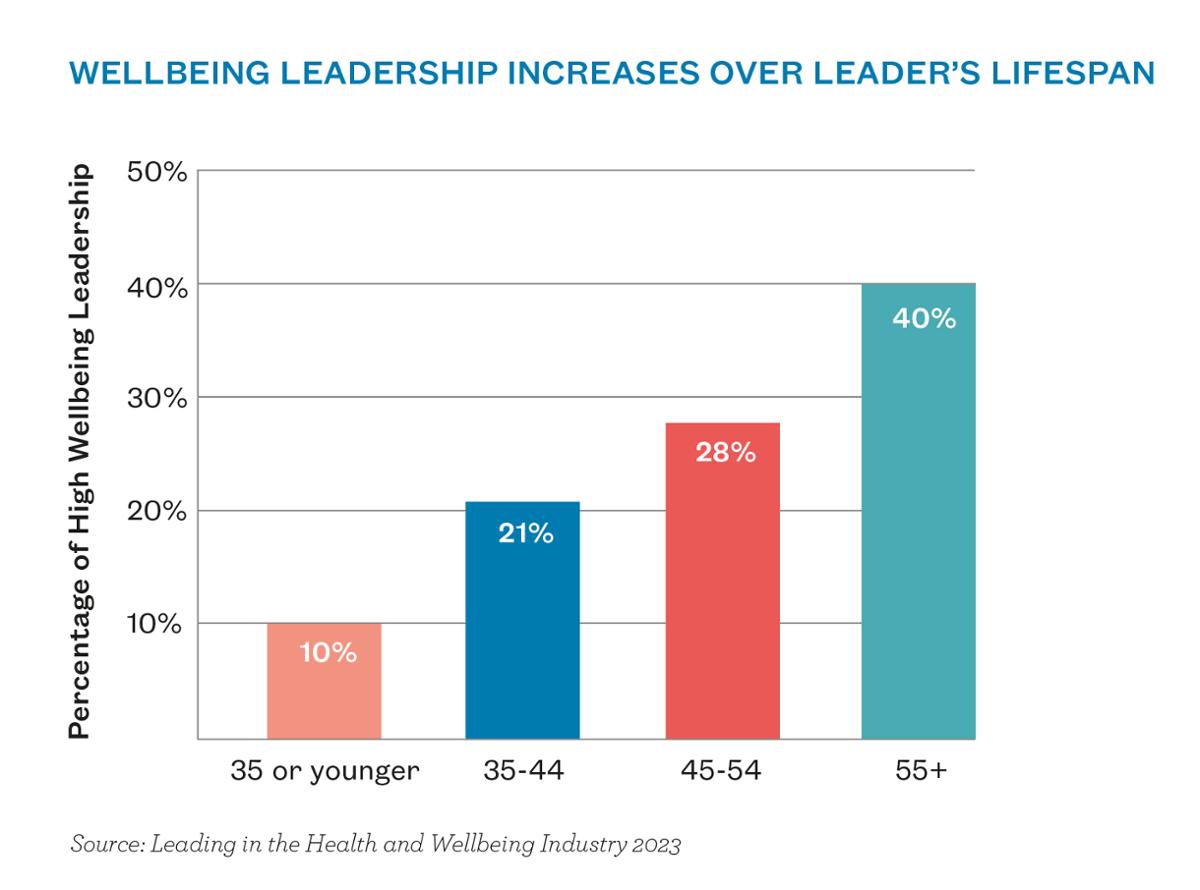
In addition, the quality of wellbeing leadership appeared to increase with age, with those over 55 years old representing the majority (40 per cent) of the high wellbeing leadership group (see graph on p62).
Lacking internal resources Most leaders surveyed agreed there was room for improvement in their wellbeing leadership, concluding that they weren’t as internally well-resourced as they could be to handle the complexities and challenges of their life and work.
“Since wellbeing is the core purpose of the health and wellbeing industry, we were surprised to find leaders not reporting higher scores,” revealed McIver.
“However, this industry has been significantly challenged to meet the growing mental, physical, emotional and social wellbeing demands of people due to complex challenges we’re collectively facing around the globe.”
Although wellbeing leadership for these industry leaders wasn’t as robust as it could be, they did indicate a high degree of job autonomy – a factor which is associated with higher wellbeing across organisational and management research.
Conclusion “This study is not only a clarion call for health and wellbeing industry leaders to prioritise wellbeing for themselves and the people and organisation they serve; it’s a voice for making thriving a standard of success across the industry,” concludes the report. “The industry can increase its global impact by ‘putting on its own mask first’.”
McIver and Moorefield both feel the study offers many takeaway points for spas. “As spa leaders, we’re affecting employees and customers not just through how we act and communicate – we’re affecting them with how we show up as human beings.
“When we feel internally well-resourced in our lives, we more naturally broadcast a sense of vibrancy and wellbeing to others; this, in turn, affects their state of being, too.
“We must understand that human beings are hard-wired to enhance or erode the wellbeing of others through co-regulation. Co-regulation simply means that we’re always broadcasting our state of being in some way.
“For example, when your heart rate variability decreases because you feel overstressed, studies show that a similar shift will likely occur in the people you’re around. Similarly, when you listen to a colleague with genuine care, this micro-moment of positive resonance shared with the other person sets off similar shifts in brain activity and oxytocin levels for both of you.
“When we return to the roots of spa as a life-giving avenue for mental, emotional, physical and social health benefits, we can quickly see how important it is to lead our lives and companies in a way that radiates wellbeing.
“Integrating wellbeing into leadership isn’t a sprint, nor is it an event, programme or fad. It’s a marathon requiring a dedicated commitment to real transformation.”
WWG is planning to repeat this report every two years, so it can provide more specific and nuanced insights into sectors of the health and wellbeing industry.
WELLBEING LEADERSHIP INCREASES OVER LEADER’s LIFESPAN
WELLNESS LEADERSHIP PSYCHOMETRICS
Psychological wellbeing
• Today & tomorrow
• Flourishing
• Resilience
• Eating as fuel
• Moving as fuel
• Resting as fuel
• Breathing as fuel
• Engagement at work
• Self-esteem at work
• Mindfulness
• Appreciation & awe
• Seeking new perspectives
• Learning & growing
• Vision & purpose
• Wholeness
• Emotional capacity
Leadership impact
• Energising others
• Maximising others
• Cultivating care in others
photo: Wisdom Works Group
"This study brings to light the need for integrating the science and practices of wellbeing into leader development as a strategy for improving leadership, work culture and industry impact" – WWG CEO Renee Moorefield.
photo: Wisdom Works Group
"How we treat ourselves – and as leaders, those we lead – broadcasts to those around us. This is about integrating human wellbeing into the very ethos and about creating a thriving work environment and this is a positive force for attracting and retaining employees" –
Study director, Kate McIver
Read more from this issue of Attractions Management magazine
View contents of Attractions Management 2023 issue 2
Editor's letter: Feeling optimistic
Revenue is at an all-time high and democratic wellness is bubbling under. It’s an exciting time for spas, says Katie Barnes
Spa People: Taichi Kuma
The son of celebrated architect Kengo Kuma designs a striking shell-like sauna in Japan
Spa People: Ana Ramirez
On her plans to roll out Ancestral Handmade, her regenerative wellness hotel concept, across South America – starting in Colombia
Spa People: Daniel Golby
On ESPA Life's debut in Doha and the markets he has his eyes set on for future expansion
News report: Milestone moment
US spa industry revenue exceeds the US$20bn mark according to ISPA's latest Big Five statistics
Sponsored: MyBlend: A new vision of beauty
Clarins has elevated its myBlend brand with new tech and formulations, as well as forging powerful alliances with global spa partners
Sponsored: Gharieni: Mind expansion
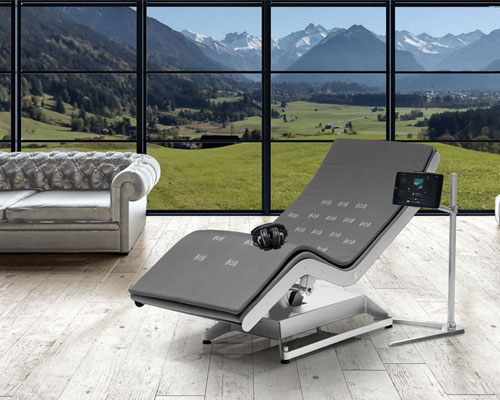
With the quest for better mental health growing ever stronger in the wake of the global pandemic, we ask Gharieni CEO Sammy Gharieni how the company’s wellness technologies are helping spas to meet this consumer demand
Top team: Hilton
Sleep, fitness and new spa concepts are top of the list as Hilton looks to deliver wellness across its 7,000 properties
Thermal spa: The heat is on
With 50 hot springs projects underway, the US is looking to establish itself as a thermal spa destination. Jane Kitchen takes a closer look
Industry leaders need to prioritise their own wellbeing / photo: shutterstock/Kzenon
Industry leaders with a higher level of wellbeing make those around them feel more energised, maximising their effectiveness and growth and cultivating a positive work environment, reveals a new survey.
The report – Leading in the Health & Wellbeing Industry 2023 – by US-based social enterprise Wisdom Works Group (WWG) explores the state of wellbeing leadership.
Answered by 841 leaders across 71 countries, the survey quizzed respondents from three sectors (the global wellness economy, healthcare and human potential and development) about their organisation and everyday stressors. It also looked at leadership impact and psychological wellbeing – which combine into something WWG calls wellbeing leadership (see p62).
“This study brings to light the need for integrating the science and practices of wellbeing into leader development as a strategy for improving leadership, work culture and industry impact,” says WWG CEO Renee Moorefield.
“The measurements we studied offer wellness leadership an expansive way to view, and thus, elevate the wellbeing of people.”
Walk the talk Across all three sectors, the higher the psychological wellbeing of leaders, the more positive their impact was. WWG calls this the study’s most significant conclusion and says it reinforces the necessity for leaders in the health and wellbeing industry to ‘walk the wellbeing talk’.
Study director Kate McIver says: “Having grown up in the spa industry, I know people join it to make a difference to other people’s lives and wellbeing. These results show the toll our roles as servant leaders can have when we don’t, as they say, ‘put our own mask on first’.
“How we treat ourselves – and as leaders, those we lead – broadcasts to those around us. This is about integrating human wellbeing into the very ethos and about creating a thriving work environment and this is a positive force for attracting and retaining employees.”
Managers need support First- and mid-level managers reported lower wellbeing leadership compared with other leadership levels. While they represented 35 per cent of the study sample, only 28 per cent of them reported high wellbeing leadership.
As this pool of leaders is the future of the industry, WWG says this finding highlights that there’s a critical opportunity for retaining and developing talent within the spa sector.
Gender and age variations In every sector, a higher proportion of women consistently scored in the high-stress category compared with their male counterparts. Women represented 65 per cent of leaders in the study sample yet a disproportionate 71 per cent of leaders in the high-stress category.
In addition, the quality of wellbeing leadership appeared to increase with age, with those over 55 years old representing the majority (40 per cent) of the high wellbeing leadership group (see graph on p62).
Lacking internal resources Most leaders surveyed agreed there was room for improvement in their wellbeing leadership, concluding that they weren’t as internally well-resourced as they could be to handle the complexities and challenges of their life and work.
“Since wellbeing is the core purpose of the health and wellbeing industry, we were surprised to find leaders not reporting higher scores,” revealed McIver.
“However, this industry has been significantly challenged to meet the growing mental, physical, emotional and social wellbeing demands of people due to complex challenges we’re collectively facing around the globe.”
Although wellbeing leadership for these industry leaders wasn’t as robust as it could be, they did indicate a high degree of job autonomy – a factor which is associated with higher wellbeing across organisational and management research.
Conclusion “This study is not only a clarion call for health and wellbeing industry leaders to prioritise wellbeing for themselves and the people and organisation they serve; it’s a voice for making thriving a standard of success across the industry,” concludes the report. “The industry can increase its global impact by ‘putting on its own mask first’.”
McIver and Moorefield both feel the study offers many takeaway points for spas. “As spa leaders, we’re affecting employees and customers not just through how we act and communicate – we’re affecting them with how we show up as human beings.
“When we feel internally well-resourced in our lives, we more naturally broadcast a sense of vibrancy and wellbeing to others; this, in turn, affects their state of being, too.
“We must understand that human beings are hard-wired to enhance or erode the wellbeing of others through co-regulation. Co-regulation simply means that we’re always broadcasting our state of being in some way.
“For example, when your heart rate variability decreases because you feel overstressed, studies show that a similar shift will likely occur in the people you’re around. Similarly, when you listen to a colleague with genuine care, this micro-moment of positive resonance shared with the other person sets off similar shifts in brain activity and oxytocin levels for both of you.
“When we return to the roots of spa as a life-giving avenue for mental, emotional, physical and social health benefits, we can quickly see how important it is to lead our lives and companies in a way that radiates wellbeing.
“Integrating wellbeing into leadership isn’t a sprint, nor is it an event, programme or fad. It’s a marathon requiring a dedicated commitment to real transformation.”
WWG is planning to repeat this report every two years, so it can provide more specific and nuanced insights into sectors of the health and wellbeing industry.
WELLBEING LEADERSHIP INCREASES OVER LEADER’s LIFESPAN
WELLNESS LEADERSHIP PSYCHOMETRICS
Psychological wellbeing
• Today & tomorrow
• Flourishing
• Resilience
• Eating as fuel
• Moving as fuel
• Resting as fuel
• Breathing as fuel
• Engagement at work
• Self-esteem at work
• Mindfulness
• Appreciation & awe
• Seeking new perspectives
• Learning & growing
• Vision & purpose
• Wholeness
• Emotional capacity
Leadership impact
• Energising others
• Maximising others
• Cultivating care in others
photo: Wisdom Works Group
"This study brings to light the need for integrating the science and practices of wellbeing into leader development as a strategy for improving leadership, work culture and industry impact" – WWG CEO Renee Moorefield.
photo: Wisdom Works Group
"How we treat ourselves – and as leaders, those we lead – broadcasts to those around us. This is about integrating human wellbeing into the very ethos and about creating a thriving work environment and this is a positive force for attracting and retaining employees" –
Study director, Kate McIver
Read more from this issue of Attractions Management magazine
View contents of Attractions Management 2023 issue 2
Editor's letter: Feeling optimistic
Revenue is at an all-time high and democratic wellness is bubbling under. It’s an exciting time for spas, says Katie Barnes
Spa People: Taichi Kuma
The son of celebrated architect Kengo Kuma designs a striking shell-like sauna in Japan
Spa People: Ana Ramirez
On her plans to roll out Ancestral Handmade, her regenerative wellness hotel concept, across South America – starting in Colombia
Spa People: Daniel Golby
On ESPA Life's debut in Doha and the markets he has his eyes set on for future expansion
News report: Milestone moment
US spa industry revenue exceeds the US$20bn mark according to ISPA's latest Big Five statistics
Sponsored: MyBlend: A new vision of beauty
Clarins has elevated its myBlend brand with new tech and formulations, as well as forging powerful alliances with global spa partners
Sponsored: Gharieni: Mind expansion
With the quest for better mental health growing ever stronger in the wake of the global pandemic, we ask Gharieni CEO Sammy Gharieni how the company’s wellness technologies are helping spas to meet this consumer demand
Top team: Hilton
Sleep, fitness and new spa concepts are top of the list as Hilton looks to deliver wellness across its 7,000 properties
Thermal spa: The heat is on
With 50 hot springs projects underway, the US is looking to establish itself as a thermal spa destination. Jane Kitchen takes a closer look
London Museum will open four new food and drink destinations when it launches its new home
at Smithfield on 28 November, making hospitality a central part of the visitor experience at one
of the capital's biggest cultural openings of the year.
OMA has completed a major transformation of New York's New Museum, creating a larger
cultural campus that combines expanded exhibition spaces with learning, performance,
hospitality and public programming.
A US$50 million (£44.2 million, €51.2 million) transformation of Chicago's historic McCormick
Mansion has created a new destination that combines live magic, immersive theatre, dining and
private membership under one roof.
The Montana Historical Society has officially celebrated the opening of its new Montana
Heritage
Center, a US$107 million (£79 million, €92 million) destination that combines immersive
storytelling with cutting-edge audiovisual technology to bring the sta
San Antonio Zoo has reported a US$283 million economic impact for 2025, following a decade-
long transformation programme that has seen almost US$200 million invested into the Texas
attraction.
Plans for the AU$180 million redevelopment of Reef HQ Aquarium in Townsville, Australia, are
progressing, with the project set to transform the attraction into a global centre for reef
education and conservation.
Abu Dhabi-based investment firm Mubadala Capital has made a binding, fully financed
€1 billion
offer to acquire Pierre and Vacances SA, the European holiday resort operator behind the
continental European Center Parcs business.
Disney has reaffirmed its commitment to investing US$30 billion in its US parks and cruise
business by 2033, using new America250 celebrations to underline the role its attractions play
in supporting jobs, tourism and economic growth.
Expo 2030 Riyadh is being planned as a permanent visitor destination, with organisers
confirming the six-million-square-metre site will become a Global Village after the event closes.
The owner of one of Australia's best-known waterparks has acquired a major competitor,
creating a new attractions business spanning two of the country's largest visitor destinations.