As the lines that once separated spas and medical businesses
continue to blur, Lisa Starr investigates how leading operators are using the latest in diagnostic technology to stay ahead of competition
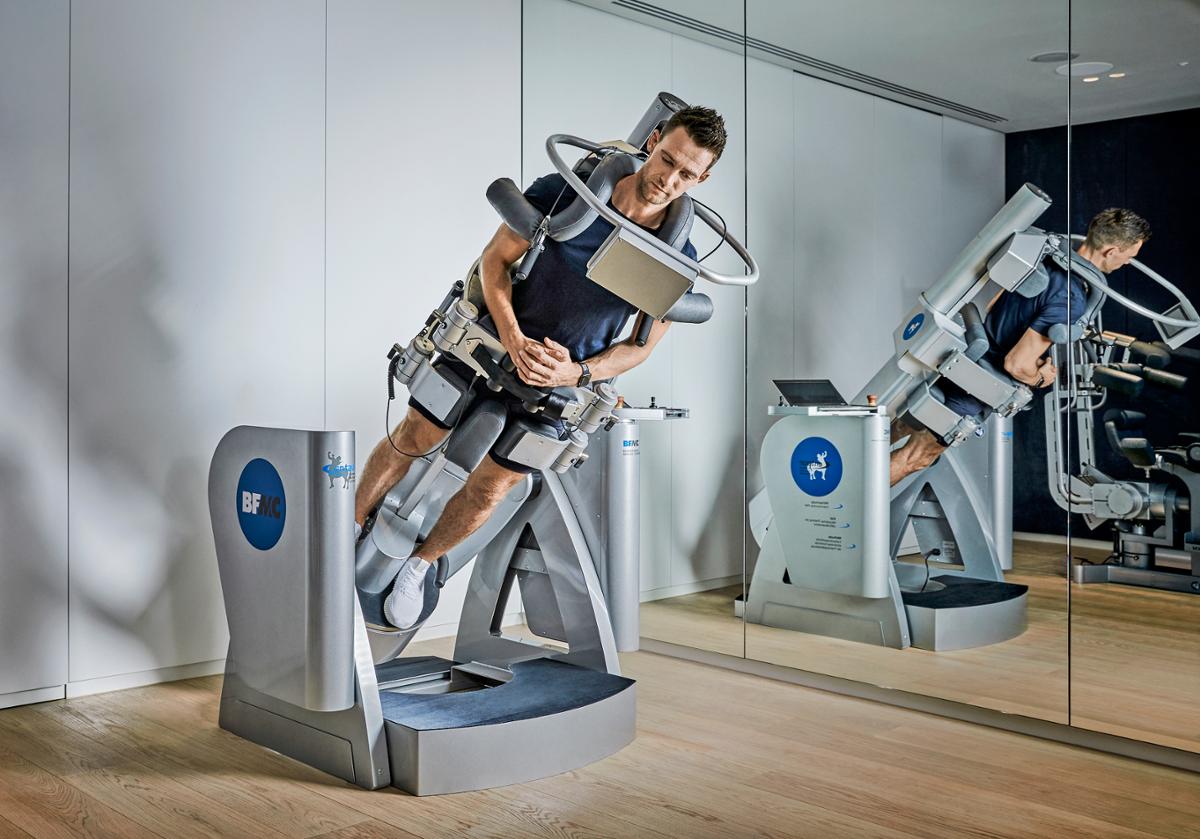
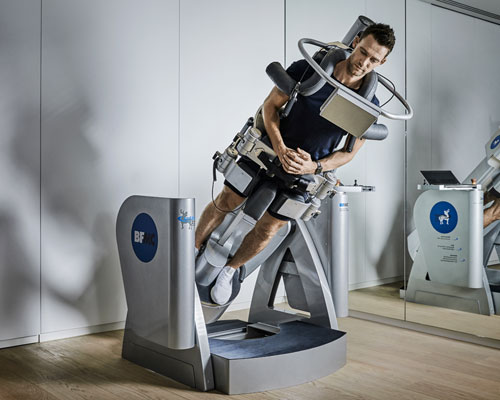
The Lanserhof Spine Lab in London tests for neuromuscular imbalances / photo: Lanserhof at the arts club, Martin Morell
With medical and technological innovations launching daily it seems, there are countless ways to assess any number of aspects of one’s health. From MediSync – a cap with sensors that uses AI to give a reading of brain activity in just 10 minutes – to Gut Note – an app that turns your mobile into a microbiome detector – and Grail – a blood test targeting 50 types of cancers – there’s something for everyone.
With so many options either available directly or known by consumers, spas and wellness centres need to up their game in order to remain a respected authority. But keeping up with all the releases is a job in itself, so how are operators managing to track this and also decide which diagnostics they’ll invest in or not?
In addition, interpreting the data of diagnostics often requires the skills of someone who’s both number-focused and medically-minded and capable of personalising treatments accordingly, as well as capable of delivering modalities with the compassion and empathy that spa therapists are known for.
Successfully offering advanced and modern diagnostics, without losing the high-touch care our businesses are known for, takes careful planning and execution.
We talk to three highly-regarded destination and resort spas about how they’re striving to do this.
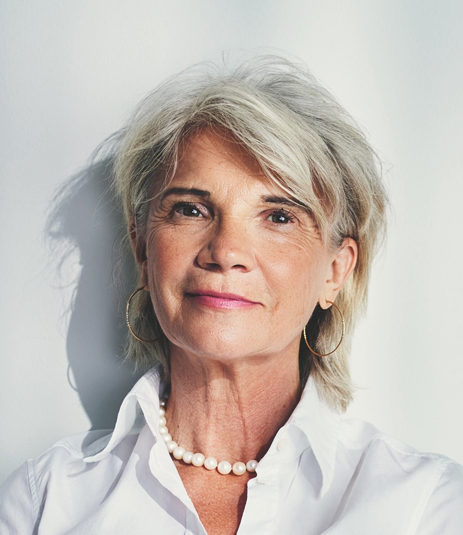
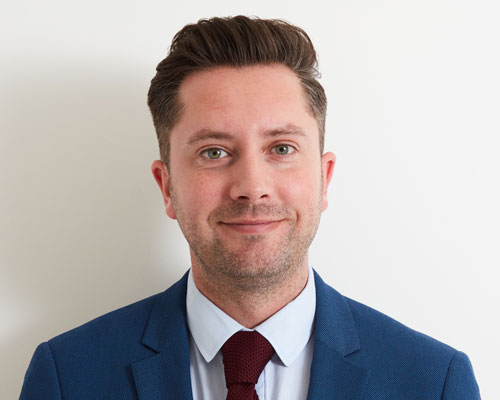
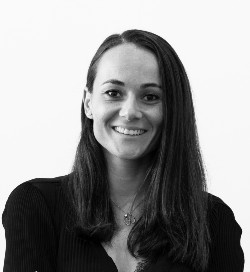
Elke Benedetto-Reisch group medical director, Lanserhof
Group medical director, Lanserhof
Photo: Lanserhof, Max Koenig
Our five clinics are known for their detoxification programmes, with most clients spending a week in them under medical supervision and with a strict nutritional programme.
Each location also has a variety of the latest medical diagnostic technology. I receive marketing on new technology every day, companies come to pitch to us and staff travel to look at new diagnostics in action. Devices have to fit our concept – they need to be high quality and modern, yet simplistic, reliable and add to our understanding of a person as a whole. We look at everything critically and many times tests are not adequate.
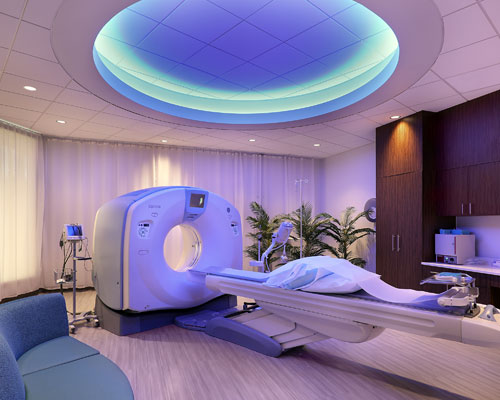
One of our all-encompassing, easy-to-use tests is Global Diagnostics which uses electromagnetic frequencies to measure the body’s energetic structure. This reveals any number of hidden conditions such as toxic overload, lymphatic blockages and active viruses. In the near future, we’ll also be introducing an MRI machine at Lans Tegernsee.
Our Spine Lab and Movement Lab in London are great examples of cutting-edge diagnostics. They use the Centaur which tests for neuromuscular imbalances in the spine and back. They’re staffed with sports scientists who analyse gait and movement to detect irregularities.
While we take advantage of technological advancements, remembering the human element is key. Many patients arrive with chronic issues, liver overload, joint problems and headaches and machinery can only capture so much of that.
That’s where our professional observations and individualised treatments come in. Upon check-in, Lanserhof guests spend one hour in a medical examination with a physician, who uses their training, patient input (learning about needs and expectations) and medical data to develop a treatment plan for the stay.
During a week-long visit, the patient will see the doctor an additional three to four times. Our specialists – osteopaths, physiotherapists, sports scientists, energetics, and dermatological and cosmetological experts – also have meetings to discuss patient progress and share information which directs treatment protocols.
Devices have to fit our concept – they
need to be high quality and modern,
yet simplistic and reliable.
Many tests are not adequate
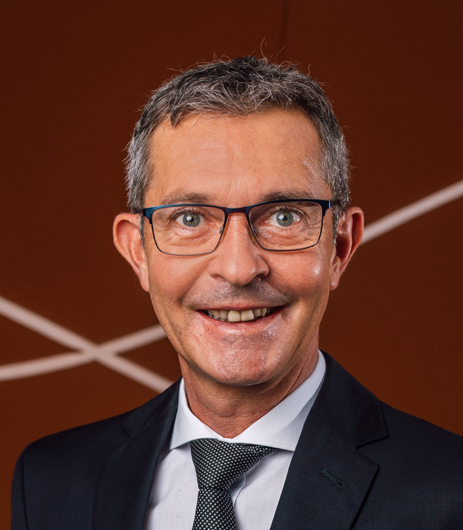
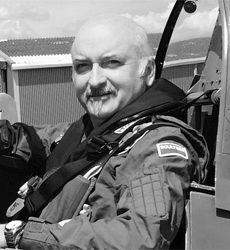
Hans Peter Veit director of spa & wellbeing, Grand Resort Bad Ragaz
Director of spa & wellbeing, Grand Resort Bad Ragaz
photo: Grand Resort Bad Ragaz
Our alpine setting and natural thermal waters mean we’re perfectly positioned to offer healing modalities in collaboration with Medical Centre Bad Ragaz, one of Europe’s largest healthcare and nutrition facilities, onsite.
Over 20 medical doctors with a wide array of expertise – including the physician for the Swiss National Ski Team – have offices here and schedule in time with hotel guests as well as their own patients.
We certainly see the benefits of having the centre onsite and having medical and spa staff sharing their findings with each other. Guests choosing our Smart Aging programme, for example, will see a dermatologist who performs diagnostics and directs the protocols of the therapy staff, who have access to the relevant medical background of the guest.
Could spa staff offer diagnostics and tests themselves? That heavily depends on the kind of tests and if they’re capable of performing analysis.
The majority of our guests visit for a specific health-related programme with the most popular being our one- to two-week Weight Loss package. Nutritionists oversee meals and advice is given on how to be more active.
Two of the key tests we use are spiroegrometry and functional movement analysis.
Spiroergometry measures a person’s breathing, oxygen consumption, carbon dioxide production and heart rate during ramped-up exercises. This can be used to determine the maximum oxygen uptake and the fat metabolic rate to pinpoint effective training zones for beginners through to athletes.
A questionnaire will determine which functional movement areas to measure to conclude a guest’s strength and flexibility. Based on the results, we’ll create a home programme which targets personal weaknesses and helps them feel more comfortable in their body.
We see diagnostics as the future and plan on investing millions of Euros in this area.
We see diagnostics as the future
and plan on investing millions
of Euros in this area
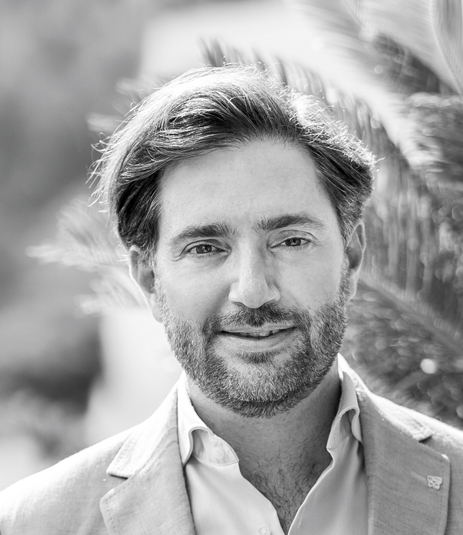
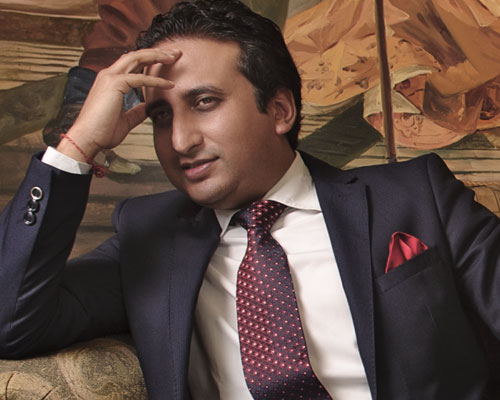
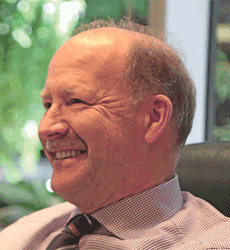
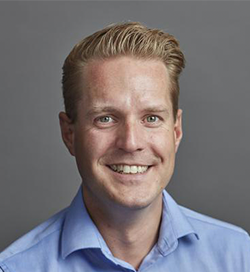
Juan Pablo Barassi chief operating officer, SHA Wellness
Chief operating officer, SHA Wellness
photo: SHA Wellness
With a staff numbering approximately 300 people, including 20 medical professionals, SHA is constantly creating and offering new services and programmes.
Our latest innovation is a Diagnostic Health Screening Lab, which includes a circuit of state-of-the-art equipment that delivers insightful metrics in just 30 minutes so bespoke programmes can begin straight away. Formerly, these separate tests and data analyses would have been carried out over the first few days.
Results obtained from the circuit include measurement of the guest’s heart rate, pulse wave, an overview of the functioning of the autonomic nervous system, information on the level of physical and mental stress, glycated proteins in tissue, vital sign collections, a body composition analysis and a 3D body scanner as well as a neurocognitive test.
What’s so different about this is the multidisciplinary approach that enables us to not only diagnose but also spot warning signs and make recommendations. A blood test, for example, gives a lot of information but it is a fixed picture – it may tell us that our cholesterol is fine at the moment, but only an arterial elasticity test will tell us if that’s always been the case.
The biggest challenge we’ve faced is ensuring staff aren’t overwhelmed with data. Our IT team has developed a way to present results that aren’t just a PDF printout. Simple graphs for any aspect of a person’s health show which variables are in or out of range and these help both the doctor and patient understand results in a very visual way.
We also have a dedicated innovation team which assesses the efficacy and suitability of new technologies. It presents findings every month and is currently researching devices which determine the health of skin and hair. We expect this to be a new stage within our diagnostic circuit and it’s just one example of how we’re constantly advancing our offering.
The biggest challenge we’ve
faced is ensuring staff aren’t
overwhelmed with data
A diagnostic circuit delivers a myriad of results in just 30 minutes / photo: SHA Wellness
Read more from this issue of Attractions Management magazine
View contents of Attractions Management 2023 issue 2
Editor's letter: Feeling optimistic
Revenue is at an all-time high and democratic wellness is bubbling under. It’s an exciting time for spas, says Katie Barnes
Spa People: Taichi Kuma
The son of celebrated architect Kengo Kuma designs a striking shell-like sauna in Japan
Spa People: Ana Ramirez
On her plans to roll out Ancestral Handmade, her regenerative wellness hotel concept, across South America – starting in Colombia
Spa People: Daniel Golby
On ESPA Life's debut in Doha and the markets he has his eyes set on for future expansion
News report: Milestone moment
US spa industry revenue exceeds the US$20bn mark according to ISPA's latest Big Five statistics
Sponsored: MyBlend: A new vision of beauty
Clarins has elevated its myBlend brand with new tech and formulations, as well as forging powerful alliances with global spa partners
Sponsored: Gharieni: Mind expansion
With the quest for better mental health growing ever stronger in the wake of the global pandemic, we ask Gharieni CEO Sammy Gharieni how the company’s wellness technologies are helping spas to meet this consumer demand
Top team: Hilton
Sleep, fitness and new spa concepts are top of the list as Hilton looks to deliver wellness across its 7,000 properties
Thermal spa: The heat is on
With 50 hot springs projects underway, the US is looking to establish itself as a thermal spa destination. Jane Kitchen takes a closer look
As the lines that once separated spas and medical businesses
continue to blur, Lisa Starr investigates how leading operators are using the latest in diagnostic technology to stay ahead of competition
The Lanserhof Spine Lab in London tests for neuromuscular imbalances / photo: Lanserhof at the arts club, Martin Morell
With medical and technological innovations launching daily it seems, there are countless ways to assess any number of aspects of one’s health. From MediSync – a cap with sensors that uses AI to give a reading of brain activity in just 10 minutes – to Gut Note – an app that turns your mobile into a microbiome detector – and Grail – a blood test targeting 50 types of cancers – there’s something for everyone.
With so many options either available directly or known by consumers, spas and wellness centres need to up their game in order to remain a respected authority. But keeping up with all the releases is a job in itself, so how are operators managing to track this and also decide which diagnostics they’ll invest in or not?
In addition, interpreting the data of diagnostics often requires the skills of someone who’s both number-focused and medically-minded and capable of personalising treatments accordingly, as well as capable of delivering modalities with the compassion and empathy that spa therapists are known for.
Successfully offering advanced and modern diagnostics, without losing the high-touch care our businesses are known for, takes careful planning and execution.
We talk to three highly-regarded destination and resort spas about how they’re striving to do this.
Elke Benedetto-Reisch group medical director, Lanserhof
Group medical director, Lanserhof
Photo: Lanserhof, Max Koenig
Our five clinics are known for their detoxification programmes, with most clients spending a week in them under medical supervision and with a strict nutritional programme.
Each location also has a variety of the latest medical diagnostic technology. I receive marketing on new technology every day, companies come to pitch to us and staff travel to look at new diagnostics in action. Devices have to fit our concept – they need to be high quality and modern, yet simplistic, reliable and add to our understanding of a person as a whole. We look at everything critically and many times tests are not adequate.
One of our all-encompassing, easy-to-use tests is Global Diagnostics which uses electromagnetic frequencies to measure the body’s energetic structure. This reveals any number of hidden conditions such as toxic overload, lymphatic blockages and active viruses. In the near future, we’ll also be introducing an MRI machine at Lans Tegernsee.
Our Spine Lab and Movement Lab in London are great examples of cutting-edge diagnostics. They use the Centaur which tests for neuromuscular imbalances in the spine and back. They’re staffed with sports scientists who analyse gait and movement to detect irregularities.
While we take advantage of technological advancements, remembering the human element is key. Many patients arrive with chronic issues, liver overload, joint problems and headaches and machinery can only capture so much of that.
That’s where our professional observations and individualised treatments come in. Upon check-in, Lanserhof guests spend one hour in a medical examination with a physician, who uses their training, patient input (learning about needs and expectations) and medical data to develop a treatment plan for the stay.
During a week-long visit, the patient will see the doctor an additional three to four times. Our specialists – osteopaths, physiotherapists, sports scientists, energetics, and dermatological and cosmetological experts – also have meetings to discuss patient progress and share information which directs treatment protocols.
Devices have to fit our concept – they
need to be high quality and modern,
yet simplistic and reliable.
Many tests are not adequate
Hans Peter Veit director of spa & wellbeing, Grand Resort Bad Ragaz
Director of spa & wellbeing, Grand Resort Bad Ragaz
photo: Grand Resort Bad Ragaz
Our alpine setting and natural thermal waters mean we’re perfectly positioned to offer healing modalities in collaboration with Medical Centre Bad Ragaz, one of Europe’s largest healthcare and nutrition facilities, onsite.
Over 20 medical doctors with a wide array of expertise – including the physician for the Swiss National Ski Team – have offices here and schedule in time with hotel guests as well as their own patients.
We certainly see the benefits of having the centre onsite and having medical and spa staff sharing their findings with each other. Guests choosing our Smart Aging programme, for example, will see a dermatologist who performs diagnostics and directs the protocols of the therapy staff, who have access to the relevant medical background of the guest.
Could spa staff offer diagnostics and tests themselves? That heavily depends on the kind of tests and if they’re capable of performing analysis.
The majority of our guests visit for a specific health-related programme with the most popular being our one- to two-week Weight Loss package. Nutritionists oversee meals and advice is given on how to be more active.
Two of the key tests we use are spiroegrometry and functional movement analysis.
Spiroergometry measures a person’s breathing, oxygen consumption, carbon dioxide production and heart rate during ramped-up exercises. This can be used to determine the maximum oxygen uptake and the fat metabolic rate to pinpoint effective training zones for beginners through to athletes.
A questionnaire will determine which functional movement areas to measure to conclude a guest’s strength and flexibility. Based on the results, we’ll create a home programme which targets personal weaknesses and helps them feel more comfortable in their body.
We see diagnostics as the future and plan on investing millions of Euros in this area.
We see diagnostics as the future
and plan on investing millions
of Euros in this area
Juan Pablo Barassi chief operating officer, SHA Wellness
Chief operating officer, SHA Wellness
photo: SHA Wellness
With a staff numbering approximately 300 people, including 20 medical professionals, SHA is constantly creating and offering new services and programmes.
Our latest innovation is a Diagnostic Health Screening Lab, which includes a circuit of state-of-the-art equipment that delivers insightful metrics in just 30 minutes so bespoke programmes can begin straight away. Formerly, these separate tests and data analyses would have been carried out over the first few days.
Results obtained from the circuit include measurement of the guest’s heart rate, pulse wave, an overview of the functioning of the autonomic nervous system, information on the level of physical and mental stress, glycated proteins in tissue, vital sign collections, a body composition analysis and a 3D body scanner as well as a neurocognitive test.
What’s so different about this is the multidisciplinary approach that enables us to not only diagnose but also spot warning signs and make recommendations. A blood test, for example, gives a lot of information but it is a fixed picture – it may tell us that our cholesterol is fine at the moment, but only an arterial elasticity test will tell us if that’s always been the case.
The biggest challenge we’ve faced is ensuring staff aren’t overwhelmed with data. Our IT team has developed a way to present results that aren’t just a PDF printout. Simple graphs for any aspect of a person’s health show which variables are in or out of range and these help both the doctor and patient understand results in a very visual way.
We also have a dedicated innovation team which assesses the efficacy and suitability of new technologies. It presents findings every month and is currently researching devices which determine the health of skin and hair. We expect this to be a new stage within our diagnostic circuit and it’s just one example of how we’re constantly advancing our offering.
The biggest challenge we’ve
faced is ensuring staff aren’t
overwhelmed with data
A diagnostic circuit delivers a myriad of results in just 30 minutes / photo: SHA Wellness
Read more from this issue of Attractions Management magazine
View contents of Attractions Management 2023 issue 2
Editor's letter: Feeling optimistic
Revenue is at an all-time high and democratic wellness is bubbling under. It’s an exciting time for spas, says Katie Barnes
Spa People: Taichi Kuma
The son of celebrated architect Kengo Kuma designs a striking shell-like sauna in Japan
Spa People: Ana Ramirez
On her plans to roll out Ancestral Handmade, her regenerative wellness hotel concept, across South America – starting in Colombia
Spa People: Daniel Golby
On ESPA Life's debut in Doha and the markets he has his eyes set on for future expansion
News report: Milestone moment
US spa industry revenue exceeds the US$20bn mark according to ISPA's latest Big Five statistics
Sponsored: MyBlend: A new vision of beauty
Clarins has elevated its myBlend brand with new tech and formulations, as well as forging powerful alliances with global spa partners
Sponsored: Gharieni: Mind expansion
With the quest for better mental health growing ever stronger in the wake of the global pandemic, we ask Gharieni CEO Sammy Gharieni how the company’s wellness technologies are helping spas to meet this consumer demand
Top team: Hilton
Sleep, fitness and new spa concepts are top of the list as Hilton looks to deliver wellness across its 7,000 properties
Thermal spa: The heat is on
With 50 hot springs projects underway, the US is looking to establish itself as a thermal spa destination. Jane Kitchen takes a closer look
London Museum will open four new food and drink destinations when it launches its new home
at Smithfield on 28 November, making hospitality a central part of the visitor experience at one
of the capital's biggest cultural openings of the year.
OMA has completed a major transformation of New York's New Museum, creating a larger
cultural campus that combines expanded exhibition spaces with learning, performance,
hospitality and public programming.
A US$50 million (£44.2 million, €51.2 million) transformation of Chicago's historic McCormick
Mansion has created a new destination that combines live magic, immersive theatre, dining and
private membership under one roof.
The Montana Historical Society has officially celebrated the opening of its new Montana
Heritage
Center, a US$107 million (£79 million, €92 million) destination that combines immersive
storytelling with cutting-edge audiovisual technology to bring the sta
San Antonio Zoo has reported a US$283 million economic impact for 2025, following a decade-
long transformation programme that has seen almost US$200 million invested into the Texas
attraction.
Plans for the AU$180 million redevelopment of Reef HQ Aquarium in Townsville, Australia, are
progressing, with the project set to transform the attraction into a global centre for reef
education and conservation.
Abu Dhabi-based investment firm Mubadala Capital has made a binding, fully financed
€1 billion
offer to acquire Pierre and Vacances SA, the European holiday resort operator behind the
continental European Center Parcs business.
Disney has reaffirmed its commitment to investing US$30 billion in its US parks and cruise
business by 2033, using new America250 celebrations to underline the role its attractions play
in supporting jobs, tourism and economic growth.
Expo 2030 Riyadh is being planned as a permanent visitor destination, with organisers
confirming the six-million-square-metre site will become a Global Village after the event closes.
The owner of one of Australia's best-known waterparks has acquired a major competitor,
creating a new attractions business spanning two of the country's largest visitor destinations.