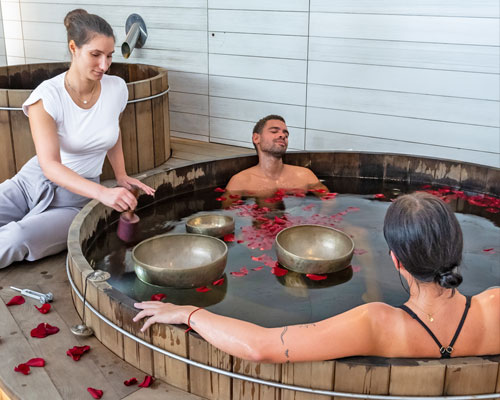
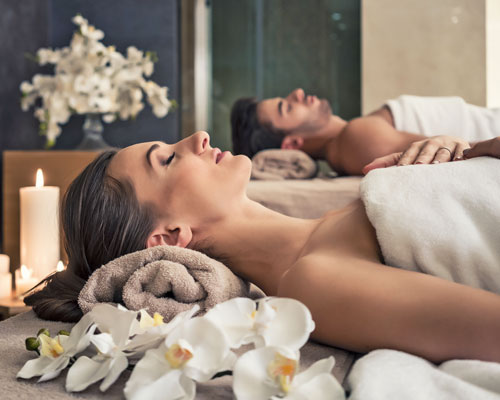
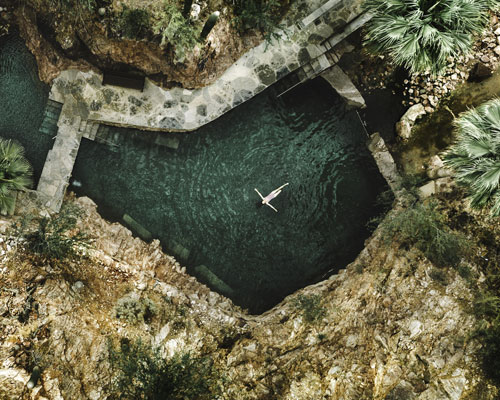
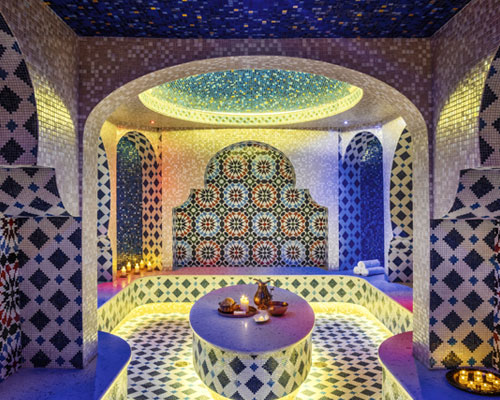
The Inns of Aurora in New York state, USA, has a WELL Certified spa / photo: Bryan Peck, courtesy of the Inns of Aurora
A new study in the Journal of Building and Environment* has found that environments which focus on things such as light, water and air quality can have a significant impact on our wellbeing in a number of ways.
For the peer-reviewed research, a team from universities in the USA which specialise in architectural engineering and design, analysed the impact of WELL Certification using more than 1,300 pre- and post-occupancy survey responses from six companies in North America.
Launched in 2014, WELL offers a framework for healthy buildings spanning 108 features across 10 categories of air, water, nourishment, light, movement, thermal comfort, sound materials, mind and community (see www.spabusiness.com/PaulScialla). It’s being used in 125 countries by more than 100 Fortune 500 companies and brands such as Four Seasons Beverly Hills.
WELL Certification is awarded to companies which meet certain requirements of the WELL Building Standard.
Specifically, this study focused on WELL Certified workplaces and found a number of benefits for occupants:
• A near 30 per cent improvement in overall satisfaction with the workplace, which jumped from 42 per cent to 70 per cent
• A 26 per cent overall increase in reported wellbeing scores
• A 10 per cent increase in mental health and a 2 per cent increase in physical health
• A 10-point jump in median productivity scores
Rachel Hogdon, president and CEO of the International WELL Building Institute, creator of the standard, says this is the first time researchers have published rigorous longitudinal research into its certification. She adds: “It shows unequivocally how a people-first approach supports wide-ranging benefits for occupants and organisations alike”.
Lead study author Nasim Ildiri concludes that the findings “serve as another powerful accelerant for healthy building adoption”.
*Source. Ildiri, N et al. Impact of WELL Certification on Occupant Satisfaction and Perceived Health, Well-being, and Productivity: A Multi-Office Pre- Versus Post-Occupancy Evaluation. Journal of Building and Environment. October 2022
Read more from this issue of Attractions Management magazine
View contents of Attractions Management 2023 issue 2
Editor's letter: Feeling optimistic
Revenue is at an all-time high and democratic wellness is bubbling under. It’s an exciting time for spas, says Katie Barnes
Spa People: Taichi Kuma
The son of celebrated architect Kengo Kuma designs a striking shell-like sauna in Japan
Spa People: Ana Ramirez
On her plans to roll out Ancestral Handmade, her regenerative wellness hotel concept, across South America – starting in Colombia
Spa People: Daniel Golby
On ESPA Life's debut in Doha and the markets he has his eyes set on for future expansion
News report: Milestone moment
US spa industry revenue exceeds the US$20bn mark according to ISPA's latest Big Five statistics
Sponsored: MyBlend: A new vision of beauty
Clarins has elevated its myBlend brand with new tech and formulations, as well as forging powerful alliances with global spa partners
Sponsored: Gharieni: Mind expansion
With the quest for better mental health growing ever stronger in the wake of the global pandemic, we ask Gharieni CEO Sammy Gharieni how the company’s wellness technologies are helping spas to meet this consumer demand
Top team: Hilton
Sleep, fitness and new spa concepts are top of the list as Hilton looks to deliver wellness across its 7,000 properties
Thermal spa: The heat is on
With 50 hot springs projects underway, the US is looking to establish itself as a thermal spa destination. Jane Kitchen takes a closer look
The Inns of Aurora in New York state, USA, has a WELL Certified spa / photo: Bryan Peck, courtesy of the Inns of Aurora
A new study in the Journal of Building and Environment* has found that environments which focus on things such as light, water and air quality can have a significant impact on our wellbeing in a number of ways.
For the peer-reviewed research, a team from universities in the USA which specialise in architectural engineering and design, analysed the impact of WELL Certification using more than 1,300 pre- and post-occupancy survey responses from six companies in North America.
Launched in 2014, WELL offers a framework for healthy buildings spanning 108 features across 10 categories of air, water, nourishment, light, movement, thermal comfort, sound materials, mind and community (see www.spabusiness.com/PaulScialla). It’s being used in 125 countries by more than 100 Fortune 500 companies and brands such as Four Seasons Beverly Hills.
WELL Certification is awarded to companies which meet certain requirements of the WELL Building Standard.
Specifically, this study focused on WELL Certified workplaces and found a number of benefits for occupants:
• A near 30 per cent improvement in overall satisfaction with the workplace, which jumped from 42 per cent to 70 per cent
• A 26 per cent overall increase in reported wellbeing scores
• A 10 per cent increase in mental health and a 2 per cent increase in physical health
• A 10-point jump in median productivity scores
Rachel Hogdon, president and CEO of the International WELL Building Institute, creator of the standard, says this is the first time researchers have published rigorous longitudinal research into its certification. She adds: “It shows unequivocally how a people-first approach supports wide-ranging benefits for occupants and organisations alike”.
Lead study author Nasim Ildiri concludes that the findings “serve as another powerful accelerant for healthy building adoption”.
*Source. Ildiri, N et al. Impact of WELL Certification on Occupant Satisfaction and Perceived Health, Well-being, and Productivity: A Multi-Office Pre- Versus Post-Occupancy Evaluation. Journal of Building and Environment. October 2022
Read more from this issue of Attractions Management magazine
View contents of Attractions Management 2023 issue 2
Editor's letter: Feeling optimistic
Revenue is at an all-time high and democratic wellness is bubbling under. It’s an exciting time for spas, says Katie Barnes
Spa People: Taichi Kuma
The son of celebrated architect Kengo Kuma designs a striking shell-like sauna in Japan
Spa People: Ana Ramirez
On her plans to roll out Ancestral Handmade, her regenerative wellness hotel concept, across South America – starting in Colombia
Spa People: Daniel Golby
On ESPA Life's debut in Doha and the markets he has his eyes set on for future expansion
News report: Milestone moment
US spa industry revenue exceeds the US$20bn mark according to ISPA's latest Big Five statistics
Sponsored: MyBlend: A new vision of beauty
Clarins has elevated its myBlend brand with new tech and formulations, as well as forging powerful alliances with global spa partners
Sponsored: Gharieni: Mind expansion
With the quest for better mental health growing ever stronger in the wake of the global pandemic, we ask Gharieni CEO Sammy Gharieni how the company’s wellness technologies are helping spas to meet this consumer demand
Top team: Hilton
Sleep, fitness and new spa concepts are top of the list as Hilton looks to deliver wellness across its 7,000 properties
Thermal spa: The heat is on
With 50 hot springs projects underway, the US is looking to establish itself as a thermal spa destination. Jane Kitchen takes a closer look
London Museum will open four new food and drink destinations when it launches its new home
at Smithfield on 28 November, making hospitality a central part of the visitor experience at one
of the capital's biggest cultural openings of the year.
OMA has completed a major transformation of New York's New Museum, creating a larger
cultural campus that combines expanded exhibition spaces with learning, performance,
hospitality and public programming.
A US$50 million (£44.2 million, €51.2 million) transformation of Chicago's historic McCormick
Mansion has created a new destination that combines live magic, immersive theatre, dining and
private membership under one roof.
The Montana Historical Society has officially celebrated the opening of its new Montana
Heritage
Center, a US$107 million (£79 million, €92 million) destination that combines immersive
storytelling with cutting-edge audiovisual technology to bring the sta
San Antonio Zoo has reported a US$283 million economic impact for 2025, following a decade-
long transformation programme that has seen almost US$200 million invested into the Texas
attraction.
Plans for the AU$180 million redevelopment of Reef HQ Aquarium in Townsville, Australia, are
progressing, with the project set to transform the attraction into a global centre for reef
education and conservation.
Abu Dhabi-based investment firm Mubadala Capital has made a binding, fully financed
€1 billion
offer to acquire Pierre and Vacances SA, the European holiday resort operator behind the
continental European Center Parcs business.
Disney has reaffirmed its commitment to investing US$30 billion in its US parks and cruise
business by 2033, using new America250 celebrations to underline the role its attractions play
in supporting jobs, tourism and economic growth.
Expo 2030 Riyadh is being planned as a permanent visitor destination, with organisers
confirming the six-million-square-metre site will become a Global Village after the event closes.
The owner of one of Australia's best-known waterparks has acquired a major competitor,
creating a new attractions business spanning two of the country's largest visitor destinations.