The happiest people outlived those who were miserable
The argument that positive wellbeing could – and should – be used in the fight against bad health and stress has been highlighted by a UK study*. Scientists from the University College of London have found that the happiest people, who have a more positive outlook, are 35 per cent less likely to die in the short term than those who are miserable.
While many existing studies already show that happy people are healthier, this study is unique because the participants were accurately reporting their mood in real time rather than recollecting them at a later date which can prove unreliable.
In the mood The study was based on 3,853 people in total aged between 52 to 79. Using the ecological momentary assessment (EMA) method, they recorded their mood four times in one day – on waking, 30 minutes after waking, at 7pm and when they went to bed.
Each time, they rated the extent to which they felt happy, excited, content, worried, anxious or fearful on a scale of one to four. The first three feelings were combined and described as positive affect (PA) in the results.
The subjects were then divided into three groups based on their PA rankings – high, medium and low. After five years, the researchers followed up with the members of each group to record who had died during that time. Factors such as age, gender, depression, health and lifestyle – which might have influenced the results – were taken into account.
Don’t worry, be happy The group with the highest PA scores had a gradual increase in lifespan it was found. Only 3.6 per cent of the high-PA group had died during the five years. In contrast, 4.6 per cent in the middle bracket and 7.3 per cent in the lower third had died.
In short, the happiest people were 35 per cent less likely to die. Yet more negative emotions did not reverse the trend and had little influence on survival. “We were surprised that measures obtained over one single day might predict so strongly,” said lead author Andrew Steptoe in an article on the health-based website healthymagination.com. Other findings the website highlighted were:
- The happiest people were slightly younger and more likely to be male and married - Positive emotions overall were lowest at 7am and highest at 7pm - Ethnicity, paid employment, education and presence of serious disease made no significant difference to PA - Smoking was less common and physical activity higher among those with higher PAs - Happier people had higher opinions of their own health
However, Steptoe was keen to point out that the results don’t prove that happiness causes people to live longer. He told UK newspaper The Telegraph: “The happiness could be a marker of some other aspect of people’s lives which is particularly important for health. For example, happiness is quite strongly linked to good social relationships – maybe it’s things like that which are account for the link between happiness and health.”
He also suspects that biological processes could be at work: other studies have shown that positive moods reduce stress-related hormones and boost the immune system.
*Steptoe A and Wardle J. Positive affect measured using ecological momentary assessment and survival in older men and women. PNAS. Vol 108, no 45, November 2011
Read more from this issue of Attractions Management magazine
View contents of Attractions Management 2012 issue 2
Ask an expert...: overbuilding
Are large, extravagant spas and treatment rooms really sustainable? Or is it time to wise up about spa design? Katie Barnes reports
Interview: Darrell Metzger
Destination Resorts is creating world-class tourist developments in Malaysia on behalf of the government. Jennifer Harbottle speaks to the man heading it all up
Spa management training: The learning curve – part one
On the eve of a new GSWS study into the state of spa management training globally, we launch a three-part series to delve into our industry’s educational offering and operational needs. Rhianon Howells gets studying
US Hotel spa research: Closer look
Leonor Stanton analyses the findings from PKF’s latest Trends® in the Hotel Spa Industry study and gets the reaction of top spa professionals
Profile: Susie Ellis
SpaFinder Inc president and the face of the Global Spa & Wellness Summit talks to Rhianon Howells about the art of uncovering up-and-coming industry trends, ethics and the importance of innovation
Resort Spa: Dual purpose
Switzerland’s renown Dolder Grand Spa has an offering to satisfy its onsite, longer-staying guests as well as local day spa customers. Katie Barnes pays a visit to this standout facility
Design: Jean-Michel Gathy
The owner of Asia-based design company Denniston has worked on some of the world’s leading spas and resorts. Jennifer Harbottle finds out about his passion for creativity
Samui spotlight:
The second most popular Thai island has been transformed from a backpackers haven to a luxury lifestyle destination with a number of new five-star spa resorts. Neena Dhillon reports
Middle East benchmarks: Peaks & Troughs
Leonor Stanton reviews hotel spa performance in Lebanon, Jordan and Doha following the 2011 benchmark surveys recently released by PwC in the Middle East
Online wellness gaming: Game Changer
Scoreboards, socialisation, challenges, rewards and feedback – the compelling components of online gaming could be key to getting people to become healthy says Susie Ellis
Kuwait focus: Cue Kuwait
The first in a two-part series on the Kuwaiti spa market by Kate Cracknell focuses on the spa-goers in the capital and the new Six Senses Spa at the Hotel Missoni
Research: Happiness
Older adults who are the most content and have a more positive outlook are likely to live longer according to a new study based on 3,800 participants
An opportunity to reimagine one of the UK’s most recognisable towers has been formally
opened by Rivington Hark, as St Johns Beacon invites operators and partners to shape its
next phase. [more...]
The happiest people outlived those who were miserable
The argument that positive wellbeing could – and should – be used in the fight against bad health and stress has been highlighted by a UK study*. Scientists from the University College of London have found that the happiest people, who have a more positive outlook, are 35 per cent less likely to die in the short term than those who are miserable.
While many existing studies already show that happy people are healthier, this study is unique because the participants were accurately reporting their mood in real time rather than recollecting them at a later date which can prove unreliable.
In the mood The study was based on 3,853 people in total aged between 52 to 79. Using the ecological momentary assessment (EMA) method, they recorded their mood four times in one day – on waking, 30 minutes after waking, at 7pm and when they went to bed.
Each time, they rated the extent to which they felt happy, excited, content, worried, anxious or fearful on a scale of one to four. The first three feelings were combined and described as positive affect (PA) in the results.
The subjects were then divided into three groups based on their PA rankings – high, medium and low. After five years, the researchers followed up with the members of each group to record who had died during that time. Factors such as age, gender, depression, health and lifestyle – which might have influenced the results – were taken into account.
Don’t worry, be happy The group with the highest PA scores had a gradual increase in lifespan it was found. Only 3.6 per cent of the high-PA group had died during the five years. In contrast, 4.6 per cent in the middle bracket and 7.3 per cent in the lower third had died.
In short, the happiest people were 35 per cent less likely to die. Yet more negative emotions did not reverse the trend and had little influence on survival. “We were surprised that measures obtained over one single day might predict so strongly,” said lead author Andrew Steptoe in an article on the health-based website healthymagination.com. Other findings the website highlighted were:
- The happiest people were slightly younger and more likely to be male and married - Positive emotions overall were lowest at 7am and highest at 7pm - Ethnicity, paid employment, education and presence of serious disease made no significant difference to PA - Smoking was less common and physical activity higher among those with higher PAs - Happier people had higher opinions of their own health
However, Steptoe was keen to point out that the results don’t prove that happiness causes people to live longer. He told UK newspaper The Telegraph: “The happiness could be a marker of some other aspect of people’s lives which is particularly important for health. For example, happiness is quite strongly linked to good social relationships – maybe it’s things like that which are account for the link between happiness and health.”
He also suspects that biological processes could be at work: other studies have shown that positive moods reduce stress-related hormones and boost the immune system.
*Steptoe A and Wardle J. Positive affect measured using ecological momentary assessment and survival in older men and women. PNAS. Vol 108, no 45, November 2011
Read more from this issue of Attractions Management magazine
View contents of Attractions Management 2012 issue 2
Ask an expert...: overbuilding
Are large, extravagant spas and treatment rooms really sustainable? Or is it time to wise up about spa design? Katie Barnes reports
Interview: Darrell Metzger
Destination Resorts is creating world-class tourist developments in Malaysia on behalf of the government. Jennifer Harbottle speaks to the man heading it all up
Spa management training: The learning curve – part one
On the eve of a new GSWS study into the state of spa management training globally, we launch a three-part series to delve into our industry’s educational offering and operational needs. Rhianon Howells gets studying
US Hotel spa research: Closer look
Leonor Stanton analyses the findings from PKF’s latest Trends® in the Hotel Spa Industry study and gets the reaction of top spa professionals
Profile: Susie Ellis
SpaFinder Inc president and the face of the Global Spa & Wellness Summit talks to Rhianon Howells about the art of uncovering up-and-coming industry trends, ethics and the importance of innovation
Resort Spa: Dual purpose
Switzerland’s renown Dolder Grand Spa has an offering to satisfy its onsite, longer-staying guests as well as local day spa customers. Katie Barnes pays a visit to this standout facility
Design: Jean-Michel Gathy
The owner of Asia-based design company Denniston has worked on some of the world’s leading spas and resorts. Jennifer Harbottle finds out about his passion for creativity
Samui spotlight:
The second most popular Thai island has been transformed from a backpackers haven to a luxury lifestyle destination with a number of new five-star spa resorts. Neena Dhillon reports
Middle East benchmarks: Peaks & Troughs
Leonor Stanton reviews hotel spa performance in Lebanon, Jordan and Doha following the 2011 benchmark surveys recently released by PwC in the Middle East
Online wellness gaming: Game Changer
Scoreboards, socialisation, challenges, rewards and feedback – the compelling components of online gaming could be key to getting people to become healthy says Susie Ellis
Kuwait focus: Cue Kuwait
The first in a two-part series on the Kuwaiti spa market by Kate Cracknell focuses on the spa-goers in the capital and the new Six Senses Spa at the Hotel Missoni
Research: Happiness
Older adults who are the most content and have a more positive outlook are likely to live longer according to a new study based on 3,800 participants
Hotel de France, located on the British Isle of Jersey, has created a wellness retreat package
that includes a hot yoga session that will take place in Jersey Zoo’s butterfly sanctuary.
A new immersive attraction designed to transport visitors into the final hours of ancient Pompeii
is preparing to open near the world-famous archaeological site in southern Italy.
Experience design company, BRC Imagination Arts, has completed a transition that sees founder
Bob Rogers pass ownership of the business to four long-serving senior executives, while
remaining actively involved with the company.
Movie Park Germany has opened a new Paramount Pictures-themed attraction as part of its 30th
anniversary celebrations, using immersive storytelling and adaptive reuse to reinforce the park’s
longstanding “Hollywood in Germany” positioning.
Therme Manchester’s 28-acre development, which will include interconnected glass pavilions
that measure 65,000sq m, will be the largest bathing and wellbeing attraction in the world once
complete, according to prof David Russell, CEO of Therme UK.
Efteling has opened Hooghmoed, a new family drop tower designed to broaden the appeal of its
recently launched Sirene Island themed area and introduce younger visitors to thrill attractions.
A proposed Puy du Fou development near Bicester and Universal Destinations and Experiences’
planned resort in Bedford are emerging as part of a wider transformation of the Oxford–
Cambridge Growth Corridor into a major centre for UK leisure and tourism inv
Shedd Aquarium has opened the Immersion Theater developed in partnership with SimEx-
Iwerks, as part of a wider strategy to enhance the guest experience and create additional
revenue opportunities.
The UK government has announced a temporary reduction in VAT on visitor attractions and
children’s meals as part of a summer cost-of-living support package designed to stimulate the
visitor economy and encourage family days out.
As designer Yinka Ilori prepares for his first solo gallery show in London, he speaks exclusively
to CLADmag about his mission to spread joy, the power of play, and his bold approach to using
colour (including the colours you won’t see in his work).
The government of Thailand is exploring plans for a THB300bn (£6.3bn, US$8.3bn)
entertainment complex in the country’s Eastern Economic Corridor (EEC), with officials
proposing a large-scale theme park and sports destination as part of a broader tourism and
economic development strategy.
+ More news
COMPANY PROFILES
Simworx Ltd The company was initially established
in 1997. Terry Monkton and Andrew
Roberts are the key stakeh [more...]
RMA Ltd RMA Ltd is a one-stop global company
that can design, build and produce from a
greenfield site upw [more...]
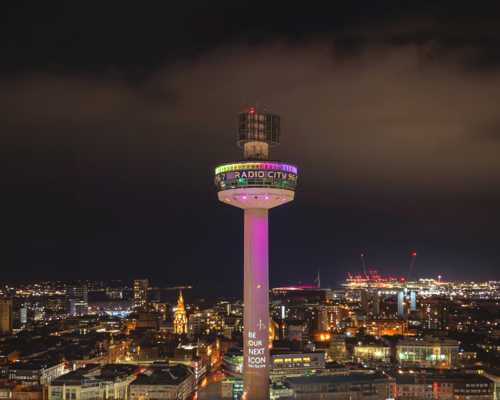
An opportunity to reimagine one of the UK’s most recognisable towers has been formally
opened by Rivington Hark, as St Johns Beacon invites operators and partners to shape its
next phase. [more...]