A profound sense of space, respect for local culture and exquisite design all underpin Chablé’s ‘redefining wellness’ approach
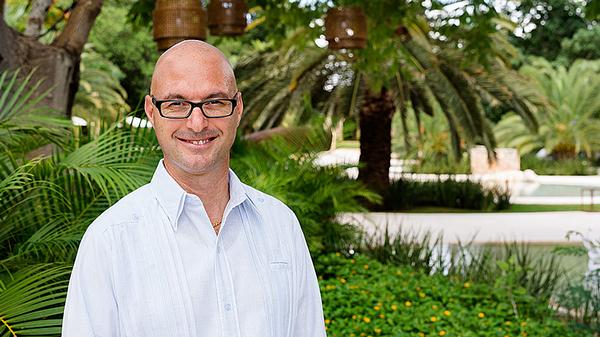
Ideas about wellness are changing,” says Rocco Bova, taking a thoughtful sip of mescal. “We’ve made a conscious decision not to put spa, massages and fitness at the centre of everything. Instead, we’re focused on the wellness of being.
“For me, that’s about creating happiness, be it through experiences that please the palate, the eyes, the mind and the soul.”
As general manager of the globally acclaimed Chablé Yucatán Resort & Spa, hidden deep in Mexico’s Mayan jungle, Bova is a well-placed observer of the changing nature of wellness. And while his five-star hotel does have a genuinely spellbinding spa that wants for nothing (see p73), he argues that just as important are other factors essential to wellbeing: sublime gastronomy, a profound sense of space, a respect for local culture and exquisite design.
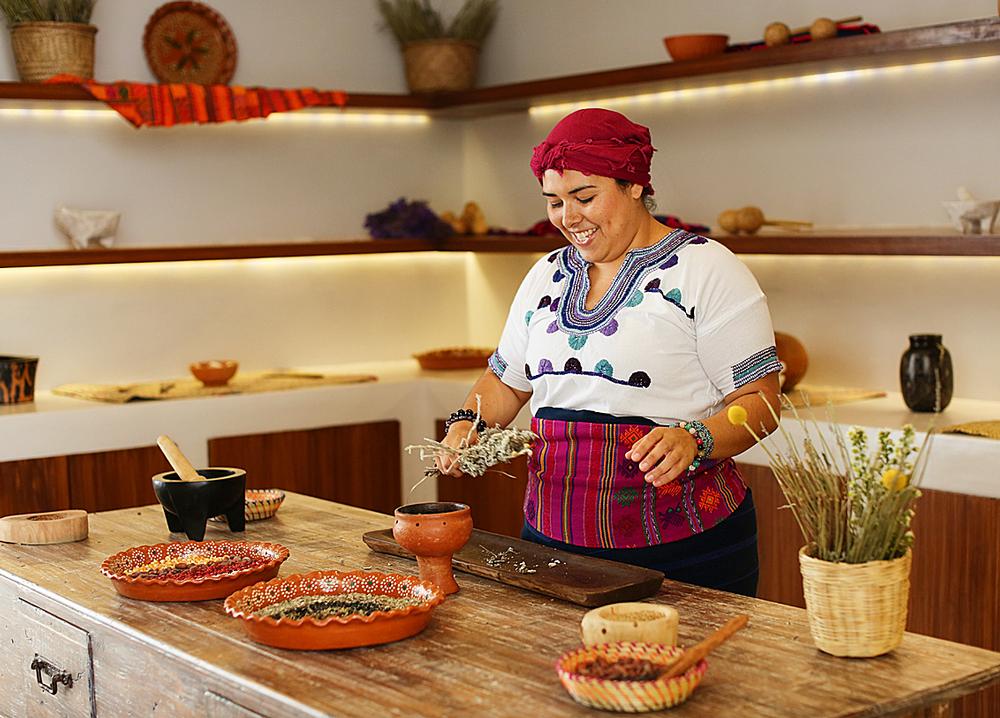
For Bova, a lesson in making tortillas, a tequila tasting session or a celebration of the annual Day of the Dead festivities with local community groups may provoke as much joy as a carefully tailored hydrotherapy treatment. “You’d have to stay for weeks to enjoy the full range of experiences we have here,” he says.
According to Chablé’s brand manager, Liliana Castellanos, the company calls this philosophy ‘redefining wellness’. “We think it’s the most innovative aspect of our portfolio,” she explains. “It allows us to touch the hearts of our guests through both the tangible and intangible. With so many distractions in the world today, we invite our guests to go back to basics and to value the important things in life in an unforgettable setting. Our aim is to speak to them in a real and honest way.”
It’s a bold claim, but Chablé, and parent company Hamak Hotels, can fairly point to the fact that it spent 12 years developing the concept and building the hotel, which finally opened in 2016. Every detail has been accounted for. The results are quietly spectacular.
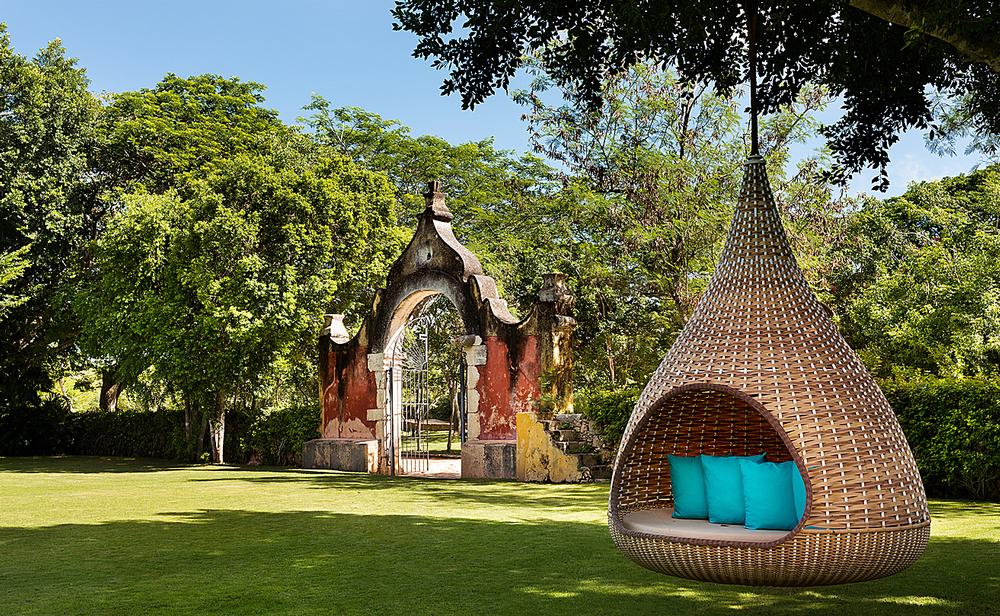
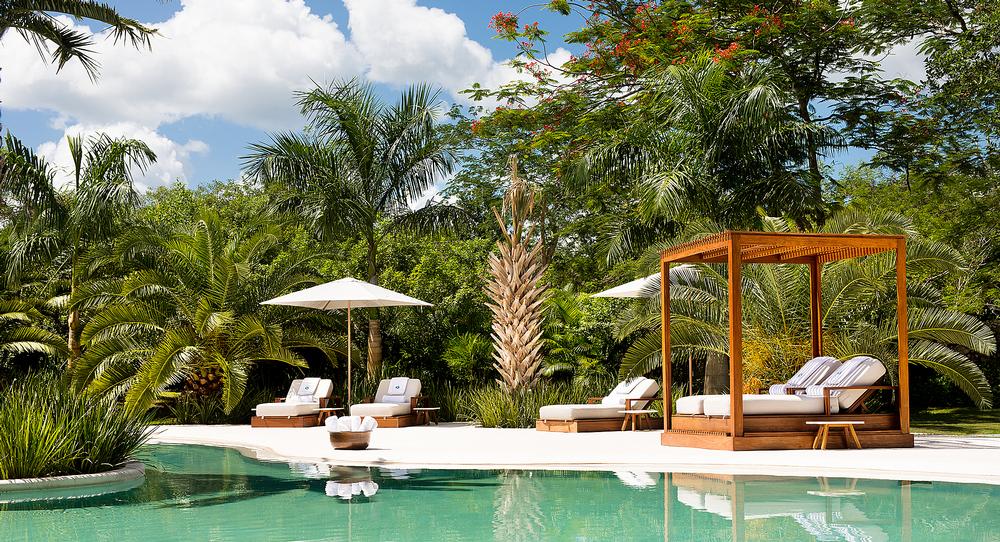
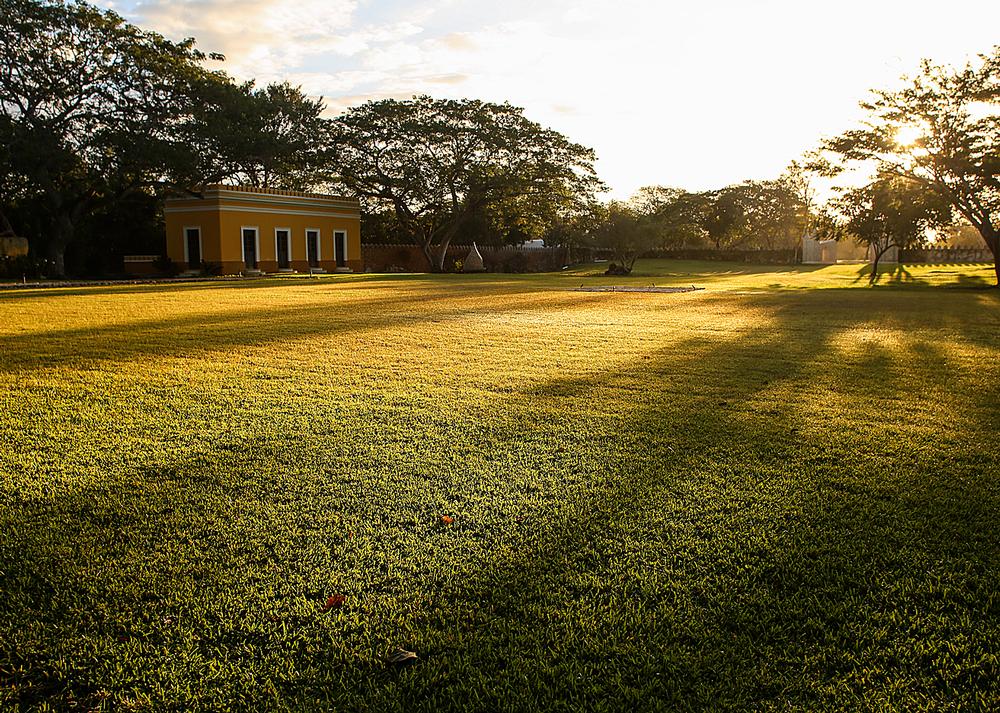
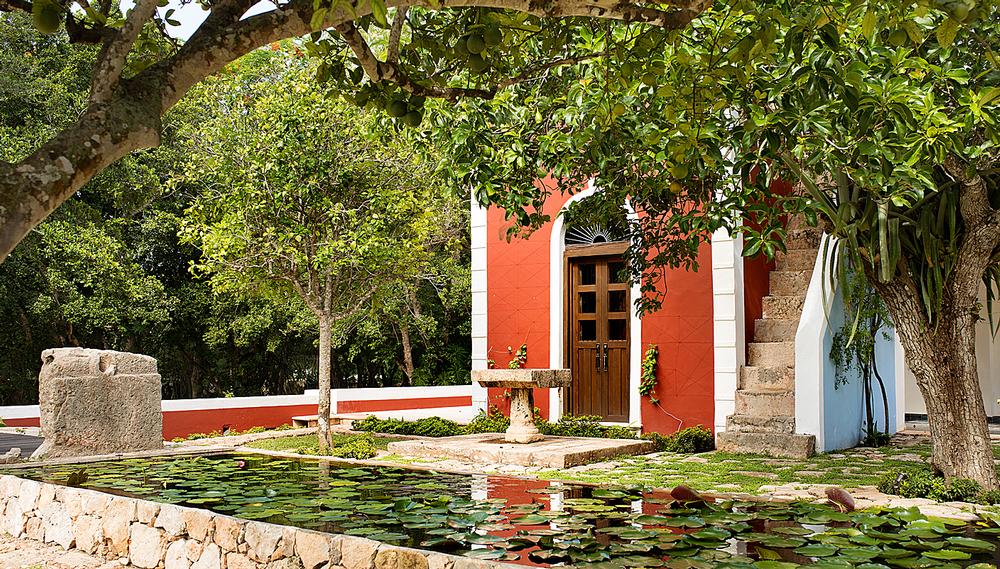
Modernism meets memory Spread across the sprawling grounds of an 19th century hacienda, once home to one of the region’s most important sisal carpet factories, the hotel is a self-contained paradise. Winding trails lead through pockets of jungle and past verdant organic gardens (a source for restaurant and spa ingredients), a deer park, tennis courts, golf course, several pools and a cenote – a natural sinkhole common to the Yucatán Peninsula – which the spa is built around.
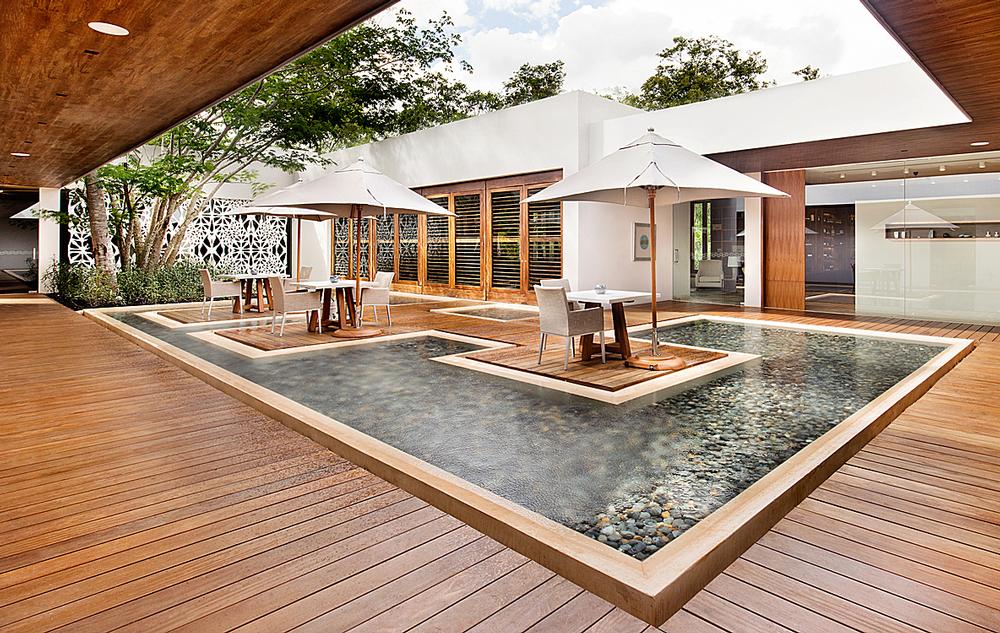
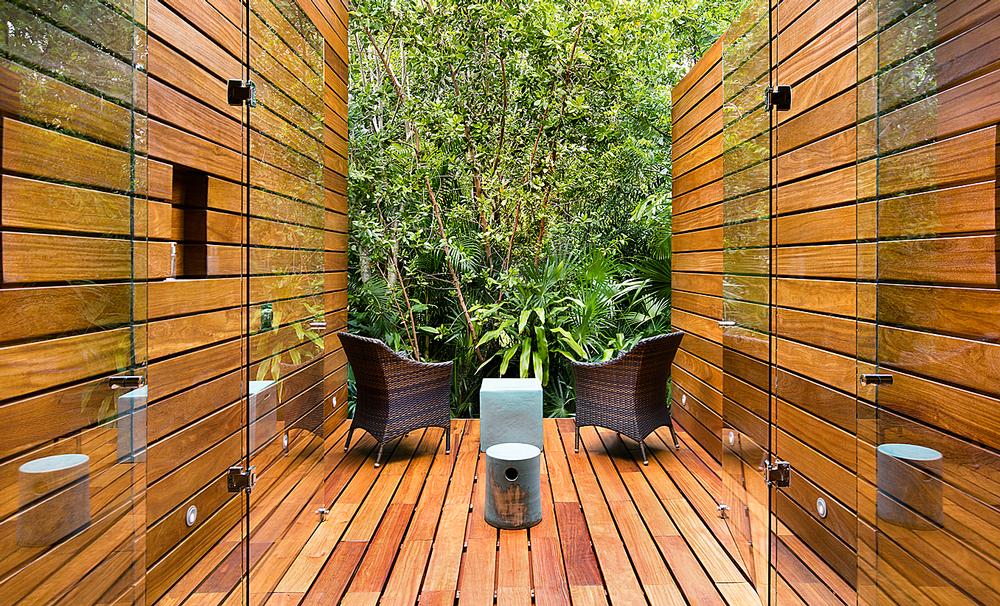
And then there’s the resort’s architecture. Despite the huge amount of space on offer, Chablé features only 36 casitas and four villas. Every residence lies hidden down its own jungle track. Architect Jorge Borja of Cancun-based Grupo BV SC has created a series of sleek, minimalist, white-clad volumes, fronted by expansive glass panels that allow 180˚ views of the surrounding nature. Outside, generous plunge pools, complete with hammocks, add an extra dimension of understated style. Think Tracy Island reimagined by Oscar Niemeyer.
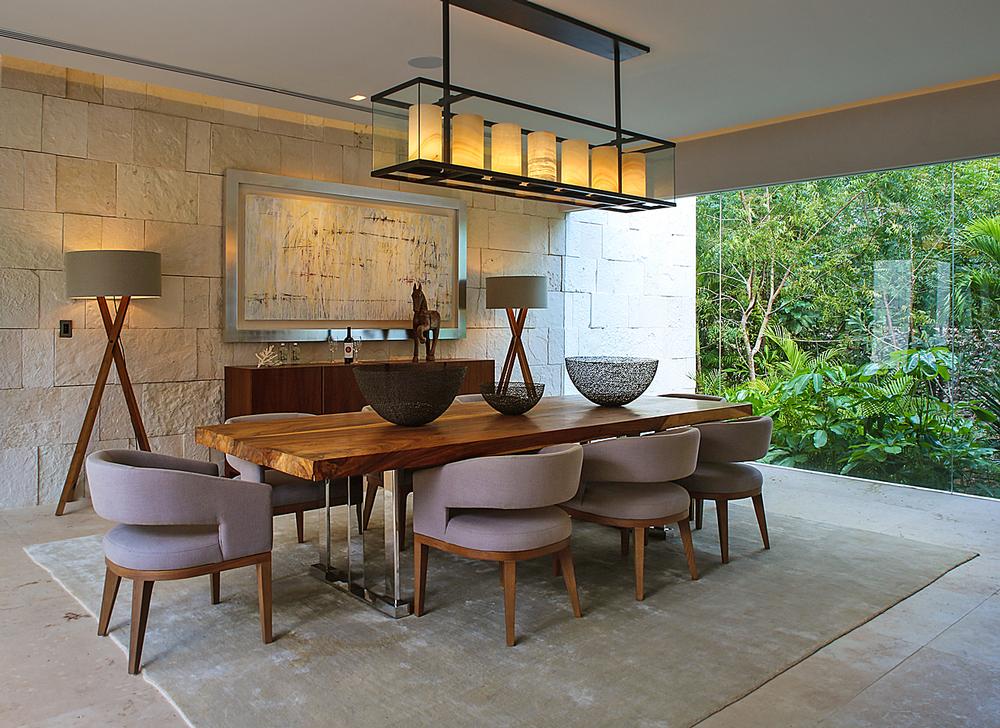
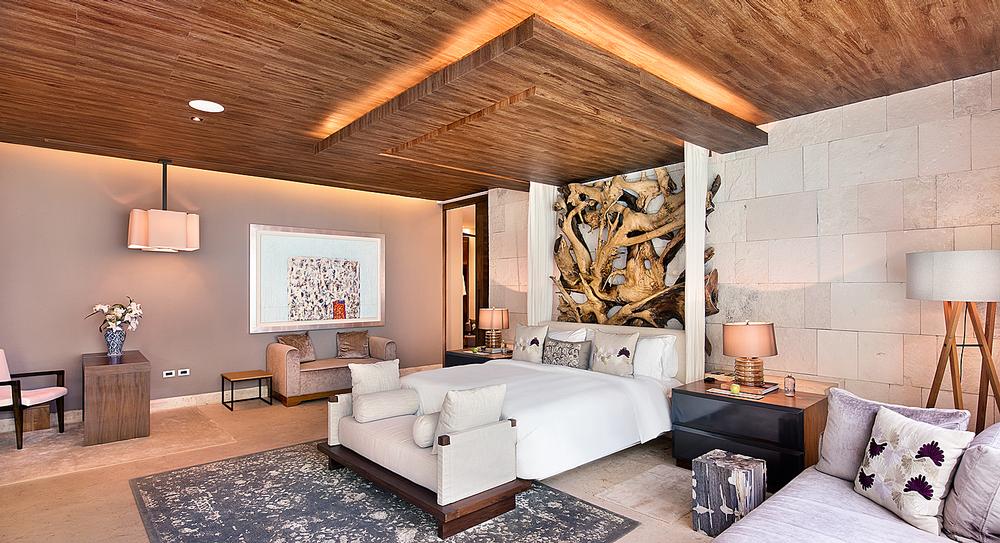
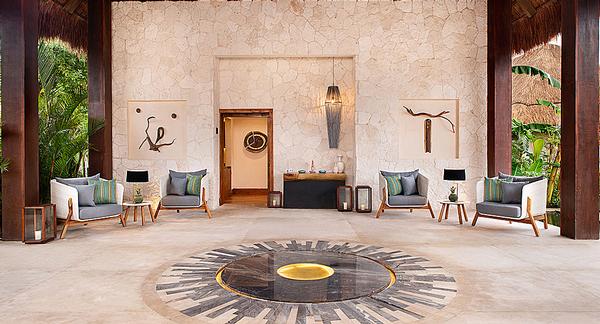
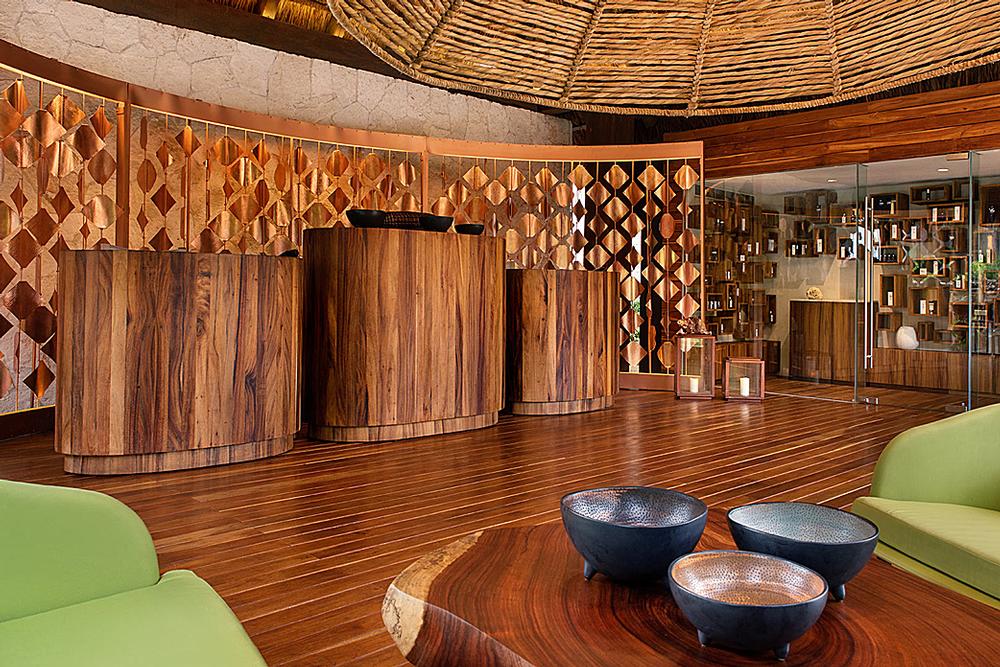
The interiors, designed by Paulina Morán, are equally impressive, with local textiles and natural materials, such as tropical wood and limestone, subtly used alongside splashes of colourful art and nods to traditional Mayan design. An extreme sense of care, materiality and lightness of touch is evident throughout, and the result is a genuine sense of luxury, without any requirement for bling.
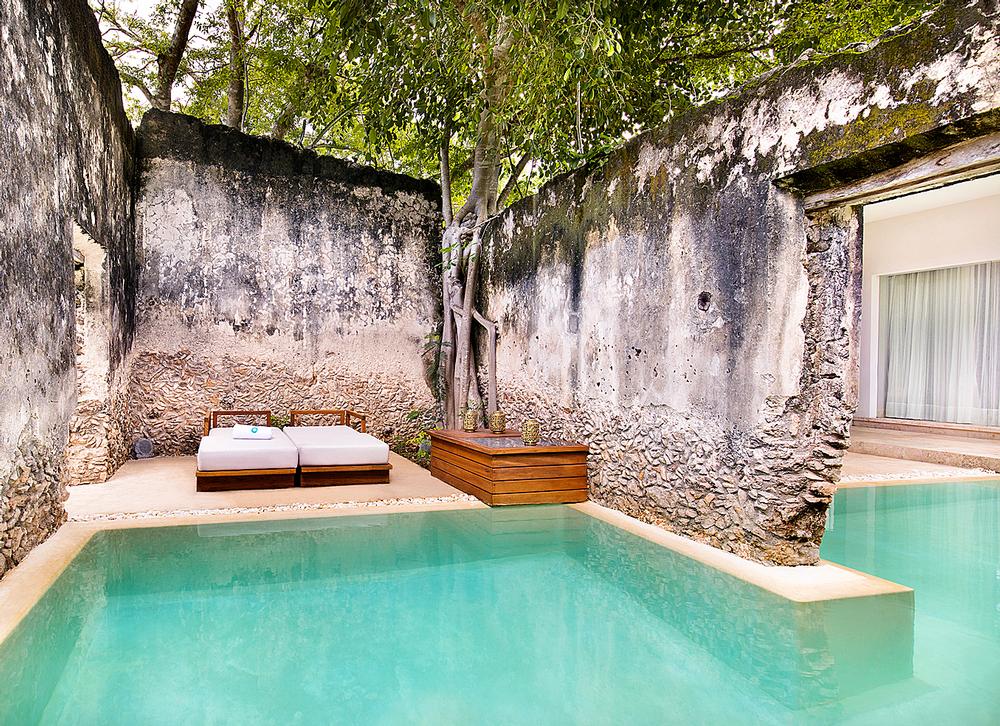
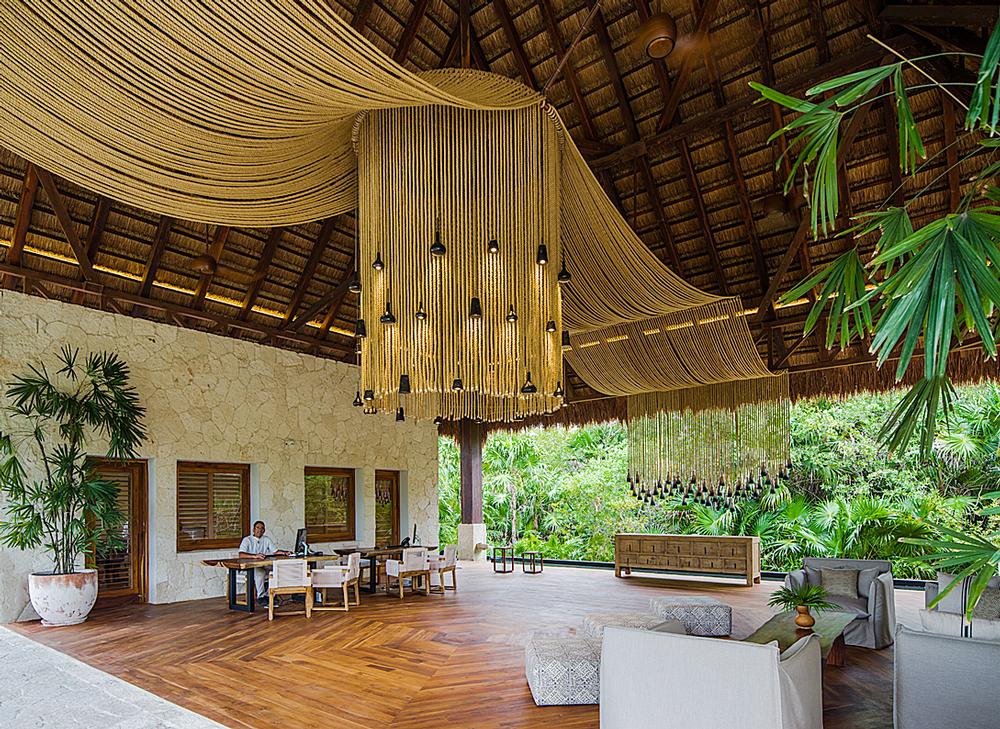
In contrast to the casitas, most of Chablé’s public amenities are situated amongst what remains of the hacienda’s historic buildings. The main office and welcome area can be found in a former administration HQ, a private wine cellar occupies an old jailhouse and the signature Ixi’im restaurant has been built in the carefully restored remnants of the abandoned textile factory.
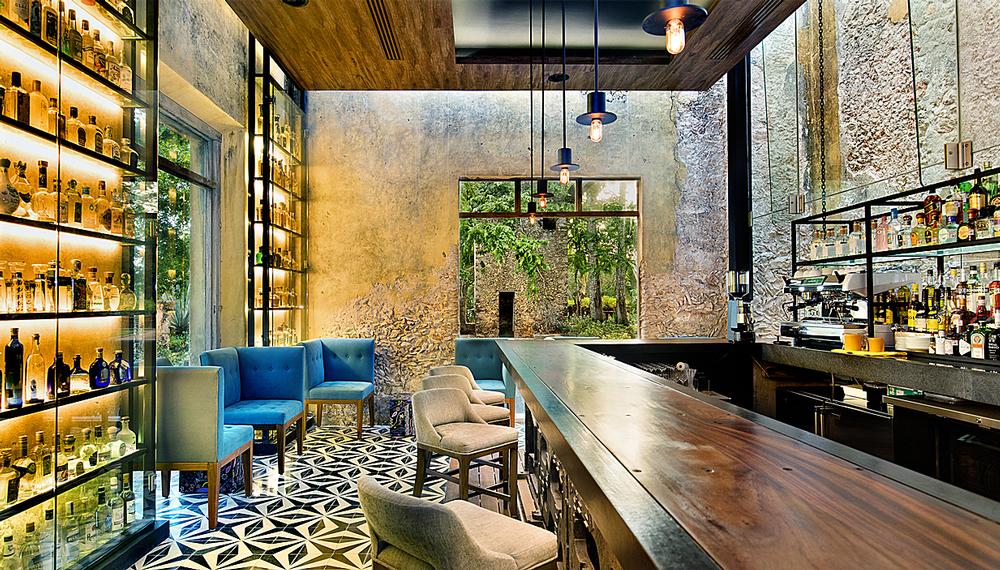
Nature is also permitted to take its course. Trees burst through gaps in facades, twist majestically around rooftops and provide courtyard centerpieces. Such is the presence of the jungle, you’re left with the lingering impression that you might find Indiana Jones lounging in the vine-covered cigar room, or Lara Croft perusing Ixi’im’s extensive tequila collection (3,175 bottles – more than anywhere else in the world). Even more ludicrously, when you walk back to your room at night, the route is illuminated by fireflies.
“True luxury is about preserving the soul of an incredible destination,” says Bova. “One of the mainstream trends important to the new wave of travellers is design, and the Global Wellness Institute put in a recent report that we must ‘build well to live well’. I guess we’re just translating into action what consumers expect nowadays.”
The effort has paid off faster than Chablé could have dared hope. Just a year after opening, the hotel received the 2017 Prix Versailles award, presented by UNESCO and the International Union of Architects to celebrate “structures that have the most remarkable interior and exterior architecture”. Last year, Ixi’im won the same award in the restaurant category.
Being known as the world’s best-designed hotel with the world’s best restaurant has done no harm to business. Bookings have multiplied and Chablé’s wellness philosophy is being reinforced to a new generation of travellers.
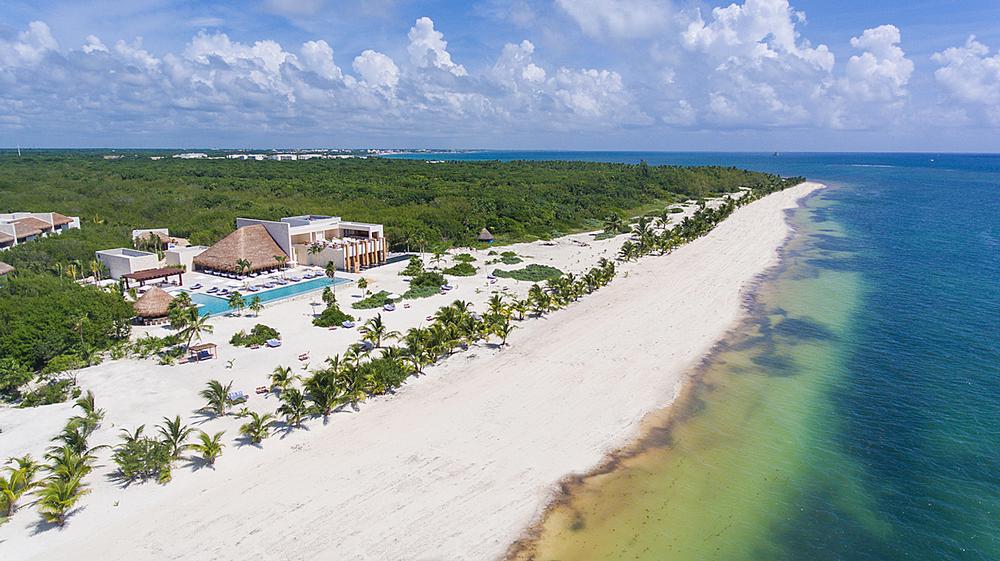
Chablé Maroma Such has been the success of Chablé in Yucatán, Hamak is expanding. The first sister property, Chablé Maroma, opened near Cancun in 2018 after eight years in development. Unlike its faraway Yucatán counterpart, a different guest experience is on offer, this time revolving around a tropical beach on the Caribbean Sea.
While there are no shells of ancient buildings here, the jungle once again takes centre stage. Signs on the approaching roads warn drivers to keep a careful eye for crossing jaguars and bridges for monkeys hang overhead.
Morán once again provides the hotel’s interiors, with architect Javier Fernandez this time responsible for creating the casitas. As before, modernism meets nature, with smart geometric volumes placed carefully around existing mangroves on the 11-acre (4.5-hecare) site.
“This hotel is a response to our guests who seek the Chablé experience in a tropical beach setting, with closer proximity to an international airport,” explains Castellano. “Maroma has long been considered one of the best beaches in the world and it seemed an obvious choice for us, far away from the all-inclusive hotels and noise.
“In line with its sister property, it respects the natural landscape, with minimal interference to the surrounding jungle and beach. We’ve touched none of the flora or dunes along the hotel’s coastline.”
There’s also a unifying focus on creating experiences that encourage happiness, she adds, although this time an itinerary might incorporate kayaking, jet skiing, scuba diving or a conch-blowing ceremony on the beach, as well as a similar range of spa facilities, treatments and temazcal offerings.
“The aim of redefining wellness is the same, with the same combination of exceptional service, attention-to-detail, gourmet cuisine, unrivalled wellness activities, and culture and traditions in their authentic setting,” she says. “Our future aim is to take this manifesto around the best places in Mexico and the world.
The Spa at Chablé Yucatán
Chablé Yucatán’s spa which “blends ancient
mysticism with modern curiosity” is of particular note
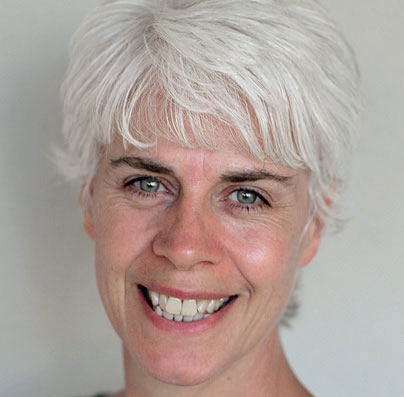
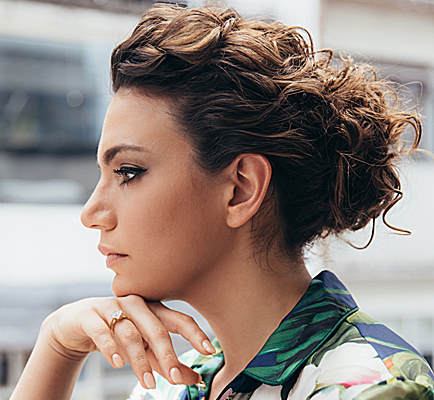
Spa consultants Baker (left) and McDonald (right)
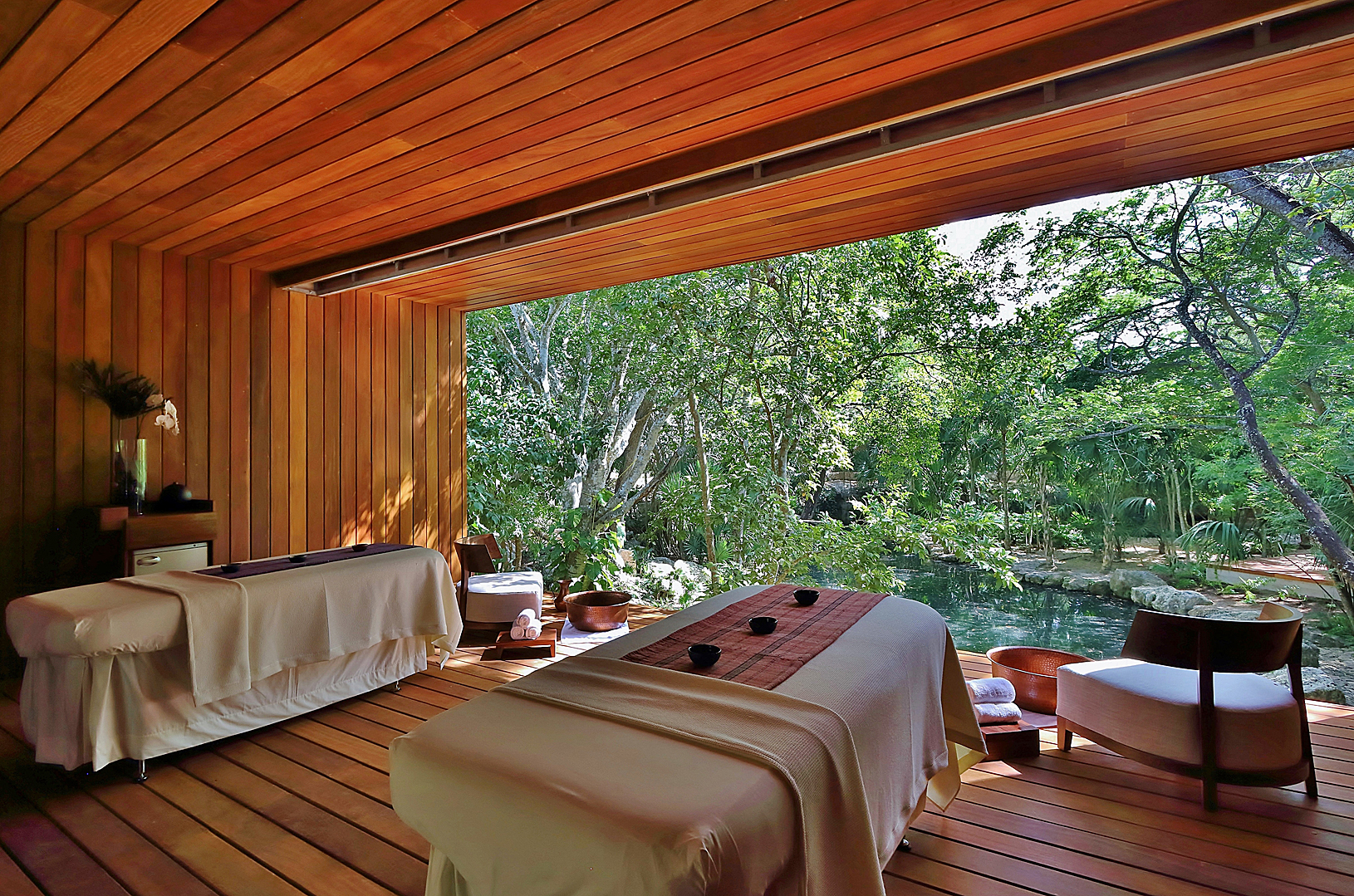
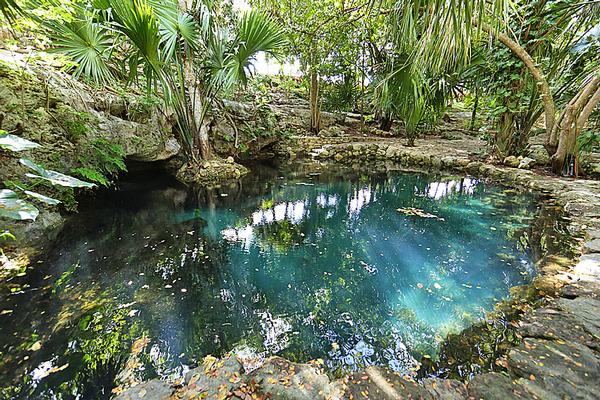
At the heart of the 3,022sq m (32,530sq ft) facility is a beautiful cenote – a natural sinkhole considered a sacred, healing force by the Mayans and a known feature of the Yucatán Peninsula. It forms the centrepiece for the 14 treatment rooms which are all situated around it and is a popular bathing spot for guests. If they tire of that, that’s also an infinity pool made entirely from petrified wood.
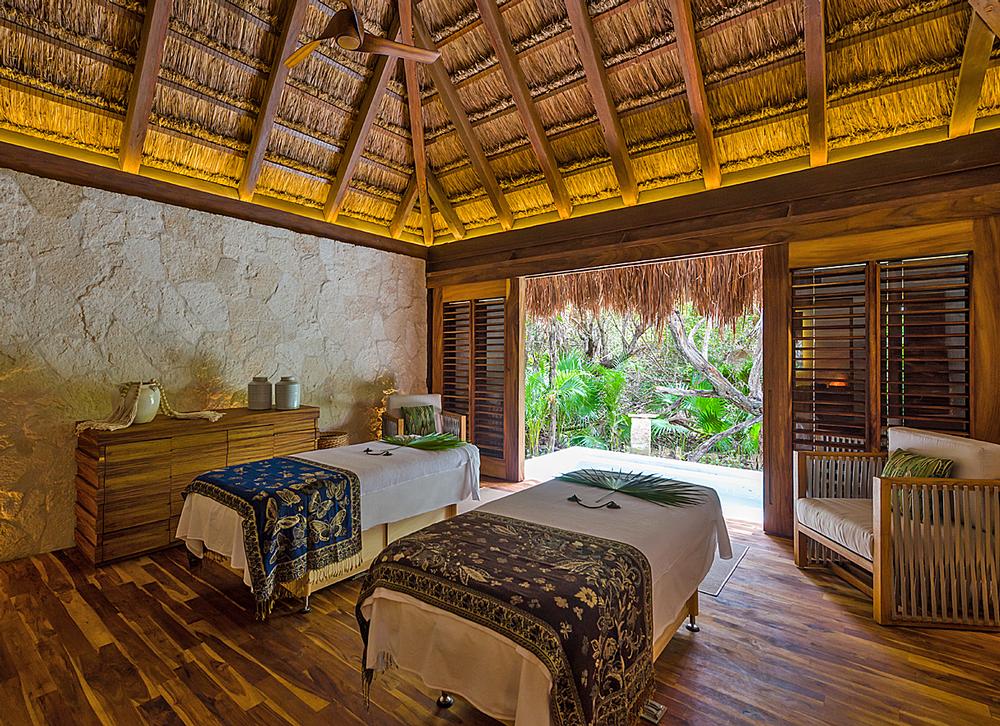
The spa was conceived by Amy McDonald, owner and CEO of Under a Tree, Health and Wellness Consulting. “Although it’s really high-end luxury, it’s thoughtfully infused with local culture and nature,” McDonald says. “The treatment rooms are completely surrounded by glass – you are in the jungle.”
McDonald hired Bonnie Baker, owner of Mexico-based spa consultancy Satteva to collaborate on all aspects of the spa, including a wide selection of treatments which use Naturopathica and Body Bliss products alongside indigenous plants.
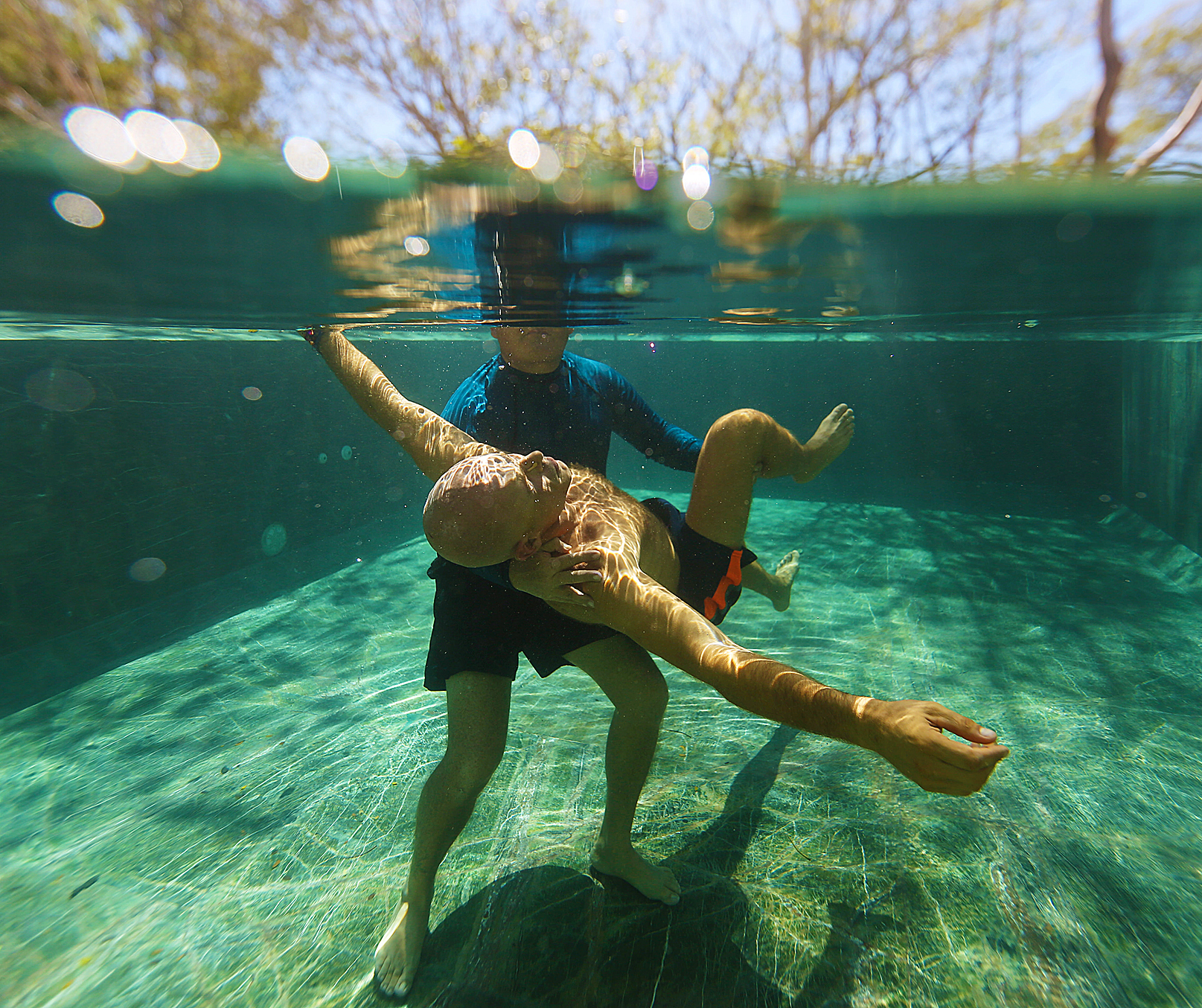
Floatation experiences in a pool made from petrified wood
The treatments are focused around three themes: Fountain of Youth (Flow), designed to be relaxing and rhythmical; Tree of Life (Balance), for purifying and de-stressing; and Heaven on Earth (Inspire), which aim to be heart-opening and connecting.
Each theme has a signature ritual. The three-hour, US$550 (€486, £422) Fountain’s Flow, for instance, includes a flotation experience, herbal salt exfoliation, lymphatic massage and aromatic anointment with plants, herbs and protocols very specific to the area and to Mayan traditions.
“We really want people to come and experience a modern interpretation of traditional Mayan rituals,” says McDonald.
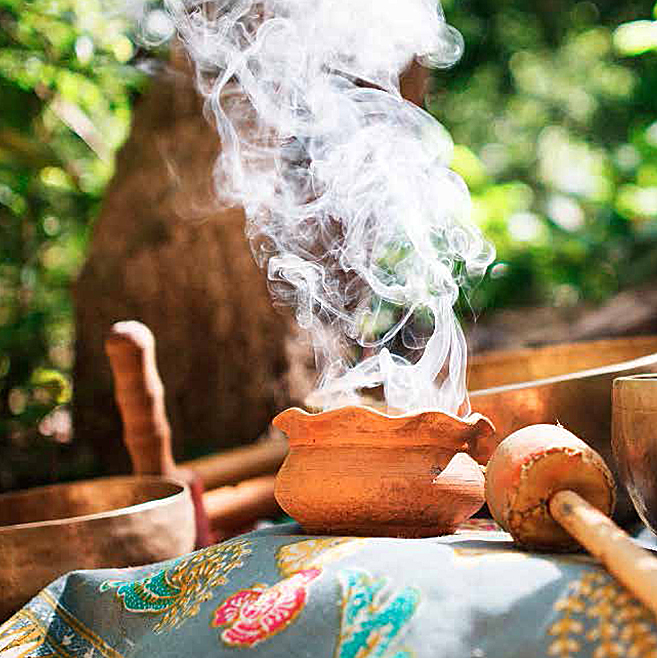
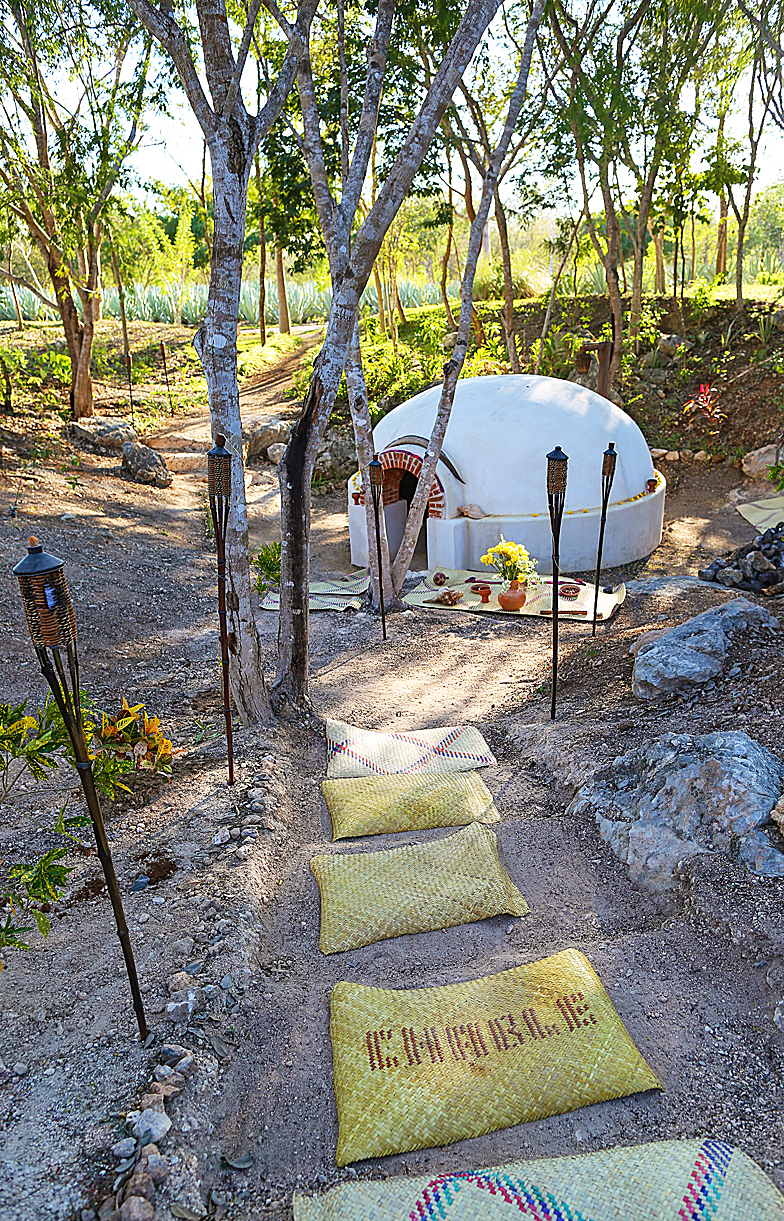
For a deeper spiritual experience, Chablé offers three temazcal rituals performed inside a traditional sweat lodge that’s designed to resemble a mother’s womb. The heat comes from volcanic stones bathed in medicinal teas while chants and oral tributes reflect group energy. The sessions are designed to evoke feelings of purification and liberation and prices start at US$200 (€177, £153) for 60 minutes.
“We really want people to experience a modern interpretation of traditional Mayan rituals,” says Amy McDonald
Other treatments include guided meditation, a Mayan Rebirth Massage and Energetic Sound and Stone Cleansing.
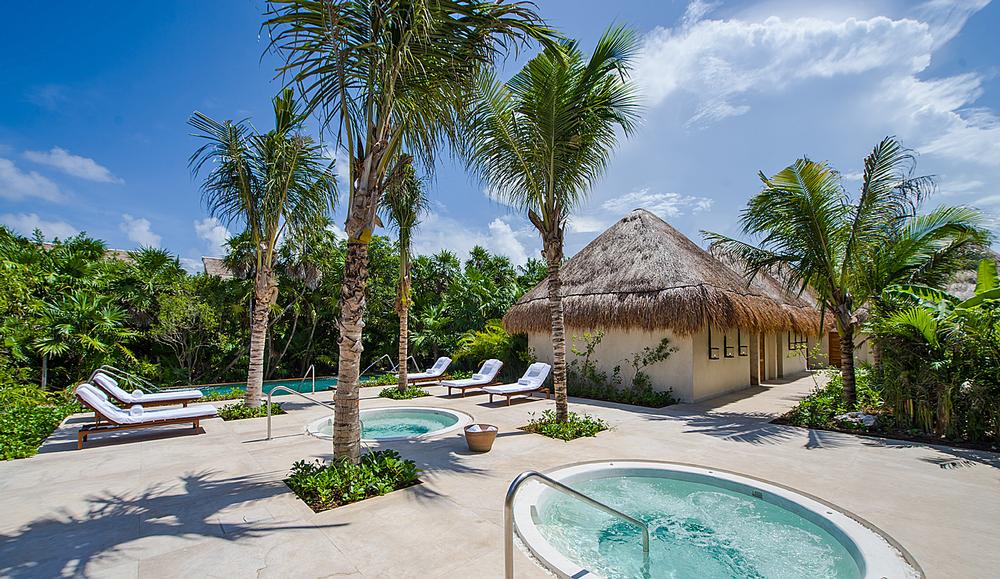
The spa also has a hydrotherapy journey comprising sauna, steam, whirlpool, hot and cold plunge pools, swimming pool, salt room and floatation experiences. A fitness studio, salon, juice bar and cafe serving nutritious food round out the wellness offerings.
McDonald and Baker joined forces again when creating the spa at sister property Chablé Maroma which opened late last year.
Although half the size, covering 1,579sq m (17,000sq ft) with eight treatment rooms, it promises an equally purposeful experience. Trees, a sacred symbol of life, inspired this jungle spa and treatments look to “assist natural balance”.
Signature therapies include the Deep Forest Awakening, an 180-minute, US$540 (€477, £414) full body purification using essential oils from fir, juniper and cypress trees, or the 120-minute four-handed Tree of Life Treatment for US$460 (€407, £353).
Naturopathica supplies products at this spa too, while towels are provided by The Madison Collection and loungewear by Zuuja.
a temazcal sweat lodge is designed to resemble the womb
Kim Megson
Kim Megson is a design and architectural journalist
email: [email protected]
Read more from this issue of Attractions Management magazine
View contents of Attractions Management 2019 issue 2
Promotional feature: Lemi - Italian Touch
From humble beginnings in a small Italian village, Lemi has grown a hugely successful global business in the massage bed market. As it celebrates its 30th anniversary year, we talk to GM Matteo Brusaferri
Spa Programmes: On the menu
Olivia Newton-John skincare, Sounds of Africa and jet lag butlers feature in our programming series
Interview: Dale Hipsh
The senior VP of hotels at Hard Rock International tells Katie Barnes why its music-centric spa menu is striking the right chord with consumers and the media
Promotional feature: ISPA
After almost three decades serving members and contributing to the growth of the industry, we talk to ISPA’s Crystal Ducker about the work of the association and the future of spa
Spa Design: Jungle VIP
Kim Megson ventures deep into Mexico’s jungle to discover how two Chablé resorts with Mayan spas are aiming to redefine wellness
Interview: John & Karina Stewart
The inspirational couple behind Kamalaya in Thailand talk to Neena Dhillon about emotional therapies, why stress-busting is the new detox and how they’re evolving the concept
Promotional feature: Gharieni - Luxury Recognition
Gharieni has long been known as an industry innovator. Now, Forbes Travel Guide has named the company as its official Spa & Wellness Equipment Manufacturer. Sammy Gharieni tells us more
Promotional feature: Comfort Zone - Beauty Reloaded
Skincare brand Comfort Zone has partnered with Wellness for Cancer to create a new programme of spa treatments for people touched by cancer. Barbara Gavazzoli tells us more
Family spa: Multi-story
With the rise in multi-generational tourism, family spas are growing in popularity. Jane Kitchen reports
Software: Training & education
From bespoke training programmes to 24/7 support teams and company super-users, how are software suppliers helping spas get the most out of their systems?
A profound sense of space, respect for local culture and exquisite design all underpin Chablé’s ‘redefining wellness’ approach
Ideas about wellness are changing,” says Rocco Bova, taking a thoughtful sip of mescal. “We’ve made a conscious decision not to put spa, massages and fitness at the centre of everything. Instead, we’re focused on the wellness of being.
“For me, that’s about creating happiness, be it through experiences that please the palate, the eyes, the mind and the soul.”
As general manager of the globally acclaimed Chablé Yucatán Resort & Spa, hidden deep in Mexico’s Mayan jungle, Bova is a well-placed observer of the changing nature of wellness. And while his five-star hotel does have a genuinely spellbinding spa that wants for nothing (see p73), he argues that just as important are other factors essential to wellbeing: sublime gastronomy, a profound sense of space, a respect for local culture and exquisite design.
For Bova, a lesson in making tortillas, a tequila tasting session or a celebration of the annual Day of the Dead festivities with local community groups may provoke as much joy as a carefully tailored hydrotherapy treatment. “You’d have to stay for weeks to enjoy the full range of experiences we have here,” he says.
According to Chablé’s brand manager, Liliana Castellanos, the company calls this philosophy ‘redefining wellness’. “We think it’s the most innovative aspect of our portfolio,” she explains. “It allows us to touch the hearts of our guests through both the tangible and intangible. With so many distractions in the world today, we invite our guests to go back to basics and to value the important things in life in an unforgettable setting. Our aim is to speak to them in a real and honest way.”
It’s a bold claim, but Chablé, and parent company Hamak Hotels, can fairly point to the fact that it spent 12 years developing the concept and building the hotel, which finally opened in 2016. Every detail has been accounted for. The results are quietly spectacular.
Modernism meets memory Spread across the sprawling grounds of an 19th century hacienda, once home to one of the region’s most important sisal carpet factories, the hotel is a self-contained paradise. Winding trails lead through pockets of jungle and past verdant organic gardens (a source for restaurant and spa ingredients), a deer park, tennis courts, golf course, several pools and a cenote – a natural sinkhole common to the Yucatán Peninsula – which the spa is built around.
And then there’s the resort’s architecture. Despite the huge amount of space on offer, Chablé features only 36 casitas and four villas. Every residence lies hidden down its own jungle track. Architect Jorge Borja of Cancun-based Grupo BV SC has created a series of sleek, minimalist, white-clad volumes, fronted by expansive glass panels that allow 180˚ views of the surrounding nature. Outside, generous plunge pools, complete with hammocks, add an extra dimension of understated style. Think Tracy Island reimagined by Oscar Niemeyer.
The interiors, designed by Paulina Morán, are equally impressive, with local textiles and natural materials, such as tropical wood and limestone, subtly used alongside splashes of colourful art and nods to traditional Mayan design. An extreme sense of care, materiality and lightness of touch is evident throughout, and the result is a genuine sense of luxury, without any requirement for bling.
In contrast to the casitas, most of Chablé’s public amenities are situated amongst what remains of the hacienda’s historic buildings. The main office and welcome area can be found in a former administration HQ, a private wine cellar occupies an old jailhouse and the signature Ixi’im restaurant has been built in the carefully restored remnants of the abandoned textile factory.
Nature is also permitted to take its course. Trees burst through gaps in facades, twist majestically around rooftops and provide courtyard centerpieces. Such is the presence of the jungle, you’re left with the lingering impression that you might find Indiana Jones lounging in the vine-covered cigar room, or Lara Croft perusing Ixi’im’s extensive tequila collection (3,175 bottles – more than anywhere else in the world). Even more ludicrously, when you walk back to your room at night, the route is illuminated by fireflies.
“True luxury is about preserving the soul of an incredible destination,” says Bova. “One of the mainstream trends important to the new wave of travellers is design, and the Global Wellness Institute put in a recent report that we must ‘build well to live well’. I guess we’re just translating into action what consumers expect nowadays.”
The effort has paid off faster than Chablé could have dared hope. Just a year after opening, the hotel received the 2017 Prix Versailles award, presented by UNESCO and the International Union of Architects to celebrate “structures that have the most remarkable interior and exterior architecture”. Last year, Ixi’im won the same award in the restaurant category.
Being known as the world’s best-designed hotel with the world’s best restaurant has done no harm to business. Bookings have multiplied and Chablé’s wellness philosophy is being reinforced to a new generation of travellers.
Chablé Maroma Such has been the success of Chablé in Yucatán, Hamak is expanding. The first sister property, Chablé Maroma, opened near Cancun in 2018 after eight years in development. Unlike its faraway Yucatán counterpart, a different guest experience is on offer, this time revolving around a tropical beach on the Caribbean Sea.
While there are no shells of ancient buildings here, the jungle once again takes centre stage. Signs on the approaching roads warn drivers to keep a careful eye for crossing jaguars and bridges for monkeys hang overhead.
Morán once again provides the hotel’s interiors, with architect Javier Fernandez this time responsible for creating the casitas. As before, modernism meets nature, with smart geometric volumes placed carefully around existing mangroves on the 11-acre (4.5-hecare) site.
“This hotel is a response to our guests who seek the Chablé experience in a tropical beach setting, with closer proximity to an international airport,” explains Castellano. “Maroma has long been considered one of the best beaches in the world and it seemed an obvious choice for us, far away from the all-inclusive hotels and noise.
“In line with its sister property, it respects the natural landscape, with minimal interference to the surrounding jungle and beach. We’ve touched none of the flora or dunes along the hotel’s coastline.”
There’s also a unifying focus on creating experiences that encourage happiness, she adds, although this time an itinerary might incorporate kayaking, jet skiing, scuba diving or a conch-blowing ceremony on the beach, as well as a similar range of spa facilities, treatments and temazcal offerings.
“The aim of redefining wellness is the same, with the same combination of exceptional service, attention-to-detail, gourmet cuisine, unrivalled wellness activities, and culture and traditions in their authentic setting,” she says. “Our future aim is to take this manifesto around the best places in Mexico and the world.
The Spa at Chablé Yucatán
Chablé Yucatán’s spa which “blends ancient
mysticism with modern curiosity” is of particular note
Spa consultants Baker (left) and McDonald (right)
At the heart of the 3,022sq m (32,530sq ft) facility is a beautiful cenote – a natural sinkhole considered a sacred, healing force by the Mayans and a known feature of the Yucatán Peninsula. It forms the centrepiece for the 14 treatment rooms which are all situated around it and is a popular bathing spot for guests. If they tire of that, that’s also an infinity pool made entirely from petrified wood.
The spa was conceived by Amy McDonald, owner and CEO of Under a Tree, Health and Wellness Consulting. “Although it’s really high-end luxury, it’s thoughtfully infused with local culture and nature,” McDonald says. “The treatment rooms are completely surrounded by glass – you are in the jungle.”
McDonald hired Bonnie Baker, owner of Mexico-based spa consultancy Satteva to collaborate on all aspects of the spa, including a wide selection of treatments which use Naturopathica and Body Bliss products alongside indigenous plants.
Floatation experiences in a pool made from petrified wood
The treatments are focused around three themes: Fountain of Youth (Flow), designed to be relaxing and rhythmical; Tree of Life (Balance), for purifying and de-stressing; and Heaven on Earth (Inspire), which aim to be heart-opening and connecting.
Each theme has a signature ritual. The three-hour, US$550 (€486, £422) Fountain’s Flow, for instance, includes a flotation experience, herbal salt exfoliation, lymphatic massage and aromatic anointment with plants, herbs and protocols very specific to the area and to Mayan traditions.
“We really want people to come and experience a modern interpretation of traditional Mayan rituals,” says McDonald.
For a deeper spiritual experience, Chablé offers three temazcal rituals performed inside a traditional sweat lodge that’s designed to resemble a mother’s womb. The heat comes from volcanic stones bathed in medicinal teas while chants and oral tributes reflect group energy. The sessions are designed to evoke feelings of purification and liberation and prices start at US$200 (€177, £153) for 60 minutes.
“We really want people to experience a modern interpretation of traditional Mayan rituals,” says Amy McDonald
Other treatments include guided meditation, a Mayan Rebirth Massage and Energetic Sound and Stone Cleansing.
The spa also has a hydrotherapy journey comprising sauna, steam, whirlpool, hot and cold plunge pools, swimming pool, salt room and floatation experiences. A fitness studio, salon, juice bar and cafe serving nutritious food round out the wellness offerings.
McDonald and Baker joined forces again when creating the spa at sister property Chablé Maroma which opened late last year.
Although half the size, covering 1,579sq m (17,000sq ft) with eight treatment rooms, it promises an equally purposeful experience. Trees, a sacred symbol of life, inspired this jungle spa and treatments look to “assist natural balance”.
Signature therapies include the Deep Forest Awakening, an 180-minute, US$540 (€477, £414) full body purification using essential oils from fir, juniper and cypress trees, or the 120-minute four-handed Tree of Life Treatment for US$460 (€407, £353).
Naturopathica supplies products at this spa too, while towels are provided by The Madison Collection and loungewear by Zuuja.
a temazcal sweat lodge is designed to resemble the womb
Kim Megson
Kim Megson is a design and architectural journalist
email: [email protected]
Read more from this issue of Attractions Management magazine
View contents of Attractions Management 2019 issue 2
Promotional feature: Lemi - Italian Touch
From humble beginnings in a small Italian village, Lemi has grown a hugely successful global business in the massage bed market. As it celebrates its 30th anniversary year, we talk to GM Matteo Brusaferri
Spa Programmes: On the menu
Olivia Newton-John skincare, Sounds of Africa and jet lag butlers feature in our programming series
Interview: Dale Hipsh
The senior VP of hotels at Hard Rock International tells Katie Barnes why its music-centric spa menu is striking the right chord with consumers and the media
Promotional feature: ISPA
After almost three decades serving members and contributing to the growth of the industry, we talk to ISPA’s Crystal Ducker about the work of the association and the future of spa
Spa Design: Jungle VIP
Kim Megson ventures deep into Mexico’s jungle to discover how two Chablé resorts with Mayan spas are aiming to redefine wellness
Interview: John & Karina Stewart
The inspirational couple behind Kamalaya in Thailand talk to Neena Dhillon about emotional therapies, why stress-busting is the new detox and how they’re evolving the concept
Promotional feature: Gharieni - Luxury Recognition
Gharieni has long been known as an industry innovator. Now, Forbes Travel Guide has named the company as its official Spa & Wellness Equipment Manufacturer. Sammy Gharieni tells us more
Promotional feature: Comfort Zone - Beauty Reloaded
Skincare brand Comfort Zone has partnered with Wellness for Cancer to create a new programme of spa treatments for people touched by cancer. Barbara Gavazzoli tells us more
Family spa: Multi-story
With the rise in multi-generational tourism, family spas are growing in popularity. Jane Kitchen reports
Software: Training & education
From bespoke training programmes to 24/7 support teams and company super-users, how are software suppliers helping spas get the most out of their systems?
Abu Dhabi-based investment firm Mubadala Capital has made a binding, fully financed
€1 billion
offer to acquire Pierre and Vacances SA, the European holiday resort operator behind the
continental European Center Parcs business.
Disney has reaffirmed its commitment to investing US$30 billion in its US parks and cruise
business by 2033, using new America250 celebrations to underline the role its attractions play
in supporting jobs, tourism and economic growth.
Expo 2030 Riyadh is being planned as a permanent visitor destination, with organisers
confirming the six-million-square-metre site will become a Global Village after the event closes.
The owner of one of Australia's best-known waterparks has acquired a major competitor,
creating a new attractions business spanning two of the country's largest visitor destinations.
The Toverland theme park in the Netherlands has announced a €98m expansion programme
that will add a resort, new attractions and staff facilities as it pursues plans to become a multi-
day destination.
Hotel de France, located on the British Isle of Jersey, has created a wellness retreat package
that includes a hot yoga session that will take place in Jersey Zoo’s butterfly sanctuary.
A new immersive attraction designed to transport visitors into the final hours of ancient Pompeii
is preparing to open near the world-famous archaeological site in southern Italy.
Experience design company, BRC Imagination Arts, has completed a transition that sees founder
Bob Rogers pass ownership of the business to four long-serving senior executives, while
remaining actively involved with the company.
Movie Park Germany has opened a new Paramount Pictures-themed attraction as part of its 30th
anniversary celebrations, using immersive storytelling and adaptive reuse to reinforce the park’s
longstanding “Hollywood in Germany” positioning.
Therme Manchester’s 28-acre development, which will include interconnected glass pavilions
that measure 65,000sq m, will be the largest bathing and wellbeing attraction in the world once
complete, according to prof David Russell, CEO of Therme UK.
+ More news
COMPANY PROFILES
QubicaAMF UK QubicaAMF is the largest and most
innovative bowling equipment provider with
600 employees worldwi [more...]
TechnoAlpin Indoor TechnoAlpin is the world leader for snowmaking systems. With the Indoor snow division, TechnoAlpin c [more...]
IDEATTACK IDEATTACK is a full-service planning and
design company with headquarters in
Los Angeles. [more...]