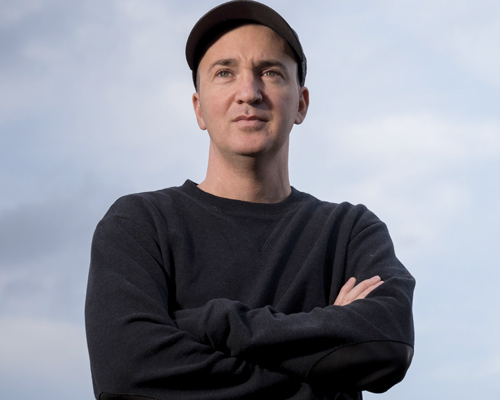
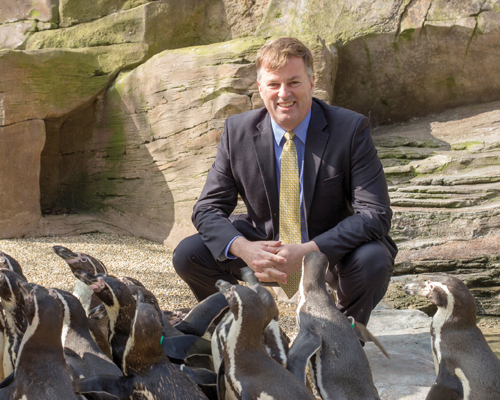
CEO John Duffey is overseeing Six Flags’ expansion into China
Ground will soon break on the first Six Flags in Asia, as the thrill king of the US theme park industry staked its own claim to a piece of the Far East pie. But Six Flags Haiyan, which will be part of $4.6bn (£3.2bn, €4.1bn) tourism destination resort not far from Shanghai, is not just the company’s first park in China, it’s the first of many.
“Given the global strength of the Six Flags brand, we believe we have tremendous growth opportunity to partner with other firms that are interested in building Six Flags-branded theme parks in markets outside North America. Developing Six Flags parks in various parts of the world is part of our long-term growth strategy,” says John Duffey, CEO of Six Flags.
The plan is to build multiple Six Flags in China in the next 10 years in partnership with real-estate developer Riverside Group, who will build and own the parks and buy the license to operate them. A similar franchise model is also supporting upcoming parks in Dubai and Vietnam, sending a clear signal that Six Flags is committed to potentially unlimited expansion abroad.
Global growth “Developing internationally is a great growth opportunity for us. China is an excellent market and one that has the potential to support multiple Six Flags-branded parks. Dubai is an emerging entertainment destination with incredible potential and Vietnam is another exciting market where we believe the brand will be well-received. All of these markets have large populations with growing disposable incomes, strong economies and a void of entertainment similar to what Six Flags offers,” says Duffey
Asia remains underserved when it comes to high-quality attractions. China in particular has a still-expanding middle class with the disposable income and desire for these experiences. According to AECOM, already 700 million Chinese can afford to visit a theme park – a figure that’s expected to reach 1 billion by 2020. And the abolition of the country’s one-child policy this year (the law has been revised to allow two children) is also likely to boost attendance and in-park spending in the future.
However, while more than 60 theme parks are under construction in China, and Disney and Universal are joining the market, there are only an estimated 850 amusement attractions in total, serving a population of 1.38 billion people. Many of those attractions will be low-quality local parks, and of the top 25 most-visited theme parks in the world in 2014, only two of them were in mainland China. The country’s leading operators by attendance – OCT Group (10 parks, including the Happy Valley chain), Chimelong Group (two parks), Songcheng Group (six parks) – clocked up 47 million visits in 2014, less than 0.5 per cent of the population.
Thrills for China For Duffey, there’s more than enough space in the market. The company’s own psychographic research in China revealed people wanted more thrills and more record-breaking rides. As a highly profitable regional park operator – with 18 North American parks attracting 28 million guests per year – it’s the same qualities that make Six Flags successful at home that are attracting investors abroad.
“Six Flags is already a global brand, one of the most recognisable in the world,” he says. “Our product offering is unique and appeals to a wide range of people and there is growing interest from other countries who want to be a part of our signature brand of thrills and innovation.”
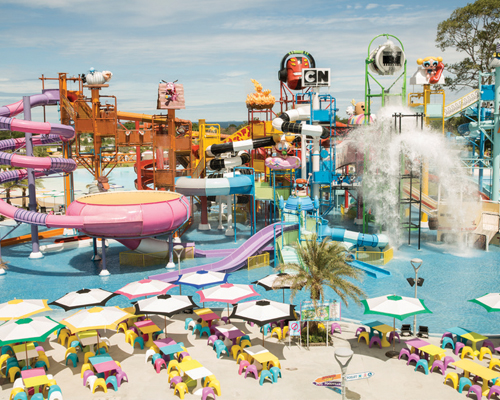
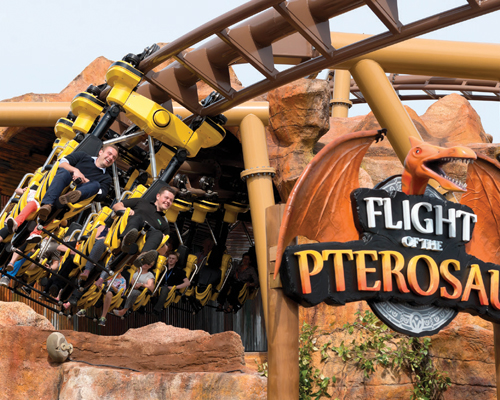
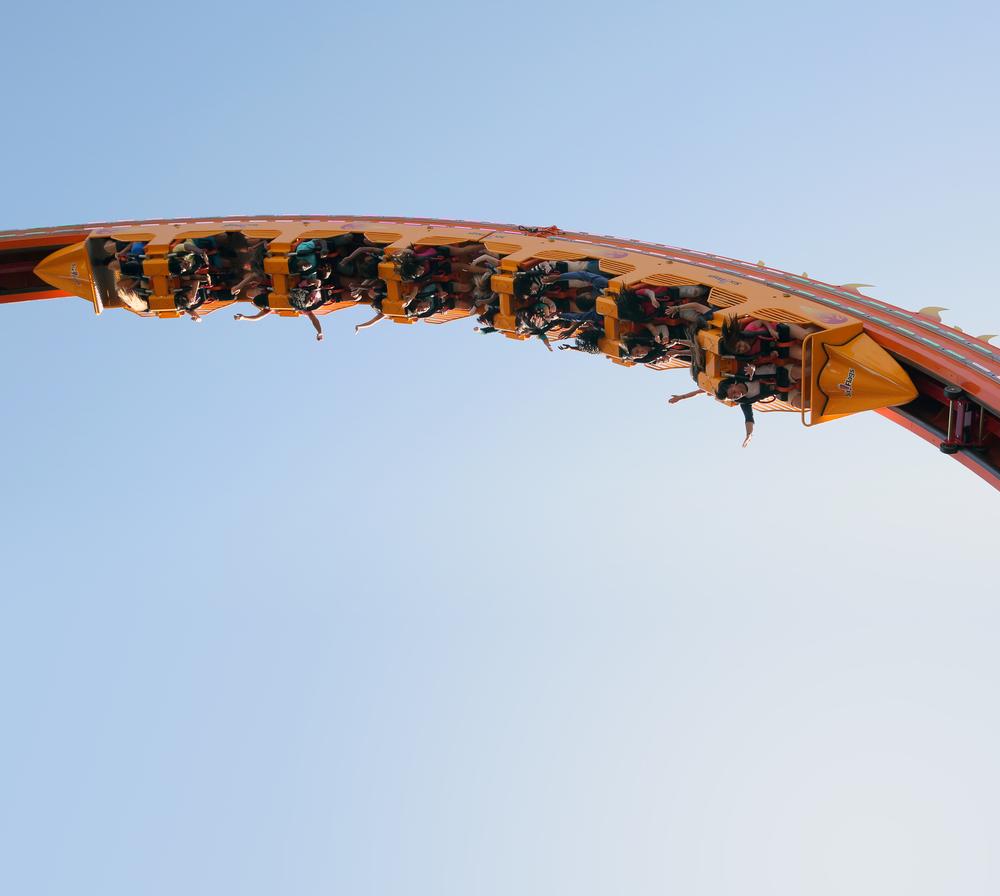
While closely following the Six Flags brand in its new destination parks – offering signature thrill rides and record-breaking rollercoasters, alongside family and kids’ rides, water rides, concerts and shows – Duffey isn’t saying they have to be replicas.
“We have an operating model that works and our international properties will follow that model, but these parks will also be tailored to their specific region. The theming, the shows, along with the food and retail offerings will reflect the customs and cultures of the local markets.”
It’s been a complete turnaround for the company, which in 2009 was delisted from the New York Stock Exchange. Six Flags had struggled through the 2000s, was forced to sell off its European assets and several US parks, but failed to make a dent in its $2.4bn (£1.6bn, €2.2bn) of debt. Former CEO Jim Reid-Anderson took the reins in August 2010, steering the company to a remarkable recovery. He came up with a strategy to reinvest 9 per cent of revenue each year in brand new attractions, got rid of ticket discounts that were just too generous and streamlined operations to improve efficiency.
Duffey was Reid-Anderson’s right-hand man during this time, serving as CFO from September 2010, until taking over as president and CEO in February this year. Prior to that, the two worked together at Dade Behring, leading it through debt restructuring before selling it to Siemens for $7bn (£4.8bn, €6.2bn) in 2006. Now in charge of Six Flags, Duffey continues to follow the successful strategies that have seen $2bn (£1.4bn, €1.8bn) returned to shareholders over the past six years.
“We had our sixth consecutive year of record performance in 2015 and the first quarter of 2016 was our 23rd record quarter out of the last 24 quarters,” Duffey says. “Our guest satisfaction ratings are among the highest in our history. We are laser-focused on providing a world-class experience to our guests and delivering new rides and attractions in every park every year. We have consistently been recognised globally by our guests and the industry as offering the best-in-class rides and attractions. Our line-up for 2016 is the best we’ve ever had.”
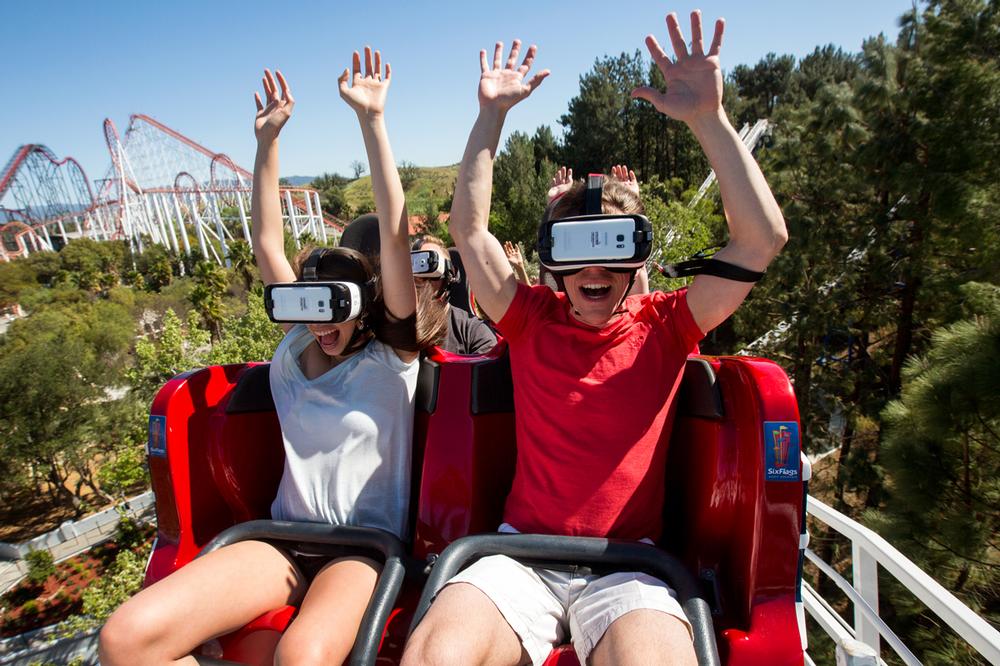
The line-up for the season certainly is exciting. The US’ first VR coaster experiences are rolling out across nine parks; last year’s award-winning Justice League: Battle for Metropolis is coming to Six Flags Great America and Six Flags Mexico; a seven-storey loop coaster called Fireball is set to up the thrills at Six Flags New England and Six Flags St Louis; Six Flags America is adding Splashwater Falls, a giant interactive water playground, and Six Flags Over Georgia introduces the world’s first DC Super Friends themed children’s area – to name just a few.
“Strategic innovation is an important key to our success. We’ve been deliberate in our efforts to enhance the guest experience by offering innovative rides, attractions and services. Our capital strategy to have something new that we can effectively market at every park every year, as well as our season pass strategy, has contributed to significant growth in attendance.”
Team morale As regional parks rely heavily on return visitors, it’s vital to offer season passes at carefully considered prices. Six Flags staff are trained to promote the season pass and membership options by helping customers see the value in them.
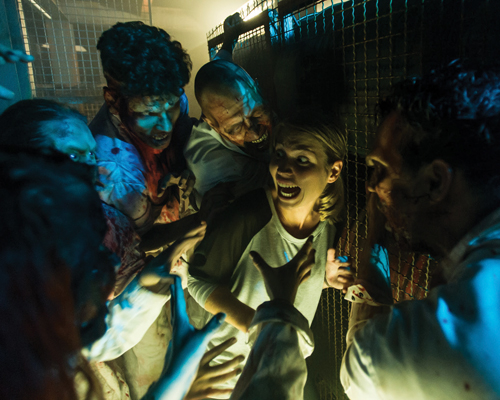
“Our pass base is up 24 per cent and we’re seeing strong sales growth in our All Season Dining Pass,” says Duffey. “Because we’re investing in Fright Fest and Holiday in the Park, guests have multiple opportunities to visit our parks each year.”
Lastly, Duffey says the company owes its successes to its staff and that it endeavours to keep them happy.
“We have some of the brightest minds in the industry on our team and their commitment is inspiring. We re-instated a number of employee benefits to reward and acknowledge their hard work, and as a result team morale has never been higher.”
Six Flags serves the top 10 demographic markets in the US and Duffey says he does not anticipate building any new theme parks in the region. Instead, Six Flags at home is poised to enjoy further benefits of an innovative and well-run company in the marketplace. Abroad, Six Flags and its partners are set to charter new territories in the next chapter of its story. If it maintains its focus on innovation, guest experience and employee satisfaction, its journey into Asia should be a Great Adventure.
Read more from this issue of Attractions Management magazine
View contents of Attractions Management 2016 issue 2
Promotional feature: IDEATTACK
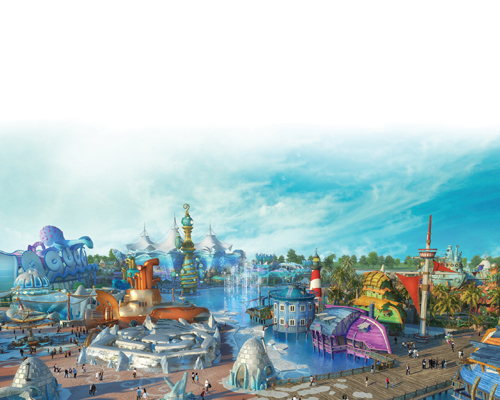
IDEATTACK’s new project in Hainan, China,
introduces the storytelling elements of a
theme park to the oceanarium concept
Science Museums: Shaping Tomorrow
Brazil’s Museum of Tomorrow uses
constantly updating, real-time digital
collection to communicate with visitors.
We met members of the team
Promotional feature: EAS
This year, the Euro Attractions Show is
coming to the Spanish city of Barcelona
Disney Special: Shanghai Disney: The Best Yet?
As Disney opens its first resort in mainland
China, our special feature examines its
business model, its potential impact and
the modernisation of the Disney castle park
New Openings: Space Inversion
A new contemporary museum district
in the Netherlands – Museumplein
Limburg – features a science centre,
a design museum and an inverted
planetarium. We take a closer look
Promotional feature: Polin
Polin’s patented technologies, extensive R&D and creative flair have made it one of the world’s leading waterpark design and manufacturing companies
Waterparks: Taking the Plunge
Waterpark suppliers constantly develop
their product offers. We dive into the
world of waterpark R&D to find out more
Zoos & Aquariums: The Long Game
UK safari park Longleat is undertaking a
decade-long upgrade that starts by going
back to its roots. As the attraction turns
50, CEO Bob Montgomery explains how
he’s bridging the past and the future
CEO John Duffey is overseeing Six Flags’ expansion into China
Ground will soon break on the first Six Flags in Asia, as the thrill king of the US theme park industry staked its own claim to a piece of the Far East pie. But Six Flags Haiyan, which will be part of $4.6bn (£3.2bn, €4.1bn) tourism destination resort not far from Shanghai, is not just the company’s first park in China, it’s the first of many.
“Given the global strength of the Six Flags brand, we believe we have tremendous growth opportunity to partner with other firms that are interested in building Six Flags-branded theme parks in markets outside North America. Developing Six Flags parks in various parts of the world is part of our long-term growth strategy,” says John Duffey, CEO of Six Flags.
The plan is to build multiple Six Flags in China in the next 10 years in partnership with real-estate developer Riverside Group, who will build and own the parks and buy the license to operate them. A similar franchise model is also supporting upcoming parks in Dubai and Vietnam, sending a clear signal that Six Flags is committed to potentially unlimited expansion abroad.
Global growth “Developing internationally is a great growth opportunity for us. China is an excellent market and one that has the potential to support multiple Six Flags-branded parks. Dubai is an emerging entertainment destination with incredible potential and Vietnam is another exciting market where we believe the brand will be well-received. All of these markets have large populations with growing disposable incomes, strong economies and a void of entertainment similar to what Six Flags offers,” says Duffey
Asia remains underserved when it comes to high-quality attractions. China in particular has a still-expanding middle class with the disposable income and desire for these experiences. According to AECOM, already 700 million Chinese can afford to visit a theme park – a figure that’s expected to reach 1 billion by 2020. And the abolition of the country’s one-child policy this year (the law has been revised to allow two children) is also likely to boost attendance and in-park spending in the future.
However, while more than 60 theme parks are under construction in China, and Disney and Universal are joining the market, there are only an estimated 850 amusement attractions in total, serving a population of 1.38 billion people. Many of those attractions will be low-quality local parks, and of the top 25 most-visited theme parks in the world in 2014, only two of them were in mainland China. The country’s leading operators by attendance – OCT Group (10 parks, including the Happy Valley chain), Chimelong Group (two parks), Songcheng Group (six parks) – clocked up 47 million visits in 2014, less than 0.5 per cent of the population.
Thrills for China For Duffey, there’s more than enough space in the market. The company’s own psychographic research in China revealed people wanted more thrills and more record-breaking rides. As a highly profitable regional park operator – with 18 North American parks attracting 28 million guests per year – it’s the same qualities that make Six Flags successful at home that are attracting investors abroad.
“Six Flags is already a global brand, one of the most recognisable in the world,” he says. “Our product offering is unique and appeals to a wide range of people and there is growing interest from other countries who want to be a part of our signature brand of thrills and innovation.”
While closely following the Six Flags brand in its new destination parks – offering signature thrill rides and record-breaking rollercoasters, alongside family and kids’ rides, water rides, concerts and shows – Duffey isn’t saying they have to be replicas.
“We have an operating model that works and our international properties will follow that model, but these parks will also be tailored to their specific region. The theming, the shows, along with the food and retail offerings will reflect the customs and cultures of the local markets.”
It’s been a complete turnaround for the company, which in 2009 was delisted from the New York Stock Exchange. Six Flags had struggled through the 2000s, was forced to sell off its European assets and several US parks, but failed to make a dent in its $2.4bn (£1.6bn, €2.2bn) of debt. Former CEO Jim Reid-Anderson took the reins in August 2010, steering the company to a remarkable recovery. He came up with a strategy to reinvest 9 per cent of revenue each year in brand new attractions, got rid of ticket discounts that were just too generous and streamlined operations to improve efficiency.
Duffey was Reid-Anderson’s right-hand man during this time, serving as CFO from September 2010, until taking over as president and CEO in February this year. Prior to that, the two worked together at Dade Behring, leading it through debt restructuring before selling it to Siemens for $7bn (£4.8bn, €6.2bn) in 2006. Now in charge of Six Flags, Duffey continues to follow the successful strategies that have seen $2bn (£1.4bn, €1.8bn) returned to shareholders over the past six years.
“We had our sixth consecutive year of record performance in 2015 and the first quarter of 2016 was our 23rd record quarter out of the last 24 quarters,” Duffey says. “Our guest satisfaction ratings are among the highest in our history. We are laser-focused on providing a world-class experience to our guests and delivering new rides and attractions in every park every year. We have consistently been recognised globally by our guests and the industry as offering the best-in-class rides and attractions. Our line-up for 2016 is the best we’ve ever had.”
The line-up for the season certainly is exciting. The US’ first VR coaster experiences are rolling out across nine parks; last year’s award-winning Justice League: Battle for Metropolis is coming to Six Flags Great America and Six Flags Mexico; a seven-storey loop coaster called Fireball is set to up the thrills at Six Flags New England and Six Flags St Louis; Six Flags America is adding Splashwater Falls, a giant interactive water playground, and Six Flags Over Georgia introduces the world’s first DC Super Friends themed children’s area – to name just a few.
“Strategic innovation is an important key to our success. We’ve been deliberate in our efforts to enhance the guest experience by offering innovative rides, attractions and services. Our capital strategy to have something new that we can effectively market at every park every year, as well as our season pass strategy, has contributed to significant growth in attendance.”
Team morale As regional parks rely heavily on return visitors, it’s vital to offer season passes at carefully considered prices. Six Flags staff are trained to promote the season pass and membership options by helping customers see the value in them.
“Our pass base is up 24 per cent and we’re seeing strong sales growth in our All Season Dining Pass,” says Duffey. “Because we’re investing in Fright Fest and Holiday in the Park, guests have multiple opportunities to visit our parks each year.”
Lastly, Duffey says the company owes its successes to its staff and that it endeavours to keep them happy.
“We have some of the brightest minds in the industry on our team and their commitment is inspiring. We re-instated a number of employee benefits to reward and acknowledge their hard work, and as a result team morale has never been higher.”
Six Flags serves the top 10 demographic markets in the US and Duffey says he does not anticipate building any new theme parks in the region. Instead, Six Flags at home is poised to enjoy further benefits of an innovative and well-run company in the marketplace. Abroad, Six Flags and its partners are set to charter new territories in the next chapter of its story. If it maintains its focus on innovation, guest experience and employee satisfaction, its journey into Asia should be a Great Adventure.
Read more from this issue of Attractions Management magazine
View contents of Attractions Management 2016 issue 2
Promotional feature: IDEATTACK
IDEATTACK’s new project in Hainan, China,
introduces the storytelling elements of a
theme park to the oceanarium concept
Science Museums: Shaping Tomorrow
Brazil’s Museum of Tomorrow uses
constantly updating, real-time digital
collection to communicate with visitors.
We met members of the team
Promotional feature: EAS
This year, the Euro Attractions Show is
coming to the Spanish city of Barcelona
Disney Special: Shanghai Disney: The Best Yet?
As Disney opens its first resort in mainland
China, our special feature examines its
business model, its potential impact and
the modernisation of the Disney castle park
New Openings: Space Inversion
A new contemporary museum district
in the Netherlands – Museumplein
Limburg – features a science centre,
a design museum and an inverted
planetarium. We take a closer look
Promotional feature: Polin
Polin’s patented technologies, extensive R&D and creative flair have made it one of the world’s leading waterpark design and manufacturing companies
Waterparks: Taking the Plunge
Waterpark suppliers constantly develop
their product offers. We dive into the
world of waterpark R&D to find out more
Zoos & Aquariums: The Long Game
UK safari park Longleat is undertaking a
decade-long upgrade that starts by going
back to its roots. As the attraction turns
50, CEO Bob Montgomery explains how
he’s bridging the past and the future
OMA has completed a major transformation of New York's New Museum, creating a larger
cultural campus that combines expanded exhibition spaces with learning, performance,
hospitality and public programming.
A US$50 million (£44.2 million, €51.2 million) transformation of Chicago's historic McCormick
Mansion has created a new destination that combines live magic, immersive theatre, dining and
private membership under one roof.
The Montana Historical Society has officially celebrated the opening of its new Montana
Heritage
Center, a US$107 million (£79 million, €92 million) destination that combines immersive
storytelling with cutting-edge audiovisual technology to bring the sta
San Antonio Zoo has reported a US$283 million economic impact for 2025, following a decade-
long transformation programme that has seen almost US$200 million invested into the Texas
attraction.
Plans for the AU$180 million redevelopment of Reef HQ Aquarium in Townsville, Australia, are
progressing, with the project set to transform the attraction into a global centre for reef
education and conservation.
Abu Dhabi-based investment firm Mubadala Capital has made a binding, fully financed
€1 billion
offer to acquire Pierre and Vacances SA, the European holiday resort operator behind the
continental European Center Parcs business.
Disney has reaffirmed its commitment to investing US$30 billion in its US parks and cruise
business by 2033, using new America250 celebrations to underline the role its attractions play
in supporting jobs, tourism and economic growth.
Expo 2030 Riyadh is being planned as a permanent visitor destination, with organisers
confirming the six-million-square-metre site will become a Global Village after the event closes.
The owner of one of Australia's best-known waterparks has acquired a major competitor,
creating a new attractions business spanning two of the country's largest visitor destinations.
The Toverland theme park in the Netherlands has announced a €98m expansion programme
that will add a resort, new attractions and staff facilities as it pursues plans to become a multi-
day destination.
+ More news
COMPANY PROFILES
Taylor Made Designs Founded in 1993, Taylor Made
Designs supply corporate clothing
and brand-enhancing merchandise
to [more...]
Polin Waterparks Polin was founded in Istanbul in 1976. Polin
has since grown into a leading company in
the waterpa [more...]
Simworx Ltd The company was initially established
in 1997. Terry Monkton and Andrew
Roberts are the key stakeh [more...]
Painting With Light By combining lighting, video, scenic and architectural elements, sound and special effects we tell s [more...]