For various physical, social or economic reasons, many people find themselves alienated from the experiences our industry offers. Happily, more operators are now seeking ways to ensure everyone shares the fun. Kath Hudson looks at some inspiring initiatives
By Kath Hudson | Published in Attractions Management 2018 issue 1
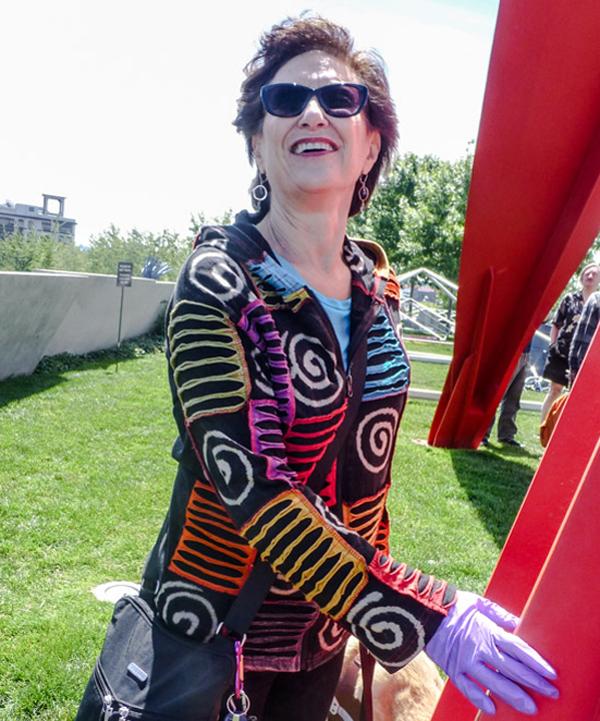
An Art Beyond Sight programme runs at Seattle Art Museum
In a time when the most powerful man in the world has made inflammatory racist comments and joked about disability, it has never been more important for attractions to reach out to those who are marginalised.
I’m not convinced that embracing otherness is something which comes naturally to humans. It goes against the rules of survival of the fittest. Children sometimes stare and ask awkward questions about people who are different and often have trouble playing with children who aren’t the same as them.
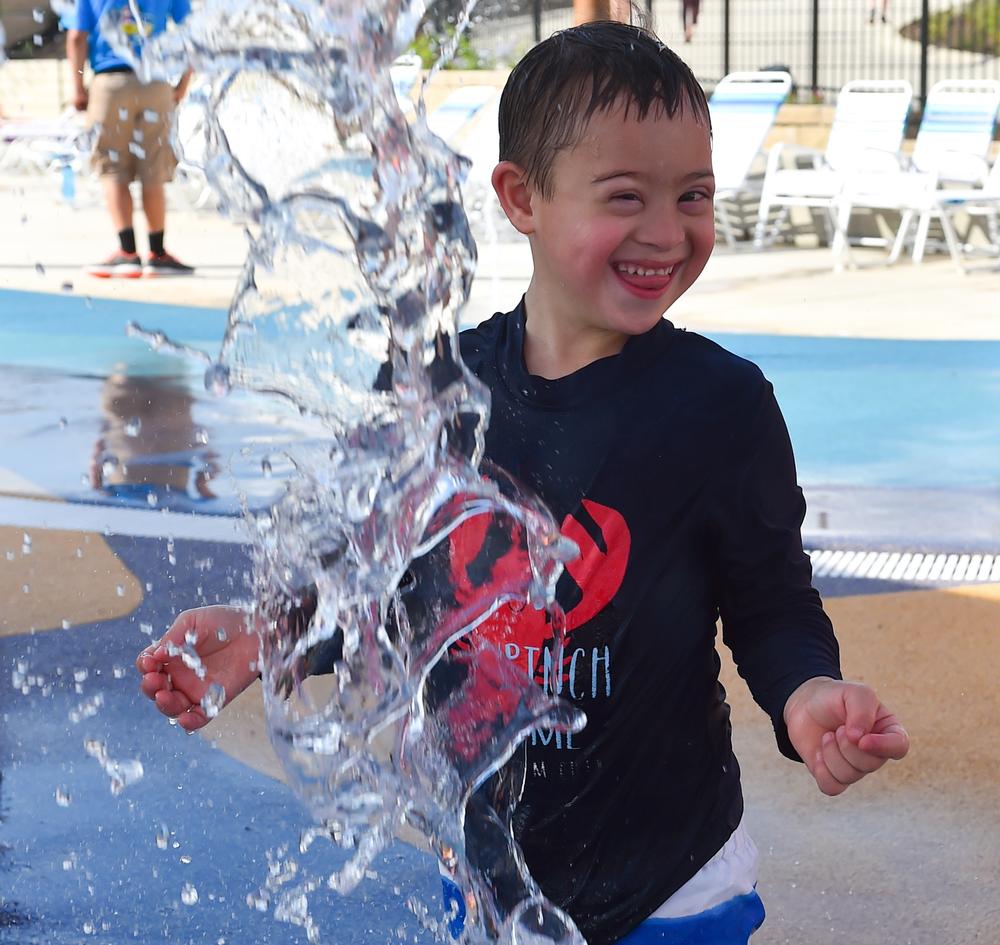
Entrepreneur Gordon Hartman noticed children were wary of playing with his daughter, who has cognitive disabilities, while they were on holiday. His response was to create Morgan’s Wonderland, a fully inclusive theme park in San Antonio, Texas, where disabled people can enjoy every experience and where anyone with a special need receives free entry. Last June, the park unveiled another world first – an ultra accessible splashpark, with five tropically themed splash pads, waterproof wheelchairs and a river boat adventure ride.
Removing barriers Not everyone, or every operator, can go this far, but having an awareness of the barriers and seeking to remove them is a great start. US-based organisation Art Beyond Sight helps operators to make their experience more inclusive for people with vision, mental or cognitive disabilities, through reviewing space, policies, programmes and promotional materials, as well as training staff on how to deliver experiences through the implementation of tactile access and verbal descriptions.
The Seattle Art Museum (SAM) in Seattle, Washington, worked with Art Beyond Sight to train some of its staff to lead tours for people with low or no vision, which now run once a month and are free to take part.
“Art Beyond Sight invites our low to no-vision visitors to participate in free group tours where they visit the galleries, learn about artworks, ask questions, and share ideas,” says Kayla Skinner, deputy director for education and public programmes.
“Attendees tell us they join the tours both to learn more about works of art and also to be in community with other art lovers. SAM is so grateful to the docents and staff who support this programme, which helps make the museum more accessible to our community. We are lucky to have visitors who have attended Art Beyond Sight tours for years and bring so much knowledge and amazing perspective to SAM. I learn something new about SAM’s collection every time I attend a tour.”
Overcoming prejudices Able-bodied people can unknowingly patronise or give false pity to people with disabilities, and the Dialogue Social Enterprise was created to subvert this relationship: putting disabled people in charge and taking away senses from the able-bodied. A number of different experiences have been developed, which attractions can offer as a social franchise, all of which empower the guides.
In Dialogue in the Dark exhibitions, blind guides lead people through a dark exhibit, which replicates the experience of everyday activities, such as visiting a café or walking in a park. The blind person teaches visitors how to use their other senses and cope with the unknown. Dinner in the Dark involves blind waiters serving dinner in a dark restaurant.
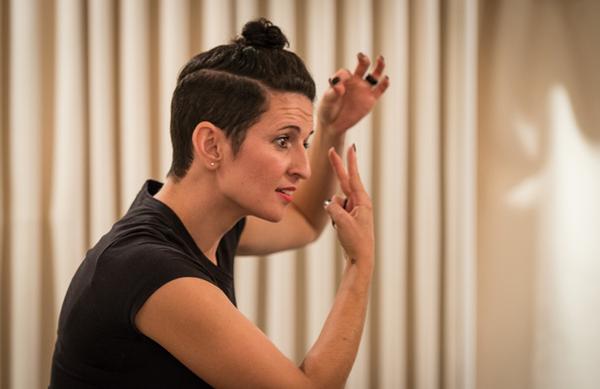
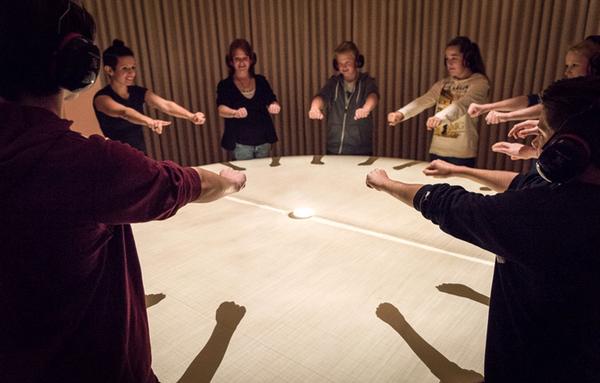
Dialogue in Silence gives visitors an insight into deafness. Wearing noise-cancelling headsets, visitors are taught, by deaf people, to read non-verbal communication, posture, hand movements and facial expressions. The most recent variation from the organisation is Dialogue with Time, which explores ageing.
Singapore Science Centre in Singapore launched a permanent Dialogue with Time exhibition in November 2017, in partnership with the Ministry of Health. By 2030, one in every four Singaporeans will be aged 65 years and above – about double that of today – so the centre believes it is important to develop understanding of ageing and overcome stereotypes.
Visitors experience weakened hearing, vision and mobility; see the effects of UV and smoking on physical appearance and get an impression of how they will look in years to come, as well as having the chance to discuss ageing with the guides, who are all aged between 65 and 85 years.
Empathy and understanding “Dialogue with Time brings to the fore some of the challenges related to ageing and seeks to foster a greater understanding, empathy and preparedness for something we must all eventually face,” says Professor Lim Tit Meng, chief executive of Singapore Science Centre.
“We hope this exhibition will help to positively re-frame and present the opportunities of ageing, as well as encourage more factual, objective and interactive conversations led by the senior guides who are role models themselves.”
Age is also the focus of a business running in the UK, Oomph, which is seeking to collaborate with operators to offer day trips to care home residents. Starting out as an initiative to get care home residents exercising, Oomph recently diversified to offer days out. One successful outing was to the Bombay Sapphire Gin Distillery in Hampshire.
“When you talk to people living in care homes, and witness their quality of life, you can see their frustration,” says founder Ben Allen. “After you take away the time they are sleeping, being fed and cared for, they still have 11 hours a day when they need to be given a reason to live. A real life is a varied life, not lived exclusively indoors.”
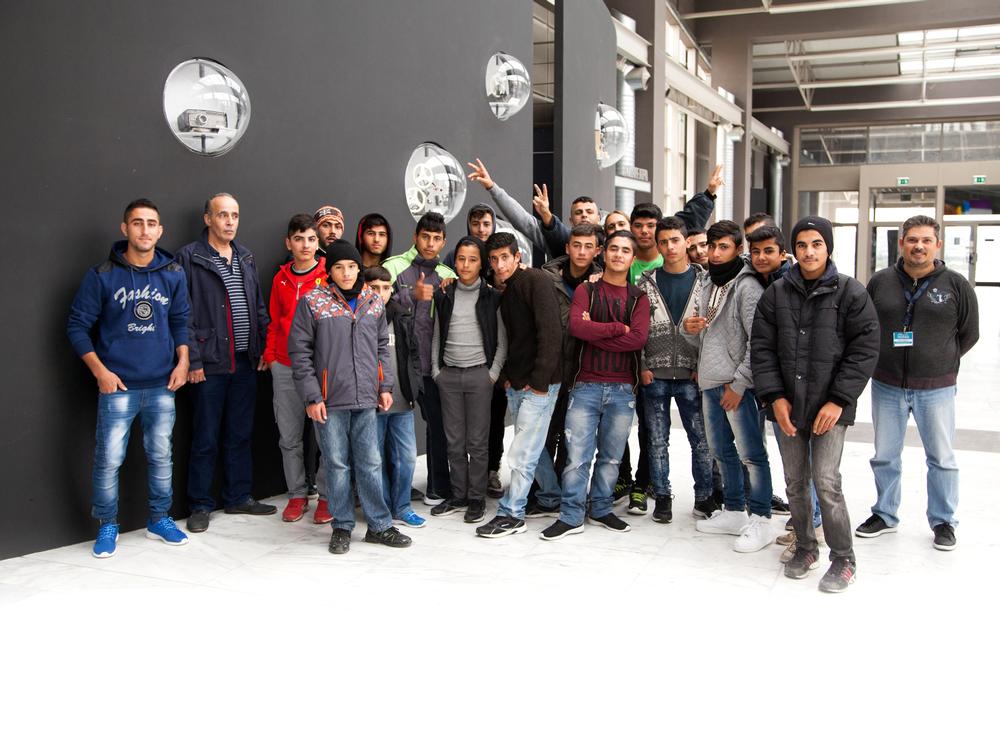
Reaching out Homelessness and the refugee crisis has led to millions of people being marginalised and the attractions industry has the ability to reach out and make them feel part of society by inviting them to engage with programmes. NOESIS Science Centre in Thessaloniki, Greece, has invited children living in the refugee camps of Thessaloniki to visit through its Welcome Refugees initiative. Children are given the opportunity to watch a planetarium film, have a guided tour in their native language and, as they learn Greek, take part in activities offered with their local peers.
“Including children in our activities and programming is a creative and effective way to make them feel welcome, show human solidarity and some hope for a better tomorrow,” says NOESIS general manager Thanassis Kontonikolaou. “Through their activities, learning programmes and collections, science centres can contribute to the social need of meeting and getting to know the unknown ‘other’.”
Since Welcome Refugees launched in 2016, 1,100 refugees have visited and the programme received a special mention for courageous leadership at the 2017 Mariano Gago Ecsite Awards. Elisavet Konstantinou, communication and public relations executive for NOESIS, says: “The children are very excited to take part in this programme and have a precious smile on their faces as they leave our science centre. That is all we need to continue our effort, knowing at the same time that we are doing the right thing.”
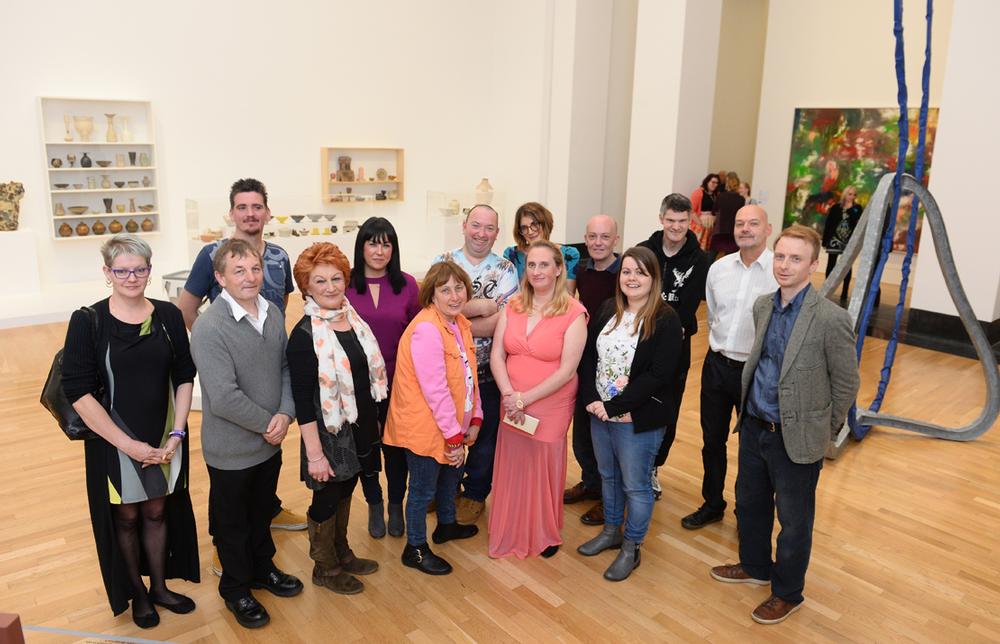
Giving back power By teaming up with The Wallich, a charity which works with homeless people, National Museum Wales smashed down barriers last year, not just inviting people who feel alienated from culture into the space, but putting them in charge.
The new curators provided a fresh insight with their selection of paintings, sculptures, films, prints and drawings from the collection that the museum and the Derek Williams Trust acquired over the past 10 years. They were involved in all aspects of the Who Decides? exhibition, including design, installation, public events, marketing and programmes for schools.
Nick Thornton, head of fine and contemporary art at National Museum Wales, says it was a wonderful experience.
“The co-curators from The Wallich had a unique perspective on the collections, which has produced an ambitious exhibition which makes contemporary art accessible to all our visitors,” he says. “It’s been a fascinating journey for all of us and underlines the huge benefits which can be had from creating opportunities for all parts of our community to contribute to the work of cultural organisations.”
Curator Michael Pugh says initiatives like this encourage wider participation in culture: “I wouldn’t have come into the museum before, but now I’m here and I’ve loved it all. I’m not afraid to come here by myself. I’m not daunted anymore.”
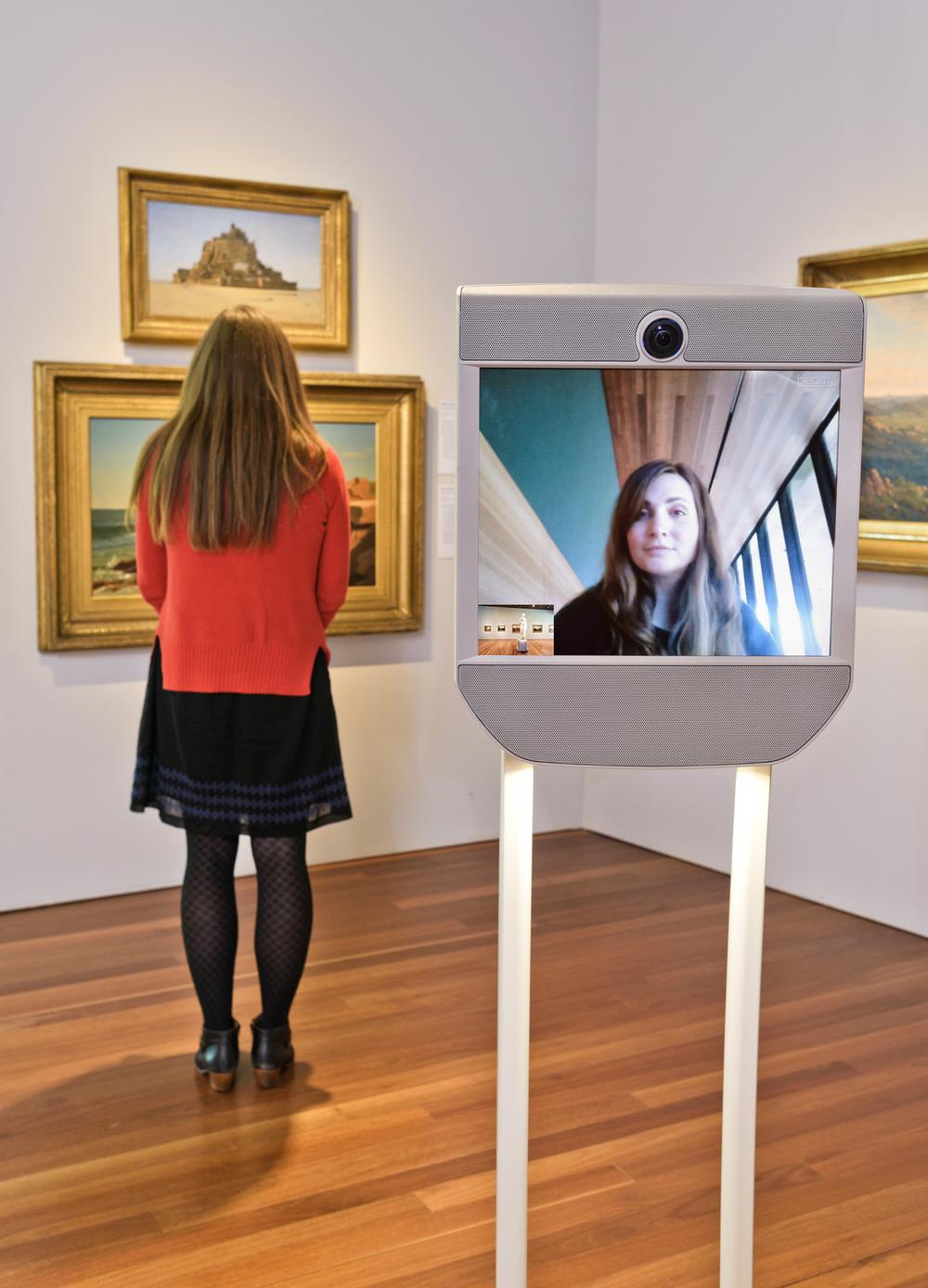
Virtual access Illness can also lead to a feeling of disconnection from society, but technology means it doesn’t have to be a problem. The de Young Museum in San Francisco, California, offers a programme which allows those unable to visit the museum in person because of a disability or illness to enjoy the collections through its Beam Tour, created by Suitable Technologies. The device’s sensitive lenses allow offsite visitors to see the art in high resolution, while its microphone, screen and speakers enable interaction with guides or friends in the museum. Comments or questions from the offsite visitor can be relayed and responded to immediately.
According to the museum website, this programme is the first of its kind and broadens access for a previously underserved segment of the population.
De Young is part of the Fine Arts Museums of San Francisco, which offer programmes to people with disabilities, including tours for people with dementia and Access Days where people with special needs can visit for free or at a reduced cost when the museum is closed to the public.
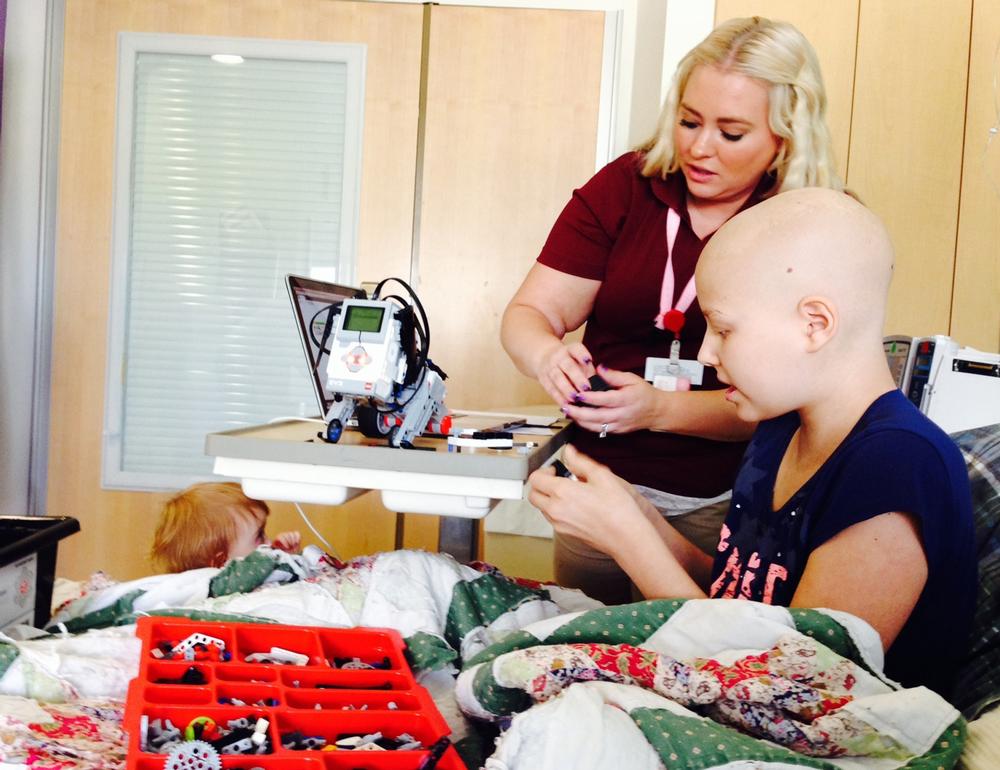
Beyond four walls Outreach programmes, taking exhibits beyond the facility, are another way of broadening the audience and including those who can’t or feel unable to attend. Orlando Science Center in Orlando, Florida, is engaged in a programme to reach out to children receiving treatment at three of the state’s hospitals. NASA has committed $1.2m over five years for the centre to develop and implement the programme, which will take stimulating science and maths activities into hospitals on mobile exhibit carts, aimed at 10 to 18-year-olds.
Volunteers from BASE Camp Children’s Cancer Foundation will be trained by science centre educators to facilitate these programmes, due to launch in the autumn. They will incorporate data and artifacts from NASA missions, University of Central Florida Planetary Science Group collections and Kennedy Space Center resources.
“Children with critical illness can struggle with formal education due to the fact that their hospitalisation keeps them from engaging in active study and attending classes” said science centre president and CEO, JoAnn Newman. “These engaging mobile exhibits will not only shorten the learning gap during their hospitalisation, they will help motivate these children to pursue STEM learning and careers.”
According to Tate, which has completed a four-year programme, Circuit, looking for ways to connect 15 to 25-year-olds with arts and culture and make gallery spaces relevant to them, young people frequently feel alienated from the arts.
Many of the report’s recommendations seem applicable to all attractions and could be applied to all sections of the population who feel left out: seek out partnerships with organisations which share your priorities and values; find ways for young people to work within your organisation as a producer and use short term projects to create long term strategies for change.
Read more from this issue of Attractions Management magazine
View contents of Attractions Management 2018 issue 1
Industry Opinion: Waterparks
More water leisure operators are investing in becoming more accessible, writes WWA's Aleatha Ezra
Industry Opinion: Zoos & Aquariums
Species survival expert Bill Robichaud shares the trials of the saola and what zoos are doing to save this near-extinct creature
Interview: Bob White
Bob White, COO of Village Roadshow, on
weathering a dip in attendance and keeping
his eyes on investment and expansion
Inclusivity: Open to All
Kath Hudson reports on some inspiring
initiatives to help include people who
face physical, social or economic
obstacles to visiting attractions
Heritage: Lofty Ideals
Westminster Abbey is getting an attic
conversion of sorts. We found out more
Waterparks: Under the Weather
Meet the team who helped bring
Epic Waters to fruition – an undercover
Texas waterpark on an epic scale
Profile: Andreas Andersen
IAAPA’s new chair Andreas Andersen sat
down with Tom Anstey to talk about industry
growth, sustainability – and queueing
Theme Parks: Think Big
Liseberg CEO Andreas Andersen reveals
details of the park’s €200m expansion
Themed design: The Story Builders
Disney’s Joe Rohde and Scott Trowbridge
and Universal’s Thierry Coup reveal the
secrets of their trade – well, some of them!
For various physical, social or economic reasons, many people find themselves alienated from the experiences our industry offers. Happily, more operators are now seeking ways to ensure everyone shares the fun. Kath Hudson looks at some inspiring initiatives
By Kath Hudson | Published in Attractions Management 2018 issue 1
An Art Beyond Sight programme runs at Seattle Art Museum
In a time when the most powerful man in the world has made inflammatory racist comments and joked about disability, it has never been more important for attractions to reach out to those who are marginalised.
I’m not convinced that embracing otherness is something which comes naturally to humans. It goes against the rules of survival of the fittest. Children sometimes stare and ask awkward questions about people who are different and often have trouble playing with children who aren’t the same as them.
Entrepreneur Gordon Hartman noticed children were wary of playing with his daughter, who has cognitive disabilities, while they were on holiday. His response was to create Morgan’s Wonderland, a fully inclusive theme park in San Antonio, Texas, where disabled people can enjoy every experience and where anyone with a special need receives free entry. Last June, the park unveiled another world first – an ultra accessible splashpark, with five tropically themed splash pads, waterproof wheelchairs and a river boat adventure ride.
Removing barriers Not everyone, or every operator, can go this far, but having an awareness of the barriers and seeking to remove them is a great start. US-based organisation Art Beyond Sight helps operators to make their experience more inclusive for people with vision, mental or cognitive disabilities, through reviewing space, policies, programmes and promotional materials, as well as training staff on how to deliver experiences through the implementation of tactile access and verbal descriptions.
The Seattle Art Museum (SAM) in Seattle, Washington, worked with Art Beyond Sight to train some of its staff to lead tours for people with low or no vision, which now run once a month and are free to take part.
“Art Beyond Sight invites our low to no-vision visitors to participate in free group tours where they visit the galleries, learn about artworks, ask questions, and share ideas,” says Kayla Skinner, deputy director for education and public programmes.
“Attendees tell us they join the tours both to learn more about works of art and also to be in community with other art lovers. SAM is so grateful to the docents and staff who support this programme, which helps make the museum more accessible to our community. We are lucky to have visitors who have attended Art Beyond Sight tours for years and bring so much knowledge and amazing perspective to SAM. I learn something new about SAM’s collection every time I attend a tour.”
Overcoming prejudices Able-bodied people can unknowingly patronise or give false pity to people with disabilities, and the Dialogue Social Enterprise was created to subvert this relationship: putting disabled people in charge and taking away senses from the able-bodied. A number of different experiences have been developed, which attractions can offer as a social franchise, all of which empower the guides.
In Dialogue in the Dark exhibitions, blind guides lead people through a dark exhibit, which replicates the experience of everyday activities, such as visiting a café or walking in a park. The blind person teaches visitors how to use their other senses and cope with the unknown. Dinner in the Dark involves blind waiters serving dinner in a dark restaurant.
Dialogue in Silence gives visitors an insight into deafness. Wearing noise-cancelling headsets, visitors are taught, by deaf people, to read non-verbal communication, posture, hand movements and facial expressions. The most recent variation from the organisation is Dialogue with Time, which explores ageing.
Singapore Science Centre in Singapore launched a permanent Dialogue with Time exhibition in November 2017, in partnership with the Ministry of Health. By 2030, one in every four Singaporeans will be aged 65 years and above – about double that of today – so the centre believes it is important to develop understanding of ageing and overcome stereotypes.
Visitors experience weakened hearing, vision and mobility; see the effects of UV and smoking on physical appearance and get an impression of how they will look in years to come, as well as having the chance to discuss ageing with the guides, who are all aged between 65 and 85 years.
Empathy and understanding “Dialogue with Time brings to the fore some of the challenges related to ageing and seeks to foster a greater understanding, empathy and preparedness for something we must all eventually face,” says Professor Lim Tit Meng, chief executive of Singapore Science Centre.
“We hope this exhibition will help to positively re-frame and present the opportunities of ageing, as well as encourage more factual, objective and interactive conversations led by the senior guides who are role models themselves.”
Age is also the focus of a business running in the UK, Oomph, which is seeking to collaborate with operators to offer day trips to care home residents. Starting out as an initiative to get care home residents exercising, Oomph recently diversified to offer days out. One successful outing was to the Bombay Sapphire Gin Distillery in Hampshire.
“When you talk to people living in care homes, and witness their quality of life, you can see their frustration,” says founder Ben Allen. “After you take away the time they are sleeping, being fed and cared for, they still have 11 hours a day when they need to be given a reason to live. A real life is a varied life, not lived exclusively indoors.”
Reaching out Homelessness and the refugee crisis has led to millions of people being marginalised and the attractions industry has the ability to reach out and make them feel part of society by inviting them to engage with programmes. NOESIS Science Centre in Thessaloniki, Greece, has invited children living in the refugee camps of Thessaloniki to visit through its Welcome Refugees initiative. Children are given the opportunity to watch a planetarium film, have a guided tour in their native language and, as they learn Greek, take part in activities offered with their local peers.
“Including children in our activities and programming is a creative and effective way to make them feel welcome, show human solidarity and some hope for a better tomorrow,” says NOESIS general manager Thanassis Kontonikolaou. “Through their activities, learning programmes and collections, science centres can contribute to the social need of meeting and getting to know the unknown ‘other’.”
Since Welcome Refugees launched in 2016, 1,100 refugees have visited and the programme received a special mention for courageous leadership at the 2017 Mariano Gago Ecsite Awards. Elisavet Konstantinou, communication and public relations executive for NOESIS, says: “The children are very excited to take part in this programme and have a precious smile on their faces as they leave our science centre. That is all we need to continue our effort, knowing at the same time that we are doing the right thing.”
Giving back power By teaming up with The Wallich, a charity which works with homeless people, National Museum Wales smashed down barriers last year, not just inviting people who feel alienated from culture into the space, but putting them in charge.
The new curators provided a fresh insight with their selection of paintings, sculptures, films, prints and drawings from the collection that the museum and the Derek Williams Trust acquired over the past 10 years. They were involved in all aspects of the Who Decides? exhibition, including design, installation, public events, marketing and programmes for schools.
Nick Thornton, head of fine and contemporary art at National Museum Wales, says it was a wonderful experience.
“The co-curators from The Wallich had a unique perspective on the collections, which has produced an ambitious exhibition which makes contemporary art accessible to all our visitors,” he says. “It’s been a fascinating journey for all of us and underlines the huge benefits which can be had from creating opportunities for all parts of our community to contribute to the work of cultural organisations.”
Curator Michael Pugh says initiatives like this encourage wider participation in culture: “I wouldn’t have come into the museum before, but now I’m here and I’ve loved it all. I’m not afraid to come here by myself. I’m not daunted anymore.”
Virtual access Illness can also lead to a feeling of disconnection from society, but technology means it doesn’t have to be a problem. The de Young Museum in San Francisco, California, offers a programme which allows those unable to visit the museum in person because of a disability or illness to enjoy the collections through its Beam Tour, created by Suitable Technologies. The device’s sensitive lenses allow offsite visitors to see the art in high resolution, while its microphone, screen and speakers enable interaction with guides or friends in the museum. Comments or questions from the offsite visitor can be relayed and responded to immediately.
According to the museum website, this programme is the first of its kind and broadens access for a previously underserved segment of the population.
De Young is part of the Fine Arts Museums of San Francisco, which offer programmes to people with disabilities, including tours for people with dementia and Access Days where people with special needs can visit for free or at a reduced cost when the museum is closed to the public.
Beyond four walls Outreach programmes, taking exhibits beyond the facility, are another way of broadening the audience and including those who can’t or feel unable to attend. Orlando Science Center in Orlando, Florida, is engaged in a programme to reach out to children receiving treatment at three of the state’s hospitals. NASA has committed $1.2m over five years for the centre to develop and implement the programme, which will take stimulating science and maths activities into hospitals on mobile exhibit carts, aimed at 10 to 18-year-olds.
Volunteers from BASE Camp Children’s Cancer Foundation will be trained by science centre educators to facilitate these programmes, due to launch in the autumn. They will incorporate data and artifacts from NASA missions, University of Central Florida Planetary Science Group collections and Kennedy Space Center resources.
“Children with critical illness can struggle with formal education due to the fact that their hospitalisation keeps them from engaging in active study and attending classes” said science centre president and CEO, JoAnn Newman. “These engaging mobile exhibits will not only shorten the learning gap during their hospitalisation, they will help motivate these children to pursue STEM learning and careers.”
According to Tate, which has completed a four-year programme, Circuit, looking for ways to connect 15 to 25-year-olds with arts and culture and make gallery spaces relevant to them, young people frequently feel alienated from the arts.
Many of the report’s recommendations seem applicable to all attractions and could be applied to all sections of the population who feel left out: seek out partnerships with organisations which share your priorities and values; find ways for young people to work within your organisation as a producer and use short term projects to create long term strategies for change.
Read more from this issue of Attractions Management magazine
View contents of Attractions Management 2018 issue 1
Industry Opinion: Waterparks
More water leisure operators are investing in becoming more accessible, writes WWA's Aleatha Ezra
Industry Opinion: Zoos & Aquariums
Species survival expert Bill Robichaud shares the trials of the saola and what zoos are doing to save this near-extinct creature
Interview: Bob White
Bob White, COO of Village Roadshow, on
weathering a dip in attendance and keeping
his eyes on investment and expansion
Inclusivity: Open to All
Kath Hudson reports on some inspiring
initiatives to help include people who
face physical, social or economic
obstacles to visiting attractions
Heritage: Lofty Ideals
Westminster Abbey is getting an attic
conversion of sorts. We found out more
Waterparks: Under the Weather
Meet the team who helped bring
Epic Waters to fruition – an undercover
Texas waterpark on an epic scale
Profile: Andreas Andersen
IAAPA’s new chair Andreas Andersen sat
down with Tom Anstey to talk about industry
growth, sustainability – and queueing
Theme Parks: Think Big
Liseberg CEO Andreas Andersen reveals
details of the park’s €200m expansion
Themed design: The Story Builders
Disney’s Joe Rohde and Scott Trowbridge
and Universal’s Thierry Coup reveal the
secrets of their trade – well, some of them!
OMA has completed a major transformation of New York's New Museum, creating a larger
cultural campus that combines expanded exhibition spaces with learning, performance,
hospitality and public programming.
A US$50 million (£44.2 million, €51.2 million) transformation of Chicago's historic McCormick
Mansion has created a new destination that combines live magic, immersive theatre, dining and
private membership under one roof.
The Montana Historical Society has officially celebrated the opening of its new Montana
Heritage
Center, a US$107 million (£79 million, €92 million) destination that combines immersive
storytelling with cutting-edge audiovisual technology to bring the sta
San Antonio Zoo has reported a US$283 million economic impact for 2025, following a decade-
long transformation programme that has seen almost US$200 million invested into the Texas
attraction.
Plans for the AU$180 million redevelopment of Reef HQ Aquarium in Townsville, Australia, are
progressing, with the project set to transform the attraction into a global centre for reef
education and conservation.
Abu Dhabi-based investment firm Mubadala Capital has made a binding, fully financed
€1 billion
offer to acquire Pierre and Vacances SA, the European holiday resort operator behind the
continental European Center Parcs business.
Disney has reaffirmed its commitment to investing US$30 billion in its US parks and cruise
business by 2033, using new America250 celebrations to underline the role its attractions play
in supporting jobs, tourism and economic growth.
Expo 2030 Riyadh is being planned as a permanent visitor destination, with organisers
confirming the six-million-square-metre site will become a Global Village after the event closes.
The owner of one of Australia's best-known waterparks has acquired a major competitor,
creating a new attractions business spanning two of the country's largest visitor destinations.
The Toverland theme park in the Netherlands has announced a €98m expansion programme
that will add a resort, new attractions and staff facilities as it pursues plans to become a multi-
day destination.
+ More news
COMPANY PROFILES
Alterface Alterface’s Creative Division team is
seasoned in concept and ride development,
as well as storyte [more...]
Holovis Holovis is a privately owned company
established in 2004 by CEO Stuart
Hetherington. [more...]