PKF-HR’s latest research shows that US hotel spa revenue is growing more than other department revenue – a notable achievement. Lead researcher Andrea Foster explains why
By Andrea Foster | Published in Spa Business 2014 issue 1
Up-selling extra treatments and pricing has been a barrier for growth in resort spas / shutterstock.com/racorn
Due to it historical stigma as a luxurious amenity, spa revenue initially lagged behind the growth of other revenue sources of US hotels during the early recovery stages from the economic downturn. But in a significant shift, PKF Hospitality Research (PKF-HR) has found that spa revenue is now growing at a pace equal to, or greater than, most other non-guestroom amenities and services.
As the US hotel industry picks up pace – PKF-HR is predicting a 6.6 per cent increase in average RevPAR in 2014 – the future for spa departments looks even more promising. But how has the division fared so far?
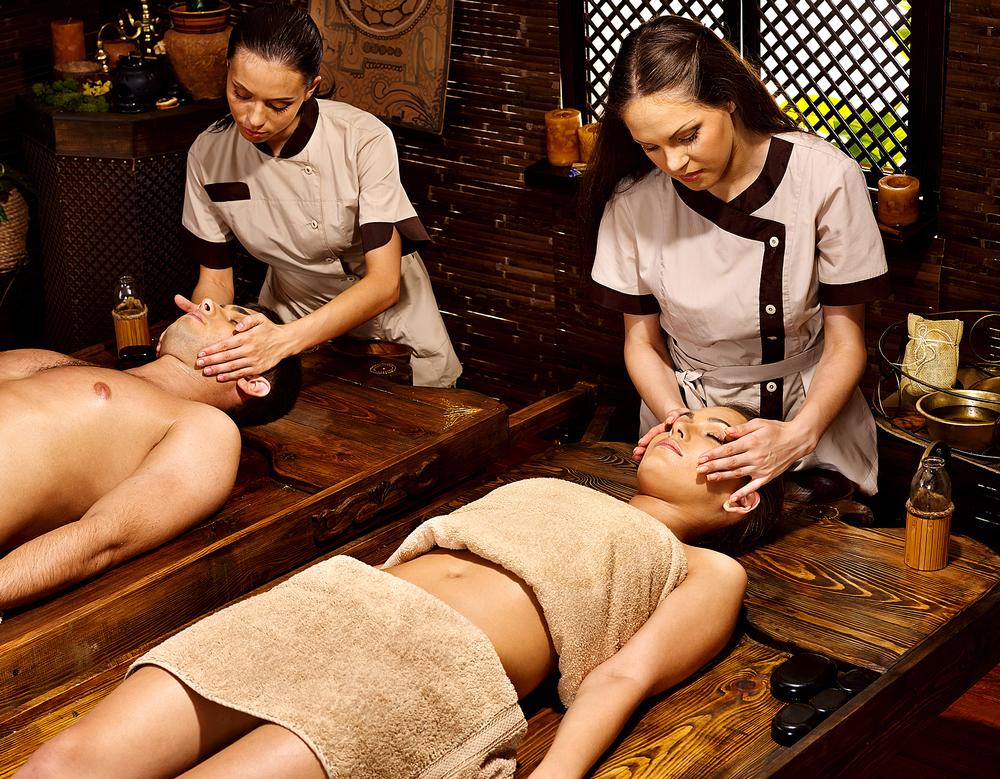
Spa department revenue The 2013 edition of Trends® in the Hotel Spa Industry, by PKF-HR, was based on 125 properties in the US. It shows that in 2012, spa department revenue increased by 5 per cent. This compares favourably to the 2.5 per cent increase in food and beverage revenue, the second largest source of revenue for most hotels. In addition, spa revenue per treatment room per day (RevPATR) averaged 2.5 times higher than the host hotels’ revenue per available guestroom (RevPAR). Not bad considering treatment rooms are typically one-third smaller in size than guest rooms.
The increase in spa department revenue in 2012 is a trend PKF Consulting anticipated as there’s been a notable move towards wellness in the US, specifically taking better care of oneself for improved health and quality of life, of which spas are an important part.
Urban vs resort While revenue in both urban hotel (+7.2 per cent) and resort (+3.8 per cent) spas increased in 2012, each achieved their growth in different ways. Urban hotels were able to attract more guests for spa services, as well as increase prices. The net result was a very attractive 16.3 per cent per occupied [hotel guest] room (POR) increase in total spa revenue at urban hotels. Resort hotels, on the other hand, suffered a 10.8 per cent decline in total spa revenue measured on a POR basis. With occupancy levels at resorts rising by 2.4 per cent, it can be assumed that resort spa managers struggled with the pricing of services, or were unable to up-sell extra treatments to the newly captured hotel guests.
Massage, skincare and body work treatments continue to generate the most revenue at hotel spas. Combined, these services represented 72.6 per cent of total spa revenue and grew by 4.7 per cent in 2012. While these core spa services grew in 2012, salon service revenue declined by 0.1 per cent. It’s a challenge for hotel spas to compete with local hair and nail salons on price and loyalty.
Data from the 2013 spa Trends® report indicates that hotel spas continue to seek customers from the local community to supplement revenues from guests at the property. The combined revenue from facility use and membership fees, fitness and personal training and health and wellness services, such as wellness coaching and nutritional consultations, increased by 4.6 per cent in 2012. These are revenue sources which are most frequently associated with local patrons. Consistently over the last few years, approximately two-thirds of demand at hotel spas comes from hotel guests and the remaining one-third is generated from members and local patrons.
Spa managers were also successful at increasing the purchase of spa merchandise and clothing. Retail revenue for hotel spas grew by 6.6 per cent in 2012.
Increasing expenses While growth in revenue is certainly welcome news, the increase in business volume also carries with it an increase in expenses. Although spa revenues grew by 5 per cent in 2012, total spa department expenses rose by 5.2 per cent. Accordingly, spa department profit margins declined slightly from 21.6 per cent in 2011 to 21.4 per cent in 2012. With not as much of an increase in volume, it’s not surprising that department expenses grew less at resort hotels (+4.1 per cent) compared with urban hotels (+7.1 per cent). Like all operated departments in a hotel, total department expenses do not include overhead costs such as administration, marketing, maintenance and utilities.
Labour costs are the single greatest expense for spa departments. The combined cost of salaries, wages, bonuses and payroll-related expenses (benefits) equaled 58.6 per cent of total department revenue in 2012, or 74.5 per cent of total departmental expense.
Because of the high levels of personal service required at spas, it’s not surprising that labour costs increased by a relatively strong 5.7 per cent from 2011 to 2012. Similar to all department heads in hotels, spa managers are concerned about the less controllable benefits component of labour costs. During 2012, payroll-related expenses increased by 8.2 per cent while salaries, wages and bonuses grew by 4.9 per cent.
Fortunately for hotel spa operators, several (if not most) spa therapists work as independent contractors and are not necessarily eligible to receive a full package of benefits. Payroll-related expenses in hotel spas averaged 22.8 per cent of total labour costs in 2012 compared with an average of 29.6 per cent for all hotel employees.
Despite the decline in department profit margins, hotel spas were able to achieve growth in departmental income. In aggregate, spa department profits increased by 4.2 per cent in 2012. Achieving greater revenue growth, urban hotel spas were also able to enjoy more growth on the bottom-line compared with resort hotel spas.
Guest conversion needed According to the September 2013 edition of PKF-HR’s Hotel Horizons® forecast report, occupancy levels for hotels in the luxury and upper-scale tiers, in which the majority of hotel spas operate, will remain above 70 per cent through 2017. This minimises the potential for significant increases in guest counts in the years to come. Therefore, the opportunity for hotel spas to achieve future growth will be dependent on their ability to: * Convert more hotel guests to spa patrons * Increase the price of spa services * Raise the number of treatments per guest * Attract greater numbers of local patrons
In a low inflationary and uncertain economic environment, raising prices will be a challenge. Therefore, educating and exposing travellers to the benefits of spa services from a wellness perspective will be a key to success in the future.
On the horizon There’s been much discussion about whether the addition of a spa to a hotel results in a higher average daily rate (ADR). It’s been shown that hotels with spas often have a higher ADR than hotels without spas, however a causal relationship is inconclusive. Similarly, there’s discussion as to the occupancy impact that a spa has on a hotel. Based on travel agent survey data, sourced by Spafinder Wellness and presented in its article in PKF’s spa Trends® report, spas do generate travel demand. So it can be concluded that spas do contribute to the occupancy level of the hotels in which they are located. But is it just the spa facility itself, or is it a broader spa and wellness experience, that drives hotel occupancy and, potentially, room rates?
The broader aspect – wellness – is expected to become somewhat less directly correlated to the economy than spa. In the US, more people are moving toward a greater understanding of the short- and long-term value of taking care of oneself. As this happens, guest expectations at hotels, restaurants, spas and the like are expected to shift towards wellness-oriented experiences. Locations and brands that have moved toward a more wellness-focused experience will be ahead of the curve and better positioned to capture the demand and related benefits, as a result.
With strong demand levels and limited supply growth projected, lodging increases in the US are expected to remain above long-run averages for the next few years. There’s no better time for spas to market the many benefits of their wellness experiences on-site so that more of these hotel guests can become spa guests too.
To purchase the full 2013 edition of PKF-HR’s Trends® in the Hotel Spa Industry visit www.pkfc.com/store
Read more from this issue of Attractions Management magazine
View contents of Attractions Management 2014 issue 1
Interview: Paul Scialla
Delos founder talks to Katie Barnes about creating the first set of wellbeing building standards and securing investment from Leonardo DiCaprio
Ask an expert: Detox
Done well, detox presents numerous business opportunities – but what's the best approach to take and what treatments should be avoided?
Business analysis: Spa inclusive
Some resorts are enticing clients with free, daily spa treatments. Neena Dhillon takes a look at the business model
Wellness tourism: Time to shine
Sophie Benge reports on wellness tourism in central and eastern Europe – a market that's ripe for development
Wellness research: Culture king
The Futures Company provides an insightful overview on how different cultures view health and wellbeing
Hotel spa research: Top division
In the hotel sector, spa revenue is growing faster than other revenue streams, according to a new PKF report. Andrea Foster analyses the findings
Andrea Foster is vice-president and national director of spa & wellness consulting, for PKF Consulting USA. Email: [email protected] Tel: +1 617 330 8189
Average revenue per treatment room a day was 2.5 times higher than the host hotel’s RevPAR / shutterstock.com/Poznyakov
Payroll-related expenses (benefits) in the spa are 6.8 per cent lower than the hotel average / shutterstock.com/AntonioDiaz
COMPANY PROFILES
TechnoAlpin Indoor
TechnoAlpin is the world leader for snowmaking systems. With the Indoor snow division, TechnoAlpin c [more...]
Simworx Ltd
The company was initially established
in 1997. Terry Monkton and Andrew
Roberts are the key stakeh [more...]
Painting With Light
By combining lighting, video, scenic and architectural elements, sound and special effects we tell s [more...]
Taylor Made Designs
Founded in 1993, Taylor Made
Designs supply corporate clothing
and brand-enhancing merchandise
to [more...]
An opportunity to reimagine one of the UK’s most recognisable towers has been formally
opened by Rivington Hark, as St Johns Beacon invites operators and partners to shape its
next phase. [more...]
PKF-HR’s latest research shows that US hotel spa revenue is growing more than other department revenue – a notable achievement. Lead researcher Andrea Foster explains why
By Andrea Foster | Published in Spa Business 2014 issue 1
Up-selling extra treatments and pricing has been a barrier for growth in resort spas / shutterstock.com/racorn
Due to it historical stigma as a luxurious amenity, spa revenue initially lagged behind the growth of other revenue sources of US hotels during the early recovery stages from the economic downturn. But in a significant shift, PKF Hospitality Research (PKF-HR) has found that spa revenue is now growing at a pace equal to, or greater than, most other non-guestroom amenities and services.
As the US hotel industry picks up pace – PKF-HR is predicting a 6.6 per cent increase in average RevPAR in 2014 – the future for spa departments looks even more promising. But how has the division fared so far?
Spa department revenue The 2013 edition of Trends® in the Hotel Spa Industry, by PKF-HR, was based on 125 properties in the US. It shows that in 2012, spa department revenue increased by 5 per cent. This compares favourably to the 2.5 per cent increase in food and beverage revenue, the second largest source of revenue for most hotels. In addition, spa revenue per treatment room per day (RevPATR) averaged 2.5 times higher than the host hotels’ revenue per available guestroom (RevPAR). Not bad considering treatment rooms are typically one-third smaller in size than guest rooms.
The increase in spa department revenue in 2012 is a trend PKF Consulting anticipated as there’s been a notable move towards wellness in the US, specifically taking better care of oneself for improved health and quality of life, of which spas are an important part.
Urban vs resort While revenue in both urban hotel (+7.2 per cent) and resort (+3.8 per cent) spas increased in 2012, each achieved their growth in different ways. Urban hotels were able to attract more guests for spa services, as well as increase prices. The net result was a very attractive 16.3 per cent per occupied [hotel guest] room (POR) increase in total spa revenue at urban hotels. Resort hotels, on the other hand, suffered a 10.8 per cent decline in total spa revenue measured on a POR basis. With occupancy levels at resorts rising by 2.4 per cent, it can be assumed that resort spa managers struggled with the pricing of services, or were unable to up-sell extra treatments to the newly captured hotel guests.
Massage, skincare and body work treatments continue to generate the most revenue at hotel spas. Combined, these services represented 72.6 per cent of total spa revenue and grew by 4.7 per cent in 2012. While these core spa services grew in 2012, salon service revenue declined by 0.1 per cent. It’s a challenge for hotel spas to compete with local hair and nail salons on price and loyalty.
Data from the 2013 spa Trends® report indicates that hotel spas continue to seek customers from the local community to supplement revenues from guests at the property. The combined revenue from facility use and membership fees, fitness and personal training and health and wellness services, such as wellness coaching and nutritional consultations, increased by 4.6 per cent in 2012. These are revenue sources which are most frequently associated with local patrons. Consistently over the last few years, approximately two-thirds of demand at hotel spas comes from hotel guests and the remaining one-third is generated from members and local patrons.
Spa managers were also successful at increasing the purchase of spa merchandise and clothing. Retail revenue for hotel spas grew by 6.6 per cent in 2012.
Increasing expenses While growth in revenue is certainly welcome news, the increase in business volume also carries with it an increase in expenses. Although spa revenues grew by 5 per cent in 2012, total spa department expenses rose by 5.2 per cent. Accordingly, spa department profit margins declined slightly from 21.6 per cent in 2011 to 21.4 per cent in 2012. With not as much of an increase in volume, it’s not surprising that department expenses grew less at resort hotels (+4.1 per cent) compared with urban hotels (+7.1 per cent). Like all operated departments in a hotel, total department expenses do not include overhead costs such as administration, marketing, maintenance and utilities.
Labour costs are the single greatest expense for spa departments. The combined cost of salaries, wages, bonuses and payroll-related expenses (benefits) equaled 58.6 per cent of total department revenue in 2012, or 74.5 per cent of total departmental expense.
Because of the high levels of personal service required at spas, it’s not surprising that labour costs increased by a relatively strong 5.7 per cent from 2011 to 2012. Similar to all department heads in hotels, spa managers are concerned about the less controllable benefits component of labour costs. During 2012, payroll-related expenses increased by 8.2 per cent while salaries, wages and bonuses grew by 4.9 per cent.
Fortunately for hotel spa operators, several (if not most) spa therapists work as independent contractors and are not necessarily eligible to receive a full package of benefits. Payroll-related expenses in hotel spas averaged 22.8 per cent of total labour costs in 2012 compared with an average of 29.6 per cent for all hotel employees.
Despite the decline in department profit margins, hotel spas were able to achieve growth in departmental income. In aggregate, spa department profits increased by 4.2 per cent in 2012. Achieving greater revenue growth, urban hotel spas were also able to enjoy more growth on the bottom-line compared with resort hotel spas.
Guest conversion needed According to the September 2013 edition of PKF-HR’s Hotel Horizons® forecast report, occupancy levels for hotels in the luxury and upper-scale tiers, in which the majority of hotel spas operate, will remain above 70 per cent through 2017. This minimises the potential for significant increases in guest counts in the years to come. Therefore, the opportunity for hotel spas to achieve future growth will be dependent on their ability to: * Convert more hotel guests to spa patrons * Increase the price of spa services * Raise the number of treatments per guest * Attract greater numbers of local patrons
In a low inflationary and uncertain economic environment, raising prices will be a challenge. Therefore, educating and exposing travellers to the benefits of spa services from a wellness perspective will be a key to success in the future.
On the horizon There’s been much discussion about whether the addition of a spa to a hotel results in a higher average daily rate (ADR). It’s been shown that hotels with spas often have a higher ADR than hotels without spas, however a causal relationship is inconclusive. Similarly, there’s discussion as to the occupancy impact that a spa has on a hotel. Based on travel agent survey data, sourced by Spafinder Wellness and presented in its article in PKF’s spa Trends® report, spas do generate travel demand. So it can be concluded that spas do contribute to the occupancy level of the hotels in which they are located. But is it just the spa facility itself, or is it a broader spa and wellness experience, that drives hotel occupancy and, potentially, room rates?
The broader aspect – wellness – is expected to become somewhat less directly correlated to the economy than spa. In the US, more people are moving toward a greater understanding of the short- and long-term value of taking care of oneself. As this happens, guest expectations at hotels, restaurants, spas and the like are expected to shift towards wellness-oriented experiences. Locations and brands that have moved toward a more wellness-focused experience will be ahead of the curve and better positioned to capture the demand and related benefits, as a result.
With strong demand levels and limited supply growth projected, lodging increases in the US are expected to remain above long-run averages for the next few years. There’s no better time for spas to market the many benefits of their wellness experiences on-site so that more of these hotel guests can become spa guests too.
To purchase the full 2013 edition of PKF-HR’s Trends® in the Hotel Spa Industry visit www.pkfc.com/store
Read more from this issue of Attractions Management magazine
View contents of Attractions Management 2014 issue 1
Interview: Paul Scialla
Delos founder talks to Katie Barnes about creating the first set of wellbeing building standards and securing investment from Leonardo DiCaprio
Ask an expert: Detox
Done well, detox presents numerous business opportunities – but what's the best approach to take and what treatments should be avoided?
Business analysis: Spa inclusive
Some resorts are enticing clients with free, daily spa treatments. Neena Dhillon takes a look at the business model
Wellness tourism: Time to shine
Sophie Benge reports on wellness tourism in central and eastern Europe – a market that's ripe for development
Wellness research: Culture king
The Futures Company provides an insightful overview on how different cultures view health and wellbeing
Hotel spa research: Top division
In the hotel sector, spa revenue is growing faster than other revenue streams, according to a new PKF report. Andrea Foster analyses the findings
Andrea Foster is vice-president and national director of spa & wellness consulting, for PKF Consulting USA. Email: [email protected] Tel: +1 617 330 8189
Average revenue per treatment room a day was 2.5 times higher than the host hotel’s RevPAR / shutterstock.com/Poznyakov
Payroll-related expenses (benefits) in the spa are 6.8 per cent lower than the hotel average / shutterstock.com/AntonioDiaz
Hotel de France, located on the British Isle of Jersey, has created a wellness retreat package
that includes a hot yoga session that will take place in Jersey Zoo’s butterfly sanctuary.
A new immersive attraction designed to transport visitors into the final hours of ancient Pompeii
is preparing to open near the world-famous archaeological site in southern Italy.
Experience design company, BRC Imagination Arts, has completed a transition that sees founder
Bob Rogers pass ownership of the business to four long-serving senior executives, while
remaining actively involved with the company.
Movie Park Germany has opened a new Paramount Pictures-themed attraction as part of its 30th
anniversary celebrations, using immersive storytelling and adaptive reuse to reinforce the park’s
longstanding “Hollywood in Germany” positioning.
Therme Manchester’s 28-acre development, which will include interconnected glass pavilions
that measure 65,000sq m, will be the largest bathing and wellbeing attraction in the world once
complete, according to prof David Russell, CEO of Therme UK.
Efteling has opened Hooghmoed, a new family drop tower designed to broaden the appeal of its
recently launched Sirene Island themed area and introduce younger visitors to thrill attractions.
A proposed Puy du Fou development near Bicester and Universal Destinations and Experiences’
planned resort in Bedford are emerging as part of a wider transformation of the Oxford–
Cambridge Growth Corridor into a major centre for UK leisure and tourism inv
Shedd Aquarium has opened the Immersion Theater developed in partnership with SimEx-
Iwerks, as part of a wider strategy to enhance the guest experience and create additional
revenue opportunities.
The UK government has announced a temporary reduction in VAT on visitor attractions and
children’s meals as part of a summer cost-of-living support package designed to stimulate the
visitor economy and encourage family days out.
As designer Yinka Ilori prepares for his first solo gallery show in London, he speaks exclusively
to CLADmag about his mission to spread joy, the power of play, and his bold approach to using
colour (including the colours you won’t see in his work).
The government of Thailand is exploring plans for a THB300bn (£6.3bn, US$8.3bn)
entertainment complex in the country’s Eastern Economic Corridor (EEC), with officials
proposing a large-scale theme park and sports destination as part of a broader tourism and
economic development strategy.
+ More news
COMPANY PROFILES
TechnoAlpin Indoor TechnoAlpin is the world leader for snowmaking systems. With the Indoor snow division, TechnoAlpin c [more...]
Simworx Ltd The company was initially established
in 1997. Terry Monkton and Andrew
Roberts are the key stakeh [more...]
Painting With Light By combining lighting, video, scenic and architectural elements, sound and special effects we tell s [more...]
Taylor Made Designs Founded in 1993, Taylor Made
Designs supply corporate clothing
and brand-enhancing merchandise
to [more...]
An opportunity to reimagine one of the UK’s most recognisable towers has been formally
opened by Rivington Hark, as St Johns Beacon invites operators and partners to shape its
next phase. [more...]