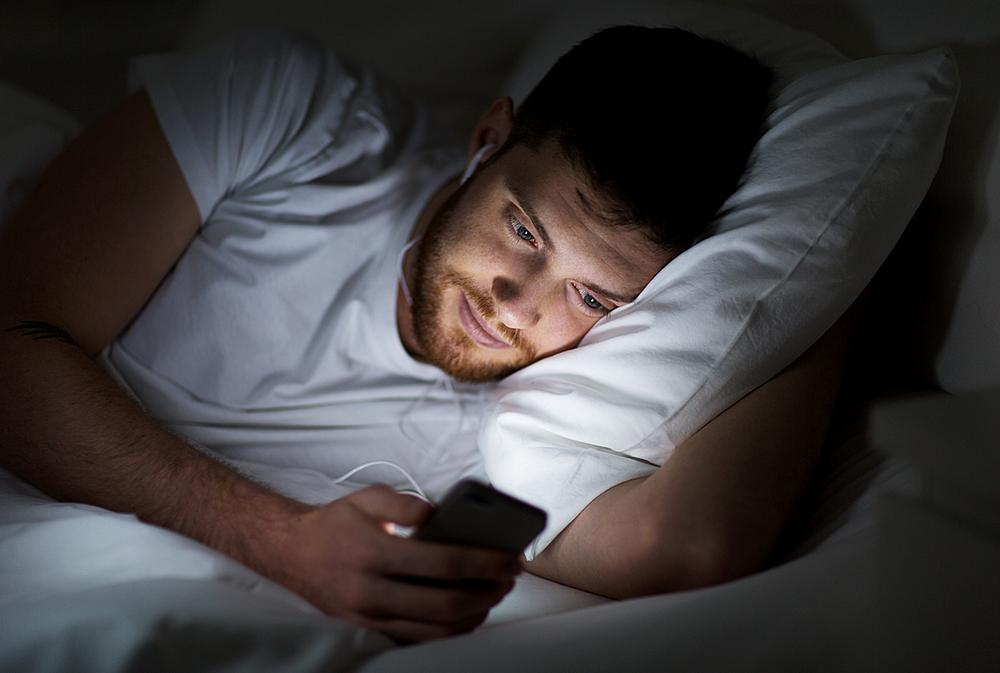
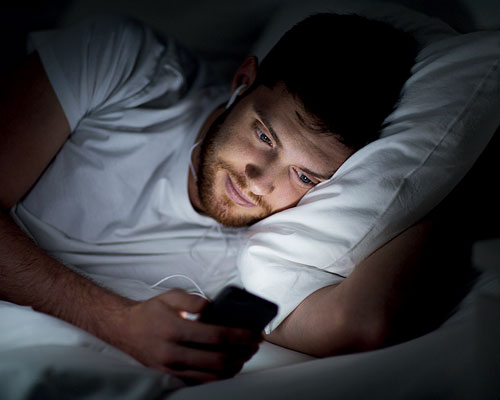
Digital devices disrupt sleep / Syda Productions/shutterstock
Digital detox sessions are becoming increasingly popular in spas as people put away their electronic gadgets for a couple of hours, or even a couple of days, in order to truly embrace ‘me time’. Mandarin Oriental was one of the first operators to introduce ‘digital detoxing’ in 2016 and now Jeremy McCarthy, the group’s director of spa and wellness, has collaborated with figures in medicine, hospitality, economics and technology on a white paper highlighting the “substantial” impact that technology has on our lives. Wellness in the Age of the Smartphone, published by the Global Wellness Institute’s Digital Wellness Initiative in May, is a 32-page report summarising current research focusing on the effect technology has on sleep, obesity, mental health, relationships, personal safety and workplace productivity.
Disrupting sleep “Adults are expected to get eight hours of sleep per night, yet the distraction of new technology may be preventing us from meeting this target,” the report says, adding that up to 60 per cent of adults experience sleep problems.
The blue-light emitting screens on digital devices mimic natural sunlight, keeping us feeling more alert and suppressing the release of sleep hormones. “Using devices in the bedroom or during the hour or two before sleep makes it difficult for us to fall asleep.” Our quality of sleep is profoundly affected too, resulting in ‘junk sleep’ which is neither long enough nor of a high enough quality for the brain to feel rested.
Mental wellness According to the report there are rising rates of depression and anxiety in the UK, with a third of teenage women reporting symptoms. “The cause is not clear but rising rates seem to coincide with the growth of social media,” it says. In extreme cases, teens who spend five or more hours a day online are 71 per cent more likely to have at least one suicide risk factor.
Screen time and TV viewing also has negative associations with childhood cognitive development and is linked to inattentiveness, internalisation of problems and lower self-esteem.
“But the biggest challenges to mental wellness appear to come, not from technology itself, but from the added pressures and pace of life in the digital age,” the report finds. The lines between personal and professional lives are blurred, we’re never too far from our devices and social media can make us feel insecure.
As McCarthy told Spa Business at the launch of Mandarin Oriental’s Digital Detox programmes: “Technology has brought us many great advances, but the expectations for instant communication and the increasing pace of change in the world can have a negative impact on our wellbeing... The spa is one of the few places left in modern society where it is acceptable and even encouraged to disconnect from technology.”
Promotional feature: Terres d’Afrique - Out of Africa
Luxury ethical spa brand Terres d’Afrique has seen rapid expansion in its first years of business. CEO and co-founder Stephan Helary explains how the company has now transitioned to creating bespoke spa experiences from concept to completion
Promotional feature: The Madison Collection - Holistic sustainability
The Madison Collection is committed to creating high-quality hotel and spa linens while at the same time protecting the environment, promoting workplace wellness and supporting clean water rights. Owner Charmaine T Lang and Gilad Lang, vice president of business development, tell us more
Wellness: Staying well
Spa Business takes a look at how some of the world’s biggest hotel operators are addressing the new trend of ‘wellness rooms’
Promotional feature: Biologique Recherche - Pioneering Personalisation
More than 40 years ago, Parisian skincare brand Biologique Recherche was founded, with a focus on research and personalisation. Co-chairs Rupert Schmid and Pierre-Louis Delapalme discuss what’s made the brand so successful – and where the future will take them
Thermal spa: Mountain therapy
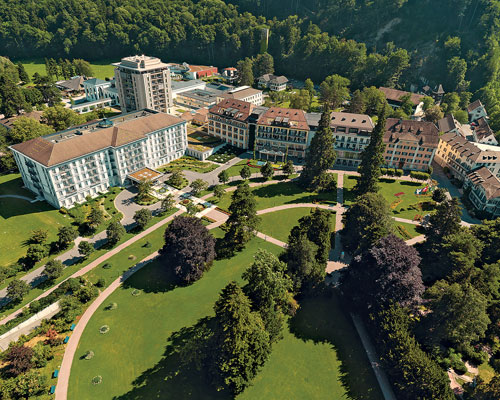
Bad Ragaz’s new CEO Patrick Vogler tells Kath Hudson about his new ambitions for the famous Swiss spa resort
Digital devices disrupt sleep / Syda Productions/shutterstock
Digital detox sessions are becoming increasingly popular in spas as people put away their electronic gadgets for a couple of hours, or even a couple of days, in order to truly embrace ‘me time’. Mandarin Oriental was one of the first operators to introduce ‘digital detoxing’ in 2016 and now Jeremy McCarthy, the group’s director of spa and wellness, has collaborated with figures in medicine, hospitality, economics and technology on a white paper highlighting the “substantial” impact that technology has on our lives. Wellness in the Age of the Smartphone, published by the Global Wellness Institute’s Digital Wellness Initiative in May, is a 32-page report summarising current research focusing on the effect technology has on sleep, obesity, mental health, relationships, personal safety and workplace productivity.
Disrupting sleep “Adults are expected to get eight hours of sleep per night, yet the distraction of new technology may be preventing us from meeting this target,” the report says, adding that up to 60 per cent of adults experience sleep problems.
The blue-light emitting screens on digital devices mimic natural sunlight, keeping us feeling more alert and suppressing the release of sleep hormones. “Using devices in the bedroom or during the hour or two before sleep makes it difficult for us to fall asleep.” Our quality of sleep is profoundly affected too, resulting in ‘junk sleep’ which is neither long enough nor of a high enough quality for the brain to feel rested.
Mental wellness According to the report there are rising rates of depression and anxiety in the UK, with a third of teenage women reporting symptoms. “The cause is not clear but rising rates seem to coincide with the growth of social media,” it says. In extreme cases, teens who spend five or more hours a day online are 71 per cent more likely to have at least one suicide risk factor.
Screen time and TV viewing also has negative associations with childhood cognitive development and is linked to inattentiveness, internalisation of problems and lower self-esteem.
“But the biggest challenges to mental wellness appear to come, not from technology itself, but from the added pressures and pace of life in the digital age,” the report finds. The lines between personal and professional lives are blurred, we’re never too far from our devices and social media can make us feel insecure.
As McCarthy told Spa Business at the launch of Mandarin Oriental’s Digital Detox programmes: “Technology has brought us many great advances, but the expectations for instant communication and the increasing pace of change in the world can have a negative impact on our wellbeing... The spa is one of the few places left in modern society where it is acceptable and even encouraged to disconnect from technology.”
Promotional feature: Terres d’Afrique - Out of Africa
Luxury ethical spa brand Terres d’Afrique has seen rapid expansion in its first years of business. CEO and co-founder Stephan Helary explains how the company has now transitioned to creating bespoke spa experiences from concept to completion
Promotional feature: The Madison Collection - Holistic sustainability
The Madison Collection is committed to creating high-quality hotel and spa linens while at the same time protecting the environment, promoting workplace wellness and supporting clean water rights. Owner Charmaine T Lang and Gilad Lang, vice president of business development, tell us more
Wellness: Staying well
Spa Business takes a look at how some of the world’s biggest hotel operators are addressing the new trend of ‘wellness rooms’
Promotional feature: Biologique Recherche - Pioneering Personalisation
More than 40 years ago, Parisian skincare brand Biologique Recherche was founded, with a focus on research and personalisation. Co-chairs Rupert Schmid and Pierre-Louis Delapalme discuss what’s made the brand so successful – and where the future will take them
Thermal spa: Mountain therapy
Bad Ragaz’s new CEO Patrick Vogler tells Kath Hudson about his new ambitions for the famous Swiss spa resort
San Antonio Zoo has reported a US$283 million economic impact for 2025, following a decade-
long transformation programme that has seen almost US$200 million invested into the Texas
attraction.
Plans for the AU$180 million redevelopment of Reef HQ Aquarium in Townsville, Australia, are
progressing, with the project set to transform the attraction into a global centre for reef
education and conservation.
Abu Dhabi-based investment firm Mubadala Capital has made a binding, fully financed
€1 billion
offer to acquire Pierre and Vacances SA, the European holiday resort operator behind the
continental European Center Parcs business.
Disney has reaffirmed its commitment to investing US$30 billion in its US parks and cruise
business by 2033, using new America250 celebrations to underline the role its attractions play
in supporting jobs, tourism and economic growth.
Expo 2030 Riyadh is being planned as a permanent visitor destination, with organisers
confirming the six-million-square-metre site will become a Global Village after the event closes.
The owner of one of Australia's best-known waterparks has acquired a major competitor,
creating a new attractions business spanning two of the country's largest visitor destinations.
The Toverland theme park in the Netherlands has announced a €98m expansion programme
that will add a resort, new attractions and staff facilities as it pursues plans to become a multi-
day destination.
Hotel de France, located on the British Isle of Jersey, has created a wellness retreat package
that includes a hot yoga session that will take place in Jersey Zoo’s butterfly sanctuary.
A new immersive attraction designed to transport visitors into the final hours of ancient Pompeii
is preparing to open near the world-famous archaeological site in southern Italy.
Experience design company, BRC Imagination Arts, has completed a transition that sees founder
Bob Rogers pass ownership of the business to four long-serving senior executives, while
remaining actively involved with the company.
+ More news
COMPANY PROFILES
Clip 'n Climb Clip ‘n Climb currently offers facility owners and
investors more than 40 colourful and unique
Cha [more...]
Alterface Alterface’s Creative Division team is
seasoned in concept and ride development,
as well as storyte [more...]