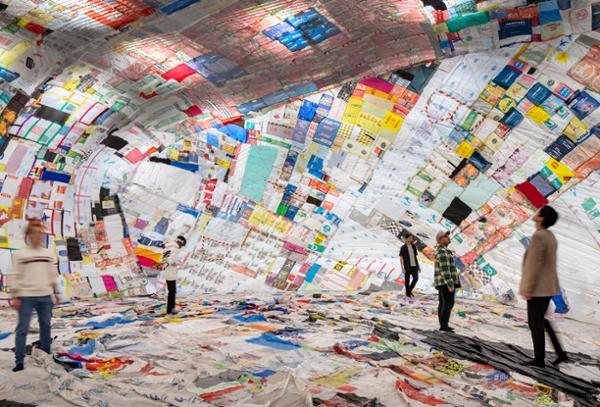
It’s no longer enough to focus on the ‘Big Five’ senses if you want to fully connect with visitors. Why not engage the senses of danger, balance or justice to create experiences that truly resonate?
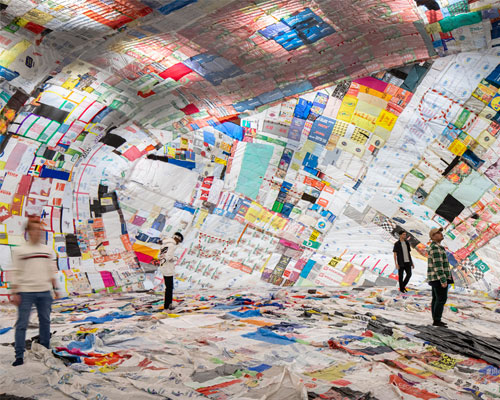
Tomas Saraceno’s sensory installation at The Shed, NYC, page 32 / Nicholas Knight
As we emerge from the pandemic, pent up demand is seeing people hungry for the adventures they’ve been missing out on.
Memorable experiences are all about triggering sensations, and that’s something the attractions industry has always excelled at, but could we be doing even more?
Museums and attractions have long described themselves as multi-sensory as a result of including exhibits and interactives that appeal to visitors’ core senses of sight, sound, smell, touch and taste.
However, today, we have far more scientific insight into how we can engage a fuller range of senses and there’s an opportunity to use this knowledge to engage visitors in more profound, unusual and creative ways.
In a fascinating interview on page 32, Roto founder, Joseph Wisne, argues it’s time for us to move beyond the sensory to develop ‘supersensory’ experiences that stimulate the full range of senses in all their depth and diversity.
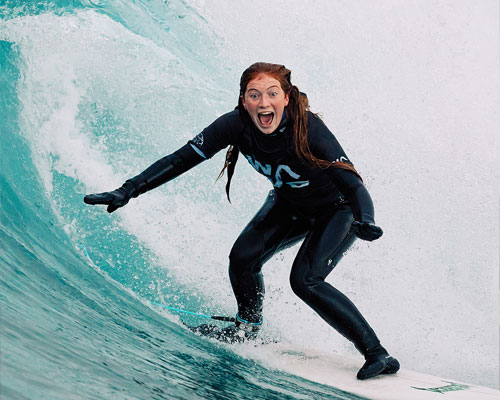
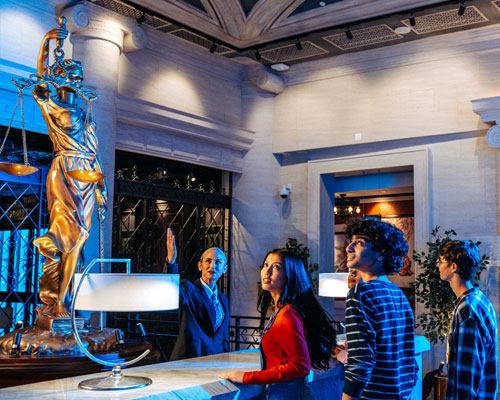
We know humans have far more than the five ‘basic’ senses we were taught about at school. We can now add a sense of danger or pain, and more complex ‘senses’, such as a sense of humour, justice or empathy to the list. All these can be used to tell powerful stories.
We can also use the science of ‘peak experience’ to play with the sense of time and make an experience feel longer than it really is, or get creative and use the senses of proprioception or balance to ‘wake up’ visitors.
This knowledge is being used by pioneers to create richer and more memorable experiences.
One of the most memorable experiences I’ve had was Punchdrunk’s Masque of the Red Death, in which the audience dressed up, the entire Victorian theatre was transformed and the live music, food and drinks were all part of the experience. We could touch the props, see and smell smoke – we were taken on a journey where we felt curious, excited and at times downright uneasy. The fact I shared the experience with friends only deepened its impact.
The success of attractions such as Superblue Miami, the Van Gogh Immersive Experiences and Meow Wolf and teamLab’s art-based attractions show people’s desire to feel fully engaged and stimulated. Static attractions and museums can learn from this to get supersensory and deepen visitors’ connection with what they’re experiencing.
Read more from this issue of Attractions Management magazine
View contents of Attractions Management 2022 issue 1
Editor's letter: Supersensory
With our growing insight into how to engage visitors’ more complex senses, it’s time for a new approach, says Magali Robathan
Immersive experiences: Joseph Wisne
Truly ambitious attractions providers need to push the boundaries of immersive design by engaging visitors’ senses of pain, danger, balance, justice and more, argues Roto’s CEO
Interview: Esther Dugdale
As the Burrell Collection relaunches and Eden Qingdao takes shape, Event’s creative director shares her tips for creating experiences that spark joy and curiosity
The arts: Room to grow
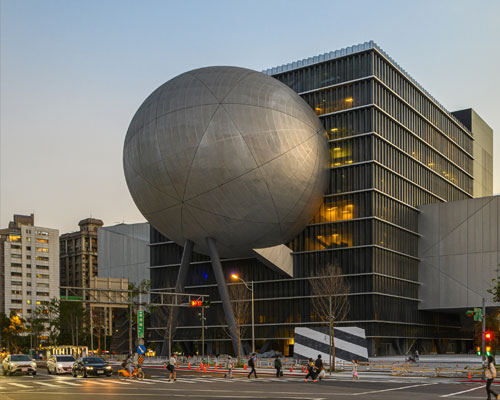
Could the space age, ultra flexible design of the new Taipei Performing Arts Center provide a model for future attractions spaces?
Museums: Ones to watch
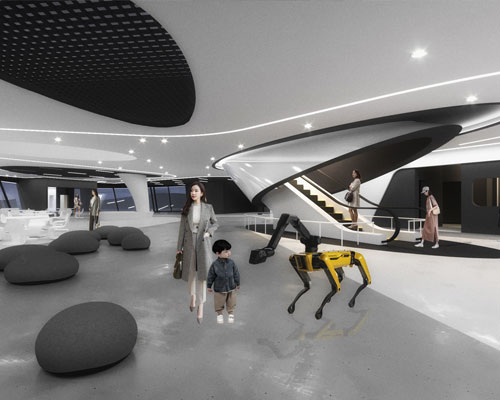
From an AI museum built by robots to the long-awaited Grand Egyptian Museum, we take a look at some exciting 2022 openings
Research: All of history
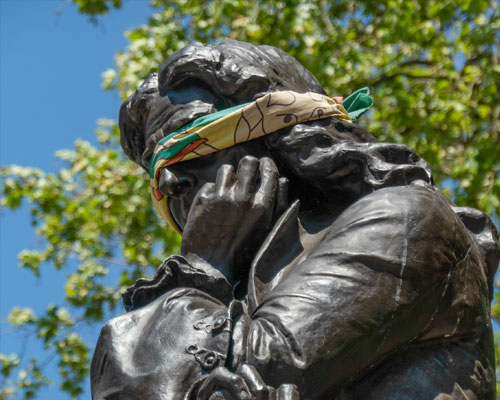
As demand for growing honesty in relation to links to slavery and colonialism grows, should attractions be open about their history? Jon Young investigates
Opinion: Vince Kadlubek
Art engages and delights visitors. Kadlubek argues that attractions should embrace and support artists and look for shared initiatives
Waterparks: Waves of change
As The Wave inland surf lake announces plans to open six more sites, we go along for a surf and a sit down with CEO Craig Stoddart
Experience economy: Joe Pine
Experience platforms represent one of the biggest growth opportunities in today’s experience economy, argues Joe Pine. Here’s how to get them right
Interview: Cale Heit
With new themed coasters open at Motiongate Dubai and some intruiging projects underway, Forrec is making the most of the pent up demand for shared experiences. CEO Cale Heit tells us more
It’s no longer enough to focus on the ‘Big Five’ senses if you want to fully connect with visitors. Why not engage the senses of danger, balance or justice to create experiences that truly resonate?
Tomas Saraceno’s sensory installation at The Shed, NYC, page 32 / Nicholas Knight
As we emerge from the pandemic, pent up demand is seeing people hungry for the adventures they’ve been missing out on.
Memorable experiences are all about triggering sensations, and that’s something the attractions industry has always excelled at, but could we be doing even more?
Museums and attractions have long described themselves as multi-sensory as a result of including exhibits and interactives that appeal to visitors’ core senses of sight, sound, smell, touch and taste.
However, today, we have far more scientific insight into how we can engage a fuller range of senses and there’s an opportunity to use this knowledge to engage visitors in more profound, unusual and creative ways.
In a fascinating interview on page 32, Roto founder, Joseph Wisne, argues it’s time for us to move beyond the sensory to develop ‘supersensory’ experiences that stimulate the full range of senses in all their depth and diversity.
We know humans have far more than the five ‘basic’ senses we were taught about at school. We can now add a sense of danger or pain, and more complex ‘senses’, such as a sense of humour, justice or empathy to the list. All these can be used to tell powerful stories.
We can also use the science of ‘peak experience’ to play with the sense of time and make an experience feel longer than it really is, or get creative and use the senses of proprioception or balance to ‘wake up’ visitors.
This knowledge is being used by pioneers to create richer and more memorable experiences.
One of the most memorable experiences I’ve had was Punchdrunk’s Masque of the Red Death, in which the audience dressed up, the entire Victorian theatre was transformed and the live music, food and drinks were all part of the experience. We could touch the props, see and smell smoke – we were taken on a journey where we felt curious, excited and at times downright uneasy. The fact I shared the experience with friends only deepened its impact.
The success of attractions such as Superblue Miami, the Van Gogh Immersive Experiences and Meow Wolf and teamLab’s art-based attractions show people’s desire to feel fully engaged and stimulated. Static attractions and museums can learn from this to get supersensory and deepen visitors’ connection with what they’re experiencing.
Read more from this issue of Attractions Management magazine
View contents of Attractions Management 2022 issue 1
Editor's letter: Supersensory
With our growing insight into how to engage visitors’ more complex senses, it’s time for a new approach, says Magali Robathan
Immersive experiences: Joseph Wisne
Truly ambitious attractions providers need to push the boundaries of immersive design by engaging visitors’ senses of pain, danger, balance, justice and more, argues Roto’s CEO
Interview: Esther Dugdale
As the Burrell Collection relaunches and Eden Qingdao takes shape, Event’s creative director shares her tips for creating experiences that spark joy and curiosity
The arts: Room to grow
Could the space age, ultra flexible design of the new Taipei Performing Arts Center provide a model for future attractions spaces?
Museums: Ones to watch
From an AI museum built by robots to the long-awaited Grand Egyptian Museum, we take a look at some exciting 2022 openings
Research: All of history
As demand for growing honesty in relation to links to slavery and colonialism grows, should attractions be open about their history? Jon Young investigates
Opinion: Vince Kadlubek
Art engages and delights visitors. Kadlubek argues that attractions should embrace and support artists and look for shared initiatives
Waterparks: Waves of change
As The Wave inland surf lake announces plans to open six more sites, we go along for a surf and a sit down with CEO Craig Stoddart
Experience economy: Joe Pine
Experience platforms represent one of the biggest growth opportunities in today’s experience economy, argues Joe Pine. Here’s how to get them right
Interview: Cale Heit
With new themed coasters open at Motiongate Dubai and some intruiging projects underway, Forrec is making the most of the pent up demand for shared experiences. CEO Cale Heit tells us more
OMA has completed a major transformation of New York's New Museum, creating a larger
cultural campus that combines expanded exhibition spaces with learning, performance,
hospitality and public programming.
A US$50 million (£44.2 million, €51.2 million) transformation of Chicago's historic McCormick
Mansion has created a new destination that combines live magic, immersive theatre, dining and
private membership under one roof.
The Montana Historical Society has officially celebrated the opening of its new Montana
Heritage
Center, a US$107 million (£79 million, €92 million) destination that combines immersive
storytelling with cutting-edge audiovisual technology to bring the sta
San Antonio Zoo has reported a US$283 million economic impact for 2025, following a decade-
long transformation programme that has seen almost US$200 million invested into the Texas
attraction.
Plans for the AU$180 million redevelopment of Reef HQ Aquarium in Townsville, Australia, are
progressing, with the project set to transform the attraction into a global centre for reef
education and conservation.
Abu Dhabi-based investment firm Mubadala Capital has made a binding, fully financed
€1 billion
offer to acquire Pierre and Vacances SA, the European holiday resort operator behind the
continental European Center Parcs business.
Disney has reaffirmed its commitment to investing US$30 billion in its US parks and cruise
business by 2033, using new America250 celebrations to underline the role its attractions play
in supporting jobs, tourism and economic growth.
Expo 2030 Riyadh is being planned as a permanent visitor destination, with organisers
confirming the six-million-square-metre site will become a Global Village after the event closes.
The owner of one of Australia's best-known waterparks has acquired a major competitor,
creating a new attractions business spanning two of the country's largest visitor destinations.
The Toverland theme park in the Netherlands has announced a €98m expansion programme
that will add a resort, new attractions and staff facilities as it pursues plans to become a multi-
day destination.