Exciting new kit is being used to support people with disabilities ranging from blindness to missing limbs. This opens up the possibility of creating attractions where they can enjoy the experience with friends and family in a way not previously possible
By Liz Terry | Published in Attractions Management 2017 issue 1
Imagine being able to create an attraction which is equally accessible and enjoyable for people with physical or sensory disabilities and the able bodied. We could enable families and friendship groups with members who struggle with their vision, mobility or senses to enjoy a day out where everyone can fully participate, with all the joy that brings.
Now that possibility is increasingly within reach, thanks to a raft of new technology emerging in the fields of 3D sound,bvirtual and augmented reality (VR and AR), robotics and brain computer interfaces (BCI). We, as an industry, need to be paying very careful attention to these developments.
Some of this exciting new technology was on show recently at the world’s first Cybathlon, held in Zurich, Switzerland. This event –essentially a bionic Olympic Games – saw severely disabled people competing in a range of different races, challenges and tasks using the latest robotics and innovations in prosthetics. This included powered exoskeleton races, powered prosthetics races and BCI races, where competitors used brain signals both to control avatars in a specially developed computer game and also to control various devices, such as motorised tractor wheelchairs.
Unlike the Paralympics, where athletes are prohibited from using powered aids, Cybathlon puts technology at the centre of the competition, showcasing its potential uses in day to day life for those with severe disabilities.
There are many directly transferable ideas for attractions innovators which could be gleaned from strong collaboration with the research and development teams working on these projects in labs and universities around the world.
Also exciting is the development work being done around VR and AR technology, where some truly groundbreaking discoveries are being made in relation to sensory challenges.
Oculus Touch, part of the Oculus VR system, is enabling people born with missing fingers to experience what it’s like to have a full set – the technology tricks the brain, so that actual sensation can be felt in fingers which have never been there.
This is thought likely because feelings of phantom movement are modulated by the parts of the brain that deal with sight, so the brain is reorganising in response to the experience.
Researchers are also finding powerful ways to connect people with vision impairment to the everyday world around them. These include wearable VR and AR aids which respond to the wearer’s head movement and magnify whatever they’re looking at. These systems have enabled users with limited vision to see more clearly and, in some cases, to read.
Auditory and haptic virtual environments which enable blind people to experience environments and build brain maps of them are also being developed using 3D sound technology.
It’s possible to foresee a day – once all this wonderful emerging technology has been developed and democratised through low-cost applications – when designers have the right tools to create the next generation of inclusive attractions.
Liz Terry, editor. Twitter: @elizterry
Read more from this issue of Attractions Management magazine
View contents of Attractions Management 2017 issue 1
People profile: Nolan Bushnell
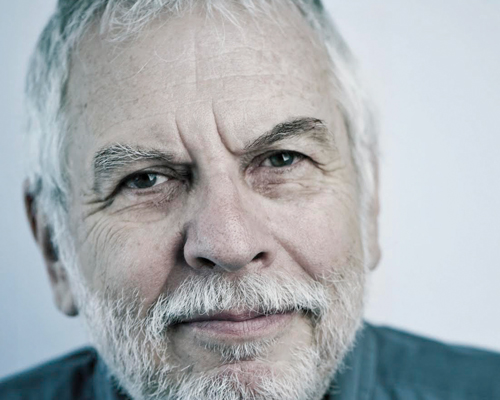
Nolan Bushnell, father of the video game industry, on his new VR business and the future of technology
People profile: Ron Magill
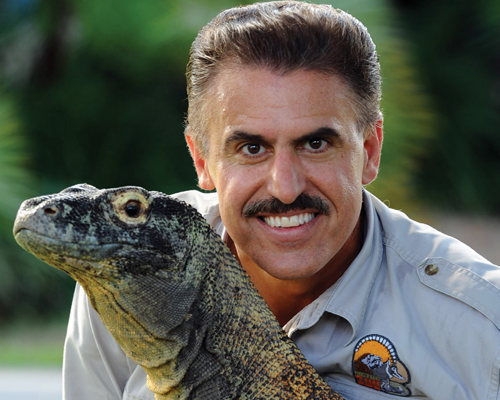
Zoo Miami’s Ron Magill gives the lowdown on the attraction’s new Florida: Mission Everglades zone
People profile: Kim Gladstone Herlev
Denmark’s Experimentarium has reopened after a major renovation. CEO Kim Gladstone Herlev shares his vision for the future
People profile: Jimmy Fallon
Hold on tight! US TV star Jimmy Fallon is the subject of a brand new ride at Universal Orlando
Interview: Matthias Li
Matthias Li, chief executive at Hong Kong’s
Ocean Park, on his response to a changing
visitor profile and rising competition
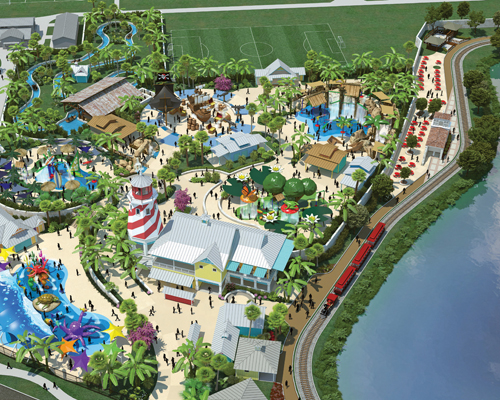
Pipeline: Opening Doors
There’s an array of attractions set to launch.
We anticipate the hot debuts of the year
Tourism: A Plan for Oman
The Ministry of Tourism’s Maitha Al Mahrouqi
on Oman’s status as a budding destination
Exciting new kit is being used to support people with disabilities ranging from blindness to missing limbs. This opens up the possibility of creating attractions where they can enjoy the experience with friends and family in a way not previously possible
By Liz Terry | Published in Attractions Management 2017 issue 1
Imagine being able to create an attraction which is equally accessible and enjoyable for people with physical or sensory disabilities and the able bodied. We could enable families and friendship groups with members who struggle with their vision, mobility or senses to enjoy a day out where everyone can fully participate, with all the joy that brings.
Now that possibility is increasingly within reach, thanks to a raft of new technology emerging in the fields of 3D sound,bvirtual and augmented reality (VR and AR), robotics and brain computer interfaces (BCI). We, as an industry, need to be paying very careful attention to these developments.
Some of this exciting new technology was on show recently at the world’s first Cybathlon, held in Zurich, Switzerland. This event –essentially a bionic Olympic Games – saw severely disabled people competing in a range of different races, challenges and tasks using the latest robotics and innovations in prosthetics. This included powered exoskeleton races, powered prosthetics races and BCI races, where competitors used brain signals both to control avatars in a specially developed computer game and also to control various devices, such as motorised tractor wheelchairs.
Unlike the Paralympics, where athletes are prohibited from using powered aids, Cybathlon puts technology at the centre of the competition, showcasing its potential uses in day to day life for those with severe disabilities.
There are many directly transferable ideas for attractions innovators which could be gleaned from strong collaboration with the research and development teams working on these projects in labs and universities around the world.
Also exciting is the development work being done around VR and AR technology, where some truly groundbreaking discoveries are being made in relation to sensory challenges.
Oculus Touch, part of the Oculus VR system, is enabling people born with missing fingers to experience what it’s like to have a full set – the technology tricks the brain, so that actual sensation can be felt in fingers which have never been there.
This is thought likely because feelings of phantom movement are modulated by the parts of the brain that deal with sight, so the brain is reorganising in response to the experience.
Researchers are also finding powerful ways to connect people with vision impairment to the everyday world around them. These include wearable VR and AR aids which respond to the wearer’s head movement and magnify whatever they’re looking at. These systems have enabled users with limited vision to see more clearly and, in some cases, to read.
Auditory and haptic virtual environments which enable blind people to experience environments and build brain maps of them are also being developed using 3D sound technology.
It’s possible to foresee a day – once all this wonderful emerging technology has been developed and democratised through low-cost applications – when designers have the right tools to create the next generation of inclusive attractions.
Liz Terry, editor. Twitter: @elizterry
Read more from this issue of Attractions Management magazine
View contents of Attractions Management 2017 issue 1
People profile: Nolan Bushnell
Nolan Bushnell, father of the video game industry, on his new VR business and the future of technology
People profile: Ron Magill
Zoo Miami’s Ron Magill gives the lowdown on the attraction’s new Florida: Mission Everglades zone
People profile: Kim Gladstone Herlev
Denmark’s Experimentarium has reopened after a major renovation. CEO Kim Gladstone Herlev shares his vision for the future
People profile: Jimmy Fallon
Hold on tight! US TV star Jimmy Fallon is the subject of a brand new ride at Universal Orlando
Interview: Matthias Li
Matthias Li, chief executive at Hong Kong’s
Ocean Park, on his response to a changing
visitor profile and rising competition
Pipeline: Opening Doors
There’s an array of attractions set to launch.
We anticipate the hot debuts of the year
Tourism: A Plan for Oman
The Ministry of Tourism’s Maitha Al Mahrouqi
on Oman’s status as a budding destination
London Museum will open four new food and drink destinations when it launches its new home
at Smithfield on 28 November, making hospitality a central part of the visitor experience at one
of the capital's biggest cultural openings of the year.
OMA has completed a major transformation of New York's New Museum, creating a larger
cultural campus that combines expanded exhibition spaces with learning, performance,
hospitality and public programming.
A US$50 million (£44.2 million, €51.2 million) transformation of Chicago's historic McCormick
Mansion has created a new destination that combines live magic, immersive theatre, dining and
private membership under one roof.
The Montana Historical Society has officially celebrated the opening of its new Montana
Heritage
Center, a US$107 million (£79 million, €92 million) destination that combines immersive
storytelling with cutting-edge audiovisual technology to bring the sta
San Antonio Zoo has reported a US$283 million economic impact for 2025, following a decade-
long transformation programme that has seen almost US$200 million invested into the Texas
attraction.
Plans for the AU$180 million redevelopment of Reef HQ Aquarium in Townsville, Australia, are
progressing, with the project set to transform the attraction into a global centre for reef
education and conservation.
Abu Dhabi-based investment firm Mubadala Capital has made a binding, fully financed
€1 billion
offer to acquire Pierre and Vacances SA, the European holiday resort operator behind the
continental European Center Parcs business.
Disney has reaffirmed its commitment to investing US$30 billion in its US parks and cruise
business by 2033, using new America250 celebrations to underline the role its attractions play
in supporting jobs, tourism and economic growth.
Expo 2030 Riyadh is being planned as a permanent visitor destination, with organisers
confirming the six-million-square-metre site will become a Global Village after the event closes.
The owner of one of Australia's best-known waterparks has acquired a major competitor,
creating a new attractions business spanning two of the country's largest visitor destinations.