More than a fashion exhibition,
the record-breaking
Savage Beauty is a journey into
the mind of Alexander McQueen.
Senior research assistant of
the V&A’s retrospective, Kate
Bethune, talks to Kath Hudson
By Kath Hudson | Published in Attractions Management 2015 issue 3
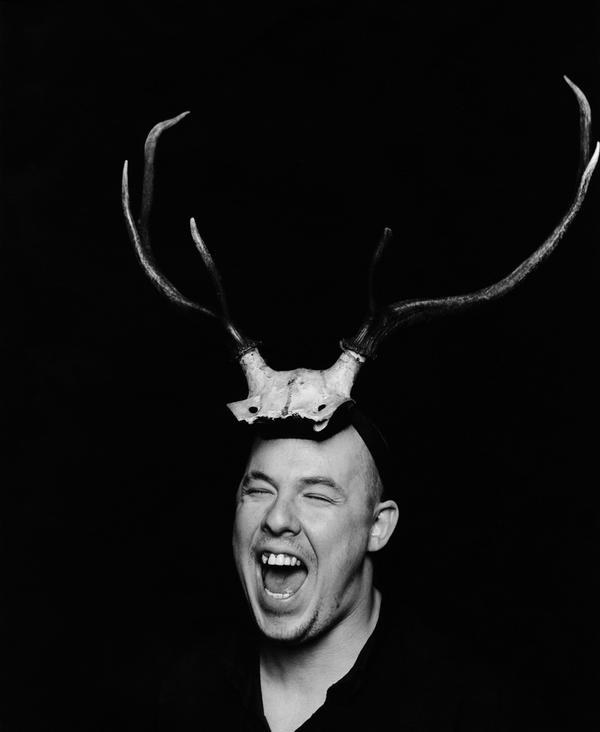
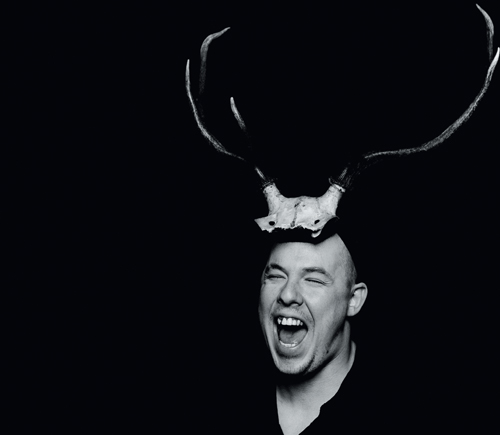
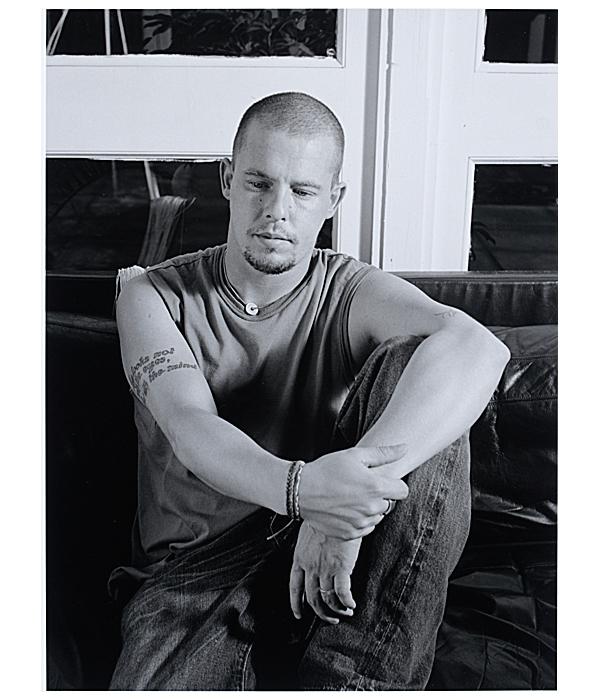
The Magic of McQueen / PHOTO: Marc Hom / Trunk Archive
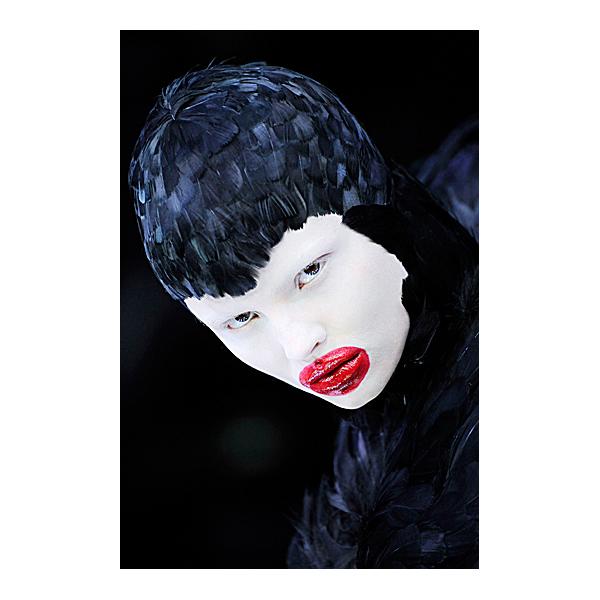
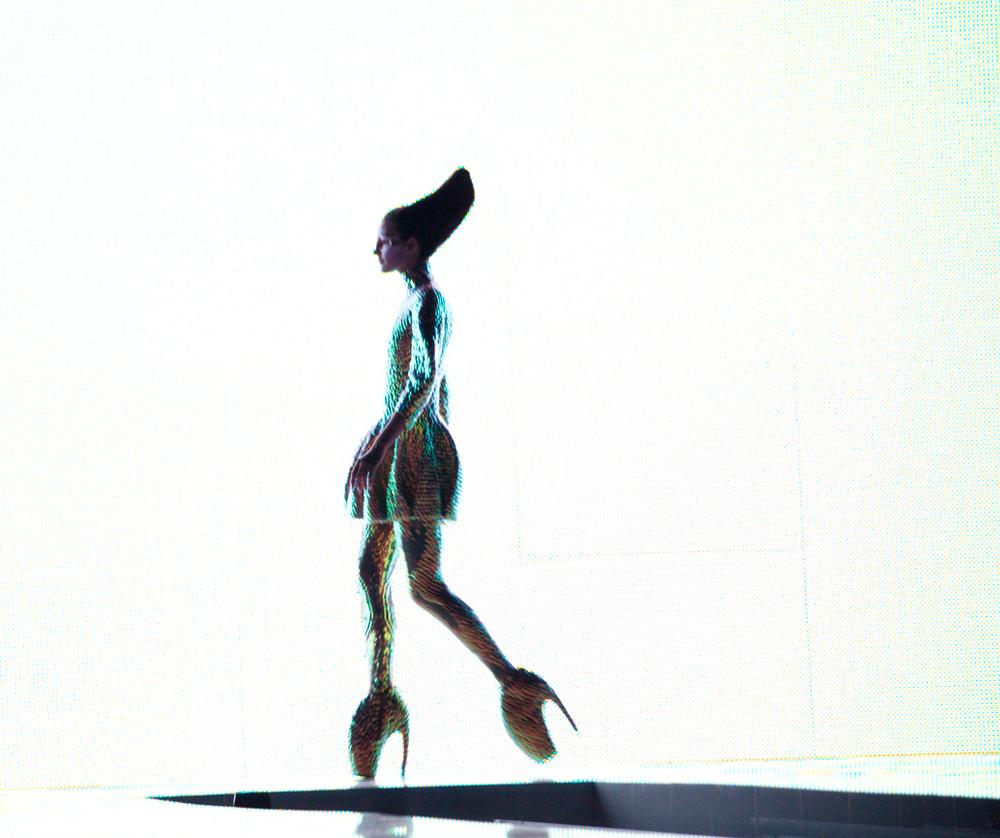
Antler headdresses, armadillo shoes, bumster trousers. Dresses made out feathers, mussels, razor clams, horse hair and pony skin. These are the creations of the late fashion designer, Alexander McQueen, and they are surprising, charismatic, feminine and intimidating.
Alexander McQueen: Savage Beauty closed on 2 August, becoming the V&A’s most visited exhibition, with 493,043 visitors during its 21-week run. To cope with demand, the exhibit was open through the night during its final two weekends.
According to Martin Roth, director of the V&A, Savage Beauty was “one of the most unpredictable, dramatic and spectacular exhibitions we have ever staged”.
“The response has been phenomenal and has exceeded our expectations. It’s been a remarkable experience to stay open around the clock for the first time,” he says.
JOURNEY INTO THE MIND When creating Savage Beauty, the curatorial team chose to go beyond producing an exhibition of fancy frocks, and take visitors on a journey into his mind, as well as giving the sense of visiting one of his fashion shows.
Having collaborated with McQueen’s former team of catwalk show producers, lighting designer, DJ and hairdresser (who did the masks and head treatments of the mannequins), the result was intoxicating.
“We wanted visitors to feel drawn into his creative mind. We wanted to create a sensory, theatrical, dramatic and immersive experience,” says Kate Bethune, senior research assistant for the V&A’s retrospective. “Each gallery was a contrast to the preceding one and each had a complementary soundtrack to work with it. Switches in tone and tempo drew out the spectacle and drama. It was light on text, so as not to break the sense of immersion.”
SUCCESS IN NEW YORK Savage Beauty was first staged at the Metropolitan Museum of Art in New York in 2011. Attracting almost 700,000 visitors in its four-month run, it was the most visited special exhibition organised by the Costume Institute since it became part of the museum in 1946 and one of the museum’s top 10 most visited exhibitions.
Andrew Bolton was the curator of the Metropolitan exhibition. It featured 100 ensembles and 70 accessories from McQueen’s 19-year career, drawn primarily from the Alexander McQueen Archive in London, with pieces from the Givenchy Archive in Paris and private collections.
Bolton says he wanted the exhibition to show McQueen’s artistry as well as illustrate how his fashion designs reflected his imagination: “McQueen was best known for his astonishing and extravagant runway presentations, which were given dramatic scenarios and narrative structures that suggested avant-garde installation and performance art,” he says. “His fashions were an outlet for his emotions, an expression of the deepest, often darkest, aspects of his imagination.”
Bethune says the V&A inherited a brilliant curation, but wanted to reflect McQueen’s London roots: he was born in Stratford, trained at Central St Martins, cut his teeth on Savile Row and launched his first collection in London. The London gallery, an addition to the beginning of the show, was one of the big changes from New York.
“We wanted to include designs from the early collections to tell the story before he was famous, when he didn’t have any money to invest in shows and materials,” she says. “We emphasised the edginess, rawness and grittiness of the early years.”
EARLY WORK To showcase work from his early career, the curatorial team had to track down some of McQueen’s early collaborators. “In the early days he couldn’t pay his staff salaries, so he paid them in garments.”
“Those pieces were quite widely dispersed and lots of work went into tracking down his PRs and stylists from that time. We were lucky that his close friend and stylist Katy England let us borrow from her private collection,” Bethune says.
Another development was the expansion of the show highlight, the Cabinet of Curiosities. “We had one-third more space, so we increased the curation by 25 per cent, which equated to 66 more exhibits and almost all of them went into that gallery,” she says. “His limitless imagination really came through in that space. I love the Cabinet because of its intensity and impact. We’d never achieved that in an exhibition before. Not only was this the largest retrospective of McQueen, but the largest and most ambitious fashion exhibition that the V&A’s ever staged.”
Read more from this issue of Attractions Management magazine
View contents of Attractions Management 2015 issue 3
Interview: Michiel Buchel
Michiel Buchel is Ecsite’s new president and CEO of the Netherland’s biggest science centre, NEMO. He shares his optimism about the science centre sector and the secrets of NEMO’s success
Attractions: All Work, All Play
KidZania, star of the edutainment world, has opened its newest franchise in London, its 17th location to date. We meet the global top team to find out what makes these small cities a big success
Analysis: Be Our Guest
TEA/AECOM’s 2014 Theme Index shows attendance growth across all regions. AECOM experts analyse the recent trends
Visceral and captivating, Savage Beauty is an assault on the senses. There’s something appropriately discomforting about the show – and it feels like a show, not an exhibition. I’m assuming Alexander McQueen would have approved: he said he wanted people to be scared of the women who wore his clothes.
The clothes are beautiful, and occasionally frightening: religious motifs become sinister, crocodile skulls are a surprising addition to the shoulders. The black swan dress, which Naomi Campbell famously wore, is aggressive, but with an admirable beauty.
The further through the exhibition you progress, the more you have the sense of looking at works of art as opposed to garments. Light and sound enhance the experience.
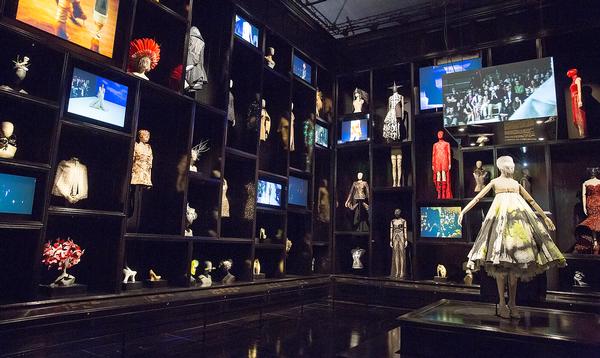
The high point – certainly the most overwhelming part of a consistently overwhelming exhibition – is the Cabinet of Curiosities. This double-height gallery has three tiers of exhibits: clothes, shoes, headwear. Some exhibits are revolving, and interspersed with 27 video screens showing footage of McQueen’s shows.
Each wall reflects a different theme: gothic, other cultures, arts and crafts, and nature and the natural world. In the middle is the paint-splattered dress from the Number 13 collection, when a model stood on a rotating disk and the dress was spray-painted by two robots.
Visually, it’s a busy gallery, and the soundtrack, put together by Matt Gosling, creates an eerie sense of unease. There’s a typewriter from A/W 1999/2000 collection the Overlook, which was inspired by Stanley Kubrick’s film The Shining; a child singing from A/W 2001/2002 collection What a Merry-Go-Round and an orchestra playing Adagio for Strings, from a collection exploring war and religion.
I could have stayed there for hours, admiring creations like the outlandish armadillo shoes, but after a while I started to feel how a baby must when it gets overstimulated. The child singing also had a horror movie quality which creeped me out.
More powerful exhibits follow: a recreation of the padded cell fashion show, where the audience could see in, but the models only saw mirrors; and the Pepper’s Ghost of supermodel Kate Moss.
Savage Beauty ends with the final collection, when McQueen’s craftsmanship was at its finest. It’s an extremely powerful show and a privilege to observe his work at such close quarters.
PHOTO: Victoria and Albert Museum, London
A dress in the Cabinet of Curiosities gallery at the V&A was famously spray-painted by robots as part of Alexander McQueen’s S/S collection in 2013 (left)
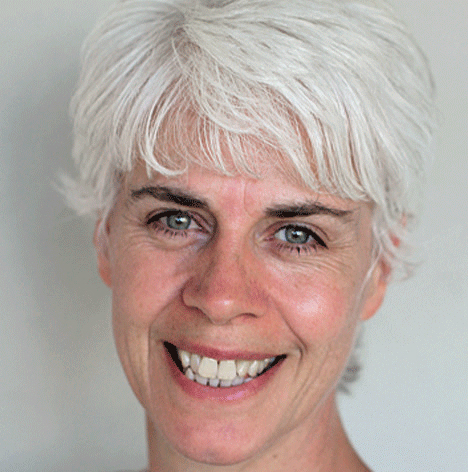
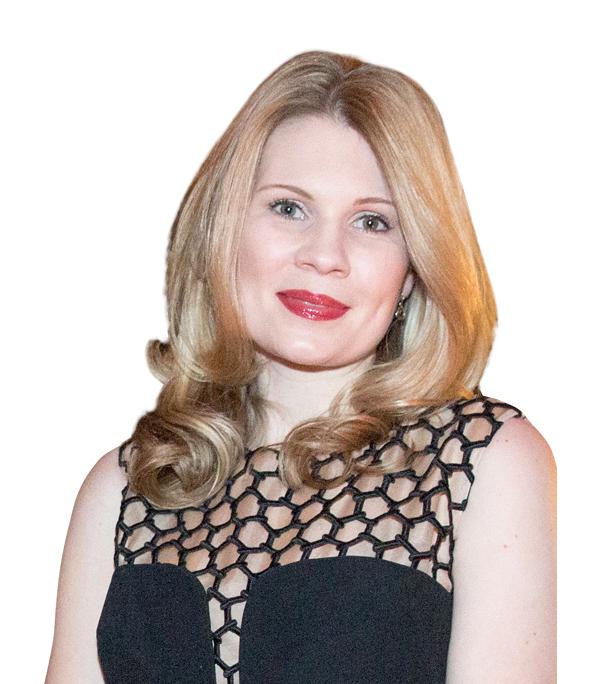
Kate Bethune helped curate Alexander McQueen: Savage Beauty at the V&A in London
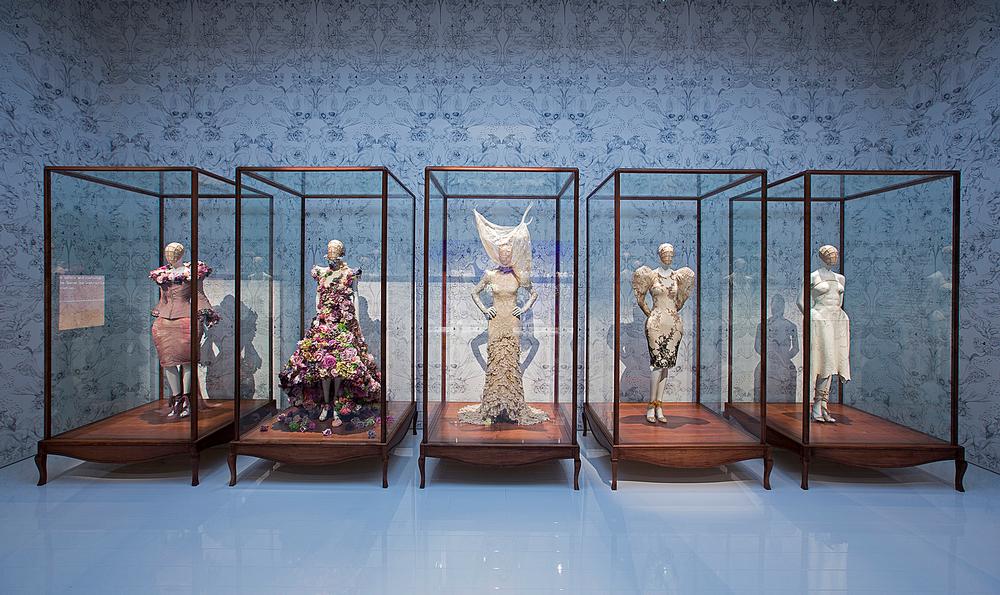
On display at the V&A. Savage Beauty’s 10 themed galleries include Romantic Naturalism / PHOTO: Victoria and Albert Museum, London
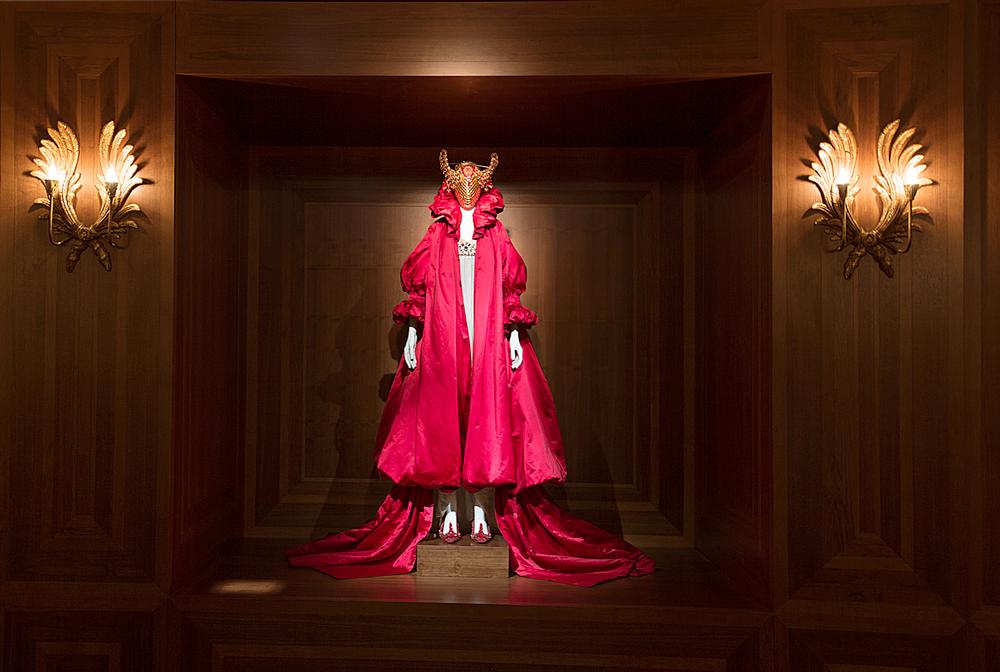
On display at the V&A. Savage Beauty’s 10 themed galleries include Romantic Nationalism / PHOTO: Victoria and Albert Museum, London
PHOTO: firstVIEW
PHOTO: Ann Ray / Victoria and Albert Museum, London
PHOTO: Lauren Greenfield /INSTITUTE
COMPANY PROFILES
Holovis
Holovis is a privately owned company
established in 2004 by CEO Stuart
Hetherington. [more...]
Polin Waterparks
Polin was founded in Istanbul in 1976. Polin
has since grown into a leading company in
the waterpa [more...]
Simworx Ltd
The company was initially established
in 1997. Terry Monkton and Andrew
Roberts are the key stakeh [more...]
IDEATTACK
IDEATTACK is a full-service planning and
design company with headquarters in
Los Angeles. [more...]
An opportunity to reimagine one of the UK’s most recognisable towers has been formally
opened by Rivington Hark, as St Johns Beacon invites operators and partners to shape its
next phase. [more...]
More than a fashion exhibition,
the record-breaking
Savage Beauty is a journey into
the mind of Alexander McQueen.
Senior research assistant of
the V&A’s retrospective, Kate
Bethune, talks to Kath Hudson
By Kath Hudson | Published in Attractions Management 2015 issue 3
The Magic of McQueen / PHOTO: Marc Hom / Trunk Archive
Antler headdresses, armadillo shoes, bumster trousers. Dresses made out feathers, mussels, razor clams, horse hair and pony skin. These are the creations of the late fashion designer, Alexander McQueen, and they are surprising, charismatic, feminine and intimidating.
Alexander McQueen: Savage Beauty closed on 2 August, becoming the V&A’s most visited exhibition, with 493,043 visitors during its 21-week run. To cope with demand, the exhibit was open through the night during its final two weekends.
According to Martin Roth, director of the V&A, Savage Beauty was “one of the most unpredictable, dramatic and spectacular exhibitions we have ever staged”.
“The response has been phenomenal and has exceeded our expectations. It’s been a remarkable experience to stay open around the clock for the first time,” he says.
JOURNEY INTO THE MIND When creating Savage Beauty, the curatorial team chose to go beyond producing an exhibition of fancy frocks, and take visitors on a journey into his mind, as well as giving the sense of visiting one of his fashion shows.
Having collaborated with McQueen’s former team of catwalk show producers, lighting designer, DJ and hairdresser (who did the masks and head treatments of the mannequins), the result was intoxicating.
“We wanted visitors to feel drawn into his creative mind. We wanted to create a sensory, theatrical, dramatic and immersive experience,” says Kate Bethune, senior research assistant for the V&A’s retrospective. “Each gallery was a contrast to the preceding one and each had a complementary soundtrack to work with it. Switches in tone and tempo drew out the spectacle and drama. It was light on text, so as not to break the sense of immersion.”
SUCCESS IN NEW YORK Savage Beauty was first staged at the Metropolitan Museum of Art in New York in 2011. Attracting almost 700,000 visitors in its four-month run, it was the most visited special exhibition organised by the Costume Institute since it became part of the museum in 1946 and one of the museum’s top 10 most visited exhibitions.
Andrew Bolton was the curator of the Metropolitan exhibition. It featured 100 ensembles and 70 accessories from McQueen’s 19-year career, drawn primarily from the Alexander McQueen Archive in London, with pieces from the Givenchy Archive in Paris and private collections.
Bolton says he wanted the exhibition to show McQueen’s artistry as well as illustrate how his fashion designs reflected his imagination: “McQueen was best known for his astonishing and extravagant runway presentations, which were given dramatic scenarios and narrative structures that suggested avant-garde installation and performance art,” he says. “His fashions were an outlet for his emotions, an expression of the deepest, often darkest, aspects of his imagination.”
Bethune says the V&A inherited a brilliant curation, but wanted to reflect McQueen’s London roots: he was born in Stratford, trained at Central St Martins, cut his teeth on Savile Row and launched his first collection in London. The London gallery, an addition to the beginning of the show, was one of the big changes from New York.
“We wanted to include designs from the early collections to tell the story before he was famous, when he didn’t have any money to invest in shows and materials,” she says. “We emphasised the edginess, rawness and grittiness of the early years.”
EARLY WORK To showcase work from his early career, the curatorial team had to track down some of McQueen’s early collaborators. “In the early days he couldn’t pay his staff salaries, so he paid them in garments.”
“Those pieces were quite widely dispersed and lots of work went into tracking down his PRs and stylists from that time. We were lucky that his close friend and stylist Katy England let us borrow from her private collection,” Bethune says.
Another development was the expansion of the show highlight, the Cabinet of Curiosities. “We had one-third more space, so we increased the curation by 25 per cent, which equated to 66 more exhibits and almost all of them went into that gallery,” she says. “His limitless imagination really came through in that space. I love the Cabinet because of its intensity and impact. We’d never achieved that in an exhibition before. Not only was this the largest retrospective of McQueen, but the largest and most ambitious fashion exhibition that the V&A’s ever staged.”
Read more from this issue of Attractions Management magazine
View contents of Attractions Management 2015 issue 3
Interview: Michiel Buchel
Michiel Buchel is Ecsite’s new president and CEO of the Netherland’s biggest science centre, NEMO. He shares his optimism about the science centre sector and the secrets of NEMO’s success
Attractions: All Work, All Play
KidZania, star of the edutainment world, has opened its newest franchise in London, its 17th location to date. We meet the global top team to find out what makes these small cities a big success
Analysis: Be Our Guest
TEA/AECOM’s 2014 Theme Index shows attendance growth across all regions. AECOM experts analyse the recent trends
Visceral and captivating, Savage Beauty is an assault on the senses. There’s something appropriately discomforting about the show – and it feels like a show, not an exhibition. I’m assuming Alexander McQueen would have approved: he said he wanted people to be scared of the women who wore his clothes.
The clothes are beautiful, and occasionally frightening: religious motifs become sinister, crocodile skulls are a surprising addition to the shoulders. The black swan dress, which Naomi Campbell famously wore, is aggressive, but with an admirable beauty.
The further through the exhibition you progress, the more you have the sense of looking at works of art as opposed to garments. Light and sound enhance the experience.
The high point – certainly the most overwhelming part of a consistently overwhelming exhibition – is the Cabinet of Curiosities. This double-height gallery has three tiers of exhibits: clothes, shoes, headwear. Some exhibits are revolving, and interspersed with 27 video screens showing footage of McQueen’s shows.
Each wall reflects a different theme: gothic, other cultures, arts and crafts, and nature and the natural world. In the middle is the paint-splattered dress from the Number 13 collection, when a model stood on a rotating disk and the dress was spray-painted by two robots.
Visually, it’s a busy gallery, and the soundtrack, put together by Matt Gosling, creates an eerie sense of unease. There’s a typewriter from A/W 1999/2000 collection the Overlook, which was inspired by Stanley Kubrick’s film The Shining; a child singing from A/W 2001/2002 collection What a Merry-Go-Round and an orchestra playing Adagio for Strings, from a collection exploring war and religion.
I could have stayed there for hours, admiring creations like the outlandish armadillo shoes, but after a while I started to feel how a baby must when it gets overstimulated. The child singing also had a horror movie quality which creeped me out.
More powerful exhibits follow: a recreation of the padded cell fashion show, where the audience could see in, but the models only saw mirrors; and the Pepper’s Ghost of supermodel Kate Moss.
Savage Beauty ends with the final collection, when McQueen’s craftsmanship was at its finest. It’s an extremely powerful show and a privilege to observe his work at such close quarters.
PHOTO: Victoria and Albert Museum, London
A dress in the Cabinet of Curiosities gallery at the V&A was famously spray-painted by robots as part of Alexander McQueen’s S/S collection in 2013 (left)
Kate Bethune helped curate Alexander McQueen: Savage Beauty at the V&A in London
On display at the V&A. Savage Beauty’s 10 themed galleries include Romantic Naturalism / PHOTO: Victoria and Albert Museum, London
On display at the V&A. Savage Beauty’s 10 themed galleries include Romantic Nationalism / PHOTO: Victoria and Albert Museum, London
PHOTO: firstVIEW
PHOTO: Ann Ray / Victoria and Albert Museum, London
A new immersive attraction designed to transport visitors into the final hours of ancient Pompeii
is preparing to open near the world-famous archaeological site in southern Italy.
Experience design company, BRC Imagination Arts, has completed a transition that sees founder
Bob Rogers pass ownership of the business to four long-serving senior executives, while
remaining actively involved with the company.
Movie Park Germany has opened a new Paramount Pictures-themed attraction as part of its 30th
anniversary celebrations, using immersive storytelling and adaptive reuse to reinforce the park’s
longstanding “Hollywood in Germany” positioning.
Therme Manchester’s 28-acre development, which will include interconnected glass pavilions
that measure 65,000sq m, will be the largest bathing and wellbeing attraction in the world once
complete, according to prof David Russell, CEO of Therme UK.
Efteling has opened Hooghmoed, a new family drop tower designed to broaden the appeal of its
recently launched Sirene Island themed area and introduce younger visitors to thrill attractions.
A proposed Puy du Fou development near Bicester and Universal Destinations and Experiences’
planned resort in Bedford are emerging as part of a wider transformation of the Oxford–
Cambridge Growth Corridor into a major centre for UK leisure and tourism inv
Shedd Aquarium has opened the Immersion Theater developed in partnership with SimEx-
Iwerks, as part of a wider strategy to enhance the guest experience and create additional
revenue opportunities.
The UK government has announced a temporary reduction in VAT on visitor attractions and
children’s meals as part of a summer cost-of-living support package designed to stimulate the
visitor economy and encourage family days out.
As designer Yinka Ilori prepares for his first solo gallery show in London, he speaks exclusively
to CLADmag about his mission to spread joy, the power of play, and his bold approach to using
colour (including the colours you won’t see in his work).
The government of Thailand is exploring plans for a THB300bn (£6.3bn, US$8.3bn)
entertainment complex in the country’s Eastern Economic Corridor (EEC), with officials
proposing a large-scale theme park and sports destination as part of a broader tourism and
economic development strategy.
An opportunity to reimagine one of the UK’s most recognisable towers has been formally
opened by Rivington Hark, as St Johns Beacon invites operators and partners to shape its
next phase. [more...]