Apple and Google are pouring millions into the wearable tech market, which is also attracting a host of exciting, innovative start-ups.
The global wearable electronics market is expected to reach revenues of US$8bn (€6.3bn, £5bn) by 2018, with health and fitness trackers representing 61 per cent of the sector.
The ramifications for health and wellbeing are huge. Medical institutions are already using the technology to monitor patients’ vital signs – aiming to identify problems early – and there’s potential for spas to monitor customer biometrics as well. They’re being integrated with corporate wellness programmes too as employers harness information from trackers to determine employees’ health insurance premiums. Many feel that this is just the start for wearable tech, which has the potential for seamless integration with the ‘internet of things’ – the advanced connectivity of devices, systems and services – as it gains momentum.
With this in mind, we look at the latest innovations in the wellness wearables market to work out which ideas are likely to leave rivals stuck in the starting blocks.
Read more from this issue of Attractions Management magazine
View contents of Attractions Management 2014 issue 4
Spa Foresight™: Spa Foresight™
Trends, technologies and strategies which will shape the future of the global spa and wellness industry
Interview: Steve Jeisman
The group director of spas and development at Alila talks to Katie Barnes about leading the way in spa innovation and about new investment from US firm Geolo Capital
Ask an expert: Fasting
What makes a successful fasting programme and how can spas offer them safely? Julie Cramer investigates
Advertisement promotion: ESPA
At 21, ESPA is a veteran
of the global spa industry,
but it’s still leading the
way. Founder and CEO Sue
Harmsworth explains how
Therapy: Mineral matters
Sophie Benge focuses on water and mud therapies in the last of her series on wellness in central and eastern Europe
Everyone’s talking about: Russia
Jak Phillips gives a SWOT analysis of the Russian spa industry and gets insights from operators and consultants working in the sector
Glacial Spa: Tribal gathering
Wellness and adventure tourism is a key focus for Ng?i Tahu, one of the richest Maori tribes in New Zealand. Jennifer Harbottle finds out more
Summit review: Bright future
Katie Barnes shares her highlights from the 2014 Global Spa & Wellness Summit held in Marrakech, Morocco
Research: Strength in numbers
The worldwide spa industry has grown 56 per cent since 2007 and is part of a US$3.4tn cluster according to the 2014 Global Spa & Wellness Economy Monitor report. Ophelia Yeung reveals more
Wellness: Wearable technology
The latest wellness wearables for your spa, including devices by Google, Apple and Ralph Lauren
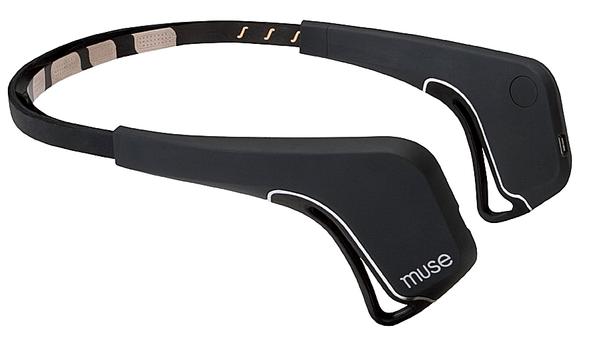
MUSE HEADBAND The Muse headband by start-up firm InteraXon has been designed to help people meditate.
Marketed as a product to help manage stress, the Muse reads and measures the user’s brainwaves to paint a picture of how brain activity is affected by emotions. It also comes with an integrated brain health application which teaches meditation.
The device rests on the ears like a pair of glasses and teaches wearers how to calm their brain by using computer-guided meditation in the form of cranial training app Calm.
Among the benefits of decreasing brainwave rhythm using meditative techniques are the production of endorphins and dopamine, in addition to better memory, attentiveness and empathy, say Muse’s makers. The device uses a rechargeable battery and is compatible with iOS, Mac and select PC operating systems. It retails at around US$299 (€220, £178).
Muse measures
brainwave activity and
an integrated app teaches
wearers how to meditate
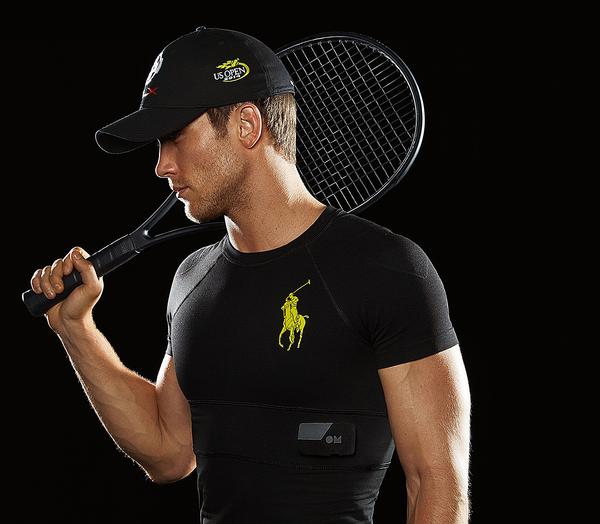
Ralph Lauren Polo Tech t-shirt From 2015, tennis lovers can record metrics and data from recent performances to improve their game, thanks to a movement tracking shirt from designers Ralph Lauren.
The luxury brand’s Polo Tech t-shirt uses sensors knitted into the fabric to read heartbeat, respiration and other biometrics. Data collected by the shirt is stored by a black-box system, which also captures movement and direction metrics.
These findings, along with data related to energy output and stress levels are sent to the cloud and will be viewable on a tablet or smartphone.
The designer t-shirt tracks biometrics and movement
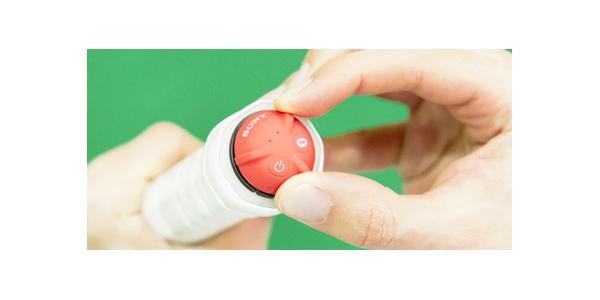
Meanwhile, Sony is set to launch its attachable Smart Tennis Sensor early next year. The US$200 (€152, £121) device attaches to rackets to record up to 12,000 shots of swing and serve data, with findings transferred to a smartphone app that can be share with friends via social media.
Smart Tennis Sensor
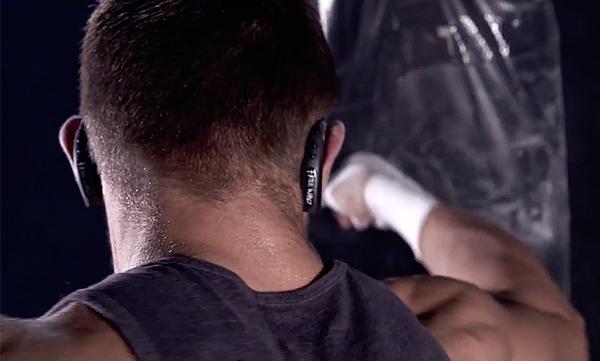
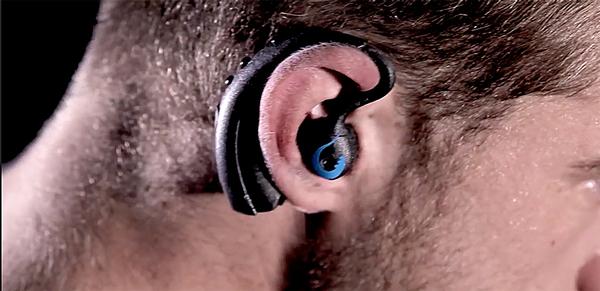
Freewavz earphones Technology designer FreeWavz is creating a set of earphones to collate health and fitness metrics and audibly relay the information to cyclists and joggers so they don’t have to take their eyes off the road.
Designed by otolaryngology specialist Dr Eric Hensen, the earphones will operate without the need for any other wearable tech, also offering wireless connectivity to music streaming, a step counter, plus heart rate and oxygen saturation monitoring.
Hensen came up with the idea because he was frustrated by poorly-fitting headphones that often disrupt workouts when they fall out or cause injuries when the wires become entangled.
The product will allow exercisers to change or pause music through voice commands and can connect to a smartphone to collate health metrics.
The earphones also feature an extra speaker above the standard earbud that allows users to listen to music while also keeping ears alive to the sound of passing cars. FreeWavz has just raised US$325,000 (€251,000 £200,000) for its first production run starting in January 2015.
The wireless earphones relay health and fitness metrics and stream music via voice commands
Freewavz wireless earphones
Freewavz wireless earphones
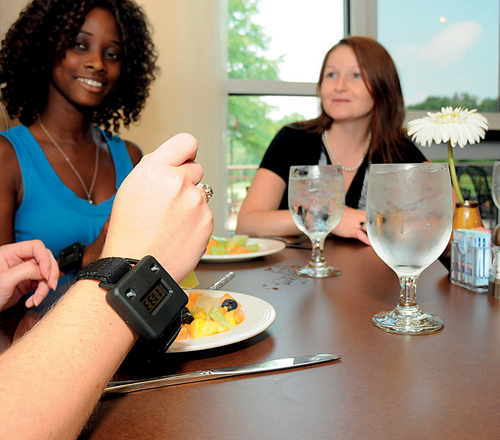
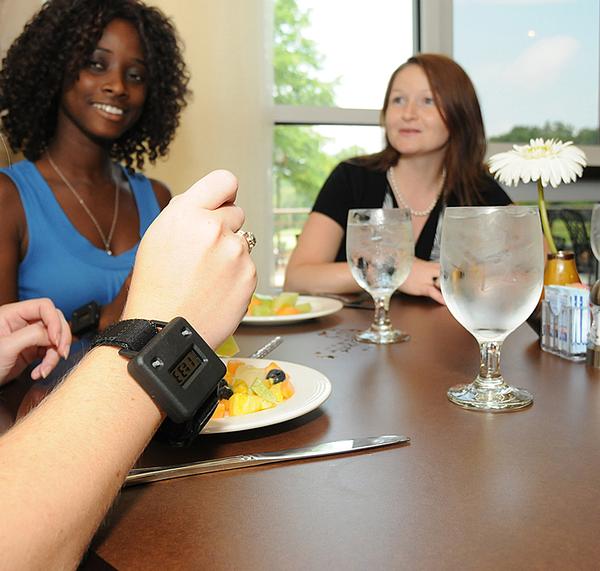
BITE COUNTER While many of the wearable technology featured here focus on health from an exercise perspective, the Bite Counter bids to remedy the developed world’s obesity crisis by discouraging overeating.
The counter has been designed as a wristwatch to detect, count and display the number of bites its wearer takes each day, to serve as a visual red flag against over-indulgence.
It uses wrist-motion tracking to count bites and estimate calories, while an alarm buzzer can also be set to warn users when they’re nearing their daily bite count limit.
Developed by researchers based at South Carolina’s Clemson University in the US, the Bite Counter tracks consumption levels over long periods. This creates a log of activity from which users can analyse when they’re eating most and least, allowing for changes and plans to be made to manage weight.
An alarm warns users when they’re over-eating
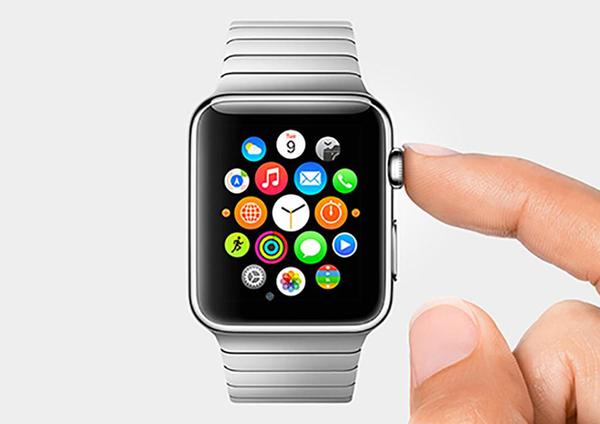
APPLE WATCH Apple debuted its long-awaited smartwatch in September, with a host of health-related functions.
The Apple Watch can record pulse rate and connect to an iPhone to track movement, pace and distances travelled. While an accelerometer can measure the quality and intensity of body movements.
There are two specific health and fitness apps: Fitness and Workout. The Fitness app tracks all types of activity, with a series of visual ‘rings’ signifying progress towards goals. Workout facilitates fitness plans and displays workout metrics in real-time on the watch.
In addition, Apple has moved to unify the fragmented health-tracking market by launching its Healthkit platform (compatible with the watch). The platform has been designed to pull in data from third-party health apps and present the info in one manageable dashboard.
The Apple Watch is due to ship in early 2015 and prices will start at US$359 (€270, £216).
Prices for the watch start at US$359
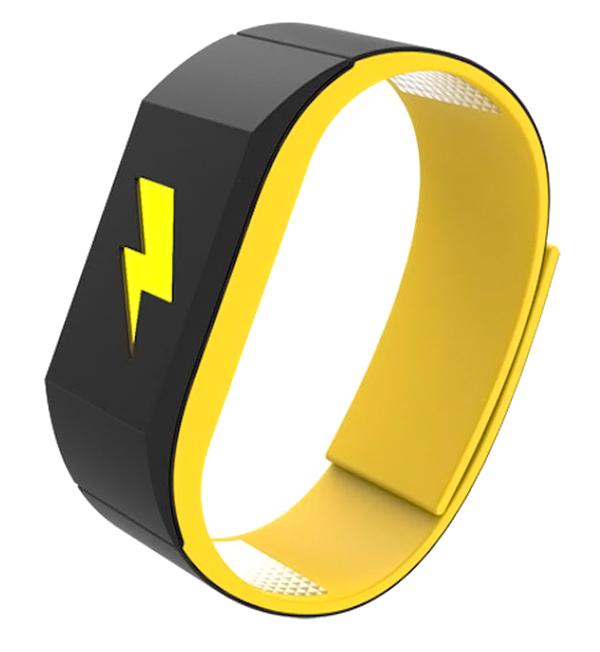
Pavlok Be it sleeping in or skipping the gym, everyone wishes they could kick those bad habits that prevent physical activity. Now, a new wearable is bidding to not just track activity, but use pain and shame to ensure users have no choice but to reach their goals.
Due for release in 2015, Pavlok is a fitness tracking wristband which also serves as a behavioural conditioner and the pre-order price is US$149.99 (€118, £92). Aside from the usual tracking of steps, activity and sleep, the device has the ability to give away your money, shame you on social media, or even deliver a 340v static shot if you slip back into bad habits. It also offers rewards – as yet unspecified – as well as encouraging social media posts if you stay on the straight and narrow.
Triallists have mainly been using the device to help programme their body to wake up earlier and carry out more exercise, although there’s clearly potential for it to be applied to diet control and smoking cessation as well.
The fi tness tracking
wristband delivers a 340v
static shock if wearers
slip into bad habits
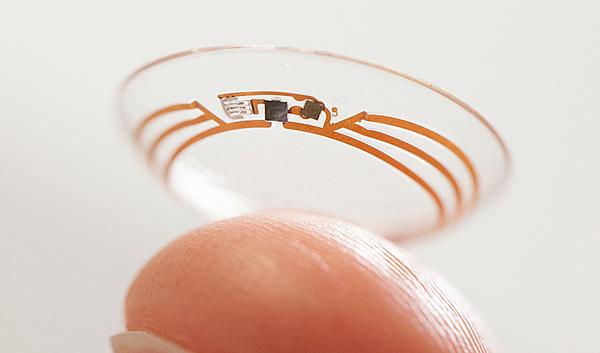
Google smart lens In addition to its much-vaunted Glass product, Google is working on developing some ‘smart contact lenses.’
Announced in January, Google plans for the lenses to be able to monitor blood sugar levels via an antenna smaller than a strand of human hair – opening up new methods of self-management for chronic diseases such as diabetes, as well as other tracking uses applicable to fitness.
With a camera potentially being used in the lenses, people’s vision could be corrected much like the auto-focus on a camera. This could create a new realm of interactive opportunities for the visually impaired in terms of sport participation, as well as a number of virtual reality applications. Google is partnering with pharmaceutical firm Novartis to take the project forward and aims to have a prototype in 2015.
Google is aiming to have a prototype ready next year
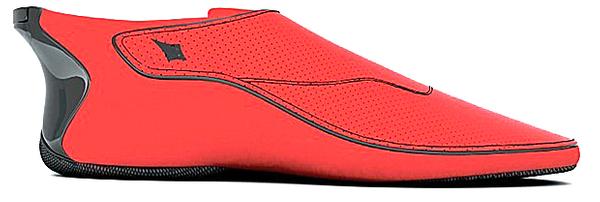
Lechal trainers While so much wearable technology has so far focused on wristwear, a company from India wants to get to the sole of fitness tracking through its Lechal wearable tech trainers.
Ducere is currently taking pre-orders with a view to a late-2014 release for its interactive haptic feedback footwear.
The full shoes are built with bluetooth-enabled insoles (which can also be bought separately) that connect to a smartphone and provide user-feedback through insole vibrations. The shoes can connect to Google Maps, enabling directions to be disseminated without the need to look at a screen – handy for running on busy streets – while the usual pedometer/calorie counter is also present.
Ducere has indicated that the insole will be priced at US$100 (€75, £59), with the cost of the shoes likely to be similar.
The creators were initially developing a shoe designed for the visually-impaired – who can buy Lechal at a discounted rate – before realising the concept had broader applications.
Blue-tooth enabled insoles measure vibrations and connect to a smartphone to provide user-feedback
An opportunity to reimagine one of the UK’s most recognisable towers has been formally
opened by Rivington Hark, as St Johns Beacon invites operators and partners to shape its
next phase. [more...]
Apple and Google are pouring millions into the wearable tech market, which is also attracting a host of exciting, innovative start-ups.
The global wearable electronics market is expected to reach revenues of US$8bn (€6.3bn, £5bn) by 2018, with health and fitness trackers representing 61 per cent of the sector.
The ramifications for health and wellbeing are huge. Medical institutions are already using the technology to monitor patients’ vital signs – aiming to identify problems early – and there’s potential for spas to monitor customer biometrics as well. They’re being integrated with corporate wellness programmes too as employers harness information from trackers to determine employees’ health insurance premiums. Many feel that this is just the start for wearable tech, which has the potential for seamless integration with the ‘internet of things’ – the advanced connectivity of devices, systems and services – as it gains momentum.
With this in mind, we look at the latest innovations in the wellness wearables market to work out which ideas are likely to leave rivals stuck in the starting blocks.
Read more from this issue of Attractions Management magazine
View contents of Attractions Management 2014 issue 4
Spa Foresight™: Spa Foresight™
Trends, technologies and strategies which will shape the future of the global spa and wellness industry
Interview: Steve Jeisman
The group director of spas and development at Alila talks to Katie Barnes about leading the way in spa innovation and about new investment from US firm Geolo Capital
Ask an expert: Fasting
What makes a successful fasting programme and how can spas offer them safely? Julie Cramer investigates
Advertisement promotion: ESPA
At 21, ESPA is a veteran
of the global spa industry,
but it’s still leading the
way. Founder and CEO Sue
Harmsworth explains how
Therapy: Mineral matters
Sophie Benge focuses on water and mud therapies in the last of her series on wellness in central and eastern Europe
Everyone’s talking about: Russia
Jak Phillips gives a SWOT analysis of the Russian spa industry and gets insights from operators and consultants working in the sector
Glacial Spa: Tribal gathering
Wellness and adventure tourism is a key focus for Ng?i Tahu, one of the richest Maori tribes in New Zealand. Jennifer Harbottle finds out more
Summit review: Bright future
Katie Barnes shares her highlights from the 2014 Global Spa & Wellness Summit held in Marrakech, Morocco
Research: Strength in numbers
The worldwide spa industry has grown 56 per cent since 2007 and is part of a US$3.4tn cluster according to the 2014 Global Spa & Wellness Economy Monitor report. Ophelia Yeung reveals more
Wellness: Wearable technology
The latest wellness wearables for your spa, including devices by Google, Apple and Ralph Lauren
MUSE HEADBAND The Muse headband by start-up firm InteraXon has been designed to help people meditate.
Marketed as a product to help manage stress, the Muse reads and measures the user’s brainwaves to paint a picture of how brain activity is affected by emotions. It also comes with an integrated brain health application which teaches meditation.
The device rests on the ears like a pair of glasses and teaches wearers how to calm their brain by using computer-guided meditation in the form of cranial training app Calm.
Among the benefits of decreasing brainwave rhythm using meditative techniques are the production of endorphins and dopamine, in addition to better memory, attentiveness and empathy, say Muse’s makers. The device uses a rechargeable battery and is compatible with iOS, Mac and select PC operating systems. It retails at around US$299 (€220, £178).
Muse measures
brainwave activity and
an integrated app teaches
wearers how to meditate
Ralph Lauren Polo Tech t-shirt From 2015, tennis lovers can record metrics and data from recent performances to improve their game, thanks to a movement tracking shirt from designers Ralph Lauren.
The luxury brand’s Polo Tech t-shirt uses sensors knitted into the fabric to read heartbeat, respiration and other biometrics. Data collected by the shirt is stored by a black-box system, which also captures movement and direction metrics.
These findings, along with data related to energy output and stress levels are sent to the cloud and will be viewable on a tablet or smartphone.
The designer t-shirt tracks biometrics and movement
Meanwhile, Sony is set to launch its attachable Smart Tennis Sensor early next year. The US$200 (€152, £121) device attaches to rackets to record up to 12,000 shots of swing and serve data, with findings transferred to a smartphone app that can be share with friends via social media.
Smart Tennis Sensor
Freewavz earphones Technology designer FreeWavz is creating a set of earphones to collate health and fitness metrics and audibly relay the information to cyclists and joggers so they don’t have to take their eyes off the road.
Designed by otolaryngology specialist Dr Eric Hensen, the earphones will operate without the need for any other wearable tech, also offering wireless connectivity to music streaming, a step counter, plus heart rate and oxygen saturation monitoring.
Hensen came up with the idea because he was frustrated by poorly-fitting headphones that often disrupt workouts when they fall out or cause injuries when the wires become entangled.
The product will allow exercisers to change or pause music through voice commands and can connect to a smartphone to collate health metrics.
The earphones also feature an extra speaker above the standard earbud that allows users to listen to music while also keeping ears alive to the sound of passing cars. FreeWavz has just raised US$325,000 (€251,000 £200,000) for its first production run starting in January 2015.
The wireless earphones relay health and fitness metrics and stream music via voice commands
Freewavz wireless earphones
Freewavz wireless earphones
BITE COUNTER While many of the wearable technology featured here focus on health from an exercise perspective, the Bite Counter bids to remedy the developed world’s obesity crisis by discouraging overeating.
The counter has been designed as a wristwatch to detect, count and display the number of bites its wearer takes each day, to serve as a visual red flag against over-indulgence.
It uses wrist-motion tracking to count bites and estimate calories, while an alarm buzzer can also be set to warn users when they’re nearing their daily bite count limit.
Developed by researchers based at South Carolina’s Clemson University in the US, the Bite Counter tracks consumption levels over long periods. This creates a log of activity from which users can analyse when they’re eating most and least, allowing for changes and plans to be made to manage weight.
An alarm warns users when they’re over-eating
APPLE WATCH Apple debuted its long-awaited smartwatch in September, with a host of health-related functions.
The Apple Watch can record pulse rate and connect to an iPhone to track movement, pace and distances travelled. While an accelerometer can measure the quality and intensity of body movements.
There are two specific health and fitness apps: Fitness and Workout. The Fitness app tracks all types of activity, with a series of visual ‘rings’ signifying progress towards goals. Workout facilitates fitness plans and displays workout metrics in real-time on the watch.
In addition, Apple has moved to unify the fragmented health-tracking market by launching its Healthkit platform (compatible with the watch). The platform has been designed to pull in data from third-party health apps and present the info in one manageable dashboard.
The Apple Watch is due to ship in early 2015 and prices will start at US$359 (€270, £216).
Prices for the watch start at US$359
Pavlok Be it sleeping in or skipping the gym, everyone wishes they could kick those bad habits that prevent physical activity. Now, a new wearable is bidding to not just track activity, but use pain and shame to ensure users have no choice but to reach their goals.
Due for release in 2015, Pavlok is a fitness tracking wristband which also serves as a behavioural conditioner and the pre-order price is US$149.99 (€118, £92). Aside from the usual tracking of steps, activity and sleep, the device has the ability to give away your money, shame you on social media, or even deliver a 340v static shot if you slip back into bad habits. It also offers rewards – as yet unspecified – as well as encouraging social media posts if you stay on the straight and narrow.
Triallists have mainly been using the device to help programme their body to wake up earlier and carry out more exercise, although there’s clearly potential for it to be applied to diet control and smoking cessation as well.
The fi tness tracking
wristband delivers a 340v
static shock if wearers
slip into bad habits
Google smart lens In addition to its much-vaunted Glass product, Google is working on developing some ‘smart contact lenses.’
Announced in January, Google plans for the lenses to be able to monitor blood sugar levels via an antenna smaller than a strand of human hair – opening up new methods of self-management for chronic diseases such as diabetes, as well as other tracking uses applicable to fitness.
With a camera potentially being used in the lenses, people’s vision could be corrected much like the auto-focus on a camera. This could create a new realm of interactive opportunities for the visually impaired in terms of sport participation, as well as a number of virtual reality applications. Google is partnering with pharmaceutical firm Novartis to take the project forward and aims to have a prototype in 2015.
Google is aiming to have a prototype ready next year
Lechal trainers While so much wearable technology has so far focused on wristwear, a company from India wants to get to the sole of fitness tracking through its Lechal wearable tech trainers.
Ducere is currently taking pre-orders with a view to a late-2014 release for its interactive haptic feedback footwear.
The full shoes are built with bluetooth-enabled insoles (which can also be bought separately) that connect to a smartphone and provide user-feedback through insole vibrations. The shoes can connect to Google Maps, enabling directions to be disseminated without the need to look at a screen – handy for running on busy streets – while the usual pedometer/calorie counter is also present.
Ducere has indicated that the insole will be priced at US$100 (€75, £59), with the cost of the shoes likely to be similar.
The creators were initially developing a shoe designed for the visually-impaired – who can buy Lechal at a discounted rate – before realising the concept had broader applications.
Blue-tooth enabled insoles measure vibrations and connect to a smartphone to provide user-feedback
A new immersive attraction designed to transport visitors into the final hours of ancient Pompeii
is preparing to open near the world-famous archaeological site in southern Italy.
Experience design company, BRC Imagination Arts, has completed a transition that sees founder
Bob Rogers pass ownership of the business to four long-serving senior executives, while
remaining actively involved with the company.
Movie Park Germany has opened a new Paramount Pictures-themed attraction as part of its 30th
anniversary celebrations, using immersive storytelling and adaptive reuse to reinforce the park’s
longstanding “Hollywood in Germany” positioning.
Therme Manchester’s 28-acre development, which will include interconnected glass pavilions
that measure 65,000sq m, will be the largest bathing and wellbeing attraction in the world once
complete, according to prof David Russell, CEO of Therme UK.
Efteling has opened Hooghmoed, a new family drop tower designed to broaden the appeal of its
recently launched Sirene Island themed area and introduce younger visitors to thrill attractions.
A proposed Puy du Fou development near Bicester and Universal Destinations and Experiences’
planned resort in Bedford are emerging as part of a wider transformation of the Oxford–
Cambridge Growth Corridor into a major centre for UK leisure and tourism inv
Shedd Aquarium has opened the Immersion Theater developed in partnership with SimEx-
Iwerks, as part of a wider strategy to enhance the guest experience and create additional
revenue opportunities.
The UK government has announced a temporary reduction in VAT on visitor attractions and
children’s meals as part of a summer cost-of-living support package designed to stimulate the
visitor economy and encourage family days out.
As designer Yinka Ilori prepares for his first solo gallery show in London, he speaks exclusively
to CLADmag about his mission to spread joy, the power of play, and his bold approach to using
colour (including the colours you won’t see in his work).
The government of Thailand is exploring plans for a THB300bn (£6.3bn, US$8.3bn)
entertainment complex in the country’s Eastern Economic Corridor (EEC), with officials
proposing a large-scale theme park and sports destination as part of a broader tourism and
economic development strategy.
An opportunity to reimagine one of the UK’s most recognisable towers has been formally
opened by Rivington Hark, as St Johns Beacon invites operators and partners to shape its
next phase. [more...]