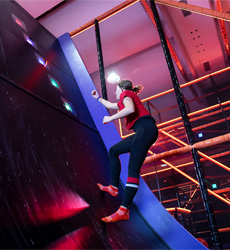
The book aims to explore key issues for the theme park industry / photo: Shutterstock/Alita Xander
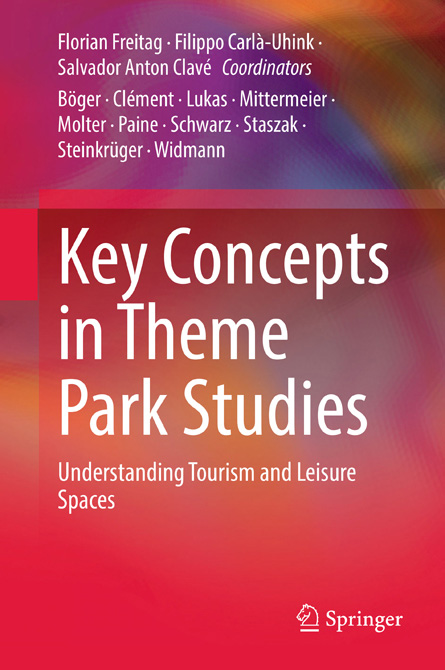
Published earlier this year, Key Concepts in Theme Park Studies aims to help readers understand the history, development, design and operation of theme parks. Written collaboratively by 13 scholars from different disciplines and countries, the book covers theme park origins, industry, design, people, culture, development and management, ethical issues and the methodologies of theme park studies.
The idea for the book was born in 2014, when one of the authors, Florian Freitag, a scholar in American Studies at the University of Duisberg-Essen, Germany, was giving a guest lecture on theme parks in front of an audience of geographers.
“During the Q&A I realised that although we were all talking about the same topic – namely, theme parks – we were not speaking the same language,” says Freitag. “It was then that I started thinking about a comprehensive, transdisciplinary introduction to theme park studies that would discuss key aspects of theme parks in a way that would combine the viewpoints and findings of theme park researchers in different disciplines and yet be accessible to all of them.”
Here the books’ authors tell us why it is an important resource for the industry.
What global trends are covered in Key Concepts in Theme Park Studies? The book discusses the expansion of the theme park industry worldwide in the context of increasing urbanisation, digital innovation, accelerated mobility, globalisation, and greater environmental awareness.
One interesting trend is the way the theme park industry is merging with other entertainment and attractions companies including interpretation centres, high-tech facilities, cultural, heritage and environmental-based parks, museums, zoos, water parks and corporate centres. The book also explores how the industry is diversifying into other areas of leisure and consumption together with real estate corporations, shopping centre operators and transmedia corporations.
Technology is also becoming a key player in the process of defining the economic, social, environmental, experiential and customer-oriented strategies of theme parks.
In the book you look at the history of theme parks. Did you find out anything that would surprise people? There are many surprises – from the acknowledgement that the Romans created spaces with controlled access in which they could spend time and be entertained, to the discovery that in the Middle Ages strategies of immersion – with the technology of the time – were used to help religious inspiration and experience.
We were particularly interested in exploring the history of theme parks outside the Western world. The Old Summer Palace near Beijing, for example, built between the 18th and the 19th century, contained replicas of many different Chinese landscapes and buildings that could be experienced by visitors. In fact these visitors were limited to the emperor, his family and his guests – and this is maybe one of the most interesting aspects discussed in this chapter: who was allowed to access these ‘ancestors’ of the theme parks, and how that access was regulated.
There is a section on authenticity. What were the key takeaways? This was an interesting chapter to put together – we wanted to look at the history of the concept of authenticity in academia, and evaluate its application to theme parks.
Recent scholarship has discarded the idea of authenticity as an attribute of objects, in the sense of the ‘museological authenticity’ of displayed material. Instead, scholars have developed the notion of ‘perceived authenticity,’ according to which the authenticity of something is determined by what visitors consider to be real, believable, and convincing. Here, obvious mistakes – such as in the representation of foreign cultures or anachronisms in the representation of historical themes – don’t necessarily contrast with the authenticity of a themed area.
An object or a place can also develop its own identity and aura over time, meaning new developments can acquire a sense of authenticity – a concept described as ‘emergent authenticity.’
Theme parks draw on these different kind of authenticities. In marketing, theme parks often draw on museological authenticity to advertise the accuracy of their themed areas.
Perceived authenticity plays a central role in design, where representations of specific themes need to match visitors’ expectations. The idea of emergent authenticity can manifest itself in fans’ reactions to such changes as the updating, replacement, and closure of ‘classic’ theme park attractions or in theme parks’ decisions to keep and even bring back certain traditional elements that may have otherwise fallen victim to the constant striving for novelty in the interest of economic competitiveness.
What can you tell us about immersion and theme parks? From the point of view of immersion, theme parks are extremely interesting places because in contrast to other immersive media, the mediated or themed space and the space of reception are one and the same.
Of course, this doesn’t necessarily lead to the total immersion of theme park visitors, as immersion depends on a large variety of factors that include not just the specific build-up of the immersive space, but also the recipients’ current disposition and the general context of the experience. In the book, we discuss theme parks’ capacity to engender or induce an immersed state of mind in visitors, focusing on two key strategies to achieve immersivity – narrativity and bodily affect.
What do you hope readers will take away from the book? Theme parks must be taken seriously; as an industry, as a medium, and as a space of cultural significance. And we hope that we can contribute not only to scholarly dialogue, but also to an open and mutually beneficial dialogue with fans and stakeholders in the industry. As we write at the end of our introduction, our book is an open invitation to come and talk to us.
Salvador Anton Clavé is Professor of Regional Geographical Analysis, University Rovira i Virgili, Spain. Filippo Carlà-Uhink is Professor of Ancient History at the University of Potsdam, Germany. Florian Freitag is Professor of American Studies at the University of Duisburg-Essen, Germany.
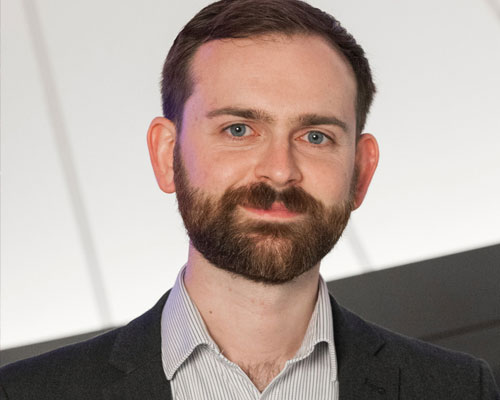
Florian Freitag
Filippo Carlà-Uhink
Salvador Anton Clavé
The book explores theme parks from mulitple perspectives
Read more from this issue of Attractions Management magazine
View contents of Attractions Management 2023 issue 4
People: Clara Rice
The director of global marketing for Adirondack Studios shares her plans
Interview: Delphine Pons
As Parc Asterix launches a new themed land and celebrates record attendance figures, its CEO tells us what’s next for the much-loved French park
First person: The power of play
Can the power of play help heal divides in our world? Can art and attractions bring people closer? Meow Wolf’s founder is sure that it can
Museum: Lighting the way
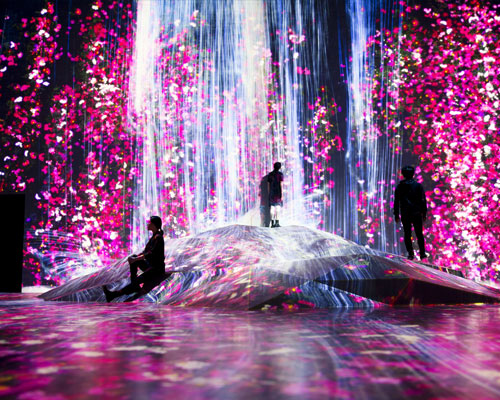
With major new museums taking shape in Jeddah and Abu Dhabi, digital art sensation teamLab are riding high. We speak to the team
Opinion: We need a revolution
It’s time for radical thinking to address the staffing crisis in our industry, argues Margreet Papamichael
Tourism: On the road
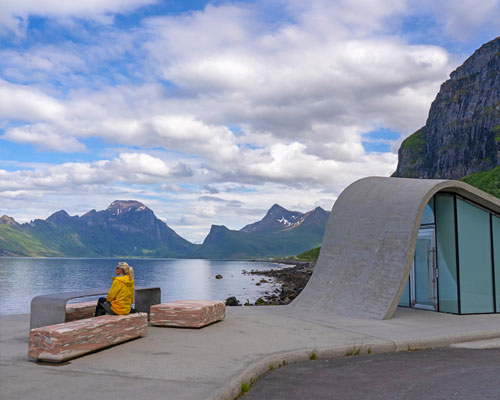
With its Scenic Routes project, Norway has turned the road trip into an attraction, and boosted tourism in a huge way. Terry Stevens gets behind the wheel
Museums: Mark Cutmore
What’s the future of immersive technology in museums? The head of commercial experiences at the Science Museum Group shares his thoughts
Research: Joined up thinking
Natural history museums around the world are sharing details of their collections to help find solutions to some of the most urgent issues of our time
The arts: Show time
As the UK’s biggest cultural venue for decades opens, we hear from the team behind Aviva Studios
Research: Making memories
The link between the emotions of visitors and their memories of an experience helps shape their reactions. Researcher Wim Strijbosch explores his findings
An opportunity to reimagine one of the UK’s most recognisable towers has been formally
opened by Rivington Hark, as St Johns Beacon invites operators and partners to shape its
next phase. [more...]
The book aims to explore key issues for the theme park industry / photo: Shutterstock/Alita Xander
Published earlier this year, Key Concepts in Theme Park Studies aims to help readers understand the history, development, design and operation of theme parks. Written collaboratively by 13 scholars from different disciplines and countries, the book covers theme park origins, industry, design, people, culture, development and management, ethical issues and the methodologies of theme park studies.
The idea for the book was born in 2014, when one of the authors, Florian Freitag, a scholar in American Studies at the University of Duisberg-Essen, Germany, was giving a guest lecture on theme parks in front of an audience of geographers.
“During the Q&A I realised that although we were all talking about the same topic – namely, theme parks – we were not speaking the same language,” says Freitag. “It was then that I started thinking about a comprehensive, transdisciplinary introduction to theme park studies that would discuss key aspects of theme parks in a way that would combine the viewpoints and findings of theme park researchers in different disciplines and yet be accessible to all of them.”
Here the books’ authors tell us why it is an important resource for the industry.
What global trends are covered in Key Concepts in Theme Park Studies? The book discusses the expansion of the theme park industry worldwide in the context of increasing urbanisation, digital innovation, accelerated mobility, globalisation, and greater environmental awareness.
One interesting trend is the way the theme park industry is merging with other entertainment and attractions companies including interpretation centres, high-tech facilities, cultural, heritage and environmental-based parks, museums, zoos, water parks and corporate centres. The book also explores how the industry is diversifying into other areas of leisure and consumption together with real estate corporations, shopping centre operators and transmedia corporations.
Technology is also becoming a key player in the process of defining the economic, social, environmental, experiential and customer-oriented strategies of theme parks.
In the book you look at the history of theme parks. Did you find out anything that would surprise people? There are many surprises – from the acknowledgement that the Romans created spaces with controlled access in which they could spend time and be entertained, to the discovery that in the Middle Ages strategies of immersion – with the technology of the time – were used to help religious inspiration and experience.
We were particularly interested in exploring the history of theme parks outside the Western world. The Old Summer Palace near Beijing, for example, built between the 18th and the 19th century, contained replicas of many different Chinese landscapes and buildings that could be experienced by visitors. In fact these visitors were limited to the emperor, his family and his guests – and this is maybe one of the most interesting aspects discussed in this chapter: who was allowed to access these ‘ancestors’ of the theme parks, and how that access was regulated.
There is a section on authenticity. What were the key takeaways? This was an interesting chapter to put together – we wanted to look at the history of the concept of authenticity in academia, and evaluate its application to theme parks.
Recent scholarship has discarded the idea of authenticity as an attribute of objects, in the sense of the ‘museological authenticity’ of displayed material. Instead, scholars have developed the notion of ‘perceived authenticity,’ according to which the authenticity of something is determined by what visitors consider to be real, believable, and convincing. Here, obvious mistakes – such as in the representation of foreign cultures or anachronisms in the representation of historical themes – don’t necessarily contrast with the authenticity of a themed area.
An object or a place can also develop its own identity and aura over time, meaning new developments can acquire a sense of authenticity – a concept described as ‘emergent authenticity.’
Theme parks draw on these different kind of authenticities. In marketing, theme parks often draw on museological authenticity to advertise the accuracy of their themed areas.
Perceived authenticity plays a central role in design, where representations of specific themes need to match visitors’ expectations. The idea of emergent authenticity can manifest itself in fans’ reactions to such changes as the updating, replacement, and closure of ‘classic’ theme park attractions or in theme parks’ decisions to keep and even bring back certain traditional elements that may have otherwise fallen victim to the constant striving for novelty in the interest of economic competitiveness.
What can you tell us about immersion and theme parks? From the point of view of immersion, theme parks are extremely interesting places because in contrast to other immersive media, the mediated or themed space and the space of reception are one and the same.
Of course, this doesn’t necessarily lead to the total immersion of theme park visitors, as immersion depends on a large variety of factors that include not just the specific build-up of the immersive space, but also the recipients’ current disposition and the general context of the experience. In the book, we discuss theme parks’ capacity to engender or induce an immersed state of mind in visitors, focusing on two key strategies to achieve immersivity – narrativity and bodily affect.
What do you hope readers will take away from the book? Theme parks must be taken seriously; as an industry, as a medium, and as a space of cultural significance. And we hope that we can contribute not only to scholarly dialogue, but also to an open and mutually beneficial dialogue with fans and stakeholders in the industry. As we write at the end of our introduction, our book is an open invitation to come and talk to us.
Salvador Anton Clavé is Professor of Regional Geographical Analysis, University Rovira i Virgili, Spain. Filippo Carlà-Uhink is Professor of Ancient History at the University of Potsdam, Germany. Florian Freitag is Professor of American Studies at the University of Duisburg-Essen, Germany.
Florian Freitag
Filippo Carlà-Uhink
Salvador Anton Clavé
The book explores theme parks from mulitple perspectives
Read more from this issue of Attractions Management magazine
View contents of Attractions Management 2023 issue 4
People: Clara Rice
The director of global marketing for Adirondack Studios shares her plans
Interview: Delphine Pons
As Parc Asterix launches a new themed land and celebrates record attendance figures, its CEO tells us what’s next for the much-loved French park
First person: The power of play
Can the power of play help heal divides in our world? Can art and attractions bring people closer? Meow Wolf’s founder is sure that it can
Museum: Lighting the way
With major new museums taking shape in Jeddah and Abu Dhabi, digital art sensation teamLab are riding high. We speak to the team
Opinion: We need a revolution
It’s time for radical thinking to address the staffing crisis in our industry, argues Margreet Papamichael
Tourism: On the road
With its Scenic Routes project, Norway has turned the road trip into an attraction, and boosted tourism in a huge way. Terry Stevens gets behind the wheel
Museums: Mark Cutmore
What’s the future of immersive technology in museums? The head of commercial experiences at the Science Museum Group shares his thoughts
Research: Joined up thinking
Natural history museums around the world are sharing details of their collections to help find solutions to some of the most urgent issues of our time
The arts: Show time
As the UK’s biggest cultural venue for decades opens, we hear from the team behind Aviva Studios
Research: Making memories
The link between the emotions of visitors and their memories of an experience helps shape their reactions. Researcher Wim Strijbosch explores his findings
Movie Park Germany has opened a new Paramount Pictures-themed attraction as part of its 30th
anniversary celebrations, using immersive storytelling and adaptive reuse to reinforce the park’s
longstanding “Hollywood in Germany” positioning.
Therme Manchester’s 28-acre development, which will include interconnected glass pavilions
that measure 65,000sq m, will be the largest bathing and wellbeing attraction in the world once
complete, according to prof David Russell, CEO of Therme UK.
Efteling has opened Hooghmoed, a new family drop tower designed to broaden the appeal of its
recently launched Sirene Island themed area and introduce younger visitors to thrill attractions.
A proposed Puy du Fou development near Bicester and Universal Destinations and Experiences’
planned resort in Bedford are emerging as part of a wider transformation of the Oxford–
Cambridge Growth Corridor into a major centre for UK leisure and tourism inv
Shedd Aquarium has opened the Immersion Theater developed in partnership with SimEx-
Iwerks, as part of a wider strategy to enhance the guest experience and create additional
revenue opportunities.
The UK government has announced a temporary reduction in VAT on visitor attractions and
children’s meals as part of a summer cost-of-living support package designed to stimulate the
visitor economy and encourage family days out.
As designer Yinka Ilori prepares for his first solo gallery show in London, he speaks exclusively
to CLADmag about his mission to spread joy, the power of play, and his bold approach to using
colour (including the colours you won’t see in his work).
The government of Thailand is exploring plans for a THB300bn (£6.3bn, US$8.3bn)
entertainment complex in the country’s Eastern Economic Corridor (EEC), with officials
proposing a large-scale theme park and sports destination as part of a broader tourism and
economic development strategy.
Royal Caribbean has revealed its Hero of the Seas cruise ship, home to the most pools at sea
(nine), and a record-breaking 28 dining venues, as well as attractions including a waterpark
with two new family raft slides.
An opportunity to reimagine one of the UK’s most recognisable towers has been formally
opened by Rivington Hark, as St Johns Beacon invites operators and partners to shape its
next phase. [more...]