As the Science Museum Group launches its permanent
Power Up exhibit, a new children’s gallery and Flying Scotsman
VR experience, SMG’s head of commercial experiences
discusses the future of immersive technology in museums
While the Science Museum Group’s five museums are free, each museum also offers paid for visitor experiences to help generate money for the Group, and immersive technologies play an increasingly important role in these offers.
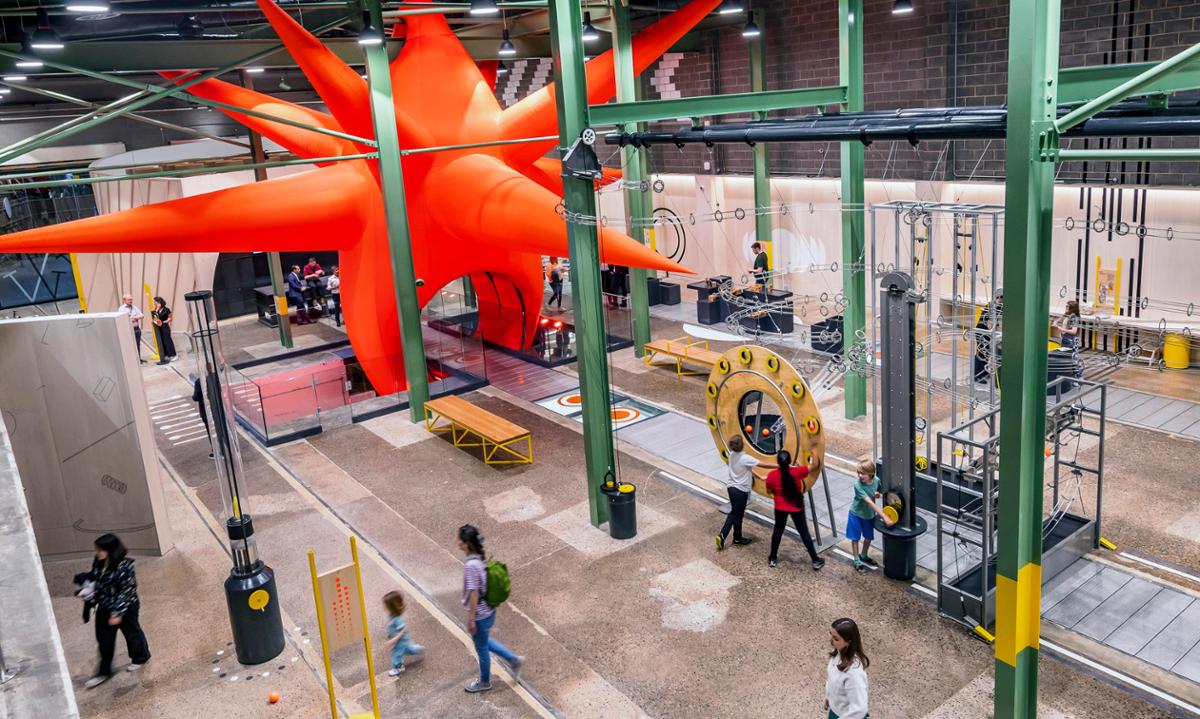
This year, the group has launched Wonderlab: The Bramall Gallery at the National Railway Museum in York – an interactive engineering-themed experience for families. Designed by De Matos Ryan, the space features 18 hands on challenges including Feel the Force – a ‘human-sized wind tunnel’ and the Sandscapes interactive sandpit that uses digital projections to create railway landscapes.
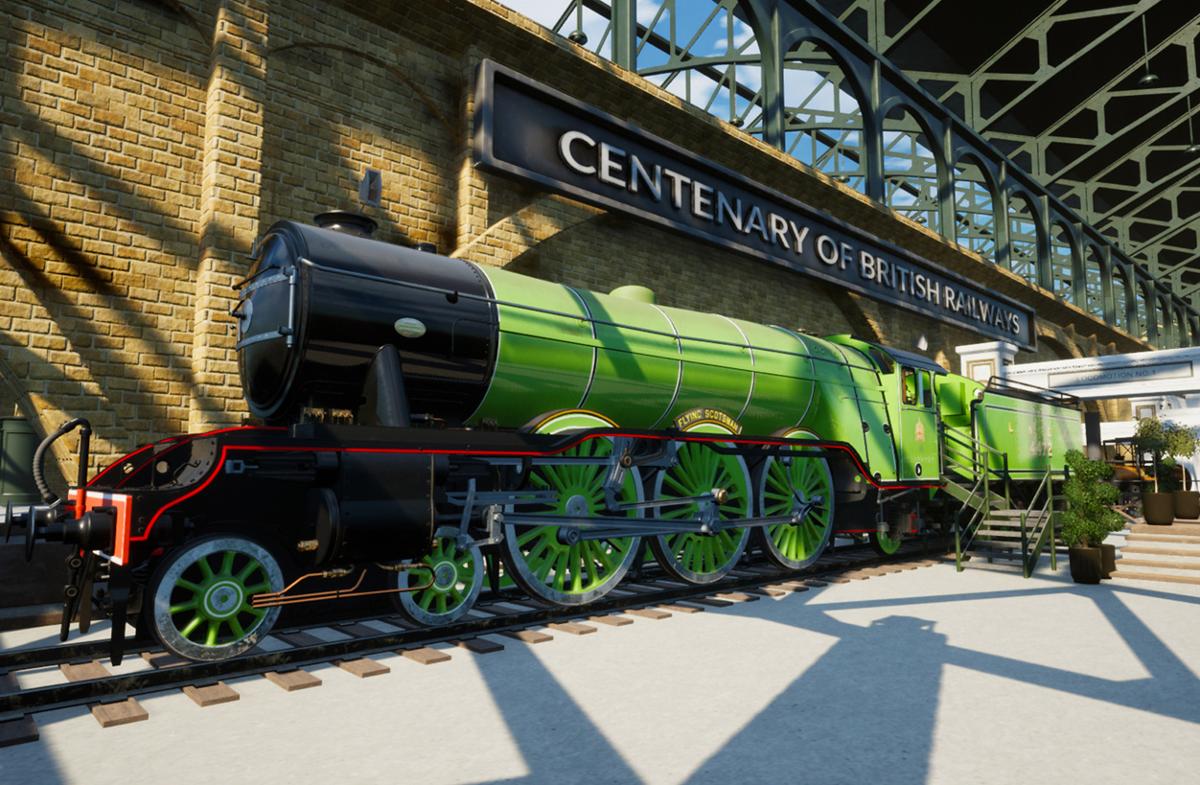
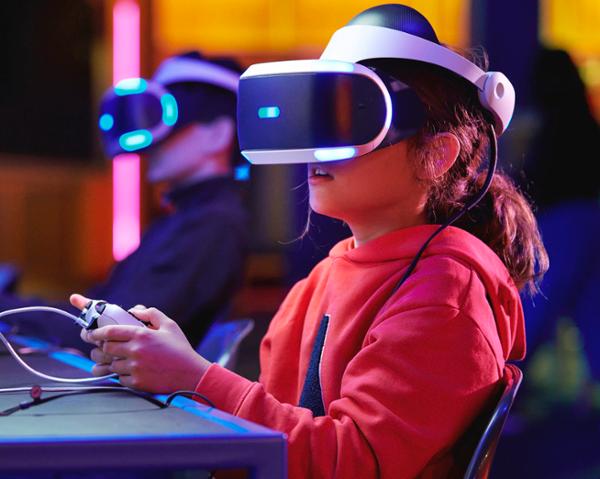
A new Flying Scotsman multisensory VR experience also launched at the National Railway Museum in April. Visitors don VR headsets to explore 100 years of history of Flying Scotsman, including the British Empire Exhibition, 100mph record-breaking run and journeys around North America and Australia.
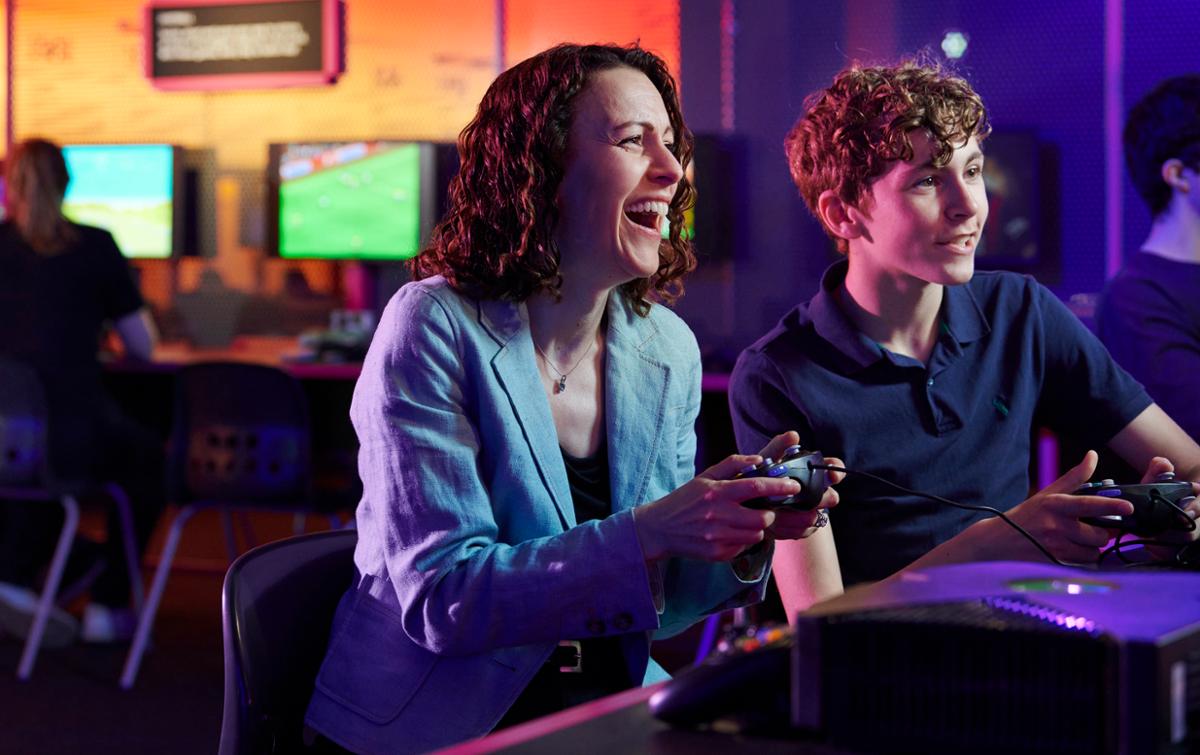
In July 2023, hands-on gaming experience Power Up launched at the Science Museum in London. After five seasons as a temporary event, the Power Up exhibition is now a permanent fixture at the museum, allowing visitors to explore the history of video gaming by playing some of the best games of the past five decades.
Here Mark Cutmore, head of commercial experiences at the Science Museum Group, tells us how technology is used to tell stories and bring in visitors, and what’s next for the group
What is your role at the Science Museum Group? I’m the head of commercial experiences for the Science Museum Group. My job is to create and manage visitor experiences that have a ticket price associated with them in order to give visitors a great experience and generate money to put back into the Science Museum Group.
These include our interactive galleries for children, including Wonderlab – we have three Wonderlab galleries aimed at inspiring kids with the wonder of science, technology and engineering. I also manage the IMAX cinema at the Science Museum in London, which features both a cutting-edge laser 4K projector and a very important 70mm IMAX film projector. We have the best of analogue and best of digital next to one other.
Wonderlab: The Bramall Gallery recently launched at the National Railway Museum in York. How have immersive technologies been used in this attraction? Each of our Wonderlab galleries – we now have three in London, Bradford and York – has its own theme and core principles based on the museum it’s in.
The Bramall Gallery’s core focus is engineering. Our aim for all of the Wonderlab galleries is for them to be very hands on and interactive, so the technology is there, but it’s subtle. One of the exhibits at the Bramall Gallery illustrates this well. It’s an interactive sandpit table with projection mapping that projects a landscape with railtracks and rail vehicles moving around.
Visitors can dig into the sandpit, play with the sand, and when they do, the landscape changes as the interactive mapping reacts. If visitors dig deep into the sand, for example, the landscape creates water and rail bridges across the water. When visitors create hills and mountains from the sand, the tracks will go through tunnels. It’s a beautiful application of technology that feels very subtle and clever.
The National Railway Museum also launched a Flying Scotsman VR experience this year. How did this come about? Our new Flying Scotsman virtual reality immersive experience is one of the most cutting-edge things we’ve created in terms of a visitor experience. It’s leagues above anything we’ve done before in terms of the technology and immersivity we’re using.
We’re always trying to find interesting ways to deliver stories to our visitors beyond written text – VR is a great way to do this. Several years ago, we developed a very successful VR experience around Tim Peake’s Soyuz capsule (Space Descent VR) which we acquired just after he came back to Earth in it.
We were looking at how we could celebrate the upcoming centenary of the Flying Scotsman locomotive, which is one of the jewels in our collection. We decided to develop a new immersive experience exploring its history, using everything we’d learned from the Space Descent VR experience and taking it up several notches.
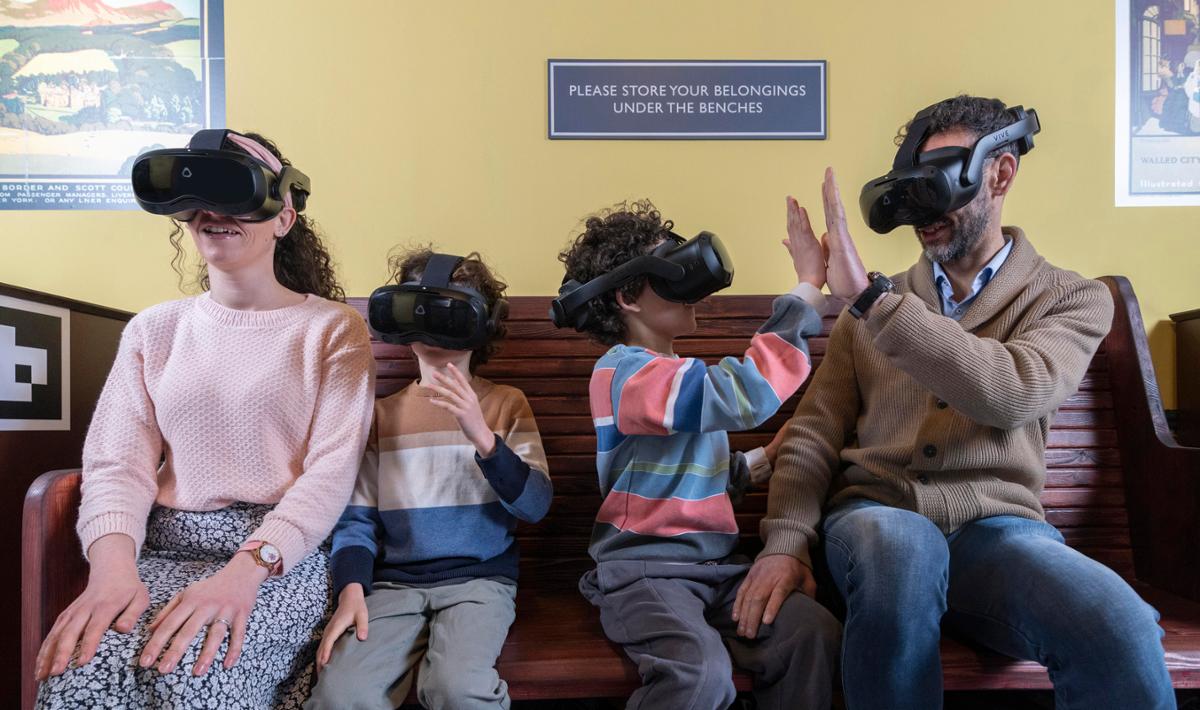
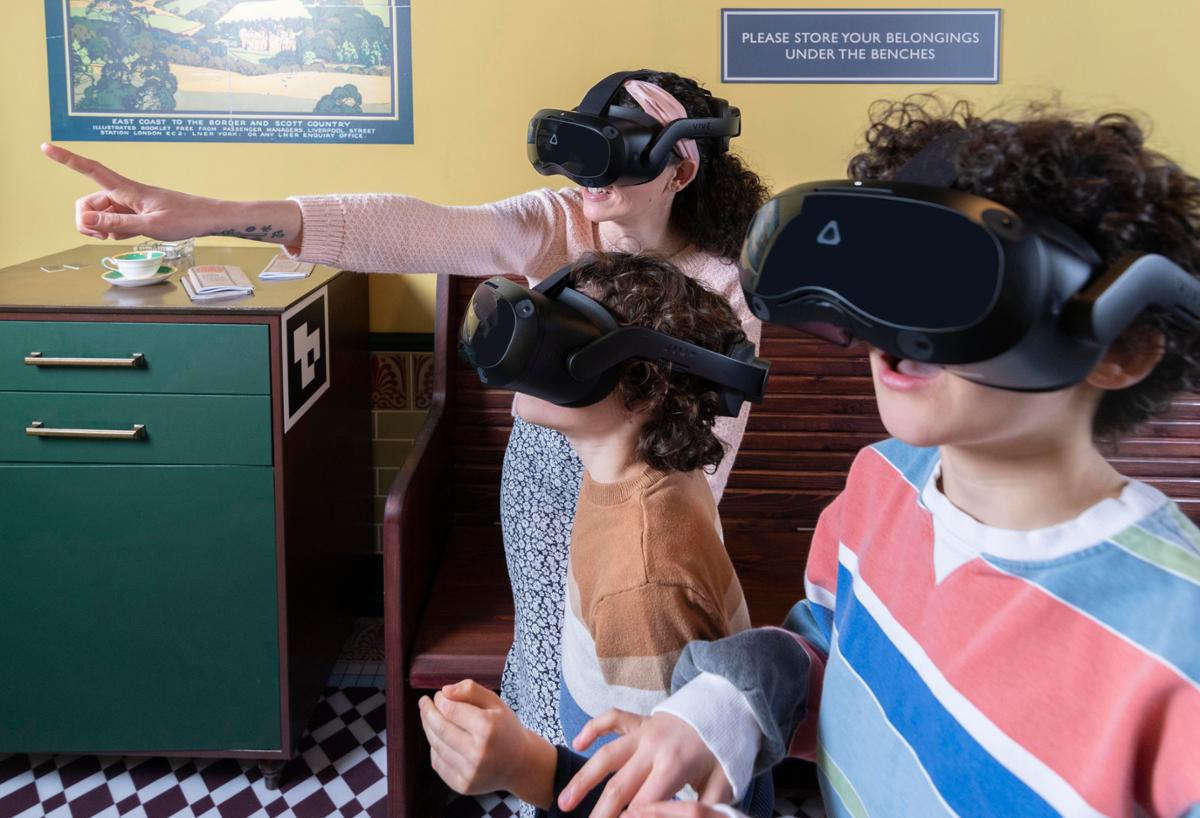
Can you describe the experience? The experience consists of two shipping containers which sit by side and are connected down the middle. We have authentically set dressed one of them to look like a 1920s waiting room on London’s Kings Cross platform.
Visitors enter the ‘waiting room’, sit down and put on VR headsets which show them in the same room, in VR, facing a set of doors. We open those doors – both virtually and physically – and invite visitors to walk through. In reality, they walk through to the second shipping container, while in the VR experience they walk onto the platform of Kings Cross in the 1920s, and are taken on a 10 minute journey showing key moments from the history of Flying Scotsman.
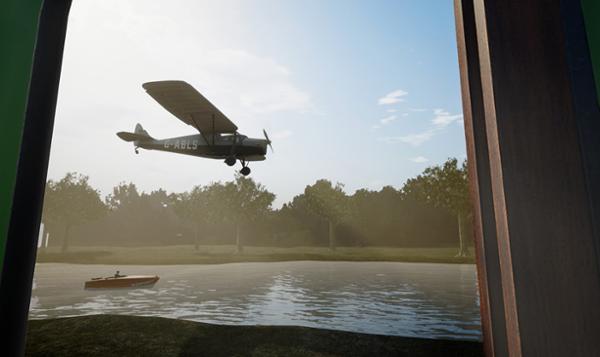
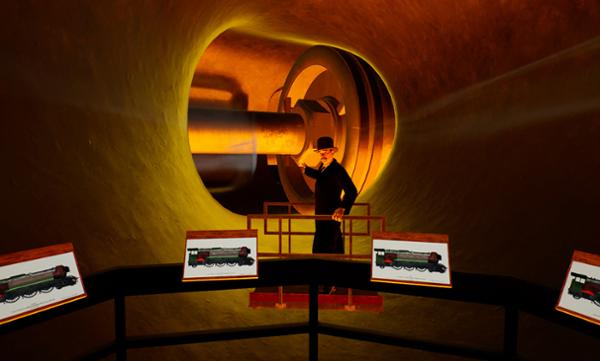
Visitors are taken further back in time to the shopworks where Flying Scotsman was built; they’re then shrunk down and taken inside the engine and shown how a locomotive steam engine works from inside the boiler. Another highlight is being taken on a 100 mile-per-hour run, where they get to experience Flying Scotsman racing a biplane and a speedboat.
We have a range of 4D effects – including rumble plates, heat lamps, wind fans and sound, which all enhance the experience. You feel the heat of the furnace, the rumble of the engine. It’s really compelling and immersive. And we use top of the line VR headsets, which are completely untethered – it’s as comfortable and easy to wear as it’s possible to be with VR at the moment. At the end of the 10 minutes, Flying Scotsman ‘arrives’ at Edinburgh Waverley Station and we invite people back into the waiting room (in the original shipping container) to take off their headsets. While they’ve been gone, we’ve done some physical trickery, changing the posters and signs so you come into Edinburgh waiting room for a bit of theatre at the end.
We’ve tried to pack a lot of very clever technology in there in a way that doesn’t feel at odds with the fact that we’re taking the visitor back in time to the steam age.
How has it been received? The experience has gone beyond my hopes – it’s absolutely fantastic, and we’ve had an amazing response from visitors. We get a lot of railway enthusiasts, who know Flying Scotsman far better than I ever could, and they have given us some great feedback. I’m very proud of it and it’s done very well for us.
Power Up has just opened at the Science Museum. What can you tell us about this? When I joined the Science Museum Group in 2017, Power Up was quite a simple idea – one of our open gallery spaces that we’d take over for half term week and fill with video games to celebrate gaming history. It was really fun, but I felt that we could do it better, with the mission and values of the Science Museum Group at heart.
I petitioned the organisation to let me buy my own set of equipment; they said yes, and my team and I embarked on a fun episode of buying every console we could on eBay. We built up an amazing catalogue of video games.
After several years of development, we’ve now opened our permanent version of Power Up in the Science Museum. It’s a hands-on gaming experience which celebrates the history of home video gaming in a way that focuses on interactivity and play rather than panels and text. It’s incredibly interpretation-light – really it’s about showing people how technology has changed over time through play, because that’s what gaming’s all about.
What does Power Up offer? We have 160 consoles telling the story of technology changing through different thematic areas – for example we have a set of consoles lined up with Mario through the ages, from the 1980s to today. You really see how that character and the technology has evolved.
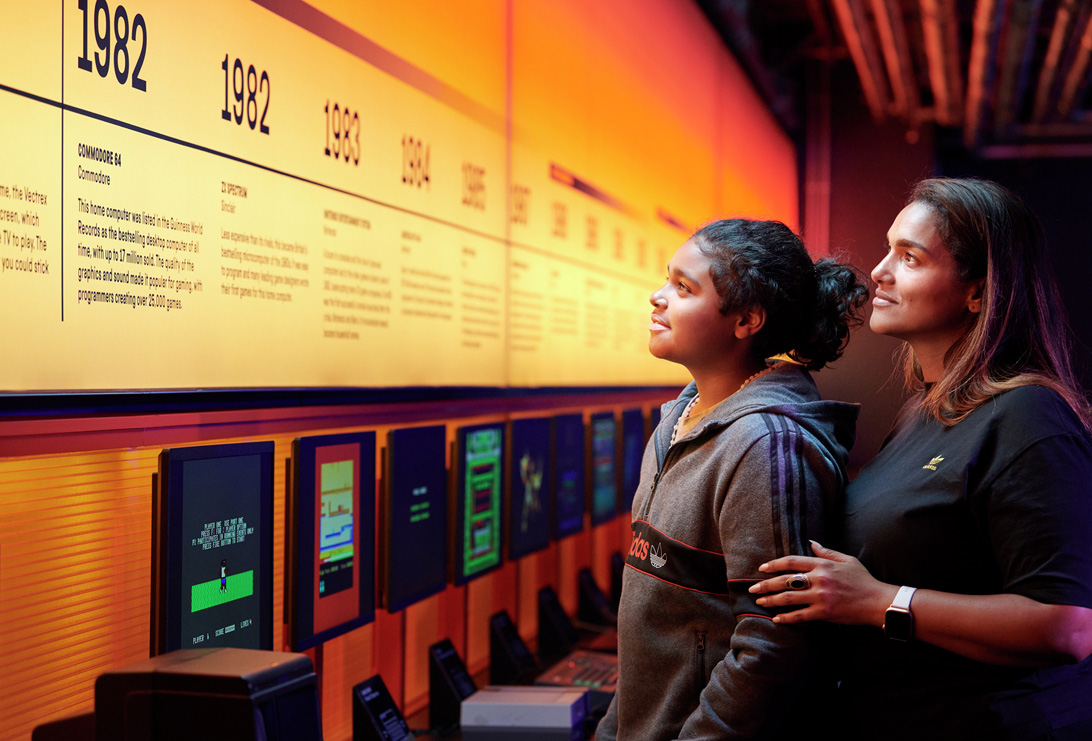
We have a few centrepieces. One highlight is our timeline, which is beautifully lit, so it draws you to it. It’s 27 consoles in chronological order starting from a Binatone TV Master in 1976 that plays Pong with interpretation about each console and why it was important.
I love watching what people make a beeline for – you can generally predict their age because it’s usually the first console they had as a kid.
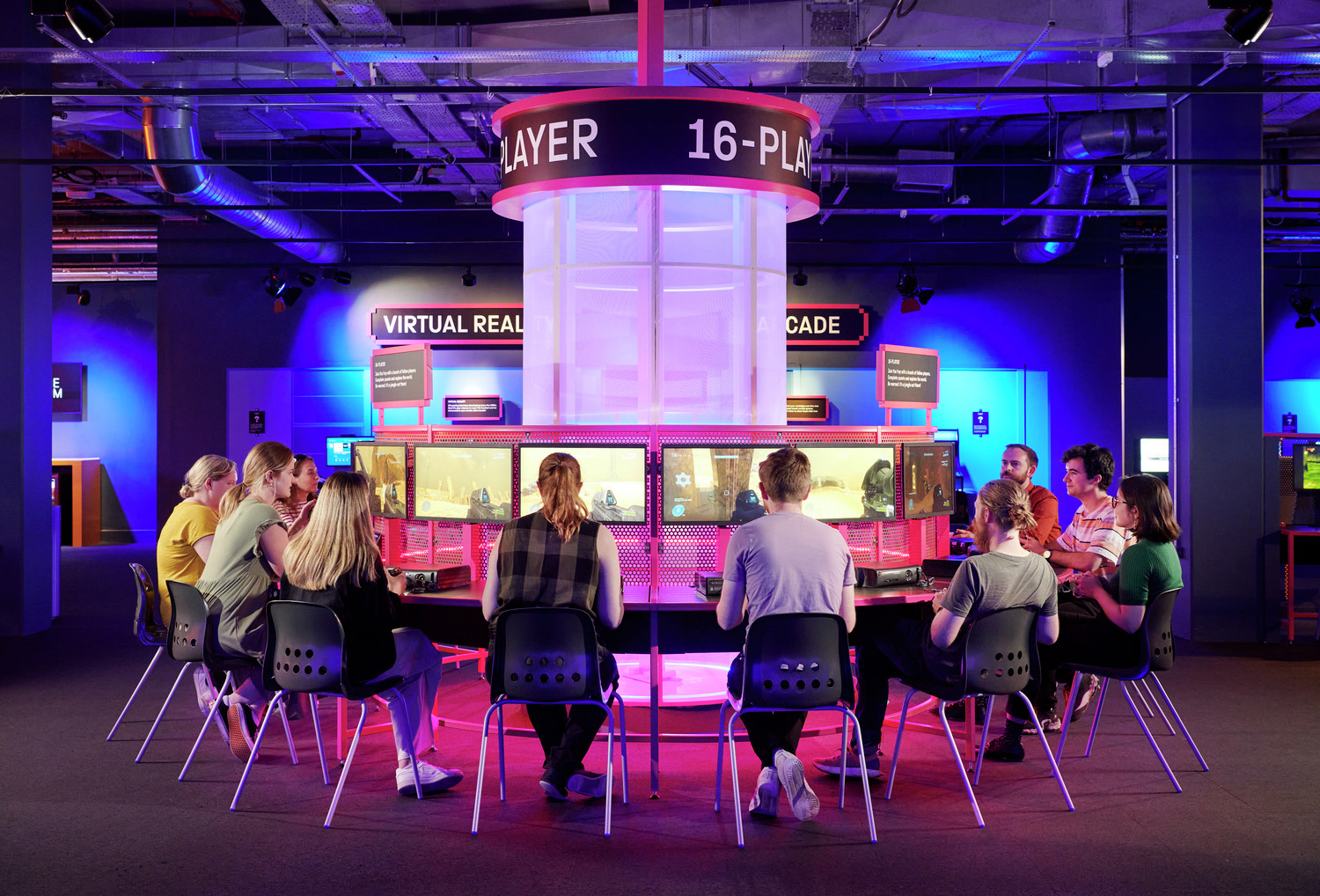
We also have a 16-player gaming ring – 16 Xbox 360s connected together so people can play the same game at the same time.
What are you proudest of with Power Up? For me Power Up is inspiring because it helps people to see that gaming is universal, and it’s for everyone. It’s lovely to see parents and grandparents showing their kids or grandkids the games they used to play.
We have also worked with BAFTA, who run a great initiative called Young Games Designers aimed at encouraging young people to consider a career in the gaming industry. Every year young people between the ages of 10 and 18 submit their games to BAFTA – they’re reviewed by judges and prizes are awarded and the young people are given help and mentorship. I thought it would be lovely if part of the prize for the winners would be for them to have their games featured in Power Up, alongside the greats like Sonic and Pac-Man and Space Invaders – we have a section featuring the winning games.
What do you see as the biggest trends in the industry right now? VR is being adopted by a lot of museums at the moment. When it’s done right it can be absolutely amazing – compelling, immersive and it can deliver storytelling in a way that you just can’t do outside of the VR environment.
There are real challenges though. Good quality VR is not cheap and people have high expectations – we’re all used to high quality technology in the home now. It can be extremely challenging to offer good VR experiences at scale for museum visitors – I think right now it’s being delivered with varying degrees of success.
In terms of the use of Augmented Reality in museums, we’re at the early stages of that journey. While there’s a lot of opportunity there, and I think it will be the way things will go in the future, we’re not quite there yet.
As for the Science Museum Group, we’re always looking for new and interesting ways to deliver stories to our visitors beyond written text.
Power Up at the
Science Museum, London
Launched in July 2023, interactive gaming exhibition Power Up now has a permanent home at London’s Science Museum.
Featuring more than 160 consoles and hundreds of games, visitors can explore the history of gaming, from the Atari 2600 to the PlayStation 5. At Power Up, visitors can navigate between 20 themes and sections, playing franchise-centred games from Disney to LEGO, jumping from a generation of Mario, Sonic or Zelda to the next, and challenge friends and fellow gamers to gaming competitions.
A physical games area allows fans to (re)discover iconic games like Wii Sport, get active with Kinect games, explore the future of gaming through VR experiences, strum on Guitar Hero and do a spot of Sega Bass Fishing.
A dedicated PC area features family favourites including Minecraft and classics like Monkey Island 2. Gamers can battle it out in Splatoon or test their sports skills with Madden NFL 2003 in the multiplayer zone, while 16 players can test their skills together in an action-packed multiplayer Halo 3 tournament, joining the same game on Xbox 360.
People: Clara Rice
The director of global marketing for Adirondack Studios shares her plans
Interview: Delphine Pons
As Parc Asterix launches a new themed land and celebrates record attendance figures, its CEO tells us what’s next for the much-loved French park
First person: The power of play
Can the power of play help heal divides in our world? Can art and attractions bring people closer? Meow Wolf’s founder is sure that it can
Museum: Lighting the way
With major new museums taking shape in Jeddah and Abu Dhabi, digital art sensation teamLab are riding high. We speak to the team
Opinion: We need a revolution
It’s time for radical thinking to address the staffing crisis in our industry, argues Margreet Papamichael
Tourism: On the road
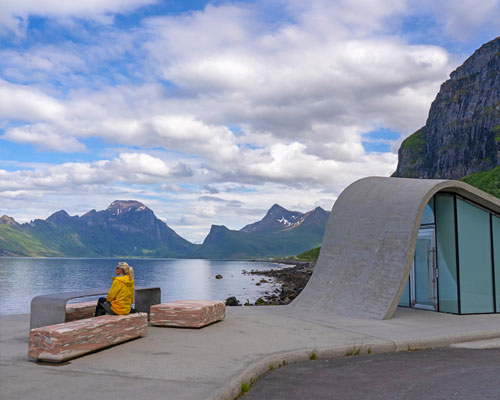
With its Scenic Routes project, Norway has turned the road trip into an attraction, and boosted tourism in a huge way. Terry Stevens gets behind the wheel
Museums: Mark Cutmore
What’s the future of immersive technology in museums? The head of commercial experiences at the Science Museum Group shares his thoughts
Research: Joined up thinking
Natural history museums around the world are sharing details of their collections to help find solutions to some of the most urgent issues of our time
The arts: Show time
As the UK’s biggest cultural venue for decades opens, we hear from the team behind Aviva Studios
Research: Making memories
The link between the emotions of visitors and their memories of an experience helps shape their reactions. Researcher Wim Strijbosch explores his findings
As the Science Museum Group launches its permanent
Power Up exhibit, a new children’s gallery and Flying Scotsman
VR experience, SMG’s head of commercial experiences
discusses the future of immersive technology in museums
While the Science Museum Group’s five museums are free, each museum also offers paid for visitor experiences to help generate money for the Group, and immersive technologies play an increasingly important role in these offers.
This year, the group has launched Wonderlab: The Bramall Gallery at the National Railway Museum in York – an interactive engineering-themed experience for families. Designed by De Matos Ryan, the space features 18 hands on challenges including Feel the Force – a ‘human-sized wind tunnel’ and the Sandscapes interactive sandpit that uses digital projections to create railway landscapes.
A new Flying Scotsman multisensory VR experience also launched at the National Railway Museum in April. Visitors don VR headsets to explore 100 years of history of Flying Scotsman, including the British Empire Exhibition, 100mph record-breaking run and journeys around North America and Australia.
In July 2023, hands-on gaming experience Power Up launched at the Science Museum in London. After five seasons as a temporary event, the Power Up exhibition is now a permanent fixture at the museum, allowing visitors to explore the history of video gaming by playing some of the best games of the past five decades.
Here Mark Cutmore, head of commercial experiences at the Science Museum Group, tells us how technology is used to tell stories and bring in visitors, and what’s next for the group
What is your role at the Science Museum Group? I’m the head of commercial experiences for the Science Museum Group. My job is to create and manage visitor experiences that have a ticket price associated with them in order to give visitors a great experience and generate money to put back into the Science Museum Group.
These include our interactive galleries for children, including Wonderlab – we have three Wonderlab galleries aimed at inspiring kids with the wonder of science, technology and engineering. I also manage the IMAX cinema at the Science Museum in London, which features both a cutting-edge laser 4K projector and a very important 70mm IMAX film projector. We have the best of analogue and best of digital next to one other.
Wonderlab: The Bramall Gallery recently launched at the National Railway Museum in York. How have immersive technologies been used in this attraction? Each of our Wonderlab galleries – we now have three in London, Bradford and York – has its own theme and core principles based on the museum it’s in.
The Bramall Gallery’s core focus is engineering. Our aim for all of the Wonderlab galleries is for them to be very hands on and interactive, so the technology is there, but it’s subtle. One of the exhibits at the Bramall Gallery illustrates this well. It’s an interactive sandpit table with projection mapping that projects a landscape with railtracks and rail vehicles moving around.
Visitors can dig into the sandpit, play with the sand, and when they do, the landscape changes as the interactive mapping reacts. If visitors dig deep into the sand, for example, the landscape creates water and rail bridges across the water. When visitors create hills and mountains from the sand, the tracks will go through tunnels. It’s a beautiful application of technology that feels very subtle and clever.
The National Railway Museum also launched a Flying Scotsman VR experience this year. How did this come about? Our new Flying Scotsman virtual reality immersive experience is one of the most cutting-edge things we’ve created in terms of a visitor experience. It’s leagues above anything we’ve done before in terms of the technology and immersivity we’re using.
We’re always trying to find interesting ways to deliver stories to our visitors beyond written text – VR is a great way to do this. Several years ago, we developed a very successful VR experience around Tim Peake’s Soyuz capsule (Space Descent VR) which we acquired just after he came back to Earth in it.
We were looking at how we could celebrate the upcoming centenary of the Flying Scotsman locomotive, which is one of the jewels in our collection. We decided to develop a new immersive experience exploring its history, using everything we’d learned from the Space Descent VR experience and taking it up several notches.
Can you describe the experience? The experience consists of two shipping containers which sit by side and are connected down the middle. We have authentically set dressed one of them to look like a 1920s waiting room on London’s Kings Cross platform.
Visitors enter the ‘waiting room’, sit down and put on VR headsets which show them in the same room, in VR, facing a set of doors. We open those doors – both virtually and physically – and invite visitors to walk through. In reality, they walk through to the second shipping container, while in the VR experience they walk onto the platform of Kings Cross in the 1920s, and are taken on a 10 minute journey showing key moments from the history of Flying Scotsman.
Visitors are taken further back in time to the shopworks where Flying Scotsman was built; they’re then shrunk down and taken inside the engine and shown how a locomotive steam engine works from inside the boiler. Another highlight is being taken on a 100 mile-per-hour run, where they get to experience Flying Scotsman racing a biplane and a speedboat.
We have a range of 4D effects – including rumble plates, heat lamps, wind fans and sound, which all enhance the experience. You feel the heat of the furnace, the rumble of the engine. It’s really compelling and immersive. And we use top of the line VR headsets, which are completely untethered – it’s as comfortable and easy to wear as it’s possible to be with VR at the moment. At the end of the 10 minutes, Flying Scotsman ‘arrives’ at Edinburgh Waverley Station and we invite people back into the waiting room (in the original shipping container) to take off their headsets. While they’ve been gone, we’ve done some physical trickery, changing the posters and signs so you come into Edinburgh waiting room for a bit of theatre at the end.
We’ve tried to pack a lot of very clever technology in there in a way that doesn’t feel at odds with the fact that we’re taking the visitor back in time to the steam age.
How has it been received? The experience has gone beyond my hopes – it’s absolutely fantastic, and we’ve had an amazing response from visitors. We get a lot of railway enthusiasts, who know Flying Scotsman far better than I ever could, and they have given us some great feedback. I’m very proud of it and it’s done very well for us.
Power Up has just opened at the Science Museum. What can you tell us about this? When I joined the Science Museum Group in 2017, Power Up was quite a simple idea – one of our open gallery spaces that we’d take over for half term week and fill with video games to celebrate gaming history. It was really fun, but I felt that we could do it better, with the mission and values of the Science Museum Group at heart.
I petitioned the organisation to let me buy my own set of equipment; they said yes, and my team and I embarked on a fun episode of buying every console we could on eBay. We built up an amazing catalogue of video games.
After several years of development, we’ve now opened our permanent version of Power Up in the Science Museum. It’s a hands-on gaming experience which celebrates the history of home video gaming in a way that focuses on interactivity and play rather than panels and text. It’s incredibly interpretation-light – really it’s about showing people how technology has changed over time through play, because that’s what gaming’s all about.
What does Power Up offer? We have 160 consoles telling the story of technology changing through different thematic areas – for example we have a set of consoles lined up with Mario through the ages, from the 1980s to today. You really see how that character and the technology has evolved.
We have a few centrepieces. One highlight is our timeline, which is beautifully lit, so it draws you to it. It’s 27 consoles in chronological order starting from a Binatone TV Master in 1976 that plays Pong with interpretation about each console and why it was important.
I love watching what people make a beeline for – you can generally predict their age because it’s usually the first console they had as a kid.
We also have a 16-player gaming ring – 16 Xbox 360s connected together so people can play the same game at the same time.
What are you proudest of with Power Up? For me Power Up is inspiring because it helps people to see that gaming is universal, and it’s for everyone. It’s lovely to see parents and grandparents showing their kids or grandkids the games they used to play.
We have also worked with BAFTA, who run a great initiative called Young Games Designers aimed at encouraging young people to consider a career in the gaming industry. Every year young people between the ages of 10 and 18 submit their games to BAFTA – they’re reviewed by judges and prizes are awarded and the young people are given help and mentorship. I thought it would be lovely if part of the prize for the winners would be for them to have their games featured in Power Up, alongside the greats like Sonic and Pac-Man and Space Invaders – we have a section featuring the winning games.
What do you see as the biggest trends in the industry right now? VR is being adopted by a lot of museums at the moment. When it’s done right it can be absolutely amazing – compelling, immersive and it can deliver storytelling in a way that you just can’t do outside of the VR environment.
There are real challenges though. Good quality VR is not cheap and people have high expectations – we’re all used to high quality technology in the home now. It can be extremely challenging to offer good VR experiences at scale for museum visitors – I think right now it’s being delivered with varying degrees of success.
In terms of the use of Augmented Reality in museums, we’re at the early stages of that journey. While there’s a lot of opportunity there, and I think it will be the way things will go in the future, we’re not quite there yet.
As for the Science Museum Group, we’re always looking for new and interesting ways to deliver stories to our visitors beyond written text.
Power Up at the
Science Museum, London
Launched in July 2023, interactive gaming exhibition Power Up now has a permanent home at London’s Science Museum.
Featuring more than 160 consoles and hundreds of games, visitors can explore the history of gaming, from the Atari 2600 to the PlayStation 5. At Power Up, visitors can navigate between 20 themes and sections, playing franchise-centred games from Disney to LEGO, jumping from a generation of Mario, Sonic or Zelda to the next, and challenge friends and fellow gamers to gaming competitions.
A physical games area allows fans to (re)discover iconic games like Wii Sport, get active with Kinect games, explore the future of gaming through VR experiences, strum on Guitar Hero and do a spot of Sega Bass Fishing.
A dedicated PC area features family favourites including Minecraft and classics like Monkey Island 2. Gamers can battle it out in Splatoon or test their sports skills with Madden NFL 2003 in the multiplayer zone, while 16 players can test their skills together in an action-packed multiplayer Halo 3 tournament, joining the same game on Xbox 360.
People: Clara Rice
The director of global marketing for Adirondack Studios shares her plans
Interview: Delphine Pons
As Parc Asterix launches a new themed land and celebrates record attendance figures, its CEO tells us what’s next for the much-loved French park
First person: The power of play
Can the power of play help heal divides in our world? Can art and attractions bring people closer? Meow Wolf’s founder is sure that it can
Museum: Lighting the way
With major new museums taking shape in Jeddah and Abu Dhabi, digital art sensation teamLab are riding high. We speak to the team
Opinion: We need a revolution
It’s time for radical thinking to address the staffing crisis in our industry, argues Margreet Papamichael
Tourism: On the road
With its Scenic Routes project, Norway has turned the road trip into an attraction, and boosted tourism in a huge way. Terry Stevens gets behind the wheel
Museums: Mark Cutmore
What’s the future of immersive technology in museums? The head of commercial experiences at the Science Museum Group shares his thoughts
Research: Joined up thinking
Natural history museums around the world are sharing details of their collections to help find solutions to some of the most urgent issues of our time
The arts: Show time
As the UK’s biggest cultural venue for decades opens, we hear from the team behind Aviva Studios
Research: Making memories
The link between the emotions of visitors and their memories of an experience helps shape their reactions. Researcher Wim Strijbosch explores his findings
Expo 2030 Riyadh is being planned as a permanent visitor destination, with organisers
confirming the six-million-square-metre site will become a Global Village after the event closes.
The owner of one of Australia's best-known waterparks has acquired a major competitor,
creating a new attractions business spanning two of the country's largest visitor destinations.
The Toverland theme park in the Netherlands has announced a €98m expansion programme
that will add a resort, new attractions and staff facilities as it pursues plans to become a multi-
day destination.
Hotel de France, located on the British Isle of Jersey, has created a wellness retreat package
that includes a hot yoga session that will take place in Jersey Zoo’s butterfly sanctuary.
A new immersive attraction designed to transport visitors into the final hours of ancient Pompeii
is preparing to open near the world-famous archaeological site in southern Italy.
Experience design company, BRC Imagination Arts, has completed a transition that sees founder
Bob Rogers pass ownership of the business to four long-serving senior executives, while
remaining actively involved with the company.
Movie Park Germany has opened a new Paramount Pictures-themed attraction as part of its 30th
anniversary celebrations, using immersive storytelling and adaptive reuse to reinforce the park’s
longstanding “Hollywood in Germany” positioning.
Therme Manchester’s 28-acre development, which will include interconnected glass pavilions
that measure 65,000sq m, will be the largest bathing and wellbeing attraction in the world once
complete, according to prof David Russell, CEO of Therme UK.
Efteling has opened Hooghmoed, a new family drop tower designed to broaden the appeal of its
recently launched Sirene Island themed area and introduce younger visitors to thrill attractions.
A proposed Puy du Fou development near Bicester and Universal Destinations and Experiences’
planned resort in Bedford are emerging as part of a wider transformation of the Oxford–
Cambridge Growth Corridor into a major centre for UK leisure and tourism inv
+ More news
COMPANY PROFILES
TechnoAlpin Indoor TechnoAlpin is the world leader for snowmaking systems. With the Indoor snow division, TechnoAlpin c [more...]
IAAPA EMEA IAAPA Expo Europe was established in 2006 and has grown to the largest international conference and [more...]
QubicaAMF UK QubicaAMF is the largest and most
innovative bowling equipment provider with
600 employees worldwi [more...]
Simworx Ltd The company was initially established
in 1997. Terry Monkton and Andrew
Roberts are the key stakeh [more...]