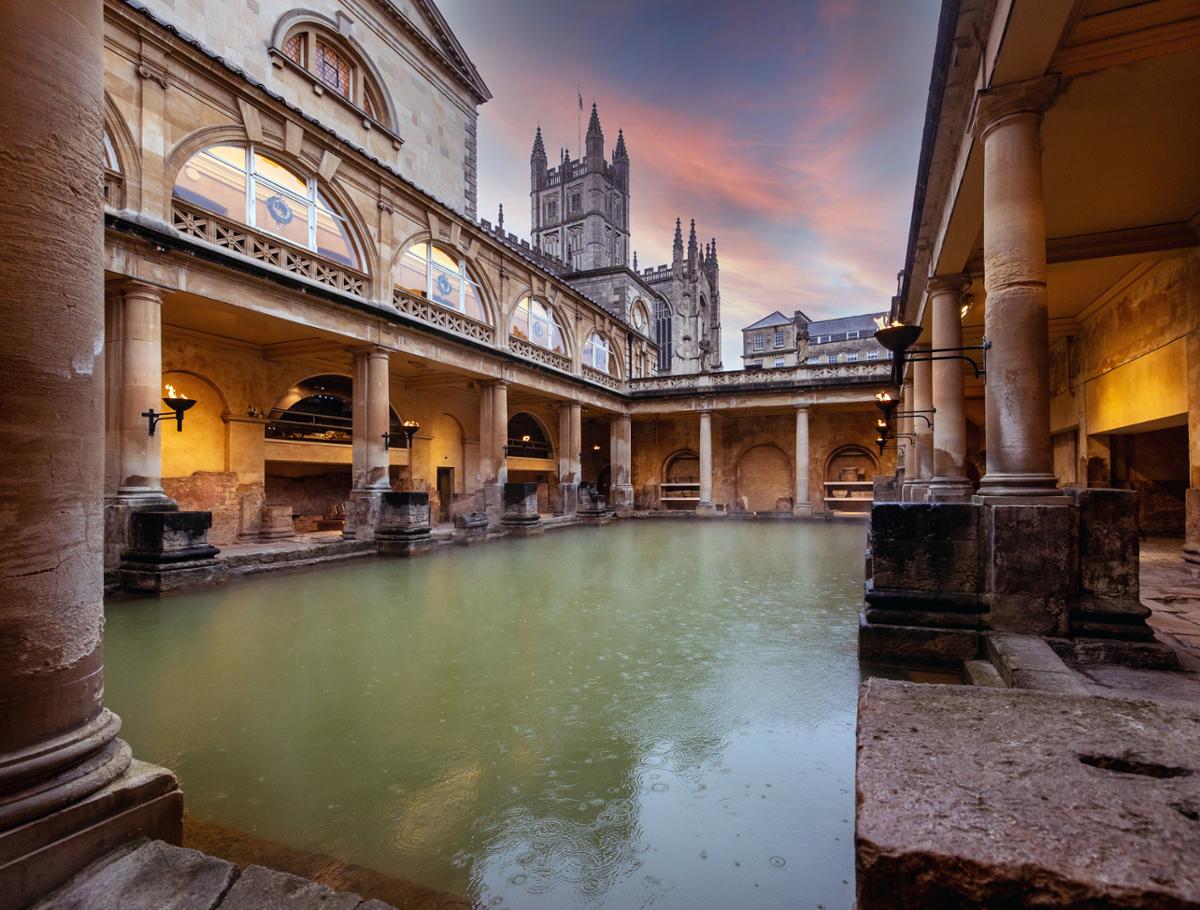
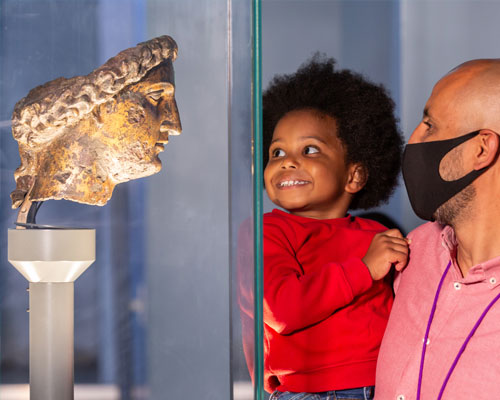
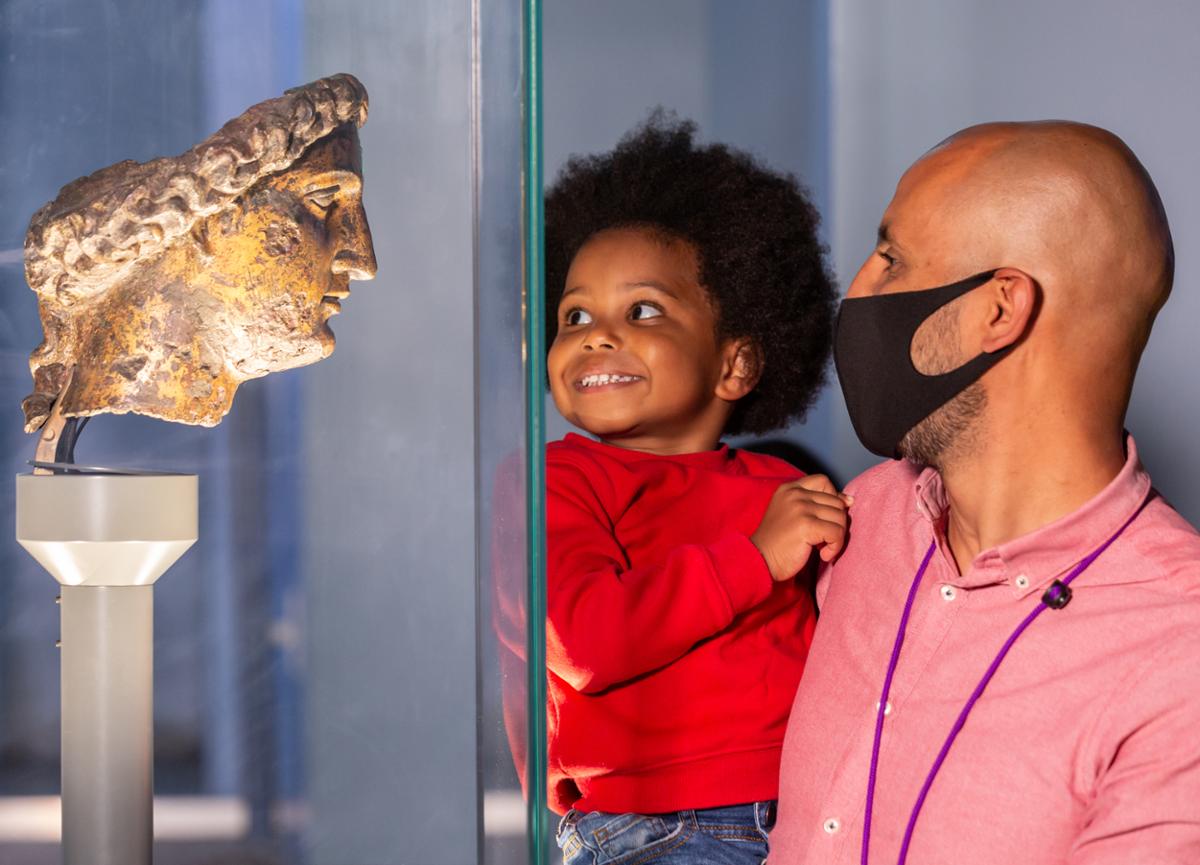
The Roman Baths in Bath, UK, is highlighted as an example of how to make pre-booking work / Rebecca Faith Photography
Many attractions moved to pre-booking in response to the pandemic, but doing so risks missing out on spontaneous and disorganised visitors in an age where customers want flexibility.
At consumer and business insight consultancy BVA BDRC, we conducted research among the UK population, as part of our ClearSight survey, to offer insight into visitor and attractions operator attitudes to pre-booking.
Attractions were drawn to pre-booking as lockdowns lifted, because of the need to control numbers under COVID-19 restrictions. The strategy did, however, come with its own issues around no shows. For some operators, these were as high as 30 per cent of all bookings (anecdotally – those that were free and with membership), while fifteen per cent of visitors across the attractions market had ‘no-showed’ in the previous six months.
The true number is likely to be higher, as even in an anonymous survey environment, people will feel bad about sharing undesirable behaviour.
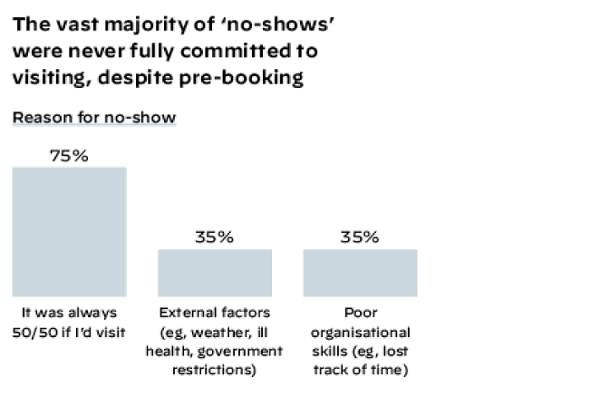
When asked why they hadn’t turned up, the vast majority stated they were not committed to visiting in the first place. Notably, seven in 10 stated that ‘they had booked more than one place to visit and would decide on the day’ or that their intention to visit was ‘always 50/50’.
The remainder gave more understandable reasons such as government restrictions (a higher percentage for indoor attractions), unsuitable weather (higher for outdoor attractions) and ill health on the day. Some blamed poor organisational skills.
Reducing no shows While some reasons are unavoidable, there’s potential to reduce ‘no-shows’ among people who were not committed to visiting in the first place. Ideas include communicating the negative impacts of ‘no-shows’ at an attraction and trying to change attitudes, as well as sending reminders – which also builds excitement – leading into the visit.
As we’ve seen in the wider hospitality sector, there’s also been growth in flexible booking software, allowing for last-minute cancellations. Some – such as the Roman Baths, in Bath, UK – allow you to cancel your visit up to the last minute. Others don’t allow cancellation at all. It’s no surprise, therefore, that the likes of the Roman Baths have comparatively low ‘no-show’ rates – although the price point will also be a driver.
The power of ‘yes shows’ While some people are no shows, there are also yes shows – people that would not have turned up if they hadn’t pre-booked. Eleven per cent of our market stated they’d been a ‘yes-show’ at some point in the previous six months, which statistically puts them level with the ‘no-shows’. There’s an argument that, on the day, the ‘no-shows’ and ‘yes-shows’ balance each other out. If steps can be taken to reduce the ‘no-shows’ these might even be a net gain as a result of pre-booking.
Pre-booking secures bookings in advance of the visit day, and allows venues to plan accordingly to stay in line with government restrictions. These numbers are then skewed by no shows, forcing operators to make assumptions about how many visitors will actually walk through the gates.
Increasing secondary spend When it comes to revenue, pre-booking increases secondary spend by making visitors feel they have more disposable income on the day and evens out the pattern of visitor arrival throughout the day, increasing availability in catering outlets and enabling a better experience while making retail spend more likely. Many attractions also report growth in donations and Gift Aid using this method.
The harvesting of visitors’ emails means there are opportunities for pre- and post-visit communication, which can drive better visitor relationships, as well as building excitement and awareness of parts of the attraction that are typically missed.
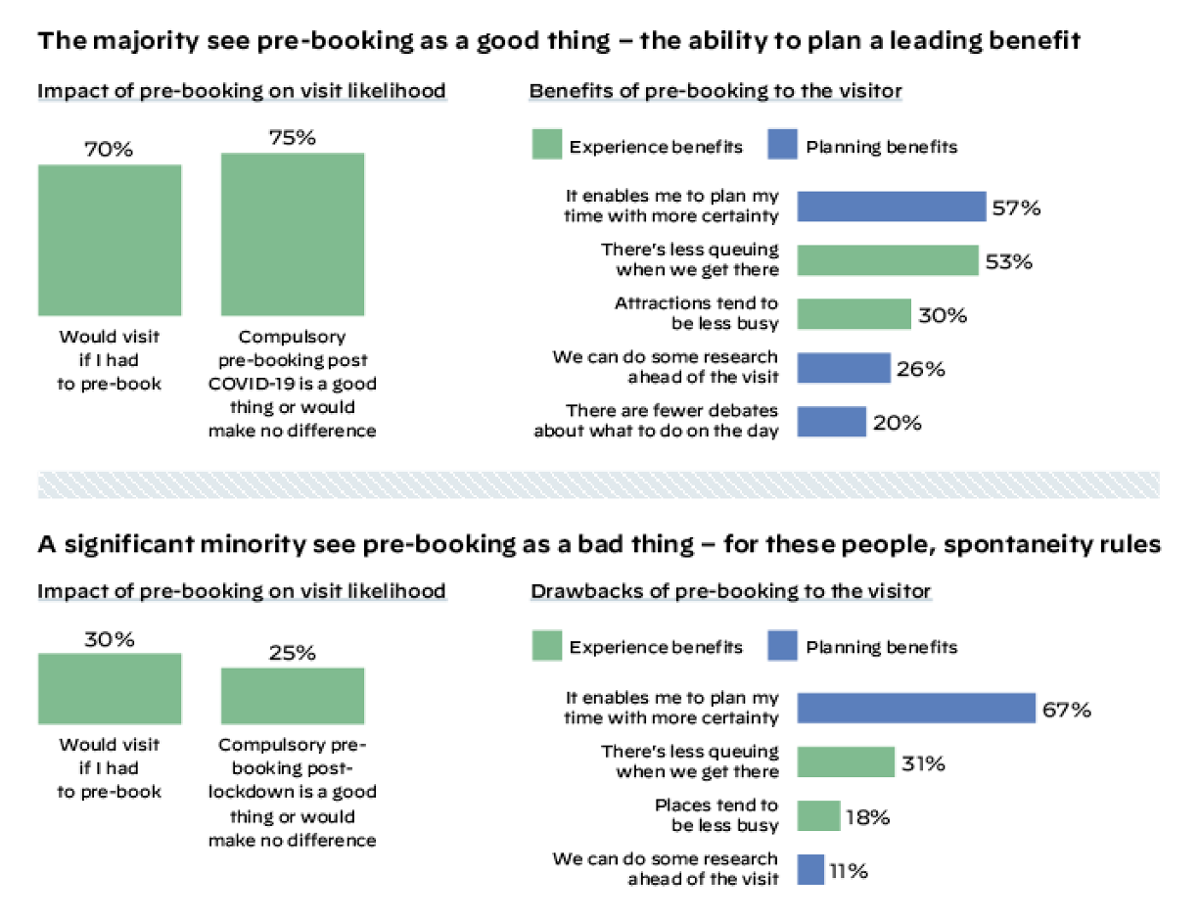
The ClearSight survey found most visitors were positive about pre-booking, with seventy per cent stating they’d still be likely to visit if they had to pre-book. The main advantages were the ability to plan, as well as the incentive of reduced queuing on arrival and a less busy experience.
Despite majority support, however, a significant minority – 25 per cent – see pre-booking as a bad thing, with 30 per cent of people less likely to visit if pre-booking is required.
With fewer international visitors expected in 2022, attractions will need to maximise the number of domestic visitors. Although 25 per cent is a minority, it still represents lots of potential visitors, so –combined with our knowledge of the spontaneous visitor – these findings raise a red flag for a 100 per cent pre-booking model.
There are clear advantages to maintaining pre-booking post COVID-19. However, there’s almost certainly a need for a hybrid approach that allows for walk-up visits.
Clever messaging and booking software that allows for last-minute cancellations will reduce ‘no-shows’, but regardless of how well this is done, there will always be spontaneous, disorganised visitors who would rather just turn up on the day.
Fail to cater for them and you may lose them as a visitor. Flexibility is all.
Key research takeaways
Attractions were drawn to pre-booking as lockdown restrictions lifted, using it to deal with the high volumes of no shows.
Seven in 10 visitors said ‘they had booked more than one place to visit and would decide on the day’ or that ‘the likelihood of visiting was always 50/50’.
The main advantages were the ability to plan, as well as the incentive of reduced queuing on arrival and a less busy experience.
There is almost certainly a need for a hybrid approach that allows for walk-up visits too.
Image Credit here if required
Jon Young is travel and culture director at BVA BDRC | www.bva-bdrc.com
Read more from this issue of Attractions Management magazine
View contents of Attractions Management 2021 issue 4
Editor's letter: Eco drivers
Therme Group and The Eden Project are going global, on an environmental mission says Magali Robathan
AM People: Julia Baird
On why her brother John Lennon would have loved the Strawberry Field attraction and the work it’s doing for the local community
AM People: Åsa Caap
The thrill of opening the Space Stockholm digital culture centre
Interview: David Harland & Sir Tim Smit
With projects underway around the world, the Eden Project is going global with its call to arms for the future of the planet
Museums: Getting creative
How the Young V&A will aim to provide children with the creative tools stripped out by the pandemic
Interview: Richard Land
Mixing waterslides with wellbeing, the Therme Group is creating a category all of its own while taking on the world, says the group’s chief development officer
Museums: Kunsthaus Zurich completes
A David Chipperfield extension has more than doubled the museum’s exhibition space, making Zurich a major destination for the arts
Interview: Julien Kauffmann
As Farah Experiences prepares to open SeaWorld Abu Dubai, its CEO talks COVID-19, branding and branching with David Camp
Research: Making pre-booking work
Attractions are benefiting from the switch to pre-booking, but must cater for spontaneous, disorganised visitors too, says Jon Young
Research: All creatures great and small
Zoo enrichment and research can’t just be focused on the large animals most popular with visitors, argues Dr Paul Rose. All must be represented
Research: Popularity game
Research on zoo animals focuses more on ‘familiar’ species such as gorillas and chimpanzees, rather than less well known ones such as the waxy monkey frog, scientists say
Analysis: Light in the dark
A successful winter light show can see margins upwards of 30 per cent. Kathleen LaClair and
Yael Coifman look at some of the operators getting it right
Museums: Munch Museum opens in Norway
The iconic new attraction has opened on Oslo’s waterfront with the world’s largest collection of works by Edvard Munch
Mystery Shopper: Galleries & Gourds
It has transformed the sleepy town of Bruton, UK, but does Hauser & Wirth Somerset live up to the hype? Magali Robathan mystery shops to find out
An opportunity to reimagine one of the UK’s most recognisable towers has been formally
opened by Rivington Hark, as St Johns Beacon invites operators and partners to shape its
next phase. [more...]
The Roman Baths in Bath, UK, is highlighted as an example of how to make pre-booking work / Rebecca Faith Photography
Many attractions moved to pre-booking in response to the pandemic, but doing so risks missing out on spontaneous and disorganised visitors in an age where customers want flexibility.
At consumer and business insight consultancy BVA BDRC, we conducted research among the UK population, as part of our ClearSight survey, to offer insight into visitor and attractions operator attitudes to pre-booking.
Attractions were drawn to pre-booking as lockdowns lifted, because of the need to control numbers under COVID-19 restrictions. The strategy did, however, come with its own issues around no shows. For some operators, these were as high as 30 per cent of all bookings (anecdotally – those that were free and with membership), while fifteen per cent of visitors across the attractions market had ‘no-showed’ in the previous six months.
The true number is likely to be higher, as even in an anonymous survey environment, people will feel bad about sharing undesirable behaviour.
When asked why they hadn’t turned up, the vast majority stated they were not committed to visiting in the first place. Notably, seven in 10 stated that ‘they had booked more than one place to visit and would decide on the day’ or that their intention to visit was ‘always 50/50’.
The remainder gave more understandable reasons such as government restrictions (a higher percentage for indoor attractions), unsuitable weather (higher for outdoor attractions) and ill health on the day. Some blamed poor organisational skills.
Reducing no shows While some reasons are unavoidable, there’s potential to reduce ‘no-shows’ among people who were not committed to visiting in the first place. Ideas include communicating the negative impacts of ‘no-shows’ at an attraction and trying to change attitudes, as well as sending reminders – which also builds excitement – leading into the visit.
As we’ve seen in the wider hospitality sector, there’s also been growth in flexible booking software, allowing for last-minute cancellations. Some – such as the Roman Baths, in Bath, UK – allow you to cancel your visit up to the last minute. Others don’t allow cancellation at all. It’s no surprise, therefore, that the likes of the Roman Baths have comparatively low ‘no-show’ rates – although the price point will also be a driver.
The power of ‘yes shows’ While some people are no shows, there are also yes shows – people that would not have turned up if they hadn’t pre-booked. Eleven per cent of our market stated they’d been a ‘yes-show’ at some point in the previous six months, which statistically puts them level with the ‘no-shows’. There’s an argument that, on the day, the ‘no-shows’ and ‘yes-shows’ balance each other out. If steps can be taken to reduce the ‘no-shows’ these might even be a net gain as a result of pre-booking.
Pre-booking secures bookings in advance of the visit day, and allows venues to plan accordingly to stay in line with government restrictions. These numbers are then skewed by no shows, forcing operators to make assumptions about how many visitors will actually walk through the gates.
Increasing secondary spend When it comes to revenue, pre-booking increases secondary spend by making visitors feel they have more disposable income on the day and evens out the pattern of visitor arrival throughout the day, increasing availability in catering outlets and enabling a better experience while making retail spend more likely. Many attractions also report growth in donations and Gift Aid using this method.
The harvesting of visitors’ emails means there are opportunities for pre- and post-visit communication, which can drive better visitor relationships, as well as building excitement and awareness of parts of the attraction that are typically missed.
The ClearSight survey found most visitors were positive about pre-booking, with seventy per cent stating they’d still be likely to visit if they had to pre-book. The main advantages were the ability to plan, as well as the incentive of reduced queuing on arrival and a less busy experience.
Despite majority support, however, a significant minority – 25 per cent – see pre-booking as a bad thing, with 30 per cent of people less likely to visit if pre-booking is required.
With fewer international visitors expected in 2022, attractions will need to maximise the number of domestic visitors. Although 25 per cent is a minority, it still represents lots of potential visitors, so –combined with our knowledge of the spontaneous visitor – these findings raise a red flag for a 100 per cent pre-booking model.
There are clear advantages to maintaining pre-booking post COVID-19. However, there’s almost certainly a need for a hybrid approach that allows for walk-up visits.
Clever messaging and booking software that allows for last-minute cancellations will reduce ‘no-shows’, but regardless of how well this is done, there will always be spontaneous, disorganised visitors who would rather just turn up on the day.
Fail to cater for them and you may lose them as a visitor. Flexibility is all.
Key research takeaways
Attractions were drawn to pre-booking as lockdown restrictions lifted, using it to deal with the high volumes of no shows.
Seven in 10 visitors said ‘they had booked more than one place to visit and would decide on the day’ or that ‘the likelihood of visiting was always 50/50’.
The main advantages were the ability to plan, as well as the incentive of reduced queuing on arrival and a less busy experience.
There is almost certainly a need for a hybrid approach that allows for walk-up visits too.
Image Credit here if required
Jon Young is travel and culture director at BVA BDRC | www.bva-bdrc.com
Read more from this issue of Attractions Management magazine
View contents of Attractions Management 2021 issue 4
Editor's letter: Eco drivers
Therme Group and The Eden Project are going global, on an environmental mission says Magali Robathan
AM People: Julia Baird
On why her brother John Lennon would have loved the Strawberry Field attraction and the work it’s doing for the local community
AM People: Åsa Caap
The thrill of opening the Space Stockholm digital culture centre
Interview: David Harland & Sir Tim Smit
With projects underway around the world, the Eden Project is going global with its call to arms for the future of the planet
Museums: Getting creative
How the Young V&A will aim to provide children with the creative tools stripped out by the pandemic
Interview: Richard Land
Mixing waterslides with wellbeing, the Therme Group is creating a category all of its own while taking on the world, says the group’s chief development officer
Museums: Kunsthaus Zurich completes
A David Chipperfield extension has more than doubled the museum’s exhibition space, making Zurich a major destination for the arts
Interview: Julien Kauffmann
As Farah Experiences prepares to open SeaWorld Abu Dubai, its CEO talks COVID-19, branding and branching with David Camp
Research: Making pre-booking work
Attractions are benefiting from the switch to pre-booking, but must cater for spontaneous, disorganised visitors too, says Jon Young
Research: All creatures great and small
Zoo enrichment and research can’t just be focused on the large animals most popular with visitors, argues Dr Paul Rose. All must be represented
Research: Popularity game
Research on zoo animals focuses more on ‘familiar’ species such as gorillas and chimpanzees, rather than less well known ones such as the waxy monkey frog, scientists say
Analysis: Light in the dark
A successful winter light show can see margins upwards of 30 per cent. Kathleen LaClair and
Yael Coifman look at some of the operators getting it right
Museums: Munch Museum opens in Norway
The iconic new attraction has opened on Oslo’s waterfront with the world’s largest collection of works by Edvard Munch
Mystery Shopper: Galleries & Gourds
It has transformed the sleepy town of Bruton, UK, but does Hauser & Wirth Somerset live up to the hype? Magali Robathan mystery shops to find out
Movie Park Germany has opened a new Paramount Pictures-themed attraction as part of its 30th
anniversary celebrations, using immersive storytelling and adaptive reuse to reinforce the park’s
longstanding “Hollywood in Germany” positioning.
Therme Manchester’s 28-acre development, which will include interconnected glass pavilions
that measure 65,000sq m, will be the largest bathing and wellbeing attraction in the world once
complete, according to prof David Russell, CEO of Therme UK.
Efteling has opened Hooghmoed, a new family drop tower designed to broaden the appeal of its
recently launched Sirene Island themed area and introduce younger visitors to thrill attractions.
A proposed Puy du Fou development near Bicester and Universal Destinations and Experiences’
planned resort in Bedford are emerging as part of a wider transformation of the Oxford–
Cambridge Growth Corridor into a major centre for UK leisure and tourism inv
Shedd Aquarium has opened the Immersion Theater developed in partnership with SimEx-
Iwerks, as part of a wider strategy to enhance the guest experience and create additional
revenue opportunities.
The UK government has announced a temporary reduction in VAT on visitor attractions and
children’s meals as part of a summer cost-of-living support package designed to stimulate the
visitor economy and encourage family days out.
As designer Yinka Ilori prepares for his first solo gallery show in London, he speaks exclusively
to CLADmag about his mission to spread joy, the power of play, and his bold approach to using
colour (including the colours you won’t see in his work).
The government of Thailand is exploring plans for a THB300bn (£6.3bn, US$8.3bn)
entertainment complex in the country’s Eastern Economic Corridor (EEC), with officials
proposing a large-scale theme park and sports destination as part of a broader tourism and
economic development strategy.
Royal Caribbean has revealed its Hero of the Seas cruise ship, home to the most pools at sea
(nine), and a record-breaking 28 dining venues, as well as attractions including a waterpark
with two new family raft slides.
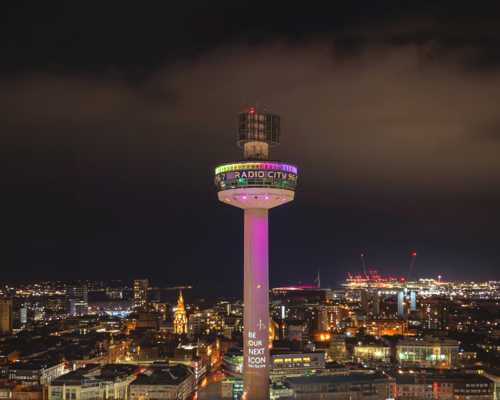
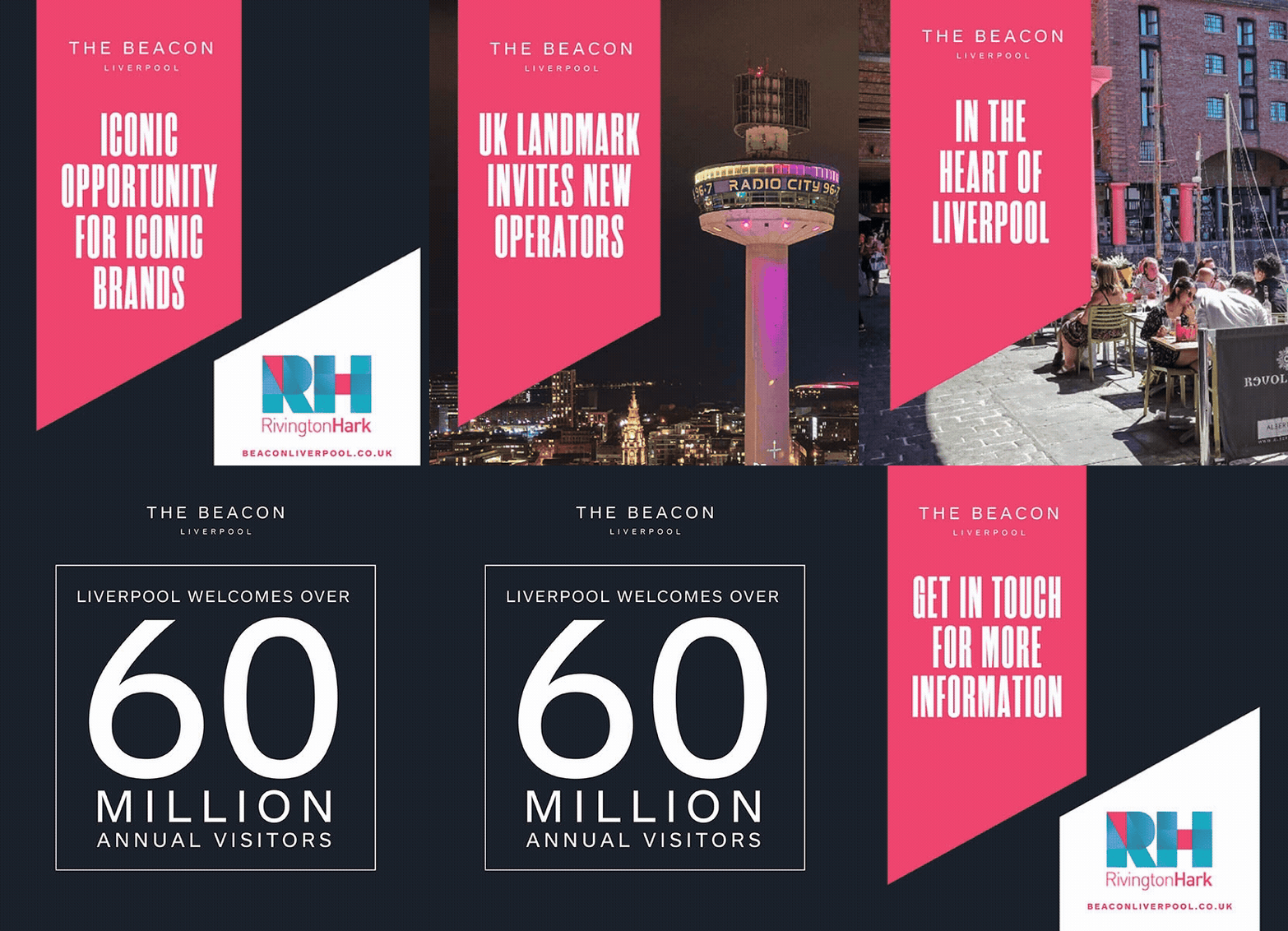
An opportunity to reimagine one of the UK’s most recognisable towers has been formally
opened by Rivington Hark, as St Johns Beacon invites operators and partners to shape its
next phase. [more...]