Theme park rides are the creative
pinnacle of immersive storytelling.
So let’s give them the media they deserve,
say Gavin and Jason Fox from Framestore
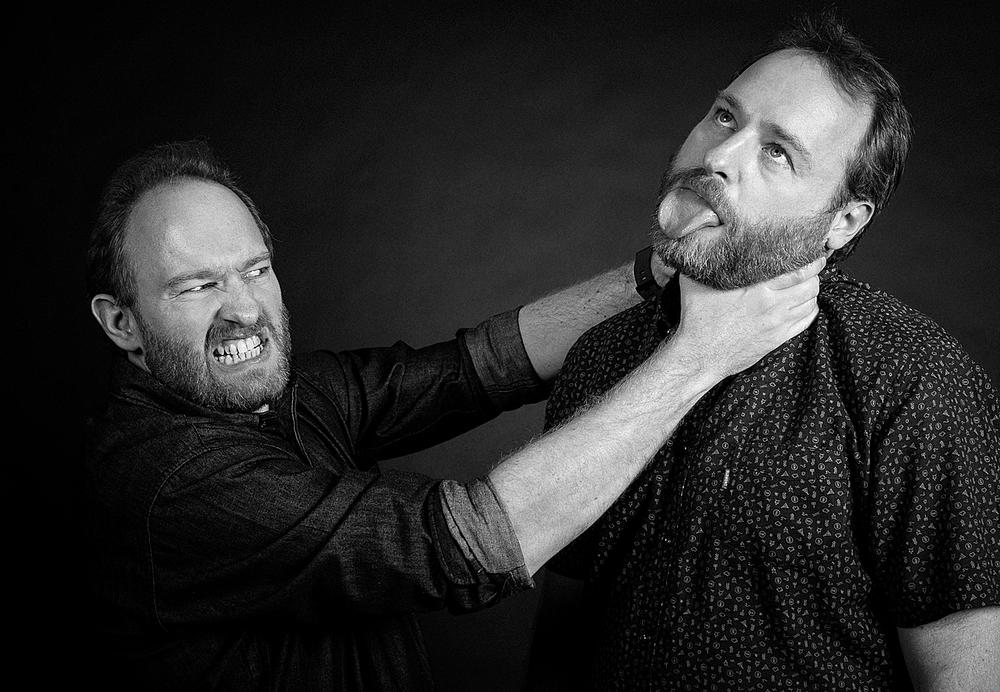
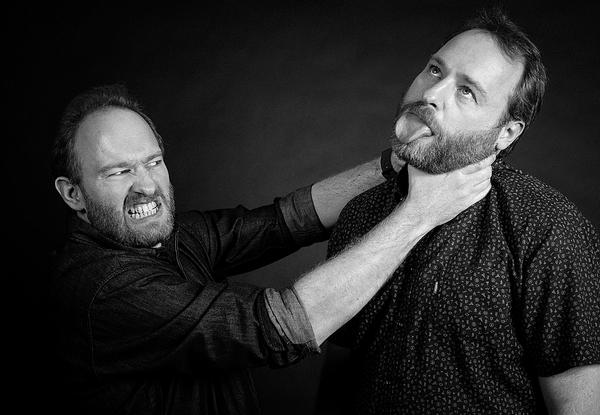
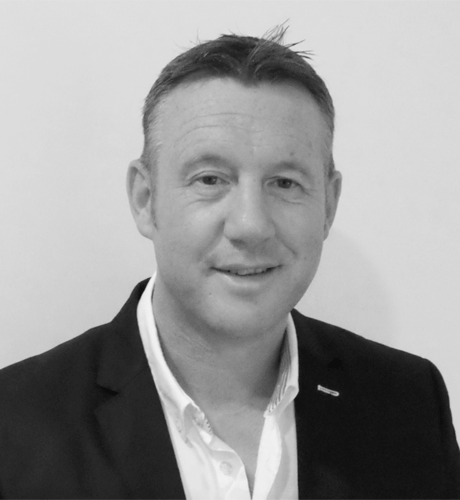
Framestore’s Gavin and Jason Fox are working on a top-secret dark ride
From integrated projection mapping through to cutting-edge mixed reality experiences, media is a key ingredient in creating the next generation of theme park rides.
For some reason, media in rides isn’t always given the same level of artistic importance as the movie or story the ride is based on. We believe rides could be even more incredible if more time was spent crafting the scripting, acting and CGI at the creative stage.
Last year, we attended the IAAPA Expo in Orlando, Florida, and met many theme park and attractions owners and IP developers. We enjoyed a wonderful reception, but were surprised to hear a recurring question. They asked us why Framestore – the Oscar-winning creative solutions company we work for – would want to “come down to our level”. This suggests an undeserved lack of self-esteem within the theme park community.
From our discussions, there was a feeling that the theme park industry undervalues itself as an art form; holding movies as a pinnacle of creativity that their experience must follow, but rarely exceed. But, from our perspective, working in film and trying to move an audience emotionally via a screen at the end of the room is never going to be as visceral as fully immersing someone in the action and technology of a ride. Rides are the most exhilarating storytelling medium there is.
At the cutting edge Rides and immersive shows have the capacity to generate genuinely immersive experiences that are not restrained by a screen; they’re interacting with all the senses, not just sight and sound. Rather than making films look real, theme parks create opportunities to make experiences feel real. And that’s so much more powerful.
Rides are a hotbed of cutting-edge engineering that offer multiple playful elements. Mechanics, physical building, progressive set design, robotics – the list goes on. When combined, these elements harness the potential to emotionally and physically move humans in all sorts of fundamental and earth-moving ways.
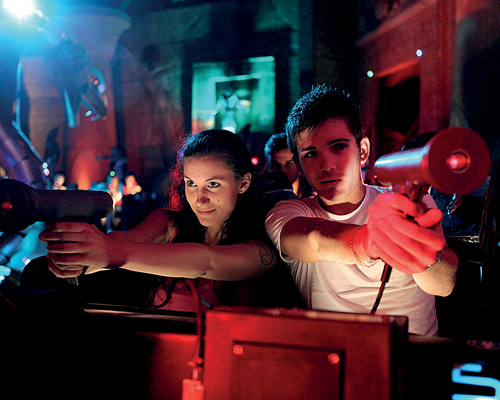
Audiences on a ride are more engaged than those in a cinema because they’re being told a story in a more dramatically heightened way. When people come off a ride, they’re dizzy, shaken up and thrilled. They’ve often travelled across oceans and then queued for hours for the privilege of a five-minute experience. It’s hard to find that level of dedication to a film.
Consumer expectations It’s clear to us that rides are the pinnacle of creative entertainment and we couldn’t be more excited to be involved. Creating Oscar-winning visual effects for films like Gravity has given us a world-class understanding of how to visualise a story and bring it to life on screen. But we want to take this even further by plugging our learnings into the more visceral ways of experiencing a story.
And it’s not just us who feel this way. Framestore is a global company that employs hundreds of creatives and technologists. Our CEO travels the world giving company-wide presentations and each time he reveals some of our work on dark ride projects, we get a surge of interest from employees wanting to join our department. Why? Because they agree that rides are a fresh, creative playground; a place where you can not just make that superhero look real, you can make people believe they’re real.
It’s no coincidence that our entry into the theme park industry comes at a time when that world is experiencing a step change in what consumers expect from the experiences on offer. Not so long ago, people were wowed by simply putting media content into the context of a ride. Physically and seamlessly moving within a content environment was enough to create a feeling of awe. But this approach is now prolific – and its novelty is waning.
As technology develops, consumer expectations simultaneously increase. So audiences now expect and demand better quality from media-based attractions. It now has to be better acted, better written and better directed: and in nothing less than the Hollywood-level fidelity they are used to seeing these worlds portrayed in.
Real emotions The relationship between Hollywood and the theme park industry has been around for decades, with some the world’s most successful rides being based on famous movie franchises. However, the symbiosis between Hollywood and theme parks runs even deeper than this obvious connection.
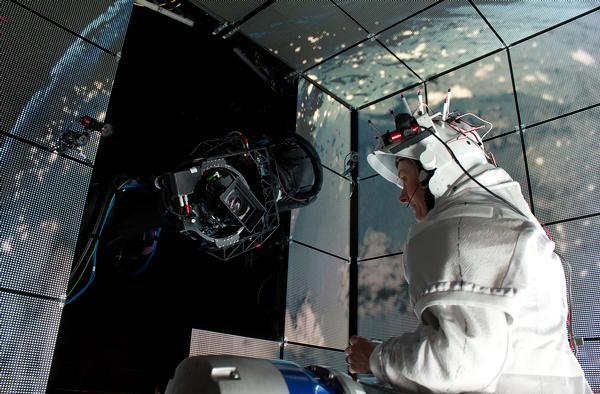
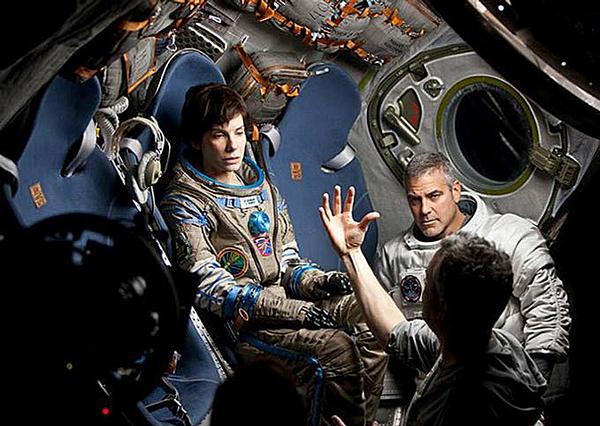
When Framestore created the groundbreaking visual effects for Gravity, the team designed and built unique rigs and light boxes that made actors Sandra Bullock and George Clooney feel as though they were floating through space. This not only aided the visual effects, but also helped to get a real emotional reaction from the actors’ experiences.
In doing this, we inadvertently created a one-person theme park ride and by heading in this more experiential direction, we’ve been amassing ride-relevant experience as part of our film work.
It’s exciting to be re-appropriating and exploiting these skills for a bigger audience than just Bullock and Clooney.
Having said that, we realise we don’t yet know it all – far from it. And for this reason we’re collaborating with ride specialists to help us transition our filmic skills.
These experts are helping us understand the complexity of ride vehicle movement, identify where the balance lies between feeling sick and feeling elated and integrate our digital media into the rides’ real physical environments.
In return, we’re sharing our film visual effects expertise and the knowledge we’ve gained in other non-traditional projects we’ve completed – including VR, large-screen installations and theatre direction. We hope that by combining these with our collaborators’ skills and knowledge, we can enhance the quality of the media-based attractions we’re doing for our clients.
So, in response to the question of why we want to “come down” to the level of the attractions industry, we’re not coming down at all, we’re aiming to contribute to raising the level through effective collaborations. And we’re extremely excited to be doing it.
Read more from this issue of Attractions Management magazine
View contents of Attractions Management 2016 issue 3
Editor’s Letter: Place-Shifting
Technology is giving us the
power to Place-Shift experiences
to create on-demand, immersive
attractions in any location
Promotional Feature: EAS - Beautiful Horizons
The attractions industry is set to descend upon one of Europe’s
most inspiring cities – Barcelona. And if it’s inspiration
you’re looking for, the Euro Attractions Show is the place
Theme Parks: Desert Operations
On the brink of an entertainment revolution, Dubai looks forward to three major theme park openings. Attractions Management caught up with key decision- makers from the upcoming attractions
Mystery Shopper: Disney Delights
Disneyland Shanghai is the company’s first new theme park resort since 2005 and its biggest investment to date. TEA president-elect David Willrich went undercover to find out what Disney’s doing differently
Analysis: Part 3 - Benchmarking
Consultant David Camp asks how we measure success as he focuses on benchmarking and market penetration rates in part three of the series
Opinion: Media Frenzy
Is it time for media-based rides to raise their game? Gavin and Jason Fox, creative directors from Oscar-winning special effects studio Framestore, believe Hollywood-standard content is the next step for the industry
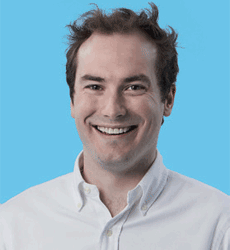
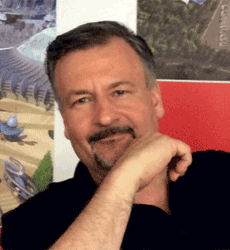
About the authors Framestore, an Oscar-winning creative solutions company was set up in 1986 to “use technology to create the most extraordinary images possible”. Twin brothers (and theme park fans) Gavin and Jason Fox joined the company as creative directors in 2014, working on films like Gravity – and currently on a top-secret dark ride
Framestore’s Gavin and Jason Fox are working on a top-secret dark ride
Gravity Aside from the faces, almost every element of Gravity is CGI. The Earth, stars, space shuttles, space station, the space debris and space suits were all created by visual effects artists at Framestore
Director Alfonso Cuarón and actors Sandra Bullock and George Clooney work with unique rigs and light boxes built by the Framestore team
Director Alfonso Cuarón and actors Sandra Bullock and George Clooney work with unique rigs and light boxes built by the Framestore team
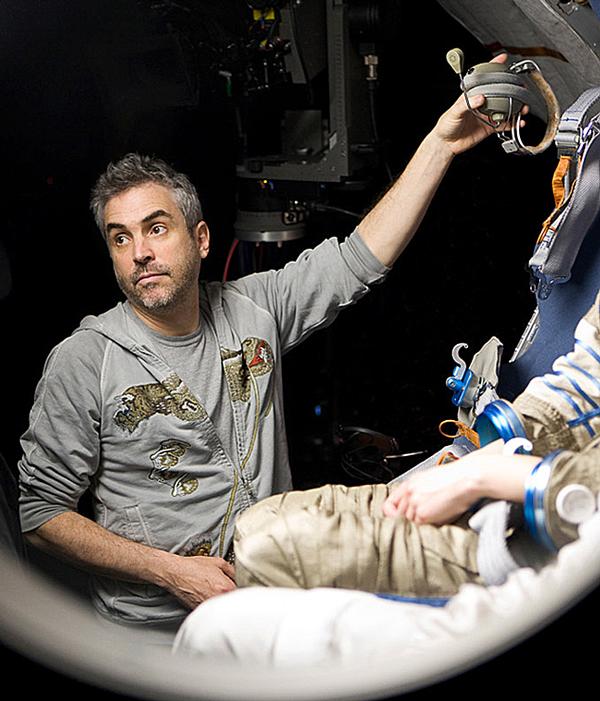
Director Alfonso Cuarón
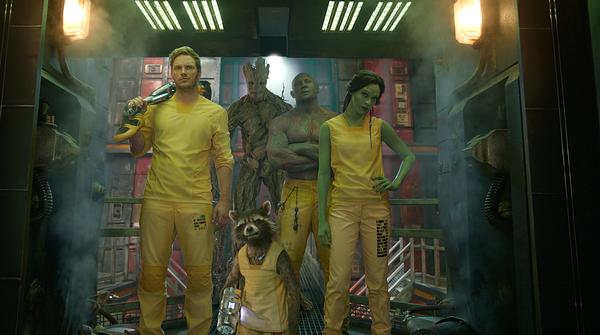
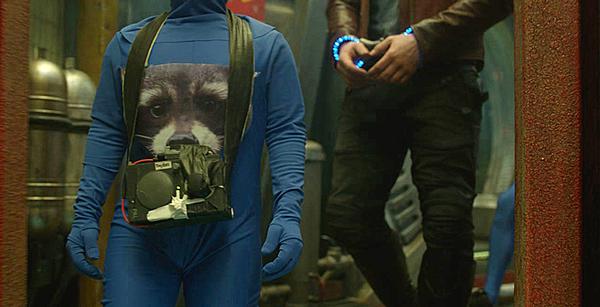
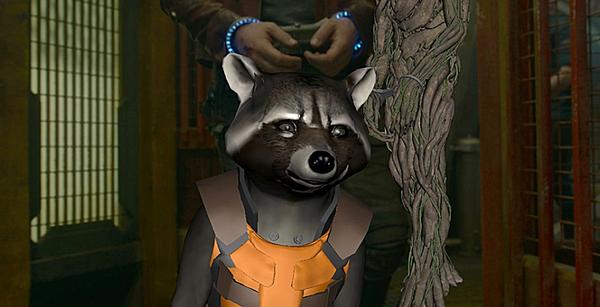
Guardians of the Galaxy Framestore created the character Rocket Raccoon as well as the city of Knowhere, one of the most complex CGI environments ever made
Rocket Racoon, who is voiced by Bradley Cooper, with his fellow superheroes
Rocket Racoon, who is voiced by Bradley Cooper, with his fellow superheroes
Rocket Racoon, who is voiced by Bradley Cooper, with his fellow superheroes
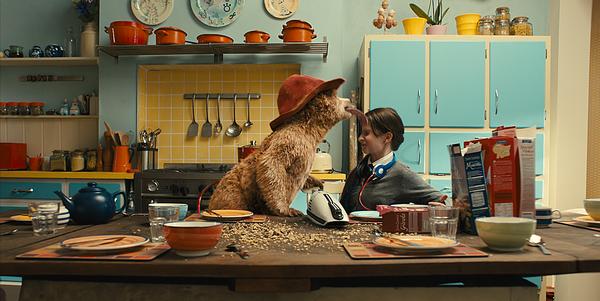
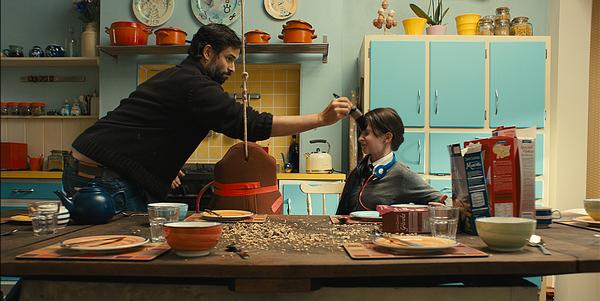
Paddington Framestore spent a long time developing the right look for Paddington in order to create a photoreal character that was anatomically detailed but simple enough to maintain the emotional connection people have with the well-loved bear
Framestore delivered 760 final shots for the film Paddington
Framestore delivered 760 final shots for the film Paddington
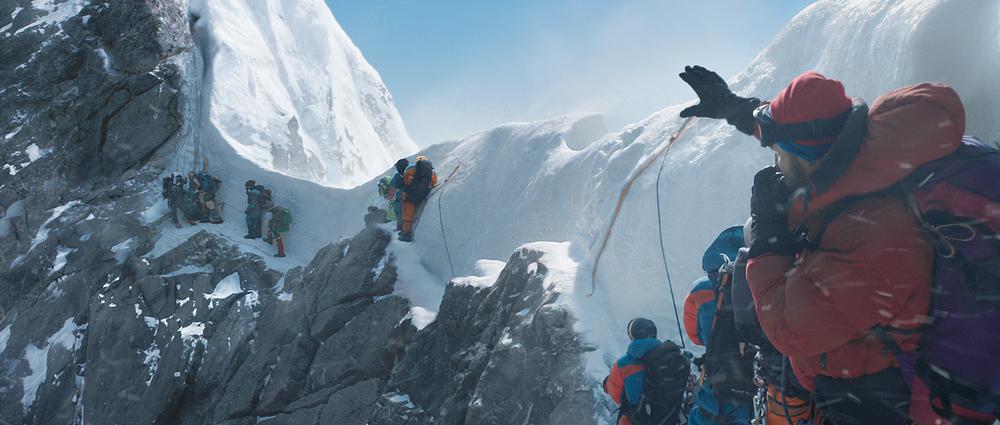
Framestore used new and old expedition footage to create CG shots for Everest
COMPANY PROFILES
Polin Waterparks
Polin was founded in Istanbul in 1976. Polin
has since grown into a leading company in
the waterpa [more...]
Simworx Ltd
The company was initially established
in 1997. Terry Monkton and Andrew
Roberts are the key stakeh [more...]
instantprint
We’re a Yorkshire-based online printer, founded
in 2009 by Adam Carnell and James Kinsella. [more...]
IDEATTACK
IDEATTACK is a full-service planning and
design company with headquarters in
Los Angeles. [more...]
An opportunity to reimagine one of the UK’s most recognisable towers has been formally
opened by Rivington Hark, as St Johns Beacon invites operators and partners to shape its
next phase. [more...]
Theme park rides are the creative
pinnacle of immersive storytelling.
So let’s give them the media they deserve,
say Gavin and Jason Fox from Framestore
Framestore’s Gavin and Jason Fox are working on a top-secret dark ride
From integrated projection mapping through to cutting-edge mixed reality experiences, media is a key ingredient in creating the next generation of theme park rides.
For some reason, media in rides isn’t always given the same level of artistic importance as the movie or story the ride is based on. We believe rides could be even more incredible if more time was spent crafting the scripting, acting and CGI at the creative stage.
Last year, we attended the IAAPA Expo in Orlando, Florida, and met many theme park and attractions owners and IP developers. We enjoyed a wonderful reception, but were surprised to hear a recurring question. They asked us why Framestore – the Oscar-winning creative solutions company we work for – would want to “come down to our level”. This suggests an undeserved lack of self-esteem within the theme park community.
From our discussions, there was a feeling that the theme park industry undervalues itself as an art form; holding movies as a pinnacle of creativity that their experience must follow, but rarely exceed. But, from our perspective, working in film and trying to move an audience emotionally via a screen at the end of the room is never going to be as visceral as fully immersing someone in the action and technology of a ride. Rides are the most exhilarating storytelling medium there is.
At the cutting edge Rides and immersive shows have the capacity to generate genuinely immersive experiences that are not restrained by a screen; they’re interacting with all the senses, not just sight and sound. Rather than making films look real, theme parks create opportunities to make experiences feel real. And that’s so much more powerful.
Rides are a hotbed of cutting-edge engineering that offer multiple playful elements. Mechanics, physical building, progressive set design, robotics – the list goes on. When combined, these elements harness the potential to emotionally and physically move humans in all sorts of fundamental and earth-moving ways.
Audiences on a ride are more engaged than those in a cinema because they’re being told a story in a more dramatically heightened way. When people come off a ride, they’re dizzy, shaken up and thrilled. They’ve often travelled across oceans and then queued for hours for the privilege of a five-minute experience. It’s hard to find that level of dedication to a film.
Consumer expectations It’s clear to us that rides are the pinnacle of creative entertainment and we couldn’t be more excited to be involved. Creating Oscar-winning visual effects for films like Gravity has given us a world-class understanding of how to visualise a story and bring it to life on screen. But we want to take this even further by plugging our learnings into the more visceral ways of experiencing a story.
And it’s not just us who feel this way. Framestore is a global company that employs hundreds of creatives and technologists. Our CEO travels the world giving company-wide presentations and each time he reveals some of our work on dark ride projects, we get a surge of interest from employees wanting to join our department. Why? Because they agree that rides are a fresh, creative playground; a place where you can not just make that superhero look real, you can make people believe they’re real.
It’s no coincidence that our entry into the theme park industry comes at a time when that world is experiencing a step change in what consumers expect from the experiences on offer. Not so long ago, people were wowed by simply putting media content into the context of a ride. Physically and seamlessly moving within a content environment was enough to create a feeling of awe. But this approach is now prolific – and its novelty is waning.
As technology develops, consumer expectations simultaneously increase. So audiences now expect and demand better quality from media-based attractions. It now has to be better acted, better written and better directed: and in nothing less than the Hollywood-level fidelity they are used to seeing these worlds portrayed in.
Real emotions The relationship between Hollywood and the theme park industry has been around for decades, with some the world’s most successful rides being based on famous movie franchises. However, the symbiosis between Hollywood and theme parks runs even deeper than this obvious connection.
When Framestore created the groundbreaking visual effects for Gravity, the team designed and built unique rigs and light boxes that made actors Sandra Bullock and George Clooney feel as though they were floating through space. This not only aided the visual effects, but also helped to get a real emotional reaction from the actors’ experiences.
In doing this, we inadvertently created a one-person theme park ride and by heading in this more experiential direction, we’ve been amassing ride-relevant experience as part of our film work.
It’s exciting to be re-appropriating and exploiting these skills for a bigger audience than just Bullock and Clooney.
Having said that, we realise we don’t yet know it all – far from it. And for this reason we’re collaborating with ride specialists to help us transition our filmic skills.
These experts are helping us understand the complexity of ride vehicle movement, identify where the balance lies between feeling sick and feeling elated and integrate our digital media into the rides’ real physical environments.
In return, we’re sharing our film visual effects expertise and the knowledge we’ve gained in other non-traditional projects we’ve completed – including VR, large-screen installations and theatre direction. We hope that by combining these with our collaborators’ skills and knowledge, we can enhance the quality of the media-based attractions we’re doing for our clients.
So, in response to the question of why we want to “come down” to the level of the attractions industry, we’re not coming down at all, we’re aiming to contribute to raising the level through effective collaborations. And we’re extremely excited to be doing it.
Read more from this issue of Attractions Management magazine
View contents of Attractions Management 2016 issue 3
Editor’s Letter: Place-Shifting
Technology is giving us the
power to Place-Shift experiences
to create on-demand, immersive
attractions in any location
Promotional Feature: EAS - Beautiful Horizons
The attractions industry is set to descend upon one of Europe’s
most inspiring cities – Barcelona. And if it’s inspiration
you’re looking for, the Euro Attractions Show is the place
Theme Parks: Desert Operations
On the brink of an entertainment revolution, Dubai looks forward to three major theme park openings. Attractions Management caught up with key decision- makers from the upcoming attractions
Mystery Shopper: Disney Delights
Disneyland Shanghai is the company’s first new theme park resort since 2005 and its biggest investment to date. TEA president-elect David Willrich went undercover to find out what Disney’s doing differently
Analysis: Part 3 - Benchmarking
Consultant David Camp asks how we measure success as he focuses on benchmarking and market penetration rates in part three of the series
Opinion: Media Frenzy
Is it time for media-based rides to raise their game? Gavin and Jason Fox, creative directors from Oscar-winning special effects studio Framestore, believe Hollywood-standard content is the next step for the industry
About the authors Framestore, an Oscar-winning creative solutions company was set up in 1986 to “use technology to create the most extraordinary images possible”. Twin brothers (and theme park fans) Gavin and Jason Fox joined the company as creative directors in 2014, working on films like Gravity – and currently on a top-secret dark ride
Framestore’s Gavin and Jason Fox are working on a top-secret dark ride
Gravity Aside from the faces, almost every element of Gravity is CGI. The Earth, stars, space shuttles, space station, the space debris and space suits were all created by visual effects artists at Framestore
Director Alfonso Cuarón and actors Sandra Bullock and George Clooney work with unique rigs and light boxes built by the Framestore team
Director Alfonso Cuarón and actors Sandra Bullock and George Clooney work with unique rigs and light boxes built by the Framestore team
Director Alfonso Cuarón
Guardians of the Galaxy Framestore created the character Rocket Raccoon as well as the city of Knowhere, one of the most complex CGI environments ever made
Rocket Racoon, who is voiced by Bradley Cooper, with his fellow superheroes
Rocket Racoon, who is voiced by Bradley Cooper, with his fellow superheroes
Rocket Racoon, who is voiced by Bradley Cooper, with his fellow superheroes
Paddington Framestore spent a long time developing the right look for Paddington in order to create a photoreal character that was anatomically detailed but simple enough to maintain the emotional connection people have with the well-loved bear
Framestore delivered 760 final shots for the film Paddington
Framestore delivered 760 final shots for the film Paddington
Framestore used new and old expedition footage to create CG shots for Everest
Experience design company, BRC Imagination Arts, has completed a transition that sees founder
Bob Rogers pass ownership of the business to four long-serving senior executives, while
remaining actively involved with the company.
Movie Park Germany has opened a new Paramount Pictures-themed attraction as part of its 30th
anniversary celebrations, using immersive storytelling and adaptive reuse to reinforce the park’s
longstanding “Hollywood in Germany” positioning.
Therme Manchester’s 28-acre development, which will include interconnected glass pavilions
that measure 65,000sq m, will be the largest bathing and wellbeing attraction in the world once
complete, according to prof David Russell, CEO of Therme UK.
Efteling has opened Hooghmoed, a new family drop tower designed to broaden the appeal of its
recently launched Sirene Island themed area and introduce younger visitors to thrill attractions.
A proposed Puy du Fou development near Bicester and Universal Destinations and Experiences’
planned resort in Bedford are emerging as part of a wider transformation of the Oxford–
Cambridge Growth Corridor into a major centre for UK leisure and tourism inv
Shedd Aquarium has opened the Immersion Theater developed in partnership with SimEx-
Iwerks, as part of a wider strategy to enhance the guest experience and create additional
revenue opportunities.
The UK government has announced a temporary reduction in VAT on visitor attractions and
children’s meals as part of a summer cost-of-living support package designed to stimulate the
visitor economy and encourage family days out.
As designer Yinka Ilori prepares for his first solo gallery show in London, he speaks exclusively
to CLADmag about his mission to spread joy, the power of play, and his bold approach to using
colour (including the colours you won’t see in his work).
The government of Thailand is exploring plans for a THB300bn (£6.3bn, US$8.3bn)
entertainment complex in the country’s Eastern Economic Corridor (EEC), with officials
proposing a large-scale theme park and sports destination as part of a broader tourism and
economic development strategy.
Royal Caribbean has revealed its Hero of the Seas cruise ship, home to the most pools at sea
(nine), and a record-breaking 28 dining venues, as well as attractions including a waterpark
with two new family raft slides.
+ More news
COMPANY PROFILES
Polin Waterparks Polin was founded in Istanbul in 1976. Polin
has since grown into a leading company in
the waterpa [more...]
Simworx Ltd The company was initially established
in 1997. Terry Monkton and Andrew
Roberts are the key stakeh [more...]
instantprint We’re a Yorkshire-based online printer, founded
in 2009 by Adam Carnell and James Kinsella. [more...]
IDEATTACK IDEATTACK is a full-service planning and
design company with headquarters in
Los Angeles. [more...]
An opportunity to reimagine one of the UK’s most recognisable towers has been formally
opened by Rivington Hark, as St Johns Beacon invites operators and partners to shape its
next phase. [more...]