Paolo Pedrazzoli of 3M – which provides multi-touch displays and systems to venue designers, AV specialists and end users – tells readers how this technology is transforming the visitor experience, while generating new revenue opportunities
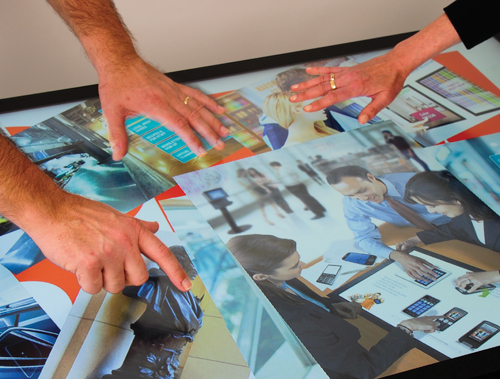
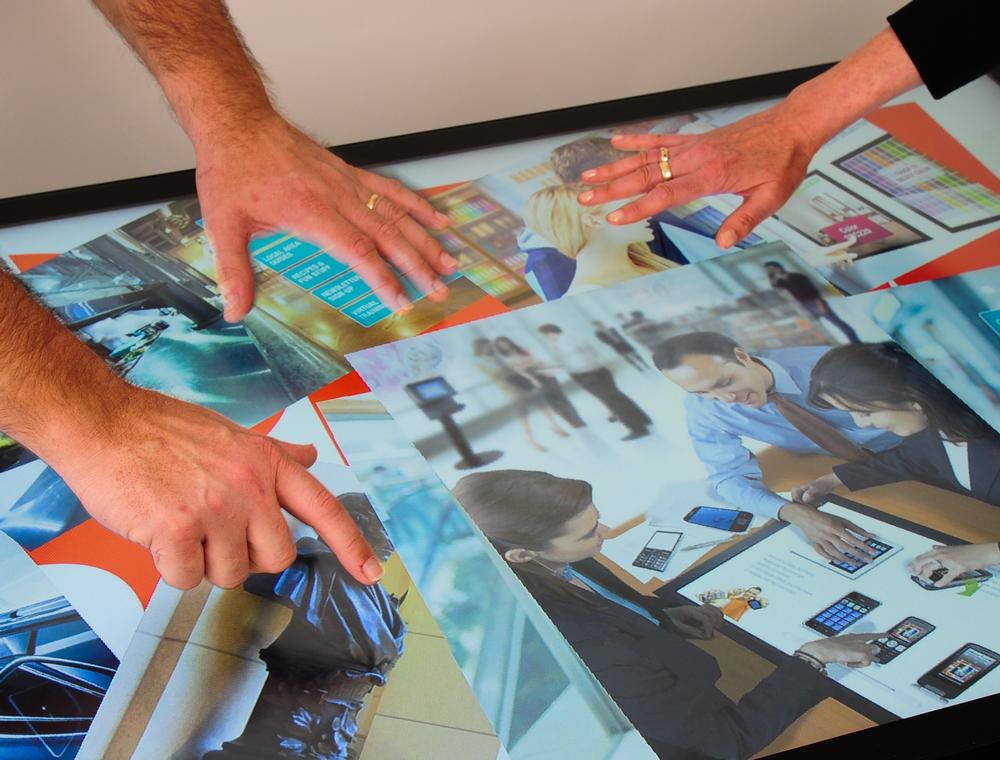
Multi-touch technology creates exciting, interactive visitor information points
One of the biggest challenges facing galleries, museums and other entertainment venues today is how to make the visitor experience as compelling as possible, particularly when competing with other forms of entertainment. Today’s younger generation, in particular, have very high expectations, thanks to their everyday use of video games and other media. Plus, there is the additional challenge of finite physical space, meaning that what venues can display is inherently limited.
This is why an increasing number of the world’s attractions venues are turning to multi-user, multi-touch AV technology. With its ability to show such a rich array of information while allowing several people to engage with the screen at any one time, the technology takes the AV experience to a whole new level. While it might be used as part of a particular exhibition, the technology – with its visual “wow” factor –is increasingly finding permanent uses and providing far more than just way finding.
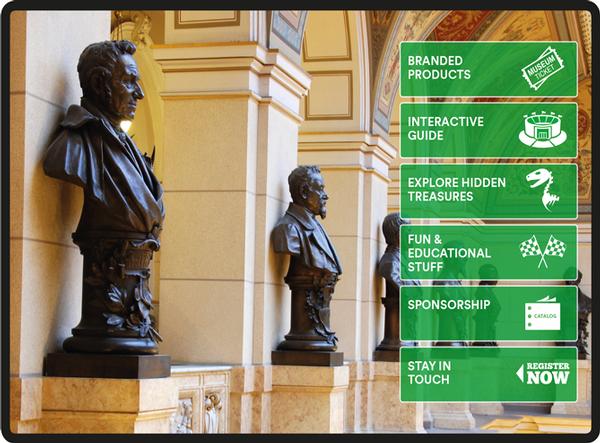
For example, windows on the screen can provide deeper insights into parts of the venue. You can include fun, interactive elements, such as modifying well-known paintings (imagine drawing a moustache – just temporarily! – on the Mona Lisa) or exploring the remains of Pompeii (and build your own Roman villa at the same time).
Several viewers can compete to identify star constellations across the Galaxy, or create their own football teams who can then compete against each other. They can home in on the Statue of Liberty, flipping the screen to see it from another angle or enjoying a bird’s eye view from the very top of her crown. They can take interactive tours of hidden treasures in the museum’s vaults, watch 3D interviews with celebrity sportspeople, play interactive video games themed to the venue – the potential is only limited by designers’ imaginations.
Generate more visitor revenue Adding an extra layer to the whole visitor experience in this way also creates opportunities to generate additional revenue. For example, consumers can take an interactive tour of the museum shop catalogue and view far more merchandise than is possible in a physical space. They can purchase discounted tickets for future events, or even pay a nominal amount to enter an online competition or play a game, with guaranteed low-cost prizes.
Multi-touch AV systems can also be integrated with other systems, such as customer relationship management (CRM), databases and marketing systems to gather data about visitor interest. For instance, the multi-touch screens might register significant interest in a particular type of exhibit, providing the kind of information that helps when planning future events.
What is multi-user, multi-touch? One major benefit of touch technology is that we are already familiar with it through using our own smartphones and other devices. We know that pinching our fingers or swiping the screen will change the content that we can see. Multi-touch technology takes this highly intuitive approach a step further, creating an interactive multi-user experience that can be applied to all kinds of environments.
Ranging from 21.5 to 55 inches (55cm to 140cm), multi-user, multi-touch displays make an immediate impact, often housed in beautifully designed table-tops, although systems can also be wall-mounted. Once users start to interact with them – simply using their fingertips, with over 60 simultaneous touch points – they can explore a wealth of information. In essence, a multi-user, multi-touch AV system is a smart screen, linked to a computer underneath or behind it and in turn able to connect to the Internet and other systems. The technology has evolved considerably in the past couple of years, with screens now able to display a fast and consistently high-quality response, even in high footfall areas.
Of course, any technology is only as good as its execution. Our five tips (see “Five Steps” box, left) are based on the work we’ve carried out with some of the world’s leading designers, installers and users of our multi-touch displays and systems.
The right multi-touch system, complete with content that captures visitors’ interest, can create a compelling, interactive experience, while at the same time generating new revenue opportunities and helping venues to compete in an increasingly multimedia world.
Read more from this issue of Attractions Management magazine
View contents of Attractions Management 2015 issue 4
Attractions: Gone, Not Forgotten
We find out what people thought of
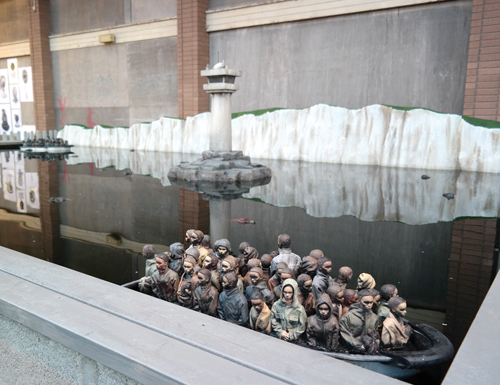
Dismaland, Banksy’s twisted theme park
and contemporary art attraction – and
talk to one of the Dismal Stewards
Promotional feature: IdeAttack
Mysteries of China’s rich culture are at the heart of IDEATTACK’s new mixed-used tourism destination
Zoos & Aquariums: Turn over a New Reef
The Florida Aquarium is teaming
up with the National Aquarium of
Cuba in a bid to save and restore
the region’s precious coral reefs
Five steps to create a great multi-user touch experience:
• Location matters – table-table designs are imposing and create a powerful impact, while upright kiosk or wall-mounted systems are great space-savers. Think about the furniture it is housed in, make a statement and link to branding.
• Touch quality is essential – an unresponsive screen is very frustrating for users. Look for zero-lag, no matter how much information is being displayed. Bezel-free design ensures that the screen is touch-sensitive right to the very edges.
• Robust and self-service – Look for “fit and forget” design. The system should be intuitive to use with no training, and should not require regular rebooting.
• Integrate it with the bigger picture – link multi-touch systems into the rest of the sales and marketing strategies, for instance to send data back to CRM systems and databases.
• The right support and expertise – work with a system designer and hardware provider that has a track-record in multi-touch and so knows what pitfalls to avoid. Make sure there is strong ongoing support.
Reader Offer:
3M has created a multi-touch best practice guide specifically for the attractions management market.
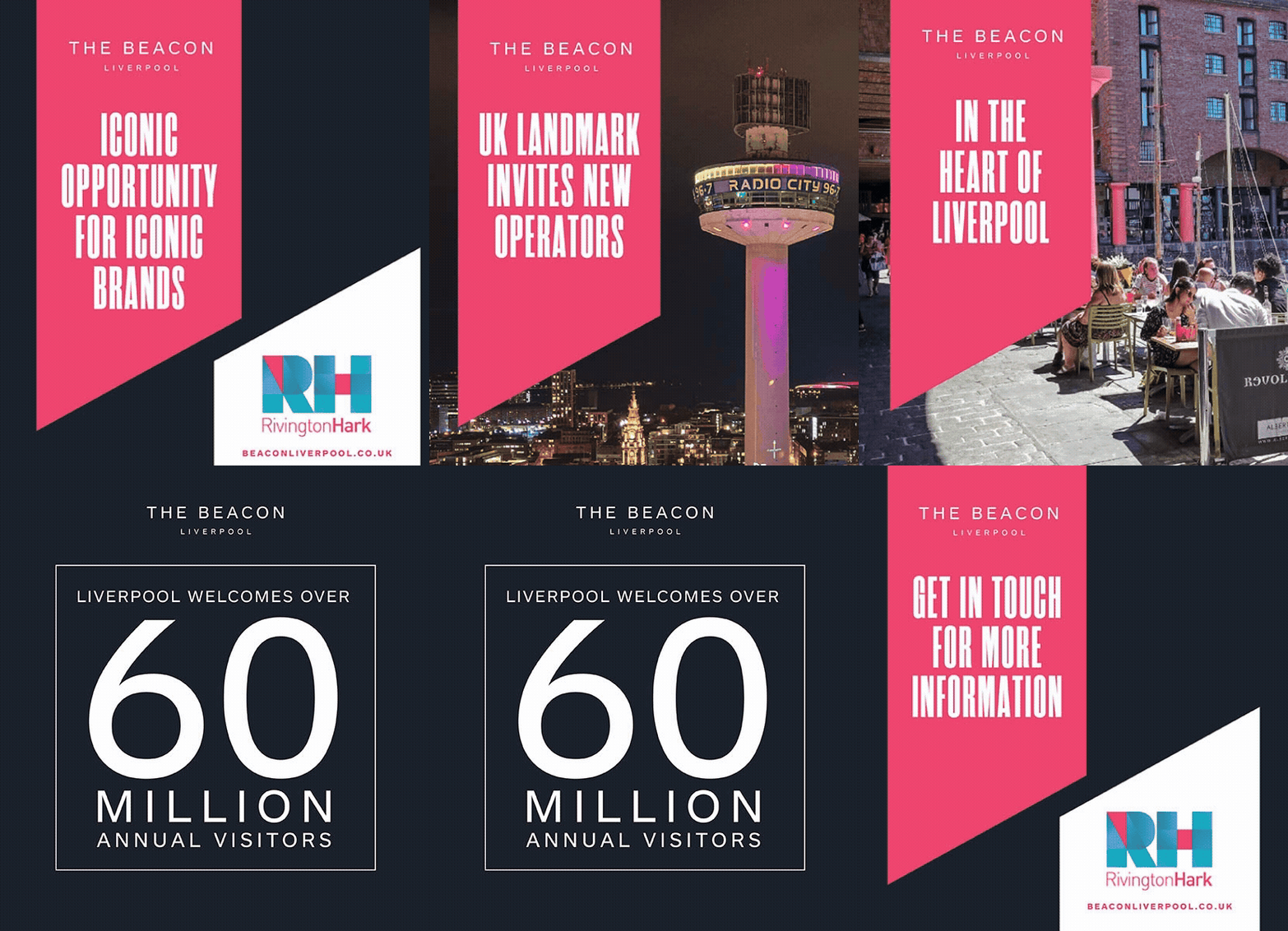
An opportunity to reimagine one of the UK’s most recognisable towers has been formally
opened by Rivington Hark, as St Johns Beacon invites operators and partners to shape its
next phase. [more...]
Paolo Pedrazzoli of 3M – which provides multi-touch displays and systems to venue designers, AV specialists and end users – tells readers how this technology is transforming the visitor experience, while generating new revenue opportunities
Multi-touch technology creates exciting, interactive visitor information points
One of the biggest challenges facing galleries, museums and other entertainment venues today is how to make the visitor experience as compelling as possible, particularly when competing with other forms of entertainment. Today’s younger generation, in particular, have very high expectations, thanks to their everyday use of video games and other media. Plus, there is the additional challenge of finite physical space, meaning that what venues can display is inherently limited.
This is why an increasing number of the world’s attractions venues are turning to multi-user, multi-touch AV technology. With its ability to show such a rich array of information while allowing several people to engage with the screen at any one time, the technology takes the AV experience to a whole new level. While it might be used as part of a particular exhibition, the technology – with its visual “wow” factor –is increasingly finding permanent uses and providing far more than just way finding.
For example, windows on the screen can provide deeper insights into parts of the venue. You can include fun, interactive elements, such as modifying well-known paintings (imagine drawing a moustache – just temporarily! – on the Mona Lisa) or exploring the remains of Pompeii (and build your own Roman villa at the same time).
Several viewers can compete to identify star constellations across the Galaxy, or create their own football teams who can then compete against each other. They can home in on the Statue of Liberty, flipping the screen to see it from another angle or enjoying a bird’s eye view from the very top of her crown. They can take interactive tours of hidden treasures in the museum’s vaults, watch 3D interviews with celebrity sportspeople, play interactive video games themed to the venue – the potential is only limited by designers’ imaginations.
Generate more visitor revenue Adding an extra layer to the whole visitor experience in this way also creates opportunities to generate additional revenue. For example, consumers can take an interactive tour of the museum shop catalogue and view far more merchandise than is possible in a physical space. They can purchase discounted tickets for future events, or even pay a nominal amount to enter an online competition or play a game, with guaranteed low-cost prizes.
Multi-touch AV systems can also be integrated with other systems, such as customer relationship management (CRM), databases and marketing systems to gather data about visitor interest. For instance, the multi-touch screens might register significant interest in a particular type of exhibit, providing the kind of information that helps when planning future events.
What is multi-user, multi-touch? One major benefit of touch technology is that we are already familiar with it through using our own smartphones and other devices. We know that pinching our fingers or swiping the screen will change the content that we can see. Multi-touch technology takes this highly intuitive approach a step further, creating an interactive multi-user experience that can be applied to all kinds of environments.
Ranging from 21.5 to 55 inches (55cm to 140cm), multi-user, multi-touch displays make an immediate impact, often housed in beautifully designed table-tops, although systems can also be wall-mounted. Once users start to interact with them – simply using their fingertips, with over 60 simultaneous touch points – they can explore a wealth of information. In essence, a multi-user, multi-touch AV system is a smart screen, linked to a computer underneath or behind it and in turn able to connect to the Internet and other systems. The technology has evolved considerably in the past couple of years, with screens now able to display a fast and consistently high-quality response, even in high footfall areas.
Of course, any technology is only as good as its execution. Our five tips (see “Five Steps” box, left) are based on the work we’ve carried out with some of the world’s leading designers, installers and users of our multi-touch displays and systems.
The right multi-touch system, complete with content that captures visitors’ interest, can create a compelling, interactive experience, while at the same time generating new revenue opportunities and helping venues to compete in an increasingly multimedia world.
Read more from this issue of Attractions Management magazine
View contents of Attractions Management 2015 issue 4
Attractions: Gone, Not Forgotten
We find out what people thought of
Dismaland, Banksy’s twisted theme park
and contemporary art attraction – and
talk to one of the Dismal Stewards
Promotional feature: IdeAttack
Mysteries of China’s rich culture are at the heart of IDEATTACK’s new mixed-used tourism destination
Zoos & Aquariums: Turn over a New Reef
The Florida Aquarium is teaming
up with the National Aquarium of
Cuba in a bid to save and restore
the region’s precious coral reefs
Five steps to create a great multi-user touch experience:
• Location matters – table-table designs are imposing and create a powerful impact, while upright kiosk or wall-mounted systems are great space-savers. Think about the furniture it is housed in, make a statement and link to branding.
• Touch quality is essential – an unresponsive screen is very frustrating for users. Look for zero-lag, no matter how much information is being displayed. Bezel-free design ensures that the screen is touch-sensitive right to the very edges.
• Robust and self-service – Look for “fit and forget” design. The system should be intuitive to use with no training, and should not require regular rebooting.
• Integrate it with the bigger picture – link multi-touch systems into the rest of the sales and marketing strategies, for instance to send data back to CRM systems and databases.
• The right support and expertise – work with a system designer and hardware provider that has a track-record in multi-touch and so knows what pitfalls to avoid. Make sure there is strong ongoing support.
Reader Offer:
3M has created a multi-touch best practice guide specifically for the attractions management market.
Movie Park Germany has opened a new Paramount Pictures-themed attraction as part of its 30th
anniversary celebrations, using immersive storytelling and adaptive reuse to reinforce the park’s
longstanding “Hollywood in Germany” positioning.
Therme Manchester’s 28-acre development, which will include interconnected glass pavilions
that measure 65,000sq m, will be the largest bathing and wellbeing attraction in the world once
complete, according to prof David Russell, CEO of Therme UK.
Efteling has opened Hooghmoed, a new family drop tower designed to broaden the appeal of its
recently launched Sirene Island themed area and introduce younger visitors to thrill attractions.
A proposed Puy du Fou development near Bicester and Universal Destinations and Experiences’
planned resort in Bedford are emerging as part of a wider transformation of the Oxford–
Cambridge Growth Corridor into a major centre for UK leisure and tourism inv
Shedd Aquarium has opened the Immersion Theater developed in partnership with SimEx-
Iwerks, as part of a wider strategy to enhance the guest experience and create additional
revenue opportunities.
The UK government has announced a temporary reduction in VAT on visitor attractions and
children’s meals as part of a summer cost-of-living support package designed to stimulate the
visitor economy and encourage family days out.
As designer Yinka Ilori prepares for his first solo gallery show in London, he speaks exclusively
to CLADmag about his mission to spread joy, the power of play, and his bold approach to using
colour (including the colours you won’t see in his work).
The government of Thailand is exploring plans for a THB300bn (£6.3bn, US$8.3bn)
entertainment complex in the country’s Eastern Economic Corridor (EEC), with officials
proposing a large-scale theme park and sports destination as part of a broader tourism and
economic development strategy.
Royal Caribbean has revealed its Hero of the Seas cruise ship, home to the most pools at sea
(nine), and a record-breaking 28 dining venues, as well as attractions including a waterpark
with two new family raft slides.
An opportunity to reimagine one of the UK’s most recognisable towers has been formally
opened by Rivington Hark, as St Johns Beacon invites operators and partners to shape its
next phase. [more...]