Technology has become second nature to many young people, but children’s literature centres are more popular than ever as they work to stop traditional storytelling ever becoming a lost art
By Catherine Larner | Published in Attractions Management 2014 issue 4
Whether it’s listening to a joke or hearing an after-dinner talk, scanning a newspaper or reading a novel, we all love a story. Early memories of being read to as a child by a parent or teacher are among the most powerful. While the pace of technology means stories can be delivered today in a multitude of ways, there’s still nothing to match the magic of opening the pages of a book, sitting at the feet of a storyteller or stepping inside a theatre (whatever our age).
The model for story centres and children’s literature venues hasn’t changed significantly since they were first introduced around 20 years ago – but they have never been so popular.
“I think it’s because life is so techy,” says Cathy Agnew, project director of Peter Pan Moat Brae – the place where JM Barrie conceived Neverland – due to open in Dumfries, Scotland, in 2017. “We want person-to-person contact. There’s nothing more comforting than having someone read to you, that one-to-one engagement.”
“Bells and whistles have their place,” according to Ruth Weyman, who works alongside a team of “story builders” who lead a variety of events at Discover Children’s Story Centre in London.
“But, there’s nothing as challenging or rewarding as being able to interact with a child when you’re telling them a story.”
Visitor figures for these venues are growing year on year. Centres are expanding their reach through touring exhibitions; book clubs, book festivals and events at bookshops are thriving and new storytelling facilities are opening. Internationally, there’s a great collaboration of resources and expertise.
CHANGE IN STATUS “There’s been a change in the status of children’s literature in the cultural landscape,” says Kate Edwards, CEO of Seven Stories in Newcastle, England.
Opened in 2005, Seven Stories is perhaps one of the key contributing factors to this growth in the sector. Attracting 80,000 visits a year, it’s housed in a converted Victorian warehouse and was the idea of two forward-thinking women who had long championed children’s literature locally through their jobs in education and bookselling. Their vision was to establish an archive of work from children’s writers and illustrators in the modern period. “There was no organisation which saw its role as saving and celebrating the literary heritage for children,” Edwards says.
Focusing on original material from the 1930s onwards, Seven Stories is a national and international resource, loaning its exhibitions to numerous venues across the world. Its seven floors house galleries for exhibitions, performance and creative spaces, a children’s bookshop and café.
“Look at the popular arts, film and theatre and you’ll see children’s literature plays a huge role in driving the cultural economy. But we also hold the firm belief that children’s books change lives; we believe they bring about better life chances,” she says.
Edwards acknowledges that the change in use of libraries, which have fallen in number as a consequence of our shift to digital media, has perhaps played a part in the development of story centres. “Twenty years ago it would have been inconceivable that there’d be any other place than a library to experience a wide range of children’s books and storytelling.” It seems that the threat posed to libraries has helped increase demand for these physical venues where parents and children can interact with one another.
DIGITAL STORYTELLER In Japan, a modern library built to serve three local preschools became a surprise visitor attraction. Created by the architect Tadao Ando in 2003, the Museum of Picture Books in Iwaki City proved hugely popular and in response now opens to the public every Friday. The 6,500sq ft (600sqm) building houses 1,300 picture books, each displayed face-out on the walls, like exhibits, with the bright book covers bringing the colour to the space.
In London, an archive of illustrators’ work opened as a visitor attraction this year. The House of Illustration attracted huge attention through its launch exhibition of the work of founder Quentin Blake. In April, the Story Museum opened in Oxford, UK, a centre which started life as a virtual museum in 2003.
“Telling a story may not seem like education, but you’re learning language, sentence structure, speaking skills,” says co-director of the Story Museum, Kim Pickin. “Our educational programme is a bit like strawberries rather than spinach. One’s good for you but you don’t enjoy it, and the other’s good for you and delicious.”
Now the museum is being turned into a visitor centre. Currently it offers the immersive, multi-sensory 26 Characters exhibition, which tours next year. “We have a ‘digital storyteller’ in residence,” says Pickin, “to help us find new ways to engage digital natives who’ve grown up with technology.”
There’s also a tablet in each room, which plays extracts of different stories read by well-known actors or interviews with authors. “The digital revolution is all the more reason to support older forms of storytelling, such as oral storytelling and reading: children still need to develop their imaginations,” she says. “Our aim is to excite people of all ages about story.”
Read more from this issue of Attractions Management magazine
View contents of Attractions Management 2014 issue 4
Editor’s letter: Access for all
We ask whether enough is being done to ensure access for all to
attractions and what practical steps can be taken to improve things
Interview: Tim Smit
The Eden Project was groundbreaking
when it opened in 2001. Now the
attraction’s founder Tim Smit is taking
the concept to a global audience,
and he’s starting with China
Interview: Jonathan Gottschall
Literary scholar and author of The
Storytelling Animal explains why we’re
all addicted to story, and how attractions
can capitalise on our love of narrative
Heritage: Actions Speak Louder
The National Trust’s Ben Cowell
describes how landscaping can build up
to a reveal, and ways the organisation
is using actors to bring history to life
Conference Report: SATE 2014
TEA president Christine Kerr presents
the hot topics from the annual design
conference devoted to Storytelling,
Architecture, Technology, Experience
Story Centres: Tell Me A Story
The popularity of story centres shows
the youngest generation – dubbed
digital natives – are thirsty for
children’s literature and illustration
Technology: Reinventing the Nerd
Meet carnival-inspired Two Bit
Circus, created from its founders’
passion for engineering, video games
and the newest technologies
Promotional feature: BARCO
Barco offers state-of-the-art visualisation technology and
a holistic solution uniquely tailored to suit any attraction
Rides: The Ride Makers
In the first of a new series,
industry-leading manufacturers
tell us about the latest trends and
innovations in thrill coasters
Theme Parks: Kooza Came to Town
PortAventura’s general manager
on the Spanish park’s partnership
with celebrated circus troupe Cirque
du Soleil and its Kooza show
Planetariums: Tom Falvey
A new planetarium, capable of live
streaming to 14,000 schools, opens
as a new addition to the South
Carolina State Museum in the US
Show Preview: IAAPA EXPO
IAAPA returns to the Orange County Convention Center in Orlando,
Florida, from 18-21 November, with more than 1,000 exhibitors
and an expected 27,000 attendees
Multimedia: Art Project
State-of-the-art projectors and
world-class artists combine to
create inspiring installations
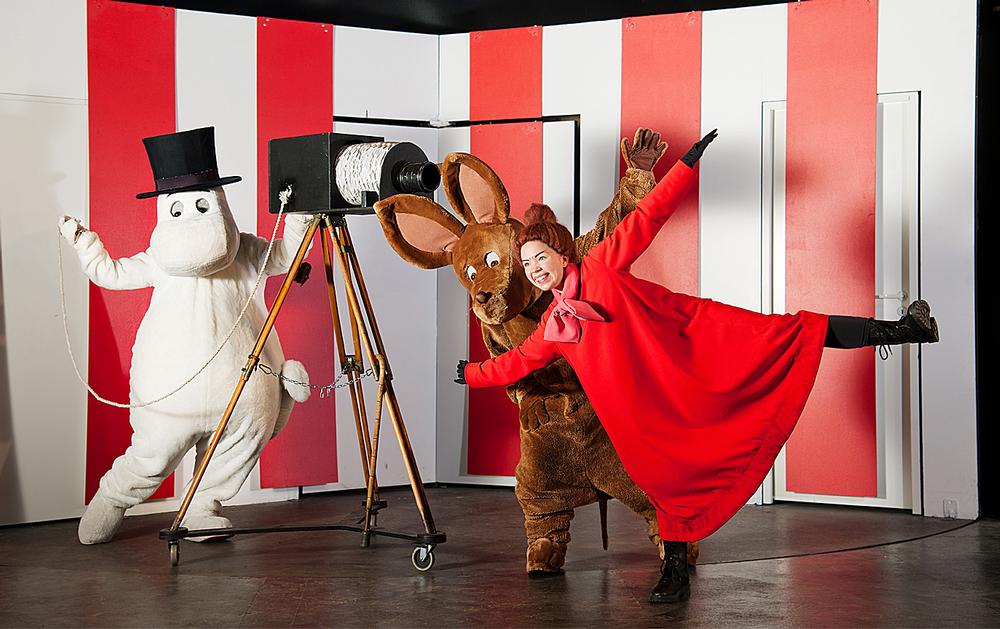
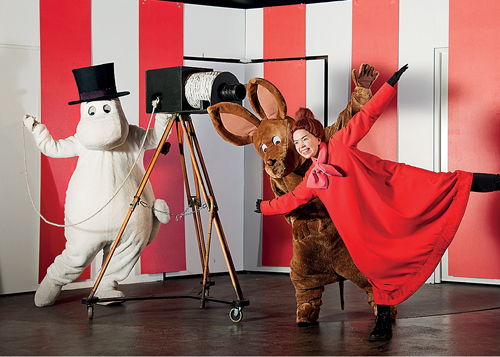
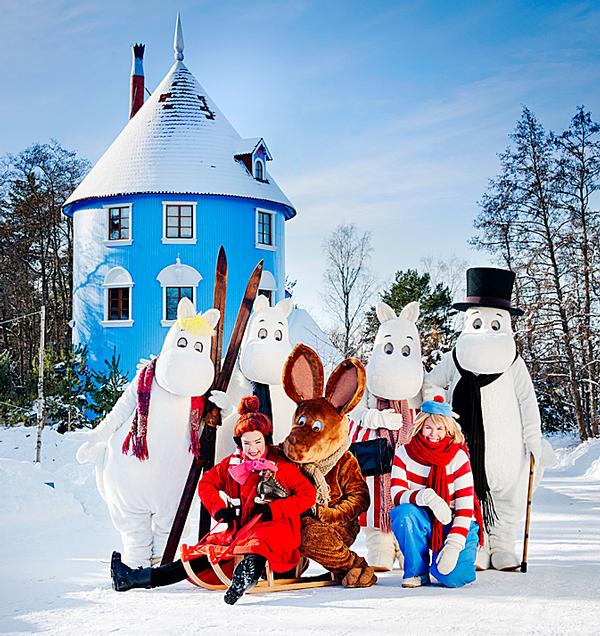
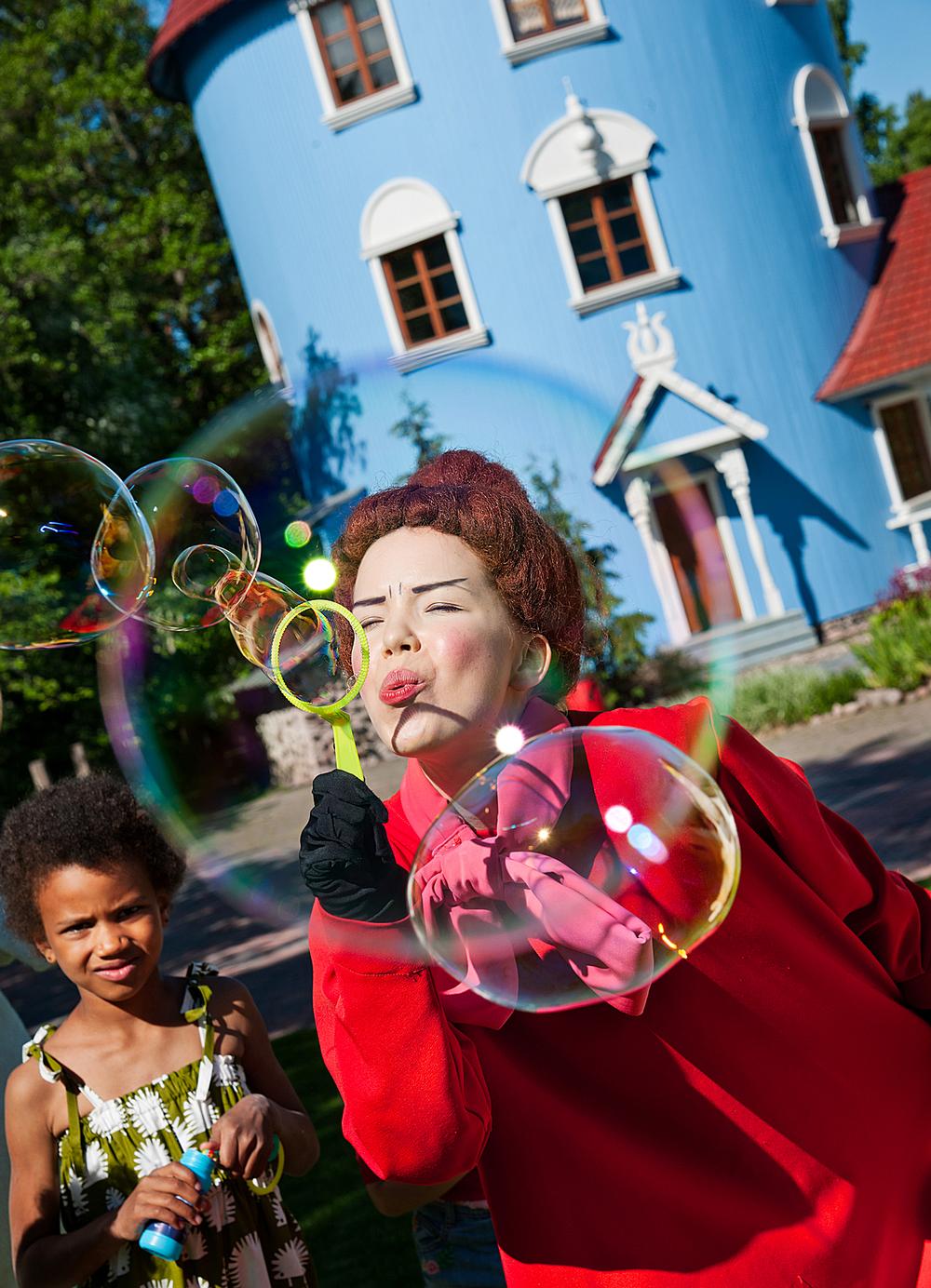
Moomin World One of the most loved literary-themed visitor attractions, this year Moomin World celebrated 100 years since the birth of author Tove Jansson, who created the strange creatures. The attraction is situated on an island near the small town of Naantali, Finland, and spans 323,000sq ft (30,000sqm). Opened in 1993, it regularly attracts between 200,000 and 230,000 visitors over its three months of opening. There are no rides, but a changing programme of events and shows to entertain visitors who mingle with the Moomin characters and scenes. Popular with Japanese visitors, there is also a Moomin-inspired theme park in Saitama, Japan, and a dedicated Moomin theme park is due to open in the country in 2015.
The park has enjoyed 20 years of success
The Seven Stories collection Seven Stories was was established in Newcastle, UK, in response to original manuscripts being sold to overseas collectors. It aims to act as a “custodian” of British children’s literature from 1930s onwards. Over 70,000 people visit the centre, which is located in a restored Victorian warehouse, every year. Seven Stories won a National Lottery Award in 2013 and was named the UK’s favourite education project.
Newcastle’s Seven Stories aims to make a difference to the lives of families living nearby
Peter Pan Moat Brae Scotland’s National Centre for Children’s Literature and Storytelling is due to open in 2017 at a cost of up to £7m ($11.4m, €8.9m). Moat Brae was where the author JM Barrie played as a child, and its grounds inspired him to create Peter Pan and Neverland. Having saved the building from demolition, the Peter Pan Moat Brae Trust is engaging in further fundraising to bring the project to fruition. When complete the centre will have a Neverland garden; offer a year-round programme of activities and exhibitions; encourage imagination in reading and recounting stories, and celebrate the history of Peter Pan.
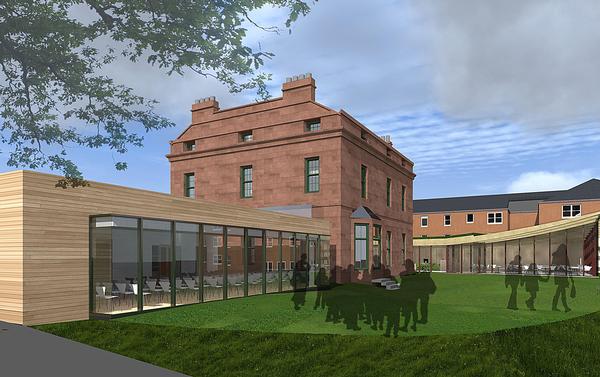
A Georgian villa and gardens in Dumfries will be developed into a literary centre
The Eric Carle Museum The 43,000sq ft (4,000sqm) Eric Carle Museum of Picture Book Art opened in Amherst, Massachussetts, in 2002 and has a collection of more than 12,000 illustrations, attracting 50,000 visitors annually. Founded by the creator of The Very Hungry Caterpillar, it aims to inspire a love of art and reading through picture books. The Carle collects picture books from around the world.
“For many children, we’re the first art museum they ever experience,” says executive director Alexandra Kennedy. Video, music and digital screens support or supplement the exhibitions, yet she insists “the Carle is fairly low-tech”.
“We offer hands-on art projects, story readings, theatre, live music and film. We engage people through art and then let them engage with one another,” she says.
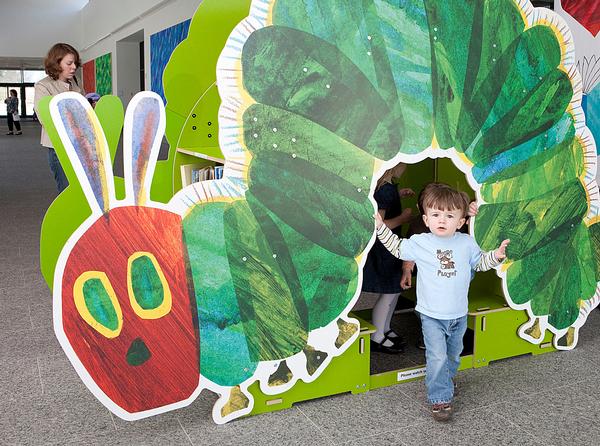
The famous Very Hungry Caterpillar was first published in 1969
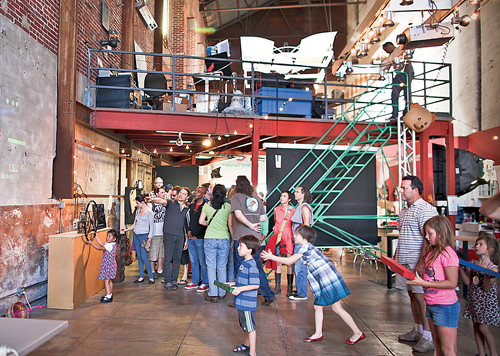
Discover Children’s Story Centre Discover Children’s Story Centre opened in Stratford, East London, in 2003. There are 110 languages spoken within its catchment area but, while some of the installations reflect this diversity, the team has found that people relate to their connections through stories. CEO Sally Goldsworthy says: “Families are interested in what they have in common rather than what separates them.”
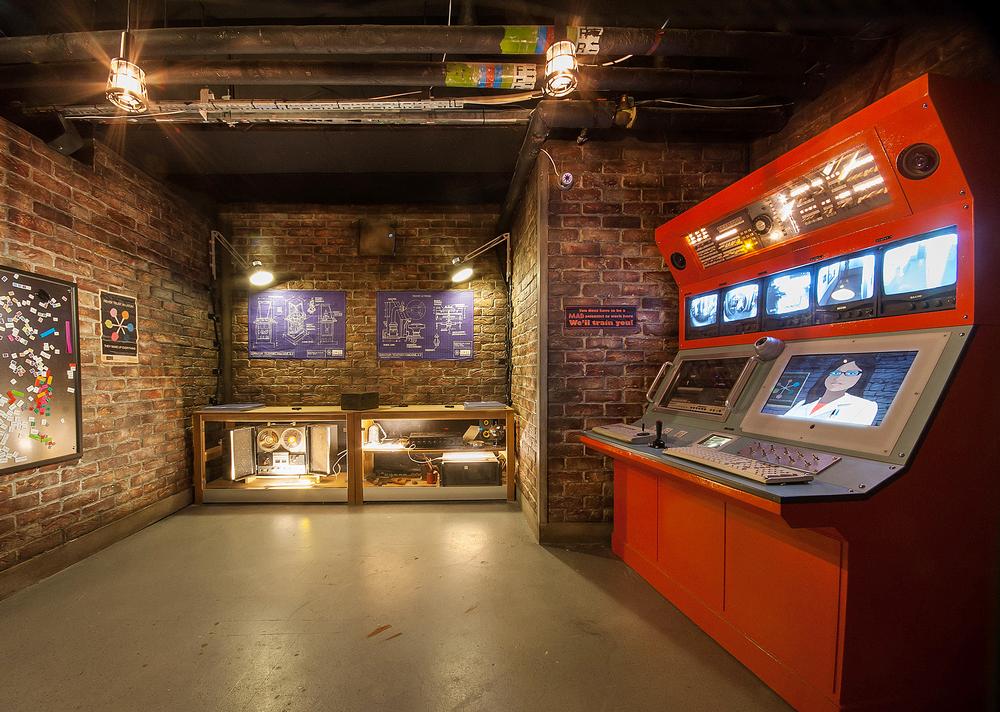
Discover has numerous themed play areas where children can make crafts, dress up and explore. Members of staff, called Story Builders, act as facilitators and storytellers, singing songs and helping children create stories of their own. There are temporary exhibitions about generic themes, such as space or secret agents, or celebrating the work of a particular illustrator. Each year the centre hosts a children’s literature festival called the Big Write, when well-known authors and illustrators visit to give talks and read from their books.
For next year, there are plans to extend the building, which is a converted Edwardian hotel situated close to the Olympic Park, and to tour its exhibitions.
Discover offers literature programmes led by children’s writers and illustrators
The Roald Dahl Museum The Roald Dahl Museum and Story Centre is one of the best-known and successful literature venues in the UK. It initiates a national Roald Dahl Day each September and is planning to collaborate with many venues in 2016 to mark the centenary of Dahl’s birth.
The Solo gallery at the Roald Dahl Museum
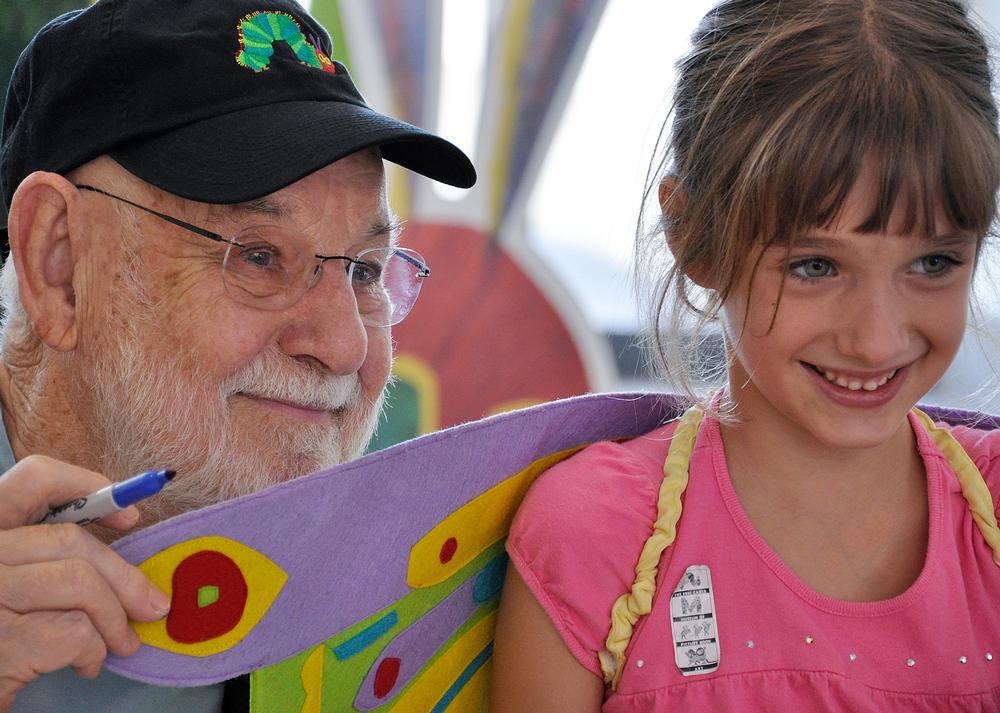
Eric Carle poses for a photo at the Museum of Picture Book Art
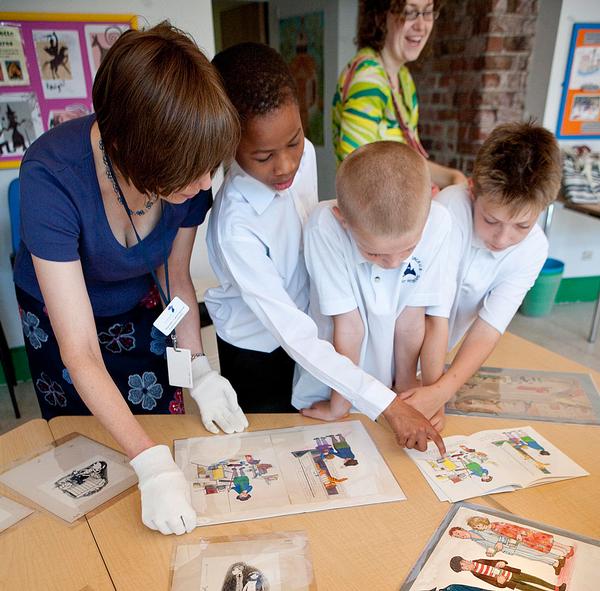
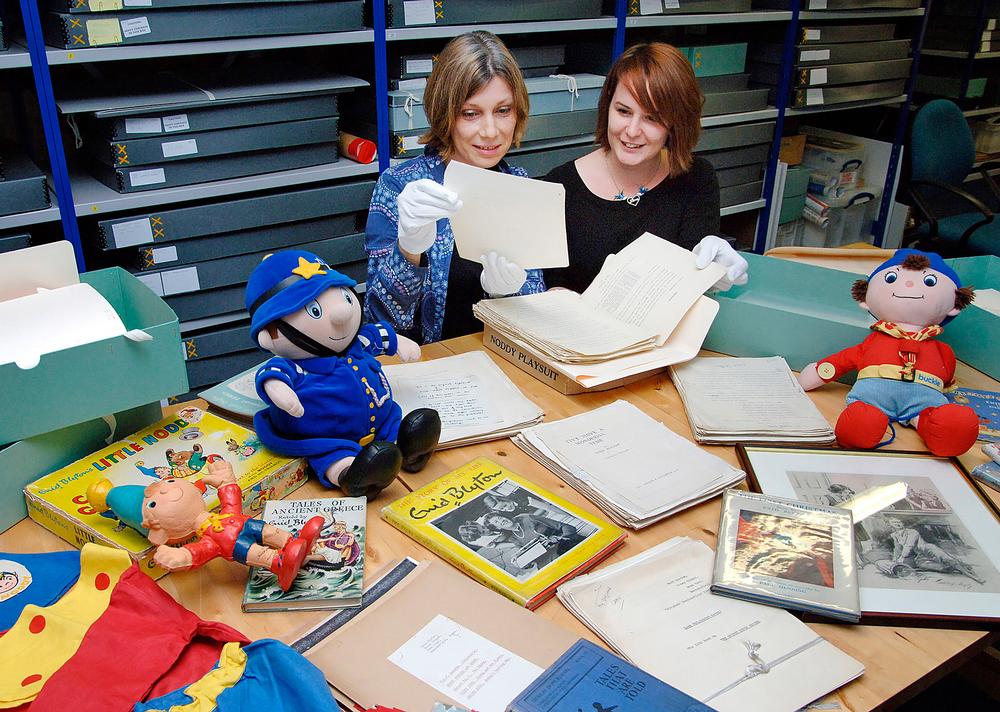
The archives of Seven Stories
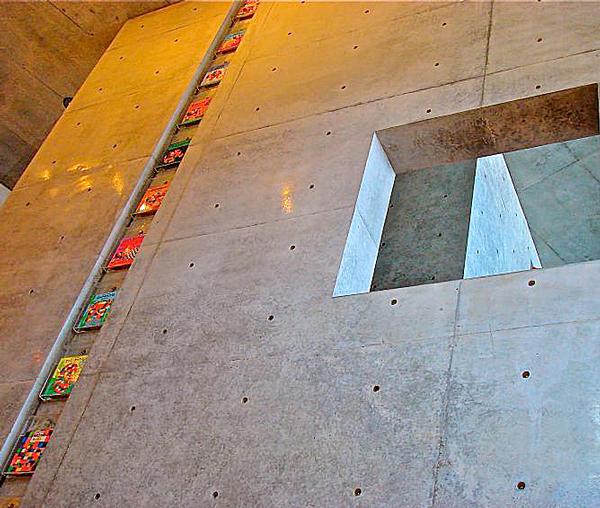
Japanese architect Tadao Ando inadvertently created an attraction with his concrete, wood and glass library
Japanese architect Tadao Ando inadvertently created an attraction with his concrete, wood and glass library
The Story Museum in Oxford opened in April 2014
Inside Stories: Quentin Blake was House of Illustration’s inaugural exhibition
A child on the Talking Throne at the Story Museum
Little My at Finland’s Moomin World
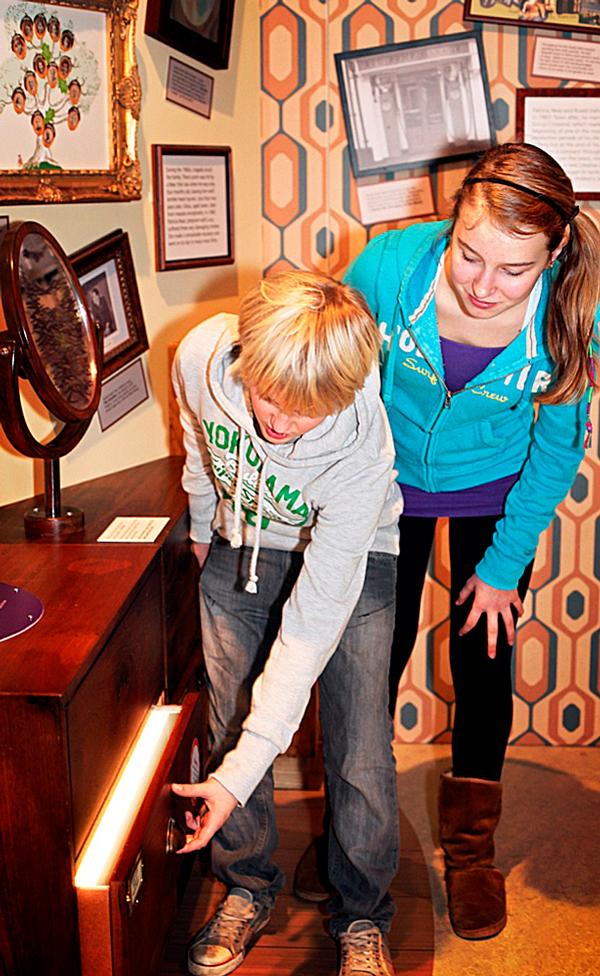
an exhibit in the Discover Children’s Story Centre
COMPANY PROFILES
Painting With Light
By combining lighting, video, scenic and architectural elements, sound and special effects we tell s [more...]
An opportunity to reimagine one of the UK’s most recognisable towers has been formally
opened by Rivington Hark, as St Johns Beacon invites operators and partners to shape its
next phase. [more...]
Technology has become second nature to many young people, but children’s literature centres are more popular than ever as they work to stop traditional storytelling ever becoming a lost art
By Catherine Larner | Published in Attractions Management 2014 issue 4
Whether it’s listening to a joke or hearing an after-dinner talk, scanning a newspaper or reading a novel, we all love a story. Early memories of being read to as a child by a parent or teacher are among the most powerful. While the pace of technology means stories can be delivered today in a multitude of ways, there’s still nothing to match the magic of opening the pages of a book, sitting at the feet of a storyteller or stepping inside a theatre (whatever our age).
The model for story centres and children’s literature venues hasn’t changed significantly since they were first introduced around 20 years ago – but they have never been so popular.
“I think it’s because life is so techy,” says Cathy Agnew, project director of Peter Pan Moat Brae – the place where JM Barrie conceived Neverland – due to open in Dumfries, Scotland, in 2017. “We want person-to-person contact. There’s nothing more comforting than having someone read to you, that one-to-one engagement.”
“Bells and whistles have their place,” according to Ruth Weyman, who works alongside a team of “story builders” who lead a variety of events at Discover Children’s Story Centre in London.
“But, there’s nothing as challenging or rewarding as being able to interact with a child when you’re telling them a story.”
Visitor figures for these venues are growing year on year. Centres are expanding their reach through touring exhibitions; book clubs, book festivals and events at bookshops are thriving and new storytelling facilities are opening. Internationally, there’s a great collaboration of resources and expertise.
CHANGE IN STATUS “There’s been a change in the status of children’s literature in the cultural landscape,” says Kate Edwards, CEO of Seven Stories in Newcastle, England.
Opened in 2005, Seven Stories is perhaps one of the key contributing factors to this growth in the sector. Attracting 80,000 visits a year, it’s housed in a converted Victorian warehouse and was the idea of two forward-thinking women who had long championed children’s literature locally through their jobs in education and bookselling. Their vision was to establish an archive of work from children’s writers and illustrators in the modern period. “There was no organisation which saw its role as saving and celebrating the literary heritage for children,” Edwards says.
Focusing on original material from the 1930s onwards, Seven Stories is a national and international resource, loaning its exhibitions to numerous venues across the world. Its seven floors house galleries for exhibitions, performance and creative spaces, a children’s bookshop and café.
“Look at the popular arts, film and theatre and you’ll see children’s literature plays a huge role in driving the cultural economy. But we also hold the firm belief that children’s books change lives; we believe they bring about better life chances,” she says.
Edwards acknowledges that the change in use of libraries, which have fallen in number as a consequence of our shift to digital media, has perhaps played a part in the development of story centres. “Twenty years ago it would have been inconceivable that there’d be any other place than a library to experience a wide range of children’s books and storytelling.” It seems that the threat posed to libraries has helped increase demand for these physical venues where parents and children can interact with one another.
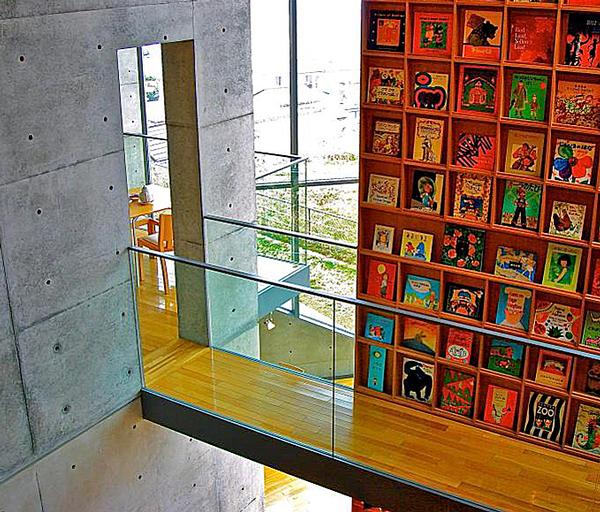
DIGITAL STORYTELLER In Japan, a modern library built to serve three local preschools became a surprise visitor attraction. Created by the architect Tadao Ando in 2003, the Museum of Picture Books in Iwaki City proved hugely popular and in response now opens to the public every Friday. The 6,500sq ft (600sqm) building houses 1,300 picture books, each displayed face-out on the walls, like exhibits, with the bright book covers bringing the colour to the space.
In London, an archive of illustrators’ work opened as a visitor attraction this year. The House of Illustration attracted huge attention through its launch exhibition of the work of founder Quentin Blake. In April, the Story Museum opened in Oxford, UK, a centre which started life as a virtual museum in 2003.
“Telling a story may not seem like education, but you’re learning language, sentence structure, speaking skills,” says co-director of the Story Museum, Kim Pickin. “Our educational programme is a bit like strawberries rather than spinach. One’s good for you but you don’t enjoy it, and the other’s good for you and delicious.”
Now the museum is being turned into a visitor centre. Currently it offers the immersive, multi-sensory 26 Characters exhibition, which tours next year. “We have a ‘digital storyteller’ in residence,” says Pickin, “to help us find new ways to engage digital natives who’ve grown up with technology.”
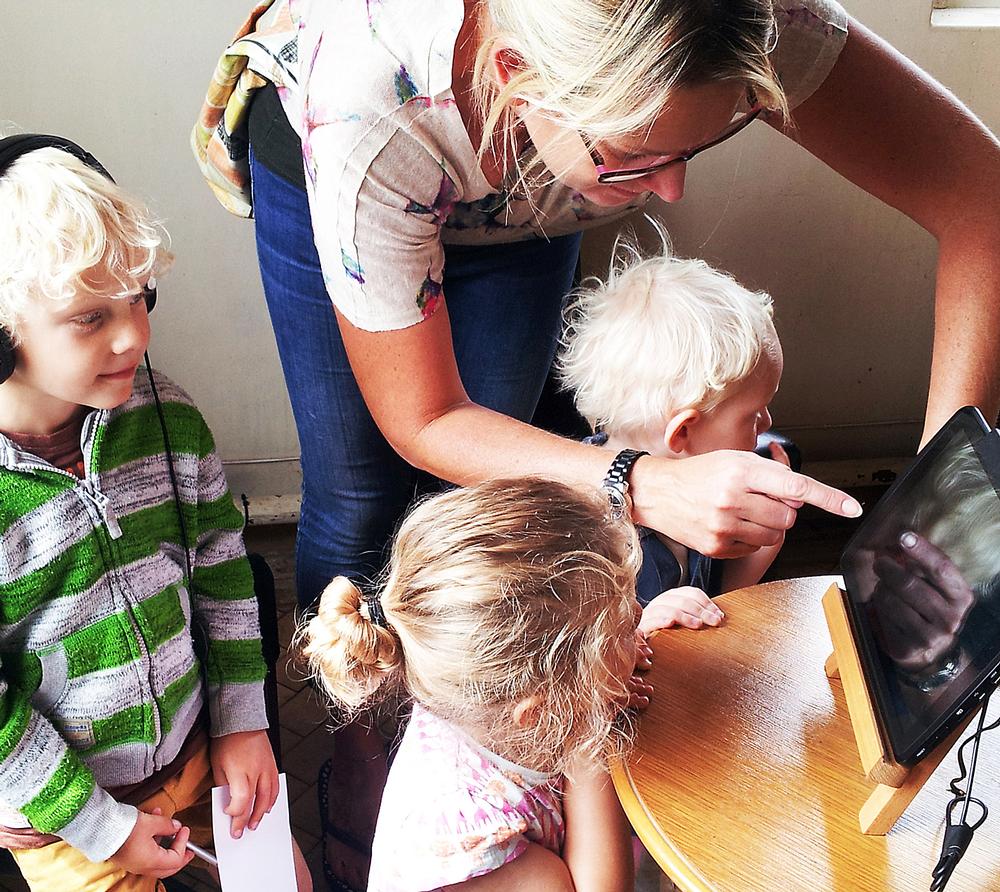
There’s also a tablet in each room, which plays extracts of different stories read by well-known actors or interviews with authors. “The digital revolution is all the more reason to support older forms of storytelling, such as oral storytelling and reading: children still need to develop their imaginations,” she says. “Our aim is to excite people of all ages about story.”
Read more from this issue of Attractions Management magazine
View contents of Attractions Management 2014 issue 4
Editor’s letter: Access for all
We ask whether enough is being done to ensure access for all to
attractions and what practical steps can be taken to improve things
Interview: Tim Smit
The Eden Project was groundbreaking
when it opened in 2001. Now the
attraction’s founder Tim Smit is taking
the concept to a global audience,
and he’s starting with China
Interview: Jonathan Gottschall
Literary scholar and author of The
Storytelling Animal explains why we’re
all addicted to story, and how attractions
can capitalise on our love of narrative
Heritage: Actions Speak Louder
The National Trust’s Ben Cowell
describes how landscaping can build up
to a reveal, and ways the organisation
is using actors to bring history to life
Conference Report: SATE 2014
TEA president Christine Kerr presents
the hot topics from the annual design
conference devoted to Storytelling,
Architecture, Technology, Experience
Story Centres: Tell Me A Story
The popularity of story centres shows
the youngest generation – dubbed
digital natives – are thirsty for
children’s literature and illustration
Technology: Reinventing the Nerd
Meet carnival-inspired Two Bit
Circus, created from its founders’
passion for engineering, video games
and the newest technologies
Promotional feature: BARCO
Barco offers state-of-the-art visualisation technology and
a holistic solution uniquely tailored to suit any attraction
Rides: The Ride Makers
In the first of a new series,
industry-leading manufacturers
tell us about the latest trends and
innovations in thrill coasters
Theme Parks: Kooza Came to Town
PortAventura’s general manager
on the Spanish park’s partnership
with celebrated circus troupe Cirque
du Soleil and its Kooza show
Planetariums: Tom Falvey
A new planetarium, capable of live
streaming to 14,000 schools, opens
as a new addition to the South
Carolina State Museum in the US
Show Preview: IAAPA EXPO
IAAPA returns to the Orange County Convention Center in Orlando,
Florida, from 18-21 November, with more than 1,000 exhibitors
and an expected 27,000 attendees
Multimedia: Art Project
State-of-the-art projectors and
world-class artists combine to
create inspiring installations
Moomin World One of the most loved literary-themed visitor attractions, this year Moomin World celebrated 100 years since the birth of author Tove Jansson, who created the strange creatures. The attraction is situated on an island near the small town of Naantali, Finland, and spans 323,000sq ft (30,000sqm). Opened in 1993, it regularly attracts between 200,000 and 230,000 visitors over its three months of opening. There are no rides, but a changing programme of events and shows to entertain visitors who mingle with the Moomin characters and scenes. Popular with Japanese visitors, there is also a Moomin-inspired theme park in Saitama, Japan, and a dedicated Moomin theme park is due to open in the country in 2015.
The park has enjoyed 20 years of success
The Seven Stories collection Seven Stories was was established in Newcastle, UK, in response to original manuscripts being sold to overseas collectors. It aims to act as a “custodian” of British children’s literature from 1930s onwards. Over 70,000 people visit the centre, which is located in a restored Victorian warehouse, every year. Seven Stories won a National Lottery Award in 2013 and was named the UK’s favourite education project.
Newcastle’s Seven Stories aims to make a difference to the lives of families living nearby
Peter Pan Moat Brae Scotland’s National Centre for Children’s Literature and Storytelling is due to open in 2017 at a cost of up to £7m ($11.4m, €8.9m). Moat Brae was where the author JM Barrie played as a child, and its grounds inspired him to create Peter Pan and Neverland. Having saved the building from demolition, the Peter Pan Moat Brae Trust is engaging in further fundraising to bring the project to fruition. When complete the centre will have a Neverland garden; offer a year-round programme of activities and exhibitions; encourage imagination in reading and recounting stories, and celebrate the history of Peter Pan.
A Georgian villa and gardens in Dumfries will be developed into a literary centre
The Eric Carle Museum The 43,000sq ft (4,000sqm) Eric Carle Museum of Picture Book Art opened in Amherst, Massachussetts, in 2002 and has a collection of more than 12,000 illustrations, attracting 50,000 visitors annually. Founded by the creator of The Very Hungry Caterpillar, it aims to inspire a love of art and reading through picture books. The Carle collects picture books from around the world.
“For many children, we’re the first art museum they ever experience,” says executive director Alexandra Kennedy. Video, music and digital screens support or supplement the exhibitions, yet she insists “the Carle is fairly low-tech”.
“We offer hands-on art projects, story readings, theatre, live music and film. We engage people through art and then let them engage with one another,” she says.
The famous Very Hungry Caterpillar was first published in 1969
Discover Children’s Story Centre Discover Children’s Story Centre opened in Stratford, East London, in 2003. There are 110 languages spoken within its catchment area but, while some of the installations reflect this diversity, the team has found that people relate to their connections through stories. CEO Sally Goldsworthy says: “Families are interested in what they have in common rather than what separates them.”
Discover has numerous themed play areas where children can make crafts, dress up and explore. Members of staff, called Story Builders, act as facilitators and storytellers, singing songs and helping children create stories of their own. There are temporary exhibitions about generic themes, such as space or secret agents, or celebrating the work of a particular illustrator. Each year the centre hosts a children’s literature festival called the Big Write, when well-known authors and illustrators visit to give talks and read from their books.
For next year, there are plans to extend the building, which is a converted Edwardian hotel situated close to the Olympic Park, and to tour its exhibitions.
Discover offers literature programmes led by children’s writers and illustrators
The Roald Dahl Museum The Roald Dahl Museum and Story Centre is one of the best-known and successful literature venues in the UK. It initiates a national Roald Dahl Day each September and is planning to collaborate with many venues in 2016 to mark the centenary of Dahl’s birth.
The Solo gallery at the Roald Dahl Museum
Eric Carle poses for a photo at the Museum of Picture Book Art
The archives of Seven Stories
Japanese architect Tadao Ando inadvertently created an attraction with his concrete, wood and glass library
Japanese architect Tadao Ando inadvertently created an attraction with his concrete, wood and glass library
The Story Museum in Oxford opened in April 2014
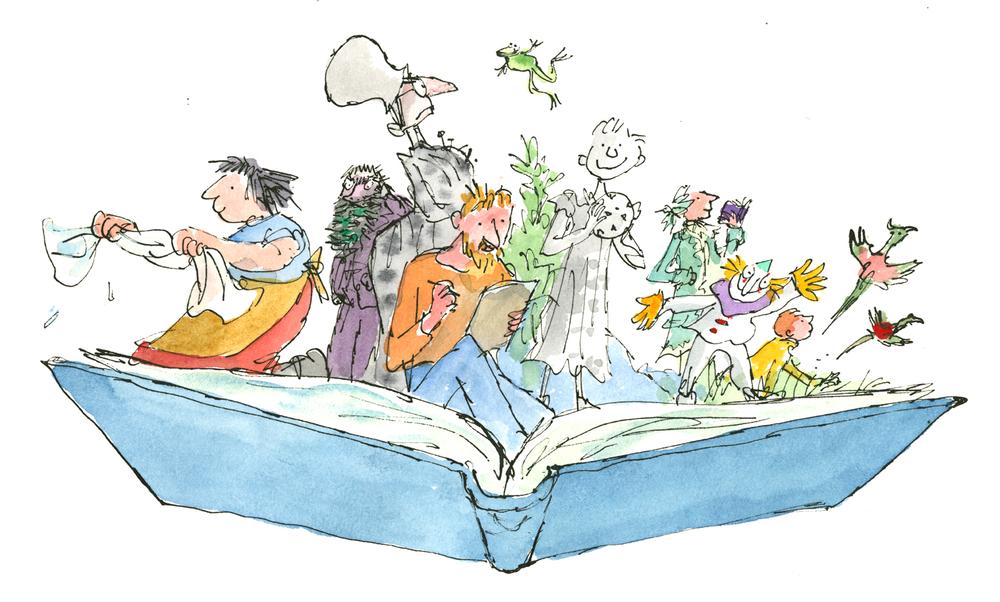
Inside Stories: Quentin Blake was House of Illustration’s inaugural exhibition
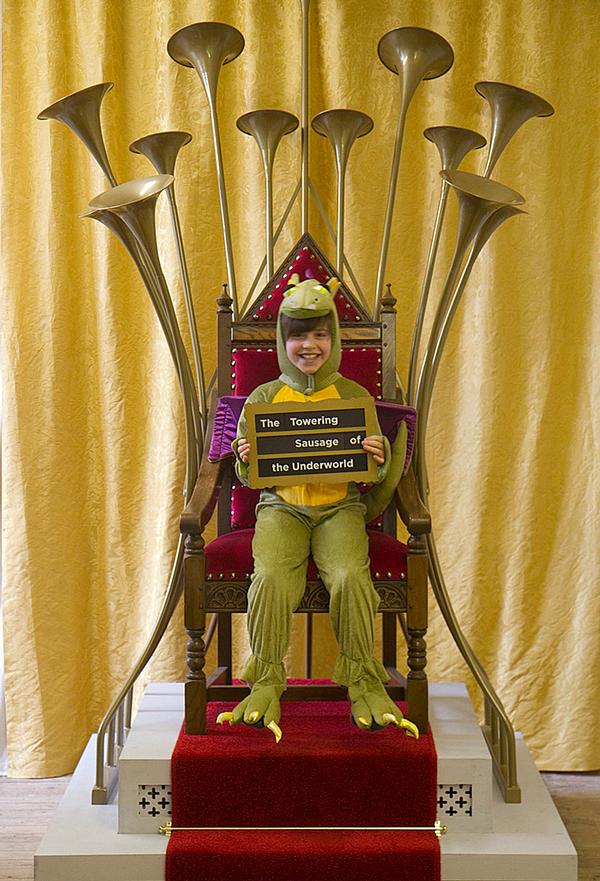
A child on the Talking Throne at the Story Museum
Little My at Finland’s Moomin World
an exhibit in the Discover Children’s Story Centre
A new immersive attraction designed to transport visitors into the final hours of ancient Pompeii
is preparing to open near the world-famous archaeological site in southern Italy.
Experience design company, BRC Imagination Arts, has completed a transition that sees founder
Bob Rogers pass ownership of the business to four long-serving senior executives, while
remaining actively involved with the company.
Movie Park Germany has opened a new Paramount Pictures-themed attraction as part of its 30th
anniversary celebrations, using immersive storytelling and adaptive reuse to reinforce the park’s
longstanding “Hollywood in Germany” positioning.
Therme Manchester’s 28-acre development, which will include interconnected glass pavilions
that measure 65,000sq m, will be the largest bathing and wellbeing attraction in the world once
complete, according to prof David Russell, CEO of Therme UK.
Efteling has opened Hooghmoed, a new family drop tower designed to broaden the appeal of its
recently launched Sirene Island themed area and introduce younger visitors to thrill attractions.
A proposed Puy du Fou development near Bicester and Universal Destinations and Experiences’
planned resort in Bedford are emerging as part of a wider transformation of the Oxford–
Cambridge Growth Corridor into a major centre for UK leisure and tourism inv
Shedd Aquarium has opened the Immersion Theater developed in partnership with SimEx-
Iwerks, as part of a wider strategy to enhance the guest experience and create additional
revenue opportunities.
The UK government has announced a temporary reduction in VAT on visitor attractions and
children’s meals as part of a summer cost-of-living support package designed to stimulate the
visitor economy and encourage family days out.
As designer Yinka Ilori prepares for his first solo gallery show in London, he speaks exclusively
to CLADmag about his mission to spread joy, the power of play, and his bold approach to using
colour (including the colours you won’t see in his work).
The government of Thailand is exploring plans for a THB300bn (£6.3bn, US$8.3bn)
entertainment complex in the country’s Eastern Economic Corridor (EEC), with officials
proposing a large-scale theme park and sports destination as part of a broader tourism and
economic development strategy.
An opportunity to reimagine one of the UK’s most recognisable towers has been formally
opened by Rivington Hark, as St Johns Beacon invites operators and partners to shape its
next phase. [more...]