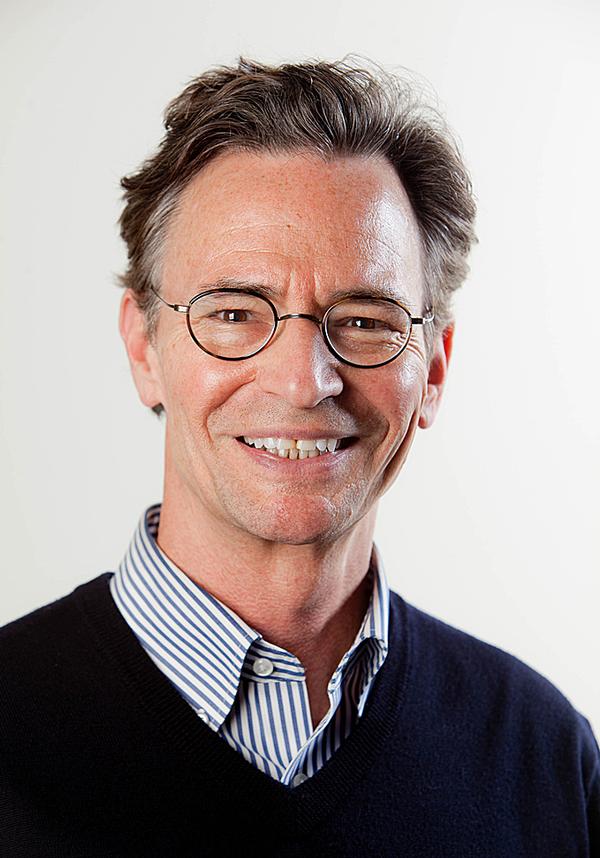
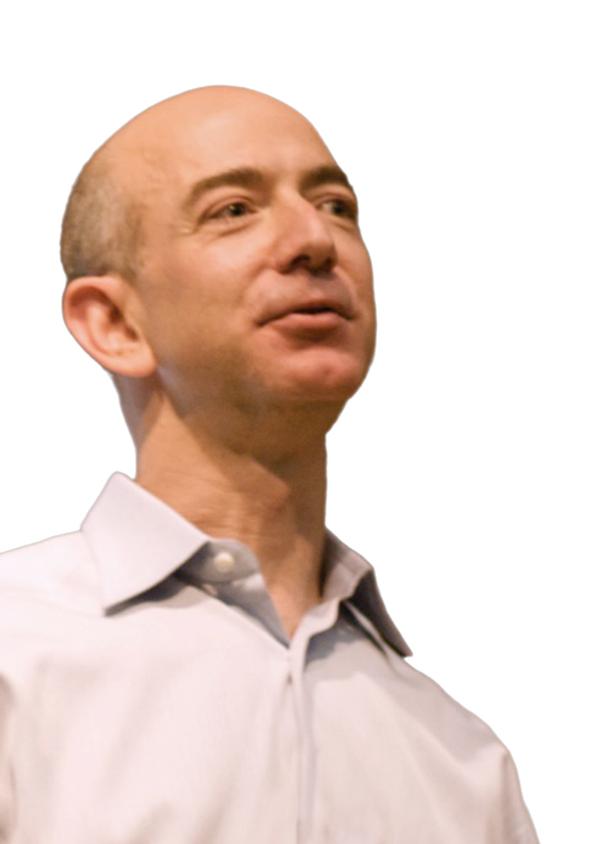
MOHAI’s executive director, Leonard Garfield, describes the Seattle museum’s exciting new development, the Bezos Center for Innovation, named after its principle donor – Amazon founder Jeff Bezos
By Kath Hudson | Published in Attractions Management 2014 issue 2
What was the inspiration for the Bezos Center for Innovation? When we were discussing themes, we realised Seattle has seen a persistent focus on innovation during the last 100 years: companies come to this region to invent the future. So a museum with innovation as the core theme seemed to be appropriate.
What’s its main aim? We set out to present the story of innovation and engage the community with that story, encouraging young people to discuss innovation, the tradition of innovation and how to build a future of innovation. To safeguard our own future, we want to prepare the workforce and community mindset.
It’s not just about inspiring the next generation of entrepreneurs, we want young people to understand that innovation comes in all areas: not just research and development, but civic life and culture and other areas as well.
The lone inventor with a great idea is not necessarily a great innovator: innovation is a team sport.
Have you been inspired by any other museums? There are some great innovation museums out there, including The Tech Museum of Innovation in San Jose and The Henry Ford Museum in Detroit.
However the main inspiration has come from the great innovations within our own community. We talked with several dozen history makers about what they felt was important to share with seventh graders and then we have presented their thoughts.
Where has funding come from? Overall, the Bezos Center has cost US$10m (£6m, E7.3m). The primary funding came from Jeff and MacKenzie Bezos and the rest has come from general funding raised by the museum. Like all US museums, we’re self-funded.
When did Jeff Bezos become involved? We began talking to him in the fall of 2011. He became familiar with our programme and we shared our ideas and expanded the mission of the museum.
He felt passionate about sharing the story of the history of innovation with a broader audience. Seattle is his hometown and being involved with this centre was one way of reaching out to the broader community.
Among our goals was to reach young people. It’s a great community, but we can’t take it for granted that they all have access to information. We wanted to share the innovation tradition with them.
How involved was Jeff Bezos in the project? Bezos inspired the development of the center and encouraged us throughout the project. MOHAI is honoured to be associated with him and the other great innovators included in the Bezos Center.
Who were the exhibition designers? We worked with local architectural firm, Olson Kundig Architects, who have a reputation for being wonderful experimental exhibit designers. Another Seattle firm, Pacific Studio, was responsible for the primary design fabrication and San Francisco company, Stimulant, did the interactive media.
What was your brief to them? Create something beautiful and engaging, present the rich history of Seattle and inspire innovation.
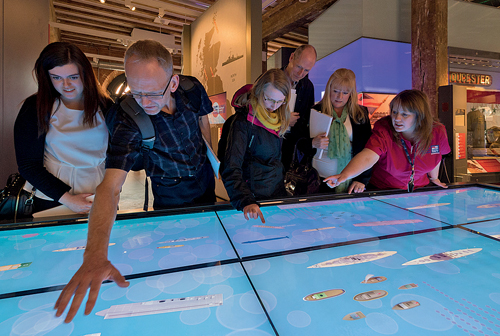
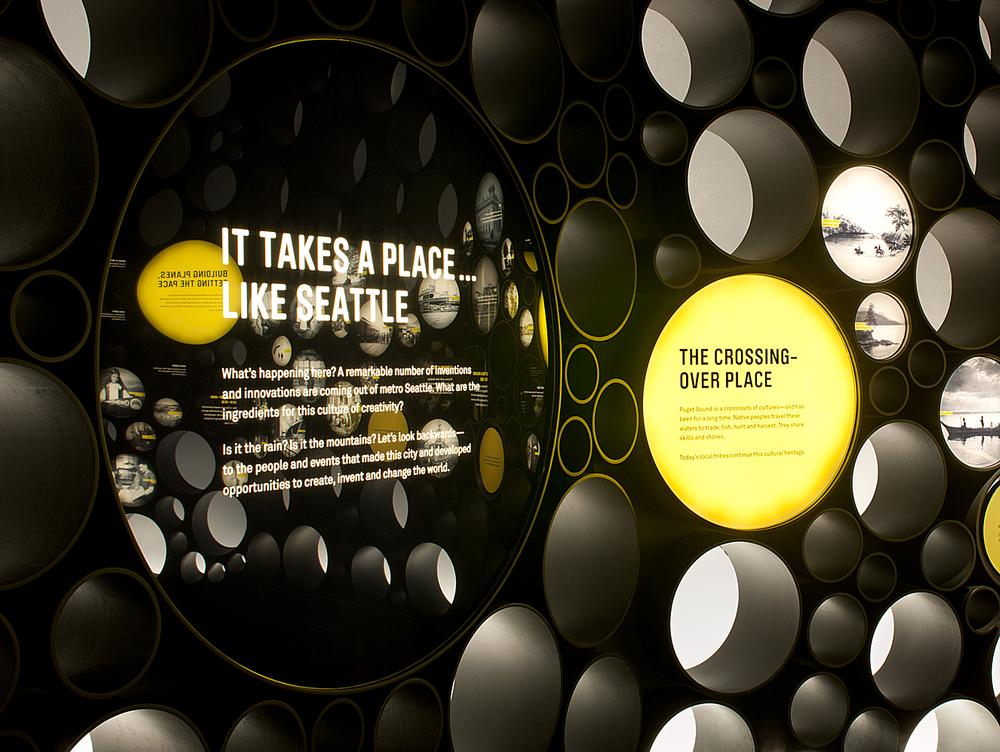
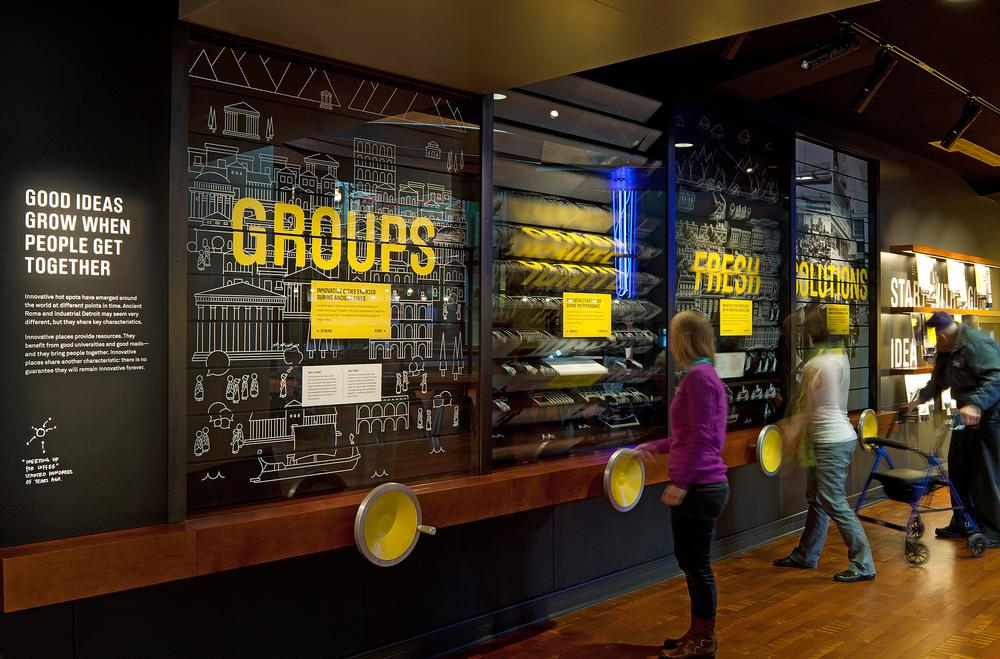
Can you describe some of the content? The centre is a combination of exhibits, oral history, programmes and interactives, asking what does it mean to be innovative and how do we stay innovative.
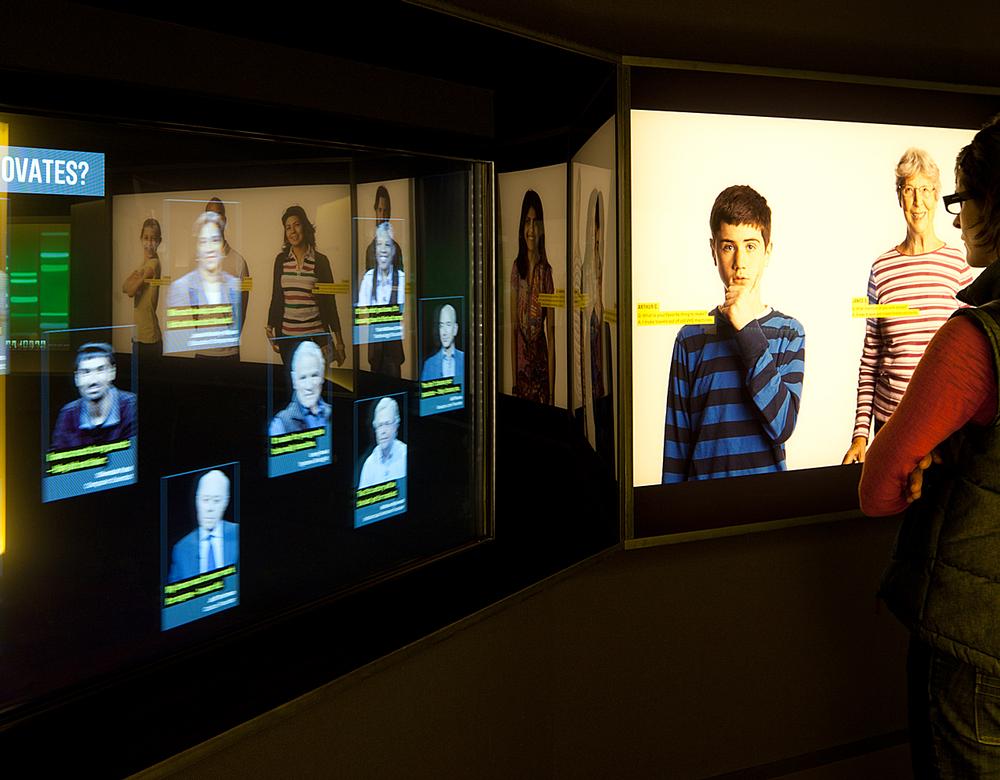
The Patent Tree details patents over the past 100 years for all types of objects from umbrellas to medical equipment. There are first person oral accounts from innovators themselves about what inspired them: you can hear people like Howard Schultz, who started Starbucks, and Jeff Bezos talk about what it takes for a company to stay at the cutting edge, or hear them talk about their personal lives or the next big idea.
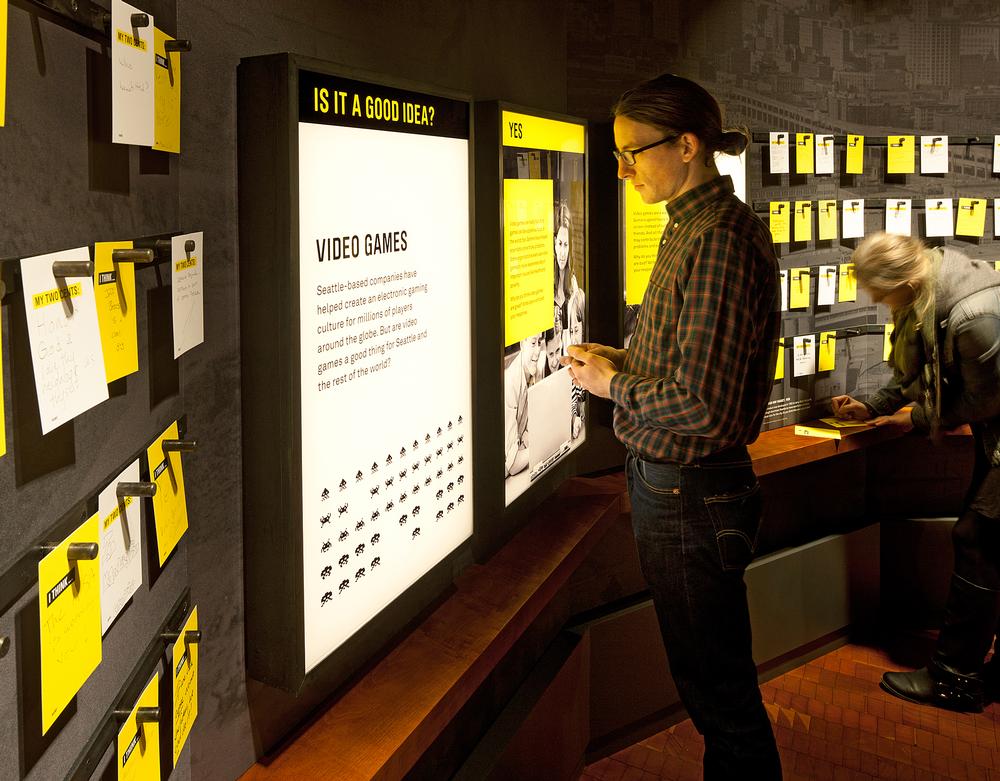
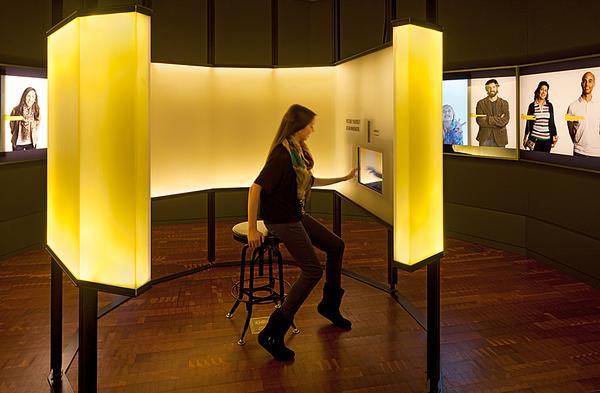
Visitors can also record what they think about innovation, and what they think will be the next challenge. They can post their ideas in a number of ways: graphically, digitally, or type ideas in response to questions from other visitors. They can also conjure up their own invention, or build a business plan and compare it with others.
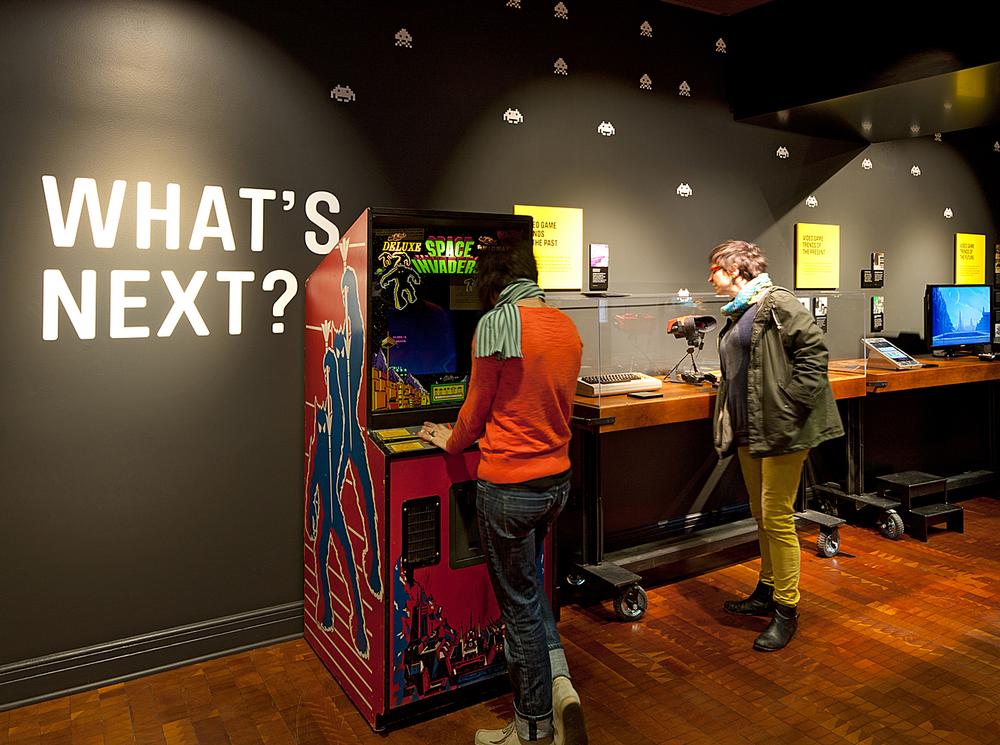
What’s the most popular feature? What’s Next is an exhibit which changes and discusses the future of innovation. Recently we looked at what would come next in the video game industry. Seattle is headquarters to a number of big names in the industry including Nintendo, Xbox and Valve. We invited young producers to come in and talk about what’s happening and visitors had the opportunity to test games which aren’t yet on the market. Their feedback was then used in games development.
How many companies are showcased? Hundreds. From big names like Boeing, Starbucks and Amazon to lots of companies that are still seeking venture capital. We’ve identified some of the most cutting edge innovation companies, and although some may not be in business next year, we expect others to be shaping the world in 10 or 20 years.
Who’s the target audience? We’re a general museum, so we want to target everyone, but the main demographic we want to engage with is younger people at high school: the pre-teens and young teens who are receptive to information. We also want to reach young professionals.
How many visitors do you expect? In the last year, MOHAI has attracted 250,000, which is more than anticipated in our business plan. It costs $14 (£8.40, E10.20) for adults, and under-15s go free.
What has been the response so far? Visitors have participated, become members, shared ideas and attended events, so the response has been great and we will keep growing and expanding.
What sort of community and educational programmes are you running? All young visitors get an innovation pack, in a backpack, to help them engage with the centre. We have also run classroom programmes, lectures and panel discussions and are identifying partnerships with Seattle companies.
What were the main challenges? Getting all of the stories and artefacts in. Making those decisions was hard because there are so many stories and people and voices.
How has the Bezos Center benefited the museum? It’s the first thing you see on the visit, so whereas history museums usually start with the distant past and work up to present day, we begin our experience with today’s history, leading to a deeper history, making you think of the future.
What are you most proud of? There’s a cliché in the US: build it and people will come, but in the museum world you do wonder about that! So I’m very proud of the fact people are coming, engaging and learning.
Read more from this issue of Attractions Management magazine
View contents of Attractions Management 2014 issue 2
Editor's letter: The New Philanthropists
Tech is hot and as the growing number of tech millionaires
turn their thoughts to philanthropy, tech-related
attactions will prosper
Profile: Mario Mamon
The current chair of IAAPA talks about
his role with the organisation, doubling
the size of family theme park Enchanted
Kingdom in the Philippines and the
devastation of Super Typhoon Haiyan
Museums: MOHAI
MOHAI's executive director,
Leonard Garfield, talks about
the Seattle museum's new Bezos
Center for Innovation, named after
Amazon founder Jeff Bezos
Science centres: Appliance of science
Andreas Waschk and Mike Boris
explain how they made Blueprint
Entertainment into Europe's largest
private science centre operator
Museums: Olympic Movement
Director Francis Gabet describes how
The Olympic Museum's extensive
refurbishment reflects the excitement
and diveristy of the modern Games
Planetariums: Starry skies
The newly upgraded Fiske Planetarium in
Boulder, Colorado now boasts the highest
specification full dome theatre in the US.
Director Douglas Duncan tells us more
Museums: Beautiful minds
The founders of MoMath, the New York
Museum of Mathematics, tell us how
they're on a mission to get ordinary
people to fall in love with maths
World expos: Brave new world
Christian Lachel considers how world
expos can raise global awareness
about what matters for the planet
3D/4D/5D: IMERSA
A review of the fifth annual IMERSA
conference held in Denver, Colorado
Advertisement feature: EAS 2014
The exhibitors reveal what they’ll be showcasing at EAS in
September and what the hot topics of conversation will be
Waterparks: Wet'n'Wild
Wet'n'Wild Sydney has welcomed
a million visitors through its gates
since opening in December. Managing
director Chris Warhurst tells us why
Ticketing: Convenience store
Gateway's Liesel Tarquini explains
how mobile web stores can help
generate additional revenue
for attractions operators
“Look at the disproportionate number of extraordinary organizations founded in Seattle - Microsoft, Costco, Boeing, Fred Hutchinson Cancer Research Center, PACCAR - even UPS was founded here. These companies and their innovations have had a big impact on Seattle, the country, and the world.
There’s something about Seattle that has made it an unusually good place to innovate, and the MOHAI Center for Innovation will help Seattle continue on that course by showcasing and teaching how industrial innovation can play an important role in human advancement. New treatments, affordable flight, a computer on every desk – the core activities of these Seattle organisations have created benefit for people at home and around the world.”
About Bezos Center for Innovation
With the aim of “igniting the innovator within”, the Bezos Center for Innovation opened its doors at Seattle’s Museum of History & Industry (MOHAI) last October.
This US$10m (£6m, E7.3m) extension to the 62-year-old museum furthers the vision of the museum to inspire people to create a better future for themselves and their communities It believes that the preservation and exploration of the past is essential to effective decision making in the future.
Seattle has spawned many of the world’s most successful companies, including Amazon, Starbucks, Nintendo. Microsoft, Expedia and Boeing.
The centre is both a celebration of this successful track record, and prepares the ground for more homegrown talent, inspiring high school kids to continue their city’s legacy.
Amazon founder and CEO, Jeff Bezos – who created the largest retailer on the internet – is the principle donor, allowing the museum to become a reality.
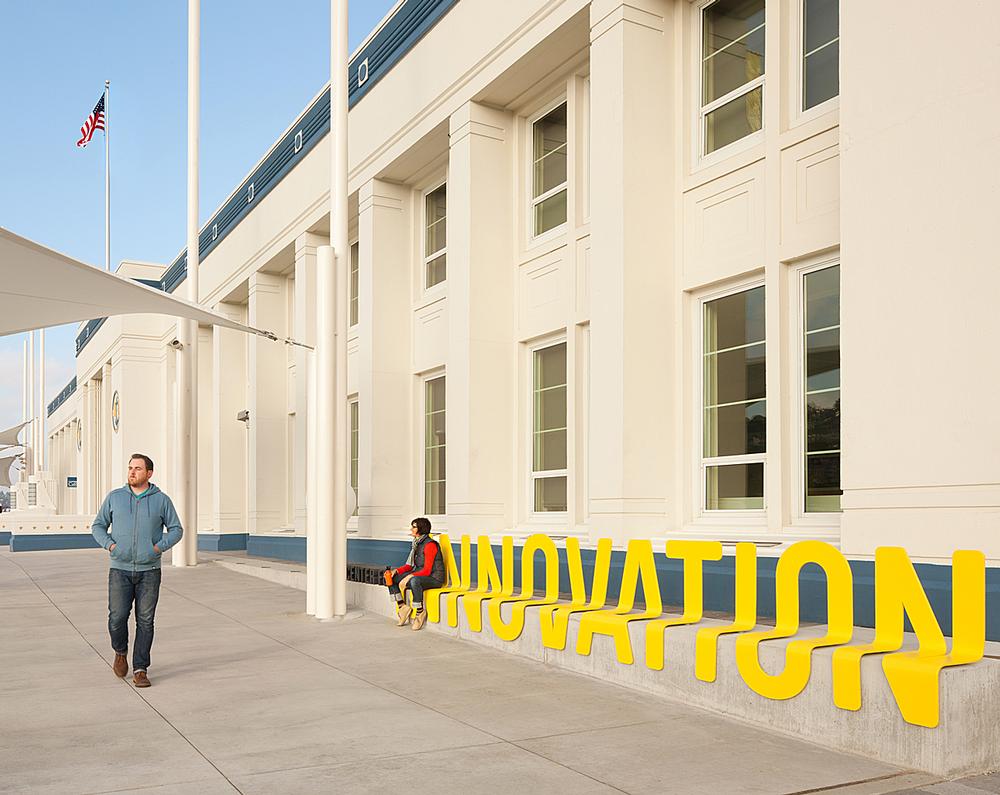
The stories behind innovations in all sectors are on display
The new innovation centre cost $US10m, with the primary funding coming from Amazon founder Jeff Bezos. MOHAI attracts 250,000 visitors a year, and the new centre will broaden the reach
The new innovation centre cost $US10m, with the primary funding coming from Amazon founder Jeff Bezos. MOHAI attracts 250,000 visitors a year, and the new centre will broaden the reach
The new innovation centre cost $US10m, with the primary funding coming from Amazon founder Jeff Bezos. MOHAI attracts 250,000 visitors a year, and the new centre will broaden the reach
The new innovation centre cost $US10m, with the primary funding coming from Amazon founder Jeff Bezos. MOHAI attracts 250,000 visitors a year, and the new centre will broaden the reach
As potential future innovators, teenagers are a key target audience
Visitors can enjoy first person insights from key innovators
An opportunity to reimagine one of the UK’s most recognisable towers has been formally
opened by Rivington Hark, as St Johns Beacon invites operators and partners to shape its
next phase. [more...]
MOHAI’s executive director, Leonard Garfield, describes the Seattle museum’s exciting new development, the Bezos Center for Innovation, named after its principle donor – Amazon founder Jeff Bezos
By Kath Hudson | Published in Attractions Management 2014 issue 2
What was the inspiration for the Bezos Center for Innovation? When we were discussing themes, we realised Seattle has seen a persistent focus on innovation during the last 100 years: companies come to this region to invent the future. So a museum with innovation as the core theme seemed to be appropriate.
What’s its main aim? We set out to present the story of innovation and engage the community with that story, encouraging young people to discuss innovation, the tradition of innovation and how to build a future of innovation. To safeguard our own future, we want to prepare the workforce and community mindset.
It’s not just about inspiring the next generation of entrepreneurs, we want young people to understand that innovation comes in all areas: not just research and development, but civic life and culture and other areas as well.
The lone inventor with a great idea is not necessarily a great innovator: innovation is a team sport.
Have you been inspired by any other museums? There are some great innovation museums out there, including The Tech Museum of Innovation in San Jose and The Henry Ford Museum in Detroit.
However the main inspiration has come from the great innovations within our own community. We talked with several dozen history makers about what they felt was important to share with seventh graders and then we have presented their thoughts.
Where has funding come from? Overall, the Bezos Center has cost US$10m (£6m, E7.3m). The primary funding came from Jeff and MacKenzie Bezos and the rest has come from general funding raised by the museum. Like all US museums, we’re self-funded.
When did Jeff Bezos become involved? We began talking to him in the fall of 2011. He became familiar with our programme and we shared our ideas and expanded the mission of the museum.
He felt passionate about sharing the story of the history of innovation with a broader audience. Seattle is his hometown and being involved with this centre was one way of reaching out to the broader community.
Among our goals was to reach young people. It’s a great community, but we can’t take it for granted that they all have access to information. We wanted to share the innovation tradition with them.
How involved was Jeff Bezos in the project? Bezos inspired the development of the center and encouraged us throughout the project. MOHAI is honoured to be associated with him and the other great innovators included in the Bezos Center.
Who were the exhibition designers? We worked with local architectural firm, Olson Kundig Architects, who have a reputation for being wonderful experimental exhibit designers. Another Seattle firm, Pacific Studio, was responsible for the primary design fabrication and San Francisco company, Stimulant, did the interactive media.
What was your brief to them? Create something beautiful and engaging, present the rich history of Seattle and inspire innovation.
Can you describe some of the content? The centre is a combination of exhibits, oral history, programmes and interactives, asking what does it mean to be innovative and how do we stay innovative.
The Patent Tree details patents over the past 100 years for all types of objects from umbrellas to medical equipment. There are first person oral accounts from innovators themselves about what inspired them: you can hear people like Howard Schultz, who started Starbucks, and Jeff Bezos talk about what it takes for a company to stay at the cutting edge, or hear them talk about their personal lives or the next big idea.
Visitors can also record what they think about innovation, and what they think will be the next challenge. They can post their ideas in a number of ways: graphically, digitally, or type ideas in response to questions from other visitors. They can also conjure up their own invention, or build a business plan and compare it with others.
What’s the most popular feature? What’s Next is an exhibit which changes and discusses the future of innovation. Recently we looked at what would come next in the video game industry. Seattle is headquarters to a number of big names in the industry including Nintendo, Xbox and Valve. We invited young producers to come in and talk about what’s happening and visitors had the opportunity to test games which aren’t yet on the market. Their feedback was then used in games development.
How many companies are showcased? Hundreds. From big names like Boeing, Starbucks and Amazon to lots of companies that are still seeking venture capital. We’ve identified some of the most cutting edge innovation companies, and although some may not be in business next year, we expect others to be shaping the world in 10 or 20 years.
Who’s the target audience? We’re a general museum, so we want to target everyone, but the main demographic we want to engage with is younger people at high school: the pre-teens and young teens who are receptive to information. We also want to reach young professionals.
How many visitors do you expect? In the last year, MOHAI has attracted 250,000, which is more than anticipated in our business plan. It costs $14 (£8.40, E10.20) for adults, and under-15s go free.
What has been the response so far? Visitors have participated, become members, shared ideas and attended events, so the response has been great and we will keep growing and expanding.
What sort of community and educational programmes are you running? All young visitors get an innovation pack, in a backpack, to help them engage with the centre. We have also run classroom programmes, lectures and panel discussions and are identifying partnerships with Seattle companies.
What were the main challenges? Getting all of the stories and artefacts in. Making those decisions was hard because there are so many stories and people and voices.
How has the Bezos Center benefited the museum? It’s the first thing you see on the visit, so whereas history museums usually start with the distant past and work up to present day, we begin our experience with today’s history, leading to a deeper history, making you think of the future.
What are you most proud of? There’s a cliché in the US: build it and people will come, but in the museum world you do wonder about that! So I’m very proud of the fact people are coming, engaging and learning.
Read more from this issue of Attractions Management magazine
View contents of Attractions Management 2014 issue 2
Editor's letter: The New Philanthropists
Tech is hot and as the growing number of tech millionaires
turn their thoughts to philanthropy, tech-related
attactions will prosper
Profile: Mario Mamon
The current chair of IAAPA talks about
his role with the organisation, doubling
the size of family theme park Enchanted
Kingdom in the Philippines and the
devastation of Super Typhoon Haiyan
Museums: MOHAI
MOHAI's executive director,
Leonard Garfield, talks about
the Seattle museum's new Bezos
Center for Innovation, named after
Amazon founder Jeff Bezos
Science centres: Appliance of science
Andreas Waschk and Mike Boris
explain how they made Blueprint
Entertainment into Europe's largest
private science centre operator
Museums: Olympic Movement
Director Francis Gabet describes how
The Olympic Museum's extensive
refurbishment reflects the excitement
and diveristy of the modern Games
Planetariums: Starry skies
The newly upgraded Fiske Planetarium in
Boulder, Colorado now boasts the highest
specification full dome theatre in the US.
Director Douglas Duncan tells us more
Museums: Beautiful minds
The founders of MoMath, the New York
Museum of Mathematics, tell us how
they're on a mission to get ordinary
people to fall in love with maths
World expos: Brave new world
Christian Lachel considers how world
expos can raise global awareness
about what matters for the planet
3D/4D/5D: IMERSA
A review of the fifth annual IMERSA
conference held in Denver, Colorado
Advertisement feature: EAS 2014
The exhibitors reveal what they’ll be showcasing at EAS in
September and what the hot topics of conversation will be
Waterparks: Wet'n'Wild
Wet'n'Wild Sydney has welcomed
a million visitors through its gates
since opening in December. Managing
director Chris Warhurst tells us why
Ticketing: Convenience store
Gateway's Liesel Tarquini explains
how mobile web stores can help
generate additional revenue
for attractions operators
“Look at the disproportionate number of extraordinary organizations founded in Seattle - Microsoft, Costco, Boeing, Fred Hutchinson Cancer Research Center, PACCAR - even UPS was founded here. These companies and their innovations have had a big impact on Seattle, the country, and the world.
There’s something about Seattle that has made it an unusually good place to innovate, and the MOHAI Center for Innovation will help Seattle continue on that course by showcasing and teaching how industrial innovation can play an important role in human advancement. New treatments, affordable flight, a computer on every desk – the core activities of these Seattle organisations have created benefit for people at home and around the world.”
About Bezos Center for Innovation
With the aim of “igniting the innovator within”, the Bezos Center for Innovation opened its doors at Seattle’s Museum of History & Industry (MOHAI) last October.
This US$10m (£6m, E7.3m) extension to the 62-year-old museum furthers the vision of the museum to inspire people to create a better future for themselves and their communities It believes that the preservation and exploration of the past is essential to effective decision making in the future.
Seattle has spawned many of the world’s most successful companies, including Amazon, Starbucks, Nintendo. Microsoft, Expedia and Boeing.
The centre is both a celebration of this successful track record, and prepares the ground for more homegrown talent, inspiring high school kids to continue their city’s legacy.
Amazon founder and CEO, Jeff Bezos – who created the largest retailer on the internet – is the principle donor, allowing the museum to become a reality.
The stories behind innovations in all sectors are on display
The new innovation centre cost $US10m, with the primary funding coming from Amazon founder Jeff Bezos. MOHAI attracts 250,000 visitors a year, and the new centre will broaden the reach
The new innovation centre cost $US10m, with the primary funding coming from Amazon founder Jeff Bezos. MOHAI attracts 250,000 visitors a year, and the new centre will broaden the reach
The new innovation centre cost $US10m, with the primary funding coming from Amazon founder Jeff Bezos. MOHAI attracts 250,000 visitors a year, and the new centre will broaden the reach
The new innovation centre cost $US10m, with the primary funding coming from Amazon founder Jeff Bezos. MOHAI attracts 250,000 visitors a year, and the new centre will broaden the reach
As potential future innovators, teenagers are a key target audience
Visitors can enjoy first person insights from key innovators
Experience design company, BRC Imagination Arts, has completed a transition that sees founder
Bob Rogers pass ownership of the business to four long-serving senior executives, while
remaining actively involved with the company.
Movie Park Germany has opened a new Paramount Pictures-themed attraction as part of its 30th
anniversary celebrations, using immersive storytelling and adaptive reuse to reinforce the park’s
longstanding “Hollywood in Germany” positioning.
Therme Manchester’s 28-acre development, which will include interconnected glass pavilions
that measure 65,000sq m, will be the largest bathing and wellbeing attraction in the world once
complete, according to prof David Russell, CEO of Therme UK.
Efteling has opened Hooghmoed, a new family drop tower designed to broaden the appeal of its
recently launched Sirene Island themed area and introduce younger visitors to thrill attractions.
A proposed Puy du Fou development near Bicester and Universal Destinations and Experiences’
planned resort in Bedford are emerging as part of a wider transformation of the Oxford–
Cambridge Growth Corridor into a major centre for UK leisure and tourism inv
Shedd Aquarium has opened the Immersion Theater developed in partnership with SimEx-
Iwerks, as part of a wider strategy to enhance the guest experience and create additional
revenue opportunities.
The UK government has announced a temporary reduction in VAT on visitor attractions and
children’s meals as part of a summer cost-of-living support package designed to stimulate the
visitor economy and encourage family days out.
As designer Yinka Ilori prepares for his first solo gallery show in London, he speaks exclusively
to CLADmag about his mission to spread joy, the power of play, and his bold approach to using
colour (including the colours you won’t see in his work).
The government of Thailand is exploring plans for a THB300bn (£6.3bn, US$8.3bn)
entertainment complex in the country’s Eastern Economic Corridor (EEC), with officials
proposing a large-scale theme park and sports destination as part of a broader tourism and
economic development strategy.
Royal Caribbean has revealed its Hero of the Seas cruise ship, home to the most pools at sea
(nine), and a record-breaking 28 dining venues, as well as attractions including a waterpark
with two new family raft slides.
An opportunity to reimagine one of the UK’s most recognisable towers has been formally
opened by Rivington Hark, as St Johns Beacon invites operators and partners to shape its
next phase. [more...]