The majority of visitor attractions rely in part on donations to meet the cost of investment, so wooing benefactors and donors is part of the process. As more tech millionaires are made, will attractions which focus on tech-related topics find it easier to fundraise?
By Liz Terry | Published in Attractions Management 2014 issue 2
The leisure and attractions industries have always caught the eye of the rich and famous. It’s no coincidence that musicians and film stars invest in restaurants, build hotels and buy ski resorts and Caribbean islands or that philanthropists have sunk parts of their fortunes into building some of the world’s most incredible museums and galleries as legacies.
As times change, people acquire their wealth by different means and their passions – to an extent – define the kinds of attractions which get built. This is particularly the case in the US, where huge wealth resides with a small elite – The One Percent. The Victorians explored, hunted, researched and catalogued the world as never before, so philanthropic collections from this era are heavy on the taxidermy. They were great art lovers, so we have galleries filled with amazing paintings and portraits.
In this issue, we look at the new philanthropists – the people influencing the direction in which the industry develops by their choice of funding and their passions. The first – the newly opened Bezos Centre for Innovation at the Museum of History and Industry in Seattle, Washington State, US – is featured on see page 30.
The attraction, part-funded by Amazon’s Jeff Bezos and his wife MacKenzie, includes content which shares and celebrates Seattle’s entrepreneurial achievements: the city is home to a significant number of successful corporations, from Boeing to Microsoft – and Amazon of course.
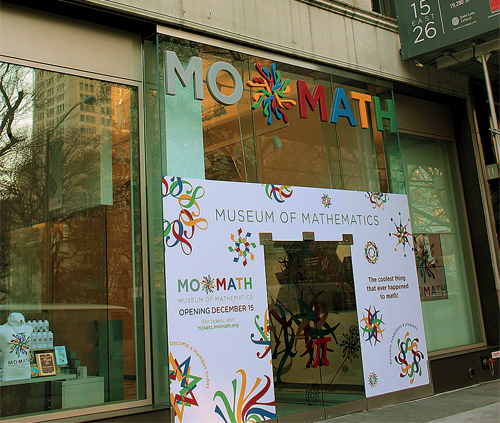
Money from tech is driving many developments and skewing the attractions sector towards technology, with Google one of the most prominent donors. On page 48 we look at MoMath – the Museum of Mathematics in New York City, which had a US$2m donation from the internet giant.
Each year, through its charitable arm, Google Giving, the company donates US$100m (E72.4m, £59.6m) in grants, as well as 50,000 hours support and $1bn (E724m, £596m) in product to good causes, making it a significant force in third sector funding and attractions are in the front line to benefit.
These days, in addition to philanthropy, there’s a broader than ever range of routes by which attractions come into existence, from crowd funding sources like Kickstarter to corporatelands and everything in between. Fittingly – in this age of the cult of personality – we even have attractions which focus on a celebrity: football star Christiano Ronaldo has opened a museum dedicated to himself on his home island of Madeira, Portugal as a gift to fans, for example.
But tech is hot and the emerging tech elite have shown intent to do good with their money, so donations from this source will continue to have an impact. When you consider that the Facebook flotation alone created 1,000 dollar millionaires, it’s clear the money’s there, meaning we’re likely to see more tech-related attractions receiving funding as the new philanthropists hit their stride.
Read more from this issue of Attractions Management magazine
View contents of Attractions Management 2014 issue 2
Editor's letter: The New Philanthropists
Tech is hot and as the growing number of tech millionaires
turn their thoughts to philanthropy, tech-related
attactions will prosper
Profile: Mario Mamon
The current chair of IAAPA talks about
his role with the organisation, doubling
the size of family theme park Enchanted
Kingdom in the Philippines and the
devastation of Super Typhoon Haiyan
Museums: MOHAI
MOHAI's executive director,
Leonard Garfield, talks about
the Seattle museum's new Bezos
Center for Innovation, named after
Amazon founder Jeff Bezos
Science centres: Appliance of science
Andreas Waschk and Mike Boris
explain how they made Blueprint
Entertainment into Europe's largest
private science centre operator
Museums: Olympic Movement
Director Francis Gabet describes how
The Olympic Museum's extensive
refurbishment reflects the excitement
and diveristy of the modern Games
Planetariums: Starry skies
The newly upgraded Fiske Planetarium in
Boulder, Colorado now boasts the highest
specification full dome theatre in the US.
Director Douglas Duncan tells us more
Museums: Beautiful minds
The founders of MoMath, the New York
Museum of Mathematics, tell us how
they're on a mission to get ordinary
people to fall in love with maths
World expos: Brave new world
Christian Lachel considers how world
expos can raise global awareness
about what matters for the planet
3D/4D/5D: IMERSA
A review of the fifth annual IMERSA
conference held in Denver, Colorado
Advertisement feature: EAS 2014
The exhibitors reveal what they’ll be showcasing at EAS in
September and what the hot topics of conversation will be
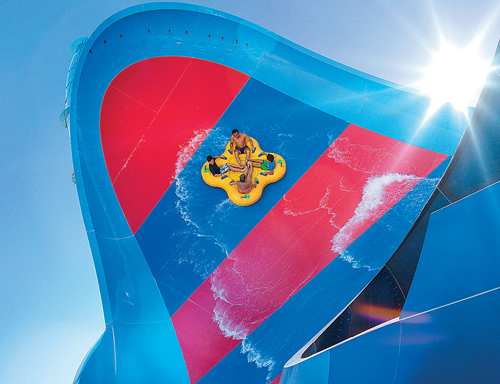
Waterparks: Wet'n'Wild
Wet'n'Wild Sydney has welcomed
a million visitors through its gates
since opening in December. Managing
director Chris Warhurst tells us why
Ticketing: Convenience store
Gateway's Liesel Tarquini explains
how mobile web stores can help
generate additional revenue
for attractions operators
The majority of visitor attractions rely in part on donations to meet the cost of investment, so wooing benefactors and donors is part of the process. As more tech millionaires are made, will attractions which focus on tech-related topics find it easier to fundraise?
By Liz Terry | Published in Attractions Management 2014 issue 2
The leisure and attractions industries have always caught the eye of the rich and famous. It’s no coincidence that musicians and film stars invest in restaurants, build hotels and buy ski resorts and Caribbean islands or that philanthropists have sunk parts of their fortunes into building some of the world’s most incredible museums and galleries as legacies.
As times change, people acquire their wealth by different means and their passions – to an extent – define the kinds of attractions which get built. This is particularly the case in the US, where huge wealth resides with a small elite – The One Percent. The Victorians explored, hunted, researched and catalogued the world as never before, so philanthropic collections from this era are heavy on the taxidermy. They were great art lovers, so we have galleries filled with amazing paintings and portraits.
In this issue, we look at the new philanthropists – the people influencing the direction in which the industry develops by their choice of funding and their passions. The first – the newly opened Bezos Centre for Innovation at the Museum of History and Industry in Seattle, Washington State, US – is featured on see page 30.
The attraction, part-funded by Amazon’s Jeff Bezos and his wife MacKenzie, includes content which shares and celebrates Seattle’s entrepreneurial achievements: the city is home to a significant number of successful corporations, from Boeing to Microsoft – and Amazon of course.
Money from tech is driving many developments and skewing the attractions sector towards technology, with Google one of the most prominent donors. On page 48 we look at MoMath – the Museum of Mathematics in New York City, which had a US$2m donation from the internet giant.
Each year, through its charitable arm, Google Giving, the company donates US$100m (E72.4m, £59.6m) in grants, as well as 50,000 hours support and $1bn (E724m, £596m) in product to good causes, making it a significant force in third sector funding and attractions are in the front line to benefit.
These days, in addition to philanthropy, there’s a broader than ever range of routes by which attractions come into existence, from crowd funding sources like Kickstarter to corporatelands and everything in between. Fittingly – in this age of the cult of personality – we even have attractions which focus on a celebrity: football star Christiano Ronaldo has opened a museum dedicated to himself on his home island of Madeira, Portugal as a gift to fans, for example.
But tech is hot and the emerging tech elite have shown intent to do good with their money, so donations from this source will continue to have an impact. When you consider that the Facebook flotation alone created 1,000 dollar millionaires, it’s clear the money’s there, meaning we’re likely to see more tech-related attractions receiving funding as the new philanthropists hit their stride.
Read more from this issue of Attractions Management magazine
View contents of Attractions Management 2014 issue 2
Editor's letter: The New Philanthropists
Tech is hot and as the growing number of tech millionaires
turn their thoughts to philanthropy, tech-related
attactions will prosper
Profile: Mario Mamon
The current chair of IAAPA talks about
his role with the organisation, doubling
the size of family theme park Enchanted
Kingdom in the Philippines and the
devastation of Super Typhoon Haiyan
Museums: MOHAI
MOHAI's executive director,
Leonard Garfield, talks about
the Seattle museum's new Bezos
Center for Innovation, named after
Amazon founder Jeff Bezos
Science centres: Appliance of science
Andreas Waschk and Mike Boris
explain how they made Blueprint
Entertainment into Europe's largest
private science centre operator
Museums: Olympic Movement
Director Francis Gabet describes how
The Olympic Museum's extensive
refurbishment reflects the excitement
and diveristy of the modern Games
Planetariums: Starry skies
The newly upgraded Fiske Planetarium in
Boulder, Colorado now boasts the highest
specification full dome theatre in the US.
Director Douglas Duncan tells us more
Museums: Beautiful minds
The founders of MoMath, the New York
Museum of Mathematics, tell us how
they're on a mission to get ordinary
people to fall in love with maths
World expos: Brave new world
Christian Lachel considers how world
expos can raise global awareness
about what matters for the planet
3D/4D/5D: IMERSA
A review of the fifth annual IMERSA
conference held in Denver, Colorado
Advertisement feature: EAS 2014
The exhibitors reveal what they’ll be showcasing at EAS in
September and what the hot topics of conversation will be
Waterparks: Wet'n'Wild
Wet'n'Wild Sydney has welcomed
a million visitors through its gates
since opening in December. Managing
director Chris Warhurst tells us why
Ticketing: Convenience store
Gateway's Liesel Tarquini explains
how mobile web stores can help
generate additional revenue
for attractions operators
London Museum will open four new food and drink destinations when it launches its new home
at Smithfield on 28 November, making hospitality a central part of the visitor experience at one
of the capital's biggest cultural openings of the year.
OMA has completed a major transformation of New York's New Museum, creating a larger
cultural campus that combines expanded exhibition spaces with learning, performance,
hospitality and public programming.
A US$50 million (£44.2 million, €51.2 million) transformation of Chicago's historic McCormick
Mansion has created a new destination that combines live magic, immersive theatre, dining and
private membership under one roof.
The Montana Historical Society has officially celebrated the opening of its new Montana
Heritage
Center, a US$107 million (£79 million, €92 million) destination that combines immersive
storytelling with cutting-edge audiovisual technology to bring the sta
San Antonio Zoo has reported a US$283 million economic impact for 2025, following a decade-
long transformation programme that has seen almost US$200 million invested into the Texas
attraction.
Plans for the AU$180 million redevelopment of Reef HQ Aquarium in Townsville, Australia, are
progressing, with the project set to transform the attraction into a global centre for reef
education and conservation.
Abu Dhabi-based investment firm Mubadala Capital has made a binding, fully financed
€1 billion
offer to acquire Pierre and Vacances SA, the European holiday resort operator behind the
continental European Center Parcs business.
Disney has reaffirmed its commitment to investing US$30 billion in its US parks and cruise
business by 2033, using new America250 celebrations to underline the role its attractions play
in supporting jobs, tourism and economic growth.
Expo 2030 Riyadh is being planned as a permanent visitor destination, with organisers
confirming the six-million-square-metre site will become a Global Village after the event closes.
The owner of one of Australia's best-known waterparks has acquired a major competitor,
creating a new attractions business spanning two of the country's largest visitor destinations.