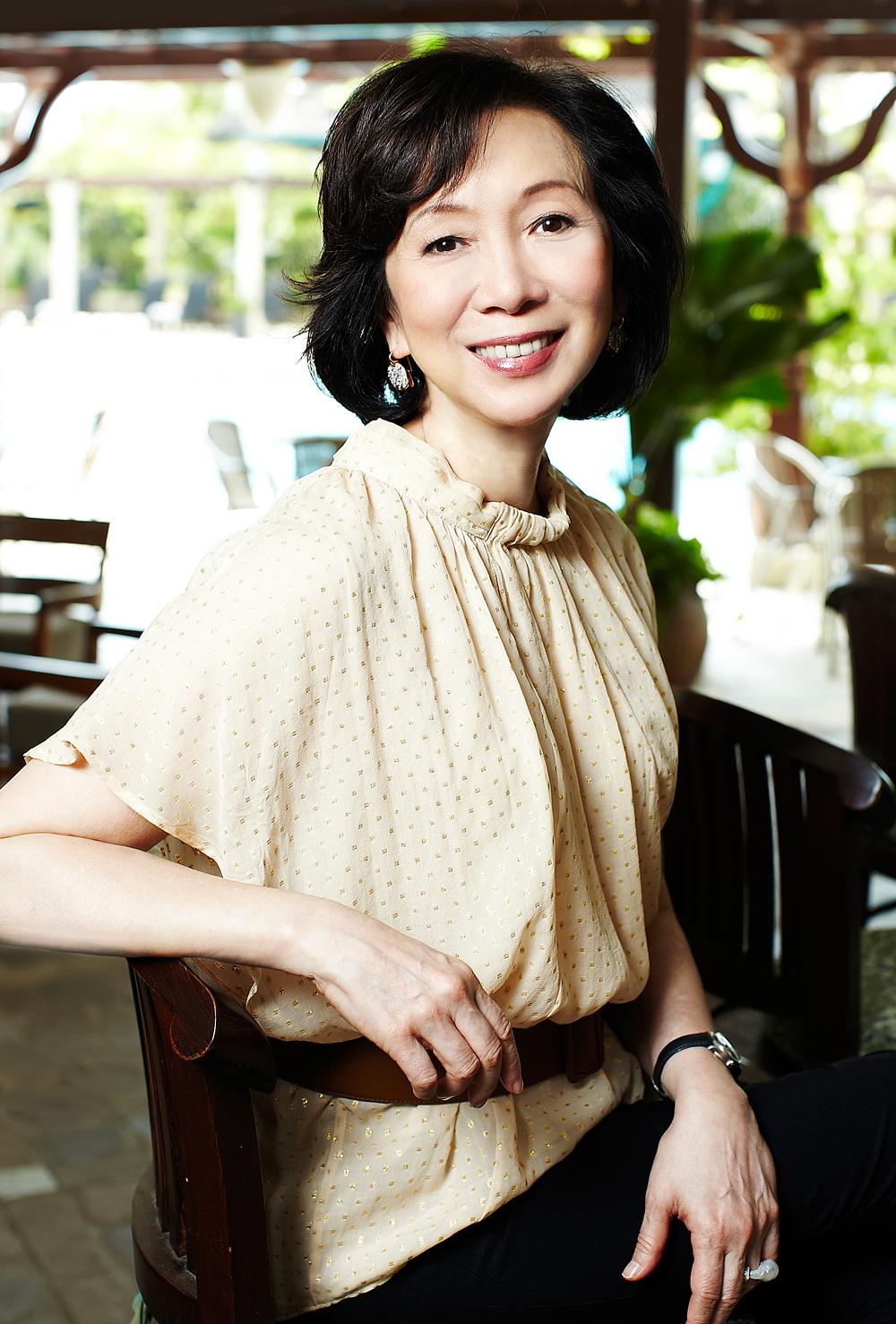
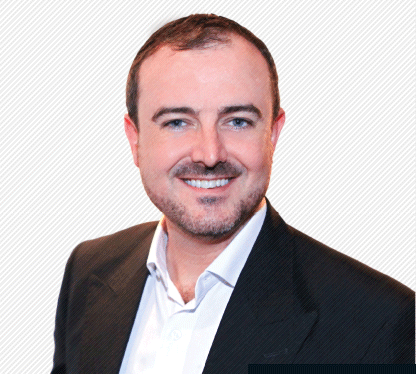
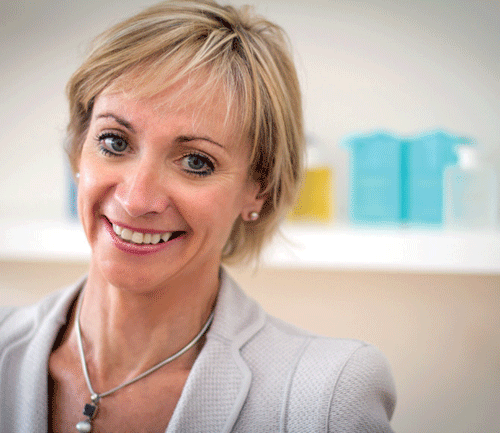
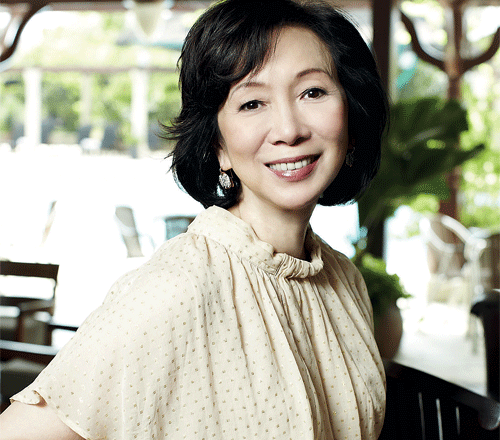
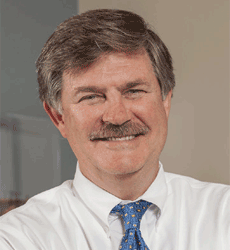
Wee is on the board of the Pan Pacific Hotels Group – the parent company of St Gregory
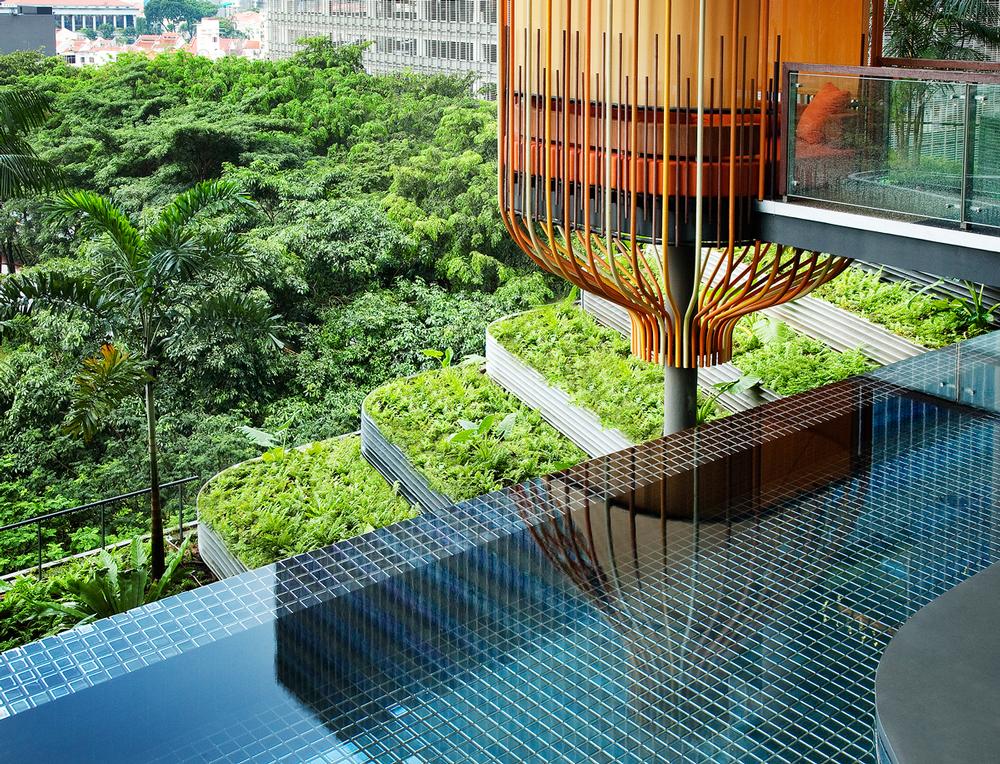
he past year has been one of expansion for St Gregory, the spa brand owned by the Pan Pacific Hotels Group (PPHG), on home ground. Most notably, the Singaporean company has opened at Parkroyal on Pickering – PPHG’s SG$350m (US$273m, €204m, £176m) ‘hotel-in-a-garden’ concept, which has been hitting the headlines for its groundbreaking use of integrated landscaping.
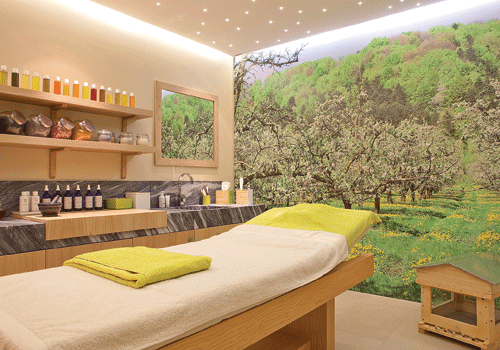
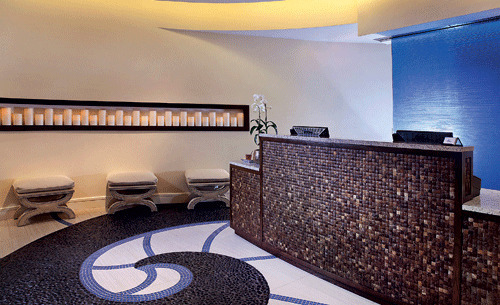
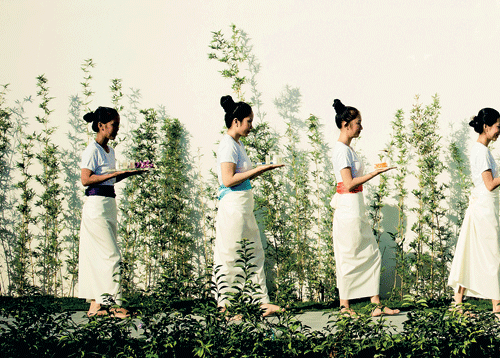
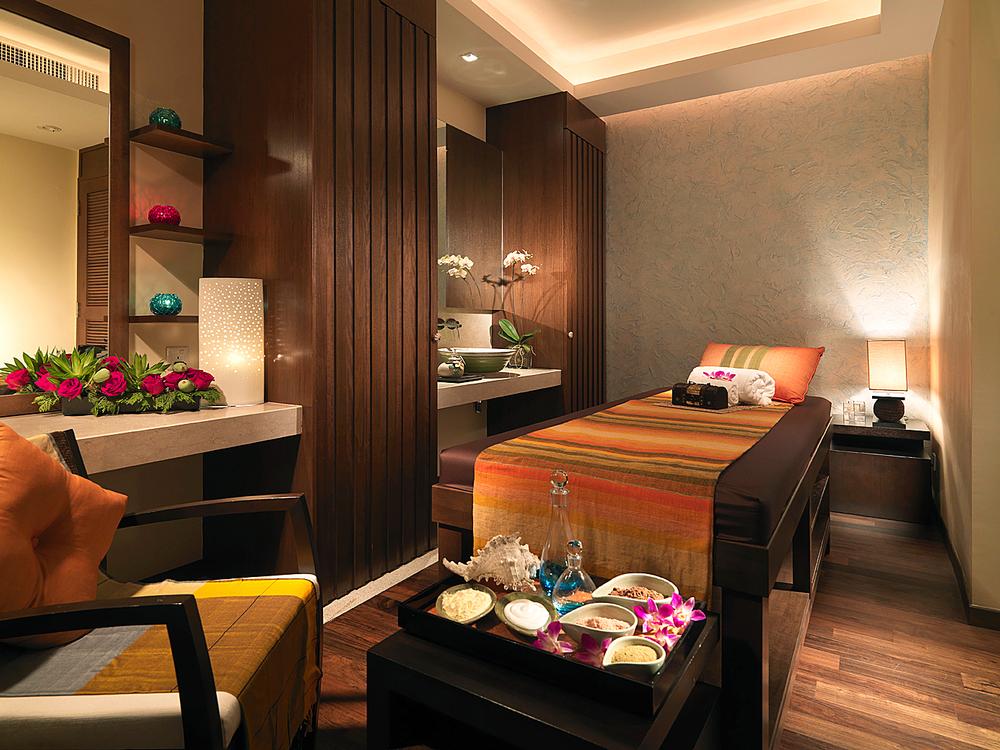
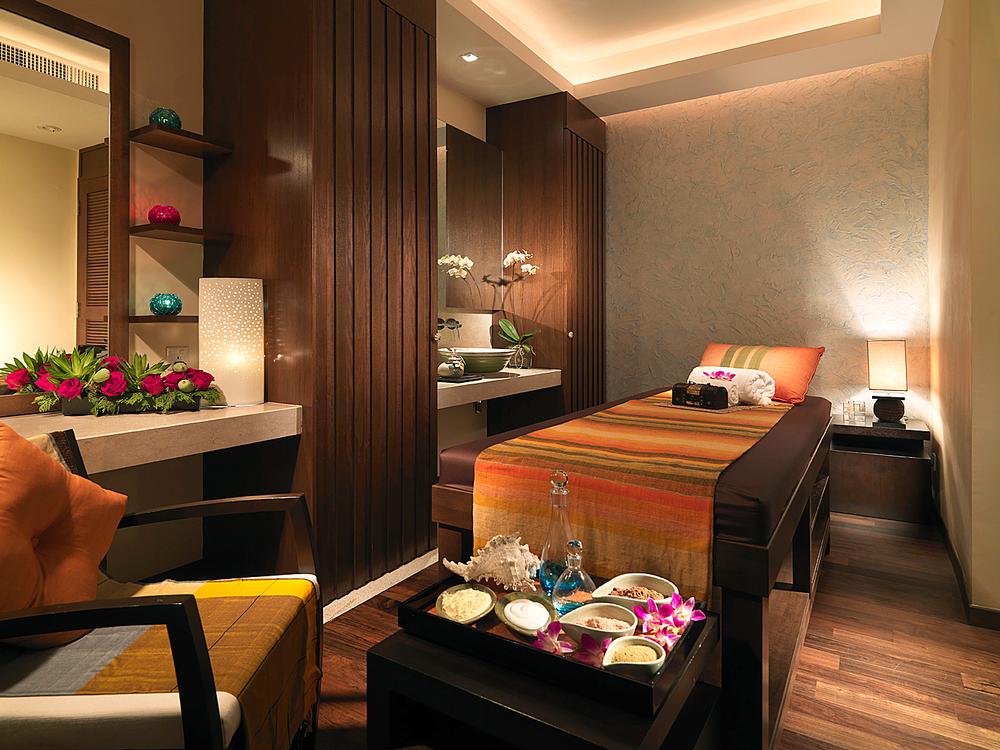
“Our spas have to fit into the individual hotel’s design to ensure continuity of experience,” points out Wee Wei Ling, the chief operating officer of St Gregory. “So we were happy to sign off on the significant inclusion of teak wood, natural decorative motifs and outdoor features as a reflection of the overall garden concept.”
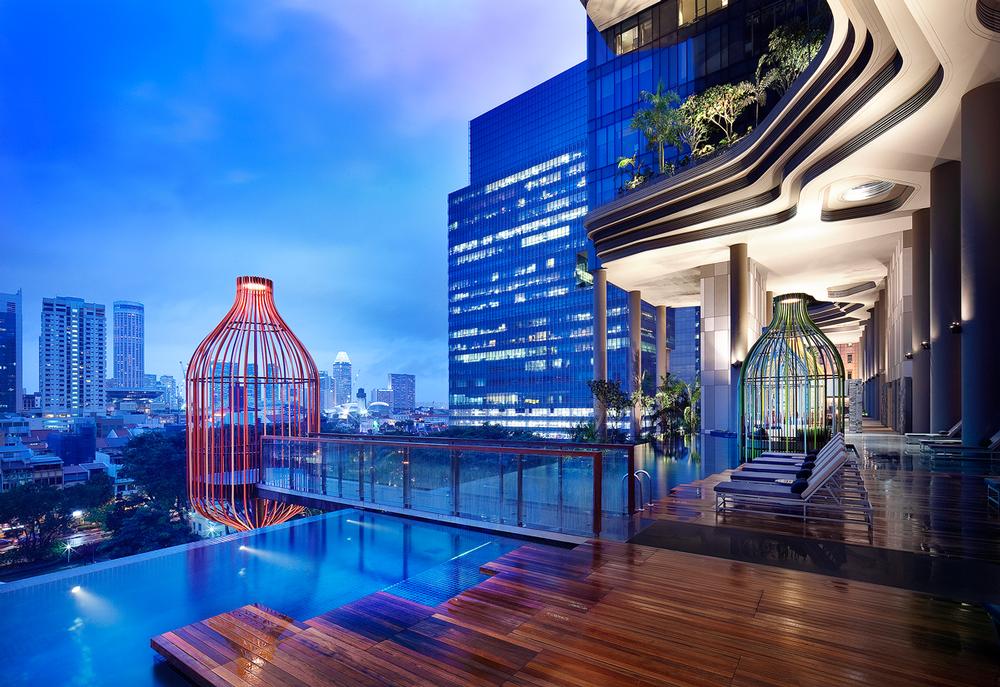
The modest-sized spa with four treatment rooms forms part of a 4,085sq m (43,970sq ft) wellness floor with an infinity pool, whirlpool, gym, 300m (984ft) garden walk and brightly hued relaxation cabanas shaped like Chinese birdcages. Indeed, it blends in seamlessly with the WOHA eco-designed hotel which boasts 15,000sq m (161,460sq ft) of sky gardens, planter terraces, water features and living green walls.
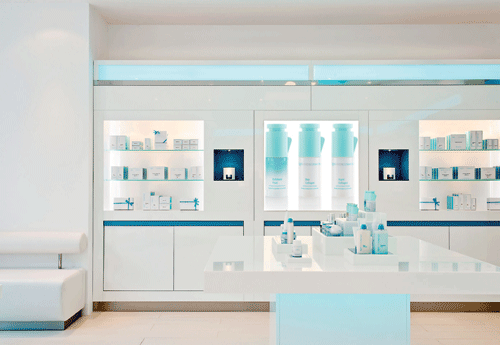
Hot on the heels of Parkroyal on Pickering, is the reopening of the spa at Parkroyal on Beach Road – which is St Gregory’s flagship property – following a major design overhaul. “We knew we had to improve it, particularly since it’s the big sister to our new spa at Parkroyal on Pickering,” says Wee. Under the direction of local design company KKS International, the refurbished 780sq m (8,396sq ft) eight-treatment room facility shows no sign of its original Balinese aesthetic, instead adopting abundant foliage, outdoor landscaping and earthy tones to create a ‘forest in the city’ theme.
Taking into account the unveiling of another St Gregory spa at Pan Pacific Orchard back in October 2012, there are now six outlets in Singapore, with six more dotted around China, Malaysia, Vietnam and Japan.
But why did Wee initially develop the spa concept and what do the facilities bring to the PPHG business?
A guest amenity “I was general manager of Parkroyal on Beach Road and I needed a unique selling proposition to bring more people to the area,” recalls Wee whose hospitality career spans nearly 30 years. “During travels to Europe and the US, I’d come across health centres that were of particular interest to me because I’m health conscious. So I decided to offer some basic treatments to my hotel guests by bringing in a local beauty salon. It seemed to work, which prompted us to open a spa at another one of our hotels situated by a small lane called St Gregory and the name stuck.”
Back in 1997, though, spas hadn’t shrugged off the murky association with massage parlours and many of Wee’s colleagues wondered why a reputed company would want to operate such a business. Fortuitously Wee, who studied in London and visited the city regularly, took the decision to work with British brand Elemis and St Gregory remains its exclusive distributor in Singapore. She also brought in holistic treatments, in particular traditional Chinese medicine (TCM) therapies such as tui na and reflexology, but ensured their efficacy by having them delivered by qualified physicians. Indeed efficacious treatments form one for the four pillars of the St Gregory offering, alongside quality of touch and service, cleanliness and good housekeeping.
St Gregory is run as an independent business – it has its own P&L and isn’t restricted to operating in PPHG properties. That said, nine out of its 12 facilities are located in Parkroyal or Pan Pacific hotels – PPHG’s two major hospitality brands that account for over 30 owned/operated sites across Asia, Oceania and North America. PPHG itself is a subsidiary of Singapore’s respected property-focused UOL Group, led by chairman Wee Cho Yaw, who is also Wee’s father.
Wee, who also serves on the board of PPHG, explains that it’s not always right to think of spas purely in terms of revenue. “A spa should be seen as a guest amenity first and profit-making centre second. Wellbeing facilities are an extension of the hotel experience, a way to offer value to our guests. But not all [third party] owners agree and sometimes they’ll lease out their spas to squeeze out more profit. Consequently we’ve seen owners hurt by negative publicity because they’ve brought onboard tenants who don’t deliver quality control or consistency of service. Such publicity can also be damaging for us as a hotel group even though we don’t operate the spa.”
Adapting the model Not every PPHG hotel has a spa, explains Wee, so when one is included – where PPHG is also the owning company – business requirements are assessed and the model adapted according to location.
The revamped wellness floor at Beach Road, for example, is targeted at a local membership base including corporate clients, as well as hotel guests, because it’s surrounded by mixed-use developments. Annual membership, costing SG$2,500 (US$1,950, €1,450, £1,250) a year, includes access to the facilities and fitness classes, as well as discounts on spa services and retail products. Approximately 60 per cent of guests at this location hold membership packages.
Wee is less concerned, however, about manipulating her treatment menus to feel local. She says: “Frankly I have no idea what a Singaporean spa treatment is supposed to be because we don’t have a native spa culture to speak of. I don’t believe in manufacturing treatments for the sake of it nor offering fanciful therapies for marketing purposes.”
She’s refreshingly honest when it comes to the subject of spa size, too. At Parkroyal on Pickering, which is a 367-bedroom property, the decision to limit the new spa to four treatment rooms may raise eyebrows. But St Gregory’s founder is clear about the rationale: “This hotel is situated in the central business district and caters for corporate rather than leisure travellers as well as busy executives who want to drop in for short treatments. There’s no point having empty treatment rooms.”
Wee acknowledges that she, like many entrepreneurs, was once preoccupied with size. But she’s witnessed ‘over-the-top facilities’ in the industry struggling to cover basic monthly costs and being forced to close. “When people ask why our spas aren’t bigger, why we don’t have more outlets, I respond by saying I don’t believe in Cinderella dreams,” Wee explains. “I don’t want my staff to feel pressured into pushing products and treatments because we’re driven only by the bottom line.”
The go-to-choice Although St Gregory is unable to disclose financials, its approach seems to be paying off in terms of above-industry-average capture rates and peer recognition. At resort locations such as Parkroyal Penang Resort in Malaysia, at least 10 per cent of hotel guests have a spa treatment while the urban locations capture at least 5 per cent. St Gregory at Parkroyal Kuala Lumpur has been named Best Luxury Hotel Spa in Malaysia for the third year running at the World Luxury Hotel Awards, while the brand’s signature treatments are regularly lauded in consumer magazines.
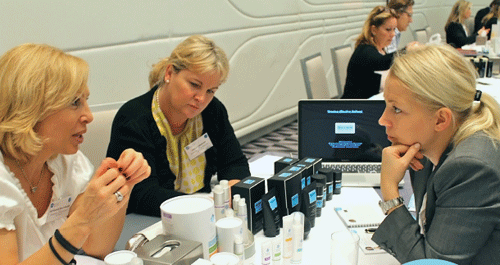
Wee puts this down to the strength of her partnership with her two main suppliers, Elemis and Thalion, as well as the training standards for therapists. Yet recruitment presents a sustained challenge, particularly as Singaporean regulations restrict the length of time that overseas therapists can work in the country. Add the competitive climate in the region as more spas open and Wee points out how this leads to an unproductive environment in which there is little staff loyalty. “You can become like a training centre if you’re not careful,” she says. “You invest in staff, give them a career path, but they’re either poached or forced to move on. Retention can be a real problem. Fortunately we have staff who’ve stayed with us for 10 to 15 years because we spotted their potential at reception level, trained them up as therapists, and then promoted them to managers. That’s why our therapists, on average in their 40s, are older than at other spas.”
As a homegrown brand with the backing of a Singapore Exchange-listed company, St Gregory carries credibility in a market where members of local spas have been left high and dry after closures. As such, all St Gregory membership package holders in Singapore are protected by its recognised insurer. Through links to UOL Group’s associate banking company, UOB, holders of select credit cards also receive attractive discounts on St Gregory spa services, cementing the brand’s reputation as the go-to-choice for affluent clients seeking consistency of treatments and service. “Spas should be the symbol of a successful hotel operation,” Wee concludes. “They must be viable, they must break even, but beyond this it is about giving our guests peace of mind and a good experience. I’d love to think that we secure repeat hotel custom because our clients are impressed with St Gregory.”
Read more from this issue of Attractions Management magazine
View contents of Attractions Management 2013 issue 3
Interview: Lee David Stephens
Thai-based management company
MSpa runs 44 spas with 450 staff. The
General Manager talks to Katie Barnes
about a recent deal with Per Aquum
and its rapid expansion
Interview: Kathryn Moore
MSpa’s operations director is creating
a brand new wellness concept and a
fast track spa manager programme
Company Profile Promotion: GOCO Hospitality
After just four years of operation GOCO Hospitality is regarded as a global leader
in wellness hospitality segment of the industry. With 22 projects on its books,
spanning three continents, we look at what underpins the company’s success
Company profile promotion: Comfort Zone
The Comfort Zone spa brand has been newly revamped and revitalised to better communicate its core offerings as a natural, scientific and soul-centred skincare and lifestyle brand
Green: Being green
Ecocert’s new Being label is the first
public-facing green certification for
spa operations, eco-friendly
Promotional Feature: Part 4 - Pre-Opening
Opening a spa successfully is all about planning. Gary
Henkin, president of WTS and Doug Chambers, principal
of Blu Spas, share their experience of pre-opening
Company Profile Promotion: Aromatherapy Associates
Global product company Aromatherapy Associates knows how
to make treatments and retail work in a spa environment and
partners with operators to make a real point of difference
Industry survey: Price to pay
A GSWS report on global therapist pay focuses on differing salary composition, benefit and commission structures. Lisa Starr takes a closer look
Spa Retreat: Running on juice
Juice Master founder Jason Vale tells
Kate Cracknell about its retreats and
how juicing can help prevent disease
Interview: Wee Wei Ling
Neena Dhillon meets the founder of
St Gregory: the spa brand owned by Pan
Pacific that’s just opened a wellness
floor in Singapore’s ‘hotel in a garden’
Research: Moving target
A McKinsey study highlights the fast-changing
spending patterns of China’s
luxury consumers. Leonor Stanton
finds out what this means for spas
Advertisement Promotion: A gift from Ez-Runner...
Vouchers can be used as a stand-alone system integrated into your website or added as a module of Ez-Runner’s leisure management software to control your spa facility
Wee is on the board of the Pan Pacific Hotels Group – the parent company of St Gregory
he past year has been one of expansion for St Gregory, the spa brand owned by the Pan Pacific Hotels Group (PPHG), on home ground. Most notably, the Singaporean company has opened at Parkroyal on Pickering – PPHG’s SG$350m (US$273m, €204m, £176m) ‘hotel-in-a-garden’ concept, which has been hitting the headlines for its groundbreaking use of integrated landscaping.
“Our spas have to fit into the individual hotel’s design to ensure continuity of experience,” points out Wee Wei Ling, the chief operating officer of St Gregory. “So we were happy to sign off on the significant inclusion of teak wood, natural decorative motifs and outdoor features as a reflection of the overall garden concept.”
The modest-sized spa with four treatment rooms forms part of a 4,085sq m (43,970sq ft) wellness floor with an infinity pool, whirlpool, gym, 300m (984ft) garden walk and brightly hued relaxation cabanas shaped like Chinese birdcages. Indeed, it blends in seamlessly with the WOHA eco-designed hotel which boasts 15,000sq m (161,460sq ft) of sky gardens, planter terraces, water features and living green walls.
Hot on the heels of Parkroyal on Pickering, is the reopening of the spa at Parkroyal on Beach Road – which is St Gregory’s flagship property – following a major design overhaul. “We knew we had to improve it, particularly since it’s the big sister to our new spa at Parkroyal on Pickering,” says Wee. Under the direction of local design company KKS International, the refurbished 780sq m (8,396sq ft) eight-treatment room facility shows no sign of its original Balinese aesthetic, instead adopting abundant foliage, outdoor landscaping and earthy tones to create a ‘forest in the city’ theme.
Taking into account the unveiling of another St Gregory spa at Pan Pacific Orchard back in October 2012, there are now six outlets in Singapore, with six more dotted around China, Malaysia, Vietnam and Japan.
But why did Wee initially develop the spa concept and what do the facilities bring to the PPHG business?
A guest amenity “I was general manager of Parkroyal on Beach Road and I needed a unique selling proposition to bring more people to the area,” recalls Wee whose hospitality career spans nearly 30 years. “During travels to Europe and the US, I’d come across health centres that were of particular interest to me because I’m health conscious. So I decided to offer some basic treatments to my hotel guests by bringing in a local beauty salon. It seemed to work, which prompted us to open a spa at another one of our hotels situated by a small lane called St Gregory and the name stuck.”
Back in 1997, though, spas hadn’t shrugged off the murky association with massage parlours and many of Wee’s colleagues wondered why a reputed company would want to operate such a business. Fortuitously Wee, who studied in London and visited the city regularly, took the decision to work with British brand Elemis and St Gregory remains its exclusive distributor in Singapore. She also brought in holistic treatments, in particular traditional Chinese medicine (TCM) therapies such as tui na and reflexology, but ensured their efficacy by having them delivered by qualified physicians. Indeed efficacious treatments form one for the four pillars of the St Gregory offering, alongside quality of touch and service, cleanliness and good housekeeping.
St Gregory is run as an independent business – it has its own P&L and isn’t restricted to operating in PPHG properties. That said, nine out of its 12 facilities are located in Parkroyal or Pan Pacific hotels – PPHG’s two major hospitality brands that account for over 30 owned/operated sites across Asia, Oceania and North America. PPHG itself is a subsidiary of Singapore’s respected property-focused UOL Group, led by chairman Wee Cho Yaw, who is also Wee’s father.
Wee, who also serves on the board of PPHG, explains that it’s not always right to think of spas purely in terms of revenue. “A spa should be seen as a guest amenity first and profit-making centre second. Wellbeing facilities are an extension of the hotel experience, a way to offer value to our guests. But not all [third party] owners agree and sometimes they’ll lease out their spas to squeeze out more profit. Consequently we’ve seen owners hurt by negative publicity because they’ve brought onboard tenants who don’t deliver quality control or consistency of service. Such publicity can also be damaging for us as a hotel group even though we don’t operate the spa.”
Adapting the model Not every PPHG hotel has a spa, explains Wee, so when one is included – where PPHG is also the owning company – business requirements are assessed and the model adapted according to location.
The revamped wellness floor at Beach Road, for example, is targeted at a local membership base including corporate clients, as well as hotel guests, because it’s surrounded by mixed-use developments. Annual membership, costing SG$2,500 (US$1,950, €1,450, £1,250) a year, includes access to the facilities and fitness classes, as well as discounts on spa services and retail products. Approximately 60 per cent of guests at this location hold membership packages.
Wee is less concerned, however, about manipulating her treatment menus to feel local. She says: “Frankly I have no idea what a Singaporean spa treatment is supposed to be because we don’t have a native spa culture to speak of. I don’t believe in manufacturing treatments for the sake of it nor offering fanciful therapies for marketing purposes.”
She’s refreshingly honest when it comes to the subject of spa size, too. At Parkroyal on Pickering, which is a 367-bedroom property, the decision to limit the new spa to four treatment rooms may raise eyebrows. But St Gregory’s founder is clear about the rationale: “This hotel is situated in the central business district and caters for corporate rather than leisure travellers as well as busy executives who want to drop in for short treatments. There’s no point having empty treatment rooms.”
Wee acknowledges that she, like many entrepreneurs, was once preoccupied with size. But she’s witnessed ‘over-the-top facilities’ in the industry struggling to cover basic monthly costs and being forced to close. “When people ask why our spas aren’t bigger, why we don’t have more outlets, I respond by saying I don’t believe in Cinderella dreams,” Wee explains. “I don’t want my staff to feel pressured into pushing products and treatments because we’re driven only by the bottom line.”
The go-to-choice Although St Gregory is unable to disclose financials, its approach seems to be paying off in terms of above-industry-average capture rates and peer recognition. At resort locations such as Parkroyal Penang Resort in Malaysia, at least 10 per cent of hotel guests have a spa treatment while the urban locations capture at least 5 per cent. St Gregory at Parkroyal Kuala Lumpur has been named Best Luxury Hotel Spa in Malaysia for the third year running at the World Luxury Hotel Awards, while the brand’s signature treatments are regularly lauded in consumer magazines.
Wee puts this down to the strength of her partnership with her two main suppliers, Elemis and Thalion, as well as the training standards for therapists. Yet recruitment presents a sustained challenge, particularly as Singaporean regulations restrict the length of time that overseas therapists can work in the country. Add the competitive climate in the region as more spas open and Wee points out how this leads to an unproductive environment in which there is little staff loyalty. “You can become like a training centre if you’re not careful,” she says. “You invest in staff, give them a career path, but they’re either poached or forced to move on. Retention can be a real problem. Fortunately we have staff who’ve stayed with us for 10 to 15 years because we spotted their potential at reception level, trained them up as therapists, and then promoted them to managers. That’s why our therapists, on average in their 40s, are older than at other spas.”
As a homegrown brand with the backing of a Singapore Exchange-listed company, St Gregory carries credibility in a market where members of local spas have been left high and dry after closures. As such, all St Gregory membership package holders in Singapore are protected by its recognised insurer. Through links to UOL Group’s associate banking company, UOB, holders of select credit cards also receive attractive discounts on St Gregory spa services, cementing the brand’s reputation as the go-to-choice for affluent clients seeking consistency of treatments and service. “Spas should be the symbol of a successful hotel operation,” Wee concludes. “They must be viable, they must break even, but beyond this it is about giving our guests peace of mind and a good experience. I’d love to think that we secure repeat hotel custom because our clients are impressed with St Gregory.”
Read more from this issue of Attractions Management magazine
View contents of Attractions Management 2013 issue 3
Interview: Lee David Stephens
Thai-based management company
MSpa runs 44 spas with 450 staff. The
General Manager talks to Katie Barnes
about a recent deal with Per Aquum
and its rapid expansion
Interview: Kathryn Moore
MSpa’s operations director is creating
a brand new wellness concept and a
fast track spa manager programme
Company Profile Promotion: GOCO Hospitality
After just four years of operation GOCO Hospitality is regarded as a global leader
in wellness hospitality segment of the industry. With 22 projects on its books,
spanning three continents, we look at what underpins the company’s success
Company profile promotion: Comfort Zone
The Comfort Zone spa brand has been newly revamped and revitalised to better communicate its core offerings as a natural, scientific and soul-centred skincare and lifestyle brand
Green: Being green
Ecocert’s new Being label is the first
public-facing green certification for
spa operations, eco-friendly
Promotional Feature: Part 4 - Pre-Opening
Opening a spa successfully is all about planning. Gary
Henkin, president of WTS and Doug Chambers, principal
of Blu Spas, share their experience of pre-opening
Company Profile Promotion: Aromatherapy Associates
Global product company Aromatherapy Associates knows how
to make treatments and retail work in a spa environment and
partners with operators to make a real point of difference
Industry survey: Price to pay
A GSWS report on global therapist pay focuses on differing salary composition, benefit and commission structures. Lisa Starr takes a closer look
Spa Retreat: Running on juice
Juice Master founder Jason Vale tells
Kate Cracknell about its retreats and
how juicing can help prevent disease
Interview: Wee Wei Ling
Neena Dhillon meets the founder of
St Gregory: the spa brand owned by Pan
Pacific that’s just opened a wellness
floor in Singapore’s ‘hotel in a garden’
Research: Moving target
A McKinsey study highlights the fast-changing
spending patterns of China’s
luxury consumers. Leonor Stanton
finds out what this means for spas
Advertisement Promotion: A gift from Ez-Runner...
Vouchers can be used as a stand-alone system integrated into your website or added as a module of Ez-Runner’s leisure management software to control your spa facility
OMA has completed a major transformation of New York's New Museum, creating a larger
cultural campus that combines expanded exhibition spaces with learning, performance,
hospitality and public programming.
A US$50 million (£44.2 million, €51.2 million) transformation of Chicago's historic McCormick
Mansion has created a new destination that combines live magic, immersive theatre, dining and
private membership under one roof.
The Montana Historical Society has officially celebrated the opening of its new Montana
Heritage
Center, a US$107 million (£79 million, €92 million) destination that combines immersive
storytelling with cutting-edge audiovisual technology to bring the sta
San Antonio Zoo has reported a US$283 million economic impact for 2025, following a decade-
long transformation programme that has seen almost US$200 million invested into the Texas
attraction.
Plans for the AU$180 million redevelopment of Reef HQ Aquarium in Townsville, Australia, are
progressing, with the project set to transform the attraction into a global centre for reef
education and conservation.
Abu Dhabi-based investment firm Mubadala Capital has made a binding, fully financed
€1 billion
offer to acquire Pierre and Vacances SA, the European holiday resort operator behind the
continental European Center Parcs business.
Disney has reaffirmed its commitment to investing US$30 billion in its US parks and cruise
business by 2033, using new America250 celebrations to underline the role its attractions play
in supporting jobs, tourism and economic growth.
Expo 2030 Riyadh is being planned as a permanent visitor destination, with organisers
confirming the six-million-square-metre site will become a Global Village after the event closes.
The owner of one of Australia's best-known waterparks has acquired a major competitor,
creating a new attractions business spanning two of the country's largest visitor destinations.
The Toverland theme park in the Netherlands has announced a €98m expansion programme
that will add a resort, new attractions and staff facilities as it pursues plans to become a multi-
day destination.