Disparities in therapist pay around the world have been highlighted in one of the first compilations of sector salaries. Lisa Starr analyses the findings
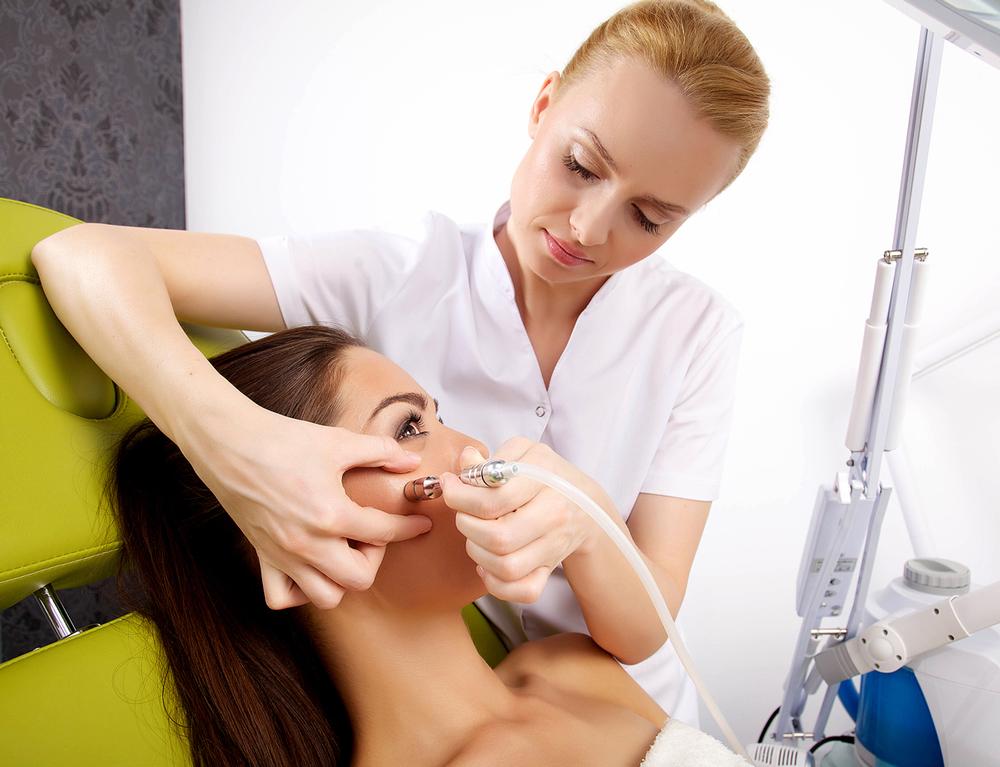
Despite the lack of standard base salary, US therapists earn the most worldwide / shutterstock.com/Goran Bogicevic
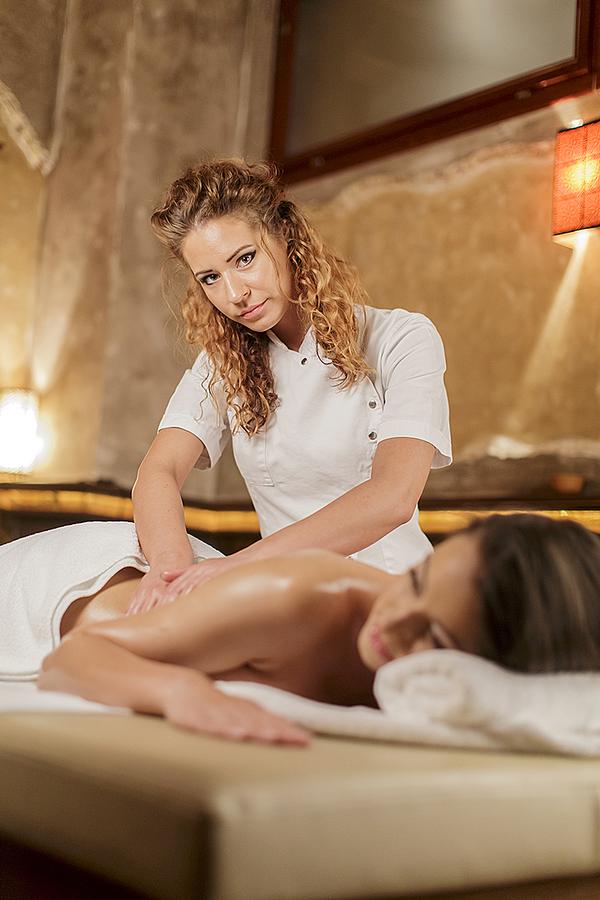
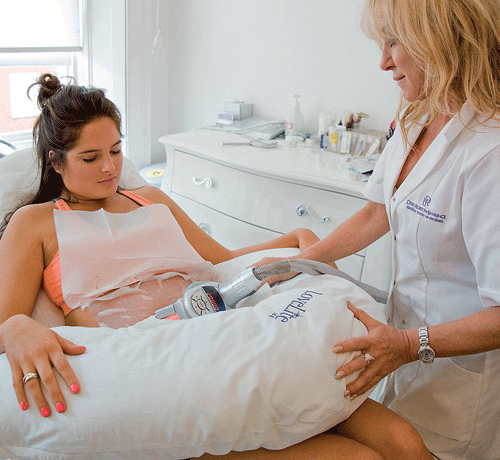
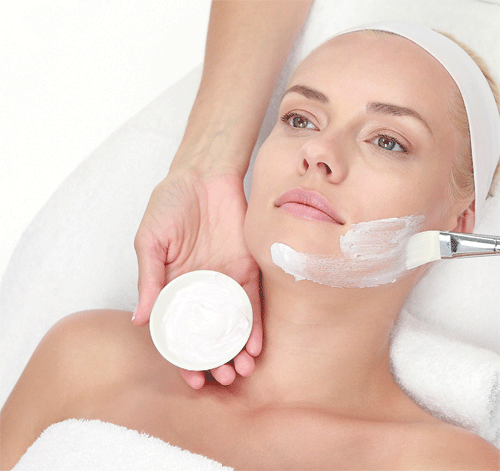
Therapists in the US are the best paid in the world and can earn up to US$4,166 (€3,100, £2,700) a month. Meanwhile their counterparts in Malaysia, with the worst salaries, only bring in US$308 (€231, £200). These were the findings of Real Numbers on Esthetician Compensation, a report published by leading industry body the Global Spa & Wellness Summit (GSWS) in April. One of the first analyses on global therapist pay, it marked the debut of the GSWS’s Metric Minutes – compilations of anonymously-sourced, industry data and stakeholder interviews that are designed to “simply start the conversation”.
Here, the GSWS has updated its findings to provide a snapshot of how aestheticians are paid in a selection of different countries – and the reasons why salaries vary so widely. The overview is intended to help operators and owners learn more about how our industry makes money (and in some cases does not).
On commission Whether cultural, regulatory, or just habit, different countries pay beauty therapists in very different ways. Even taking into account the cost of living from one place to another, there are still major variances in average monthly pay.
In a large number of countries, the standard method of pay for beauty therapists is a monthly salary. Although, as shown in the table, there doesn’t appear to be any rhyme or reason to the amount of the salary. In almost every country, except for in the US, the salary makes up the lion’s share of monthly income, with commissions on services or retail comprising the rest. Service commissions are typically 5-10 per cent of the cost of the treatment provided and are added to the monthly base salary.
In the US, however, it’s quite common for beauty therapists in day spas – which make up the vast majority of country’s spa establishments – to receive absolutely no base salary, earning all of their income as a commission on the treatment prices charged by the business. While this sounds unfair and quixotic, the result is that American therapists are the most highly paid in the world.
The US also provides the biggest variety of pay plans which vary between states and cities or even two businesses in the same block. As there’s no one way things are done, methods of pay can be quite creative. Rather than paying a straight percentage for all therapists, for example, operators could offer more compensation to those who reach set benchmarks – such as better client retention rates and average customer spend – that help drive business. Alternatively, they can vary the percentage of compensation according to different services: paying less for treatments where a high amount has been spent on pieces of equipment, for example, to get a quicker return on investment. Slowly and incrementally, this is helping to off-set the high staff overhead that US spas face.
Retail commission – where therapists get a percentage of revenue from products they sell – is another possible add-on for salaries as spas all over the world offer products for home use. Globally, retail commission levels are fairly consistent at 5-10 per cent of the retail price, which is typically all a business can afford on branded merchandise that already have high markup costs.
Benefits and taxes Every country also has its own legal and cultural requirements for employers paying therapists concerning issues such as health insurance, retirement/pensions and other social service benefits. The costs vary widely also, from an approximate 11 per cent of payroll in the US to as much as 40 per cent in Sweden. It’s certainly incumbent on any spa business opening in a new country to fully understand all the different taxes and benefits that its expected to pay in addition to service provider salaries.
There’s no correlation between a therapist’s education and pay. Some countries require licensing for beauty therapy which typically involves up to two year’s of study. Meanwhile, in the US an aesthetics licence can be earned in many states in four months of full-time schooling; and there are still many countries, such as China, South Africa, Cambodia, the Philippines and Brazil, where no licence is required at all. However, the countries with the highest education costs are not those that pay the most. This could be a false economy – while an operator could potentially save money by hiring unlicensed therapists, the spa may develop a less desirable reputation, and incur additional in-house training costs as a result.
Something that is standard internationally is workers typically receiving 21 to 28 days of paid holiday a year. In China and Hong Kong, staff get an extra months’ pay for Chinese New Year, along with two weeks off. That said, many global workers put in a lot of time and effort to earn such benefits – regularly putting in a six-day workweek, and in some resorts or on cruise ships working daily for two to three weeks before taking a day off.
In the US, paid time off is less generous: small spas will provide no paid leave, while spas that are part of larger brands will offer a week off after a year of employment, and that may increase to two weeks after two or three years of steady employment. Therapist schedules are also becoming shorter, often three to four days per week, and part-time shifts are becoming more frequent as mandated health-care costs for full-time workers increase.
Growing concerns Staff pay is, in most markets, the single biggest expense in spa business operations. This makes sense, as the inherent strength of spas is a labour-intensive product. But as companies continue to expand, and brands proliferate across country regions and borders, spa management teams should be aware of the differing pay, benefit and tax conventions. It’s not safe to assume that “what you’ve always done” in one country will be accepted in another, and this makes projecting turnover and profits more complex.
It’s no surprise that countries which pay the least in direct salary also have the lowest cost of living, however, this may also be a reflection of the importance of personal care to a specific locale or region, or the value placed on overall health and appearance. Spa services sit right at the crossroads of beauty services and healthcare, and in most countries spas are attracting increasing numbers of practitioners, who deserve the right to a fair living wage. But in situations where the desired pay is outsized compared to other overheads, it can make the ability for a business to earn a profit almost impossible, and negatively impact the growth potential for the industry as a whole.
Read more from this issue of Attractions Management magazine
View contents of Attractions Management 2013 issue 3
Interview: Lee David Stephens
Thai-based management company
MSpa runs 44 spas with 450 staff. The
General Manager talks to Katie Barnes
about a recent deal with Per Aquum
and its rapid expansion
Interview: Kathryn Moore
MSpa’s operations director is creating
a brand new wellness concept and a
fast track spa manager programme
Company Profile Promotion: GOCO Hospitality
After just four years of operation GOCO Hospitality is regarded as a global leader
in wellness hospitality segment of the industry. With 22 projects on its books,
spanning three continents, we look at what underpins the company’s success
Company profile promotion: Comfort Zone
The Comfort Zone spa brand has been newly revamped and revitalised to better communicate its core offerings as a natural, scientific and soul-centred skincare and lifestyle brand
Green: Being green
Ecocert’s new Being label is the first
public-facing green certification for
spa operations, eco-friendly
Promotional Feature: Part 4 - Pre-Opening
Opening a spa successfully is all about planning. Gary
Henkin, president of WTS and Doug Chambers, principal
of Blu Spas, share their experience of pre-opening
Company Profile Promotion: Aromatherapy Associates
Global product company Aromatherapy Associates knows how
to make treatments and retail work in a spa environment and
partners with operators to make a real point of difference
Industry survey: Price to pay
A GSWS report on global therapist pay focuses on differing salary composition, benefit and commission structures. Lisa Starr takes a closer look
Spa Retreat: Running on juice
Juice Master founder Jason Vale tells
Kate Cracknell about its retreats and
how juicing can help prevent disease
Interview: Wee Wei Ling
Neena Dhillon meets the founder of
St Gregory: the spa brand owned by Pan
Pacific that’s just opened a wellness
floor in Singapore’s ‘hotel in a garden’
Research: Moving target
A McKinsey study highlights the fast-changing
spending patterns of China’s
luxury consumers. Leonor Stanton
finds out what this means for spas
Advertisement Promotion: A gift from Ez-Runner...
Vouchers can be used as a stand-alone system integrated into your website or added as a module of Ez-Runner’s leisure management software to control your spa facility
Disparities in therapist pay around the world have been highlighted in one of the first compilations of sector salaries. Lisa Starr analyses the findings
Despite the lack of standard base salary, US therapists earn the most worldwide / shutterstock.com/Goran Bogicevic
Therapists in the US are the best paid in the world and can earn up to US$4,166 (€3,100, £2,700) a month. Meanwhile their counterparts in Malaysia, with the worst salaries, only bring in US$308 (€231, £200). These were the findings of Real Numbers on Esthetician Compensation, a report published by leading industry body the Global Spa & Wellness Summit (GSWS) in April. One of the first analyses on global therapist pay, it marked the debut of the GSWS’s Metric Minutes – compilations of anonymously-sourced, industry data and stakeholder interviews that are designed to “simply start the conversation”.
Here, the GSWS has updated its findings to provide a snapshot of how aestheticians are paid in a selection of different countries – and the reasons why salaries vary so widely. The overview is intended to help operators and owners learn more about how our industry makes money (and in some cases does not).
On commission Whether cultural, regulatory, or just habit, different countries pay beauty therapists in very different ways. Even taking into account the cost of living from one place to another, there are still major variances in average monthly pay.
In a large number of countries, the standard method of pay for beauty therapists is a monthly salary. Although, as shown in the table, there doesn’t appear to be any rhyme or reason to the amount of the salary. In almost every country, except for in the US, the salary makes up the lion’s share of monthly income, with commissions on services or retail comprising the rest. Service commissions are typically 5-10 per cent of the cost of the treatment provided and are added to the monthly base salary.
In the US, however, it’s quite common for beauty therapists in day spas – which make up the vast majority of country’s spa establishments – to receive absolutely no base salary, earning all of their income as a commission on the treatment prices charged by the business. While this sounds unfair and quixotic, the result is that American therapists are the most highly paid in the world.
The US also provides the biggest variety of pay plans which vary between states and cities or even two businesses in the same block. As there’s no one way things are done, methods of pay can be quite creative. Rather than paying a straight percentage for all therapists, for example, operators could offer more compensation to those who reach set benchmarks – such as better client retention rates and average customer spend – that help drive business. Alternatively, they can vary the percentage of compensation according to different services: paying less for treatments where a high amount has been spent on pieces of equipment, for example, to get a quicker return on investment. Slowly and incrementally, this is helping to off-set the high staff overhead that US spas face.
Retail commission – where therapists get a percentage of revenue from products they sell – is another possible add-on for salaries as spas all over the world offer products for home use. Globally, retail commission levels are fairly consistent at 5-10 per cent of the retail price, which is typically all a business can afford on branded merchandise that already have high markup costs.
Benefits and taxes Every country also has its own legal and cultural requirements for employers paying therapists concerning issues such as health insurance, retirement/pensions and other social service benefits. The costs vary widely also, from an approximate 11 per cent of payroll in the US to as much as 40 per cent in Sweden. It’s certainly incumbent on any spa business opening in a new country to fully understand all the different taxes and benefits that its expected to pay in addition to service provider salaries.
There’s no correlation between a therapist’s education and pay. Some countries require licensing for beauty therapy which typically involves up to two year’s of study. Meanwhile, in the US an aesthetics licence can be earned in many states in four months of full-time schooling; and there are still many countries, such as China, South Africa, Cambodia, the Philippines and Brazil, where no licence is required at all. However, the countries with the highest education costs are not those that pay the most. This could be a false economy – while an operator could potentially save money by hiring unlicensed therapists, the spa may develop a less desirable reputation, and incur additional in-house training costs as a result.
Something that is standard internationally is workers typically receiving 21 to 28 days of paid holiday a year. In China and Hong Kong, staff get an extra months’ pay for Chinese New Year, along with two weeks off. That said, many global workers put in a lot of time and effort to earn such benefits – regularly putting in a six-day workweek, and in some resorts or on cruise ships working daily for two to three weeks before taking a day off.
In the US, paid time off is less generous: small spas will provide no paid leave, while spas that are part of larger brands will offer a week off after a year of employment, and that may increase to two weeks after two or three years of steady employment. Therapist schedules are also becoming shorter, often three to four days per week, and part-time shifts are becoming more frequent as mandated health-care costs for full-time workers increase.
Growing concerns Staff pay is, in most markets, the single biggest expense in spa business operations. This makes sense, as the inherent strength of spas is a labour-intensive product. But as companies continue to expand, and brands proliferate across country regions and borders, spa management teams should be aware of the differing pay, benefit and tax conventions. It’s not safe to assume that “what you’ve always done” in one country will be accepted in another, and this makes projecting turnover and profits more complex.
It’s no surprise that countries which pay the least in direct salary also have the lowest cost of living, however, this may also be a reflection of the importance of personal care to a specific locale or region, or the value placed on overall health and appearance. Spa services sit right at the crossroads of beauty services and healthcare, and in most countries spas are attracting increasing numbers of practitioners, who deserve the right to a fair living wage. But in situations where the desired pay is outsized compared to other overheads, it can make the ability for a business to earn a profit almost impossible, and negatively impact the growth potential for the industry as a whole.
Read more from this issue of Attractions Management magazine
View contents of Attractions Management 2013 issue 3
Interview: Lee David Stephens
Thai-based management company
MSpa runs 44 spas with 450 staff. The
General Manager talks to Katie Barnes
about a recent deal with Per Aquum
and its rapid expansion
Interview: Kathryn Moore
MSpa’s operations director is creating
a brand new wellness concept and a
fast track spa manager programme
Company Profile Promotion: GOCO Hospitality
After just four years of operation GOCO Hospitality is regarded as a global leader
in wellness hospitality segment of the industry. With 22 projects on its books,
spanning three continents, we look at what underpins the company’s success
Company profile promotion: Comfort Zone
The Comfort Zone spa brand has been newly revamped and revitalised to better communicate its core offerings as a natural, scientific and soul-centred skincare and lifestyle brand
Green: Being green
Ecocert’s new Being label is the first
public-facing green certification for
spa operations, eco-friendly
Promotional Feature: Part 4 - Pre-Opening
Opening a spa successfully is all about planning. Gary
Henkin, president of WTS and Doug Chambers, principal
of Blu Spas, share their experience of pre-opening
Company Profile Promotion: Aromatherapy Associates
Global product company Aromatherapy Associates knows how
to make treatments and retail work in a spa environment and
partners with operators to make a real point of difference
Industry survey: Price to pay
A GSWS report on global therapist pay focuses on differing salary composition, benefit and commission structures. Lisa Starr takes a closer look
Spa Retreat: Running on juice
Juice Master founder Jason Vale tells
Kate Cracknell about its retreats and
how juicing can help prevent disease
Interview: Wee Wei Ling
Neena Dhillon meets the founder of
St Gregory: the spa brand owned by Pan
Pacific that’s just opened a wellness
floor in Singapore’s ‘hotel in a garden’
Research: Moving target
A McKinsey study highlights the fast-changing
spending patterns of China’s
luxury consumers. Leonor Stanton
finds out what this means for spas
Advertisement Promotion: A gift from Ez-Runner...
Vouchers can be used as a stand-alone system integrated into your website or added as a module of Ez-Runner’s leisure management software to control your spa facility
OMA has completed a major transformation of New York's New Museum, creating a larger
cultural campus that combines expanded exhibition spaces with learning, performance,
hospitality and public programming.
A US$50 million (£44.2 million, €51.2 million) transformation of Chicago's historic McCormick
Mansion has created a new destination that combines live magic, immersive theatre, dining and
private membership under one roof.
The Montana Historical Society has officially celebrated the opening of its new Montana
Heritage
Center, a US$107 million (£79 million, €92 million) destination that combines immersive
storytelling with cutting-edge audiovisual technology to bring the sta
San Antonio Zoo has reported a US$283 million economic impact for 2025, following a decade-
long transformation programme that has seen almost US$200 million invested into the Texas
attraction.
Plans for the AU$180 million redevelopment of Reef HQ Aquarium in Townsville, Australia, are
progressing, with the project set to transform the attraction into a global centre for reef
education and conservation.
Abu Dhabi-based investment firm Mubadala Capital has made a binding, fully financed
€1 billion
offer to acquire Pierre and Vacances SA, the European holiday resort operator behind the
continental European Center Parcs business.
Disney has reaffirmed its commitment to investing US$30 billion in its US parks and cruise
business by 2033, using new America250 celebrations to underline the role its attractions play
in supporting jobs, tourism and economic growth.
Expo 2030 Riyadh is being planned as a permanent visitor destination, with organisers
confirming the six-million-square-metre site will become a Global Village after the event closes.
The owner of one of Australia's best-known waterparks has acquired a major competitor,
creating a new attractions business spanning two of the country's largest visitor destinations.
The Toverland theme park in the Netherlands has announced a €98m expansion programme
that will add a resort, new attractions and staff facilities as it pursues plans to become a multi-
day destination.
+ More news
COMPANY PROFILES
Polin Waterparks Polin was founded in Istanbul in 1976. Polin
has since grown into a leading company in
the waterpa [more...]
IDEATTACK IDEATTACK is a full-service planning and
design company with headquarters in
Los Angeles. [more...]
Clip 'n Climb Clip ‘n Climb currently offers facility owners and
investors more than 40 colourful and unique
Cha [more...]