Latest
issue
Get Attractions Management digital magazine FREE
Sign up here ▸
Jobs   News   Features   Products   Company profilesProfiles   Magazine   Handbook   Advertise    Subscribe  
NEWS
Is this the stadium of the future? Italian architects unveil modular timber concept
POSTED 03 Nov 2017 . BY Kim Megson
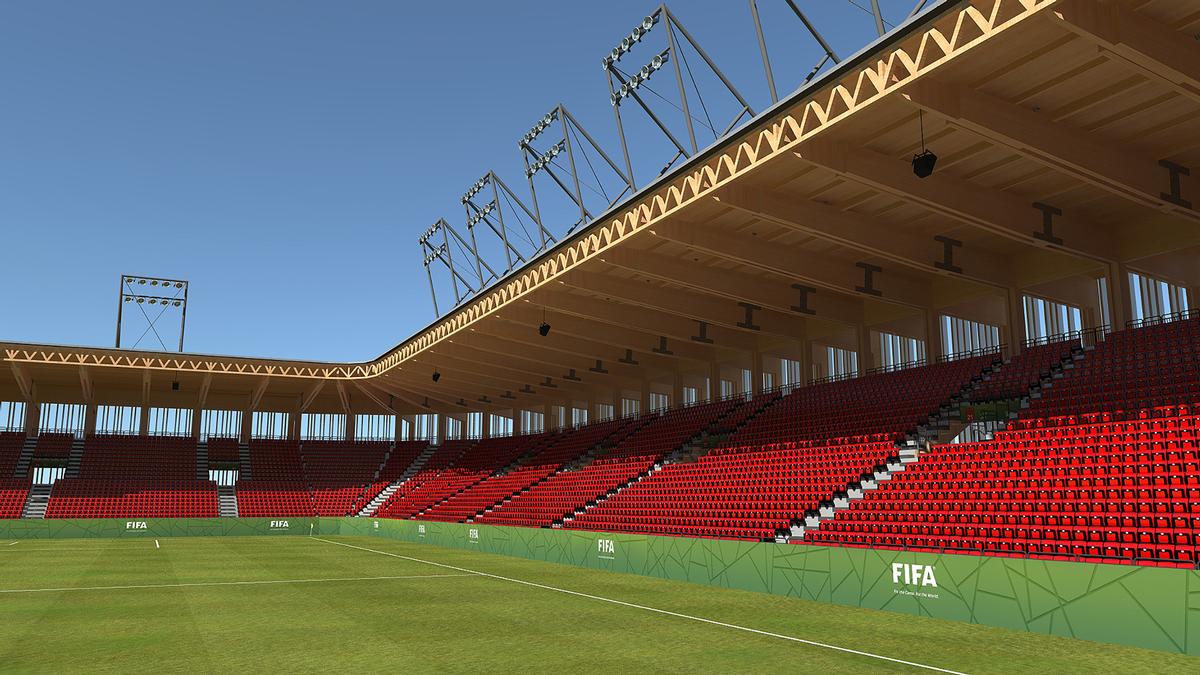
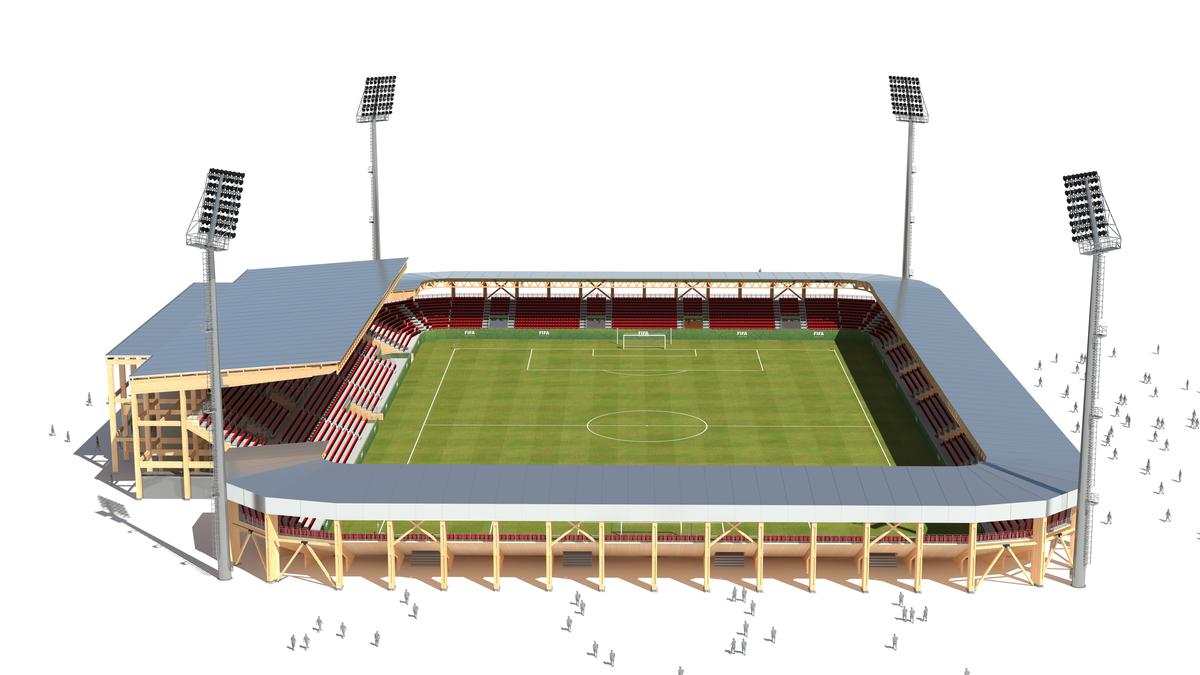
The stadium will be constructed using timber Credit: Bear Stadiums
Architecture practice Bear Stadiums and Italian timber manufacturer Rubner Holzbau have joined forces to produce wooden sports venues that can be built quickly and cost-efficiently.

The two companies claim their modular, mid-capacity “stadiums of the future” can be assembled in just six to eight months and are totally green.

The project was conceived for Italy’s smaller sports clubs beginning to move up the ladder of the professional game.

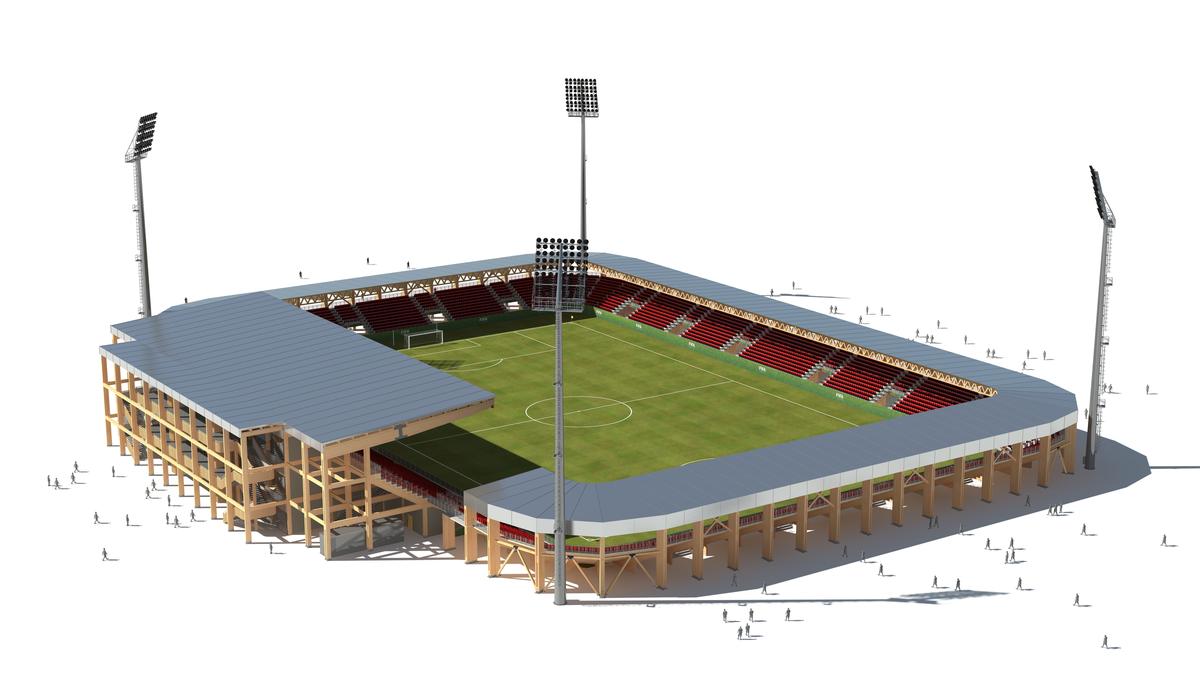
The proposed stadiums start from a minimum 1,500 seats – the minimum demanded by Italy’s smaller leagues – but this can be raised incrementally to a maximum of 20,000 seats for clubs with ambitions of top-flight football. The result of this flexibility, according to the concept’s creators, is “reduced management and maintenance costs and a stadium that is always tailored to the needs of the club”.

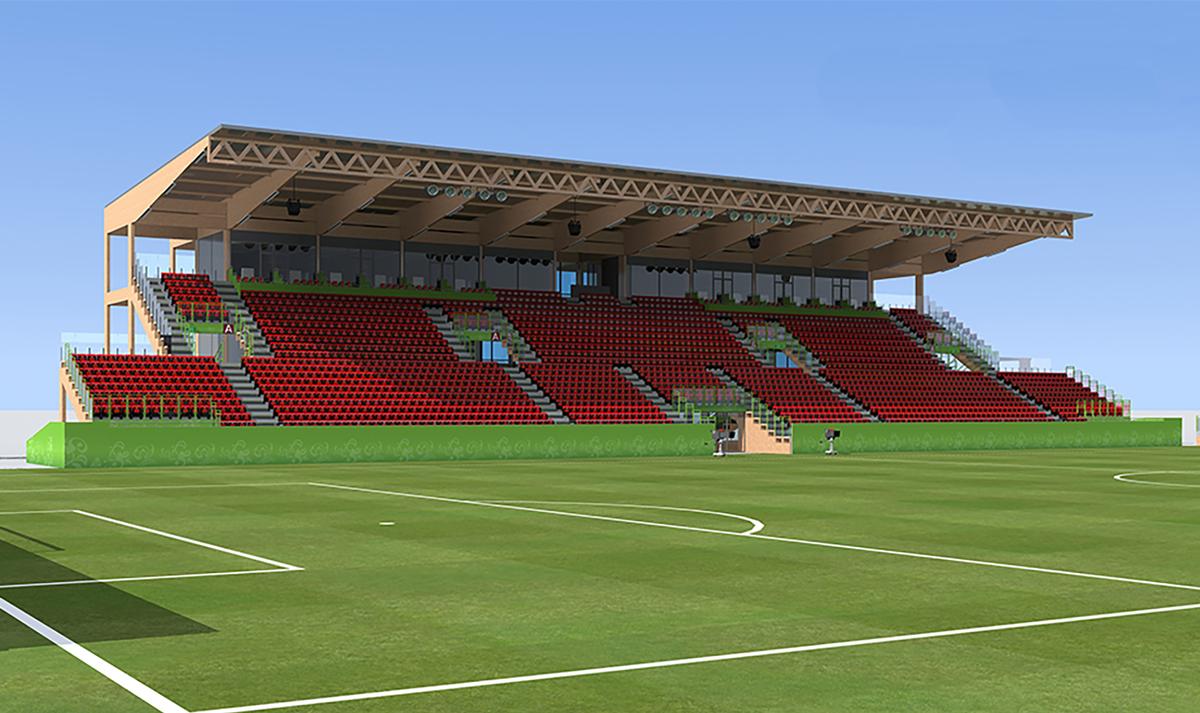
In their design, Bear Stadium have included all the necessary facilities, including spacious locker rooms for athletes and referees, an anti-doping area, an infirmary, a media room, a conference hall and a club terrace on the first floor with a bar, restaurant and large window facing the playing field.

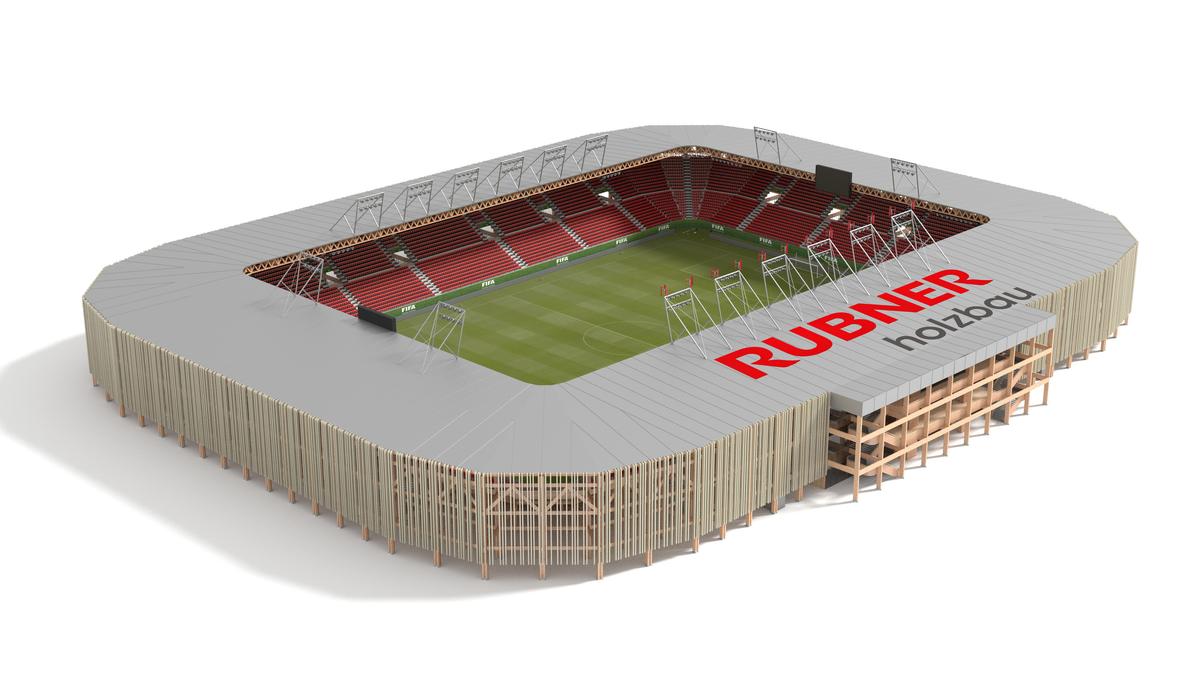
The cost for a stadium has been set at €1,500 (US$1,700, £1,300) per seat for a mid-sized structure, and €2,000 (US$2,300, £1,800) per seat for a smaller format. In comparison, the designers said a traditional stadium would cost €2,500-€3,000 per seat and take up to 18 months longer to build.

“We see a huge demand in the world for medium-capacity stadiums, typically ranging from 5,000 to 20,000 seats, which actually represents 80 per cent of the global market for this type of infrastructure,” said Jaime Manca Di Villahermosa, creator of the new format and co-founder of Bear Stadiums.

“The stadiums should replace existing structures made from reinforced concrete or metal that become dilapidated in just a few decades, resulting in high maintenance costs and low appeal to the public and fans.

“Given the significant development of HD television technology which drives us to watch games comfortably seated on the sofa at home, it’s necessary to build a new concept of a beautiful, comfortable, safe and easy-to-assemble stadium, whose structures express wellbeing, serenity and favour encounters among individuals and team supporters”.

The modular stadiums will be constructed using glulam timber – a structurally engineered wood product comprising a number of layers bound together with ecological adhesives – in order to reduce the greenhouse gas emissions and high energy consumption that come from using reinforced concrete or metal.

“Wood is an extraordinary building material,” said Claudio Rustioni, CEO of Rubner Holzbau. “It’s capable of creating warmth and comfort and offering a secure and lightweight structure, while minimising the impact on the landscape. Our stadium is built with certified wood from sustainably managed forests.

“Glulam wood enhances the structural capabilities of wood and allows the development of innovative design solutions with efficient engineering qualities. The result is low energy consumption that contributes to reducing carbon dioxide emissions in the atmosphere.”

He added that the company and Bear Stadiums are collaborating with a pool of leading Italian companies to offer customers a ‘turnkey’ formula for even greener stadiums by supplying, where requested, mini wind turbines, solar panels, high efficiency and low energy consumption light towers, and recyclable, synthetic or hybrid lawns.

This is not the first time an architect has proposed building a stadium completely out of timber. Last year, English football club Forest Green Rovers selected Zaha Hadid Architects to design its new football stadium completely out of wood, with the aim of making it “the greenest football stadium in the world.”

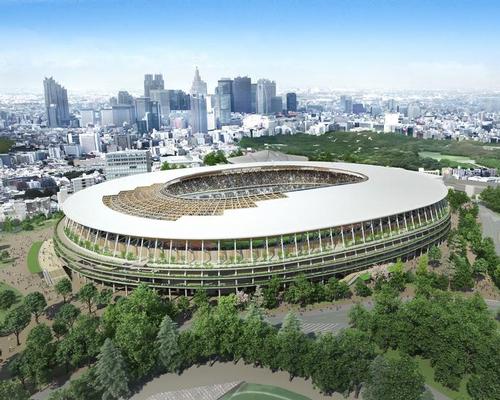
Meanwhile, Japanese architect Kengo Kuma has designed the forthcoming Olympic Stadium in Tokyo using a large quantity of timber and landscaping.

The stadiums can be assembled in just 6-8 months and are made from timber Credit: Bear Stadiums
Football clubs can choose what capacity they would like, from 1,500 to 20,000 Credit: Bear Stadiums
The cost for a stadium has been set at €1,500 (US$1,700, £1,300) per seat for a mid-sized structure Credit: Bear Stadiums
The project was conceived for Italy’s smaller sports clubs beginning to move up the ladder of the professional game Credit: Bear Stadiums
RELATED STORIES
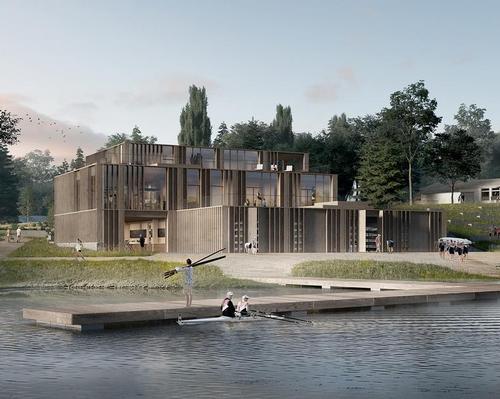
  AART Architects win design competition for timber-clad new Denmark Rowing Stadium


Danish practice AART Architects have won an international design competition to create Denmark’s Rowing Stadium; a new venue for both the public and elite athletes that will be situated on Bagsværd Lake, outside of Copenhagen.
  Can timber construction overcome the obstacles of urban development?


Architects, designers, engineers, planners and manufacturers gathered in London earlier this month to participate in a roundtable discussion on how timber can and should be used to meet the construction challenges they face.
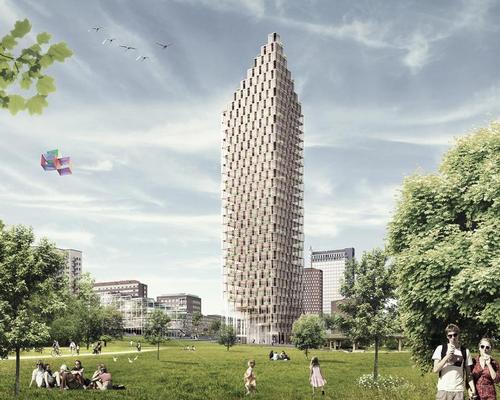
  Molecular 'glue' could hold the key to building towering timber skyscrapers, research finds


Molecules 10,000 times narrower than the width of a human hair could hold the key to building towering wooden skyscrapers in the future, new research has found.
  Construction begins on Kengo Kuma's National Stadium for 2020 Tokyo Olympics


Construction work has kicked off on Tokyo’s new National Stadium, the Kengo Kuma- designed stage for the 2020 Olympics and Paralympics.
MORE NEWS
Warner Bros Discovery collaborates on upcoming Pompeii attraction
A new immersive attraction designed to transport visitors into the final hours of ancient Pompeii is preparing to open near the world-famous archaeological site in southern Italy.
Bob Rogers hands BRC to long-serving leadership team
Experience design company, BRC Imagination Arts, has completed a transition that sees founder Bob Rogers pass ownership of the business to four long-serving senior executives, while remaining actively involved with the company.
Rainer Maelzer joins Therme Group as chief entertainment officer
Rainer Maelzer, an experiential entertainment innovator, has been appointed chief entertainment officer by Therme Group.
Movie Park Germany reveals new Paramount attraction as part of its 30th anniversary celebrations
Movie Park Germany has opened a new Paramount Pictures-themed attraction as part of its 30th anniversary celebrations, using immersive storytelling and adaptive reuse to reinforce the park’s longstanding “Hollywood in Germany” positioning.
+ More news   

COMPANY PROFILES
Sally Corporation

Our services include: Dark ride design & build; Redevelopment of existing attractions; High-quality [more...]
Painting With Light

By combining lighting, video, scenic and architectural elements, sound and special effects we tell s [more...]
IDEATTACK

IDEATTACK is a full-service planning and design company with headquarters in Los Angeles. [more...]
IAAPA EMEA

IAAPA Expo Europe was established in 2006 and has grown to the largest international conference and [more...]
+ More profiles  
FEATURED SUPPLIER

Iconic Liverpool attraction opens door to new operators
An opportunity to reimagine one of the UK’s most recognisable towers has been formally opened by Rivington Hark, as St Johns Beacon invites operators and partners to shape its next phase. [more...]
CATALOGUE GALLERY
 

+ More catalogues  
DIRECTORY
+ More directory  
DIARY


09-11 Jun 2026

World Sauna Forum 2026

Savutuvan Apaja, Haapaniemi, Finland
23-26 Aug 2026

Elevate Spa Riviera Maya Edition

The Riviera Maya Edition Kanai, Playa del Carmen, Mexico
+ More diary  
LATEST ISSUES
+ View Magazine Archive

Attractions Management

2026 issue 1


View issue contents
View on turning pages
Download PDF
FREE digital subscription
Print subscription

Attractions Management

2025 issue 2


View issue contents
View on turning pages
Download PDF
FREE digital subscription
Print subscription

Attractions Management

2025 issue 1


View issue contents
View on turning pages
Download PDF
FREE digital subscription
Print subscription

Attractions Management

2024 issue 4


View issue contents
View on turning pages
Download PDF
FREE digital subscription
Print subscription

Attractions Management News

06 Apr 2020 issue 153


View on turning pages
Download PDF
View archive
FREE digital subscription
Print subscription

Attractions Handbook

2019


View issue contents
View on turning pages
Download PDF
FREE digital subscription
Print subscription
 
ABOUT LEISURE MEDIA
LEISURE MEDIA MAGAZINES
LEISURE MEDIA HANDBOOKS
LEISURE MEDIA WEBSITES
LEISURE MEDIA PRODUCT SEARCH
 
ATTRACTIONS MANAGEMENT
ATTRACTIONS MANAGEMENT NEWS
ATTRACTIONS HANDBOOK
PRINT SUBSCRIPTIONS
FREE DIGITAL SUBSCRIPTIONS
ADVERTISE . CONTACT US

Leisure Media
Tel: +44 (0)1462 431385

©Cybertrek 2026
Get Attractions Management digital magazine FREE
Sign up here ▸
Jobs    News   Products   Magazine   Subscribe
NEWS
Is this the stadium of the future? Italian architects unveil modular timber concept
POSTED 03 Nov 2017 . BY Kim Megson
The stadium will be constructed using timber Credit: Bear Stadiums
Architecture practice Bear Stadiums and Italian timber manufacturer Rubner Holzbau have joined forces to produce wooden sports venues that can be built quickly and cost-efficiently.

The two companies claim their modular, mid-capacity “stadiums of the future” can be assembled in just six to eight months and are totally green.

The project was conceived for Italy’s smaller sports clubs beginning to move up the ladder of the professional game.

The proposed stadiums start from a minimum 1,500 seats – the minimum demanded by Italy’s smaller leagues – but this can be raised incrementally to a maximum of 20,000 seats for clubs with ambitions of top-flight football. The result of this flexibility, according to the concept’s creators, is “reduced management and maintenance costs and a stadium that is always tailored to the needs of the club”.

In their design, Bear Stadium have included all the necessary facilities, including spacious locker rooms for athletes and referees, an anti-doping area, an infirmary, a media room, a conference hall and a club terrace on the first floor with a bar, restaurant and large window facing the playing field.

The cost for a stadium has been set at €1,500 (US$1,700, £1,300) per seat for a mid-sized structure, and €2,000 (US$2,300, £1,800) per seat for a smaller format. In comparison, the designers said a traditional stadium would cost €2,500-€3,000 per seat and take up to 18 months longer to build.

“We see a huge demand in the world for medium-capacity stadiums, typically ranging from 5,000 to 20,000 seats, which actually represents 80 per cent of the global market for this type of infrastructure,” said Jaime Manca Di Villahermosa, creator of the new format and co-founder of Bear Stadiums.

“The stadiums should replace existing structures made from reinforced concrete or metal that become dilapidated in just a few decades, resulting in high maintenance costs and low appeal to the public and fans.

“Given the significant development of HD television technology which drives us to watch games comfortably seated on the sofa at home, it’s necessary to build a new concept of a beautiful, comfortable, safe and easy-to-assemble stadium, whose structures express wellbeing, serenity and favour encounters among individuals and team supporters”.

The modular stadiums will be constructed using glulam timber – a structurally engineered wood product comprising a number of layers bound together with ecological adhesives – in order to reduce the greenhouse gas emissions and high energy consumption that come from using reinforced concrete or metal.

“Wood is an extraordinary building material,” said Claudio Rustioni, CEO of Rubner Holzbau. “It’s capable of creating warmth and comfort and offering a secure and lightweight structure, while minimising the impact on the landscape. Our stadium is built with certified wood from sustainably managed forests.

“Glulam wood enhances the structural capabilities of wood and allows the development of innovative design solutions with efficient engineering qualities. The result is low energy consumption that contributes to reducing carbon dioxide emissions in the atmosphere.”

He added that the company and Bear Stadiums are collaborating with a pool of leading Italian companies to offer customers a ‘turnkey’ formula for even greener stadiums by supplying, where requested, mini wind turbines, solar panels, high efficiency and low energy consumption light towers, and recyclable, synthetic or hybrid lawns.

This is not the first time an architect has proposed building a stadium completely out of timber. Last year, English football club Forest Green Rovers selected Zaha Hadid Architects to design its new football stadium completely out of wood, with the aim of making it “the greenest football stadium in the world.”

Meanwhile, Japanese architect Kengo Kuma has designed the forthcoming Olympic Stadium in Tokyo using a large quantity of timber and landscaping.

The stadiums can be assembled in just 6-8 months and are made from timber Credit: Bear Stadiums
Football clubs can choose what capacity they would like, from 1,500 to 20,000 Credit: Bear Stadiums
The cost for a stadium has been set at €1,500 (US$1,700, £1,300) per seat for a mid-sized structure Credit: Bear Stadiums
The project was conceived for Italy’s smaller sports clubs beginning to move up the ladder of the professional game Credit: Bear Stadiums
RELATED STORIES
AART Architects win design competition for timber-clad new Denmark Rowing Stadium


Danish practice AART Architects have won an international design competition to create Denmark’s Rowing Stadium; a new venue for both the public and elite athletes that will be situated on Bagsværd Lake, outside of Copenhagen.
Can timber construction overcome the obstacles of urban development?


Architects, designers, engineers, planners and manufacturers gathered in London earlier this month to participate in a roundtable discussion on how timber can and should be used to meet the construction challenges they face.
Molecular 'glue' could hold the key to building towering timber skyscrapers, research finds


Molecules 10,000 times narrower than the width of a human hair could hold the key to building towering wooden skyscrapers in the future, new research has found.
Construction begins on Kengo Kuma's National Stadium for 2020 Tokyo Olympics


Construction work has kicked off on Tokyo’s new National Stadium, the Kengo Kuma- designed stage for the 2020 Olympics and Paralympics.
MORE NEWS
Warner Bros Discovery collaborates on upcoming Pompeii attraction
A new immersive attraction designed to transport visitors into the final hours of ancient Pompeii is preparing to open near the world-famous archaeological site in southern Italy.
Bob Rogers hands BRC to long-serving leadership team
Experience design company, BRC Imagination Arts, has completed a transition that sees founder Bob Rogers pass ownership of the business to four long-serving senior executives, while remaining actively involved with the company.
Rainer Maelzer joins Therme Group as chief entertainment officer
Rainer Maelzer, an experiential entertainment innovator, has been appointed chief entertainment officer by Therme Group.
Movie Park Germany reveals new Paramount attraction as part of its 30th anniversary celebrations
Movie Park Germany has opened a new Paramount Pictures-themed attraction as part of its 30th anniversary celebrations, using immersive storytelling and adaptive reuse to reinforce the park’s longstanding “Hollywood in Germany” positioning.

Therme Manchester reveals 90:90 strategy – 90 per cent of the UK population within a 90-minute drive of a Therme
Therme Manchester’s 28-acre development, which will include interconnected glass pavilions that measure 65,000sq m, will be the largest bathing and wellbeing attraction in the world once complete, according to prof David Russell, CEO of Therme UK. 

Efteling expands family offer with new Hooghmoed drop tower
Efteling has opened Hooghmoed, a new family drop tower designed to broaden the appeal of its recently launched Sirene Island themed area and introduce younger visitors to thrill attractions.
+ More news   
 
COMPANY PROFILES
Sally Corporation

Our services include: Dark ride design & build; Redevelopment of existing attractions; High-quality [more...]
Painting With Light

By combining lighting, video, scenic and architectural elements, sound and special effects we tell s [more...]
IDEATTACK

IDEATTACK is a full-service planning and design company with headquarters in Los Angeles. [more...]
IAAPA EMEA

IAAPA Expo Europe was established in 2006 and has grown to the largest international conference and [more...]
+ More profiles  
FEATURED SUPPLIER

Iconic Liverpool attraction opens door to new operators
An opportunity to reimagine one of the UK’s most recognisable towers has been formally opened by Rivington Hark, as St Johns Beacon invites operators and partners to shape its next phase. [more...]
CATALOGUE GALLERY
+ More catalogues  
DIRECTORY
+ More directory  
DIARY


09-11 Jun 2026

World Sauna Forum 2026

Savutuvan Apaja, Haapaniemi, Finland
23-26 Aug 2026

Elevate Spa Riviera Maya Edition

The Riviera Maya Edition Kanai, Playa del Carmen, Mexico
+ More diary  


ADVERTISE . CONTACT US

Leisure Media
Tel: +44 (0)1462 431385

©Cybertrek 2026

ABOUT LEISURE MEDIA
LEISURE MEDIA MAGAZINES
LEISURE MEDIA HANDBOOKS
LEISURE MEDIA WEBSITES
LEISURE MEDIA PRODUCT SEARCH
ATTRACTIONS MANAGEMENT NEWS
ATTRACTIONS HANDBOOK
PRINT SUBSCRIPTIONS
FREE DIGITAL SUBSCRIPTIONS