Latest
issue
Get Attractions Management digital magazine FREE
Sign up here ▸
Jobs   News   Features   Products   Company profilesProfiles   Magazine   Handbook   Advertise    Subscribe  
NEWS
Can timber construction overcome the obstacles of urban development?
POSTED 29 May 2017 . BY Kim Megson
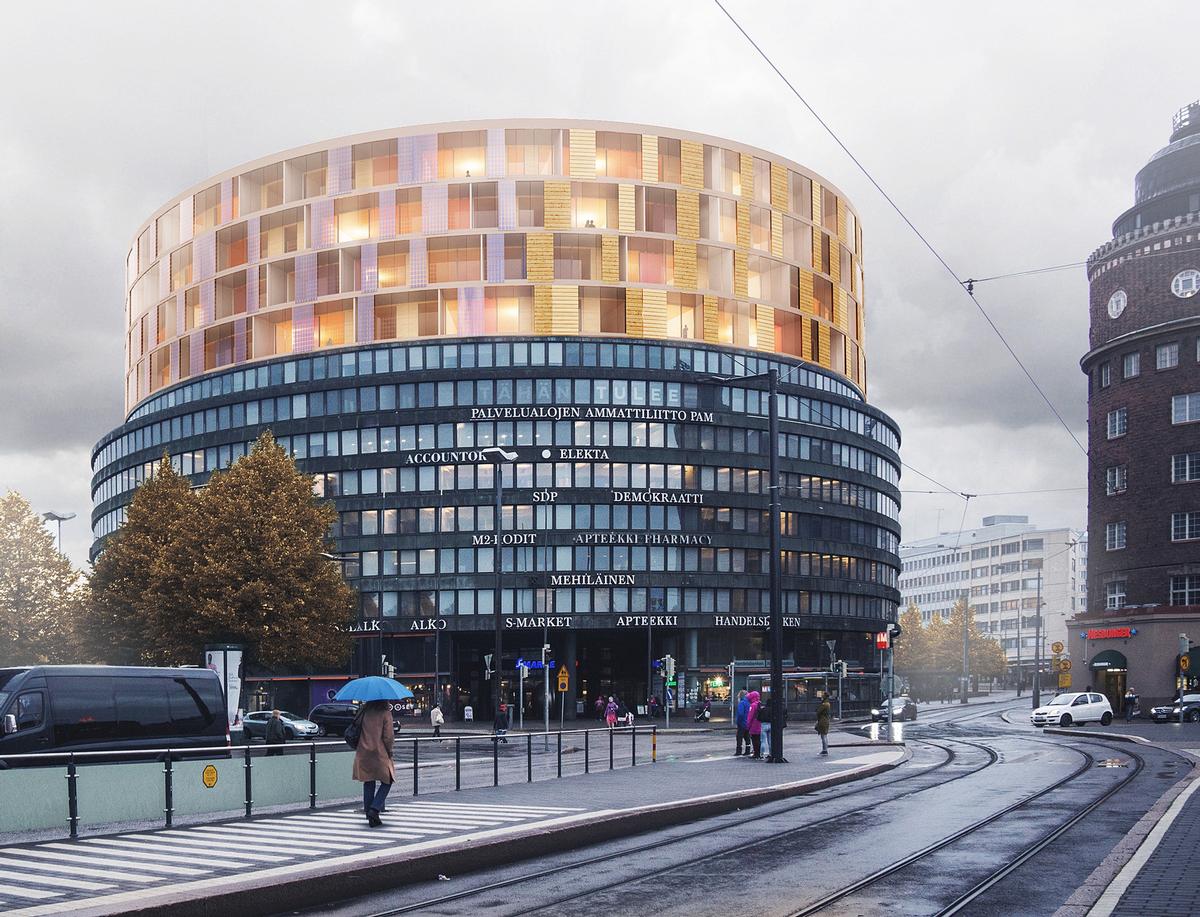
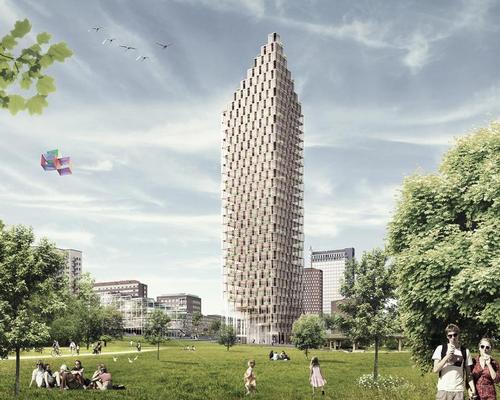
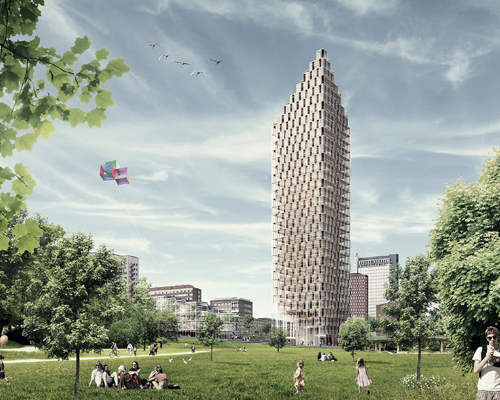
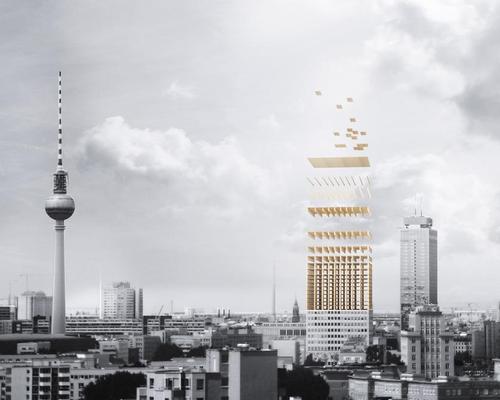
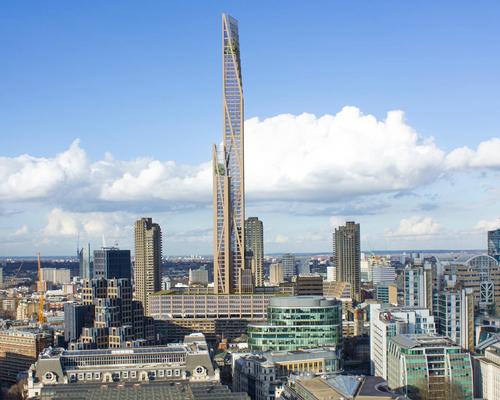
Architects, engineers, planners and manufacturers have met to discuss how timber can be used to meet the construction challenges they face Credit: Jari Lonka, Francesco Allaix & Lilja Mustila
Architects, designers, engineers, planners and manufacturers gathered in London earlier this month to participate in a roundtable discussion on how timber can and should be used to meet the construction challenges they face.

The talks focused on how wooden materials can ease Britain’s housing crisis – it is projected that London alone requires 60,000 new houses a year, double the current rate, to meet demand – but the discussion also touched more generally on the urgent need for fast and sustainable construction methods across building sectors in an age of urbanisation.

The event was hosted by specialist manufacturer Metsä Wood – which believes modern timber materials can “enable several storeys to be constructed on top of existing structures, allowing us to build up and stop tearing down.”

Topics discussed included the energy performance of new builds created using timber; the benefits of hybrid construction, using a range of materials including steel, concrete, brick and timber; and the need to raise awareness of the cost benefits of wooden materials.

“We find there’s still a lot of anxiety and lack of knowledge [among architects and developers], particularly on cost,” said Rory Bergin, a partner of architecture studio HTA Design. “The way to further innovation is to push at the sweet spots where the benefits are indisputable to the client.”

Nick Milestone, managing director of hybrid engineering firm B & K Structures, added: “The people we need to convince are quantity surveyors. I’m starting to see that firms are now measuring the costs of engineered timber against traditional construction. They are saying to developers they can now build it quicker, lighter and cheaper. It is now a competitive solution, because reinforced concrete is becoming very expensive.”

Linda Thiel of Sweden’s White Arkitekter discussed how timber can be used for commercial and public buildings, as well as housing, particularly in urban areas where space is at a premium.
“Too often engineered timber is being used simply to replace concrete,” she said. “Once designers see it as a different material, design will flourish and create a new architecture.”

In order to explore this idea further, Metsä Wood recently ran a competition, called “City above the City’, inviting architects to design timber structure extensions to existing urban buildings in 69 cities worldwide, including Sydney, Shanghai, New York, Berlin, Paris and London.

Explaining its reason for promoting the potential of timber in this way, the company said: “Research shows that approximately a quarter of existing buildings are strong enough to carry additional floors made of wood. Moreover, it is the only material light enough to build quickly on to existing structures.

“This makes wood a highly promising building material for providing living space for billions of people – while also preserving the architectural heritage of our cities.”


Case Study


Kalpana Gurung and Robert Buss from Studio Hoopla demonstrate how timber extensions could revive a threatened London market


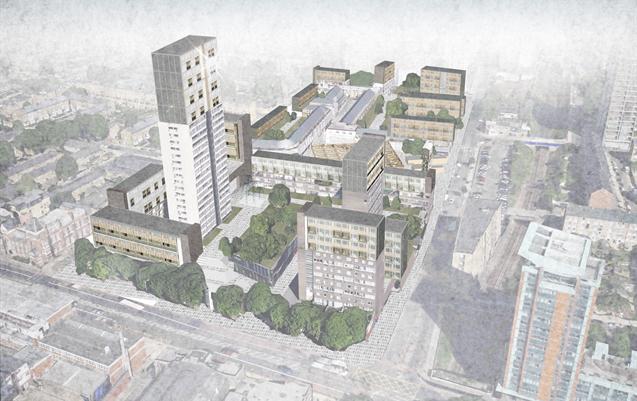
Chrisp Street Market is a 3.6 hectare site near Canary Wharf, built in the 1950s as part of the Festival of Britain, and having been active as a street market since Victorian times. There are currently plans to build 750 new homes while upgrading the existing retail units.
However, according to Gurung and Buss, this proposal will “destroy most of the site and, with it, businesses, homes and community”.

They have offered an alternative vision as part of the Metsä Wood ‘City above the City’ competition.
Their idea is for the existing residential blocks are extended upwards, using Metsä’s Kerto-Q and Kerto-S LVL wooden modules, “while new blocks sitting on the podium itself use the same system.”

The timber would protected from the elements but visible through an aluminium-glazed screen. It would be exposed throughout the residential interiors.

Explaining their vision, they said: “London has a housing crisis but tackling this should not come at the expense of quality of life and the destruction of diverse and functioning communities. Our proposal seeks a sustainable future: environmentally and socially, for everyone, by building on the existing structure and community.

“We should address the difficult, but responsible challenge of augmenting the new with the old - both physical and social.

“This system could be adapted and replicated across London and other cities, as a way to address the tide of wholesale gentrification – a more human, slower paced and responsible method of regeneration and change, while adding significant density to the areas people want to live.”


RELATED STORIES
  Molecular 'glue' could hold the key to building towering timber skyscrapers, research finds


Molecules 10,000 times narrower than the width of a human hair could hold the key to building towering wooden skyscrapers in the future, new research has found.
  FEATURE: Ask the experts: Timber towers


Tall timber buildings have an exciting future. The experts explain
  Architects invited to propose how timber buildings can save our cities for international competition


Architects around the world have been challenged to push the boundaries of modern wood building design in cities.
  Will our skyscrapers soon be built from timber?


Timber skyscrapers can improve our built environments and urban experiences, according British practice PLP Architecture and researchers from Cambridge University.
MORE NEWS
OMA completes New Museum transformation with landmark expansion and Oberon restaurant
OMA has completed a major transformation of New York's New Museum, creating a larger cultural campus that combines expanded exhibition spaces with learning, performance, hospitality and public programming.
David Rockwell creates immersive magic destination, The Hand and The Eye
A US$50 million (£44.2 million, €51.2 million) transformation of Chicago's historic McCormick Mansion has created a new destination that combines live magic, immersive theatre, dining and private membership under one roof.
Montana Heritage Center opens with immersive exhibits and US$107 million investment
The Montana Historical Society has officially celebrated the opening of its new Montana Heritage Center, a US$107 million (£79 million, €92 million) destination that combines immersive storytelling with cutting-edge audiovisual technology to bring the sta
Universal launches new theme park model with Kids Resort
Universal Destinations and Experiences has launched a new regional theme park model with the opening of Universal Kids Resort in Frisco, Texas.
+ More news   
LATEST JOBS
General Manager, The Needles
Heritage Great Britain
Salary: c£70,000pa + benefits + relocation support
Job location: Isle of Wight , United Kingdom
+ More jobs  

COMPANY PROFILES
ProSlide Technology, Inc.

A former national ski team racer, ProSlide® CEO Rick Hunter’s goal has been to integrate the smoot [more...]
IAAPA EMEA

IAAPA Expo Europe was established in 2006 and has grown to the largest international conference and [more...]
Taylor Made Designs

Founded in 1993, Taylor Made Designs supply corporate clothing and brand-enhancing merchandise to [more...]
DJW

David & Lynn Willrich started the Company over thirty years ago, from the Audio Visual Department [more...]
+ More profiles  
CATALOGUE GALLERY
 

+ More catalogues  
DIRECTORY
+ More directory  
DIARY


23-26 Aug 2026

Elevate Spa Riviera Maya Edition

The Riviera Maya Edition Kanai, Playa del Carmen, Mexico
28-29 Sep 2026

Wellness Destination AI Tech Summit – Tourism, Hospitality & Real Estate, 28-29 Sept 2026

Grand Ballroom, METT Singapore, Singapore
+ More diary  
LATEST ISSUES
+ View Magazine Archive

Attractions Management

2026 issue 1


View issue contents
View on turning pages
Download PDF
FREE digital subscription
Print subscription

Attractions Management

2025 issue 2


View issue contents
View on turning pages
Download PDF
FREE digital subscription
Print subscription

Attractions Management

2025 issue 1


View issue contents
View on turning pages
Download PDF
FREE digital subscription
Print subscription

Attractions Management

2024 issue 4


View issue contents
View on turning pages
Download PDF
FREE digital subscription
Print subscription

Attractions Management News

06 Apr 2020 issue 153


View on turning pages
Download PDF
View archive
FREE digital subscription
Print subscription

Attractions Handbook

2019


View issue contents
View on turning pages
Download PDF
FREE digital subscription
Print subscription
 
ABOUT LEISURE MEDIA
LEISURE MEDIA MAGAZINES
LEISURE MEDIA HANDBOOKS
LEISURE MEDIA WEBSITES
LEISURE MEDIA PRODUCT SEARCH
 
ATTRACTIONS MANAGEMENT
ATTRACTIONS MANAGEMENT NEWS
ATTRACTIONS HANDBOOK
PRINT SUBSCRIPTIONS
FREE DIGITAL SUBSCRIPTIONS
ADVERTISE . CONTACT US

Leisure Media
Tel: +44 (0)1462 431385

©Cybertrek 2026
Get Attractions Management digital magazine FREE
Sign up here ▸
Jobs    News   Products   Magazine   Subscribe
NEWS
Can timber construction overcome the obstacles of urban development?
POSTED 29 May 2017 . BY Kim Megson
Architects, engineers, planners and manufacturers have met to discuss how timber can be used to meet the construction challenges they face Credit: Jari Lonka, Francesco Allaix & Lilja Mustila
Architects, designers, engineers, planners and manufacturers gathered in London earlier this month to participate in a roundtable discussion on how timber can and should be used to meet the construction challenges they face.

The talks focused on how wooden materials can ease Britain’s housing crisis – it is projected that London alone requires 60,000 new houses a year, double the current rate, to meet demand – but the discussion also touched more generally on the urgent need for fast and sustainable construction methods across building sectors in an age of urbanisation.

The event was hosted by specialist manufacturer Metsä Wood – which believes modern timber materials can “enable several storeys to be constructed on top of existing structures, allowing us to build up and stop tearing down.”

Topics discussed included the energy performance of new builds created using timber; the benefits of hybrid construction, using a range of materials including steel, concrete, brick and timber; and the need to raise awareness of the cost benefits of wooden materials.

“We find there’s still a lot of anxiety and lack of knowledge [among architects and developers], particularly on cost,” said Rory Bergin, a partner of architecture studio HTA Design. “The way to further innovation is to push at the sweet spots where the benefits are indisputable to the client.”

Nick Milestone, managing director of hybrid engineering firm B & K Structures, added: “The people we need to convince are quantity surveyors. I’m starting to see that firms are now measuring the costs of engineered timber against traditional construction. They are saying to developers they can now build it quicker, lighter and cheaper. It is now a competitive solution, because reinforced concrete is becoming very expensive.”

Linda Thiel of Sweden’s White Arkitekter discussed how timber can be used for commercial and public buildings, as well as housing, particularly in urban areas where space is at a premium.
“Too often engineered timber is being used simply to replace concrete,” she said. “Once designers see it as a different material, design will flourish and create a new architecture.”

In order to explore this idea further, Metsä Wood recently ran a competition, called “City above the City’, inviting architects to design timber structure extensions to existing urban buildings in 69 cities worldwide, including Sydney, Shanghai, New York, Berlin, Paris and London.

Explaining its reason for promoting the potential of timber in this way, the company said: “Research shows that approximately a quarter of existing buildings are strong enough to carry additional floors made of wood. Moreover, it is the only material light enough to build quickly on to existing structures.

“This makes wood a highly promising building material for providing living space for billions of people – while also preserving the architectural heritage of our cities.”


Case Study


Kalpana Gurung and Robert Buss from Studio Hoopla demonstrate how timber extensions could revive a threatened London market


Chrisp Street Market is a 3.6 hectare site near Canary Wharf, built in the 1950s as part of the Festival of Britain, and having been active as a street market since Victorian times. There are currently plans to build 750 new homes while upgrading the existing retail units.
However, according to Gurung and Buss, this proposal will “destroy most of the site and, with it, businesses, homes and community”.

They have offered an alternative vision as part of the Metsä Wood ‘City above the City’ competition.
Their idea is for the existing residential blocks are extended upwards, using Metsä’s Kerto-Q and Kerto-S LVL wooden modules, “while new blocks sitting on the podium itself use the same system.”

The timber would protected from the elements but visible through an aluminium-glazed screen. It would be exposed throughout the residential interiors.

Explaining their vision, they said: “London has a housing crisis but tackling this should not come at the expense of quality of life and the destruction of diverse and functioning communities. Our proposal seeks a sustainable future: environmentally and socially, for everyone, by building on the existing structure and community.

“We should address the difficult, but responsible challenge of augmenting the new with the old - both physical and social.

“This system could be adapted and replicated across London and other cities, as a way to address the tide of wholesale gentrification – a more human, slower paced and responsible method of regeneration and change, while adding significant density to the areas people want to live.”

RELATED STORIES
Molecular 'glue' could hold the key to building towering timber skyscrapers, research finds


Molecules 10,000 times narrower than the width of a human hair could hold the key to building towering wooden skyscrapers in the future, new research has found.
FEATURE: Ask the experts: Timber towers


Tall timber buildings have an exciting future. The experts explain
Architects invited to propose how timber buildings can save our cities for international competition


Architects around the world have been challenged to push the boundaries of modern wood building design in cities.
Will our skyscrapers soon be built from timber?


Timber skyscrapers can improve our built environments and urban experiences, according British practice PLP Architecture and researchers from Cambridge University.
MORE NEWS
OMA completes New Museum transformation with landmark expansion and Oberon restaurant
OMA has completed a major transformation of New York's New Museum, creating a larger cultural campus that combines expanded exhibition spaces with learning, performance, hospitality and public programming.
David Rockwell creates immersive magic destination, The Hand and The Eye
A US$50 million (£44.2 million, €51.2 million) transformation of Chicago's historic McCormick Mansion has created a new destination that combines live magic, immersive theatre, dining and private membership under one roof.
Montana Heritage Center opens with immersive exhibits and US$107 million investment
The Montana Historical Society has officially celebrated the opening of its new Montana Heritage Center, a US$107 million (£79 million, €92 million) destination that combines immersive storytelling with cutting-edge audiovisual technology to bring the sta
Universal launches new theme park model with Kids Resort
Universal Destinations and Experiences has launched a new regional theme park model with the opening of Universal Kids Resort in Frisco, Texas.
San Antonio Zoo reports $283 million economic impact as expansion plans progress
San Antonio Zoo has reported a US$283 million economic impact for 2025, following a decade- long transformation programme that has seen almost US$200 million invested into the Texas attraction.
Great Barrier Reef attraction set for AU$180 million reinvention
Plans for the AU$180 million redevelopment of Reef HQ Aquarium in Townsville, Australia, are progressing, with the project set to transform the attraction into a global centre for reef education and conservation.
+ More news   
 
COMPANY PROFILES
ProSlide Technology, Inc.

A former national ski team racer, ProSlide® CEO Rick Hunter’s goal has been to integrate the smoot [more...]
IAAPA EMEA

IAAPA Expo Europe was established in 2006 and has grown to the largest international conference and [more...]
Taylor Made Designs

Founded in 1993, Taylor Made Designs supply corporate clothing and brand-enhancing merchandise to [more...]
DJW

David & Lynn Willrich started the Company over thirty years ago, from the Audio Visual Department [more...]
+ More profiles  
CATALOGUE GALLERY
+ More catalogues  
DIRECTORY
+ More directory  
DIARY


23-26 Aug 2026

Elevate Spa Riviera Maya Edition

The Riviera Maya Edition Kanai, Playa del Carmen, Mexico
28-29 Sep 2026

Wellness Destination AI Tech Summit – Tourism, Hospitality & Real Estate, 28-29 Sept 2026

Grand Ballroom, METT Singapore, Singapore
+ More diary  


ADVERTISE . CONTACT US

Leisure Media
Tel: +44 (0)1462 431385

©Cybertrek 2026

ABOUT LEISURE MEDIA
LEISURE MEDIA MAGAZINES
LEISURE MEDIA HANDBOOKS
LEISURE MEDIA WEBSITES
LEISURE MEDIA PRODUCT SEARCH
ATTRACTIONS MANAGEMENT NEWS
ATTRACTIONS HANDBOOK
PRINT SUBSCRIPTIONS
FREE DIGITAL SUBSCRIPTIONS