With plans to open on every inhabited continent on earth,
the Eden Project hopes to inspire change and encourage a more
sustainable future, CEO David Harland tells Magali Robathan
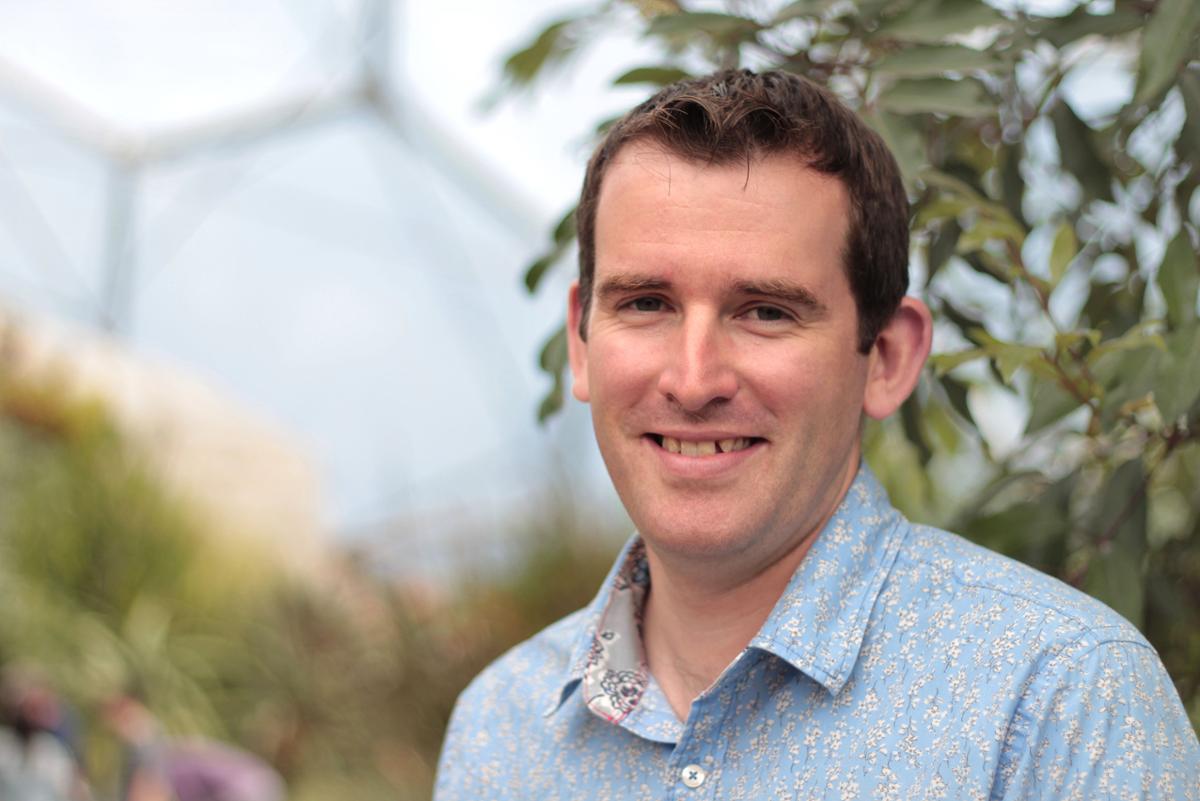
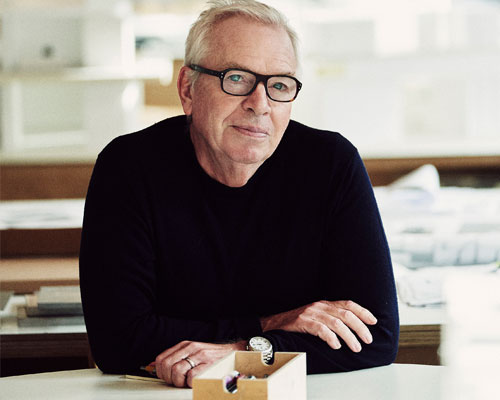
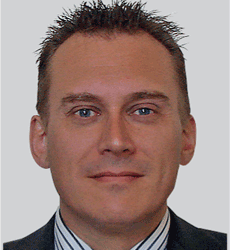
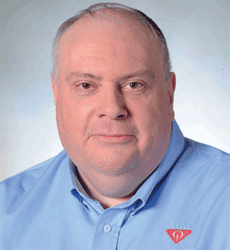
Eden Project CEO David Harland / Ben Foster/Eden Project
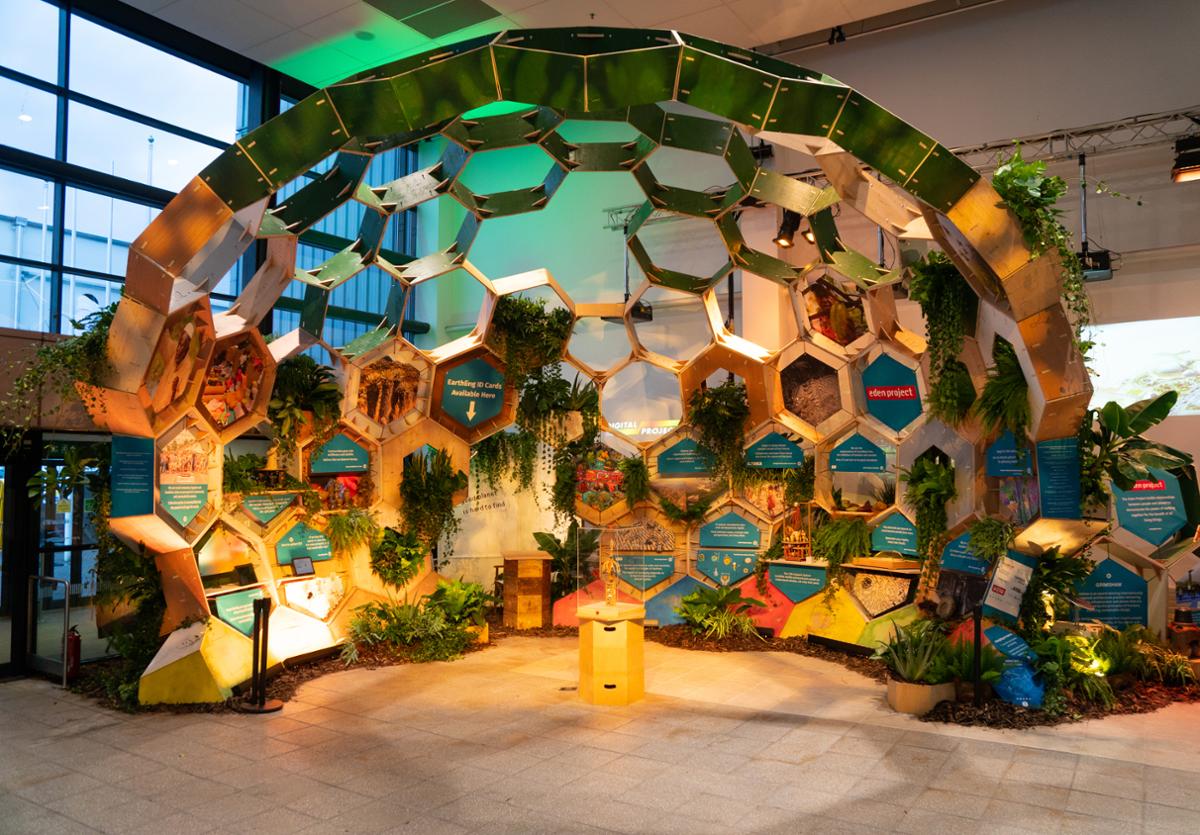
When I speak to Eden International CEO David Harland, he’s at the COP26 United Nations Climate Change Conference in Glasgow, UK, where the Eden Project Pavilion aimed to be a ‘showcase of, and call to arms for, the actions needed to regenerate our fractured planet.’
“I might be biased, but I think it’s the most beautiful thing at COP26. It’s very visually appealing and it gets people thinking and talking,” Harland tells me, in between announcing new projects, speaking to news crews and scouting for funding.
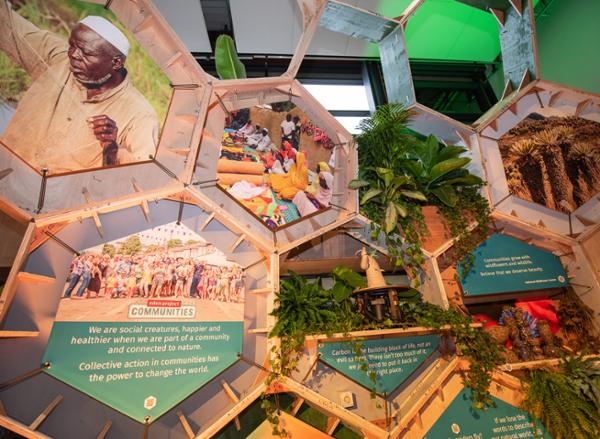
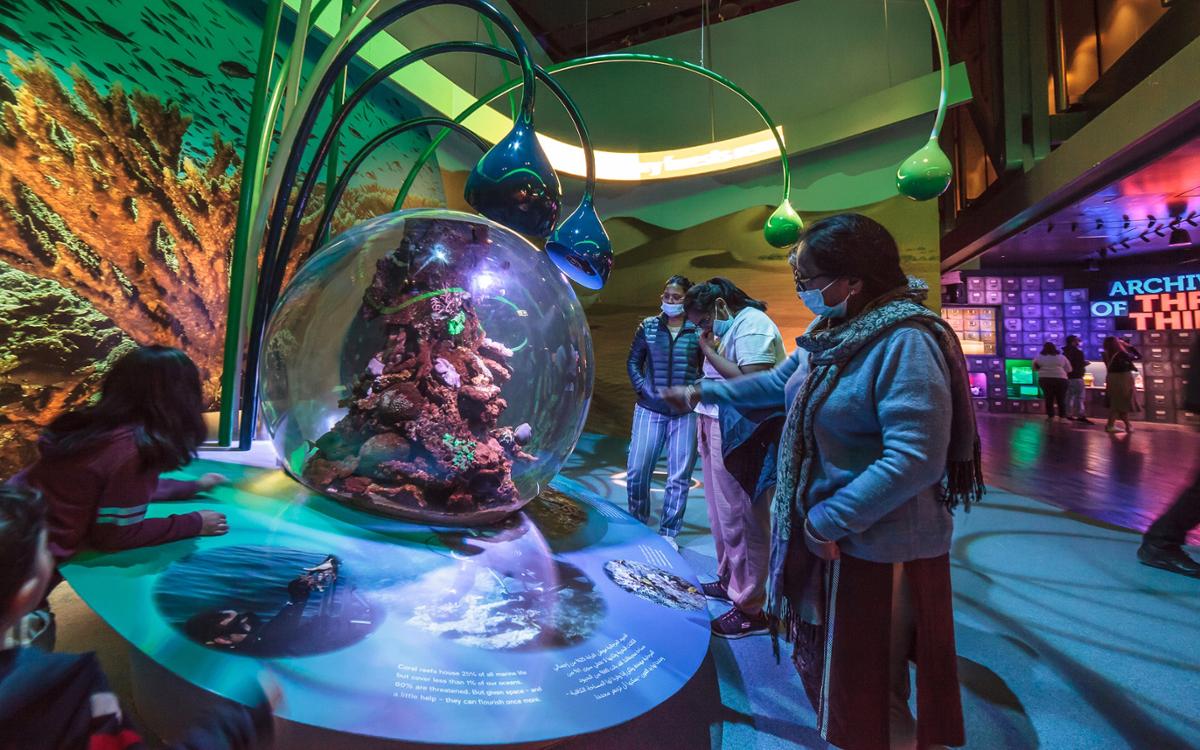
Designed by Grimshaw, the pavilion is reminiscent of the geodesic design of the Eden Project biomes in Cornwall, but features collapsed panels to reflect the current planetary crisis.
Just before I speak to Harland, the Eden Project team used the pavilion as a backdrop to announce plans to open the first South American site, in Colombia’s Meta region. It’s the latest in a string of international ‘New Edens,’ with projects planned for Costa Rica, China, New Zealand, Australia, Africa, the US and the UK.
Meanwhile, at the original site in Cornwall UK, which opened in a disused clay pit in 2001, Eden Geothermal – a groundbreaking project aiming to harness sustainable energy from the rocks deep underground – is progressing fast. At the start of November 2021, the partners announced the project it had reached a critical point, with the completion of its first well five kilometres underground. The plan is to use the heat to produce electricity to power the Eden Project and the equivalent of around 5,000 homes.
“When we built the Eden Project in Cornwall, doing no harm was good enough. Now we need our buildings and operations to do good,” says Harland.
The Eden Project organisation has pledged to be carbon positive by 2030. “Actually, we should do better than that,” Harland says. “We’ll be carbon positive for scopes 1 and 2 [direct emissions and indirect emissions – owned] at Eden Project Cornwall by the end of 2022. Geothermal will help us to go further and deal with visitors coming to us and that element of the carbon counting. And of course that pledge must relate to all of our future sites as well.”
NEW EDENS Since opening in 2001, the original Eden Project has attracted more than 22 million visitors. Now, Eden is keen to reach a greater audience around the world; to influence individuals, corporations and governments to change their behaviours in order to protect the planet.
“We feel you can only do that by connecting with people,” explains Harland. “The physical sites are really important to tell those stories about how we live and how dependent we are on the natural world.
“It’s about giving people the tools and capability to take action. The way we want to do that in part is by creating exemplar projects that show that the future remains ours to make – that you can take something apparently hopeless, sterile and derelict that had been used up by humans, such as a clay pit or a mine, and breathe new life into it.”
Eden Project International was launched in 2017, with the aim of driving the establishment of new Eden projects worldwide, partnering with “like-minded organisations to deliver social and ecological benefits.”
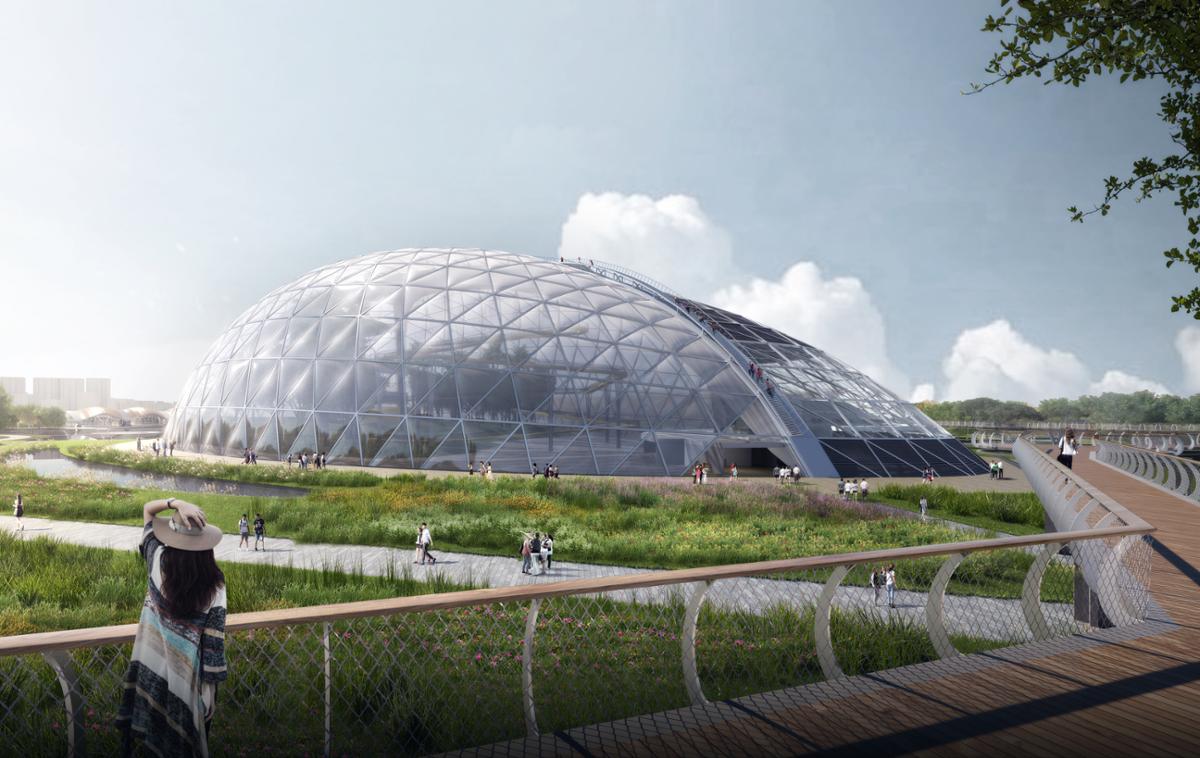
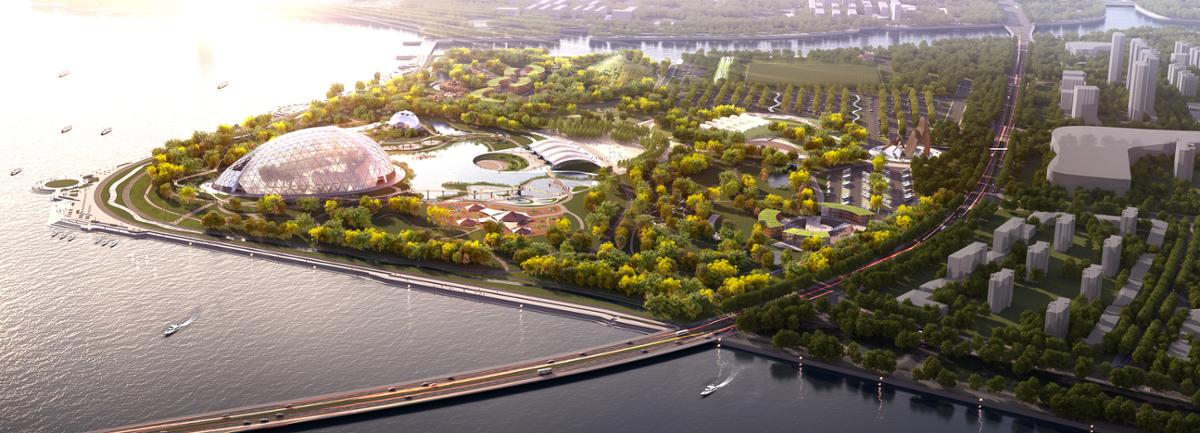
EDEN PROJECT QINGDAO The first location to be announced outside the UK was the Eden Project Qingdao in China, which broke ground in May 2020 and topped out in October 2021. Themed around water, it’s situated on 66 hectares of reclaimed, environmentally damaged land that was used for salt production and then prawn breeding.
Eden Project partnered with China Jinmao Holdings Limited on the £150m (US$213m, €170.8m) project, which is due to open in 2023. “The site has water on three sides. We’re telling the story of water abundance, water scarcity and the power of water,” says Harland.
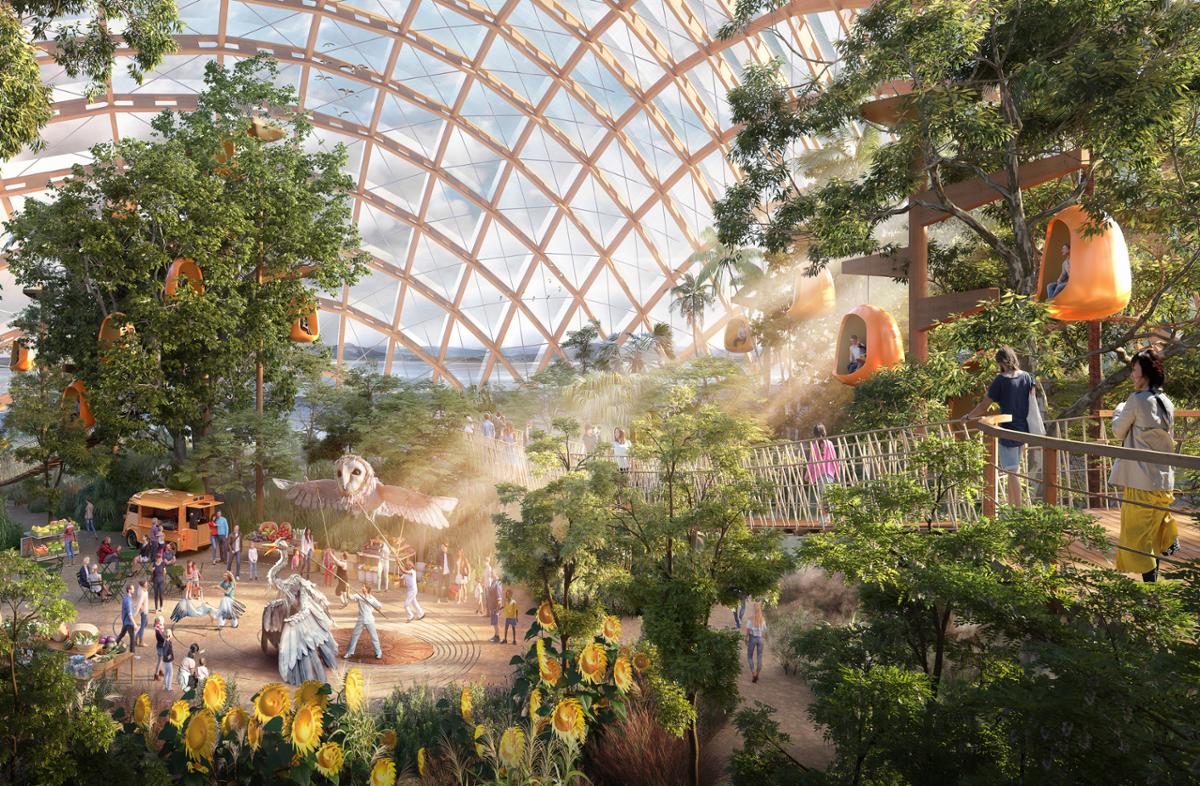
Designed by Grimshaw Architects, who were also responsible for the design of the original Eden Project, it will be made from triangular ETFE domes or ‘pillows’ and have the world’s largest indoor waterfall at its centrepiece. Rising to a height of 50m (164ft) , it will be roughly the same size as Niagara Falls.
Visitors to Eden Project Qingdao will journey through dramatic landscapes of extreme aridity and water abundance, surrounded by theatrical performances and interactive installations. These will explore different aspects of water – from the microscopic life forms in one drop of water to the thunder claps of a storm cloud.
WORKING IN CHINA How have Harland and the rest of the team found working in China, I ask. “It’s not easy,” he says, “that’s not about them being difficult; it’s just that there are cultural differences and different ways of working.
“What we did find is a real commitment to wanting to look at things afresh and push the envelope, from a sustainability point of view.”
China’s rapid urbanisation and construction boom has had a high environmental cost; it’s vital that the Qingdao project is constructed sustainably and helps demonstrate a different way of doing things, adds Harland. “You have to engage in dialogue and work with people rather than just criticising from the outside. We spent a lot of time looking for the right partner – they recognise there’s been fantastic advancement over the past 30 years, but there’s also been a cost to that.
“We’re challenging construction methods at Eden Project Qingdao,” he says. “For example our partner would have happily put peat into the project. We said, you can’t do that and we worked through the reasons, gave them the evidence, and they agreed they absolutely didn’t want to use it.”
Eden’s projects are all being run through partnerships – how do they ensure partners share their values and don’t tarnish the Eden brand?
“This is our biggest risk, and it’s the thing that occupies the most time,” acknowledges Harland. “We’re very alive to the idea of greenwashing and other traps we could fall into if we’re not careful. The key is to spend a lot of time researching our partners and finding out about them. We say to people, if you want to work with us, there’s a cost to that, and also we want to do a feasibility study. That allows us to assess if they’re really serious about the project. Feasibility is part of the due diligence we do, and it seems to work well.”
EDEN PROJECT NORTH Plans to build a northern version of the Eden Project in Lancashire, UK, were submitted to Lancaster City Council in September 2021.
If approved, the £125m project would be situated on the site of the former Bubbles leisure complex on the seafront at Morecambe Bay. Eden has teamed up again with Grimshaw Architects to create ‘shell-like’ domes, with a mix of indoor and outdoor attractions designed to connect people with the natural environment of Morecambe Bay. It’s projected to attract around one million visitors a year, and employ around 400 people.
“The concept comes from the idea of tides and rhythms and their effect on our lives,” says Harland. “There’s a pulse, or a rhythm to life, and when things are out of rhythm, that’s when they start to go wrong. We want visitors to understand and experience this rhythm.”
FUNDING CHALLENGES Harland recently spoke about the need for government funding for the Eden Project North, and speaking to potential funders for Eden projects is a big part of his role.
“It’s a challenge and I spend a lot of my energy trying to raise funding,” he says. “Our projects are often public, private and philanthropically funded with capital, but they stand on their own two feet once they’re built. We have a sustainable business model – the exciting thing is that we can make a return both commercially and also for the public sector on these developments, which is why these partnerships work.
“Is it easy? No. Truthfully, it’s a slog, but we know that these things are worth doing because they have real impact on people’s lives and that’s why we keep doing what we’re doing,” he says.
As our conversation comes to a close, I ask Harland whether he feels optimistic or pessimistic about the future of our planet.
“I feel entirely optimistic for the future of the planet – this is a human-made problem and the planet will be absolutely fine without us,” he says. “If you ask me if I feel optimistic for the future of humankind, yes I do as well, but we’ve got to take action. We’re an optimistic organisation, I’m an optimist by nature and we know that the future remains ours to make.”
NEW EDENS
Eden Project North in Morecambe,
Lancashire
Where: Morecambe, Lancashire
Working with: Lancashire Enterprise Partnership, Lancaster University, Lancashire County Council and Lancaster City Council
How much: £125m
When: 2024
Eden Project Qingdao, China
Where: Qingdao, Shandong province, China
Working with: China Jinmao Holdings Limited
How much: £150m
When: 2023
SELECTED PROJECTS
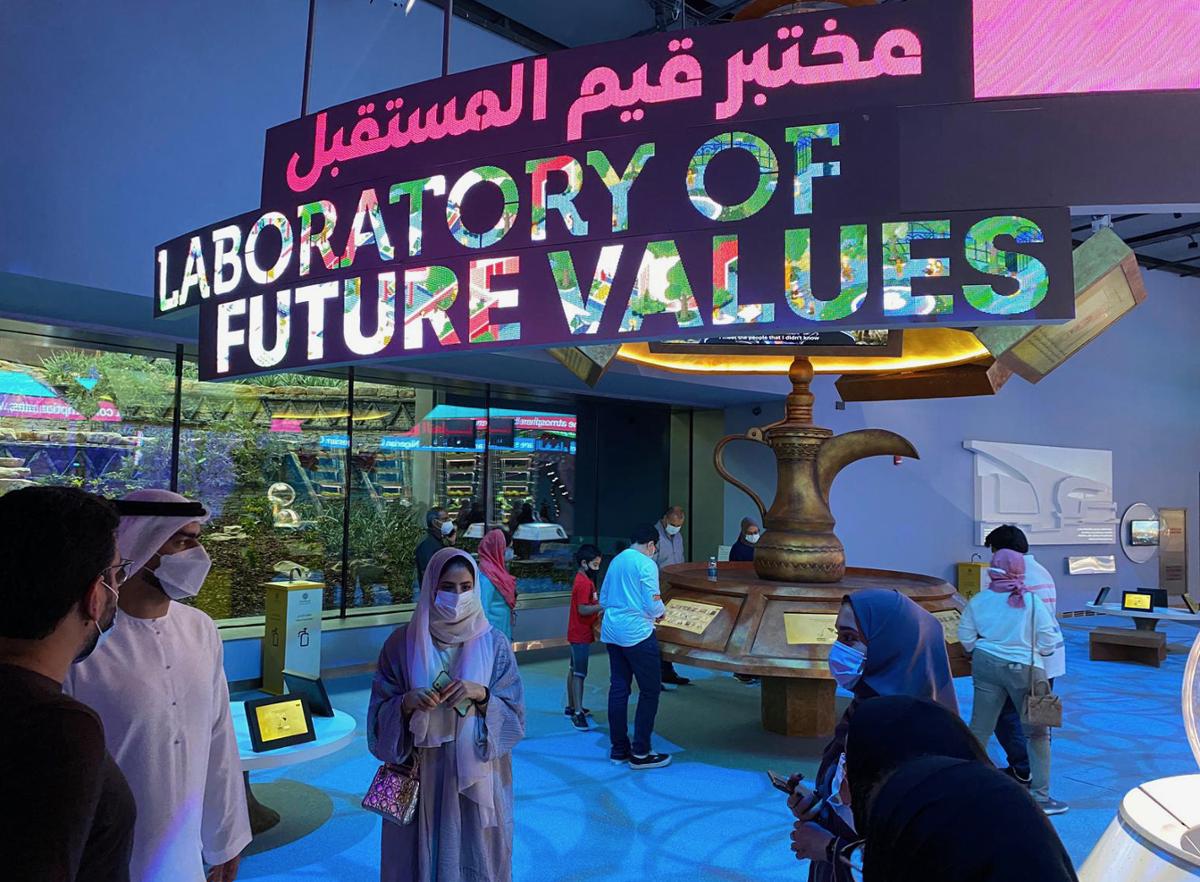
Terra, the Sustainability Pavilion,
Expo 2020, Dubai
Where: Dubai, UAE
Working with: Grimshaw Architects, Thinc Design and the Dubai Expo 2020 team
When: Now until 31 March 2022
Eden Project Dundee, UK
Where: Dundee, Scotland
Working with: Dundee City Council, University of Dundee, The Northwood Charitable Trust, National Grid, SGN
When: 2024
Eden Project Costa Rica
Where: Nicoya Peninsula, Costa Rica
Working with: Matambú Forest Nature Reserve, Costa Rican Ministry of Environment and Energy
How much: fundraising for $15m
When: Ongoing
Eden Project New Zealand
Where: Christchurch, New Zealand
Working with: Christchurch City Council, Eden Project NZ Trust
When: 2025
Ecological restoration of Lake Chad
Where: Republic of Chad
Working with: UNESCO (United Nations Educational, Scientific and Cultural Organisation), University of N’Djamena
When: ongoing project
Eden Project Foyle, UK
Where: Derry~Londonderry, UK
Working with: Foyle River Gardens charity
How much: £67m
When: 2025
Eden Geothermal
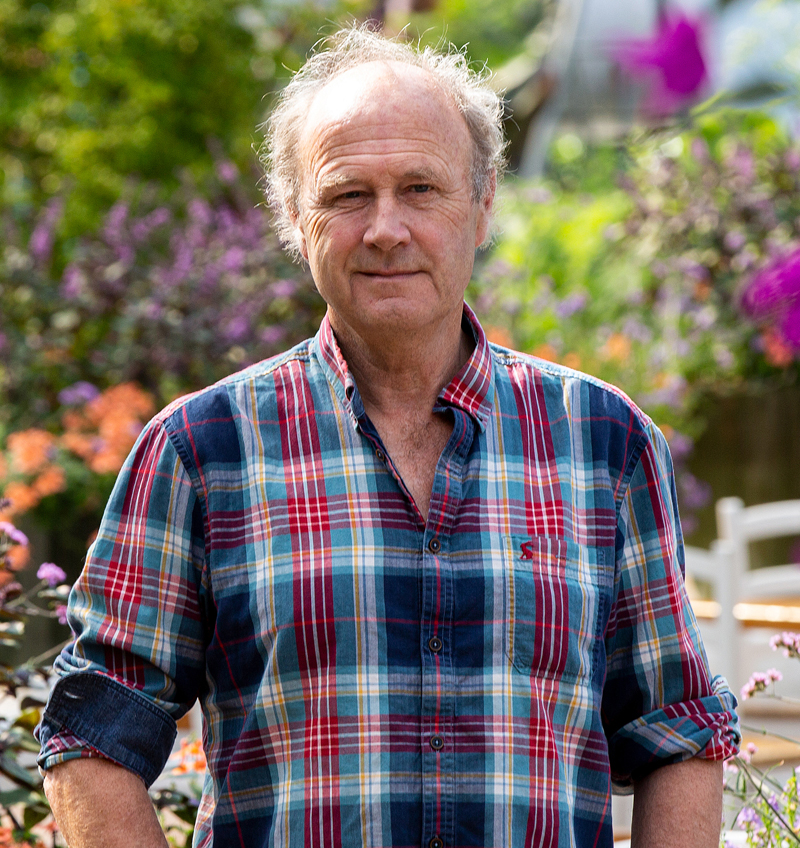
Co-founder Sir Tim Smit
For the team at Eden, the idea of tapping into the resources underground to generate renewable power has been a long held dream.
“We’ve been chasing the geothermal project for more than 10 years, because we happen to be located with the right geological conditions,” David Harland says. “We’ve sent a drill down and the good news is that we have the right conditions down there and we’re going to be able to generate all the electricity we need for Eden, and probably about 5,000 homes equivalent.”
Drilling deep into the granite at the Eden Project in Cornwall started in May, and the first well was completed in November 2021, with the team reporting promising results, with high temperatures and good permeability at depth.
“The Holy Grail of renewables is constancy so that we get heat and power even when the sun don’t shine and the wind don’t blow,” Eden Project co-founder Sir Tim Smit said, at the announcement of the successful completion of the well.
“This is base load ... the key to unlocking Britain’s fossil fuel dependence for energy.
“Jules Verne would have loved it. Brunel would be dancing a jig at the dawning of a green industrial revolution. Now politicians and planners have no excuses not to commit to the future for it is here ... now.”
Eden Geothermal Ltd has been set up by three partners: Eden Project, EGS Energy Ltd, and Bestec (UK) Ltd, and has funding from the European Regional Development Fund, Cornwall Council and institutional investors.
Phase one, currently underway, involves drilling and testing the first well of a geothermal energy demonstration system at the Eden Project, and the supply of heat to the Eden Project.
Phase two involves drilling a second well to bring further heated water to the surface to provide power for the local community.
Politicians and planners
have no excuses not to
commit to the future
for it is here ... now
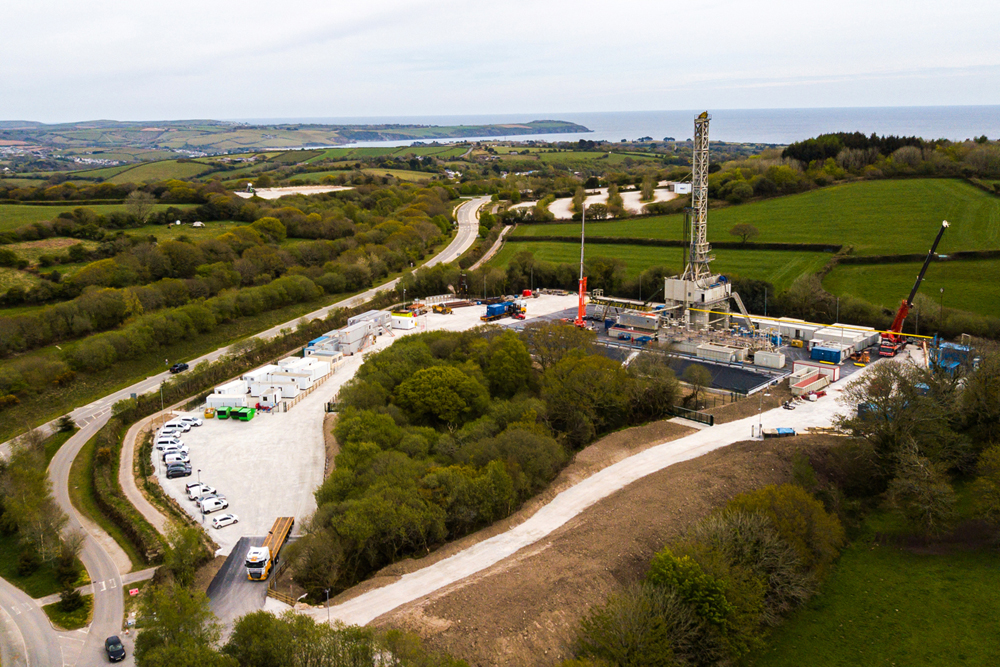
A three mile-deep borehole has been drilled into the earth at the Eden Project. “Jules Verne would have loved it,” says co-founder Sir Tim Smit (above) / Photo: Ben Foster/Eden Project
Read more from this issue of Attractions Management magazine
View contents of Attractions Management 2021 issue 4
Editor's letter: Eco drivers
Therme Group and The Eden Project are going global, on an environmental mission says Magali Robathan
AM People: Julia Baird
On why her brother John Lennon would have loved the Strawberry Field attraction and the work it’s doing for the local community
AM People: Åsa Caap
The thrill of opening the Space Stockholm digital culture centre
Interview: David Harland & Sir Tim Smit
With projects underway around the world, the Eden Project is going global with its call to arms for the future of the planet
Museums: Getting creative
How the Young V&A will aim to provide children with the creative tools stripped out by the pandemic
Interview: Richard Land
Mixing waterslides with wellbeing, the Therme Group is creating a category all of its own while taking on the world, says the group’s chief development officer
Museums: Kunsthaus Zurich completes
A David Chipperfield extension has more than doubled the museum’s exhibition space, making Zurich a major destination for the arts
Interview: Julien Kauffmann
As Farah Experiences prepares to open SeaWorld Abu Dubai, its CEO talks COVID-19, branding and branching with David Camp
Research: Making pre-booking work
Attractions are benefiting from the switch to pre-booking, but must cater for spontaneous, disorganised visitors too, says Jon Young
Research: All creatures great and small
Zoo enrichment and research can’t just be focused on the large animals most popular with visitors, argues Dr Paul Rose. All must be represented
Research: Popularity game
Research on zoo animals focuses more on ‘familiar’ species such as gorillas and chimpanzees, rather than less well known ones such as the waxy monkey frog, scientists say
Analysis: Light in the dark
A successful winter light show can see margins upwards of 30 per cent. Kathleen LaClair and
Yael Coifman look at some of the operators getting it right
Museums: Munch Museum opens in Norway
The iconic new attraction has opened on Oslo’s waterfront with the world’s largest collection of works by Edvard Munch
Mystery Shopper: Galleries & Gourds
It has transformed the sleepy town of Bruton, UK, but does Hauser & Wirth Somerset live up to the hype? Magali Robathan mystery shops to find out
With plans to open on every inhabited continent on earth,
the Eden Project hopes to inspire change and encourage a more
sustainable future, CEO David Harland tells Magali Robathan
Eden Project CEO David Harland / Ben Foster/Eden Project
When I speak to Eden International CEO David Harland, he’s at the COP26 United Nations Climate Change Conference in Glasgow, UK, where the Eden Project Pavilion aimed to be a ‘showcase of, and call to arms for, the actions needed to regenerate our fractured planet.’
“I might be biased, but I think it’s the most beautiful thing at COP26. It’s very visually appealing and it gets people thinking and talking,” Harland tells me, in between announcing new projects, speaking to news crews and scouting for funding.
Designed by Grimshaw, the pavilion is reminiscent of the geodesic design of the Eden Project biomes in Cornwall, but features collapsed panels to reflect the current planetary crisis.
Just before I speak to Harland, the Eden Project team used the pavilion as a backdrop to announce plans to open the first South American site, in Colombia’s Meta region. It’s the latest in a string of international ‘New Edens,’ with projects planned for Costa Rica, China, New Zealand, Australia, Africa, the US and the UK.
Meanwhile, at the original site in Cornwall UK, which opened in a disused clay pit in 2001, Eden Geothermal – a groundbreaking project aiming to harness sustainable energy from the rocks deep underground – is progressing fast. At the start of November 2021, the partners announced the project it had reached a critical point, with the completion of its first well five kilometres underground. The plan is to use the heat to produce electricity to power the Eden Project and the equivalent of around 5,000 homes.
“When we built the Eden Project in Cornwall, doing no harm was good enough. Now we need our buildings and operations to do good,” says Harland.
The Eden Project organisation has pledged to be carbon positive by 2030. “Actually, we should do better than that,” Harland says. “We’ll be carbon positive for scopes 1 and 2 [direct emissions and indirect emissions – owned] at Eden Project Cornwall by the end of 2022. Geothermal will help us to go further and deal with visitors coming to us and that element of the carbon counting. And of course that pledge must relate to all of our future sites as well.”
NEW EDENS Since opening in 2001, the original Eden Project has attracted more than 22 million visitors. Now, Eden is keen to reach a greater audience around the world; to influence individuals, corporations and governments to change their behaviours in order to protect the planet.
“We feel you can only do that by connecting with people,” explains Harland. “The physical sites are really important to tell those stories about how we live and how dependent we are on the natural world.
“It’s about giving people the tools and capability to take action. The way we want to do that in part is by creating exemplar projects that show that the future remains ours to make – that you can take something apparently hopeless, sterile and derelict that had been used up by humans, such as a clay pit or a mine, and breathe new life into it.”
Eden Project International was launched in 2017, with the aim of driving the establishment of new Eden projects worldwide, partnering with “like-minded organisations to deliver social and ecological benefits.”
EDEN PROJECT QINGDAO The first location to be announced outside the UK was the Eden Project Qingdao in China, which broke ground in May 2020 and topped out in October 2021. Themed around water, it’s situated on 66 hectares of reclaimed, environmentally damaged land that was used for salt production and then prawn breeding.
Eden Project partnered with China Jinmao Holdings Limited on the £150m (US$213m, €170.8m) project, which is due to open in 2023. “The site has water on three sides. We’re telling the story of water abundance, water scarcity and the power of water,” says Harland.
Designed by Grimshaw Architects, who were also responsible for the design of the original Eden Project, it will be made from triangular ETFE domes or ‘pillows’ and have the world’s largest indoor waterfall at its centrepiece. Rising to a height of 50m (164ft) , it will be roughly the same size as Niagara Falls.
Visitors to Eden Project Qingdao will journey through dramatic landscapes of extreme aridity and water abundance, surrounded by theatrical performances and interactive installations. These will explore different aspects of water – from the microscopic life forms in one drop of water to the thunder claps of a storm cloud.
WORKING IN CHINA How have Harland and the rest of the team found working in China, I ask. “It’s not easy,” he says, “that’s not about them being difficult; it’s just that there are cultural differences and different ways of working.
“What we did find is a real commitment to wanting to look at things afresh and push the envelope, from a sustainability point of view.”
China’s rapid urbanisation and construction boom has had a high environmental cost; it’s vital that the Qingdao project is constructed sustainably and helps demonstrate a different way of doing things, adds Harland. “You have to engage in dialogue and work with people rather than just criticising from the outside. We spent a lot of time looking for the right partner – they recognise there’s been fantastic advancement over the past 30 years, but there’s also been a cost to that.
“We’re challenging construction methods at Eden Project Qingdao,” he says. “For example our partner would have happily put peat into the project. We said, you can’t do that and we worked through the reasons, gave them the evidence, and they agreed they absolutely didn’t want to use it.”
Eden’s projects are all being run through partnerships – how do they ensure partners share their values and don’t tarnish the Eden brand?
“This is our biggest risk, and it’s the thing that occupies the most time,” acknowledges Harland. “We’re very alive to the idea of greenwashing and other traps we could fall into if we’re not careful. The key is to spend a lot of time researching our partners and finding out about them. We say to people, if you want to work with us, there’s a cost to that, and also we want to do a feasibility study. That allows us to assess if they’re really serious about the project. Feasibility is part of the due diligence we do, and it seems to work well.”
EDEN PROJECT NORTH Plans to build a northern version of the Eden Project in Lancashire, UK, were submitted to Lancaster City Council in September 2021.
If approved, the £125m project would be situated on the site of the former Bubbles leisure complex on the seafront at Morecambe Bay. Eden has teamed up again with Grimshaw Architects to create ‘shell-like’ domes, with a mix of indoor and outdoor attractions designed to connect people with the natural environment of Morecambe Bay. It’s projected to attract around one million visitors a year, and employ around 400 people.
“The concept comes from the idea of tides and rhythms and their effect on our lives,” says Harland. “There’s a pulse, or a rhythm to life, and when things are out of rhythm, that’s when they start to go wrong. We want visitors to understand and experience this rhythm.”
FUNDING CHALLENGES Harland recently spoke about the need for government funding for the Eden Project North, and speaking to potential funders for Eden projects is a big part of his role.
“It’s a challenge and I spend a lot of my energy trying to raise funding,” he says. “Our projects are often public, private and philanthropically funded with capital, but they stand on their own two feet once they’re built. We have a sustainable business model – the exciting thing is that we can make a return both commercially and also for the public sector on these developments, which is why these partnerships work.
“Is it easy? No. Truthfully, it’s a slog, but we know that these things are worth doing because they have real impact on people’s lives and that’s why we keep doing what we’re doing,” he says.
As our conversation comes to a close, I ask Harland whether he feels optimistic or pessimistic about the future of our planet.
“I feel entirely optimistic for the future of the planet – this is a human-made problem and the planet will be absolutely fine without us,” he says. “If you ask me if I feel optimistic for the future of humankind, yes I do as well, but we’ve got to take action. We’re an optimistic organisation, I’m an optimist by nature and we know that the future remains ours to make.”
NEW EDENS
Eden Project North in Morecambe,
Lancashire
Where: Morecambe, Lancashire
Working with: Lancashire Enterprise Partnership, Lancaster University, Lancashire County Council and Lancaster City Council
How much: £125m
When: 2024
Eden Project Qingdao, China
Where: Qingdao, Shandong province, China
Working with: China Jinmao Holdings Limited
How much: £150m
When: 2023
SELECTED PROJECTS
Terra, the Sustainability Pavilion,
Expo 2020, Dubai
Where: Dubai, UAE
Working with: Grimshaw Architects, Thinc Design and the Dubai Expo 2020 team
When: Now until 31 March 2022
Eden Project Dundee, UK
Where: Dundee, Scotland
Working with: Dundee City Council, University of Dundee, The Northwood Charitable Trust, National Grid, SGN
When: 2024
Eden Project Costa Rica
Where: Nicoya Peninsula, Costa Rica
Working with: Matambú Forest Nature Reserve, Costa Rican Ministry of Environment and Energy
How much: fundraising for $15m
When: Ongoing
Eden Project New Zealand
Where: Christchurch, New Zealand
Working with: Christchurch City Council, Eden Project NZ Trust
When: 2025
Ecological restoration of Lake Chad
Where: Republic of Chad
Working with: UNESCO (United Nations Educational, Scientific and Cultural Organisation), University of N’Djamena
When: ongoing project
Eden Project Foyle, UK
Where: Derry~Londonderry, UK
Working with: Foyle River Gardens charity
How much: £67m
When: 2025
Eden Geothermal
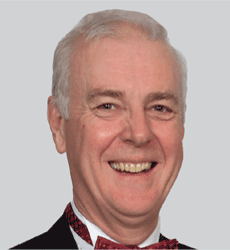
Co-founder Sir Tim Smit
For the team at Eden, the idea of tapping into the resources underground to generate renewable power has been a long held dream.
“We’ve been chasing the geothermal project for more than 10 years, because we happen to be located with the right geological conditions,” David Harland says. “We’ve sent a drill down and the good news is that we have the right conditions down there and we’re going to be able to generate all the electricity we need for Eden, and probably about 5,000 homes equivalent.”
Drilling deep into the granite at the Eden Project in Cornwall started in May, and the first well was completed in November 2021, with the team reporting promising results, with high temperatures and good permeability at depth.
“The Holy Grail of renewables is constancy so that we get heat and power even when the sun don’t shine and the wind don’t blow,” Eden Project co-founder Sir Tim Smit said, at the announcement of the successful completion of the well.
“This is base load ... the key to unlocking Britain’s fossil fuel dependence for energy.
“Jules Verne would have loved it. Brunel would be dancing a jig at the dawning of a green industrial revolution. Now politicians and planners have no excuses not to commit to the future for it is here ... now.”
Eden Geothermal Ltd has been set up by three partners: Eden Project, EGS Energy Ltd, and Bestec (UK) Ltd, and has funding from the European Regional Development Fund, Cornwall Council and institutional investors.
Phase one, currently underway, involves drilling and testing the first well of a geothermal energy demonstration system at the Eden Project, and the supply of heat to the Eden Project.
Phase two involves drilling a second well to bring further heated water to the surface to provide power for the local community.
Politicians and planners
have no excuses not to
commit to the future
for it is here ... now
A three mile-deep borehole has been drilled into the earth at the Eden Project. “Jules Verne would have loved it,” says co-founder Sir Tim Smit (above) / Photo: Ben Foster/Eden Project
Read more from this issue of Attractions Management magazine
View contents of Attractions Management 2021 issue 4
Editor's letter: Eco drivers
Therme Group and The Eden Project are going global, on an environmental mission says Magali Robathan
AM People: Julia Baird
On why her brother John Lennon would have loved the Strawberry Field attraction and the work it’s doing for the local community
AM People: Åsa Caap
The thrill of opening the Space Stockholm digital culture centre
Interview: David Harland & Sir Tim Smit
With projects underway around the world, the Eden Project is going global with its call to arms for the future of the planet
Museums: Getting creative
How the Young V&A will aim to provide children with the creative tools stripped out by the pandemic
Interview: Richard Land
Mixing waterslides with wellbeing, the Therme Group is creating a category all of its own while taking on the world, says the group’s chief development officer
Museums: Kunsthaus Zurich completes
A David Chipperfield extension has more than doubled the museum’s exhibition space, making Zurich a major destination for the arts
Interview: Julien Kauffmann
As Farah Experiences prepares to open SeaWorld Abu Dubai, its CEO talks COVID-19, branding and branching with David Camp
Research: Making pre-booking work
Attractions are benefiting from the switch to pre-booking, but must cater for spontaneous, disorganised visitors too, says Jon Young
Research: All creatures great and small
Zoo enrichment and research can’t just be focused on the large animals most popular with visitors, argues Dr Paul Rose. All must be represented
Research: Popularity game
Research on zoo animals focuses more on ‘familiar’ species such as gorillas and chimpanzees, rather than less well known ones such as the waxy monkey frog, scientists say
Analysis: Light in the dark
A successful winter light show can see margins upwards of 30 per cent. Kathleen LaClair and
Yael Coifman look at some of the operators getting it right
Museums: Munch Museum opens in Norway
The iconic new attraction has opened on Oslo’s waterfront with the world’s largest collection of works by Edvard Munch
Mystery Shopper: Galleries & Gourds
It has transformed the sleepy town of Bruton, UK, but does Hauser & Wirth Somerset live up to the hype? Magali Robathan mystery shops to find out
A US$50 million (£44.2 million, €51.2 million) transformation of Chicago's historic McCormick
Mansion has created a new destination that combines live magic, immersive theatre, dining and
private membership under one roof.
The Montana Historical Society has officially celebrated the opening of its new Montana
Heritage
Center, a US$107 million (£79 million, €92 million) destination that combines immersive
storytelling with cutting-edge audiovisual technology to bring the sta
San Antonio Zoo has reported a US$283 million economic impact for 2025, following a decade-
long transformation programme that has seen almost US$200 million invested into the Texas
attraction.
Plans for the AU$180 million redevelopment of Reef HQ Aquarium in Townsville, Australia, are
progressing, with the project set to transform the attraction into a global centre for reef
education and conservation.
Abu Dhabi-based investment firm Mubadala Capital has made a binding, fully financed
€1 billion
offer to acquire Pierre and Vacances SA, the European holiday resort operator behind the
continental European Center Parcs business.
Disney has reaffirmed its commitment to investing US$30 billion in its US parks and cruise
business by 2033, using new America250 celebrations to underline the role its attractions play
in supporting jobs, tourism and economic growth.
Expo 2030 Riyadh is being planned as a permanent visitor destination, with organisers
confirming the six-million-square-metre site will become a Global Village after the event closes.
The owner of one of Australia's best-known waterparks has acquired a major competitor,
creating a new attractions business spanning two of the country's largest visitor destinations.
The Toverland theme park in the Netherlands has announced a €98m expansion programme
that will add a resort, new attractions and staff facilities as it pursues plans to become a multi-
day destination.
Hotel de France, located on the British Isle of Jersey, has created a wellness retreat package
that includes a hot yoga session that will take place in Jersey Zoo’s butterfly sanctuary.
+ More news
COMPANY PROFILES
Holovis Holovis is a privately owned company
established in 2004 by CEO Stuart
Hetherington. [more...]