Humans have been fascinated
by tall towers for thousands
of years and now a new
generation of vertical
attractions is shaking
things up. Dr Terry Stevens
investigates the phenomenon
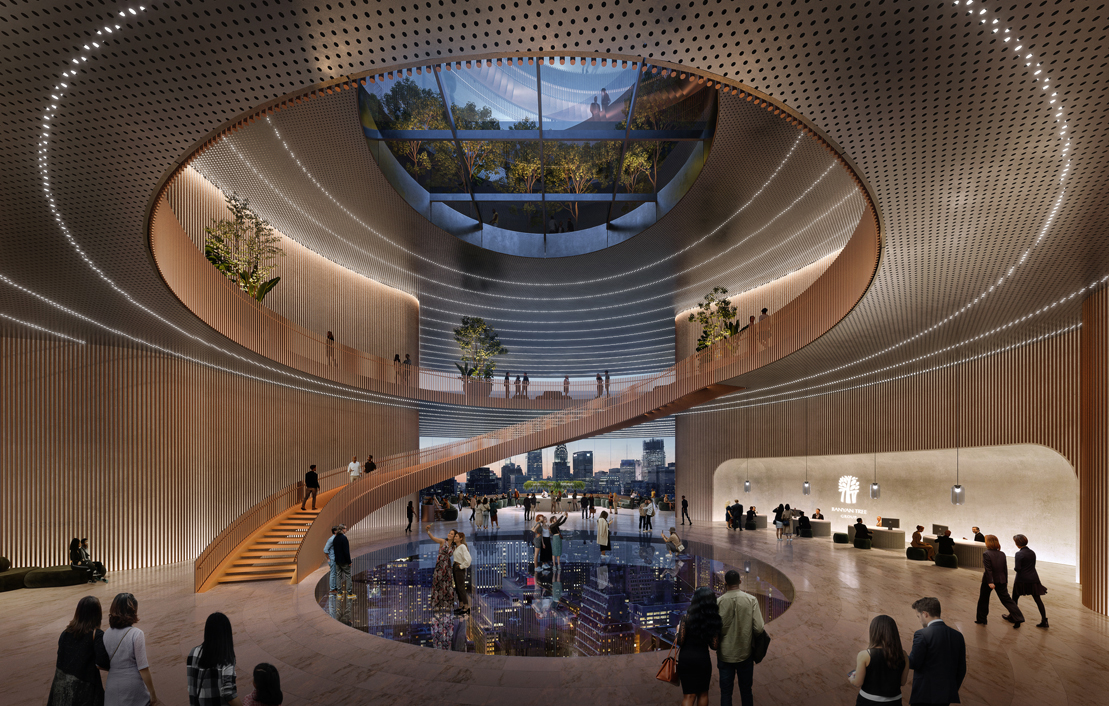
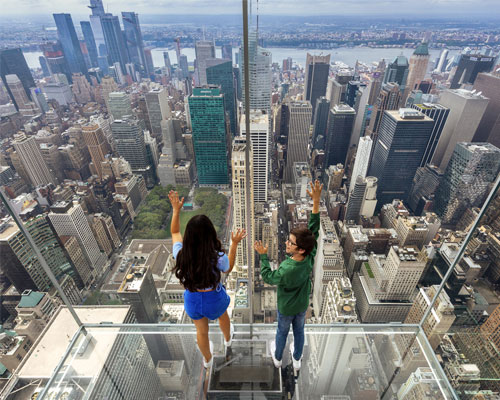
New York’s Summit One Vanderbilt offers an “extraordinary experience” / Photo courtesy of Summit One Vanderbilt
The past few years have seen a surge of interest in the development of a new generation of vertical attractions, as destinations around the world seek to enhance their appeal to tourists.
Vertical visitor attractions have existed for centuries, of course. The Blackpool Tower entertainment complex is one of the best known and most loved landmarks in England, while the Eiffel Tower is synonymous with Paris. Vertical attractions can be found on remote mountain tops, in coastal resorts, and in the centre of capital cities.
These structures, by their nature, stand out in their environments. Their design can often divide opinion and generate strong emotions. Their innovative design, method of construction, and nature of the visitor experience makes them ‘game-changers.’ They have to be unique to truly succeed.
The awe factor What’s the appeal of these high-rise experiences for visitors? It’s all about the awe factor.
In many ways, these are the ultimate adventure experience delivered in a safe and controlled environment. The experiences touch raw emotions – both fear and pleasure. They’re out of the ordinary, they’re powerful and they create memorable moments. In many cases they’re a new form of high-rise entertainment that has re-imagined a traditional form of the vertical visitor attraction.
For some visitors it may also be about religious analogies such as getting closer to God (or another great deity), transcendence, omnipotence, achieving a God’s eye view of the world. These experiences play to a basic human instinct to understand our place in the wider scheme of things, combining pure aesthetic, inquisitiveness, escaping the everyday, seeing the world in a different way and enjoying the spectacle.
In some instances, vertical attractions have purposefully set out to promote physical activity by creating innovative opportunities and media-focused events and challenges, such as vertical running with the Vertical World Circle and Championships, the Skyrunning Championships, and International Stairclimbing Competitions, each with their own governing body for their respective sports.
The future of high rise leisure There’s a surge of interest in developing observation towers and high-rise viewpoints in rural as well as urban settings across the world.
The clamour to find the next generation of vertical attractions has given rise to the unique Spiral Tower concept, billed as the future of urban leisure.
Its designers claim it will be the world’s first climate-neutral high-rise attraction, featuring transparent electric passenger cabins spiralling up and down its façade, and vertical gardens. It will be powered by solar panels integrated into the mast and an urban windmill at the top of the tower.
In 2023, leading high rise attraction operator and owner Magnicity acquired the patent for Spiral Tower and announced its collaboration with design company Northern Light and Groenendijk Engineering for the international development of the tower.
Magnicity has plenty of experience operating and developing vertical attractions – the company owns the Paris Montparnasse Observatory in the French capital and the Euromast tower in Rotterdam, Netherlands, and operates the Berliner Fernsehturm (TV Tower), the 360 Chicago Observation Deck in the US and De Zalmhaven 1 tower in Rotterdam, the Netherlands.
Magnicity is also behind plans to create a new European destination at the top of the Foster + Partners-designed Varso Tower in Warsaw, Poland, the tallest skyscraper in the EU. The owner of Varso Tower, HB Reavis, recently announced that it had selected Magnicity to manage the top three floors of the building.
The Magnicity site at the 310m-high Varso Tower will include a tree-lined terrace on the 49th floor, as well as a rooftop located at the top of the tower on the 53rd floor, offering visitors a unique panoramic view of Warsaw, an immersive experience, and a large bar facing its rooftop garden and the famous Palace of Culture and Science.
Original experiences The past few years have seen the opening of a range of jaw-dropping viewing experiences worldwide. These include Lift 109 at Battersea Power Station and Horizon 22 in London; Sky Views Dubai; The Beam at the Rockefeller Building and the Elevator Ride at 1 World Trade Centre – both in New York.
One of the most exciting developments has been the Summit One Vanderbilt in New York City. This extraordinary immersive experience was designed by Kohn Pedersen Fox and sits above floor 73 of the Midtown Manhattan skyscraper, One Vanderbilt – New York’s fourth-tallest building.
Summit One Vanderbilt, allegedly costing US$39m and spanning 6,683sq m, consists of four components. The first part, Rise, has three high-speed Schindler 7000 series elevators, which take visitors from the Grand Central Terminal level to the observation area 310m above ground in less than 50 seconds. The second part, Air, is an extraordinary art installation featuring mirrors and shape-changing sculptures by Yayoi Kusama.
Next comes Levitation, comprising two enclosed glass balconies protruding from the façade, while the final part, Ascent, takes guests to the top of the building in two all-glass outside elevators. The interior of the top floor features a glass parapet and a bar, as well as an ‘infinity room’ containing a 12m high ceiling and an interactive art exhibit created by Kenzo Digital. The experience includes Après – a Snøhetta-designed, Nordic-inspired restaurant.
The boutique approach While some countries have gone for the drama of supertall towers with jaw-dropping installations, Slovenia has taken a different approach, with a series of rural, relatively modest tower attractions, that are nonetheless impactful, creatively designed and well executed. These are highly appropriate for this small country that positions itself as boutique and green.
Following the success of the Vinarium Tower in Lendava, Slovenia – which opened in 2015 and has attracted many tourists to the area – the country has fully embraced the vertical attraction concept.
The latest to open is Kristal Tower, which opened in May 2024 in the Slovenian spa resort of Rogaška Slatina. At 106m, the €5m tower is the tallest structure in Slovenia; it features a closed viewing platform and an open outdoor rooftop observatory. Open year-round, the project aims to attract 60,000 visitors a year thus boosting the overall appeal of the resort and injecting €600,000 into the local economy.
Visitors to the concrete, needle-like tower – designed by Ponting Bridges with Korpnik Produkcija – ascend the attraction via elevator, before reaching the viewing platform, created from 500sq metres of glass crystal that’s emblematic of the town’s heritage. The first floor of the platform features a café and a transparent floor, while the second floor features a panoramic observation deck and a virtual reality experience that brings to life the story of the legendary winged horse, Pegasus.
An hour north-east, on the shores of Lake Velenja in the Šaleska Valley, another unique vertical attraction anchors a multipurpose public park and 30,000-capacity event space. Vista Park is characterised by a 14m-high climb to a viewing platform the design of which was inspired by the Pozej Dragon, the legendary lake monster. The Vista incorporates a 2,300sq m stage facing the event area, as well as a restaurant, bar and wedding venue.
Personal favourite If pushed to name my favourite vertical attraction it would be Pyramidenkogel, sitting on an Alpine ridge on the Austrian-Slovenia border near Klagenfurt. With a total height of 100 metres, the Pyramidenkogel is the highest wooden viewing tower in the world. From the Pyramidenkogel visitors can enjoy impressive wide-ranging views of Austria, Slovenia and Italy. Resting on this is the tower head with the two highest viewing platforms and the glazed Sky Box, used as a café and for events. Visitors can either ride in a transparent panoramic lift or climb the 441 stairs to the top.
The viewing tower offers a special experience for children – the highest and longest slide in Europe to be incorporated in a building is just waiting to be discovered. From a height of 52 metres within the viewing tower, is the start of Europe’s tallest indoor tunnel slide, which shoots down 120 metres to the ground floor reaching speeds of up to 25 kilometres an hour.
What next? There are many permutations for future ‘go-high’ attractions – different locations, designs, materials, gravity rides, immersive experiences, and a variety of food and beverage offers. The opportunities are endless.
There will be an increasing emphasis on theming and story-telling alongside the obvious thrill elements. The new Zip World Tower at the former opencast Tower Colliery in South Wales succeeds in merging these two dimensions. Its design echoes the adjacent (now defunct) Pithead Wheel, its content pays homage to the miners, and the visitor experiences are raw, thrilling and physical.
TYPES OF VERTICAL ATTRACTIONS
Stand-alone vertical structures with observation deck
• Traditional structures
Examples include the Eiffel Tower, Paris, France; the Wallace Monument, Stirling, Scotland; the Statute of Liberty, New York, USA.
• Contemporary structures
Examples include the Crystal Tower, Rogaska Slatina, Slovenia; The Vessel, New York, USA; Birštonas, Lithuania; Lookout Tower, Bruneck, Italy; Swan Bells Tower, Perth, Australia; Sauvebelin Tower, Lausanne, Switzerland; BIG’s Marsk Tower, Esbjerg, Denmark; Tower of Health and Joy, Podcetrtek, Slovenia.
Vertical attractions with additional amenities
Examples include the Aalborg Tower, Aalborg, Denmark; i360 Brighton, Sussex, England; AncelorMittal Orbit, Olympic Park, London; the Circuit of Americas Tower, Austin, Texas, USA; Blackpool Tower, Blackpool, England.
Vertical attractions that are part of another vertical structure built for another reason
Examples include BT Tower, London, England; CN Tower, Toronto, Canada; John Hancock Building, Chicago, USA; Liverpool Radio City, England; Dubai Creek Tower, Dubai; Space Needle, Seattle, Canada; The Sydney Tower, Australia; The Berlin Tower, Germany; The Stratosphere Tower, Las Vegas, USA; Sky Tower, Auckland, New Zealand; Danube Tower, Vienna, Austria.
Vertical attraction within mixed-use developments
Examples include A’DAM, Amsterdam, Netherlands; the Spinnaker Tower, Portsmouth, England; the Shard, London, England; SAIL City, Bremerhaven, Germany; Sky Deck, Willis Tower, Chicago, United States; Sky Tree, Tokyo, Japan; Lift109 Battersea Power Station, London, UK.
Hybrids, a new generation of vertical attraction
This new generation of high rise leisure towers include Vista Park, Saleske Doline, Slovenia; La Machine, Toulouse & Nantes, France; CopenHill, Copenhagen, Denmark; the Globe Arena, Stockholm, Sweden; London Eye, London, England; Gardens by the Bay, Singapore; Rainbow Walk, AROS, Aarhus, Denmark; Ba Na Hills, Vietnam; Sky Bridge, Petronas Towers, Kuala Lumpur.
The Freedom Plaza, designed by Bjarke Ingels Group / Image: Negativ
Read more from this issue of Attractions Management magazine
View contents of Attractions Management 2024 issue 3
Multimedia: Sakchin Bessette
How did the team at Moment Factory go from designing visuals for raves to illuminating the Sagrada Familia and creating stage shows for Madonna? The co-founder shares the journey
Museums: Roll of honour
From the Rijksmuseum’s first family exhibition to a 4D experience that wows on a budget, we check out Museum + Heritage Award winners
Theme parks: Cecil Magpuri
Work has begun on the first Dragon Ball theme park, and it’s set to take theming to a whole new level, according to its designer
Museums: Rise up
Filled with colour, music, technology and storytelling, the John K Randle Center is a fitting celebration of Yoruban culture and history, says its architect Seun Oduwole
Experiences: Flight of fancy
Airbnb is diving into the world of immersive experiences with its new Icons initiative. What does this mean for attractions?
Immersive experience: Andrew McGuinness
As Layered Reality prepares to launch its highly-anticipated Elvis Experience, we speak to its CEO about the business of wowing visitors
Zoos: Making a difference
Visiting zoos and aquaria inspires people to act more sustainably, finds a study from the University of Sheffield and Chester Zoo
Tourism: Vertical reality
From energy-generating viewing pods to world-class art installations, a new generation of vertical attractions is shaking up the scene. Dr Terry Stevens investigates
Humans have been fascinated
by tall towers for thousands
of years and now a new
generation of vertical
attractions is shaking
things up. Dr Terry Stevens
investigates the phenomenon
New York’s Summit One Vanderbilt offers an “extraordinary experience” / Photo courtesy of Summit One Vanderbilt
The past few years have seen a surge of interest in the development of a new generation of vertical attractions, as destinations around the world seek to enhance their appeal to tourists.
Vertical visitor attractions have existed for centuries, of course. The Blackpool Tower entertainment complex is one of the best known and most loved landmarks in England, while the Eiffel Tower is synonymous with Paris. Vertical attractions can be found on remote mountain tops, in coastal resorts, and in the centre of capital cities.
These structures, by their nature, stand out in their environments. Their design can often divide opinion and generate strong emotions. Their innovative design, method of construction, and nature of the visitor experience makes them ‘game-changers.’ They have to be unique to truly succeed.
The awe factor What’s the appeal of these high-rise experiences for visitors? It’s all about the awe factor.
In many ways, these are the ultimate adventure experience delivered in a safe and controlled environment. The experiences touch raw emotions – both fear and pleasure. They’re out of the ordinary, they’re powerful and they create memorable moments. In many cases they’re a new form of high-rise entertainment that has re-imagined a traditional form of the vertical visitor attraction.
For some visitors it may also be about religious analogies such as getting closer to God (or another great deity), transcendence, omnipotence, achieving a God’s eye view of the world. These experiences play to a basic human instinct to understand our place in the wider scheme of things, combining pure aesthetic, inquisitiveness, escaping the everyday, seeing the world in a different way and enjoying the spectacle.
In some instances, vertical attractions have purposefully set out to promote physical activity by creating innovative opportunities and media-focused events and challenges, such as vertical running with the Vertical World Circle and Championships, the Skyrunning Championships, and International Stairclimbing Competitions, each with their own governing body for their respective sports.
The future of high rise leisure There’s a surge of interest in developing observation towers and high-rise viewpoints in rural as well as urban settings across the world.
The clamour to find the next generation of vertical attractions has given rise to the unique Spiral Tower concept, billed as the future of urban leisure.
Its designers claim it will be the world’s first climate-neutral high-rise attraction, featuring transparent electric passenger cabins spiralling up and down its façade, and vertical gardens. It will be powered by solar panels integrated into the mast and an urban windmill at the top of the tower.
In 2023, leading high rise attraction operator and owner Magnicity acquired the patent for Spiral Tower and announced its collaboration with design company Northern Light and Groenendijk Engineering for the international development of the tower.
Magnicity has plenty of experience operating and developing vertical attractions – the company owns the Paris Montparnasse Observatory in the French capital and the Euromast tower in Rotterdam, Netherlands, and operates the Berliner Fernsehturm (TV Tower), the 360 Chicago Observation Deck in the US and De Zalmhaven 1 tower in Rotterdam, the Netherlands.
Magnicity is also behind plans to create a new European destination at the top of the Foster + Partners-designed Varso Tower in Warsaw, Poland, the tallest skyscraper in the EU. The owner of Varso Tower, HB Reavis, recently announced that it had selected Magnicity to manage the top three floors of the building.
The Magnicity site at the 310m-high Varso Tower will include a tree-lined terrace on the 49th floor, as well as a rooftop located at the top of the tower on the 53rd floor, offering visitors a unique panoramic view of Warsaw, an immersive experience, and a large bar facing its rooftop garden and the famous Palace of Culture and Science.
Original experiences The past few years have seen the opening of a range of jaw-dropping viewing experiences worldwide. These include Lift 109 at Battersea Power Station and Horizon 22 in London; Sky Views Dubai; The Beam at the Rockefeller Building and the Elevator Ride at 1 World Trade Centre – both in New York.
One of the most exciting developments has been the Summit One Vanderbilt in New York City. This extraordinary immersive experience was designed by Kohn Pedersen Fox and sits above floor 73 of the Midtown Manhattan skyscraper, One Vanderbilt – New York’s fourth-tallest building.
Summit One Vanderbilt, allegedly costing US$39m and spanning 6,683sq m, consists of four components. The first part, Rise, has three high-speed Schindler 7000 series elevators, which take visitors from the Grand Central Terminal level to the observation area 310m above ground in less than 50 seconds. The second part, Air, is an extraordinary art installation featuring mirrors and shape-changing sculptures by Yayoi Kusama.
Next comes Levitation, comprising two enclosed glass balconies protruding from the façade, while the final part, Ascent, takes guests to the top of the building in two all-glass outside elevators. The interior of the top floor features a glass parapet and a bar, as well as an ‘infinity room’ containing a 12m high ceiling and an interactive art exhibit created by Kenzo Digital. The experience includes Après – a Snøhetta-designed, Nordic-inspired restaurant.
The boutique approach While some countries have gone for the drama of supertall towers with jaw-dropping installations, Slovenia has taken a different approach, with a series of rural, relatively modest tower attractions, that are nonetheless impactful, creatively designed and well executed. These are highly appropriate for this small country that positions itself as boutique and green.
Following the success of the Vinarium Tower in Lendava, Slovenia – which opened in 2015 and has attracted many tourists to the area – the country has fully embraced the vertical attraction concept.
The latest to open is Kristal Tower, which opened in May 2024 in the Slovenian spa resort of Rogaška Slatina. At 106m, the €5m tower is the tallest structure in Slovenia; it features a closed viewing platform and an open outdoor rooftop observatory. Open year-round, the project aims to attract 60,000 visitors a year thus boosting the overall appeal of the resort and injecting €600,000 into the local economy.
Visitors to the concrete, needle-like tower – designed by Ponting Bridges with Korpnik Produkcija – ascend the attraction via elevator, before reaching the viewing platform, created from 500sq metres of glass crystal that’s emblematic of the town’s heritage. The first floor of the platform features a café and a transparent floor, while the second floor features a panoramic observation deck and a virtual reality experience that brings to life the story of the legendary winged horse, Pegasus.
An hour north-east, on the shores of Lake Velenja in the Šaleska Valley, another unique vertical attraction anchors a multipurpose public park and 30,000-capacity event space. Vista Park is characterised by a 14m-high climb to a viewing platform the design of which was inspired by the Pozej Dragon, the legendary lake monster. The Vista incorporates a 2,300sq m stage facing the event area, as well as a restaurant, bar and wedding venue.
Personal favourite If pushed to name my favourite vertical attraction it would be Pyramidenkogel, sitting on an Alpine ridge on the Austrian-Slovenia border near Klagenfurt. With a total height of 100 metres, the Pyramidenkogel is the highest wooden viewing tower in the world. From the Pyramidenkogel visitors can enjoy impressive wide-ranging views of Austria, Slovenia and Italy. Resting on this is the tower head with the two highest viewing platforms and the glazed Sky Box, used as a café and for events. Visitors can either ride in a transparent panoramic lift or climb the 441 stairs to the top.
The viewing tower offers a special experience for children – the highest and longest slide in Europe to be incorporated in a building is just waiting to be discovered. From a height of 52 metres within the viewing tower, is the start of Europe’s tallest indoor tunnel slide, which shoots down 120 metres to the ground floor reaching speeds of up to 25 kilometres an hour.
What next? There are many permutations for future ‘go-high’ attractions – different locations, designs, materials, gravity rides, immersive experiences, and a variety of food and beverage offers. The opportunities are endless.
There will be an increasing emphasis on theming and story-telling alongside the obvious thrill elements. The new Zip World Tower at the former opencast Tower Colliery in South Wales succeeds in merging these two dimensions. Its design echoes the adjacent (now defunct) Pithead Wheel, its content pays homage to the miners, and the visitor experiences are raw, thrilling and physical.
TYPES OF VERTICAL ATTRACTIONS
Stand-alone vertical structures with observation deck
• Traditional structures
Examples include the Eiffel Tower, Paris, France; the Wallace Monument, Stirling, Scotland; the Statute of Liberty, New York, USA.
• Contemporary structures
Examples include the Crystal Tower, Rogaska Slatina, Slovenia; The Vessel, New York, USA; Birštonas, Lithuania; Lookout Tower, Bruneck, Italy; Swan Bells Tower, Perth, Australia; Sauvebelin Tower, Lausanne, Switzerland; BIG’s Marsk Tower, Esbjerg, Denmark; Tower of Health and Joy, Podcetrtek, Slovenia.
Vertical attractions with additional amenities
Examples include the Aalborg Tower, Aalborg, Denmark; i360 Brighton, Sussex, England; AncelorMittal Orbit, Olympic Park, London; the Circuit of Americas Tower, Austin, Texas, USA; Blackpool Tower, Blackpool, England.
Vertical attractions that are part of another vertical structure built for another reason
Examples include BT Tower, London, England; CN Tower, Toronto, Canada; John Hancock Building, Chicago, USA; Liverpool Radio City, England; Dubai Creek Tower, Dubai; Space Needle, Seattle, Canada; The Sydney Tower, Australia; The Berlin Tower, Germany; The Stratosphere Tower, Las Vegas, USA; Sky Tower, Auckland, New Zealand; Danube Tower, Vienna, Austria.
Vertical attraction within mixed-use developments
Examples include A’DAM, Amsterdam, Netherlands; the Spinnaker Tower, Portsmouth, England; the Shard, London, England; SAIL City, Bremerhaven, Germany; Sky Deck, Willis Tower, Chicago, United States; Sky Tree, Tokyo, Japan; Lift109 Battersea Power Station, London, UK.
Hybrids, a new generation of vertical attraction
This new generation of high rise leisure towers include Vista Park, Saleske Doline, Slovenia; La Machine, Toulouse & Nantes, France; CopenHill, Copenhagen, Denmark; the Globe Arena, Stockholm, Sweden; London Eye, London, England; Gardens by the Bay, Singapore; Rainbow Walk, AROS, Aarhus, Denmark; Ba Na Hills, Vietnam; Sky Bridge, Petronas Towers, Kuala Lumpur.
The Freedom Plaza, designed by Bjarke Ingels Group / Image: Negativ
Read more from this issue of Attractions Management magazine
View contents of Attractions Management 2024 issue 3
Multimedia: Sakchin Bessette
How did the team at Moment Factory go from designing visuals for raves to illuminating the Sagrada Familia and creating stage shows for Madonna? The co-founder shares the journey
Museums: Roll of honour
From the Rijksmuseum’s first family exhibition to a 4D experience that wows on a budget, we check out Museum + Heritage Award winners
Theme parks: Cecil Magpuri
Work has begun on the first Dragon Ball theme park, and it’s set to take theming to a whole new level, according to its designer
Museums: Rise up
Filled with colour, music, technology and storytelling, the John K Randle Center is a fitting celebration of Yoruban culture and history, says its architect Seun Oduwole
Experiences: Flight of fancy
Airbnb is diving into the world of immersive experiences with its new Icons initiative. What does this mean for attractions?
Immersive experience: Andrew McGuinness
As Layered Reality prepares to launch its highly-anticipated Elvis Experience, we speak to its CEO about the business of wowing visitors
Zoos: Making a difference
Visiting zoos and aquaria inspires people to act more sustainably, finds a study from the University of Sheffield and Chester Zoo
Tourism: Vertical reality
From energy-generating viewing pods to world-class art installations, a new generation of vertical attractions is shaking up the scene. Dr Terry Stevens investigates
San Antonio Zoo has reported a US$283 million economic impact for 2025, following a decade-
long transformation programme that has seen almost US$200 million invested into the Texas
attraction.
Plans for the AU$180 million redevelopment of Reef HQ Aquarium in Townsville, Australia, are
progressing, with the project set to transform the attraction into a global centre for reef
education and conservation.
Abu Dhabi-based investment firm Mubadala Capital has made a binding, fully financed
€1 billion
offer to acquire Pierre and Vacances SA, the European holiday resort operator behind the
continental European Center Parcs business.
Disney has reaffirmed its commitment to investing US$30 billion in its US parks and cruise
business by 2033, using new America250 celebrations to underline the role its attractions play
in supporting jobs, tourism and economic growth.
Expo 2030 Riyadh is being planned as a permanent visitor destination, with organisers
confirming the six-million-square-metre site will become a Global Village after the event closes.
The owner of one of Australia's best-known waterparks has acquired a major competitor,
creating a new attractions business spanning two of the country's largest visitor destinations.
The Toverland theme park in the Netherlands has announced a €98m expansion programme
that will add a resort, new attractions and staff facilities as it pursues plans to become a multi-
day destination.
Hotel de France, located on the British Isle of Jersey, has created a wellness retreat package
that includes a hot yoga session that will take place in Jersey Zoo’s butterfly sanctuary.
A new immersive attraction designed to transport visitors into the final hours of ancient Pompeii
is preparing to open near the world-famous archaeological site in southern Italy.
Experience design company, BRC Imagination Arts, has completed a transition that sees founder
Bob Rogers pass ownership of the business to four long-serving senior executives, while
remaining actively involved with the company.