A major new museum and cultural centre opening in Lagos
this autumn aims to celebrate and uplift Yoruba culture.
Magali Robathan speaks to the architect behind the project
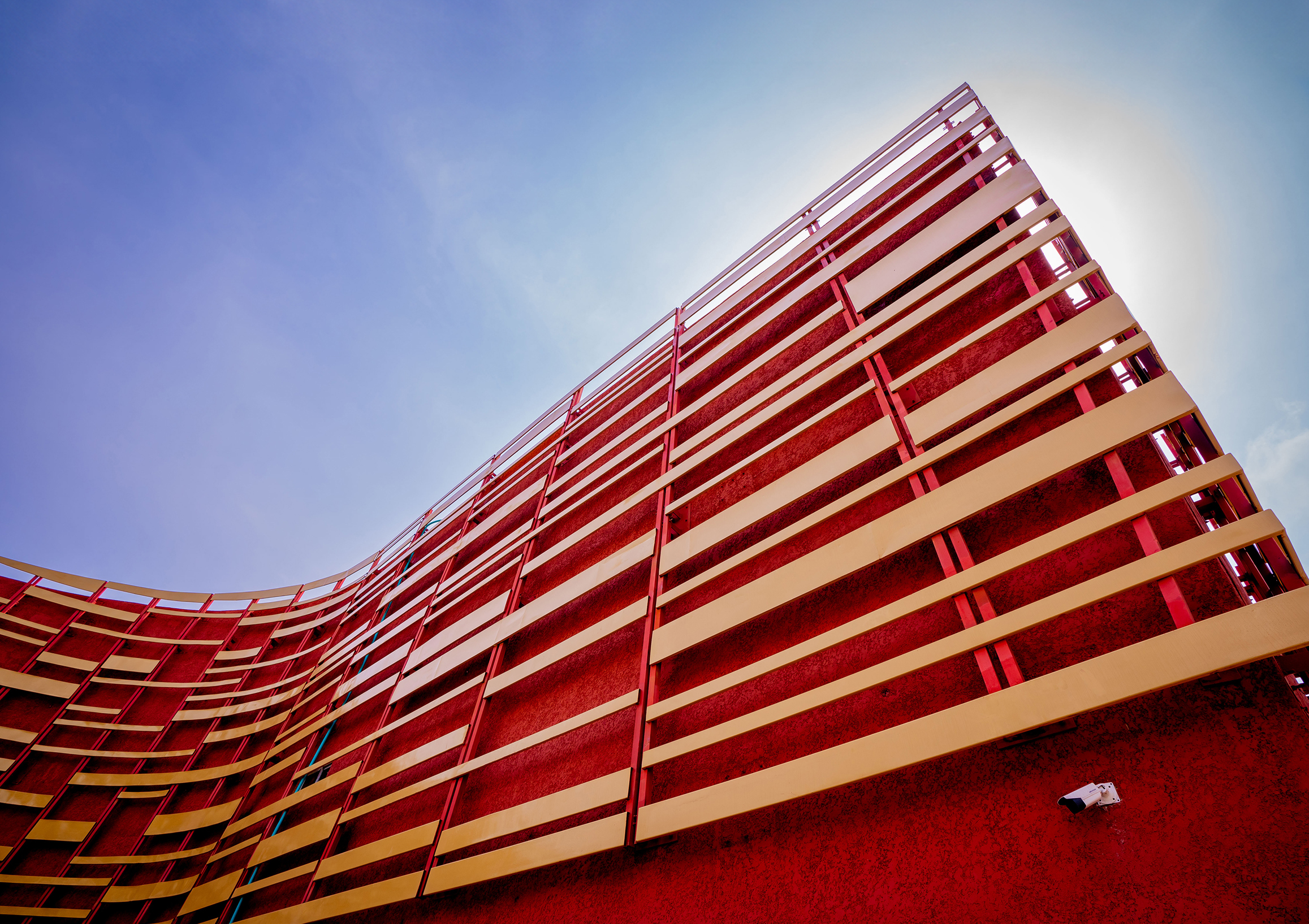
The building appears to rise from the earth; a green roof ties it back to the landscape / Photo: Ademola Olaniran & Jide Atobatele
When Studio Imagine Simply Architecture (Si.Sa) was given the task of designing the John K Randle Center in Lagos, Nigeria, and helping to create a museum space to celebrate the vibrancy and diversity of Yoruba culture and history, founder Seun Oduwole knew that a ‘traditional’ Western-style museum wasn’t going to work.
“You go into most museums, they’re very static; very contemplative,” he says, speaking to CNN. “If you’re thinking about a museum that’s focused on Yoruba culture, there’s a conflict… we’re not quiet, we’re not static.”
The central question when designing the John K Randle Center for Yoruba Culture and History, says Oduwole, was: “How do we celebrate it in a way that’s uniquely Yoruba so that anyone who comes into this space is very clear where they are?”
The answer is a joyful, colourful 1,800sq m museum space that references Yoruba culture with its form, colours and materials. Storytelling and music is important here, as is an atmosphere that makes everyone feel welcome.
“It’s unapologetic,” says Oduwole. “It celebrates the best aspects of the [Yoruba] culture, of the language, the history, the heroes, the mythologies and the narratives.”
From the inside It was important for the story of Yoruba art, culture and history to be told through the lens of the Yoruba people, rather than from an outsider’s perspective looking in, explains Oduwole.
“These sorts of institutions are important at scale around the continent [of Africa], because it’s important to tell the story that glorifies the lion and not the hunter,” he says.
“It’s important so that all these different stories – the nuances, the complexities – can be told in full voice, in full colour, in their own language, expressing their own identity.”
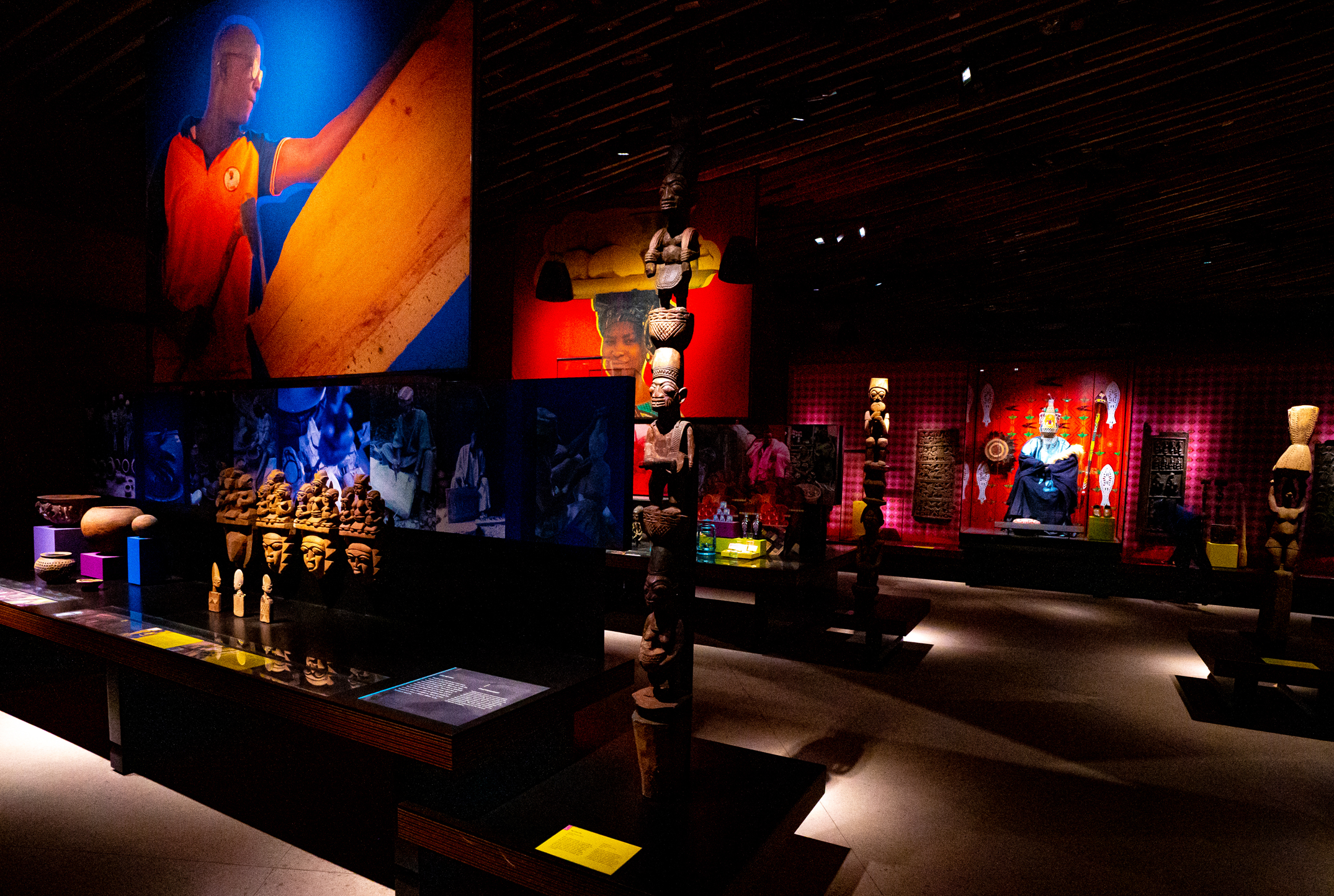
The museum explores Yoruba culture and history via artefacts, old and new media and various storytelling devices. Visitors entering the museum are greeted by an AV display of the Yoruba creation myth, as well as African artworks and fashion. Dedicated spaces explore history, art, mythology, fashion, entertainment, music, culture and more, with artefacts ranging from historical objects and carvings to Nigerian garments and colonial-era gramophones. There is a dedicated space for oral storytelling and Nigerian artists – including author Wole Soyinka and musician Fela Kuti – are celebrated.
The John K Randle Center is in talks with European museums including the British Museum and the Pitts River Museum in London to bring Yoruban artefacts back to Nigeria.
The bigger picture The museum is part of a wider regeneration project – also designed by Si.Sa – to revive the historic John K Randle Center, an important cultural and recreational facility that included a public swimming pool built in 1928 by Sierra Leonean medical doctor John Randle for Lagosians to learn to swim in.
The centre – which also had a park and memorial – had fallen into disrepair, and the pool was no longer in use.
The new cultural centre features a restored swimming pool, revitalised public park, library, restaurants, bars, public square and a performance hall, as well as the museum. The new buildings were inspired by Yoruba architecture and craftsmanship, with the walls finished in earth-hues to echo the mud aesthetic of traditional Yoruba homes, while a metallic gold latticed screen references Yoruba craftsmanship. The building appears to rise from the earth and lean forward as a symbol of Yoruban progressiveness, while the sloping green roof “ties the building to the landscape.”
“It’s a surreal feeling when people are grateful to you for giving them a space that represents them,” says Oduwole. “I hope people take away the idea that nothing is impossible.”
Here Oduwole talks to Attractions Management about his experience of designing the project
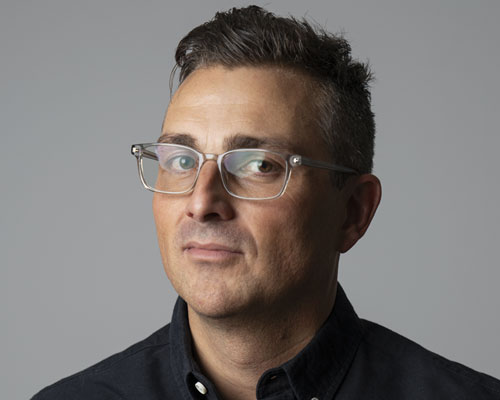
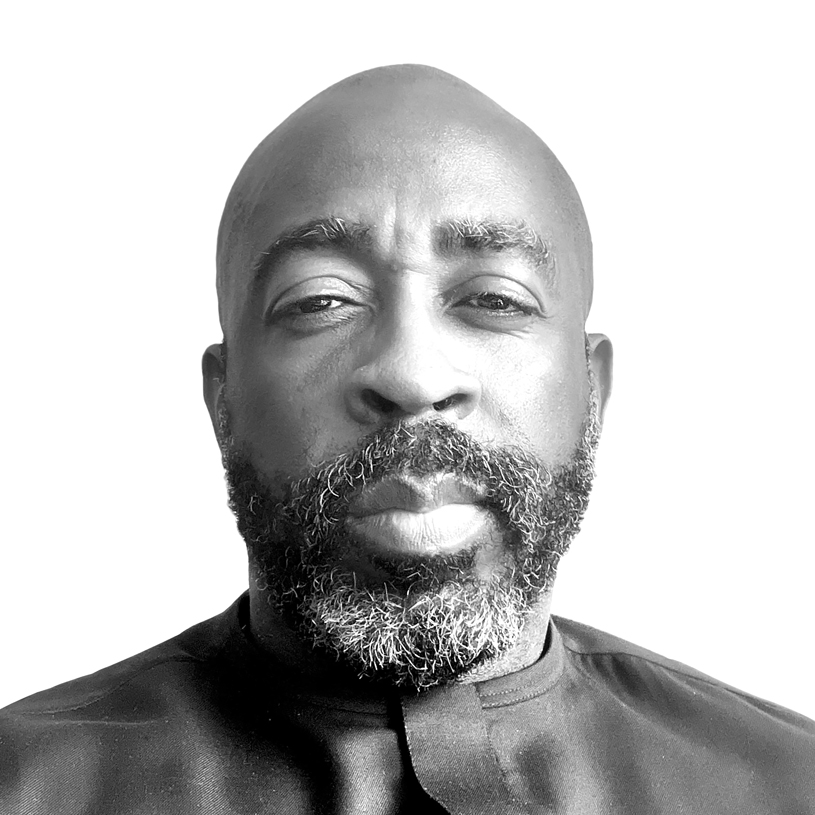
Seun Oduwole / Photo: Ademola Olaniran & Jide Atobatele
How have you designed the building to be as welcoming and uplifting as possible?
From an urbanism perspective, there were several drivers: to restore as much of the old fabric and memory of the city as possible by rebuilding the swimming pool, replacing the demolished cultural hall and replanting landscape lost to development.
Architecturally, we sought to create a building grounded in context and conscious of its surroundings. Internally we sought to interrogate museology as a construct in order to create a museum and visitor experience that was relatable and immersive.
What has been the biggest challenge of this project?
Securing the appropriate level of funding to complete the project excellently and on time.
How was the design inspired by its location and by the surrounding community?
We applied historical patterns and visual metaphors as concept drivers. The site layout was informed by the concentric settlement patterns found in Yoruba urbanism, which typically had the Royal palace at the centre fronted by a square.
The curved part of the site allowed us to shape the museum building as a fractal. The building rises from in earth in a nod to Yoruba spirituality and the metal screen around the façade pays homage to age old skills such as metalwork, woodcarving, looming and weaving.
Internally, the museum is devoted to the elucidation of Yoruba culture, its representation as visual and verbal Oriki (praise poetry), presentation of its philosophical thought system using concepts of Ori (spiritual head), Ase (life force) and Iwa (essential nature). It’s a space where mythology, archaeology, history and storytelling meet to set the stage for the understanding of Yoruba culture and history.
Can you pick out two or three particularly interesting areas of the museum?
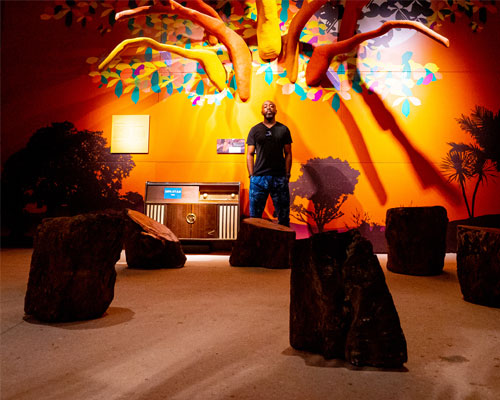
Visitors are greeted by a completely immersive environment, a visually stimulating spectacle with spatial audio consisting of music and storytelling throughout the journey, which add context to a mix of storytelling media ranging from antiquities, interactives and objects of cultural significance.
Do you have a personal favourite part of the museum?
The future storytelling area where animators, contemporary artists and storytellers have an opportunity to reimagine their own version of a future from the Yoruba thought perspective.
Visitors are greeted by an immersive environment – a visually stimulating spectacle
The story of the Yoruba people is told via artefacts, VR, AR and interactive media / Photo: Ademola Olaniran & Jide Atobatele
Photo: Ademola Olaniran & Jide Atobatele
Project Details
Name: John Randle Center for Yoruba Culture and History
Location: Lagos, Nigeria
Area: 18,000sq m
Centre inaugurated: January 2024
Museum open to the public: Q3 2024
Client: Lagos State Government
Architect: Seun Oduwole - Studio Imagine Simply Architecture
Exhibition designer: Ralph Applebaum Associates
Read more from this issue of Attractions Management magazine
View contents of Attractions Management 2024 issue 3
Multimedia: Sakchin Bessette
How did the team at Moment Factory go from designing visuals for raves to illuminating the Sagrada Familia and creating stage shows for Madonna? The co-founder shares the journey
Museums: Roll of honour
From the Rijksmuseum’s first family exhibition to a 4D experience that wows on a budget, we check out Museum + Heritage Award winners
Theme parks: Cecil Magpuri
Work has begun on the first Dragon Ball theme park, and it’s set to take theming to a whole new level, according to its designer
Museums: Rise up
Filled with colour, music, technology and storytelling, the John K Randle Center is a fitting celebration of Yoruban culture and history, says its architect Seun Oduwole
Experiences: Flight of fancy
Airbnb is diving into the world of immersive experiences with its new Icons initiative. What does this mean for attractions?
Immersive experience: Andrew McGuinness
As Layered Reality prepares to launch its highly-anticipated Elvis Experience, we speak to its CEO about the business of wowing visitors
Zoos: Making a difference
Visiting zoos and aquaria inspires people to act more sustainably, finds a study from the University of Sheffield and Chester Zoo
Tourism: Vertical reality
From energy-generating viewing pods to world-class art installations, a new generation of vertical attractions is shaking up the scene. Dr Terry Stevens investigates
An opportunity to reimagine one of the UK’s most recognisable towers has been formally
opened by Rivington Hark, as St Johns Beacon invites operators and partners to shape its
next phase. [more...]
A major new museum and cultural centre opening in Lagos
this autumn aims to celebrate and uplift Yoruba culture.
Magali Robathan speaks to the architect behind the project
The building appears to rise from the earth; a green roof ties it back to the landscape / Photo: Ademola Olaniran & Jide Atobatele
When Studio Imagine Simply Architecture (Si.Sa) was given the task of designing the John K Randle Center in Lagos, Nigeria, and helping to create a museum space to celebrate the vibrancy and diversity of Yoruba culture and history, founder Seun Oduwole knew that a ‘traditional’ Western-style museum wasn’t going to work.
“You go into most museums, they’re very static; very contemplative,” he says, speaking to CNN. “If you’re thinking about a museum that’s focused on Yoruba culture, there’s a conflict… we’re not quiet, we’re not static.”
The central question when designing the John K Randle Center for Yoruba Culture and History, says Oduwole, was: “How do we celebrate it in a way that’s uniquely Yoruba so that anyone who comes into this space is very clear where they are?”
The answer is a joyful, colourful 1,800sq m museum space that references Yoruba culture with its form, colours and materials. Storytelling and music is important here, as is an atmosphere that makes everyone feel welcome.
“It’s unapologetic,” says Oduwole. “It celebrates the best aspects of the [Yoruba] culture, of the language, the history, the heroes, the mythologies and the narratives.”
From the inside It was important for the story of Yoruba art, culture and history to be told through the lens of the Yoruba people, rather than from an outsider’s perspective looking in, explains Oduwole.
“These sorts of institutions are important at scale around the continent [of Africa], because it’s important to tell the story that glorifies the lion and not the hunter,” he says.
“It’s important so that all these different stories – the nuances, the complexities – can be told in full voice, in full colour, in their own language, expressing their own identity.”
The museum explores Yoruba culture and history via artefacts, old and new media and various storytelling devices. Visitors entering the museum are greeted by an AV display of the Yoruba creation myth, as well as African artworks and fashion. Dedicated spaces explore history, art, mythology, fashion, entertainment, music, culture and more, with artefacts ranging from historical objects and carvings to Nigerian garments and colonial-era gramophones. There is a dedicated space for oral storytelling and Nigerian artists – including author Wole Soyinka and musician Fela Kuti – are celebrated.
The John K Randle Center is in talks with European museums including the British Museum and the Pitts River Museum in London to bring Yoruban artefacts back to Nigeria.
The bigger picture The museum is part of a wider regeneration project – also designed by Si.Sa – to revive the historic John K Randle Center, an important cultural and recreational facility that included a public swimming pool built in 1928 by Sierra Leonean medical doctor John Randle for Lagosians to learn to swim in.
The centre – which also had a park and memorial – had fallen into disrepair, and the pool was no longer in use.
The new cultural centre features a restored swimming pool, revitalised public park, library, restaurants, bars, public square and a performance hall, as well as the museum. The new buildings were inspired by Yoruba architecture and craftsmanship, with the walls finished in earth-hues to echo the mud aesthetic of traditional Yoruba homes, while a metallic gold latticed screen references Yoruba craftsmanship. The building appears to rise from the earth and lean forward as a symbol of Yoruban progressiveness, while the sloping green roof “ties the building to the landscape.”
“It’s a surreal feeling when people are grateful to you for giving them a space that represents them,” says Oduwole. “I hope people take away the idea that nothing is impossible.”
Here Oduwole talks to Attractions Management about his experience of designing the project
Seun Oduwole / Photo: Ademola Olaniran & Jide Atobatele
How have you designed the building to be as welcoming and uplifting as possible?
From an urbanism perspective, there were several drivers: to restore as much of the old fabric and memory of the city as possible by rebuilding the swimming pool, replacing the demolished cultural hall and replanting landscape lost to development.
Architecturally, we sought to create a building grounded in context and conscious of its surroundings. Internally we sought to interrogate museology as a construct in order to create a museum and visitor experience that was relatable and immersive.
What has been the biggest challenge of this project?
Securing the appropriate level of funding to complete the project excellently and on time.
How was the design inspired by its location and by the surrounding community?
We applied historical patterns and visual metaphors as concept drivers. The site layout was informed by the concentric settlement patterns found in Yoruba urbanism, which typically had the Royal palace at the centre fronted by a square.
The curved part of the site allowed us to shape the museum building as a fractal. The building rises from in earth in a nod to Yoruba spirituality and the metal screen around the façade pays homage to age old skills such as metalwork, woodcarving, looming and weaving.
Internally, the museum is devoted to the elucidation of Yoruba culture, its representation as visual and verbal Oriki (praise poetry), presentation of its philosophical thought system using concepts of Ori (spiritual head), Ase (life force) and Iwa (essential nature). It’s a space where mythology, archaeology, history and storytelling meet to set the stage for the understanding of Yoruba culture and history.
Can you pick out two or three particularly interesting areas of the museum?
Visitors are greeted by a completely immersive environment, a visually stimulating spectacle with spatial audio consisting of music and storytelling throughout the journey, which add context to a mix of storytelling media ranging from antiquities, interactives and objects of cultural significance.
Do you have a personal favourite part of the museum?
The future storytelling area where animators, contemporary artists and storytellers have an opportunity to reimagine their own version of a future from the Yoruba thought perspective.
Visitors are greeted by an immersive environment – a visually stimulating spectacle
The story of the Yoruba people is told via artefacts, VR, AR and interactive media / Photo: Ademola Olaniran & Jide Atobatele
Photo: Ademola Olaniran & Jide Atobatele
Project Details
Name: John Randle Center for Yoruba Culture and History
Location: Lagos, Nigeria
Area: 18,000sq m
Centre inaugurated: January 2024
Museum open to the public: Q3 2024
Client: Lagos State Government
Architect: Seun Oduwole - Studio Imagine Simply Architecture
Exhibition designer: Ralph Applebaum Associates
Read more from this issue of Attractions Management magazine
View contents of Attractions Management 2024 issue 3
Multimedia: Sakchin Bessette
How did the team at Moment Factory go from designing visuals for raves to illuminating the Sagrada Familia and creating stage shows for Madonna? The co-founder shares the journey
Museums: Roll of honour
From the Rijksmuseum’s first family exhibition to a 4D experience that wows on a budget, we check out Museum + Heritage Award winners
Theme parks: Cecil Magpuri
Work has begun on the first Dragon Ball theme park, and it’s set to take theming to a whole new level, according to its designer
Museums: Rise up
Filled with colour, music, technology and storytelling, the John K Randle Center is a fitting celebration of Yoruban culture and history, says its architect Seun Oduwole
Experiences: Flight of fancy
Airbnb is diving into the world of immersive experiences with its new Icons initiative. What does this mean for attractions?
Immersive experience: Andrew McGuinness
As Layered Reality prepares to launch its highly-anticipated Elvis Experience, we speak to its CEO about the business of wowing visitors
Zoos: Making a difference
Visiting zoos and aquaria inspires people to act more sustainably, finds a study from the University of Sheffield and Chester Zoo
Tourism: Vertical reality
From energy-generating viewing pods to world-class art installations, a new generation of vertical attractions is shaking up the scene. Dr Terry Stevens investigates
Experience design company, BRC Imagination Arts, has completed a transition that sees founder
Bob Rogers pass ownership of the business to four long-serving senior executives, while
remaining actively involved with the company.
Movie Park Germany has opened a new Paramount Pictures-themed attraction as part of its 30th
anniversary celebrations, using immersive storytelling and adaptive reuse to reinforce the park’s
longstanding “Hollywood in Germany” positioning.
Therme Manchester’s 28-acre development, which will include interconnected glass pavilions
that measure 65,000sq m, will be the largest bathing and wellbeing attraction in the world once
complete, according to prof David Russell, CEO of Therme UK.
Efteling has opened Hooghmoed, a new family drop tower designed to broaden the appeal of its
recently launched Sirene Island themed area and introduce younger visitors to thrill attractions.
A proposed Puy du Fou development near Bicester and Universal Destinations and Experiences’
planned resort in Bedford are emerging as part of a wider transformation of the Oxford–
Cambridge Growth Corridor into a major centre for UK leisure and tourism inv
Shedd Aquarium has opened the Immersion Theater developed in partnership with SimEx-
Iwerks, as part of a wider strategy to enhance the guest experience and create additional
revenue opportunities.
The UK government has announced a temporary reduction in VAT on visitor attractions and
children’s meals as part of a summer cost-of-living support package designed to stimulate the
visitor economy and encourage family days out.
As designer Yinka Ilori prepares for his first solo gallery show in London, he speaks exclusively
to CLADmag about his mission to spread joy, the power of play, and his bold approach to using
colour (including the colours you won’t see in his work).
The government of Thailand is exploring plans for a THB300bn (£6.3bn, US$8.3bn)
entertainment complex in the country’s Eastern Economic Corridor (EEC), with officials
proposing a large-scale theme park and sports destination as part of a broader tourism and
economic development strategy.
Royal Caribbean has revealed its Hero of the Seas cruise ship, home to the most pools at sea
(nine), and a record-breaking 28 dining venues, as well as attractions including a waterpark
with two new family raft slides.
+ More news
COMPANY PROFILES
QubicaAMF UK QubicaAMF is the largest and most
innovative bowling equipment provider with
600 employees worldwi [more...]
Sally Corporation Our services include: Dark ride design & build; Redevelopment of existing attractions; High-quality [more...]
Clip 'n Climb Clip ‘n Climb currently offers facility owners and
investors more than 40 colourful and unique
Cha [more...]
Alterface Alterface’s Creative Division team is
seasoned in concept and ride development,
as well as storyte [more...]
An opportunity to reimagine one of the UK’s most recognisable towers has been formally
opened by Rivington Hark, as St Johns Beacon invites operators and partners to shape its
next phase. [more...]