With its commitment to meeting
the highest standards in relation to
sustainability and regeneration, Comfort
Zone is reducing its plastic footprint
through the use of innovative packaging
design and an important partnership
to stop ocean bound plastic
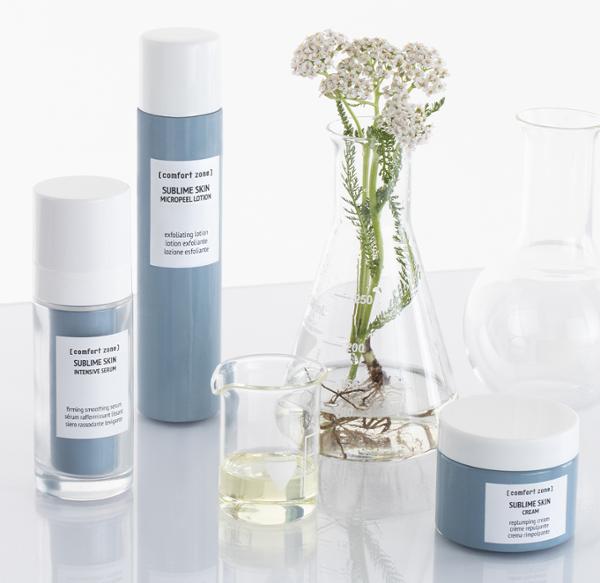
Comfort Zone has introduced recycled glass and a refillable solution in the new Sublime Skin anti-aging range / photo: Comfort Zone/Davines Group
Italian B Corp, The Davines Group, is renowned for its commitment to the sustainable creation and production of its result-driven Comfort Zone skincare line.
Since 2014, the company has been aware of the damaging impact plastic packaging is having on the planet and has been working hard to develop innovative solutions that remove the need to use plastic, while engaging with global initiatives that help to counter its impact on the environment.
A circular approach Although the spa and beauty sector has always been reliant on plastic packaging and it has traditionally played an important role in keeping products fresh and ensuring a safe user experience, the Davines Group has been accelerating its efforts to challenge its reliance on the material.
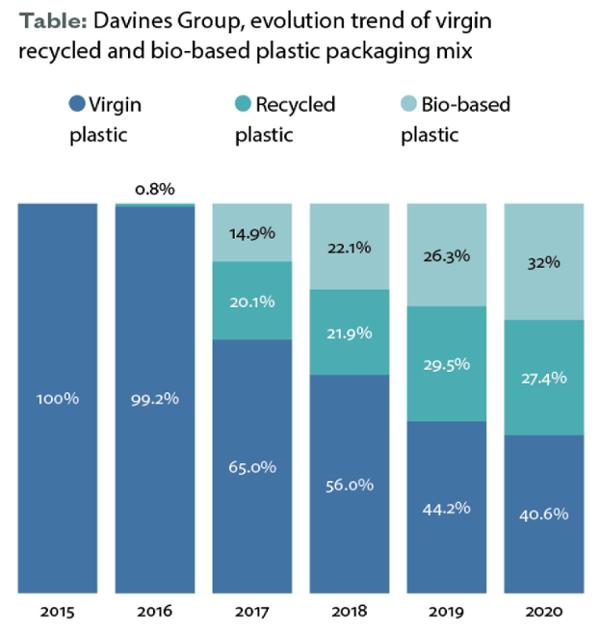
Through a programme of rigorous product research and development, the focus has moved away from the use of virgin plastic made from fossil fuels, towards the use of innovative packaging materials made from recycled or renewable plastic. Comfort Zone has also reduced the weight of its glass packaging and introduced fully refillable solutions, while ensuring all its packaging is recyclable.
Following exhaustive scrutiny of the way it approaches the use of fossil fuel-based materials, the company has now updated its production processes so 59 per cent of all packaging used is recycled or bio-based plastic.
Significantly, Davines Group has reduced its reliance on plastic by a massive 631 tons since 2014, thanks to ongoing research and development into innovative, eco-friendly alternative package solutions.
Commenting, Davines Group chair, Davide Bollati, says: “We’re conscious that packaging has an environmental impact and no material can be considered perfect, but properly managing our products’ end-of-life stage is very important. It’s crucial we eco-design the packaging right from the beginning of that lifecycle.
“We aim for simplification, by reducing the volume of the packaging components as much as possible, eliminating unnecessary plastic elements and introducing refillable solutions, just as we’ve done for our new Comfort Zone Sublime Skin Intensive Serum,” he explains.
Plastic footprint In 2020, the company calculated its plastic footprint using 3Ri standards (www.spabusiness.com/3ri), which revealed the business generated a total of 721.9 tons of plastic that year. This included waste produced by manufacturing and offices (27 per cent), plus the packaging of products sold worldwide (73 per cent).
These findings led to an investigation by the Group into whether its plastic waste was being correctly managed globally.
The outcome has been the development of initiatives to significantly reduce the company’s environmental impact in areas of the world where there’s a lack of institutions and technology to enable the full and proper recyclable process.
This has led to the partnership with Plastic Bank that will expand in 2022 to ensure an even stronger positive impact on planet and people. l
"It’s crucial we eco-design packaging right from
the beginning of its lifecycle, while properly
managing our products’ end-of-life stage" – Davide Bollati, chair, Davines Group
Tackling waste
Supporting sustainability initiatives enables the Comfort Zone to amplify its work to reduce its environmental impact
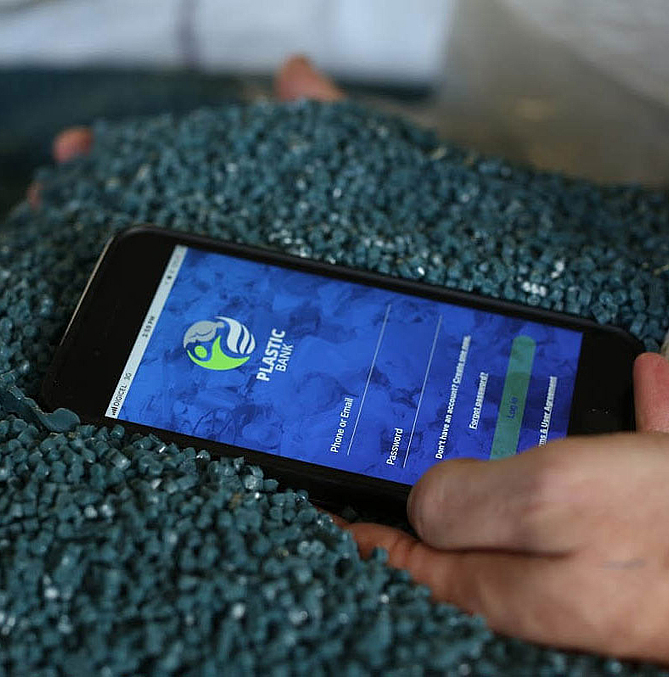
Tracking plastic on the app / photo: Plastic Bank
In autumn 2021, the Group started a plastic collection project with social enterprise, Plastic Bank (www.plasticbank.com), to prevent 100 tonnes of material being dispersed into the environment and ending up in the world’s oceans.
This initiative involves the management of ethical recycling ecosystems which are run by local people in the coastal communities of Indonesia, the Philippines and Brazil.
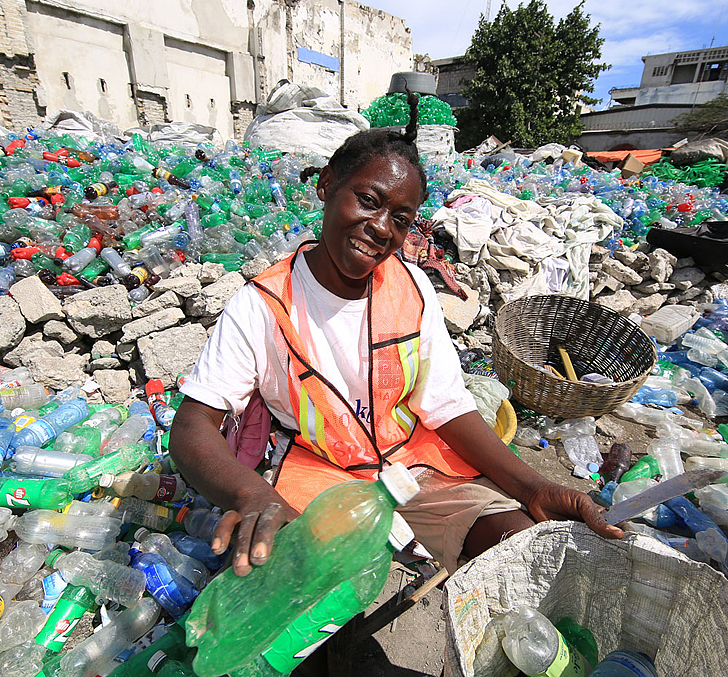
They gather ocean-bound plastic waste from land and beaches to stop it reaching our oceans and receive bonuses for doing so, which contribute towards the cost of food, fuel, school and health insurance, to help improve their quality of life.
Commenting on the partnership, Bollati says: “There’s no social sustainability without environmental sustainability, and no progress without respect for ecosystems and human rights. Without human ecology, there is simply no future.”
Without human ecology, there is simply no future
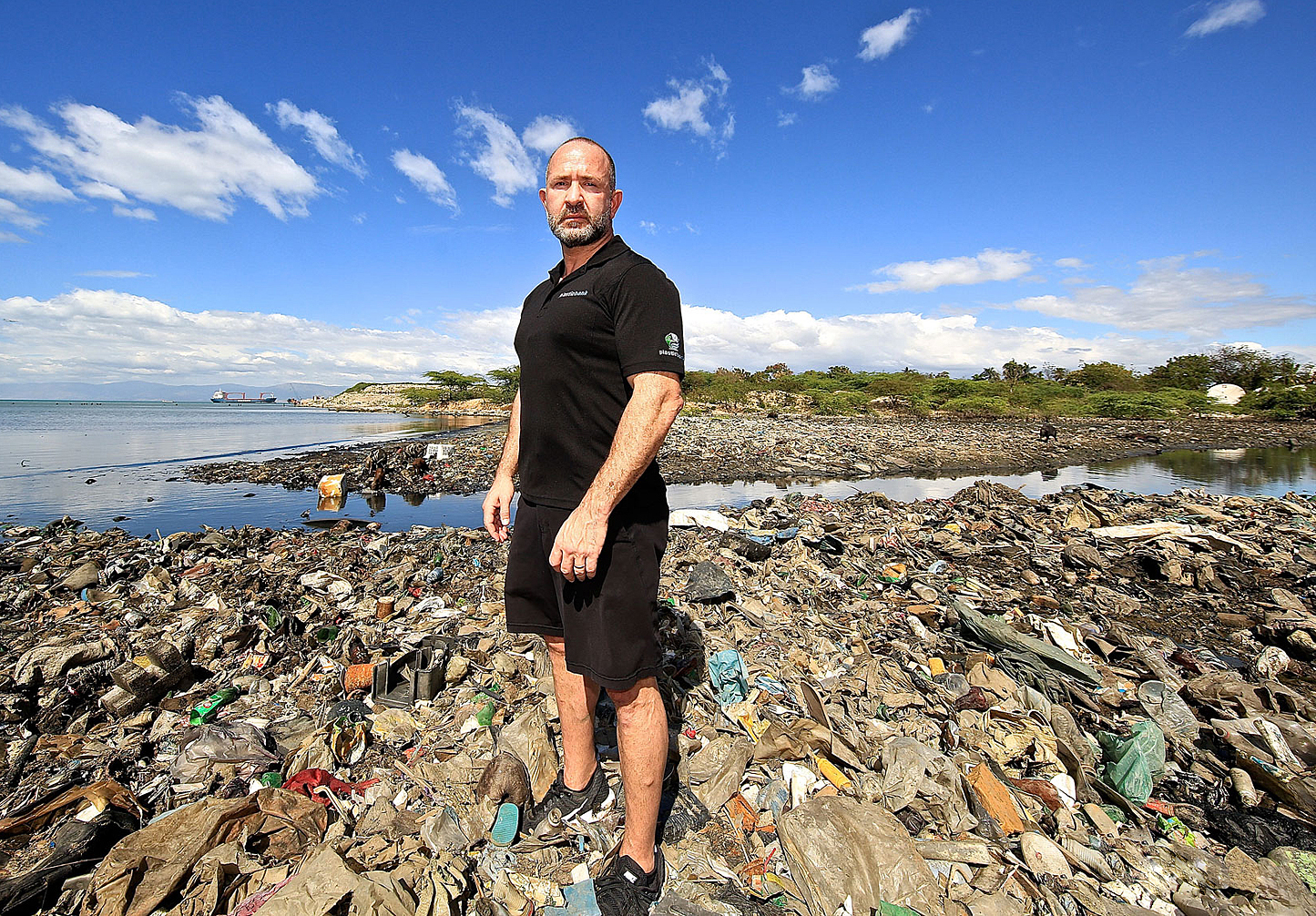
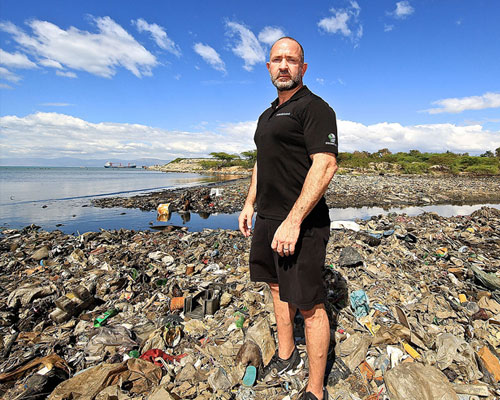
David Katz started Plastic Bank in 2013 – Comfort Zone is supporting the initiative / photo: David Katz, Plastic Bank
photo: Plastic Bank
Read more from this issue of Attractions Management magazine
View contents of Attractions Management 2021 issue 4
Sponsored: Comfort Zone - Rethinking packaging
With its commitment to meeting the highest standards in relation to sustainability and regeneration, Comfort Zone is reducing its plastic footprint through the use of innovative packaging design and an important partnership to stop ocean-bound plastic
Project preview: Cultivating health
Montara Hospitality Group is developing Tri Vananda, a multi- generational, residential wellness community on the island of Phuket
Sponsored: Art of Cryo – Cold gold
Introducing cryotherapy can be lucrative for spas, as well as offering customers a cutting-edge therapy with powerful benefits for both body and mind
Interview: Brothers in spa
Saverio Quadrio Curzio of QC Terme on working with brother Andrea
on the global expansion of their luxury brand, which is built around European bathing traditions
Everyone’s talking about: Property investment
Reductions in travel and the growth
of homeworking have changed where people spend their time. Our experts consider how this will impact investment
Research: Crossing the watershed
The Global Wellness Institute dives deep into data on the US$4.4tr global wellness economy. Kath Hudson reports
Q&A: Michael Roizen & Victor Koo
The Global Wellness Summit in Boston brought the industry together for three idea-packed days. Spa Business caught up with this year's influential co-chairs
Mystery Shopper: Out of the blue
Jane Kitchen visits Iceland, the
land of fire and ice, to compare
and contrast experiences at the
famed Blue Lagoon and the newly-opened Sky Lagoon in Reykjavik
Sponsored: Optimal results
Gharieni is using research findings and insight to ensure its innovative wellness concepts exceed customers’ expectations
First person: True North
Andrew Gibson heads to Larvik in Norway to experience the world of wellness that is Farris Bad
Urban spas: La Samaritaine
Ghislain Waeyaert visits the Dior Spa at La Samaritaine in Paris, after its €500m upgrade
Spa software: Staff retention
How the latest software can help retain staff and increase business potential in a COVID-challenged world
Finishing touch: COVID attacks fat cells
Researchers from Stanford University set out to explain why people with obesity are at higher risk when contracting COVID-19, as Tom Walker reports
With its commitment to meeting
the highest standards in relation to
sustainability and regeneration, Comfort
Zone is reducing its plastic footprint
through the use of innovative packaging
design and an important partnership
to stop ocean bound plastic
Comfort Zone has introduced recycled glass and a refillable solution in the new Sublime Skin anti-aging range / photo: Comfort Zone/Davines Group
Italian B Corp, The Davines Group, is renowned for its commitment to the sustainable creation and production of its result-driven Comfort Zone skincare line.
Since 2014, the company has been aware of the damaging impact plastic packaging is having on the planet and has been working hard to develop innovative solutions that remove the need to use plastic, while engaging with global initiatives that help to counter its impact on the environment.
A circular approach Although the spa and beauty sector has always been reliant on plastic packaging and it has traditionally played an important role in keeping products fresh and ensuring a safe user experience, the Davines Group has been accelerating its efforts to challenge its reliance on the material.
Through a programme of rigorous product research and development, the focus has moved away from the use of virgin plastic made from fossil fuels, towards the use of innovative packaging materials made from recycled or renewable plastic. Comfort Zone has also reduced the weight of its glass packaging and introduced fully refillable solutions, while ensuring all its packaging is recyclable.
Following exhaustive scrutiny of the way it approaches the use of fossil fuel-based materials, the company has now updated its production processes so 59 per cent of all packaging used is recycled or bio-based plastic.
Significantly, Davines Group has reduced its reliance on plastic by a massive 631 tons since 2014, thanks to ongoing research and development into innovative, eco-friendly alternative package solutions.
Commenting, Davines Group chair, Davide Bollati, says: “We’re conscious that packaging has an environmental impact and no material can be considered perfect, but properly managing our products’ end-of-life stage is very important. It’s crucial we eco-design the packaging right from the beginning of that lifecycle.
“We aim for simplification, by reducing the volume of the packaging components as much as possible, eliminating unnecessary plastic elements and introducing refillable solutions, just as we’ve done for our new Comfort Zone Sublime Skin Intensive Serum,” he explains.
Plastic footprint In 2020, the company calculated its plastic footprint using 3Ri standards (www.spabusiness.com/3ri), which revealed the business generated a total of 721.9 tons of plastic that year. This included waste produced by manufacturing and offices (27 per cent), plus the packaging of products sold worldwide (73 per cent).
These findings led to an investigation by the Group into whether its plastic waste was being correctly managed globally.
The outcome has been the development of initiatives to significantly reduce the company’s environmental impact in areas of the world where there’s a lack of institutions and technology to enable the full and proper recyclable process.
This has led to the partnership with Plastic Bank that will expand in 2022 to ensure an even stronger positive impact on planet and people. l
"It’s crucial we eco-design packaging right from
the beginning of its lifecycle, while properly
managing our products’ end-of-life stage" – Davide Bollati, chair, Davines Group
Tackling waste
Supporting sustainability initiatives enables the Comfort Zone to amplify its work to reduce its environmental impact
Tracking plastic on the app / photo: Plastic Bank
In autumn 2021, the Group started a plastic collection project with social enterprise, Plastic Bank (www.plasticbank.com), to prevent 100 tonnes of material being dispersed into the environment and ending up in the world’s oceans.
This initiative involves the management of ethical recycling ecosystems which are run by local people in the coastal communities of Indonesia, the Philippines and Brazil.
They gather ocean-bound plastic waste from land and beaches to stop it reaching our oceans and receive bonuses for doing so, which contribute towards the cost of food, fuel, school and health insurance, to help improve their quality of life.
Commenting on the partnership, Bollati says: “There’s no social sustainability without environmental sustainability, and no progress without respect for ecosystems and human rights. Without human ecology, there is simply no future.”
Without human ecology, there is simply no future
David Katz started Plastic Bank in 2013 – Comfort Zone is supporting the initiative / photo: David Katz, Plastic Bank
photo: Plastic Bank
Read more from this issue of Attractions Management magazine
View contents of Attractions Management 2021 issue 4
Sponsored: Comfort Zone - Rethinking packaging
With its commitment to meeting the highest standards in relation to sustainability and regeneration, Comfort Zone is reducing its plastic footprint through the use of innovative packaging design and an important partnership to stop ocean-bound plastic
Project preview: Cultivating health
Montara Hospitality Group is developing Tri Vananda, a multi- generational, residential wellness community on the island of Phuket
Sponsored: Art of Cryo – Cold gold
Introducing cryotherapy can be lucrative for spas, as well as offering customers a cutting-edge therapy with powerful benefits for both body and mind
Interview: Brothers in spa
Saverio Quadrio Curzio of QC Terme on working with brother Andrea
on the global expansion of their luxury brand, which is built around European bathing traditions
Everyone’s talking about: Property investment
Reductions in travel and the growth
of homeworking have changed where people spend their time. Our experts consider how this will impact investment
Research: Crossing the watershed
The Global Wellness Institute dives deep into data on the US$4.4tr global wellness economy. Kath Hudson reports
Q&A: Michael Roizen & Victor Koo
The Global Wellness Summit in Boston brought the industry together for three idea-packed days. Spa Business caught up with this year's influential co-chairs
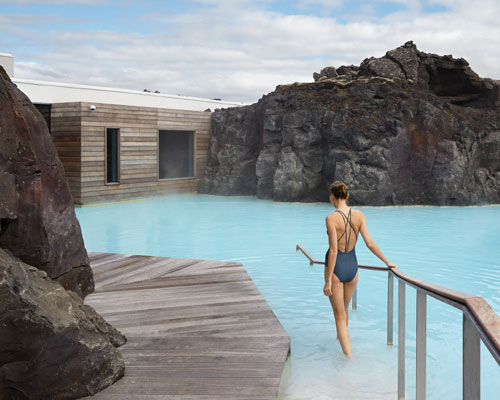
Mystery Shopper: Out of the blue
Jane Kitchen visits Iceland, the
land of fire and ice, to compare
and contrast experiences at the
famed Blue Lagoon and the newly-opened Sky Lagoon in Reykjavik
Sponsored: Optimal results
Gharieni is using research findings and insight to ensure its innovative wellness concepts exceed customers’ expectations
First person: True North
Andrew Gibson heads to Larvik in Norway to experience the world of wellness that is Farris Bad
Urban spas: La Samaritaine
Ghislain Waeyaert visits the Dior Spa at La Samaritaine in Paris, after its €500m upgrade
Spa software: Staff retention
How the latest software can help retain staff and increase business potential in a COVID-challenged world
Finishing touch: COVID attacks fat cells
Researchers from Stanford University set out to explain why people with obesity are at higher risk when contracting COVID-19, as Tom Walker reports
Abu Dhabi-based investment firm Mubadala Capital has made a binding, fully financed
€1 billion
offer to acquire Pierre and Vacances SA, the European holiday resort operator behind the
continental European Center Parcs business.
Disney has reaffirmed its commitment to investing US$30 billion in its US parks and cruise
business by 2033, using new America250 celebrations to underline the role its attractions play
in supporting jobs, tourism and economic growth.
Expo 2030 Riyadh is being planned as a permanent visitor destination, with organisers
confirming the six-million-square-metre site will become a Global Village after the event closes.
The owner of one of Australia's best-known waterparks has acquired a major competitor,
creating a new attractions business spanning two of the country's largest visitor destinations.
The Toverland theme park in the Netherlands has announced a €98m expansion programme
that will add a resort, new attractions and staff facilities as it pursues plans to become a multi-
day destination.
Hotel de France, located on the British Isle of Jersey, has created a wellness retreat package
that includes a hot yoga session that will take place in Jersey Zoo’s butterfly sanctuary.
A new immersive attraction designed to transport visitors into the final hours of ancient Pompeii
is preparing to open near the world-famous archaeological site in southern Italy.
Experience design company, BRC Imagination Arts, has completed a transition that sees founder
Bob Rogers pass ownership of the business to four long-serving senior executives, while
remaining actively involved with the company.
Movie Park Germany has opened a new Paramount Pictures-themed attraction as part of its 30th
anniversary celebrations, using immersive storytelling and adaptive reuse to reinforce the park’s
longstanding “Hollywood in Germany” positioning.
Therme Manchester’s 28-acre development, which will include interconnected glass pavilions
that measure 65,000sq m, will be the largest bathing and wellbeing attraction in the world once
complete, according to prof David Russell, CEO of Therme UK.