A 45- to 60-minute snooze produces a five-fold improvement in memory / Jeka/shutterstock
Operators such as YeloSpa and Spa Eastman which offer short sleep sessions to weary customers (see below) could be helping them to maintain their memories and enhance their capability to learn as well as recharge their batteries, according to a new, albeit small, study.
A group of researchers at Saarland University in Germany have discovered that a snooze lasting 45-60 minutes leads to a five-fold improvement in how the brain retrieves information.
Memory test The study involved a memory recall exam of 41 university students. The volunteers were asked to learn 90 single words and 120 word pairs and were tested on what they could remember immediately afterwards. The word pairs were essentially meaningless, using random duos such as ‘milk-taxi’, so that participants would not have heard them before and would not recall them due to familiarity.
After the initial memory test, one half of the participants was allowed a brief nap, sleeping for an average of 64 minutes. The other half (the control group), sat down to watch a DVD. All of the participants were then retested to see how many of the words they could recall again.
The results, published in the Neurobiology of Learning and Memory* journal, showed that while there was no memory improvement in those who slept, they could still remember a similar amount of words from before. Their memory was “just as good as it was before sleeping,” says research supervisor Axel Mecklinger.
In comparison, those who watched the DVD performed significantly worse when it came to remembering word pairs.
Sleep spindles The researchers also used an EEG to measure the brainwave activity of those who slept to see if there was a correlation with how they performed in the memory test. They focused on the role of the hippocampus, a part of the brain where memories are consolidated and transferred into long-term memory storage.
Sara Studte, a graduate specialising in neuropsychology, who also worked on the research says: “We examined a particular type of brain activity, known as ‘sleep spindles’, that plays an important role in memory consolidating during sleep.” A sleep spindle is shown on an EEG as a short burst of rapid oscillations. The findings confirmed that the greater the number of sleep spindles, the better a person can remember things.
Although the number of participants in the study was limited, Mecklinger still feels the overall findings are telling. He concludes: “A short nap at the office or in school is enough to significantly improve learning success.”
*Studte S et al. Nap sleep preserves associative but not item memory performance. Neurobiology of Leaning and Memory. Feb 2015.
Read more from this issue of Attractions Management magazine
View contents of Attractions Management 2015 issue 4
Letters:
Concerns raised over massage-on-demand vetting systems
Interview: Michael Tompkins
What’s next for Michael Tompkins as he takes a step back at Hilton Head Health? Rhianon Howells finds out
Promotional feature: Dr Burgener Switzerland
Leading skincare brand Dr Burgener Switzerland combines natural ingredients with advanced technology to produce exceptional results – and the company sees customisation as the way forward for each of its spa clients
Trends: Workplace wellness
Neena Dhillon looks at two award-winning employee wellness programmes and asks how spas can get involved in this burgeoning market
Promotional feature: ESPA
ESPA International has always been a leader in the global spa business but has never been averse to change. The CEO and son of its founder explains how the company he joined 22 years ago is adapting to meet the challenges facing the industry today
Research: Onwards & upwards
ISPA research shows the US spa sector has reached new heights. Colin McIlheney analyses the findings
Promotional feature: Phytomer
Director of international development, Tristan Lagarde, explains how PHYTOMER has become a leader in the field of technological skincare development, and how spas can benefit from the brand’s success
Spa concept: Eforea 2.0
Hilton has refreshed its spa concept to make it more appealing to hoteliers. But what’s changed? Jane Kitchen finds out
Promotional feature: Living Earth Crafts
Brian Paris, spa designer and VP of sales for Living Earth Crafts, explains how the company is helping spa operators become more efficient with space-saving but stylish spa equipment and accessories
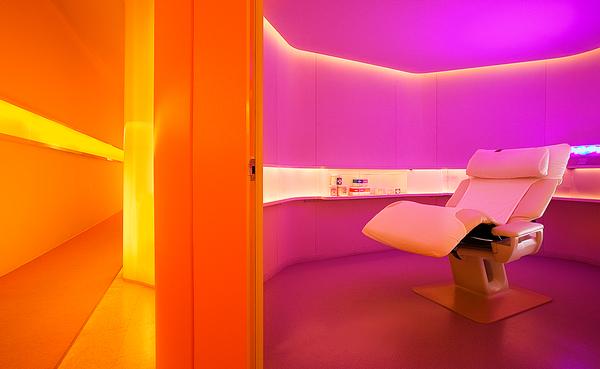
Sleep treat YeloSpa has offered power nap treatments since opening in New York in 2007. A YeloCab nap on a zero gravity bed can be customised with aromatherapy and sound settings and costs US$1 a minute for a 20- to 40-minute session. The signature menu item is also available at YeloSpa’s newer locations in São Paulo, Brazil and San Juan, Puerto Rico.
Spa Eastman in Montreal, Canada also offers a NeuroSpa treatment. A 30-minute session in its Power Nap Station with multi-frequency acoustic vibrations is priced at CA$45 (US$34, €30, £22).
A 20-minute power nap session at YeloSpa, NYC, costs US$20
COMPANY PROFILES
instantprint
We’re a Yorkshire-based online printer, founded
in 2009 by Adam Carnell and James Kinsella. [more...]
QubicaAMF UK
QubicaAMF is the largest and most
innovative bowling equipment provider with
600 employees worldwi [more...]
RMA Ltd
RMA Ltd is a one-stop global company
that can design, build and produce from a
greenfield site upw [more...]
Polin Waterparks
Polin was founded in Istanbul in 1976. Polin
has since grown into a leading company in
the waterpa [more...]
An opportunity to reimagine one of the UK’s most recognisable towers has been formally
opened by Rivington Hark, as St Johns Beacon invites operators and partners to shape its
next phase. [more...]
A 45- to 60-minute snooze produces a five-fold improvement in memory / Jeka/shutterstock
Operators such as YeloSpa and Spa Eastman which offer short sleep sessions to weary customers (see below) could be helping them to maintain their memories and enhance their capability to learn as well as recharge their batteries, according to a new, albeit small, study.
A group of researchers at Saarland University in Germany have discovered that a snooze lasting 45-60 minutes leads to a five-fold improvement in how the brain retrieves information.
Memory test The study involved a memory recall exam of 41 university students. The volunteers were asked to learn 90 single words and 120 word pairs and were tested on what they could remember immediately afterwards. The word pairs were essentially meaningless, using random duos such as ‘milk-taxi’, so that participants would not have heard them before and would not recall them due to familiarity.
After the initial memory test, one half of the participants was allowed a brief nap, sleeping for an average of 64 minutes. The other half (the control group), sat down to watch a DVD. All of the participants were then retested to see how many of the words they could recall again.
The results, published in the Neurobiology of Learning and Memory* journal, showed that while there was no memory improvement in those who slept, they could still remember a similar amount of words from before. Their memory was “just as good as it was before sleeping,” says research supervisor Axel Mecklinger.
In comparison, those who watched the DVD performed significantly worse when it came to remembering word pairs.
Sleep spindles The researchers also used an EEG to measure the brainwave activity of those who slept to see if there was a correlation with how they performed in the memory test. They focused on the role of the hippocampus, a part of the brain where memories are consolidated and transferred into long-term memory storage.
Sara Studte, a graduate specialising in neuropsychology, who also worked on the research says: “We examined a particular type of brain activity, known as ‘sleep spindles’, that plays an important role in memory consolidating during sleep.” A sleep spindle is shown on an EEG as a short burst of rapid oscillations. The findings confirmed that the greater the number of sleep spindles, the better a person can remember things.
Although the number of participants in the study was limited, Mecklinger still feels the overall findings are telling. He concludes: “A short nap at the office or in school is enough to significantly improve learning success.”
*Studte S et al. Nap sleep preserves associative but not item memory performance. Neurobiology of Leaning and Memory. Feb 2015.
Read more from this issue of Attractions Management magazine
View contents of Attractions Management 2015 issue 4
Letters:
Concerns raised over massage-on-demand vetting systems
Interview: Michael Tompkins
What’s next for Michael Tompkins as he takes a step back at Hilton Head Health? Rhianon Howells finds out
Promotional feature: Dr Burgener Switzerland
Leading skincare brand Dr Burgener Switzerland combines natural ingredients with advanced technology to produce exceptional results – and the company sees customisation as the way forward for each of its spa clients
Trends: Workplace wellness
Neena Dhillon looks at two award-winning employee wellness programmes and asks how spas can get involved in this burgeoning market
Promotional feature: ESPA
ESPA International has always been a leader in the global spa business but has never been averse to change. The CEO and son of its founder explains how the company he joined 22 years ago is adapting to meet the challenges facing the industry today
Research: Onwards & upwards
ISPA research shows the US spa sector has reached new heights. Colin McIlheney analyses the findings
Promotional feature: Phytomer
Director of international development, Tristan Lagarde, explains how PHYTOMER has become a leader in the field of technological skincare development, and how spas can benefit from the brand’s success
Spa concept: Eforea 2.0
Hilton has refreshed its spa concept to make it more appealing to hoteliers. But what’s changed? Jane Kitchen finds out
Promotional feature: Living Earth Crafts
Brian Paris, spa designer and VP of sales for Living Earth Crafts, explains how the company is helping spa operators become more efficient with space-saving but stylish spa equipment and accessories
Sleep treat YeloSpa has offered power nap treatments since opening in New York in 2007. A YeloCab nap on a zero gravity bed can be customised with aromatherapy and sound settings and costs US$1 a minute for a 20- to 40-minute session. The signature menu item is also available at YeloSpa’s newer locations in São Paulo, Brazil and San Juan, Puerto Rico.
Spa Eastman in Montreal, Canada also offers a NeuroSpa treatment. A 30-minute session in its Power Nap Station with multi-frequency acoustic vibrations is priced at CA$45 (US$34, €30, £22).
A 20-minute power nap session at YeloSpa, NYC, costs US$20
Hotel de France, located on the British Isle of Jersey, has created a wellness retreat package
that includes a hot yoga session that will take place in Jersey Zoo’s butterfly sanctuary.
A new immersive attraction designed to transport visitors into the final hours of ancient Pompeii
is preparing to open near the world-famous archaeological site in southern Italy.
Experience design company, BRC Imagination Arts, has completed a transition that sees founder
Bob Rogers pass ownership of the business to four long-serving senior executives, while
remaining actively involved with the company.
Movie Park Germany has opened a new Paramount Pictures-themed attraction as part of its 30th
anniversary celebrations, using immersive storytelling and adaptive reuse to reinforce the park’s
longstanding “Hollywood in Germany” positioning.
Therme Manchester’s 28-acre development, which will include interconnected glass pavilions
that measure 65,000sq m, will be the largest bathing and wellbeing attraction in the world once
complete, according to prof David Russell, CEO of Therme UK.
Efteling has opened Hooghmoed, a new family drop tower designed to broaden the appeal of its
recently launched Sirene Island themed area and introduce younger visitors to thrill attractions.
A proposed Puy du Fou development near Bicester and Universal Destinations and Experiences’
planned resort in Bedford are emerging as part of a wider transformation of the Oxford–
Cambridge Growth Corridor into a major centre for UK leisure and tourism inv
Shedd Aquarium has opened the Immersion Theater developed in partnership with SimEx-
Iwerks, as part of a wider strategy to enhance the guest experience and create additional
revenue opportunities.
The UK government has announced a temporary reduction in VAT on visitor attractions and
children’s meals as part of a summer cost-of-living support package designed to stimulate the
visitor economy and encourage family days out.
As designer Yinka Ilori prepares for his first solo gallery show in London, he speaks exclusively
to CLADmag about his mission to spread joy, the power of play, and his bold approach to using
colour (including the colours you won’t see in his work).
The government of Thailand is exploring plans for a THB300bn (£6.3bn, US$8.3bn)
entertainment complex in the country’s Eastern Economic Corridor (EEC), with officials
proposing a large-scale theme park and sports destination as part of a broader tourism and
economic development strategy.
+ More news
COMPANY PROFILES
instantprint We’re a Yorkshire-based online printer, founded
in 2009 by Adam Carnell and James Kinsella. [more...]
QubicaAMF UK QubicaAMF is the largest and most
innovative bowling equipment provider with
600 employees worldwi [more...]
RMA Ltd RMA Ltd is a one-stop global company
that can design, build and produce from a
greenfield site upw [more...]
Polin Waterparks Polin was founded in Istanbul in 1976. Polin
has since grown into a leading company in
the waterpa [more...]
An opportunity to reimagine one of the UK’s most recognisable towers has been formally
opened by Rivington Hark, as St Johns Beacon invites operators and partners to shape its
next phase. [more...]