A groundbreaking new study shows that massage can help muscle re-growth after an injury – even when applied to the opposite, uninjured limb. Jane Kitchen takes a closer look
By Jane Kitchen | Published in Spa Business 2017 issue 4
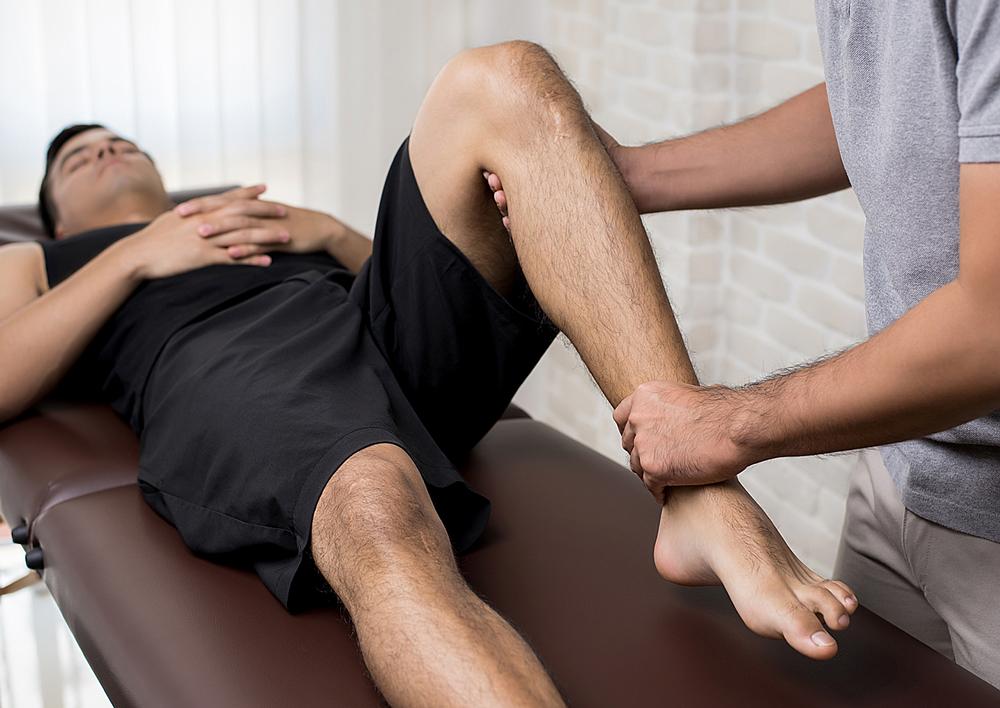
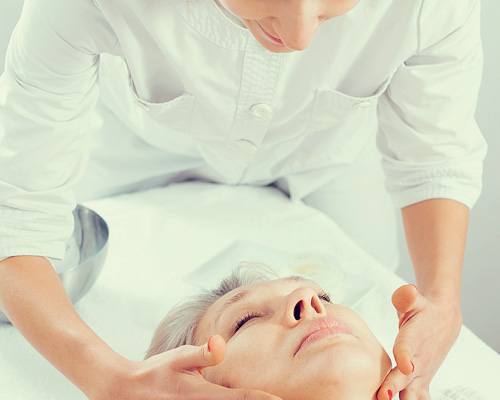
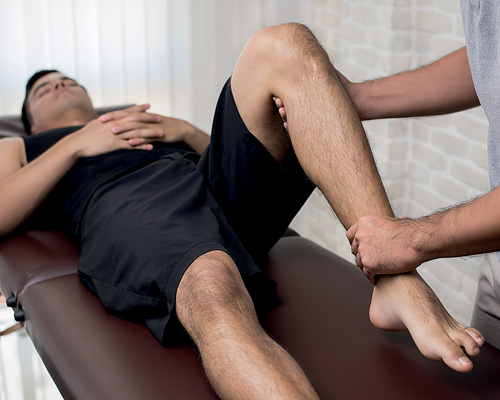
Massage could be used for patients after orthopaedic surgeries / shutterstock
Massage has long been known in the physiology world as an easy-to-use treatment with very few side effects, which can also lessen pain, decrease anxiety and stress, increase flexibility, improve immunity and increase blood flow. But its value for muscle regeneration has also now been demonstrated, and researchers from Colorado State University (CSU) and the University of Kentucky have found some surprising new benefits with important implications for healing.
The researchers have shown that massage can increase the re-growth of muscle tissue after an injury – even when applied to the opposite, uninjured limb. Their paper, published in November in The Journal of Physiology, showed that muscle grew faster after a massage because the making of protein in cells was improved. They also showed that when one leg was massaged, the muscle in the other, non-massaged leg also grew faster.
This has implications for people on bed rest, the elderly or those having a prolonged hospital stay, as muscle is lost quickly during periods of disuse and is difficult to grow back – especially in the elderly. Karyn Hamilton and Ben Miller, faculty members of CSU’s Department of Health and Exercise Science and authors on the paper, say the concept that massaging one limb might also lead to benefits in another non-massaged limb is groundbreaking.
“For instance, if you injured one leg and couldn’t massage it because of that injury, we now have evidence suggesting that massaging the other non-injured leg could lead to benefits in the injured leg,” says Hamilton. “That’s a novel finding with potentially very important implications.”
The researchers used rats that underwent a period of inactivity to decrease muscle mass, then were allowed to recover. During the recovery period, the rats were massaged every other day, and the researchers analysed the muscle for the size of muscle fibres, making of proteins, presence of other cells and communication in the cells that programmes them to grow.
The research team is beginning studies with human participants, and hopes to find similar implications.
“We foresee that massage could be used in situations where other treatments, such as exercise, can’t be applied: in the intensive care unit and in patients who are under non-weight-bearing orders after orthopaedic surgeries,” says Esther Dupont-Versteegden, one of the investigators at the University of Kentucky’s College of Health Sciences.
Read more from this issue of Attractions Management magazine
View contents of Attractions Management 2017 issue 4
Promotional feature: Anne Semonin
Katherine Connolly, newly appointed global
director of retail and spa operations at Anne
Semonin, discusses her plans for the brand
Promotional feature: Thalion
Thalion is the first company to develop highly
specialised mineral therapies for clients, says
training manager Sophie Alemany
Research: Finishing touch
A new study shows that massage can
help muscle re-growth after an injury –
even when applied to the opposite limb
An opportunity to reimagine one of the UK’s most recognisable towers has been formally
opened by Rivington Hark, as St Johns Beacon invites operators and partners to shape its
next phase. [more...]
A groundbreaking new study shows that massage can help muscle re-growth after an injury – even when applied to the opposite, uninjured limb. Jane Kitchen takes a closer look
By Jane Kitchen | Published in Spa Business 2017 issue 4
Massage could be used for patients after orthopaedic surgeries / shutterstock
Massage has long been known in the physiology world as an easy-to-use treatment with very few side effects, which can also lessen pain, decrease anxiety and stress, increase flexibility, improve immunity and increase blood flow. But its value for muscle regeneration has also now been demonstrated, and researchers from Colorado State University (CSU) and the University of Kentucky have found some surprising new benefits with important implications for healing.
The researchers have shown that massage can increase the re-growth of muscle tissue after an injury – even when applied to the opposite, uninjured limb. Their paper, published in November in The Journal of Physiology, showed that muscle grew faster after a massage because the making of protein in cells was improved. They also showed that when one leg was massaged, the muscle in the other, non-massaged leg also grew faster.
This has implications for people on bed rest, the elderly or those having a prolonged hospital stay, as muscle is lost quickly during periods of disuse and is difficult to grow back – especially in the elderly. Karyn Hamilton and Ben Miller, faculty members of CSU’s Department of Health and Exercise Science and authors on the paper, say the concept that massaging one limb might also lead to benefits in another non-massaged limb is groundbreaking.
“For instance, if you injured one leg and couldn’t massage it because of that injury, we now have evidence suggesting that massaging the other non-injured leg could lead to benefits in the injured leg,” says Hamilton. “That’s a novel finding with potentially very important implications.”
The researchers used rats that underwent a period of inactivity to decrease muscle mass, then were allowed to recover. During the recovery period, the rats were massaged every other day, and the researchers analysed the muscle for the size of muscle fibres, making of proteins, presence of other cells and communication in the cells that programmes them to grow.
The research team is beginning studies with human participants, and hopes to find similar implications.
“We foresee that massage could be used in situations where other treatments, such as exercise, can’t be applied: in the intensive care unit and in patients who are under non-weight-bearing orders after orthopaedic surgeries,” says Esther Dupont-Versteegden, one of the investigators at the University of Kentucky’s College of Health Sciences.
Read more from this issue of Attractions Management magazine
View contents of Attractions Management 2017 issue 4
Promotional feature: Anne Semonin
Katherine Connolly, newly appointed global
director of retail and spa operations at Anne
Semonin, discusses her plans for the brand
Promotional feature: Thalion
Thalion is the first company to develop highly
specialised mineral therapies for clients, says
training manager Sophie Alemany
Research: Finishing touch
A new study shows that massage can
help muscle re-growth after an injury –
even when applied to the opposite limb
Hotel de France, located on the British Isle of Jersey, has created a wellness retreat package
that includes a hot yoga session that will take place in Jersey Zoo’s butterfly sanctuary.
A new immersive attraction designed to transport visitors into the final hours of ancient Pompeii
is preparing to open near the world-famous archaeological site in southern Italy.
Experience design company, BRC Imagination Arts, has completed a transition that sees founder
Bob Rogers pass ownership of the business to four long-serving senior executives, while
remaining actively involved with the company.
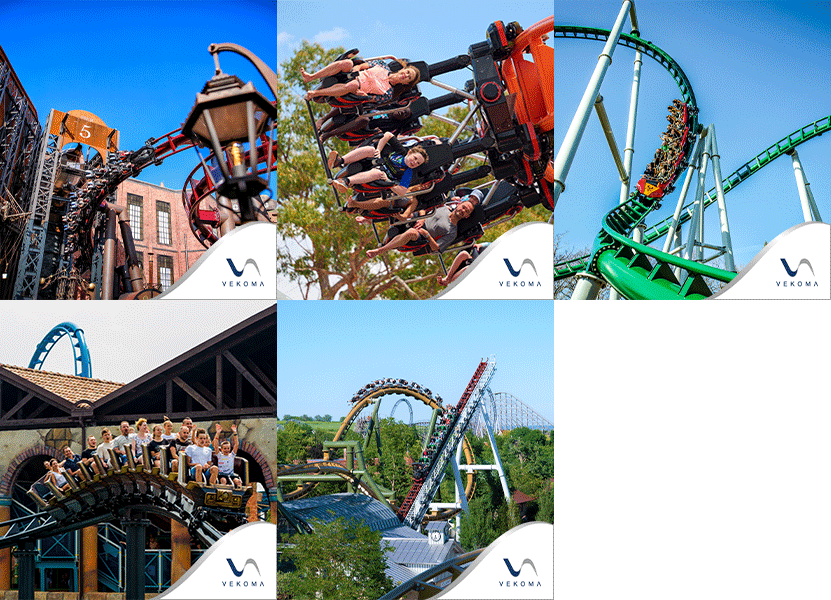
Movie Park Germany has opened a new Paramount Pictures-themed attraction as part of its 30th
anniversary celebrations, using immersive storytelling and adaptive reuse to reinforce the park’s
longstanding “Hollywood in Germany” positioning.
Therme Manchester’s 28-acre development, which will include interconnected glass pavilions
that measure 65,000sq m, will be the largest bathing and wellbeing attraction in the world once
complete, according to prof David Russell, CEO of Therme UK.
Efteling has opened Hooghmoed, a new family drop tower designed to broaden the appeal of its
recently launched Sirene Island themed area and introduce younger visitors to thrill attractions.
A proposed Puy du Fou development near Bicester and Universal Destinations and Experiences’
planned resort in Bedford are emerging as part of a wider transformation of the Oxford–
Cambridge Growth Corridor into a major centre for UK leisure and tourism inv
Shedd Aquarium has opened the Immersion Theater developed in partnership with SimEx-
Iwerks, as part of a wider strategy to enhance the guest experience and create additional
revenue opportunities.
The UK government has announced a temporary reduction in VAT on visitor attractions and
children’s meals as part of a summer cost-of-living support package designed to stimulate the
visitor economy and encourage family days out.
As designer Yinka Ilori prepares for his first solo gallery show in London, he speaks exclusively
to CLADmag about his mission to spread joy, the power of play, and his bold approach to using
colour (including the colours you won’t see in his work).
The government of Thailand is exploring plans for a THB300bn (£6.3bn, US$8.3bn)
entertainment complex in the country’s Eastern Economic Corridor (EEC), with officials
proposing a large-scale theme park and sports destination as part of a broader tourism and
economic development strategy.
+ More news
COMPANY PROFILES
QubicaAMF UK QubicaAMF is the largest and most
innovative bowling equipment provider with
600 employees worldwi [more...]
Polin Waterparks Polin was founded in Istanbul in 1976. Polin
has since grown into a leading company in
the waterpa [more...]
Sally Corporation Our services include: Dark ride design & build; Redevelopment of existing attractions; High-quality [more...]
IDEATTACK IDEATTACK is a full-service planning and
design company with headquarters in
Los Angeles. [more...]
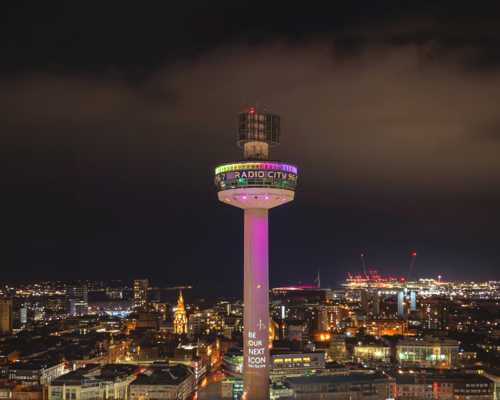
An opportunity to reimagine one of the UK’s most recognisable towers has been formally
opened by Rivington Hark, as St Johns Beacon invites operators and partners to shape its
next phase. [more...]