If you want to be part of the conversation, then you need to go where the conversation is happening. So how are software companies helping spa operators navigate social media? Kate Parker investigates
By Kate Parker | Published in Spa Business 2017 issue 4
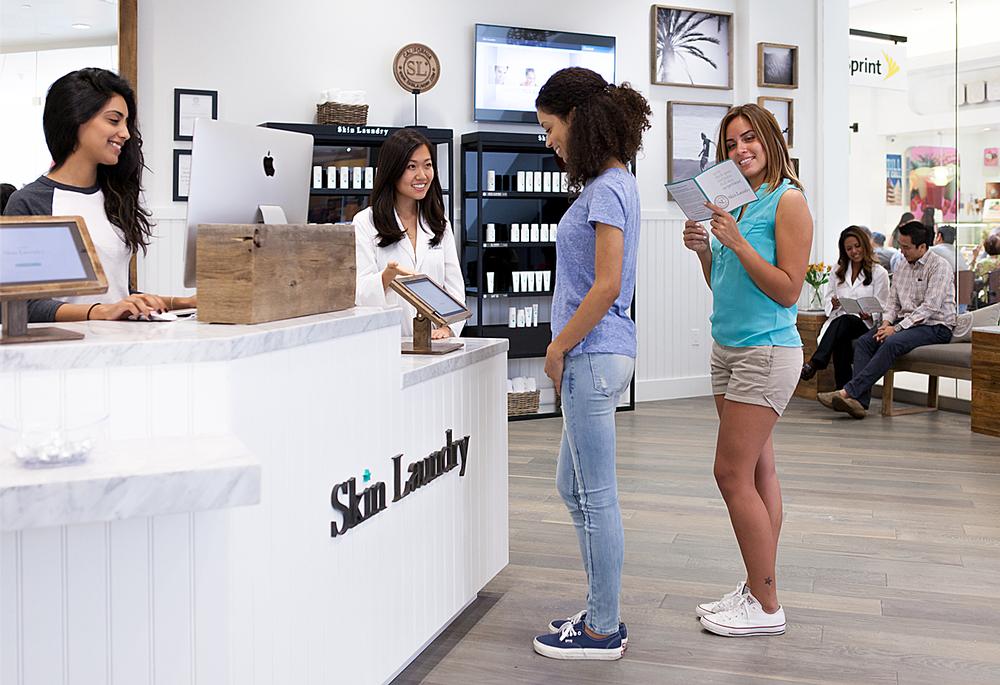
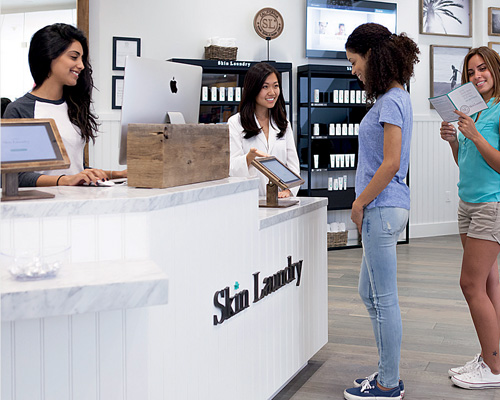
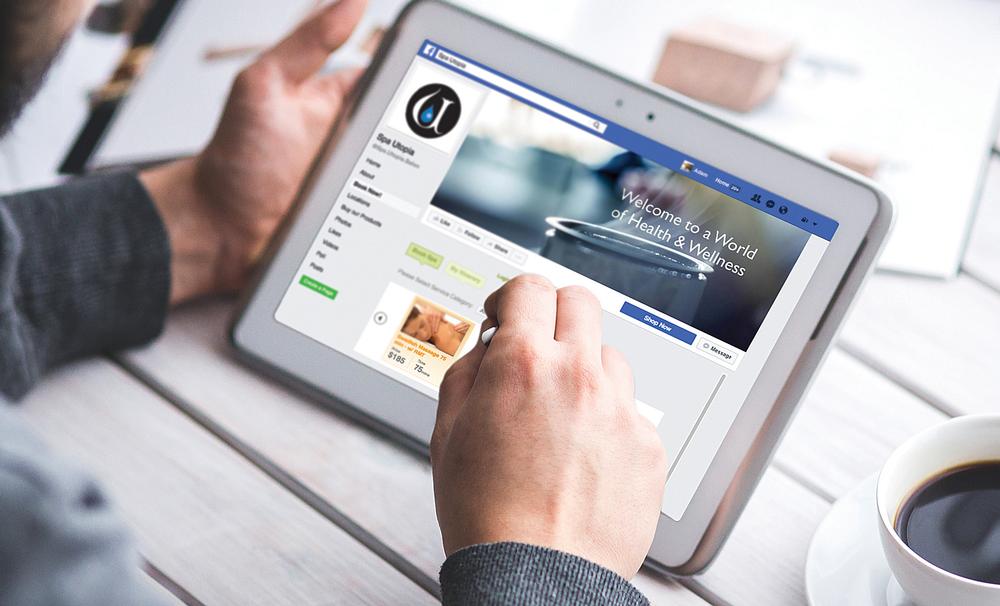
Skin Laundry uses Booker’s social media plugins to create a social media presence online
With a quarter of the world’s population using social media on a regular basis, representing some 2.3 billion people logging on for an average of two hours every day, spa operators have a massive pool of potential customers at their fingertips. But today’s spa guests have high expectations of speed, convenience and usability, not to mention the power of their user-generated content in making or breaking a reputation. So how can spa software companies help harness the potential and navigate the complexities of this evolving field?
Authentic conversations Matthew Mahoney, SVP of product at software company Booker, says it’s all about understanding the customer, remembering that it’s not solely about the technology and never forgetting that it’s about having authentic conversations.
“It’s you as an owner speaking to a customer, just as you would if they were visiting in person,” he explains. “Of course, the difference is that everyone who follows you can follow that conversation too.”
And therein lies the real promise of social media for spa operators: “One of the central tenets of marketing is to go where the customers are, and for more than a decade they’ve been on social media,” he says.
Booker offers booking plugins that allow customers to book appointments on social platforms, including Facebook and Yelp. “Our customers take advantage of their time on social media by sharing good news stories about their businesses: providing tips or relaying a glowing customer comment. You can make it easy for spa clients to act when they’re ready. Make sure they know how to get to your menu, where to book online and when there’s a special offer or it’s time to buy a gift certificate,” Mahoney says.
Devon Branam, director of marketing and PR at Skin Laundry, uses Booker’s social media plugins for a variety of different functions. “We use them for promotions, brand awareness, customer service, community-building, new client acquisition and as a tool to educate our clients and fans on our products and our signature Laser & Light facial,” Branam says. “It also plays a key role in our relationship with retail partners.”
Social media allows spa operators to deliver a more direct, personal marketing approach, right where people are actively looking to connect with businesses that they’re interested in, thereby initiating the customer experience before they’ve even walked through the door.
“For a marketer, social media is an amazing tool offering an infinite number of possibilities,” says Stefan Drummond, founder and MD of software solution provider EZ Runner. “It gives you tangible data to report on, can bring your brand to life and it allows your spa to connect with customers in a personalised way, such as using Facebook to target customers with back pain rather than those who are interested in massages, for example.”
Targeted content Guenther Poellabauer, managing director of software company The Assistant Company (TAC), says that one of the biggest mistakes a spa can make is in failing to offer a diversity of content on different channels. “Posting the same content on all platforms is not about killing two birds with one stone, and you risk fans missing the added-value of following a brand or company on all platforms,” he says. “Spas should use Instagram for posting visual content, beauty products and stories; and Snapchat can be used for background insights into the daily business of the spa manager.”
For Frank Pitsikalis, founder and CEO of software company ResortSuite, it’s all about staying relevant, offering its clients access to the company’s embedded booking engines. ResortSuite’s spa clients have access to ResortSuite Social, an online booking engine that’s embedded in a spa’s Facebook page, together with ResortSuite Web, a customisable online booking engine available through a spa’s main website. ResortSuite Web provides guests with the opportunity to book spa treatments, accommodations, lessons, activities and more in a single transaction.
“Above all, stay relevant,” says Pitsikalis. “Ensure that all your posts are in line with current events and fall within the interests of your target market. In addition, concentrate on the social media channels that are most effective in reaching your clientele: Facebook for boomers, Instagram for millennials.”
Get the balance right, and social media allows spas to get closer to their guests, enhancing new customer experiences through word-of-mouth and a personal approach. In getting to know your followers, you can post content that’s appealing for a particular target group, encouraging interaction with potential guests and developing a fan-base.
For example, publishing large numbers of images builds your brand identity, and featuring more personal material, such as employee biographies or expert information, adds depth to the relationship.
Branam explains: “We’ve found Instagram to be most effective from a brand awareness and community-building standpoint. We’ve also seen the most significant follower growth there too.”
“We’ve had tremendous success with the implementation of video – in particular, the behind-the-scenes view of our Laser & Light facial treatments. In addition to producing high engagement, it’s helped with new client acquisition; and we’ve also seen a significant spike in following after posting these,” she adds.
Easy booking Social media is shaping both operators’ and clients’ demands, and with the rise of the expectation of 24/7 access to booking options, managing a successful online function is imperative for spas. According to ISPA’s latest Industry Study (see pages 48-50), more than four in five US spas (83 per cent) offered social media promotions in 2016, with over three in five (62 per cent) offering online booking options. People want instantaneous results, and if they’re using social media to look for spa treatments, they’ll likely want to search, book and pay for the service in one exercise – right then and there.
TAC offers its Facebook Booking App, which allows users to book and purchase directly from a spa’s Facebook company profile and, as such, provides an additional sales channel. It provides customers with booking opportunities directly over the largest social network, as well as the easy promotion and booking of special offers. All reservations and sales completed over Facebook are automatically synced with TAC’s spa software, without any media disruption. “By using TAC’s Facebook Booking App, users can book and purchase directly within a spa’s Facebook profile. Promotion codes and last-minute hot deals can easily be created and offered across platforms,” says Poellabauer. “Spa managers benefit from these tools without having to put in any additional effort.”
The power of sharing However, a spa’s online presence isn’t just about booking – it’s about client loyalty and recommendations. Social media has the power to shape opinions, and spa operators know that brand reputation and identity can be built or damaged online.
“Spa bloggers and their user-generated content have become a powerful influencing factor when it comes to booking inspiration and online bookings,” explains Poellabauer. “Decisions on what to buy are no longer based on one-way information from companies, but on recommendations on social media.”
Spas need to be innovative in order to maximise their presence across social media platforms. Software is helping operators meet these demands and react to new trends. “Through different social media software tools, it’s much easier for spas to be able to address different target groups, match and time content and receive reports,” says Poellabauer.
This speed and ease of use is key.
“Social media is fast becoming the go-to place to learn about last-minute promotions and offers,” says Leonie Wileman, Premier Software’s COO. “Previously, spas relied on emails or SMS messaging, but social media is quicker and engages larger audiences. It’s also easy to track, so you can monitor click-throughs, shares, likes and bookings. Twitter tends to be picked up quicker and is easy to link directly with the online portal, so if a spa has same-day availability these can be posted regularly for maximum uptake.”
So as the personal goes virtual, spas need to be where their audience is and work hard to make the virtual personal, creating the ultimate experience to be shared and distributed. Social media is constantly evolving and spas need to be ever-more creative in the ways they interact with clients, using software systems that pre-empt their customers’ next moves and integrate seamlessly with the latest social media platforms.
In a community where word-of-mouth endorsement equals repeat business, spas need to be able to adapt and keep pace, and keep the chatter circulating.
Read more from this issue of Attractions Management magazine
View contents of Attractions Management 2017 issue 4
Promotional feature: Anne Semonin
Katherine Connolly, newly appointed global
director of retail and spa operations at Anne
Semonin, discusses her plans for the brand
Promotional feature: Thalion
Thalion is the first company to develop highly
specialised mineral therapies for clients, says
training manager Sophie Alemany
Research: Finishing touch
A new study shows that massage can
help muscle re-growth after an injury –
even when applied to the opposite limb
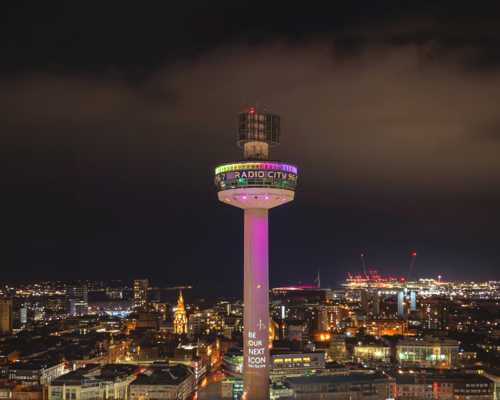
An opportunity to reimagine one of the UK’s most recognisable towers has been formally
opened by Rivington Hark, as St Johns Beacon invites operators and partners to shape its
next phase. [more...]
If you want to be part of the conversation, then you need to go where the conversation is happening. So how are software companies helping spa operators navigate social media? Kate Parker investigates
By Kate Parker | Published in Spa Business 2017 issue 4
Skin Laundry uses Booker’s social media plugins to create a social media presence online
With a quarter of the world’s population using social media on a regular basis, representing some 2.3 billion people logging on for an average of two hours every day, spa operators have a massive pool of potential customers at their fingertips. But today’s spa guests have high expectations of speed, convenience and usability, not to mention the power of their user-generated content in making or breaking a reputation. So how can spa software companies help harness the potential and navigate the complexities of this evolving field?
Authentic conversations Matthew Mahoney, SVP of product at software company Booker, says it’s all about understanding the customer, remembering that it’s not solely about the technology and never forgetting that it’s about having authentic conversations.
“It’s you as an owner speaking to a customer, just as you would if they were visiting in person,” he explains. “Of course, the difference is that everyone who follows you can follow that conversation too.”
And therein lies the real promise of social media for spa operators: “One of the central tenets of marketing is to go where the customers are, and for more than a decade they’ve been on social media,” he says.
Booker offers booking plugins that allow customers to book appointments on social platforms, including Facebook and Yelp. “Our customers take advantage of their time on social media by sharing good news stories about their businesses: providing tips or relaying a glowing customer comment. You can make it easy for spa clients to act when they’re ready. Make sure they know how to get to your menu, where to book online and when there’s a special offer or it’s time to buy a gift certificate,” Mahoney says.
Devon Branam, director of marketing and PR at Skin Laundry, uses Booker’s social media plugins for a variety of different functions. “We use them for promotions, brand awareness, customer service, community-building, new client acquisition and as a tool to educate our clients and fans on our products and our signature Laser & Light facial,” Branam says. “It also plays a key role in our relationship with retail partners.”
Social media allows spa operators to deliver a more direct, personal marketing approach, right where people are actively looking to connect with businesses that they’re interested in, thereby initiating the customer experience before they’ve even walked through the door.
“For a marketer, social media is an amazing tool offering an infinite number of possibilities,” says Stefan Drummond, founder and MD of software solution provider EZ Runner. “It gives you tangible data to report on, can bring your brand to life and it allows your spa to connect with customers in a personalised way, such as using Facebook to target customers with back pain rather than those who are interested in massages, for example.”
Targeted content Guenther Poellabauer, managing director of software company The Assistant Company (TAC), says that one of the biggest mistakes a spa can make is in failing to offer a diversity of content on different channels. “Posting the same content on all platforms is not about killing two birds with one stone, and you risk fans missing the added-value of following a brand or company on all platforms,” he says. “Spas should use Instagram for posting visual content, beauty products and stories; and Snapchat can be used for background insights into the daily business of the spa manager.”
For Frank Pitsikalis, founder and CEO of software company ResortSuite, it’s all about staying relevant, offering its clients access to the company’s embedded booking engines. ResortSuite’s spa clients have access to ResortSuite Social, an online booking engine that’s embedded in a spa’s Facebook page, together with ResortSuite Web, a customisable online booking engine available through a spa’s main website. ResortSuite Web provides guests with the opportunity to book spa treatments, accommodations, lessons, activities and more in a single transaction.
“Above all, stay relevant,” says Pitsikalis. “Ensure that all your posts are in line with current events and fall within the interests of your target market. In addition, concentrate on the social media channels that are most effective in reaching your clientele: Facebook for boomers, Instagram for millennials.”
Get the balance right, and social media allows spas to get closer to their guests, enhancing new customer experiences through word-of-mouth and a personal approach. In getting to know your followers, you can post content that’s appealing for a particular target group, encouraging interaction with potential guests and developing a fan-base.
For example, publishing large numbers of images builds your brand identity, and featuring more personal material, such as employee biographies or expert information, adds depth to the relationship.
Branam explains: “We’ve found Instagram to be most effective from a brand awareness and community-building standpoint. We’ve also seen the most significant follower growth there too.”
“We’ve had tremendous success with the implementation of video – in particular, the behind-the-scenes view of our Laser & Light facial treatments. In addition to producing high engagement, it’s helped with new client acquisition; and we’ve also seen a significant spike in following after posting these,” she adds.
Easy booking Social media is shaping both operators’ and clients’ demands, and with the rise of the expectation of 24/7 access to booking options, managing a successful online function is imperative for spas. According to ISPA’s latest Industry Study (see pages 48-50), more than four in five US spas (83 per cent) offered social media promotions in 2016, with over three in five (62 per cent) offering online booking options. People want instantaneous results, and if they’re using social media to look for spa treatments, they’ll likely want to search, book and pay for the service in one exercise – right then and there.
TAC offers its Facebook Booking App, which allows users to book and purchase directly from a spa’s Facebook company profile and, as such, provides an additional sales channel. It provides customers with booking opportunities directly over the largest social network, as well as the easy promotion and booking of special offers. All reservations and sales completed over Facebook are automatically synced with TAC’s spa software, without any media disruption. “By using TAC’s Facebook Booking App, users can book and purchase directly within a spa’s Facebook profile. Promotion codes and last-minute hot deals can easily be created and offered across platforms,” says Poellabauer. “Spa managers benefit from these tools without having to put in any additional effort.”
The power of sharing However, a spa’s online presence isn’t just about booking – it’s about client loyalty and recommendations. Social media has the power to shape opinions, and spa operators know that brand reputation and identity can be built or damaged online.
“Spa bloggers and their user-generated content have become a powerful influencing factor when it comes to booking inspiration and online bookings,” explains Poellabauer. “Decisions on what to buy are no longer based on one-way information from companies, but on recommendations on social media.”
Spas need to be innovative in order to maximise their presence across social media platforms. Software is helping operators meet these demands and react to new trends. “Through different social media software tools, it’s much easier for spas to be able to address different target groups, match and time content and receive reports,” says Poellabauer.
This speed and ease of use is key.
“Social media is fast becoming the go-to place to learn about last-minute promotions and offers,” says Leonie Wileman, Premier Software’s COO. “Previously, spas relied on emails or SMS messaging, but social media is quicker and engages larger audiences. It’s also easy to track, so you can monitor click-throughs, shares, likes and bookings. Twitter tends to be picked up quicker and is easy to link directly with the online portal, so if a spa has same-day availability these can be posted regularly for maximum uptake.”
So as the personal goes virtual, spas need to be where their audience is and work hard to make the virtual personal, creating the ultimate experience to be shared and distributed. Social media is constantly evolving and spas need to be ever-more creative in the ways they interact with clients, using software systems that pre-empt their customers’ next moves and integrate seamlessly with the latest social media platforms.
In a community where word-of-mouth endorsement equals repeat business, spas need to be able to adapt and keep pace, and keep the chatter circulating.
Read more from this issue of Attractions Management magazine
View contents of Attractions Management 2017 issue 4
Promotional feature: Anne Semonin
Katherine Connolly, newly appointed global
director of retail and spa operations at Anne
Semonin, discusses her plans for the brand
Promotional feature: Thalion
Thalion is the first company to develop highly
specialised mineral therapies for clients, says
training manager Sophie Alemany
Research: Finishing touch
A new study shows that massage can
help muscle re-growth after an injury –
even when applied to the opposite limb
Hotel de France, located on the British Isle of Jersey, has created a wellness retreat package
that includes a hot yoga session that will take place in Jersey Zoo’s butterfly sanctuary.
A new immersive attraction designed to transport visitors into the final hours of ancient Pompeii
is preparing to open near the world-famous archaeological site in southern Italy.
Experience design company, BRC Imagination Arts, has completed a transition that sees founder
Bob Rogers pass ownership of the business to four long-serving senior executives, while
remaining actively involved with the company.
Movie Park Germany has opened a new Paramount Pictures-themed attraction as part of its 30th
anniversary celebrations, using immersive storytelling and adaptive reuse to reinforce the park’s
longstanding “Hollywood in Germany” positioning.
Therme Manchester’s 28-acre development, which will include interconnected glass pavilions
that measure 65,000sq m, will be the largest bathing and wellbeing attraction in the world once
complete, according to prof David Russell, CEO of Therme UK.
Efteling has opened Hooghmoed, a new family drop tower designed to broaden the appeal of its
recently launched Sirene Island themed area and introduce younger visitors to thrill attractions.
A proposed Puy du Fou development near Bicester and Universal Destinations and Experiences’
planned resort in Bedford are emerging as part of a wider transformation of the Oxford–
Cambridge Growth Corridor into a major centre for UK leisure and tourism inv
Shedd Aquarium has opened the Immersion Theater developed in partnership with SimEx-
Iwerks, as part of a wider strategy to enhance the guest experience and create additional
revenue opportunities.
The UK government has announced a temporary reduction in VAT on visitor attractions and
children’s meals as part of a summer cost-of-living support package designed to stimulate the
visitor economy and encourage family days out.
As designer Yinka Ilori prepares for his first solo gallery show in London, he speaks exclusively
to CLADmag about his mission to spread joy, the power of play, and his bold approach to using
colour (including the colours you won’t see in his work).
The government of Thailand is exploring plans for a THB300bn (£6.3bn, US$8.3bn)
entertainment complex in the country’s Eastern Economic Corridor (EEC), with officials
proposing a large-scale theme park and sports destination as part of a broader tourism and
economic development strategy.
+ More news
COMPANY PROFILES
Alterface Alterface’s Creative Division team is
seasoned in concept and ride development,
as well as storyte [more...]
IAAPA EMEA IAAPA Expo Europe was established in 2006 and has grown to the largest international conference and [more...]
Polin Waterparks Polin was founded in Istanbul in 1976. Polin
has since grown into a leading company in
the waterpa [more...]
QubicaAMF UK QubicaAMF is the largest and most
innovative bowling equipment provider with
600 employees worldwi [more...]
An opportunity to reimagine one of the UK’s most recognisable towers has been formally
opened by Rivington Hark, as St Johns Beacon invites operators and partners to shape its
next phase. [more...]