Spas in Sweden have been able to stay open during
the pandemic. But do people still want to visit them?
Andrew Gibson investigates at spa hotel Yasuragi
While the majority of countries shut down non-essential services over the past year to curb the spread of coronavirus, the Swedish government took a different approach. They issued guidelines and restrictions but continued to keep schools and businesses, including spas and hotels, open to avoid lockdown.
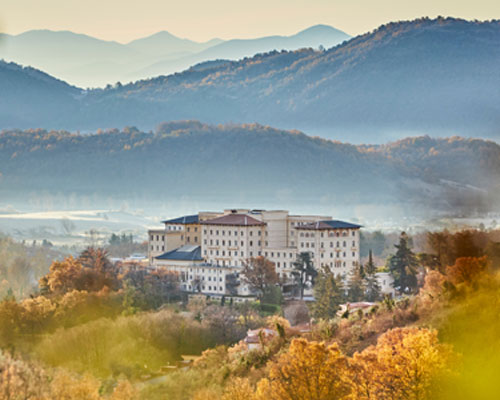
Yasuragi, a Japanese inspired spa hotel on the outskirts of Stockholm, remained operational throughout the pandemic while adhering to regulations. All employees wear face masks, but guests don’t have to, screens are placed at all service counters, sanitisers are everywhere and numbers are restricted to enable social distancing. Swedes have always respected personal space so adherence to physical distance is easily complied with, but signage helps reassure and remind everyone to observe protocols.
And it appears that COVID-19 has not curbed the nation’s appetite for wellness. Just like any ryokan, the bathing facilities are the primary attraction and on my mid-week stay the extensive hydrothermal facilities that are open to both hotel and day guests were busy. I counted at least 80 people in the baths (the capacity was 400 pre-COVID). Almost all were couples, with age groups ranging from people in their early 20s to seniors.
The offer Yasuragi was originally built as a conference centre for the Trade Union Confederation in the 1970s. The confederation commissioned Yoji Kasajima to design it after admiring his work at the Japanese embassy in Stockholm.
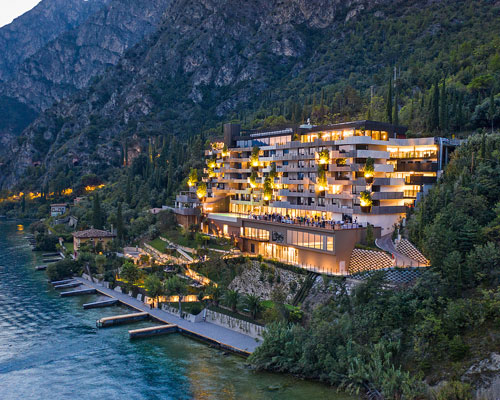
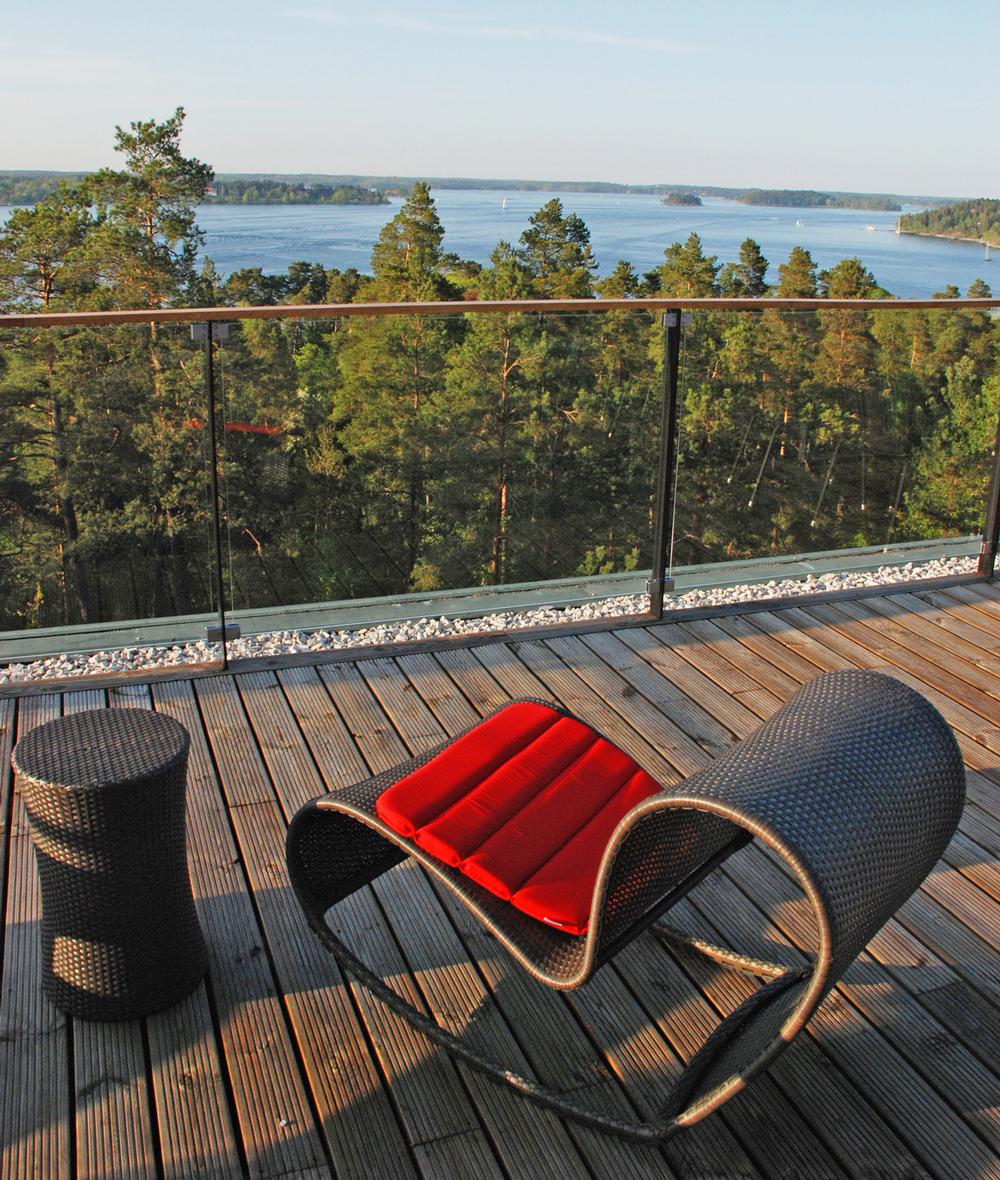
Perched on a majestic cliff top overlooking a sea channel and clad in dark timber, the building pays homage to Japanese style and is now a fitting home to a 191-room hotel and spa which falls under the Nordic Hotels & Resorts banner – a collection of 40 independent hotels and restaurants across Sweden, Norway, Denmark and Finland. Other properties in the portfolio include the Ice Hotel and Farris Bad.
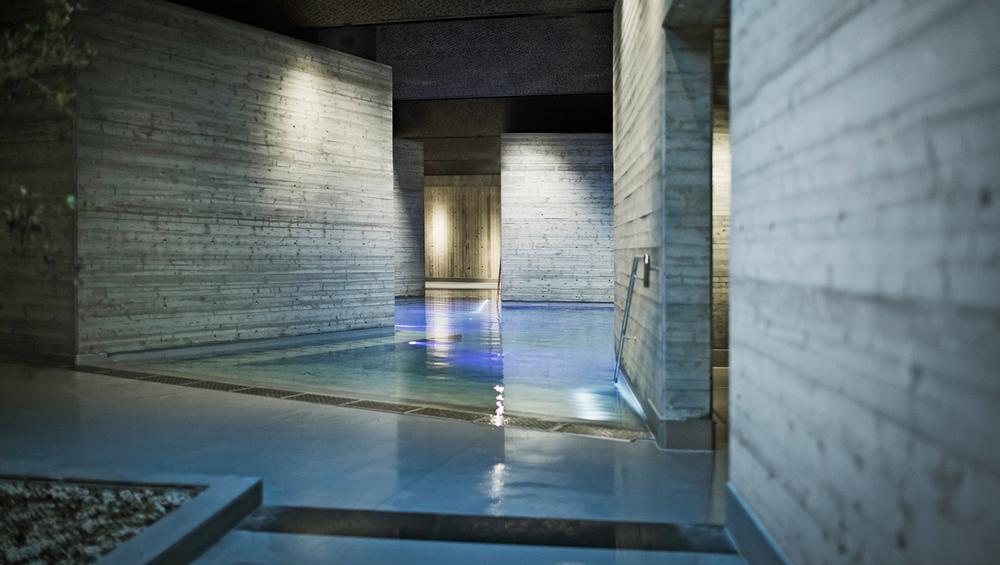
The prime attraction at Yasuragi is the bathing area which was renovated and extended in 2017 and covers around 2,200sq m. Architects DAP Stockholm AB spearheaded the overhaul with EnviroProcess, a partner of Klafs, installing multiple thermal rooms by Klafs and supporting and supplying the treatment system for a wide range of pools.
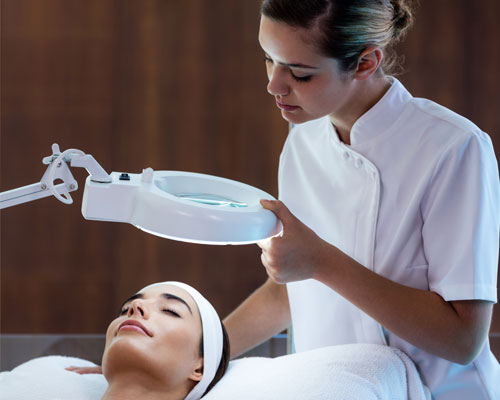
Located off the entrance to the baths is one floor for skincare treatments and another for body therapies.
There’s a choice of four eateries, from a teppanyaki dining room to an informal snack bar by the baths. Perhaps restaurants have been the biggest victims of COVID restrictions as all were closed except one and Yasuragi has taken the opportunity to renovate the other two.
Packages and prices There’s a wide range of spa and accommodation options at Yasuragi with yield management strategies in place according to time of day, day of week, concessions for seniors and children and treatment and food add-ons. Loyalty cards are available too.
There are almost too many choices, making selection over the internet difficult, but it’s nice to have options.
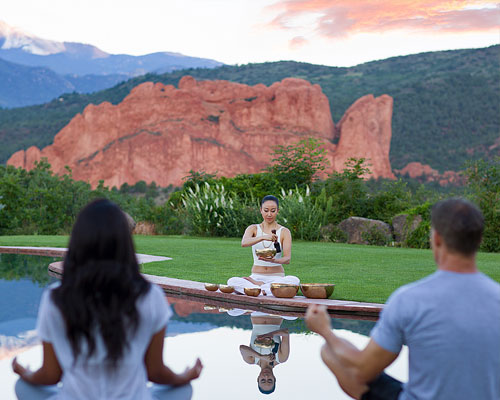
A day spa package starts at SEK990 (US$120, €98, £84) and includes access to the baths, snacks, lunch or dinner and a choice of distinctively Japanese daily activities such as zen meditation, yoga and sound bowl sessions. The price goes up to SEK1,630 (US$197, €161, £139) when a 20-minute treatment is bundled in.
An overnight stay with breakfast, including all of the above except for a treatment, starts at SEK1,750 (US$211, €173, £149).
For those wanting just a treatment, a 50-minute classic massage is SEK1,275 (US$154, €127, £100) or additional activities such as origami, calligraphy and tea ceremonies carry a fee of SEK210 (US$25, €21, £20).
Upon arrival So... the key question is, would you want to stay in a 20-year-old converted conference centre that has a Japanese theme set in the Swedish countryside? In my opinion, yes. It’s a place to truly relax and to take a moment to reset your mind.
Perhaps your first thoughts are that a Japanese spa would be totally out of place in Sweden. But throughout my stay, I became aware of how many customs the countries share. Both have a deep respect for nature that extends from visual appreciation to full immersion. Both have a classic and strong design identity based on a minimalist feel, high quality finishes and natural materials... and both have a prominent culture of bathing (onsen and sauna).
As we stroll up a stone path lined with wooden pillars and cherry trees in full blossom the arrival is classically Japanese, but totally fitting for Sweden. Yasuragi exudes the lagom approach of Sweden where everything is just right, unassuming and certainly not extravagant and this provides the opportunity to slow down, appreciate your surroundings and have gratitude for the simple things in life.
My wife and I received a warm welcome and a quick, efficient check-in. Yasuragi is a pet-friendly hotel so we took our dog and enjoyed many of the woodland trails.
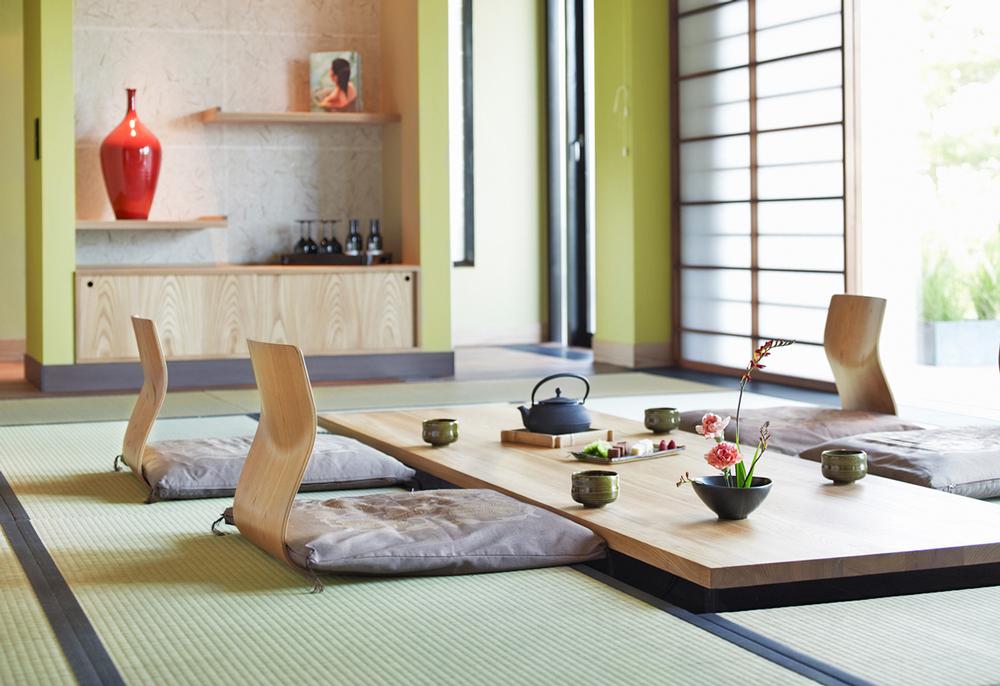
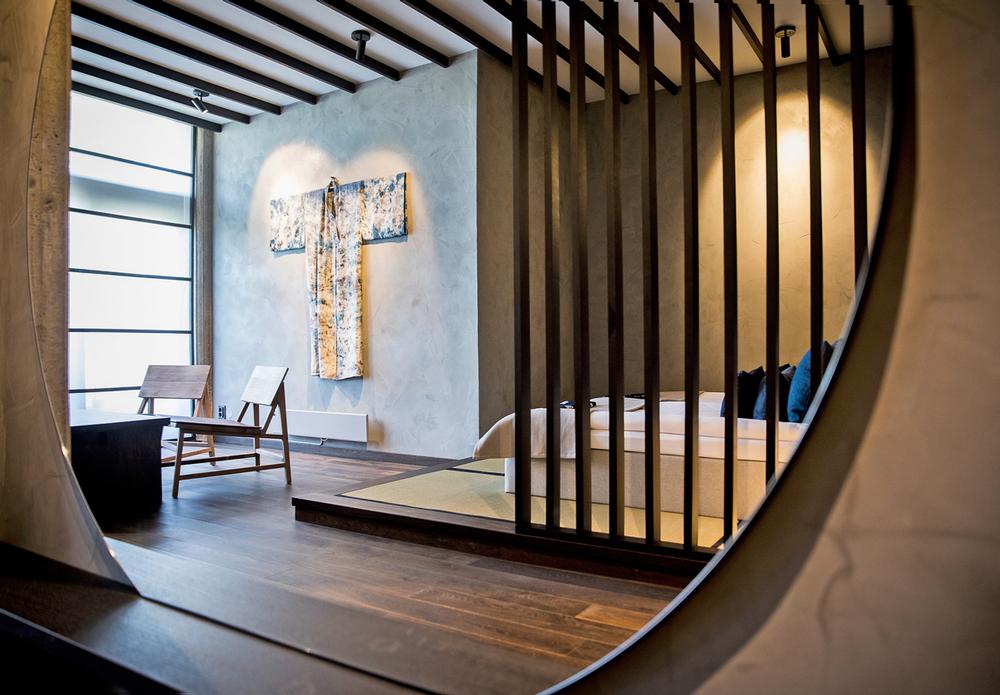
Our standard guestroom (issued to people with pets) was typically Japanese with futon-style beds and simple furnishings, but at 20sq m felt a little small. I would recommend the ryokan (top suite) – complete with two bedrooms, extensive stone bathing area and enormous outdoor terrace with whirlpool – for the full experience.
Communication was one of the weakest parts of my stay. Although spa protocols and facilities were explained, there were no details of my treatment at arrival or in my room. Returning to reception, I was presented with a handwritten note simply saying ‘5pm’ and the only confirmation I got was from speaking to a member of staff. Similarly spa activities were posted around the hotel, but not in the room.
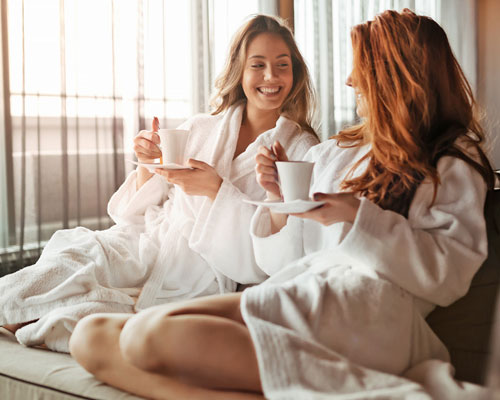
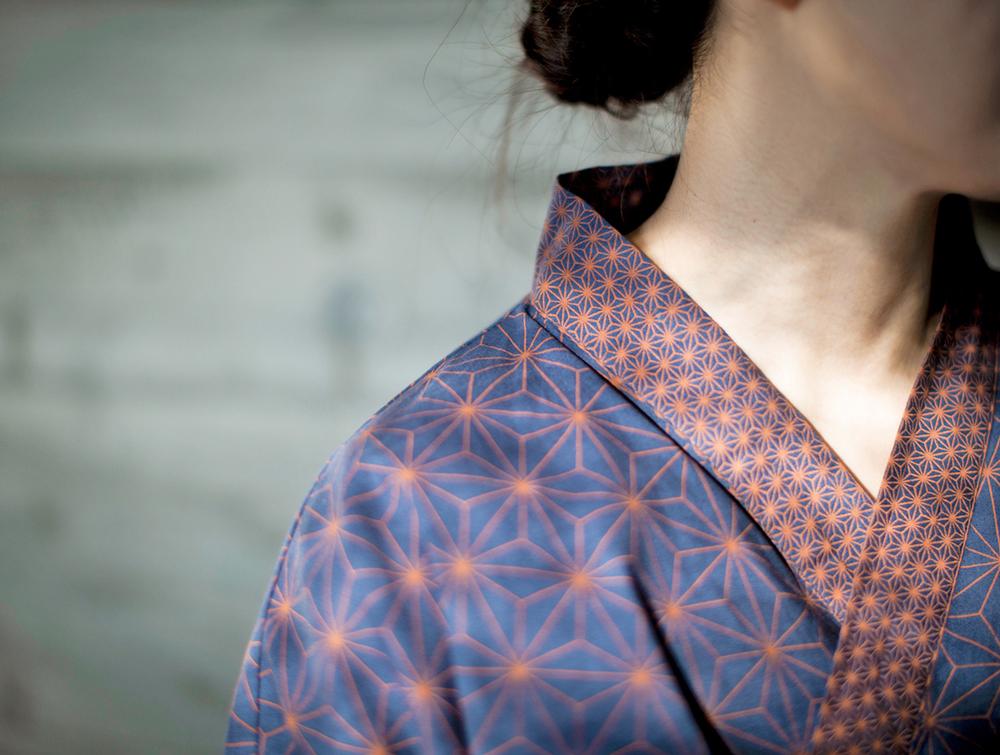
The spa experience One of the enjoyable features at Yasuragi is that guests are dressed in the same patterned yukata (Japanese robe) and slippers. You’re given these well-designed, comfortable clothes and swimsuits to wear (the latter to keep) throughout your stay, even at dinner, and it’s relaxing to know everyone is the same.
As a side note, the robes are also cleverly designed with a pocket inside the sleeve for key cards and numbered hangers help you to locate them when in the spa.
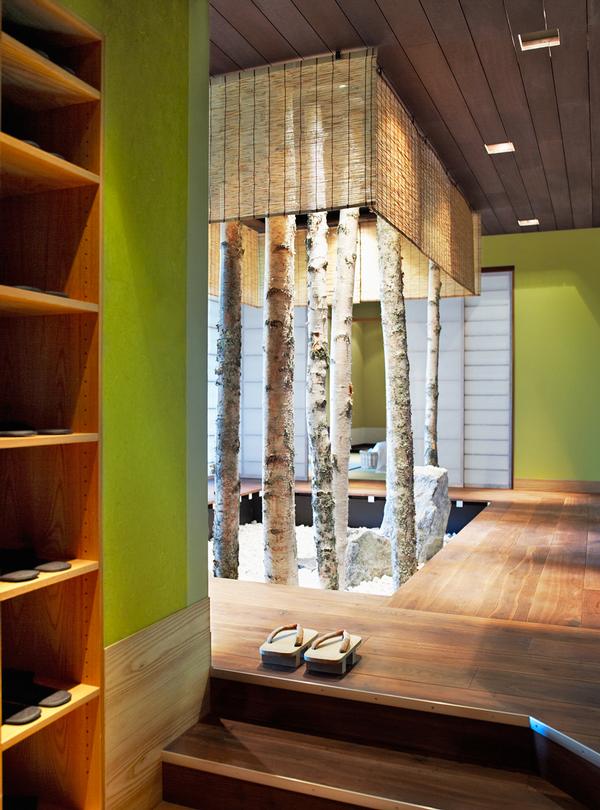
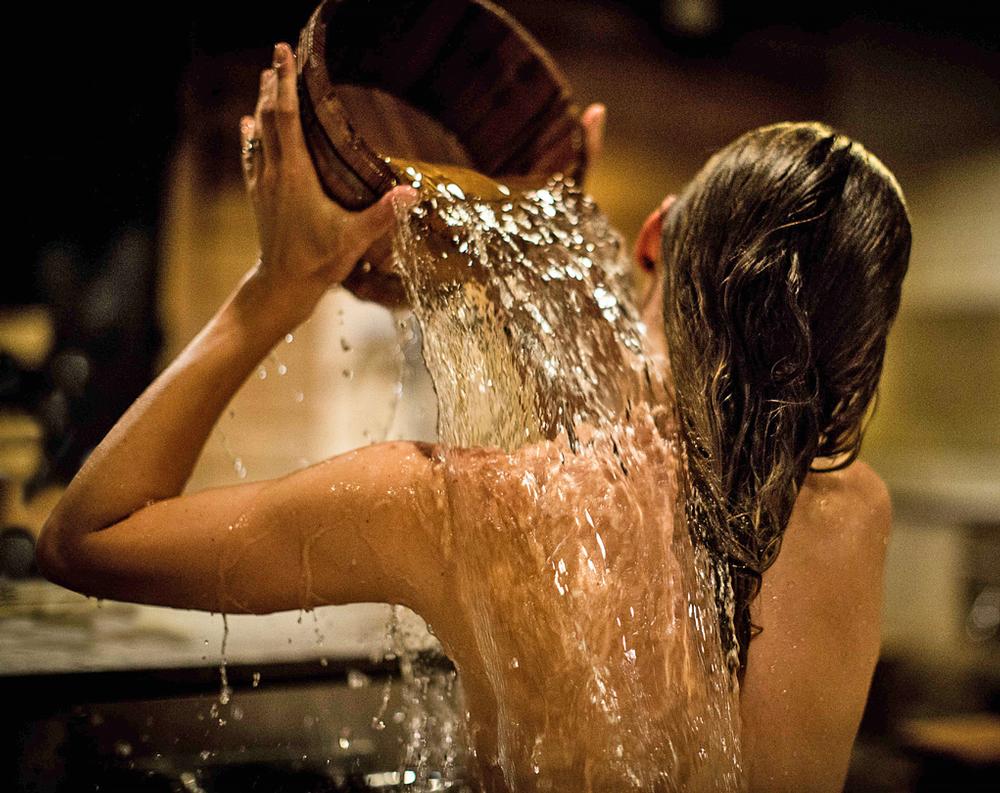
The baths can be reached via a glazed passage with views over a simple Japanese rockery and you’re provided with a detailed written and verbal explanation of a naked cleansing ritual, as is the onsen tradition, which takes place in the changing rooms. The ritual takes place across 50 ablution areas that are cleverly designed around courtyards and terraces, to withstand the volume of business. During COVID spacing is controlled through signage and continual reminders of the maximum number of people permitted in any space.
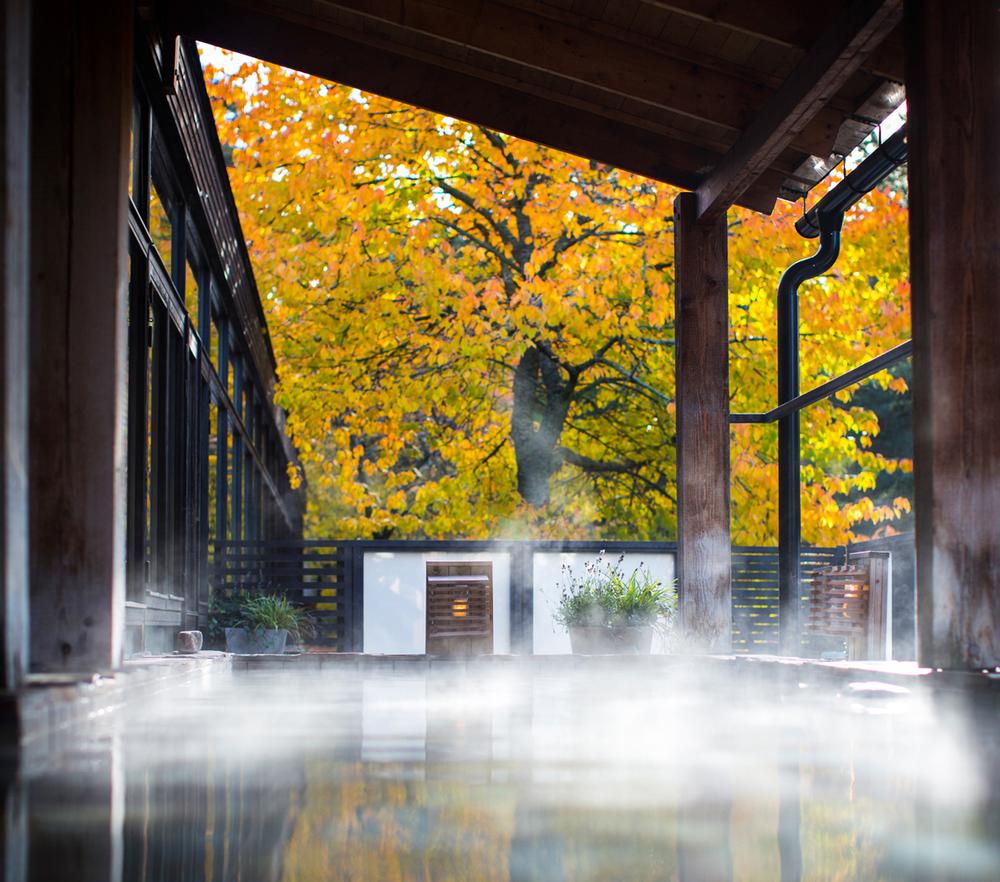
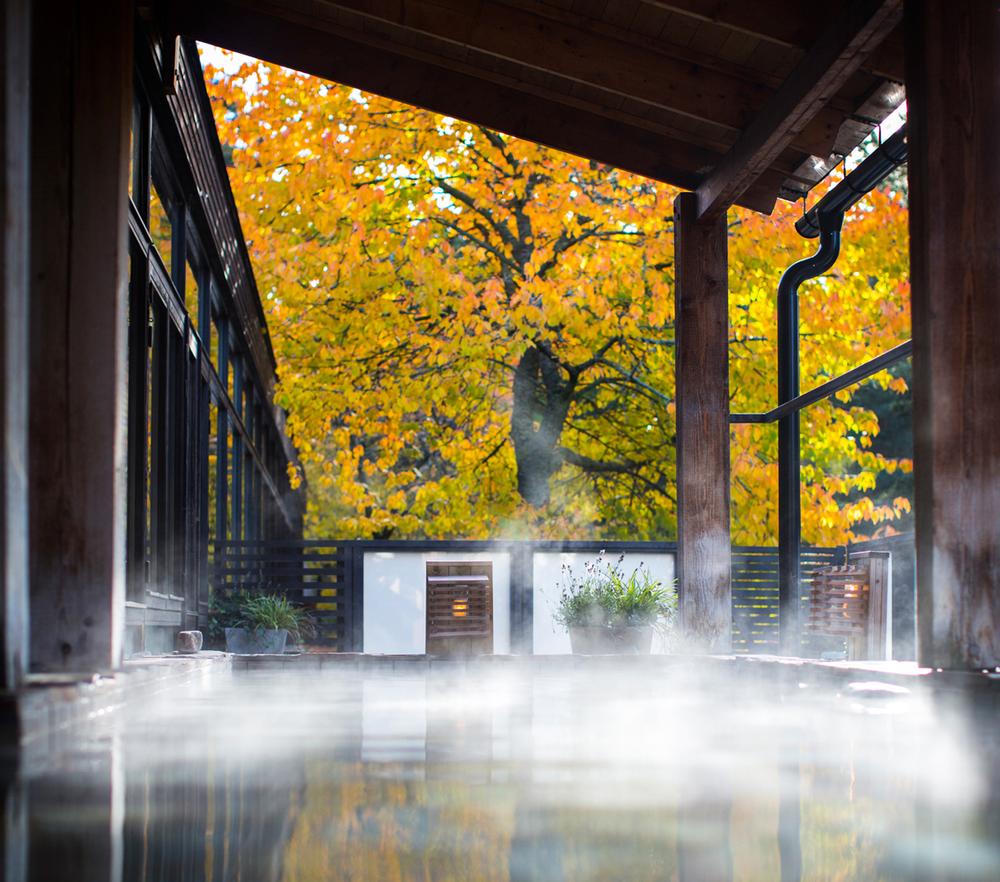
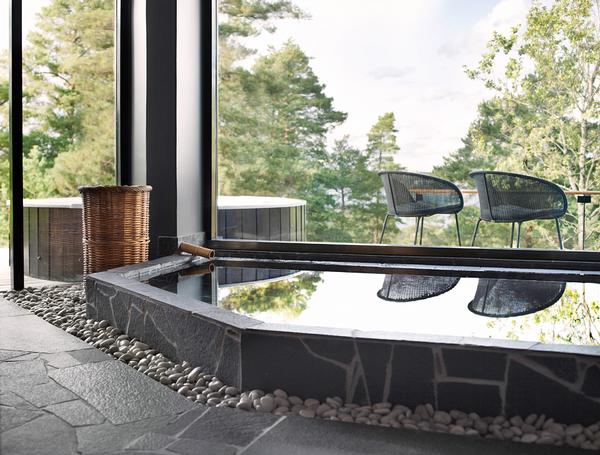
After washing, the baths await. You enter a warm, high-ceiling courtyard dotted with small bathhouses that surround pools to give a village feel. Each bathhouse is different but the overall simple design showcases stone, wood and water and accentuates the play on light and sound.
There are many options for quiet relaxation, from lounging on heated ganban yoku slabs to soaking in a tub on a moss-covered outdoor terrace with the undisturbed sounds of water, bird song and wind rustling through the pine and birch trees. Inside, the atmosphere could have been improved with more eastern style music rather than the generic, melancholy spa background tracks.
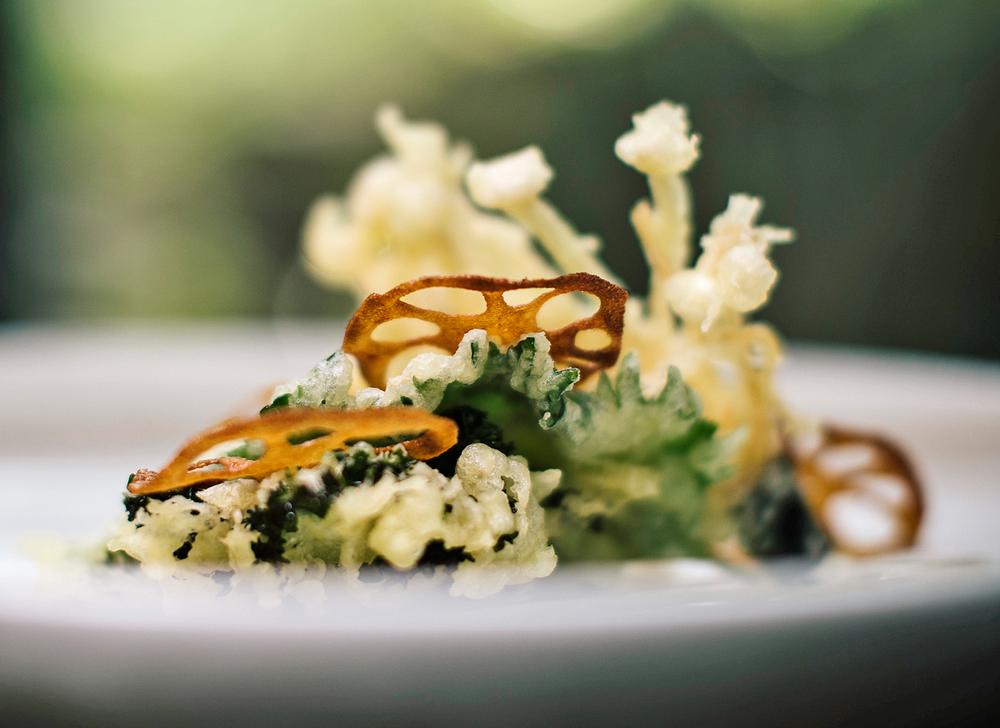
Similarly, some dining options are more reflective of Japan while others aren’t. The snack bar by the entrance to the baths serves only Japanese food, handmade for us (although service was slow) and we abandoned the classic Swedish menu at dinner to sample a high-quality five-course Japanese meal including sake tasting. Yet a European continental buffet breakfast, with few Japanese dishes, was less authentic.
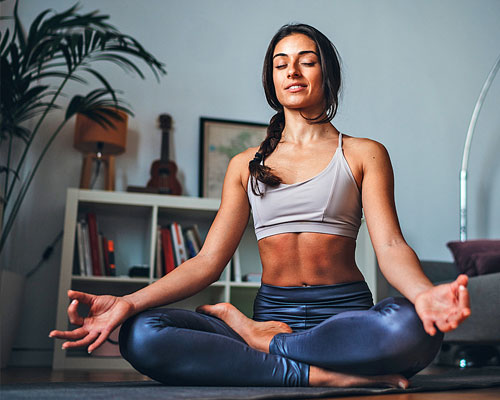
The daily activities seemed popular. They’ve been moved to large meetings rooms, which are plentiful at this former conference centre, and numbers are restricted to 20 guests. I counted nine people coming out of yoga and there were 18 of us taking the zen meditation class. The session was set at a basic level that felt right given the mix of guests ranging from curious to experienced.
Unfortunately, the treatment for my wife and myself was not a highlight. Both therapists were very good and had excellent draping skills but lacked the subtle touch of hospitality found in a luxury spa. The classic massage was therapeutic with no frills. The haru was personalised but was also quite methodical. In summary, the experiences were detached from the subtle, refined Japanese feel in the rest of the hotel.
Lasting impression Overall, the hotel shows some signs of ageing compared to the renovated baths. But don’t let this spoil your visit because even though we all get a few wrinkles as we get older, we’re still nice to be with.
If you’re in Stockholm, take time to add this very accessible, value-for-money experience to your itinerary. The attention to Japanese design and customs aids relaxation and charm as you escape into another world.
As we changed out of our yukatas and back into to our normal clothes in preparation for check out, and got ready to face the outside world once more, we realised that our 30 hours at Yasuragi had instilled a sense of happiness and calmness. My experience hit the perfect combination of the cherry blossom in full bloom, great weather and busy, but controlled, guest numbers.
Andrew Gibson is a global wellness and hospitality advisor
| [email protected]
Read more from this issue of Attractions Management magazine
View contents of Attractions Management 2021 issue 2
Spa people: Adrian Zecha
Adrian Zecha talks about his latest brands and why he's not planning retirement anytime soon
Spa people: Michala Chatel
Ultima Collection's managing partner explains why and how it's adding wellness options to exclusively rented villas and properties
Spa people: Stephanie Stahl
The Ace of Air co-founder tackles sustainability head on with a 'buy the product rent the packaging' scheme
Menu engineering: At your service
Art and sauna bathing collide in a Japanese exhibition; Banyan Tree rolls out its Wellbeing Sanctuary concept globally
Top team: Capella
Neena Dhillon talks to the owning company and senior executives from this burgeoning Asian hospitality brand with a passion for wellness
Ask an Expert: Treating Long COVID
One in 20 people who've had coronavirus are still battling its side effects for three months or more. How can spas help?
Promotion: Art of Cryo: Cool night's sleep
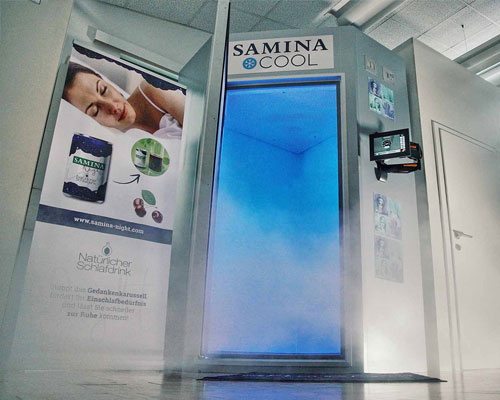
High-performance cryo chamber specialist Art of Cryo joins forces with leading bed manufacturer Samina to launch cryo centres for sleep health
Interview: Stelian Iacob
Therme Group's COO tells Katie Barnes how it's making the traditional thermal facility model more relevant to today's consumers
First person: Yasuragi
Spas in Sweden stayed open in the pandemic, but does the nation still have an appetite for wellness? Andrew Gibson investigates at this Japanese concept spa hotel near Stockholm
Interview: Tammy Pahel
The VP of spa at Carillon Miami candidly shares some of the challenges of the past year with Lisa Starr and explains why she's investing in touchless innovations
Spa survey: Wellness time
A new consumer survey shows how people's attitudes towards wellness and spas have changed. Mindbody's Katherine Wernet
Focus on: IV nutrition therapy
Is IV nutrition therapy as credible as some spas claim? Lisa Starr investigates this increasingly popular treatment
Spas in Sweden have been able to stay open during
the pandemic. But do people still want to visit them?
Andrew Gibson investigates at spa hotel Yasuragi
While the majority of countries shut down non-essential services over the past year to curb the spread of coronavirus, the Swedish government took a different approach. They issued guidelines and restrictions but continued to keep schools and businesses, including spas and hotels, open to avoid lockdown.
Yasuragi, a Japanese inspired spa hotel on the outskirts of Stockholm, remained operational throughout the pandemic while adhering to regulations. All employees wear face masks, but guests don’t have to, screens are placed at all service counters, sanitisers are everywhere and numbers are restricted to enable social distancing. Swedes have always respected personal space so adherence to physical distance is easily complied with, but signage helps reassure and remind everyone to observe protocols.
And it appears that COVID-19 has not curbed the nation’s appetite for wellness. Just like any ryokan, the bathing facilities are the primary attraction and on my mid-week stay the extensive hydrothermal facilities that are open to both hotel and day guests were busy. I counted at least 80 people in the baths (the capacity was 400 pre-COVID). Almost all were couples, with age groups ranging from people in their early 20s to seniors.
The offer Yasuragi was originally built as a conference centre for the Trade Union Confederation in the 1970s. The confederation commissioned Yoji Kasajima to design it after admiring his work at the Japanese embassy in Stockholm.
Perched on a majestic cliff top overlooking a sea channel and clad in dark timber, the building pays homage to Japanese style and is now a fitting home to a 191-room hotel and spa which falls under the Nordic Hotels & Resorts banner – a collection of 40 independent hotels and restaurants across Sweden, Norway, Denmark and Finland. Other properties in the portfolio include the Ice Hotel and Farris Bad.
The prime attraction at Yasuragi is the bathing area which was renovated and extended in 2017 and covers around 2,200sq m. Architects DAP Stockholm AB spearheaded the overhaul with EnviroProcess, a partner of Klafs, installing multiple thermal rooms by Klafs and supporting and supplying the treatment system for a wide range of pools.
Located off the entrance to the baths is one floor for skincare treatments and another for body therapies.
There’s a choice of four eateries, from a teppanyaki dining room to an informal snack bar by the baths. Perhaps restaurants have been the biggest victims of COVID restrictions as all were closed except one and Yasuragi has taken the opportunity to renovate the other two.
Packages and prices There’s a wide range of spa and accommodation options at Yasuragi with yield management strategies in place according to time of day, day of week, concessions for seniors and children and treatment and food add-ons. Loyalty cards are available too.
There are almost too many choices, making selection over the internet difficult, but it’s nice to have options.
A day spa package starts at SEK990 (US$120, €98, £84) and includes access to the baths, snacks, lunch or dinner and a choice of distinctively Japanese daily activities such as zen meditation, yoga and sound bowl sessions. The price goes up to SEK1,630 (US$197, €161, £139) when a 20-minute treatment is bundled in.
An overnight stay with breakfast, including all of the above except for a treatment, starts at SEK1,750 (US$211, €173, £149).
For those wanting just a treatment, a 50-minute classic massage is SEK1,275 (US$154, €127, £100) or additional activities such as origami, calligraphy and tea ceremonies carry a fee of SEK210 (US$25, €21, £20).
Upon arrival So... the key question is, would you want to stay in a 20-year-old converted conference centre that has a Japanese theme set in the Swedish countryside? In my opinion, yes. It’s a place to truly relax and to take a moment to reset your mind.
Perhaps your first thoughts are that a Japanese spa would be totally out of place in Sweden. But throughout my stay, I became aware of how many customs the countries share. Both have a deep respect for nature that extends from visual appreciation to full immersion. Both have a classic and strong design identity based on a minimalist feel, high quality finishes and natural materials... and both have a prominent culture of bathing (onsen and sauna).
As we stroll up a stone path lined with wooden pillars and cherry trees in full blossom the arrival is classically Japanese, but totally fitting for Sweden. Yasuragi exudes the lagom approach of Sweden where everything is just right, unassuming and certainly not extravagant and this provides the opportunity to slow down, appreciate your surroundings and have gratitude for the simple things in life.
My wife and I received a warm welcome and a quick, efficient check-in. Yasuragi is a pet-friendly hotel so we took our dog and enjoyed many of the woodland trails.
Our standard guestroom (issued to people with pets) was typically Japanese with futon-style beds and simple furnishings, but at 20sq m felt a little small. I would recommend the ryokan (top suite) – complete with two bedrooms, extensive stone bathing area and enormous outdoor terrace with whirlpool – for the full experience.
Communication was one of the weakest parts of my stay. Although spa protocols and facilities were explained, there were no details of my treatment at arrival or in my room. Returning to reception, I was presented with a handwritten note simply saying ‘5pm’ and the only confirmation I got was from speaking to a member of staff. Similarly spa activities were posted around the hotel, but not in the room.
The spa experience One of the enjoyable features at Yasuragi is that guests are dressed in the same patterned yukata (Japanese robe) and slippers. You’re given these well-designed, comfortable clothes and swimsuits to wear (the latter to keep) throughout your stay, even at dinner, and it’s relaxing to know everyone is the same.
As a side note, the robes are also cleverly designed with a pocket inside the sleeve for key cards and numbered hangers help you to locate them when in the spa.
The baths can be reached via a glazed passage with views over a simple Japanese rockery and you’re provided with a detailed written and verbal explanation of a naked cleansing ritual, as is the onsen tradition, which takes place in the changing rooms. The ritual takes place across 50 ablution areas that are cleverly designed around courtyards and terraces, to withstand the volume of business. During COVID spacing is controlled through signage and continual reminders of the maximum number of people permitted in any space.
After washing, the baths await. You enter a warm, high-ceiling courtyard dotted with small bathhouses that surround pools to give a village feel. Each bathhouse is different but the overall simple design showcases stone, wood and water and accentuates the play on light and sound.
There are many options for quiet relaxation, from lounging on heated ganban yoku slabs to soaking in a tub on a moss-covered outdoor terrace with the undisturbed sounds of water, bird song and wind rustling through the pine and birch trees. Inside, the atmosphere could have been improved with more eastern style music rather than the generic, melancholy spa background tracks.
Similarly, some dining options are more reflective of Japan while others aren’t. The snack bar by the entrance to the baths serves only Japanese food, handmade for us (although service was slow) and we abandoned the classic Swedish menu at dinner to sample a high-quality five-course Japanese meal including sake tasting. Yet a European continental buffet breakfast, with few Japanese dishes, was less authentic.
The daily activities seemed popular. They’ve been moved to large meetings rooms, which are plentiful at this former conference centre, and numbers are restricted to 20 guests. I counted nine people coming out of yoga and there were 18 of us taking the zen meditation class. The session was set at a basic level that felt right given the mix of guests ranging from curious to experienced.
Unfortunately, the treatment for my wife and myself was not a highlight. Both therapists were very good and had excellent draping skills but lacked the subtle touch of hospitality found in a luxury spa. The classic massage was therapeutic with no frills. The haru was personalised but was also quite methodical. In summary, the experiences were detached from the subtle, refined Japanese feel in the rest of the hotel.
Lasting impression Overall, the hotel shows some signs of ageing compared to the renovated baths. But don’t let this spoil your visit because even though we all get a few wrinkles as we get older, we’re still nice to be with.
If you’re in Stockholm, take time to add this very accessible, value-for-money experience to your itinerary. The attention to Japanese design and customs aids relaxation and charm as you escape into another world.
As we changed out of our yukatas and back into to our normal clothes in preparation for check out, and got ready to face the outside world once more, we realised that our 30 hours at Yasuragi had instilled a sense of happiness and calmness. My experience hit the perfect combination of the cherry blossom in full bloom, great weather and busy, but controlled, guest numbers.
Andrew Gibson is a global wellness and hospitality advisor
| [email protected]
Read more from this issue of Attractions Management magazine
View contents of Attractions Management 2021 issue 2
Spa people: Adrian Zecha
Adrian Zecha talks about his latest brands and why he's not planning retirement anytime soon
Spa people: Michala Chatel
Ultima Collection's managing partner explains why and how it's adding wellness options to exclusively rented villas and properties
Spa people: Stephanie Stahl
The Ace of Air co-founder tackles sustainability head on with a 'buy the product rent the packaging' scheme
Menu engineering: At your service
Art and sauna bathing collide in a Japanese exhibition; Banyan Tree rolls out its Wellbeing Sanctuary concept globally
Top team: Capella
Neena Dhillon talks to the owning company and senior executives from this burgeoning Asian hospitality brand with a passion for wellness
Ask an Expert: Treating Long COVID
One in 20 people who've had coronavirus are still battling its side effects for three months or more. How can spas help?
Promotion: Art of Cryo: Cool night's sleep
High-performance cryo chamber specialist Art of Cryo joins forces with leading bed manufacturer Samina to launch cryo centres for sleep health
Interview: Stelian Iacob
Therme Group's COO tells Katie Barnes how it's making the traditional thermal facility model more relevant to today's consumers
First person: Yasuragi
Spas in Sweden stayed open in the pandemic, but does the nation still have an appetite for wellness? Andrew Gibson investigates at this Japanese concept spa hotel near Stockholm
Interview: Tammy Pahel
The VP of spa at Carillon Miami candidly shares some of the challenges of the past year with Lisa Starr and explains why she's investing in touchless innovations
Spa survey: Wellness time
A new consumer survey shows how people's attitudes towards wellness and spas have changed. Mindbody's Katherine Wernet
Focus on: IV nutrition therapy
Is IV nutrition therapy as credible as some spas claim? Lisa Starr investigates this increasingly popular treatment
A US$50 million (£44.2 million, €51.2 million) transformation of Chicago's historic McCormick
Mansion has created a new destination that combines live magic, immersive theatre, dining and
private membership under one roof.
The Montana Historical Society has officially celebrated the opening of its new Montana
Heritage
Center, a US$107 million (£79 million, €92 million) destination that combines immersive
storytelling with cutting-edge audiovisual technology to bring the sta
San Antonio Zoo has reported a US$283 million economic impact for 2025, following a decade-
long transformation programme that has seen almost US$200 million invested into the Texas
attraction.
Plans for the AU$180 million redevelopment of Reef HQ Aquarium in Townsville, Australia, are
progressing, with the project set to transform the attraction into a global centre for reef
education and conservation.
Abu Dhabi-based investment firm Mubadala Capital has made a binding, fully financed
€1 billion
offer to acquire Pierre and Vacances SA, the European holiday resort operator behind the
continental European Center Parcs business.
Disney has reaffirmed its commitment to investing US$30 billion in its US parks and cruise
business by 2033, using new America250 celebrations to underline the role its attractions play
in supporting jobs, tourism and economic growth.
Expo 2030 Riyadh is being planned as a permanent visitor destination, with organisers
confirming the six-million-square-metre site will become a Global Village after the event closes.
The owner of one of Australia's best-known waterparks has acquired a major competitor,
creating a new attractions business spanning two of the country's largest visitor destinations.
The Toverland theme park in the Netherlands has announced a €98m expansion programme
that will add a resort, new attractions and staff facilities as it pursues plans to become a multi-
day destination.
Hotel de France, located on the British Isle of Jersey, has created a wellness retreat package
that includes a hot yoga session that will take place in Jersey Zoo’s butterfly sanctuary.
+ More news
COMPANY PROFILES
Polin Waterparks Polin was founded in Istanbul in 1976. Polin
has since grown into a leading company in
the waterpa [more...]