We must unite and support industry leaders to lobby for the emergency funding our sectors need to shield us from the worst impacts of the coronavirus pandemic
By Liz Terry | Published in Attractions Management 2020 issue 1
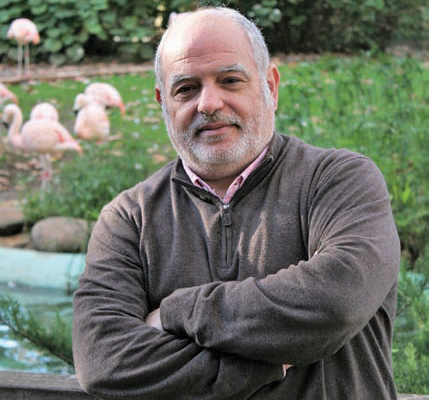
ALVA director, Bernard Donoghue, is fighting for support
As we slither down the pyramid of Maslow’s famous hierarchy of needs, from the peaks of self-actualisation and the joys of creativity, spontaneity and self-fulfillment, to a focus on survival – food, shelter, water – questions hover in the air around the shape the industry will be in once we come crawling out of the other side of the pandemic.
Attractions represent one of the pinnacles of human existence, celebrating as they do our history, knowledge and culture and offering time to reflect or celebrate, to learn or to enjoy carefree time with loved ones.
But we are on the front line in the pandemic, stripped of revenue streams by the shutdowns and with no other substantial sources of income to replace this vital funding.
With such heavy infrastructure costs, many attractions may not survive. If they close, we will not only lose beloved places, but also precious people with rare and valuable skills, as teams scatter.
A world with fewer attractions and culture would be a lesser place and so we must fight and work together to keep our industry afloat in whatever ways we can.
This means powerful leadership to lobby governments to give the financial support the industry needs and calls for them to make charitable giving more tax-efficient to attract funds from high net worth individuals.
In the UK, Bernard Donoghue, director of the Association of Leading Visitor Attractions, has been leading the charge in partnership with industry body, The Museums Association. They have identified a partial solution and are working to prise £120m from the government to rescue the sector from the worst of the damage.
This had been ringfenced for a Festival of Culture in 2022, but as Donoghue told the Guardian, if we don’t support the sector now, there will be no culture to celebrate.
In the US, the Alliance of American Museums is seeking US$4 billion in coronavirus relief from the government for emergency assistance up to June. The amount gives an indication of the scale of the challenge: AMM says museums in the US are losing US$33m a day, and that’s not counting the impact on the private sector.
We must preserve the heart of what we do in the best ways we can, so we’re in a position to rebuild when the time comes. This is the time for our trade associations to stand up for the sector. We must back them to the hilt.
Read more from this issue of Attractions Management magazine
View contents of Attractions Management 2020 issue 1
We must unite and support industry leaders to lobby for the emergency funding our sectors need to shield us from the worst impacts of the coronavirus pandemic
By Liz Terry | Published in Attractions Management 2020 issue 1
ALVA director, Bernard Donoghue, is fighting for support
As we slither down the pyramid of Maslow’s famous hierarchy of needs, from the peaks of self-actualisation and the joys of creativity, spontaneity and self-fulfillment, to a focus on survival – food, shelter, water – questions hover in the air around the shape the industry will be in once we come crawling out of the other side of the pandemic.
Attractions represent one of the pinnacles of human existence, celebrating as they do our history, knowledge and culture and offering time to reflect or celebrate, to learn or to enjoy carefree time with loved ones.
But we are on the front line in the pandemic, stripped of revenue streams by the shutdowns and with no other substantial sources of income to replace this vital funding.
With such heavy infrastructure costs, many attractions may not survive. If they close, we will not only lose beloved places, but also precious people with rare and valuable skills, as teams scatter.
A world with fewer attractions and culture would be a lesser place and so we must fight and work together to keep our industry afloat in whatever ways we can.
This means powerful leadership to lobby governments to give the financial support the industry needs and calls for them to make charitable giving more tax-efficient to attract funds from high net worth individuals.
In the UK, Bernard Donoghue, director of the Association of Leading Visitor Attractions, has been leading the charge in partnership with industry body, The Museums Association. They have identified a partial solution and are working to prise £120m from the government to rescue the sector from the worst of the damage.
This had been ringfenced for a Festival of Culture in 2022, but as Donoghue told the Guardian, if we don’t support the sector now, there will be no culture to celebrate.
In the US, the Alliance of American Museums is seeking US$4 billion in coronavirus relief from the government for emergency assistance up to June. The amount gives an indication of the scale of the challenge: AMM says museums in the US are losing US$33m a day, and that’s not counting the impact on the private sector.
We must preserve the heart of what we do in the best ways we can, so we’re in a position to rebuild when the time comes. This is the time for our trade associations to stand up for the sector. We must back them to the hilt.
Read more from this issue of Attractions Management magazine
View contents of Attractions Management 2020 issue 1
OMA has completed a major transformation of New York's New Museum, creating a larger
cultural campus that combines expanded exhibition spaces with learning, performance,
hospitality and public programming.
A US$50 million (£44.2 million, €51.2 million) transformation of Chicago's historic McCormick
Mansion has created a new destination that combines live magic, immersive theatre, dining and
private membership under one roof.
The Montana Historical Society has officially celebrated the opening of its new Montana
Heritage
Center, a US$107 million (£79 million, €92 million) destination that combines immersive
storytelling with cutting-edge audiovisual technology to bring the sta
San Antonio Zoo has reported a US$283 million economic impact for 2025, following a decade-
long transformation programme that has seen almost US$200 million invested into the Texas
attraction.
Plans for the AU$180 million redevelopment of Reef HQ Aquarium in Townsville, Australia, are
progressing, with the project set to transform the attraction into a global centre for reef
education and conservation.
Abu Dhabi-based investment firm Mubadala Capital has made a binding, fully financed
€1 billion
offer to acquire Pierre and Vacances SA, the European holiday resort operator behind the
continental European Center Parcs business.
Disney has reaffirmed its commitment to investing US$30 billion in its US parks and cruise
business by 2033, using new America250 celebrations to underline the role its attractions play
in supporting jobs, tourism and economic growth.
Expo 2030 Riyadh is being planned as a permanent visitor destination, with organisers
confirming the six-million-square-metre site will become a Global Village after the event closes.
The owner of one of Australia's best-known waterparks has acquired a major competitor,
creating a new attractions business spanning two of the country's largest visitor destinations.
The Toverland theme park in the Netherlands has announced a €98m expansion programme
that will add a resort, new attractions and staff facilities as it pursues plans to become a multi-
day destination.
+ More news
COMPANY PROFILES
instantprint We’re a Yorkshire-based online printer, founded
in 2009 by Adam Carnell and James Kinsella. [more...]
Taylor Made Designs Founded in 1993, Taylor Made
Designs supply corporate clothing
and brand-enhancing merchandise
to [more...]
DJW David & Lynn Willrich started the Company
over thirty years ago, from the Audio Visual
Department [more...]
Simworx Ltd The company was initially established
in 1997. Terry Monkton and Andrew
Roberts are the key stakeh [more...]