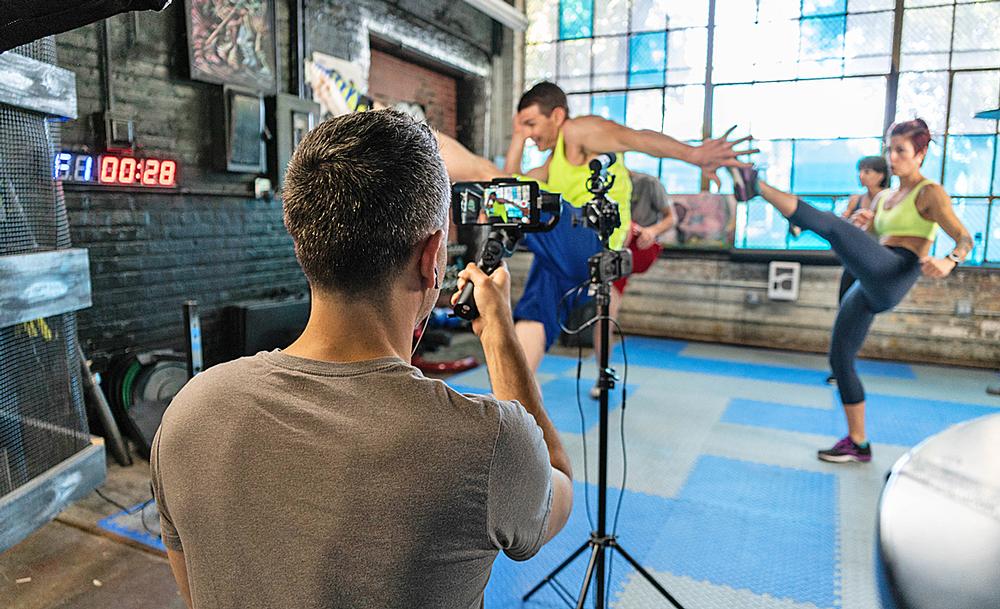
We’re in the middle of a change so vast we still can’t see the shape of it. The only definites are that achieving good health will become a new and urgent priority and technology will be a major driver of this, as the fitness industry embraces digital
Fit tech has become a tool of hope since the beginning of the coronavirus lockdown, offering health and fitness operators and professionals a fighting chance to save their businesses.
The adrenaline and urgency of the moment have driven the industry to fast track change. We estimate the COVID-19 emergency has accelerated the adoption of technology in the fitness industry by at least a decade in the space of just a few weeks.
Experts calculate that more than half the world’s gyms have been closed at some point during the pandemic, locking out hundreds of millions of members.
The impact of this displacement on the sector has been nothing less than revolutionary, with people in lockdown pining for their exercise fix and health and fitness operators and exercise professionals turning to technology to connect.
Live streaming and on-demand content have exploded to the point where every major gym operator now has a digital offering – many of them developed and launched within a matter of days, showing the huge resourcefulness and energy of the sector.
Deals have been done between competitors, collaborations have yielded new products and an array of new tech set-ups are being used to stay in touch with customers, monetise services, deliver remote and streaming workouts and keep companies and people in business.
The world has changed. The new future will be based on tech in a way that wouldn’t have seemed possible even a few weeks ago.
Now operators and fitpros have tasted the power of tech, there’s no going back. We expect the pivot to digital to continue, for tech to be refined and to bed down to be part of the infrastructure of the industry in a symbiotic relationship with gyms.
The pandemic has drawn the attention of everyone – including governments and corporations – to the fundamental importance of good health, as it emerges this is a major determinant when it comes to COVID-19 survival rates and outcomes.
When the storm has passed and we’re able to reflect on what has happened, it will become clear that being fit must be given far higher priority on a lifelong basis and we expect fitness technology to be one of the major drivers of this revolution to come.
An opportunity to reimagine one of the UK’s most recognisable towers has been formally
opened by Rivington Hark, as St Johns Beacon invites operators and partners to shape its
next phase. [more...]
We’re in the middle of a change so vast we still can’t see the shape of it. The only definites are that achieving good health will become a new and urgent priority and technology will be a major driver of this, as the fitness industry embraces digital
Fit tech has become a tool of hope since the beginning of the coronavirus lockdown, offering health and fitness operators and professionals a fighting chance to save their businesses.
The adrenaline and urgency of the moment have driven the industry to fast track change. We estimate the COVID-19 emergency has accelerated the adoption of technology in the fitness industry by at least a decade in the space of just a few weeks.
Experts calculate that more than half the world’s gyms have been closed at some point during the pandemic, locking out hundreds of millions of members.
The impact of this displacement on the sector has been nothing less than revolutionary, with people in lockdown pining for their exercise fix and health and fitness operators and exercise professionals turning to technology to connect.
Live streaming and on-demand content have exploded to the point where every major gym operator now has a digital offering – many of them developed and launched within a matter of days, showing the huge resourcefulness and energy of the sector.
Deals have been done between competitors, collaborations have yielded new products and an array of new tech set-ups are being used to stay in touch with customers, monetise services, deliver remote and streaming workouts and keep companies and people in business.
The world has changed. The new future will be based on tech in a way that wouldn’t have seemed possible even a few weeks ago.
Now operators and fitpros have tasted the power of tech, there’s no going back. We expect the pivot to digital to continue, for tech to be refined and to bed down to be part of the infrastructure of the industry in a symbiotic relationship with gyms.
The pandemic has drawn the attention of everyone – including governments and corporations – to the fundamental importance of good health, as it emerges this is a major determinant when it comes to COVID-19 survival rates and outcomes.
When the storm has passed and we’re able to reflect on what has happened, it will become clear that being fit must be given far higher priority on a lifelong basis and we expect fitness technology to be one of the major drivers of this revolution to come.
A new immersive attraction designed to transport visitors into the final hours of ancient Pompeii
is preparing to open near the world-famous archaeological site in southern Italy.
Experience design company, BRC Imagination Arts, has completed a transition that sees founder
Bob Rogers pass ownership of the business to four long-serving senior executives, while
remaining actively involved with the company.
Movie Park Germany has opened a new Paramount Pictures-themed attraction as part of its 30th
anniversary celebrations, using immersive storytelling and adaptive reuse to reinforce the park’s
longstanding “Hollywood in Germany” positioning.
Therme Manchester’s 28-acre development, which will include interconnected glass pavilions
that measure 65,000sq m, will be the largest bathing and wellbeing attraction in the world once
complete, according to prof David Russell, CEO of Therme UK.
Efteling has opened Hooghmoed, a new family drop tower designed to broaden the appeal of its
recently launched Sirene Island themed area and introduce younger visitors to thrill attractions.
A proposed Puy du Fou development near Bicester and Universal Destinations and Experiences’
planned resort in Bedford are emerging as part of a wider transformation of the Oxford–
Cambridge Growth Corridor into a major centre for UK leisure and tourism inv
Shedd Aquarium has opened the Immersion Theater developed in partnership with SimEx-
Iwerks, as part of a wider strategy to enhance the guest experience and create additional
revenue opportunities.
The UK government has announced a temporary reduction in VAT on visitor attractions and
children’s meals as part of a summer cost-of-living support package designed to stimulate the
visitor economy and encourage family days out.
As designer Yinka Ilori prepares for his first solo gallery show in London, he speaks exclusively
to CLADmag about his mission to spread joy, the power of play, and his bold approach to using
colour (including the colours you won’t see in his work).
The government of Thailand is exploring plans for a THB300bn (£6.3bn, US$8.3bn)
entertainment complex in the country’s Eastern Economic Corridor (EEC), with officials
proposing a large-scale theme park and sports destination as part of a broader tourism and
economic development strategy.
An opportunity to reimagine one of the UK’s most recognisable towers has been formally
opened by Rivington Hark, as St Johns Beacon invites operators and partners to shape its
next phase. [more...]