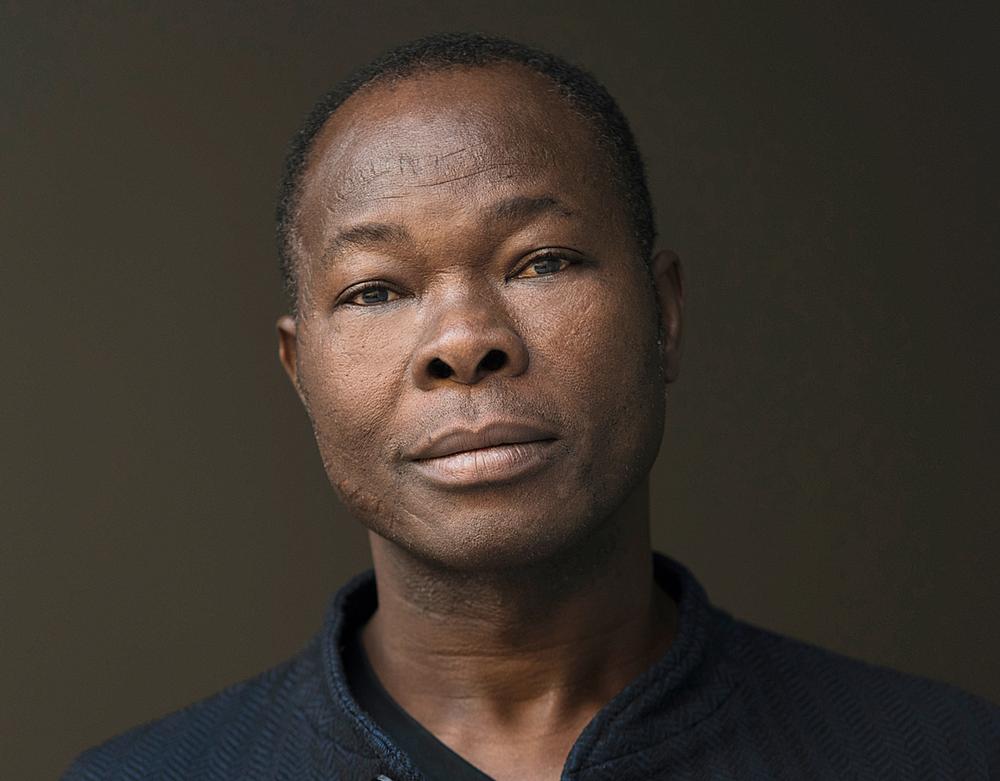
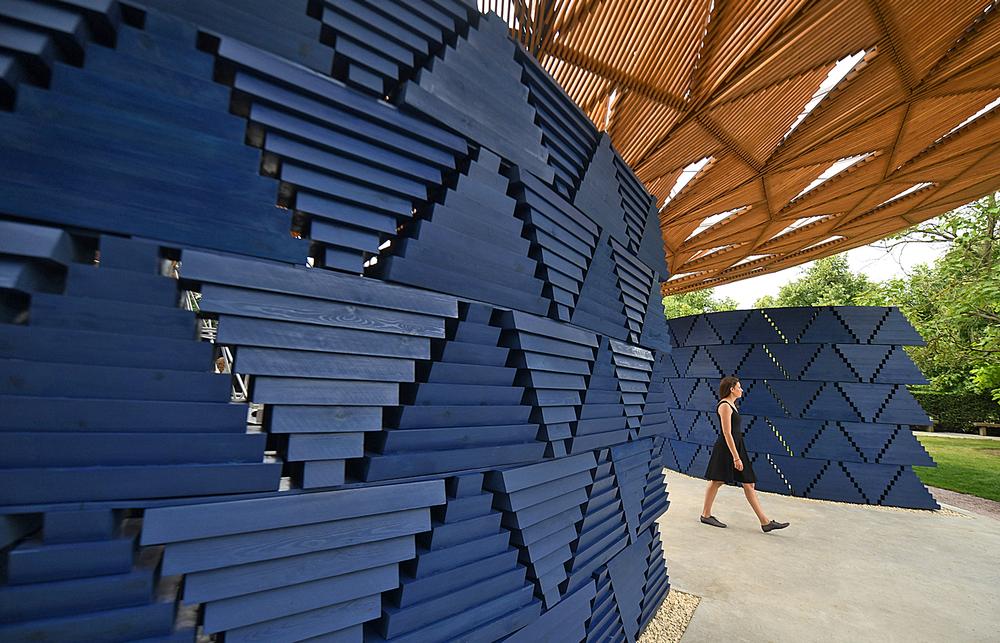
Kéré told CLAD that the value of great public spaces ‘cannot be measured by money’ / Image: Jan Ouwerkerk.
This year’s Serpentine Pavilion, designed by Diébédo Francis Kéré, has been unveiled in London’s Hyde Park.
Speaking to CLAD, the architect said the high-profile commission had given him an “exciting opportunity to explore new ideas, new ways of shaping space, new materials and new ways of using materials.”
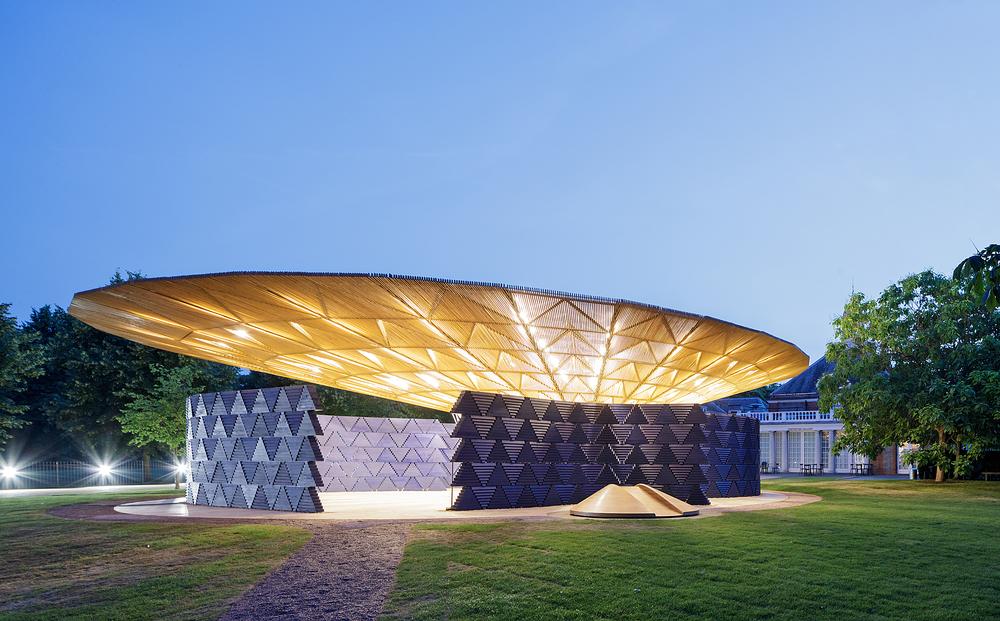
His pavilion, designed “to bring a sense of light and life” to the park, was inspired by the tree that serves as a central meeting point for life in his hometown of Gando, Burkina Faso.
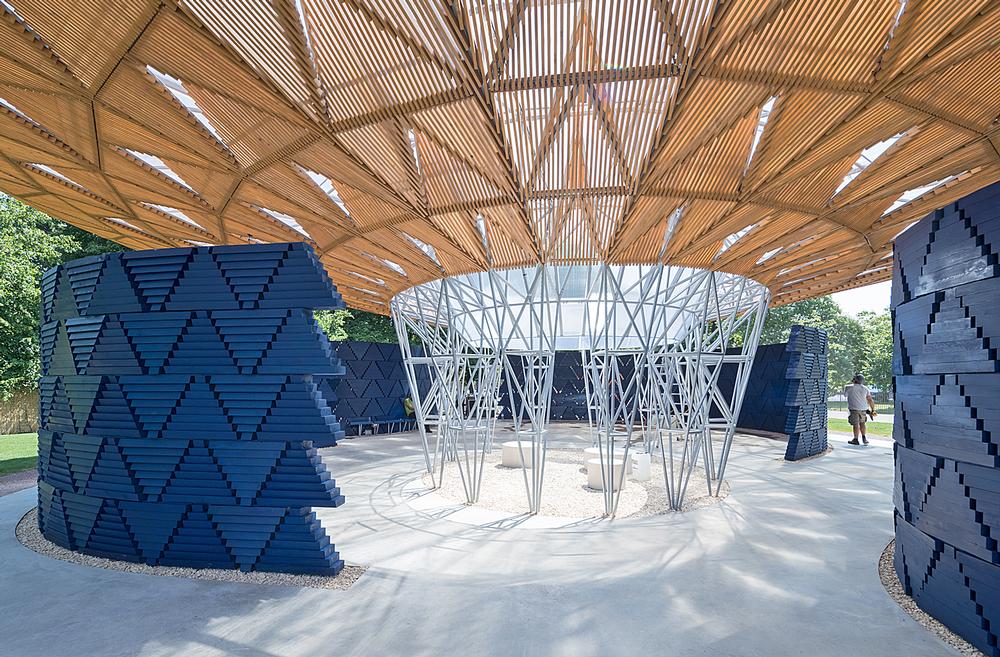
To mimic the tree’s canopy, Kéré visualised an expansive timber roof supported by a central latticed steel framework, which allows air to circulate freely while offering shelter against London rain and summer heat.
An oculus funnels rainwater collected on the roof to create a waterfall effect into an open courtyard below, which is set above a hidden underground storage tank.
There are four separate entry points into the pavilion, and the structure’s bright indigo walls – formed of inverted wooden triangles – are angled so as to let daylight flood in.
“From the very start, it was always my idea to focus on the figure of the tree in the landscape, and design something around community gathering,” Kéré said. “We really pushed that concept as much as we could.”
The architect, who leads the Berlin-based practice Kéré Architecture, was chosen in part for his commitment to socially engaged and ecological design, and this is reflected in the programme of events taking place in the pavilion, including seminars exploring questions of community and rights to the city.
“Well designed public spaces, where we can all meet and come together, are the foundation of a healthy society,” he said. “The value [such spaces] give to a community cannot be measured by money, which is why it’s very important to think how we can create more.
“It’s amazing to see the diversity of people living here in London. It’s amazing if you can have structures that bring them all together.”
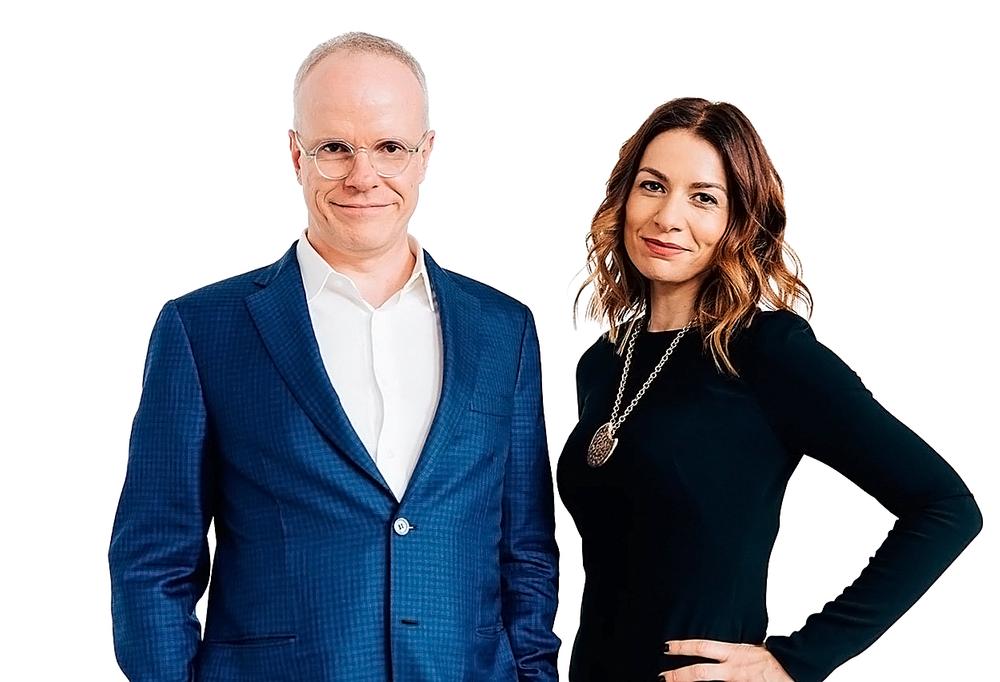
In a joint statement, Serpentine artistic director Hans Ulrich Obrist and CEO Yana Peel described the pavilion as “a space of conversation, collaboration and exchange.”
Technical consultant David Glover, fabrication firm Stage One and engineers AECOM collaborated with the Kéré team on the project, which remains open until 8 October 2017.
The Serpentine Pavilion programme, which began in 2000 with a structure created by the late Zaha Hadid, sees an architect who has never built in the UK create a temporary summer structure in the park’s Kensington Gardens. Herzog & de Meuron, Jean Nouvel, Sou Fujimoto, SANAA and Bjarke Ingels Group are among the international architects to have previously taken part.
Kéré told CLAD that the value of great public spaces ‘cannot be measured by money’ / Image: Iwan Baan
Kéré’s design is inspired by a tree in his hometown of Gando, Burkina Faso / Image: Iwan Baan
Kéré’s design is inspired by a tree in his hometown of Gando, Burkina Faso / Image: Victoria Jones/PA Images
We share Kéré’s belief that architecture, at its best, can enhance our collective creativity and push people to take the future into their own hands - Serpentine artistic director Hans Ulrich Obrist and CEO Yana Peel / Image: Kate Berry
COMPANY PROFILES
TechnoAlpin Indoor
TechnoAlpin is the world leader for snowmaking systems. With the Indoor snow division, TechnoAlpin c [more...]
Kéré told CLAD that the value of great public spaces ‘cannot be measured by money’ / Image: Jan Ouwerkerk.
This year’s Serpentine Pavilion, designed by Diébédo Francis Kéré, has been unveiled in London’s Hyde Park.
Speaking to CLAD, the architect said the high-profile commission had given him an “exciting opportunity to explore new ideas, new ways of shaping space, new materials and new ways of using materials.”
His pavilion, designed “to bring a sense of light and life” to the park, was inspired by the tree that serves as a central meeting point for life in his hometown of Gando, Burkina Faso.
To mimic the tree’s canopy, Kéré visualised an expansive timber roof supported by a central latticed steel framework, which allows air to circulate freely while offering shelter against London rain and summer heat.
An oculus funnels rainwater collected on the roof to create a waterfall effect into an open courtyard below, which is set above a hidden underground storage tank.
There are four separate entry points into the pavilion, and the structure’s bright indigo walls – formed of inverted wooden triangles – are angled so as to let daylight flood in.
“From the very start, it was always my idea to focus on the figure of the tree in the landscape, and design something around community gathering,” Kéré said. “We really pushed that concept as much as we could.”
The architect, who leads the Berlin-based practice Kéré Architecture, was chosen in part for his commitment to socially engaged and ecological design, and this is reflected in the programme of events taking place in the pavilion, including seminars exploring questions of community and rights to the city.
“Well designed public spaces, where we can all meet and come together, are the foundation of a healthy society,” he said. “The value [such spaces] give to a community cannot be measured by money, which is why it’s very important to think how we can create more.
“It’s amazing to see the diversity of people living here in London. It’s amazing if you can have structures that bring them all together.”
In a joint statement, Serpentine artistic director Hans Ulrich Obrist and CEO Yana Peel described the pavilion as “a space of conversation, collaboration and exchange.”
Technical consultant David Glover, fabrication firm Stage One and engineers AECOM collaborated with the Kéré team on the project, which remains open until 8 October 2017.
The Serpentine Pavilion programme, which began in 2000 with a structure created by the late Zaha Hadid, sees an architect who has never built in the UK create a temporary summer structure in the park’s Kensington Gardens. Herzog & de Meuron, Jean Nouvel, Sou Fujimoto, SANAA and Bjarke Ingels Group are among the international architects to have previously taken part.
Kéré told CLAD that the value of great public spaces ‘cannot be measured by money’ / Image: Iwan Baan
Kéré’s design is inspired by a tree in his hometown of Gando, Burkina Faso / Image: Iwan Baan
Kéré’s design is inspired by a tree in his hometown of Gando, Burkina Faso / Image: Victoria Jones/PA Images
We share Kéré’s belief that architecture, at its best, can enhance our collective creativity and push people to take the future into their own hands - Serpentine artistic director Hans Ulrich Obrist and CEO Yana Peel / Image: Kate Berry
Abu Dhabi-based investment firm Mubadala Capital has made a binding, fully financed
€1 billion
offer to acquire Pierre and Vacances SA, the European holiday resort operator behind the
continental European Center Parcs business.
Expo 2030 Riyadh is being planned as a permanent visitor destination, with organisers
confirming the six-million-square-metre site will become a Global Village after the event closes.
The owner of one of Australia's best-known waterparks has acquired a major competitor,
creating a new attractions business spanning two of the country's largest visitor destinations.
The Toverland theme park in the Netherlands has announced a €98m expansion programme
that will add a resort, new attractions and staff facilities as it pursues plans to become a multi-
day destination.
Hotel de France, located on the British Isle of Jersey, has created a wellness retreat package
that includes a hot yoga session that will take place in Jersey Zoo’s butterfly sanctuary.
A new immersive attraction designed to transport visitors into the final hours of ancient Pompeii
is preparing to open near the world-famous archaeological site in southern Italy.
Experience design company, BRC Imagination Arts, has completed a transition that sees founder
Bob Rogers pass ownership of the business to four long-serving senior executives, while
remaining actively involved with the company.
Movie Park Germany has opened a new Paramount Pictures-themed attraction as part of its 30th
anniversary celebrations, using immersive storytelling and adaptive reuse to reinforce the park’s
longstanding “Hollywood in Germany” positioning.
Therme Manchester’s 28-acre development, which will include interconnected glass pavilions
that measure 65,000sq m, will be the largest bathing and wellbeing attraction in the world once
complete, according to prof David Russell, CEO of Therme UK.
Efteling has opened Hooghmoed, a new family drop tower designed to broaden the appeal of its
recently launched Sirene Island themed area and introduce younger visitors to thrill attractions.
+ More news
COMPANY PROFILES
TechnoAlpin Indoor TechnoAlpin is the world leader for snowmaking systems. With the Indoor snow division, TechnoAlpin c [more...]