It’s time gyms and health clubs are
recognised as a cornerstone of our global
recovery from COVID-19 and given the
necessary backing, says Phillip Mills
Gym members are 14 times more active than non-members
A recent IHRSA briefing highlighted the benefits of exercise, offering scientific evidence that shows health clubs pose no higher risk of COVID-19 transmission than other public places, when operating under appropriate guidelines.
It noted that “there has not been any evidence of COVID-19 spreading in any US club to date.”
So now we are starting to gather the evidence to show gyms are safe, how can we hammer home the solutions they bring when it comes to bouncing back from COVID-19?
Proving value A study by consultants, McKinsey, found the economic impact of better health among the world’s population could add US$12 trillion to global GDP by 2040 – an 8 per cent boost.
Investing in this area now could help kickstart our global economic recovery from the devastating effects of the COVID-19 pandemic.
On the health front, a new academic paper by scientist David C Nieman, suggests regular physical activity should be undertaken to reduce our risk of contracting COVID-19. Nieman believes it’s as important as physical distancing, hand washing and the wearing of face coverings. He found aerobic exercise increases immunological fitness by increasing blood flow and mobilising white blood cells.
Regular exercise also guards against obesity, and as Nieman makes clear, “reduces risk for hypertension, type 2 diabetes, and cardiovascular disease – three of the most important underlying conditions for COVID-19”.
Meanwhile, research led by Professor Zhen Yan at the University of Virginia found that regular exercise may reduce the risk of complications in people with COVID-19.
Studying an antioxidant called extracellular superoxide dismutase (EcSOD) that’s released in the body during exercise, Yan’s work “strongly supports” the possibility that higher levels of EcSOD in the body can prevent or at least reduce the severity of acute respiratory distress syndrome (ARDS) – one of the worst outcomes of COVID-19.
Yan urges people to protect themselves by starting to exercise more to boost EcSOD levels.
Demonstrating value Clearly exercise is vital to our planet’s comeback from COVID-19 on a number of important levels, so how do we demonstrate the value of those who provide it?
Lockdown increased the range of options for people to stay active at home, leading some in the media to question whether we still need gyms to service our fitness needs. After all, no one owns the patent to the press up and and there’s no finer treadmill than the great outdoors – but if this is the case, why are gym members on average found to be 14 times more active than non-members?
One reason is that our facilities don’t just serve up fitness, they also give members motivation. We know this remains a key ingredient in regular exercise adherence and is one of the key reasons our industry exists.
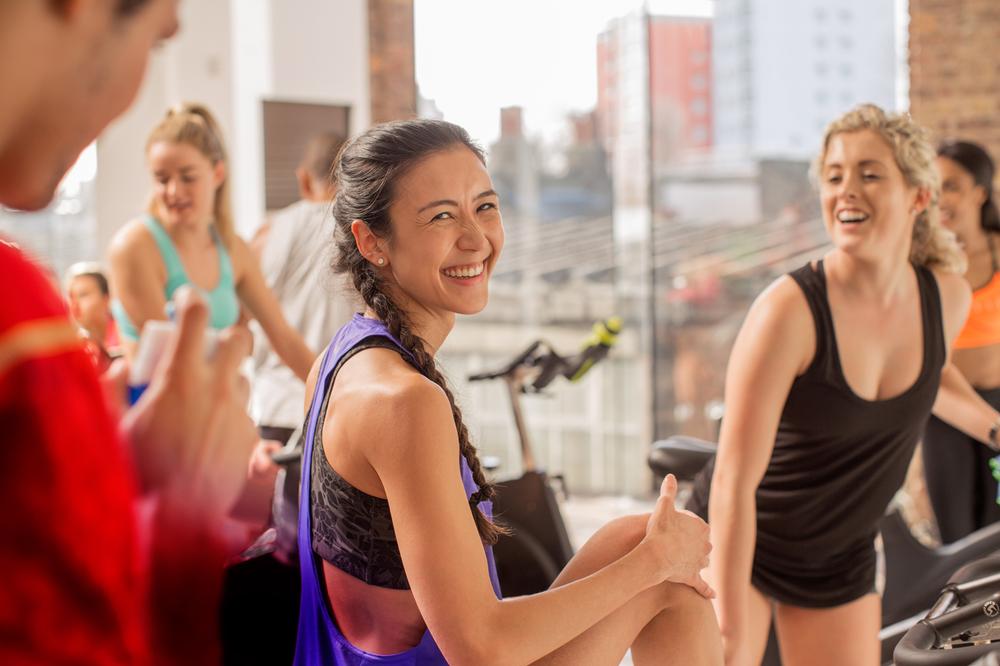
Among the most powerful motivators are the accountability and sense of connection we get from working out with others. Nowhere is this more evident than in a live group workout. Anyone who’s felt the electricity of a great class will attest that it’s one of the most powerful and motivational workout experiences you can get.
Peer support Plenty of research shows this sense of connection and accountability pays dividends. Research indicates that members who work out in groups are far more likely to stick to exercise than those who go it alone. Science shows that we get more enjoyment and satisfaction when we work out in a group. And there’s evidence that when we’re surrounded by the healthy actions of others, it rubs off on us too.
A study published in Obesity Journal indicated that when overweight people spent time with their fit friends they lost more weight, and the more time they spent with these friends, the more weight they lost.
This finding is backed up by another study from the University of Pittsburgh School of Medicine, showing that 95 per cent of those who follow a weight loss program with a friend complete it, but just 76 per cent make it to the end if they go it alone.
There’s also evidence of the Kohler Effect, where we push ourselves harder when working out alongside others. One study compared people planking on their own and with a partner (who had superior ability).
When planking with a more capable partner, people were clearly more motivated, increasing their plank duration by 24 per cent.
A study by Kansas State University found that working out alongside other capable exercisers can increase your workout time and intensity by 200 per cent.
Embracing active habits Motivation is a key component of an enduring exercise habit and that’s why it’s so important for society to get back to health clubs globally – and all the things that make them inspiring – as soon as is safely possible.
As the UK government’s Chief Medical Adviser, Chris Whitty, said at a coronavirus briefing on 15 April, “There is no situation, there is no age and no condition where exercise is not a good thing... exercise is one of the best things you can possibly do.”
Whitty said being physically active is “very important to long-term health” and crucial for keeping people fighting fit during the ongoing pandemic.
The alternative would have catastrophic consequences for our physical and mental health, not to mention that of the economy and environment: in the US alone, chronic diseases that can be prevented by regular exercise are projected to cost US$42 trillion between 2016 and 2030.
We know exercise in pill-form would be hailed as a wonder drug. A huge 2013 comparison study of exercise and drug interventions published in the British Medical Journal found that being fit was as good if not better at combatting a number of chronic illnesses.
It truly is the best medicine, with the power to improve everything from general wellbeing and musculoskeletal disease to cardiovascular problems, cancers, diabetes, multiple sclerosis and mental health challenges, such as anxiety and depression.
As the world adjusts in the wake of this major health pandemic, with lessons learned and safer processes in place, it’s time for governments to recognise the vital role of gyms in society and take meaningful action to support them. Our COVID-19 recovery depends on it.
Philip Mills, executive director of Les Mills, says it’s time to recognise the power of gyms – economically and in terms of health
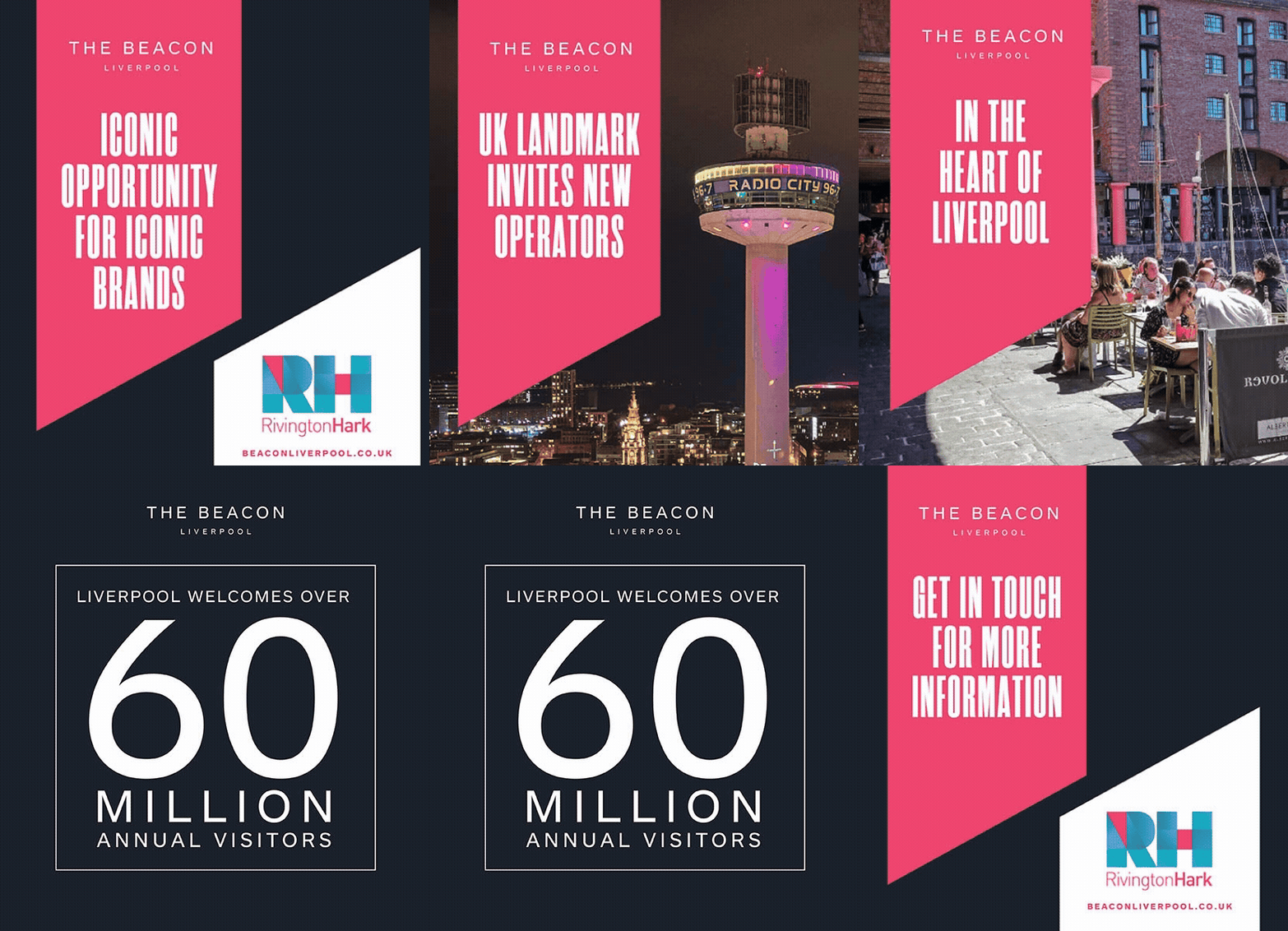
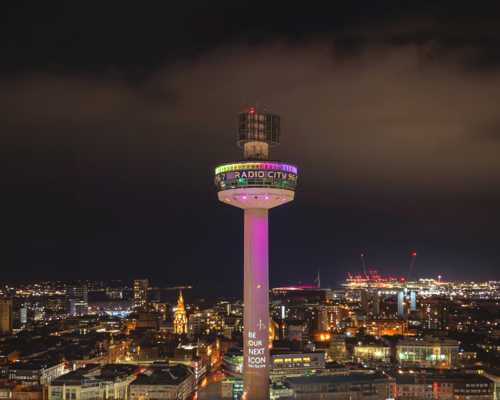
An opportunity to reimagine one of the UK’s most recognisable towers has been formally
opened by Rivington Hark, as St Johns Beacon invites operators and partners to shape its
next phase. [more...]
It’s time gyms and health clubs are
recognised as a cornerstone of our global
recovery from COVID-19 and given the
necessary backing, says Phillip Mills
Gym members are 14 times more active than non-members
A recent IHRSA briefing highlighted the benefits of exercise, offering scientific evidence that shows health clubs pose no higher risk of COVID-19 transmission than other public places, when operating under appropriate guidelines.
It noted that “there has not been any evidence of COVID-19 spreading in any US club to date.”
So now we are starting to gather the evidence to show gyms are safe, how can we hammer home the solutions they bring when it comes to bouncing back from COVID-19?
Proving value A study by consultants, McKinsey, found the economic impact of better health among the world’s population could add US$12 trillion to global GDP by 2040 – an 8 per cent boost.
Investing in this area now could help kickstart our global economic recovery from the devastating effects of the COVID-19 pandemic.
On the health front, a new academic paper by scientist David C Nieman, suggests regular physical activity should be undertaken to reduce our risk of contracting COVID-19. Nieman believes it’s as important as physical distancing, hand washing and the wearing of face coverings. He found aerobic exercise increases immunological fitness by increasing blood flow and mobilising white blood cells.
Regular exercise also guards against obesity, and as Nieman makes clear, “reduces risk for hypertension, type 2 diabetes, and cardiovascular disease – three of the most important underlying conditions for COVID-19”.
Meanwhile, research led by Professor Zhen Yan at the University of Virginia found that regular exercise may reduce the risk of complications in people with COVID-19.
Studying an antioxidant called extracellular superoxide dismutase (EcSOD) that’s released in the body during exercise, Yan’s work “strongly supports” the possibility that higher levels of EcSOD in the body can prevent or at least reduce the severity of acute respiratory distress syndrome (ARDS) – one of the worst outcomes of COVID-19.
Yan urges people to protect themselves by starting to exercise more to boost EcSOD levels.
Demonstrating value Clearly exercise is vital to our planet’s comeback from COVID-19 on a number of important levels, so how do we demonstrate the value of those who provide it?
Lockdown increased the range of options for people to stay active at home, leading some in the media to question whether we still need gyms to service our fitness needs. After all, no one owns the patent to the press up and and there’s no finer treadmill than the great outdoors – but if this is the case, why are gym members on average found to be 14 times more active than non-members?
One reason is that our facilities don’t just serve up fitness, they also give members motivation. We know this remains a key ingredient in regular exercise adherence and is one of the key reasons our industry exists.
Among the most powerful motivators are the accountability and sense of connection we get from working out with others. Nowhere is this more evident than in a live group workout. Anyone who’s felt the electricity of a great class will attest that it’s one of the most powerful and motivational workout experiences you can get.
Peer support Plenty of research shows this sense of connection and accountability pays dividends. Research indicates that members who work out in groups are far more likely to stick to exercise than those who go it alone. Science shows that we get more enjoyment and satisfaction when we work out in a group. And there’s evidence that when we’re surrounded by the healthy actions of others, it rubs off on us too.
A study published in Obesity Journal indicated that when overweight people spent time with their fit friends they lost more weight, and the more time they spent with these friends, the more weight they lost.
This finding is backed up by another study from the University of Pittsburgh School of Medicine, showing that 95 per cent of those who follow a weight loss program with a friend complete it, but just 76 per cent make it to the end if they go it alone.
There’s also evidence of the Kohler Effect, where we push ourselves harder when working out alongside others. One study compared people planking on their own and with a partner (who had superior ability).
When planking with a more capable partner, people were clearly more motivated, increasing their plank duration by 24 per cent.
A study by Kansas State University found that working out alongside other capable exercisers can increase your workout time and intensity by 200 per cent.
Embracing active habits Motivation is a key component of an enduring exercise habit and that’s why it’s so important for society to get back to health clubs globally – and all the things that make them inspiring – as soon as is safely possible.
As the UK government’s Chief Medical Adviser, Chris Whitty, said at a coronavirus briefing on 15 April, “There is no situation, there is no age and no condition where exercise is not a good thing... exercise is one of the best things you can possibly do.”
Whitty said being physically active is “very important to long-term health” and crucial for keeping people fighting fit during the ongoing pandemic.
The alternative would have catastrophic consequences for our physical and mental health, not to mention that of the economy and environment: in the US alone, chronic diseases that can be prevented by regular exercise are projected to cost US$42 trillion between 2016 and 2030.
We know exercise in pill-form would be hailed as a wonder drug. A huge 2013 comparison study of exercise and drug interventions published in the British Medical Journal found that being fit was as good if not better at combatting a number of chronic illnesses.
It truly is the best medicine, with the power to improve everything from general wellbeing and musculoskeletal disease to cardiovascular problems, cancers, diabetes, multiple sclerosis and mental health challenges, such as anxiety and depression.
As the world adjusts in the wake of this major health pandemic, with lessons learned and safer processes in place, it’s time for governments to recognise the vital role of gyms in society and take meaningful action to support them. Our COVID-19 recovery depends on it.
Philip Mills, executive director of Les Mills, says it’s time to recognise the power of gyms – economically and in terms of health
A new immersive attraction designed to transport visitors into the final hours of ancient Pompeii
is preparing to open near the world-famous archaeological site in southern Italy.
Experience design company, BRC Imagination Arts, has completed a transition that sees founder
Bob Rogers pass ownership of the business to four long-serving senior executives, while
remaining actively involved with the company.
Movie Park Germany has opened a new Paramount Pictures-themed attraction as part of its 30th
anniversary celebrations, using immersive storytelling and adaptive reuse to reinforce the park’s
longstanding “Hollywood in Germany” positioning.
Therme Manchester’s 28-acre development, which will include interconnected glass pavilions
that measure 65,000sq m, will be the largest bathing and wellbeing attraction in the world once
complete, according to prof David Russell, CEO of Therme UK.
Efteling has opened Hooghmoed, a new family drop tower designed to broaden the appeal of its
recently launched Sirene Island themed area and introduce younger visitors to thrill attractions.
A proposed Puy du Fou development near Bicester and Universal Destinations and Experiences’
planned resort in Bedford are emerging as part of a wider transformation of the Oxford–
Cambridge Growth Corridor into a major centre for UK leisure and tourism inv
Shedd Aquarium has opened the Immersion Theater developed in partnership with SimEx-
Iwerks, as part of a wider strategy to enhance the guest experience and create additional
revenue opportunities.
The UK government has announced a temporary reduction in VAT on visitor attractions and
children’s meals as part of a summer cost-of-living support package designed to stimulate the
visitor economy and encourage family days out.
As designer Yinka Ilori prepares for his first solo gallery show in London, he speaks exclusively
to CLADmag about his mission to spread joy, the power of play, and his bold approach to using
colour (including the colours you won’t see in his work).
The government of Thailand is exploring plans for a THB300bn (£6.3bn, US$8.3bn)
entertainment complex in the country’s Eastern Economic Corridor (EEC), with officials
proposing a large-scale theme park and sports destination as part of a broader tourism and
economic development strategy.
An opportunity to reimagine one of the UK’s most recognisable towers has been formally
opened by Rivington Hark, as St Johns Beacon invites operators and partners to shape its
next phase. [more...]