Latest
issue
GET ATTRACTIONS MANAGEMENT
magazine
Yes! Send me the FREE digital edition of Attractions Management and the FREE weekly Attractions Management ezines and breaking news alerts!
Not right now, thanksclose this window I've already subscribed. I've already subscribed.
Get Attractions Management digital magazine FREE
Sign up here ▸
Jobs   News   Features   Products   Company profilesProfiles   Magazine   Handbook   Advertise    Subscribe  
NEWS
Exclusive: New technologies driving digital culture says Google Cultural Institute's James Davis
POSTED 21 Apr 2016 . BY Tom Anstey
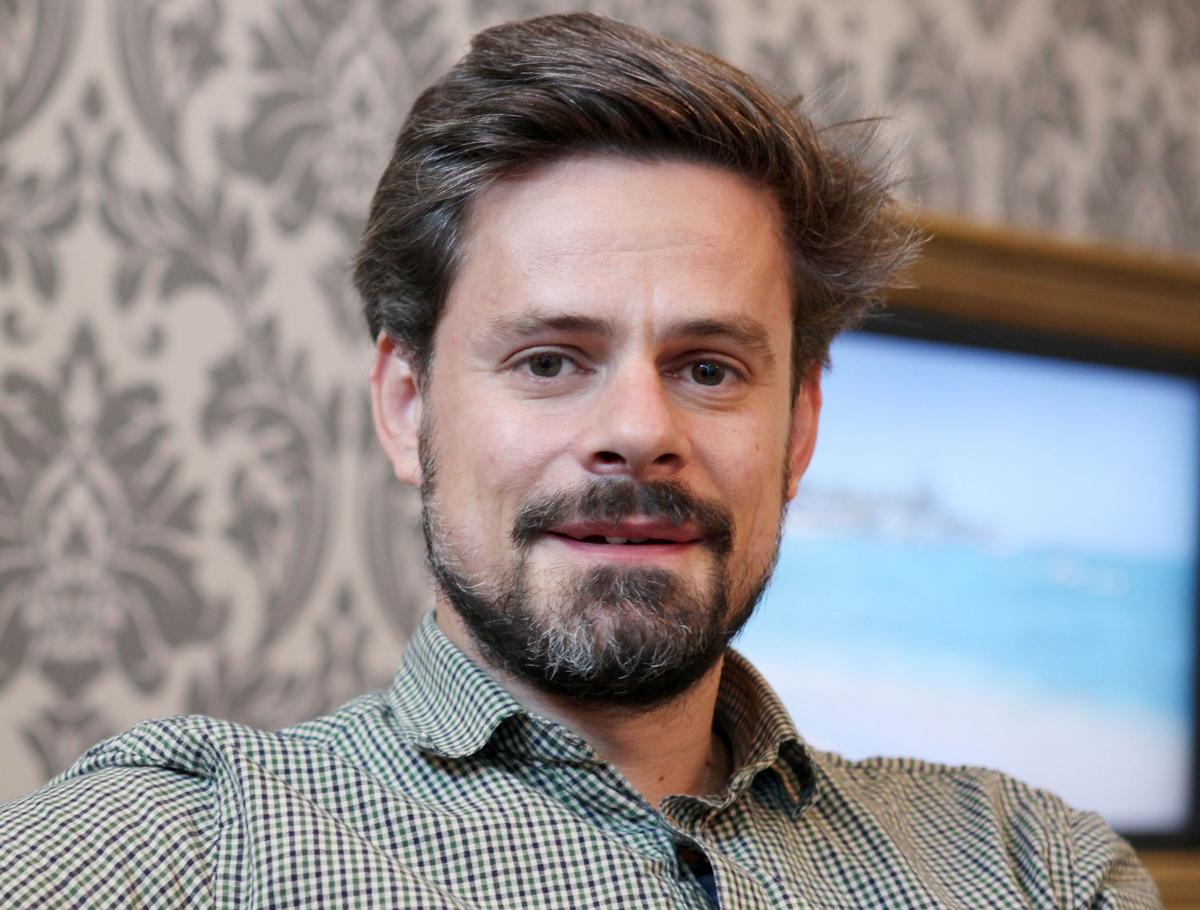
Davis joined the Google Cultural Institute in June 2011 after spending seven years working at Tate Online and Tate Britain
James Davis, program manager of the Google Cultural Institute, has revealed how Google’s technological advances will benefit the future of the arts and culture sectors, with digital opening up a new pathway for the consumer.

Davis, who joined Google in June 2011 after spending seven years at Tate Online and Tate Britain, told Attractions Management that what we are seeing now from Google is just the start and that as accessibility increases, so will interest in arts and culture.

“I think digital culture is heading to much bigger audiences,” said Davis. “One of the real compelling reasons to have digital cultural experiences is that if you’re interested in something the other side of the world, that might be an obstacle for you going to see it. However if it’s available directly from your pocket, then it’s extremely accessible to you.

“We are absolutely convinced that the global audience for culture will increase because of people having access to cultural organisations all around the world and as a result I think and hope that physical attendance will increase,” he continued. “It’s something we’ve begun to see anecdotally. If you get a larger audience interested in this topic – for example introducing people to a particular museum for the very first time – some of them are going to go to that museum when they weren’t beforehand because they hadn’t heard of it. That’s the direction that the Google Cultural Institute is going.”

In the five years since Google create its Cultural Institute in 2011, the project has gone from strength-to-strength. The project now has more than 1,000 cultural partners from 60 countries, and has several-thousand exhibits and millions of artefacts digitised in its public archive. 675,000 people have created galleries on the platform, telling their own stories and curating their own exhibitions, while the project has a large and critically engaged social following.

“I think Google has created a new way into art and culture for consumers and audiences,” said Davis. “We hope to develop best standards in the field. We know what we’re doing with technology so we hope to be able to create standards that become more shareable with the community. The aim is that the art and culture sector will be able to benefit from our investments in experimentation and iteration over the last few years.”

Davis added that Google sees its cultural platform as an add-on rather than a replacement, with the hope that its service encourages people to actually visit museums and galleries.

“We don’t want to change the nature of how cultural experiences occur because we’re not cultural experts and that’s not our job,” he said. “We want to add a digital component to them rather than take away from the experience, hopefully driving people to seek out culture in more physical forms.”

As it continues to add to its archive and team with more and more institutions around the world, the Institute is also trying to stay on the cutting edge, creating innovation for the sector as it operates, using tools like its own various Google platforms, as well as its physical Culture Lab in Paris to develop a new way of thinking and to drive forward a new approach to art and culture using future technologies.

“We have a continuing iteration process so some of the work that we’ve been doing with our mobile app, we’re going into more experimentation with machine learning,” said Davis. “Using our powerful algorithms applied to cultural artefacts, we’re trying to see how we can provide access to them, how we can encourage serendipitous encounters and what useful ways that might be integrated with other experiences through platforms like Google Now and Google Search.

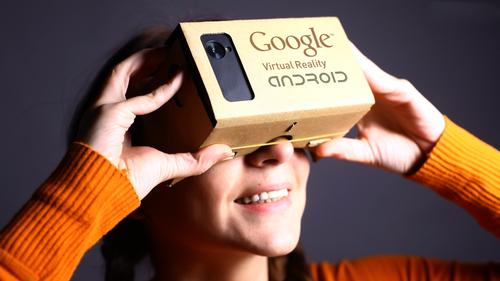
“The second thing we’re looking at is virtual reality. We’re very proud that Google Cardboard came from our Culture Lab. I led a project last year with performing arts organisations applying the technology we developed and allowing you to get on stage during a performance and look around in 360 degree vision. We’re really intrigued about the possibilities of VR and 360 video, those are the two big areas for us coming next.”
RELATED STORIES
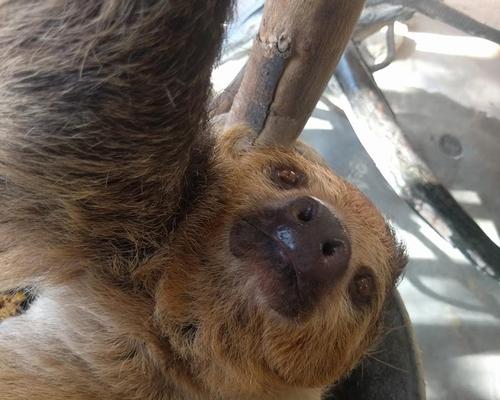
  Google installs 'animal selfie' cameras at Los Angeles Zoo


Google and Los Angeles Zoo have teamed up for a marketing stunt which allows animals at the zoo to take photos of themselves.
  Google launches virtual reality division


Google has launched its own virtual reality computing division, appointing executive Clay Bavor to run the new arm of the technology giant.
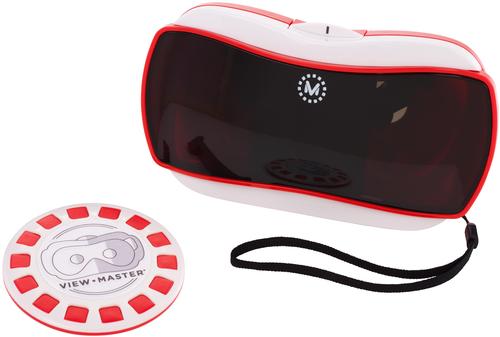
  Mattel and Google tie-up reimagines View-Master as affordable VR alternative


View-Master – a popular children's toy since the 1960s – could be the next big step in affordable, commercial virtual reality following a tie-up between Mattel and Google to create a new iteration of the device based on VR using smartphones.
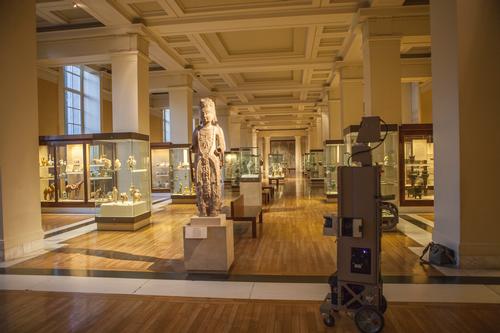
  British Museum teams up with Google to create virtual tour of institution


A new partnership between the British Museum and Google has made more than 4,500 objects from the national institution available to view online for free.
MORE NEWS
Rainer Maelzer joins Therme Group as chief entertainment officer
Rainer Maelzer, an experiential entertainment innovator, has been appointed chief entertainment officer by Therme Group.
Movie Park Germany reveals new Paramount attraction as part of its 30th anniversary celebrations
Movie Park Germany has opened a new Paramount Pictures-themed attraction as part of its 30th anniversary celebrations, using immersive storytelling and adaptive reuse to reinforce the park’s longstanding “Hollywood in Germany” positioning.
Therme Manchester reveals 90:90 strategy – 90 per cent of the UK population within a 90-minute drive of a Therme
Therme Manchester’s 28-acre development, which will include interconnected glass pavilions that measure 65,000sq m, will be the largest bathing and wellbeing attraction in the world once complete, according to prof David Russell, CEO of Therme UK. 
Efteling expands family offer with new Hooghmoed drop tower
Efteling has opened Hooghmoed, a new family drop tower designed to broaden the appeal of its recently launched Sirene Island themed area and introduce younger visitors to thrill attractions.
+ More news   

COMPANY PROFILES
Sally Corporation

Our services include: Dark ride design & build; Redevelopment of existing attractions; High-quality [more...]
instantprint

We’re a Yorkshire-based online printer, founded in 2009 by Adam Carnell and James Kinsella. [more...]
Clip 'n Climb

Clip ‘n Climb currently offers facility owners and investors more than 40 colourful and unique Cha [more...]
Simworx Ltd

The company was initially established in 1997. Terry Monkton and Andrew Roberts are the key stakeh [more...]
+ More profiles  
FEATURED SUPPLIER

Iconic Liverpool attraction opens door to new operators
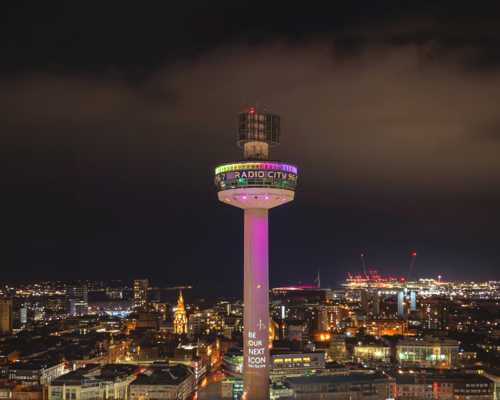
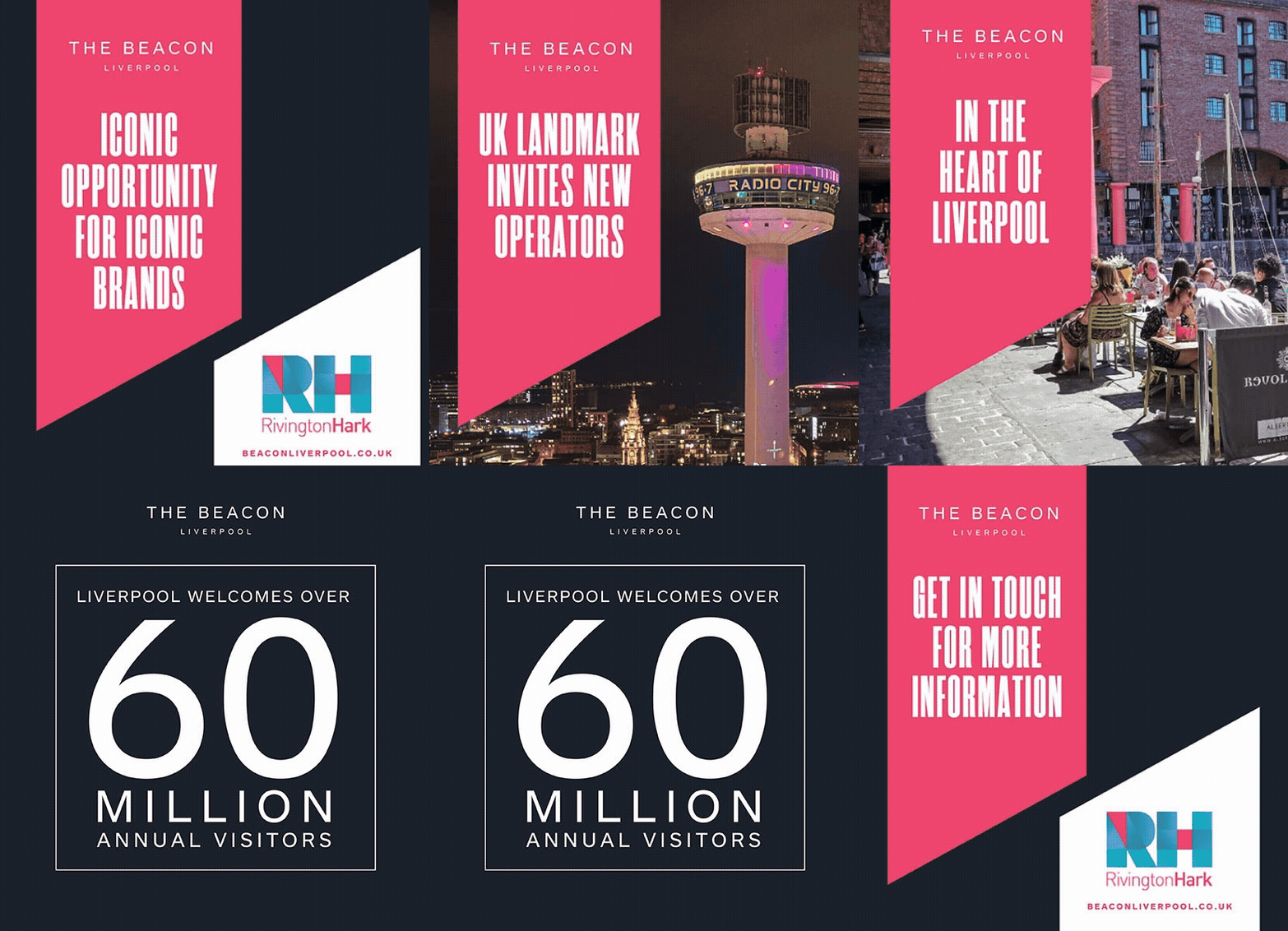
An opportunity to reimagine one of the UK’s most recognisable towers has been formally opened by Rivington Hark, as St Johns Beacon invites operators and partners to shape its next phase. [more...]
CATALOGUE GALLERY
 

+ More catalogues  
DIRECTORY
+ More directory  
DIARY


09-11 Jun 2026

World Sauna Forum 2026

Savutuvan Apaja, Haapaniemi, Finland
23-26 Aug 2026

Elevate Spa Riviera Maya Edition

The Riviera Maya Edition Kanai, Playa del Carmen, Mexico
+ More diary  
LATEST ISSUES
+ View Magazine Archive

Attractions Management

2026 issue 1


View issue contents
View on turning pages
Download PDF
FREE digital subscription
Print subscription

Attractions Management

2025 issue 2


View issue contents
View on turning pages
Download PDF
FREE digital subscription
Print subscription

Attractions Management

2025 issue 1


View issue contents
View on turning pages
Download PDF
FREE digital subscription
Print subscription

Attractions Management

2024 issue 4


View issue contents
View on turning pages
Download PDF
FREE digital subscription
Print subscription

Attractions Management News

06 Apr 2020 issue 153


View on turning pages
Download PDF
View archive
FREE digital subscription
Print subscription

Attractions Handbook

2019


View issue contents
View on turning pages
Download PDF
FREE digital subscription
Print subscription
 
ABOUT LEISURE MEDIA
LEISURE MEDIA MAGAZINES
LEISURE MEDIA HANDBOOKS
LEISURE MEDIA WEBSITES
LEISURE MEDIA PRODUCT SEARCH
 
ATTRACTIONS MANAGEMENT
ATTRACTIONS MANAGEMENT NEWS
ATTRACTIONS HANDBOOK
PRINT SUBSCRIPTIONS
FREE DIGITAL SUBSCRIPTIONS
ADVERTISE . CONTACT US

Leisure Media
Tel: +44 (0)1462 431385

©Cybertrek 2026
Get Attractions Management digital magazine FREE
Sign up here ▸
Jobs    News   Products   Magazine   Subscribe
NEWS
Exclusive: New technologies driving digital culture says Google Cultural Institute's James Davis
POSTED 21 Apr 2016 . BY Tom Anstey
Davis joined the Google Cultural Institute in June 2011 after spending seven years working at Tate Online and Tate Britain
James Davis, program manager of the Google Cultural Institute, has revealed how Google’s technological advances will benefit the future of the arts and culture sectors, with digital opening up a new pathway for the consumer.

Davis, who joined Google in June 2011 after spending seven years at Tate Online and Tate Britain, told Attractions Management that what we are seeing now from Google is just the start and that as accessibility increases, so will interest in arts and culture.

“I think digital culture is heading to much bigger audiences,” said Davis. “One of the real compelling reasons to have digital cultural experiences is that if you’re interested in something the other side of the world, that might be an obstacle for you going to see it. However if it’s available directly from your pocket, then it’s extremely accessible to you.

“We are absolutely convinced that the global audience for culture will increase because of people having access to cultural organisations all around the world and as a result I think and hope that physical attendance will increase,” he continued. “It’s something we’ve begun to see anecdotally. If you get a larger audience interested in this topic – for example introducing people to a particular museum for the very first time – some of them are going to go to that museum when they weren’t beforehand because they hadn’t heard of it. That’s the direction that the Google Cultural Institute is going.”

In the five years since Google create its Cultural Institute in 2011, the project has gone from strength-to-strength. The project now has more than 1,000 cultural partners from 60 countries, and has several-thousand exhibits and millions of artefacts digitised in its public archive. 675,000 people have created galleries on the platform, telling their own stories and curating their own exhibitions, while the project has a large and critically engaged social following.

“I think Google has created a new way into art and culture for consumers and audiences,” said Davis. “We hope to develop best standards in the field. We know what we’re doing with technology so we hope to be able to create standards that become more shareable with the community. The aim is that the art and culture sector will be able to benefit from our investments in experimentation and iteration over the last few years.”

Davis added that Google sees its cultural platform as an add-on rather than a replacement, with the hope that its service encourages people to actually visit museums and galleries.

“We don’t want to change the nature of how cultural experiences occur because we’re not cultural experts and that’s not our job,” he said. “We want to add a digital component to them rather than take away from the experience, hopefully driving people to seek out culture in more physical forms.”

As it continues to add to its archive and team with more and more institutions around the world, the Institute is also trying to stay on the cutting edge, creating innovation for the sector as it operates, using tools like its own various Google platforms, as well as its physical Culture Lab in Paris to develop a new way of thinking and to drive forward a new approach to art and culture using future technologies.

“We have a continuing iteration process so some of the work that we’ve been doing with our mobile app, we’re going into more experimentation with machine learning,” said Davis. “Using our powerful algorithms applied to cultural artefacts, we’re trying to see how we can provide access to them, how we can encourage serendipitous encounters and what useful ways that might be integrated with other experiences through platforms like Google Now and Google Search.

“The second thing we’re looking at is virtual reality. We’re very proud that Google Cardboard came from our Culture Lab. I led a project last year with performing arts organisations applying the technology we developed and allowing you to get on stage during a performance and look around in 360 degree vision. We’re really intrigued about the possibilities of VR and 360 video, those are the two big areas for us coming next.”

RELATED STORIES
Google installs 'animal selfie' cameras at Los Angeles Zoo


Google and Los Angeles Zoo have teamed up for a marketing stunt which allows animals at the zoo to take photos of themselves.
Google launches virtual reality division


Google has launched its own virtual reality computing division, appointing executive Clay Bavor to run the new arm of the technology giant.
Mattel and Google tie-up reimagines View-Master as affordable VR alternative


View-Master – a popular children's toy since the 1960s – could be the next big step in affordable, commercial virtual reality following a tie-up between Mattel and Google to create a new iteration of the device based on VR using smartphones.
British Museum teams up with Google to create virtual tour of institution


A new partnership between the British Museum and Google has made more than 4,500 objects from the national institution available to view online for free.
MORE NEWS
Rainer Maelzer joins Therme Group as chief entertainment officer
Rainer Maelzer, an experiential entertainment innovator, has been appointed chief entertainment officer by Therme Group.
Movie Park Germany reveals new Paramount attraction as part of its 30th anniversary celebrations
Movie Park Germany has opened a new Paramount Pictures-themed attraction as part of its 30th anniversary celebrations, using immersive storytelling and adaptive reuse to reinforce the park’s longstanding “Hollywood in Germany” positioning.
Therme Manchester reveals 90:90 strategy – 90 per cent of the UK population within a 90-minute drive of a Therme
Therme Manchester’s 28-acre development, which will include interconnected glass pavilions that measure 65,000sq m, will be the largest bathing and wellbeing attraction in the world once complete, according to prof David Russell, CEO of Therme UK. 
Efteling expands family offer with new Hooghmoed drop tower
Efteling has opened Hooghmoed, a new family drop tower designed to broaden the appeal of its recently launched Sirene Island themed area and introduce younger visitors to thrill attractions.
Universal and Puy du Fou projects point to rise of Oxford–Cambridge corridor
A proposed Puy du Fou development near Bicester and Universal Destinations and Experiences’ planned resort in Bedford are emerging as part of a wider transformation of the Oxford– Cambridge Growth Corridor into a major centre for UK leisure and tourism inv
Shedd Aquarium upgrades its visitor experience with new Immersion Theater
Shedd Aquarium has opened the Immersion Theater developed in partnership with SimEx- Iwerks, as part of a wider strategy to enhance the guest experience and create additional revenue opportunities.
+ More news   
 
COMPANY PROFILES
Sally Corporation

Our services include: Dark ride design & build; Redevelopment of existing attractions; High-quality [more...]
instantprint

We’re a Yorkshire-based online printer, founded in 2009 by Adam Carnell and James Kinsella. [more...]
Clip 'n Climb

Clip ‘n Climb currently offers facility owners and investors more than 40 colourful and unique Cha [more...]
Simworx Ltd

The company was initially established in 1997. Terry Monkton and Andrew Roberts are the key stakeh [more...]
+ More profiles  
FEATURED SUPPLIER

Iconic Liverpool attraction opens door to new operators
An opportunity to reimagine one of the UK’s most recognisable towers has been formally opened by Rivington Hark, as St Johns Beacon invites operators and partners to shape its next phase. [more...]
CATALOGUE GALLERY
+ More catalogues  
DIRECTORY
+ More directory  
DIARY


09-11 Jun 2026

World Sauna Forum 2026

Savutuvan Apaja, Haapaniemi, Finland
23-26 Aug 2026

Elevate Spa Riviera Maya Edition

The Riviera Maya Edition Kanai, Playa del Carmen, Mexico
+ More diary  


ADVERTISE . CONTACT US

Leisure Media
Tel: +44 (0)1462 431385

©Cybertrek 2026

ABOUT LEISURE MEDIA
LEISURE MEDIA MAGAZINES
LEISURE MEDIA HANDBOOKS
LEISURE MEDIA WEBSITES
LEISURE MEDIA PRODUCT SEARCH
ATTRACTIONS MANAGEMENT NEWS
ATTRACTIONS HANDBOOK
PRINT SUBSCRIPTIONS
FREE DIGITAL SUBSCRIPTIONS