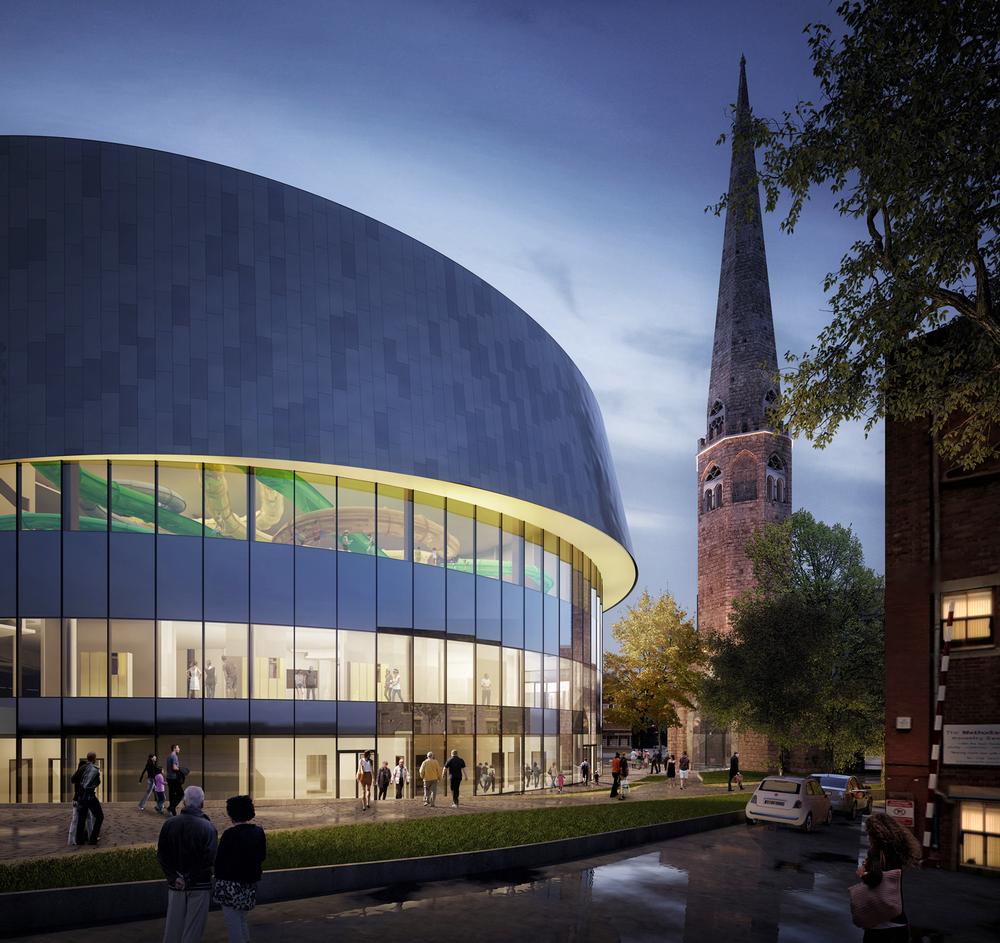
FaulknerBrowns recently submitted plans for an exciting new, high octane waterpark for the city of Coventry. During the process, I couldn’t help but reflect on the parallels between this bold move by the local council and the debate surrounding the remit of the BBC as a public broadcaster in contrast to competing providers in the private sector.
Of the few waterparks built in the UK in the last few years almost all have been investments by the private sector, with holiday destinations such as Center Parcs dominating the landscape. This has raised the question of why a publicly funded local authority would invest in a city centre waterpark and – like the BBC – how will it be able to demonstrate value for money.
Public Benefits Firstly, it’s important to consider the wider regeneration benefits that a destination leisure facility can bring to a city centre. We know that through increased footfall and inspirational placemaking, similar schemes have acted as catalysts for private sector investment, bringing a welcome boost to the economy.
For the last 20 years, much sporting policy and funding in aquatics facilities has been driven by lane swimming, but the reality is that participation covers a wide spectrum of activity, ranging from supervised play through to developing water confidence, swimming for recreation and fitness and competition swimming. The ideal aquatics centre would contain facilities to provide for all these activities.
As well as the characteristic flume rides, the Coventry waterpark proposals contain toddler areas, leisure water to a range of depths and also lane swimming.
From both a social perspective and – in particular – a health standpoint, it’s interesting to examine the concept behind this new waterpark through the viewpoint of changing government policy, because the Sporting Futures strategy places much greater emphasis on a wider, more holistic health and leisure offer which is in tune with this type of facility development.
Health Benefits There’s also a strong argument to suggest that significant ‘incidental’ (non-swimming related) health benefits arise from the leisure water experience, both in terms of the physical movement up and down the levels of the facility and also from the associated feel-good factor.
In our Coventry proposal this vertical movement up through the building is exaggerated by the tight city centre site, which has led us to stack the facilities on top of each other: the main pools and the ride hall are stacked three stories above the 25m pool, the wet changing and the spa, with access provided by a generous spiral ramp up through the building.
Strong Public Sector Role Like the BBC, there is a strong role that the public sector can play, alongside the private sector, in providing high quality entertainment. In this case the added public value is provided through strong health and wellbeing benefits, in much the same way the BBC focuses on providing an educational offer.
In the post-Olympic landscape, schemes to promote health and wellbeing need to be conceived and delivered through innovative delivery mechanisms. As in the case of the BBC, change is needed, but the public sector is capable of championing innovative thinking.
See more on sport in Coventry on page 34
Read about the ASA’s initiative to prove the health benefits of swimming on page 8
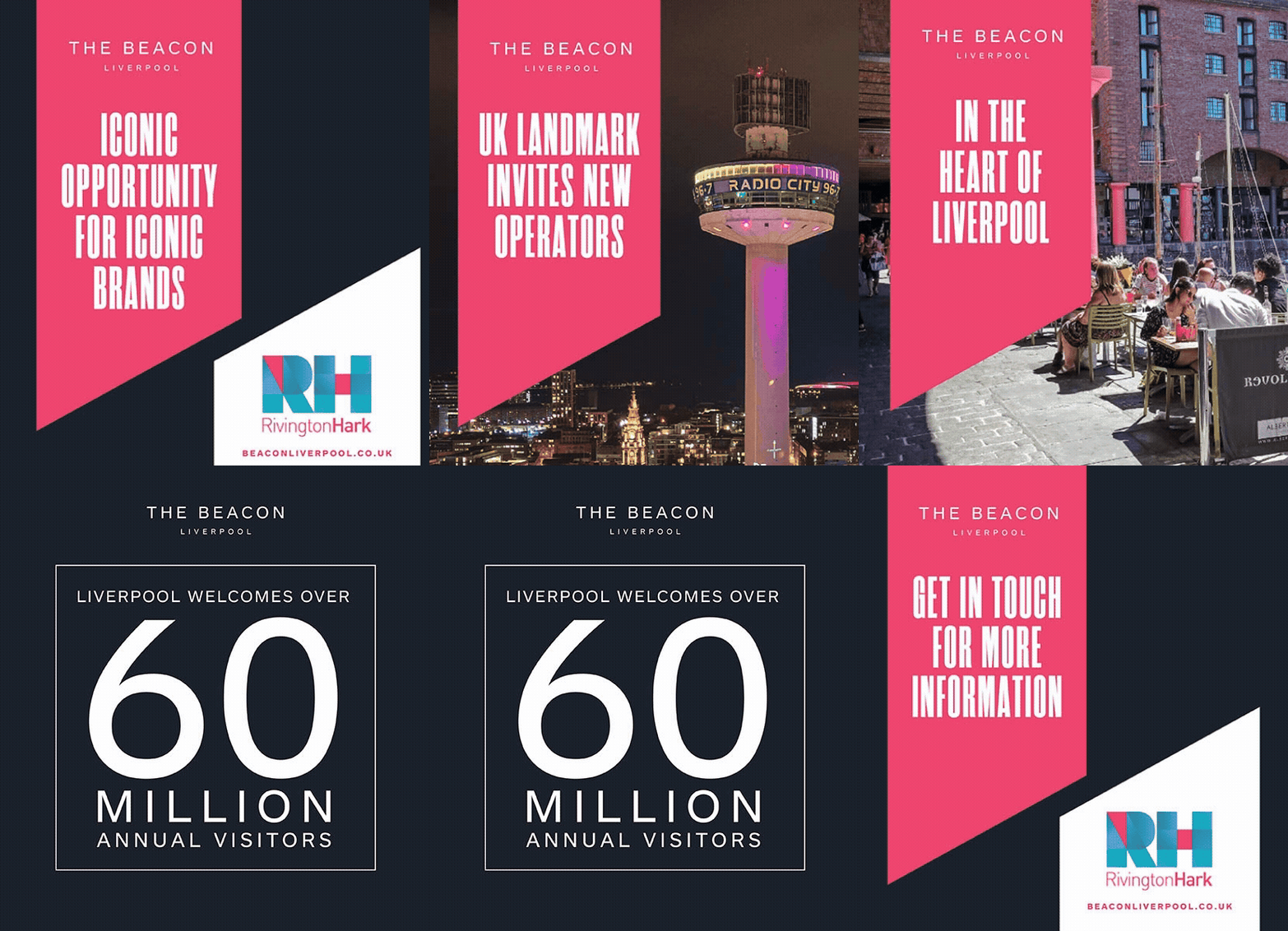
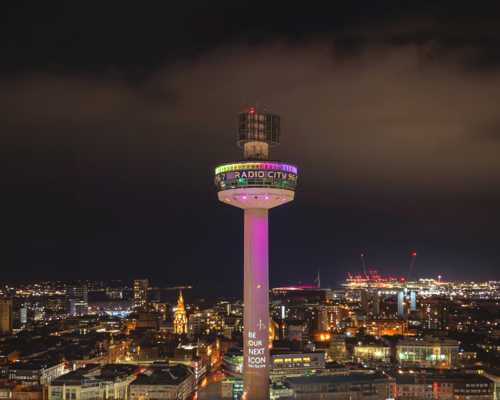
An opportunity to reimagine one of the UK’s most recognisable towers has been formally
opened by Rivington Hark, as St Johns Beacon invites operators and partners to shape its
next phase. [more...]
FaulknerBrowns recently submitted plans for an exciting new, high octane waterpark for the city of Coventry. During the process, I couldn’t help but reflect on the parallels between this bold move by the local council and the debate surrounding the remit of the BBC as a public broadcaster in contrast to competing providers in the private sector.
Of the few waterparks built in the UK in the last few years almost all have been investments by the private sector, with holiday destinations such as Center Parcs dominating the landscape. This has raised the question of why a publicly funded local authority would invest in a city centre waterpark and – like the BBC – how will it be able to demonstrate value for money.
Public Benefits Firstly, it’s important to consider the wider regeneration benefits that a destination leisure facility can bring to a city centre. We know that through increased footfall and inspirational placemaking, similar schemes have acted as catalysts for private sector investment, bringing a welcome boost to the economy.
For the last 20 years, much sporting policy and funding in aquatics facilities has been driven by lane swimming, but the reality is that participation covers a wide spectrum of activity, ranging from supervised play through to developing water confidence, swimming for recreation and fitness and competition swimming. The ideal aquatics centre would contain facilities to provide for all these activities.
As well as the characteristic flume rides, the Coventry waterpark proposals contain toddler areas, leisure water to a range of depths and also lane swimming.
From both a social perspective and – in particular – a health standpoint, it’s interesting to examine the concept behind this new waterpark through the viewpoint of changing government policy, because the Sporting Futures strategy places much greater emphasis on a wider, more holistic health and leisure offer which is in tune with this type of facility development.
Health Benefits There’s also a strong argument to suggest that significant ‘incidental’ (non-swimming related) health benefits arise from the leisure water experience, both in terms of the physical movement up and down the levels of the facility and also from the associated feel-good factor.
In our Coventry proposal this vertical movement up through the building is exaggerated by the tight city centre site, which has led us to stack the facilities on top of each other: the main pools and the ride hall are stacked three stories above the 25m pool, the wet changing and the spa, with access provided by a generous spiral ramp up through the building.
Strong Public Sector Role Like the BBC, there is a strong role that the public sector can play, alongside the private sector, in providing high quality entertainment. In this case the added public value is provided through strong health and wellbeing benefits, in much the same way the BBC focuses on providing an educational offer.
In the post-Olympic landscape, schemes to promote health and wellbeing need to be conceived and delivered through innovative delivery mechanisms. As in the case of the BBC, change is needed, but the public sector is capable of championing innovative thinking.
See more on sport in Coventry on page 34
Read about the ASA’s initiative to prove the health benefits of swimming on page 8
A new immersive attraction designed to transport visitors into the final hours of ancient Pompeii
is preparing to open near the world-famous archaeological site in southern Italy.
Experience design company, BRC Imagination Arts, has completed a transition that sees founder
Bob Rogers pass ownership of the business to four long-serving senior executives, while
remaining actively involved with the company.
Movie Park Germany has opened a new Paramount Pictures-themed attraction as part of its 30th
anniversary celebrations, using immersive storytelling and adaptive reuse to reinforce the park’s
longstanding “Hollywood in Germany” positioning.
Therme Manchester’s 28-acre development, which will include interconnected glass pavilions
that measure 65,000sq m, will be the largest bathing and wellbeing attraction in the world once
complete, according to prof David Russell, CEO of Therme UK.
Efteling has opened Hooghmoed, a new family drop tower designed to broaden the appeal of its
recently launched Sirene Island themed area and introduce younger visitors to thrill attractions.
A proposed Puy du Fou development near Bicester and Universal Destinations and Experiences’
planned resort in Bedford are emerging as part of a wider transformation of the Oxford–
Cambridge Growth Corridor into a major centre for UK leisure and tourism inv
Shedd Aquarium has opened the Immersion Theater developed in partnership with SimEx-
Iwerks, as part of a wider strategy to enhance the guest experience and create additional
revenue opportunities.
The UK government has announced a temporary reduction in VAT on visitor attractions and
children’s meals as part of a summer cost-of-living support package designed to stimulate the
visitor economy and encourage family days out.
As designer Yinka Ilori prepares for his first solo gallery show in London, he speaks exclusively
to CLADmag about his mission to spread joy, the power of play, and his bold approach to using
colour (including the colours you won’t see in his work).
The government of Thailand is exploring plans for a THB300bn (£6.3bn, US$8.3bn)
entertainment complex in the country’s Eastern Economic Corridor (EEC), with officials
proposing a large-scale theme park and sports destination as part of a broader tourism and
economic development strategy.
An opportunity to reimagine one of the UK’s most recognisable towers has been formally
opened by Rivington Hark, as St Johns Beacon invites operators and partners to shape its
next phase. [more...]