Where has your career taken you so far? I’ve been involved in teaching swimming and leisure management for 20 years and as operations, swimming and training manager at Inspire Leisure for the last 10.
I was STA’s youngest, longest serving president, which has given me the opportunity to share practical experiences and influence the development of STA’s educational programmes. As a tutor, I’ve also had the privilege of training hundreds of teachers.
Working in a leisure environment gives me an understanding of the industry and what’s needed.
What will your priorities as CEO be? Being firmly focussed on our charitable objective of ‘the preservation of human life by the teaching of swimming, lifesaving and survival techniques’. This will involve working closely with members and customers to deliver what they need in terms of qualifications, and resources to reach the highest standards of teaching.
There’s also a need to address the industry’s challenges in recruiting trained swimming teachers, which is creating problems for swim schools across the UK. We’ve already started this process by piloting a Swimming Teacher Mentor Course, which involves STA training candidates and placing them in local swim schools to receive training, mentoring and practical experience with a swimming teacher.
I also feel strongly that a Level 2 swimming teacher qualification should be exactly that – no matter who the awarding body is. To my knowledge, in no other industry are qualifications specified by the awarding body name – a 2:1 business degree is a 2:1 business degree and a first aid at work qualification is just that.
The misconception I want to address is that choosing a Level 2 qualification from any of the awarding bodies does not mean you can’t teach another’s learn to swim programme and doesn’t impact on ongoing training. I know this from running one of the biggest swim schools in the country.
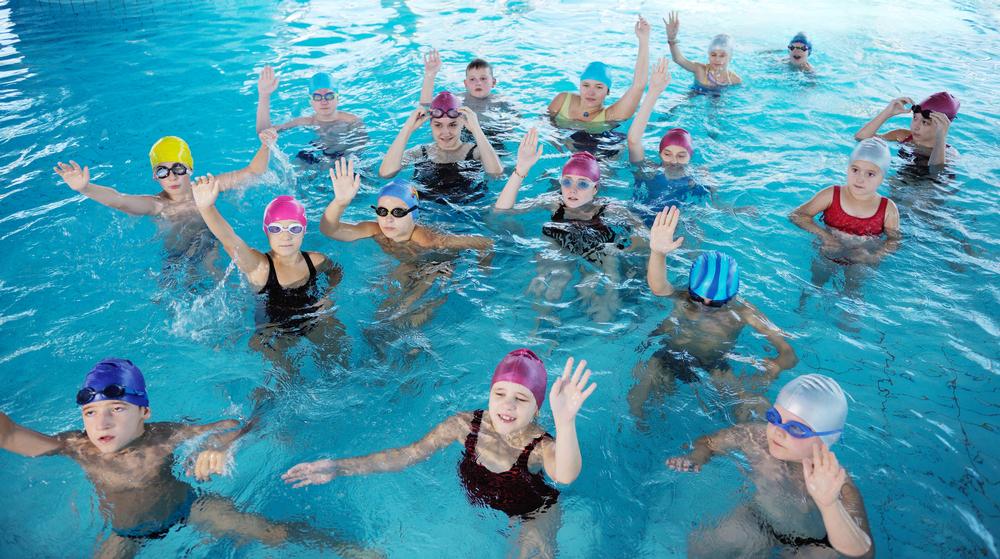
How will you get more people swimming? For younger children, it’s about educating parents on the importance of swimming, so they see it as a key life skill. For schools, we want swimming to be taken more seriously on the curriculum and the government to intervene to provide them practical support, but as mentioned this will be a long process.
For children who’ve reached the top of the learn to swim programme and don’t wish to progress on to club swimming, we want to retain their interest by giving them a choice of activities they can do in the pool.
For example our Junior Lifeguard Academy offers 40 aquatic activities for youngsters aged 8+ years to choose from. For adults, we need to attract them to the pool and we’re in the process of exploring exciting new fitness based aquatic programmes that are more akin with what you find in a gym programme.
How will the STA’s role develop, going forward? Will it expand into other areas? We want to create programmes which people of all ages will enjoy in the pool and that might mean expanding into other teaching areas or partnering with specialist training companies. Education is also big on our agenda, informing parents and/or carers about the importance of learning to swim and water safety education. In June we have our National Water Safety Week and we’ll be reaching out to all those involved in influencing young people to pledge their support.
What do you see as swimming’s biggest strength as a participation sport? There are so many benefits from it. Swimming is a fantastic way for people of all ages and abilities to get fit and stay fit. The natural buoyancy of the water reduces weight-bearing stress, allowing a greater ease of movement with less strain on the body.
For families, it’s also one of the only activities you can all do together and have fun. It also goes without saying that learning to swimming is a vital life skill that could one day save your life.
And its biggest weakness? Cost is a major barrier, as is an ageing pool stock and pool availability in some parts of the country.
Pool programming is also an increasing issue, fitting everyone in at a time everyone wants. Pools are an expensive commodity and with many council pools not being subsidised these days, timetabling has become ever more an issue with the most profitable and popular sessions given a priority to cover costs.
How would you correct these weaknesses? As an awarding body, we can’t do much without government intervention when it comes to pool stock, but more needs to be done to ensure facilities fulfil their potential – not only from a financial viewpoint but also to encourage more people to use them.
We encourage the sector to be creative and explore new ways to optimise pool time and increase revenue. Many councils and trusts, for example, have embraced change through our Swim Academy programme.
The scheme increases wet leisure income, reduces operating costs and expands pool programmes by offering a more diverse range of aquatic activities.
The results speak for themselves – the Link4Life Swim Academy in Rochdale saw a 30 per cent increase in enrolments over three years – and the success of the Swim Academies has led the way for more council- and trust-run pools to have the confidence to step outside of the box. They too are reaping the rewards.
An opportunity to reimagine one of the UK’s most recognisable towers has been formally
opened by Rivington Hark, as St Johns Beacon invites operators and partners to shape its
next phase. [more...]
Where has your career taken you so far? I’ve been involved in teaching swimming and leisure management for 20 years and as operations, swimming and training manager at Inspire Leisure for the last 10.
I was STA’s youngest, longest serving president, which has given me the opportunity to share practical experiences and influence the development of STA’s educational programmes. As a tutor, I’ve also had the privilege of training hundreds of teachers.
Working in a leisure environment gives me an understanding of the industry and what’s needed.
What will your priorities as CEO be? Being firmly focussed on our charitable objective of ‘the preservation of human life by the teaching of swimming, lifesaving and survival techniques’. This will involve working closely with members and customers to deliver what they need in terms of qualifications, and resources to reach the highest standards of teaching.
There’s also a need to address the industry’s challenges in recruiting trained swimming teachers, which is creating problems for swim schools across the UK. We’ve already started this process by piloting a Swimming Teacher Mentor Course, which involves STA training candidates and placing them in local swim schools to receive training, mentoring and practical experience with a swimming teacher.
I also feel strongly that a Level 2 swimming teacher qualification should be exactly that – no matter who the awarding body is. To my knowledge, in no other industry are qualifications specified by the awarding body name – a 2:1 business degree is a 2:1 business degree and a first aid at work qualification is just that.
The misconception I want to address is that choosing a Level 2 qualification from any of the awarding bodies does not mean you can’t teach another’s learn to swim programme and doesn’t impact on ongoing training. I know this from running one of the biggest swim schools in the country.
How will you get more people swimming? For younger children, it’s about educating parents on the importance of swimming, so they see it as a key life skill. For schools, we want swimming to be taken more seriously on the curriculum and the government to intervene to provide them practical support, but as mentioned this will be a long process.
For children who’ve reached the top of the learn to swim programme and don’t wish to progress on to club swimming, we want to retain their interest by giving them a choice of activities they can do in the pool.
For example our Junior Lifeguard Academy offers 40 aquatic activities for youngsters aged 8+ years to choose from. For adults, we need to attract them to the pool and we’re in the process of exploring exciting new fitness based aquatic programmes that are more akin with what you find in a gym programme.
How will the STA’s role develop, going forward? Will it expand into other areas? We want to create programmes which people of all ages will enjoy in the pool and that might mean expanding into other teaching areas or partnering with specialist training companies. Education is also big on our agenda, informing parents and/or carers about the importance of learning to swim and water safety education. In June we have our National Water Safety Week and we’ll be reaching out to all those involved in influencing young people to pledge their support.
What do you see as swimming’s biggest strength as a participation sport? There are so many benefits from it. Swimming is a fantastic way for people of all ages and abilities to get fit and stay fit. The natural buoyancy of the water reduces weight-bearing stress, allowing a greater ease of movement with less strain on the body.
For families, it’s also one of the only activities you can all do together and have fun. It also goes without saying that learning to swimming is a vital life skill that could one day save your life.
And its biggest weakness? Cost is a major barrier, as is an ageing pool stock and pool availability in some parts of the country.
Pool programming is also an increasing issue, fitting everyone in at a time everyone wants. Pools are an expensive commodity and with many council pools not being subsidised these days, timetabling has become ever more an issue with the most profitable and popular sessions given a priority to cover costs.
How would you correct these weaknesses? As an awarding body, we can’t do much without government intervention when it comes to pool stock, but more needs to be done to ensure facilities fulfil their potential – not only from a financial viewpoint but also to encourage more people to use them.
We encourage the sector to be creative and explore new ways to optimise pool time and increase revenue. Many councils and trusts, for example, have embraced change through our Swim Academy programme.
The scheme increases wet leisure income, reduces operating costs and expands pool programmes by offering a more diverse range of aquatic activities.
The results speak for themselves – the Link4Life Swim Academy in Rochdale saw a 30 per cent increase in enrolments over three years – and the success of the Swim Academies has led the way for more council- and trust-run pools to have the confidence to step outside of the box. They too are reaping the rewards.
A new immersive attraction designed to transport visitors into the final hours of ancient Pompeii
is preparing to open near the world-famous archaeological site in southern Italy.
Experience design company, BRC Imagination Arts, has completed a transition that sees founder
Bob Rogers pass ownership of the business to four long-serving senior executives, while
remaining actively involved with the company.
Movie Park Germany has opened a new Paramount Pictures-themed attraction as part of its 30th
anniversary celebrations, using immersive storytelling and adaptive reuse to reinforce the park’s
longstanding “Hollywood in Germany” positioning.
Therme Manchester’s 28-acre development, which will include interconnected glass pavilions
that measure 65,000sq m, will be the largest bathing and wellbeing attraction in the world once
complete, according to prof David Russell, CEO of Therme UK.
Efteling has opened Hooghmoed, a new family drop tower designed to broaden the appeal of its
recently launched Sirene Island themed area and introduce younger visitors to thrill attractions.
A proposed Puy du Fou development near Bicester and Universal Destinations and Experiences’
planned resort in Bedford are emerging as part of a wider transformation of the Oxford–
Cambridge Growth Corridor into a major centre for UK leisure and tourism inv
Shedd Aquarium has opened the Immersion Theater developed in partnership with SimEx-
Iwerks, as part of a wider strategy to enhance the guest experience and create additional
revenue opportunities.
The UK government has announced a temporary reduction in VAT on visitor attractions and
children’s meals as part of a summer cost-of-living support package designed to stimulate the
visitor economy and encourage family days out.
As designer Yinka Ilori prepares for his first solo gallery show in London, he speaks exclusively
to CLADmag about his mission to spread joy, the power of play, and his bold approach to using
colour (including the colours you won’t see in his work).
The government of Thailand is exploring plans for a THB300bn (£6.3bn, US$8.3bn)
entertainment complex in the country’s Eastern Economic Corridor (EEC), with officials
proposing a large-scale theme park and sports destination as part of a broader tourism and
economic development strategy.
An opportunity to reimagine one of the UK’s most recognisable towers has been formally
opened by Rivington Hark, as St Johns Beacon invites operators and partners to shape its
next phase. [more...]